a home for all in rikuzentakata, full scale prototype
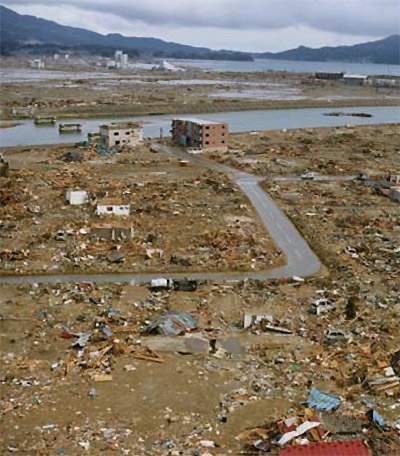
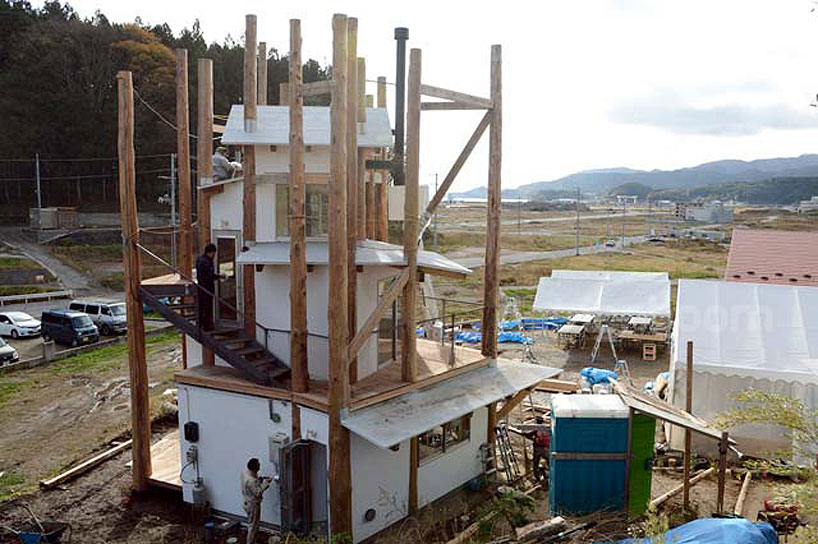
the concept model presented at the 2012 venice biennale has now been constructed at full scale to serve the people left homeless after the 2011 earthquake.
[FEATURED]
‘a home for all’ by toyo ito, kumiko inui, sou fujimoto, and akihisa hirata, rikuzentakata, japanimage © kumiko inui
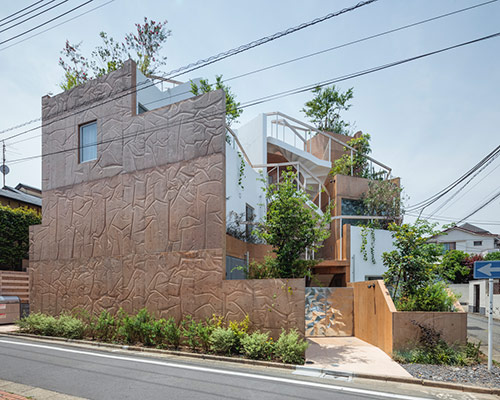
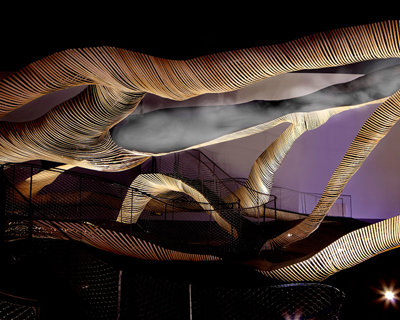
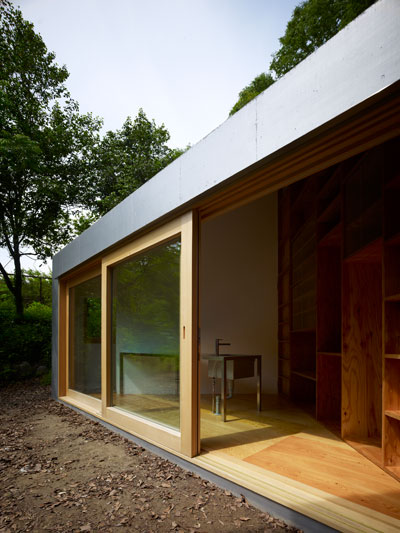
after introducing the various projects in the japanese pavilion of the 2012 venice architecture biennale, the collaborative team of japenese architects including toyo ito, kumiko inui, sou fujimoto, and akihisa hirata have built a full-scale prototype of their gathering house concept open to the public in rikuzentakata. in response to the great east japan earthquake of 2011, the group of architects worked together to explore possible future typologies for japanese coastal cities that may be prone to similar events. using a system of natural wooden columns like pilotis arranged on a regular grid, the volumes are suspended in a three-dimensional matrix like a complex home on stilts with a relationship on both the horizontal and vertical axes of the different layers of the dwelling, sometimes maintaining the orthogonal nature of the foundations while at others exercising the exception. ‘a home for all’ serves as a gathering space for the thousands of people that were left homeless after the devastating natural disaster.
see designboom’s earlier coverage of the japanese exhibition ‘architecture. possible here? a home for all’ at the 2012 venice architecture biennale, here.
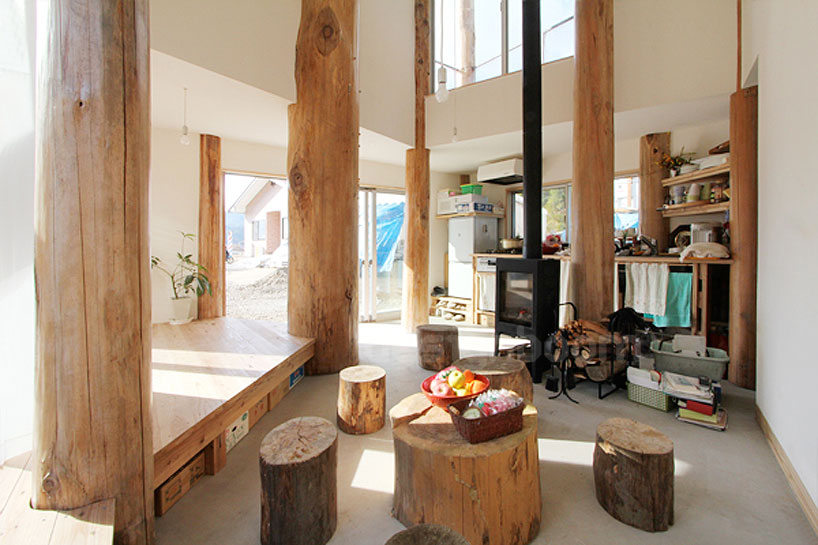 interiorimage © kumiko inui
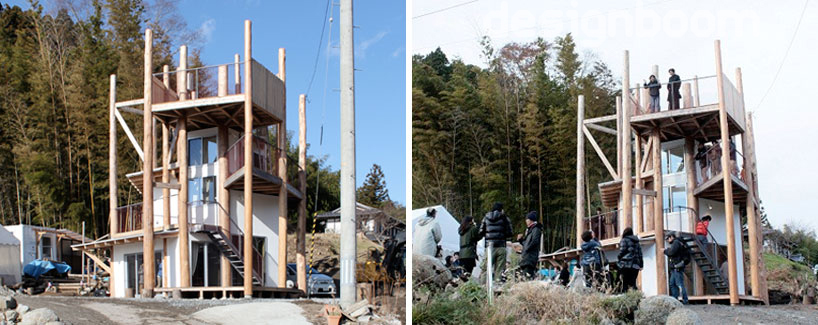 finished houseimage © kumiko inui
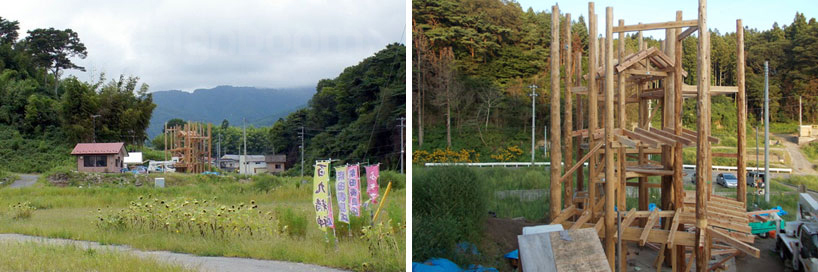 timber column and beam substructureimage © kumiko inui
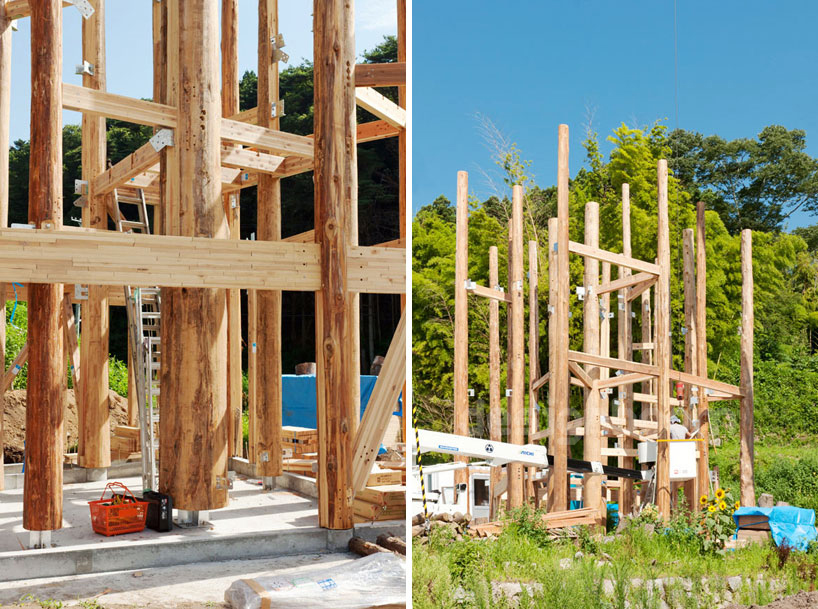 constructionimage © ja+u
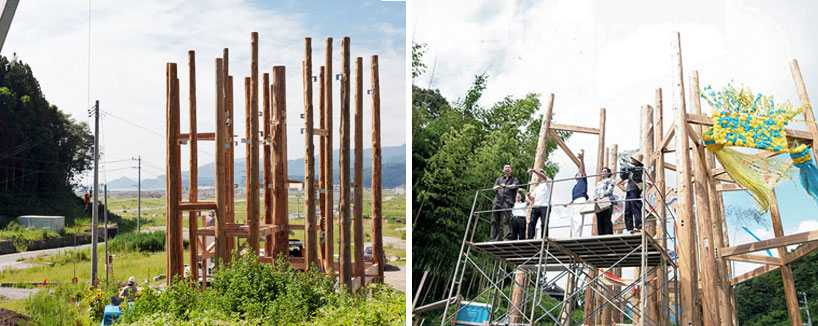 image © ja+u
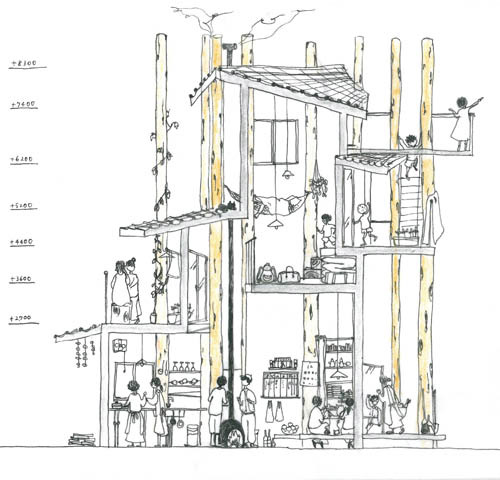 sketch
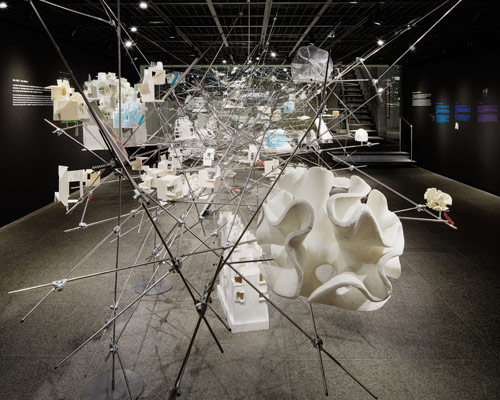
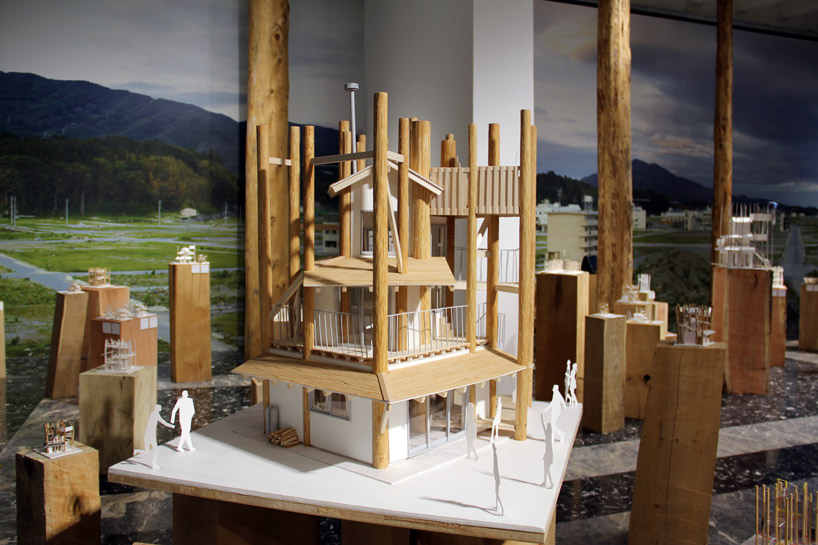 model displayed at the japanese pavilion of the same housing proposal image © designboom
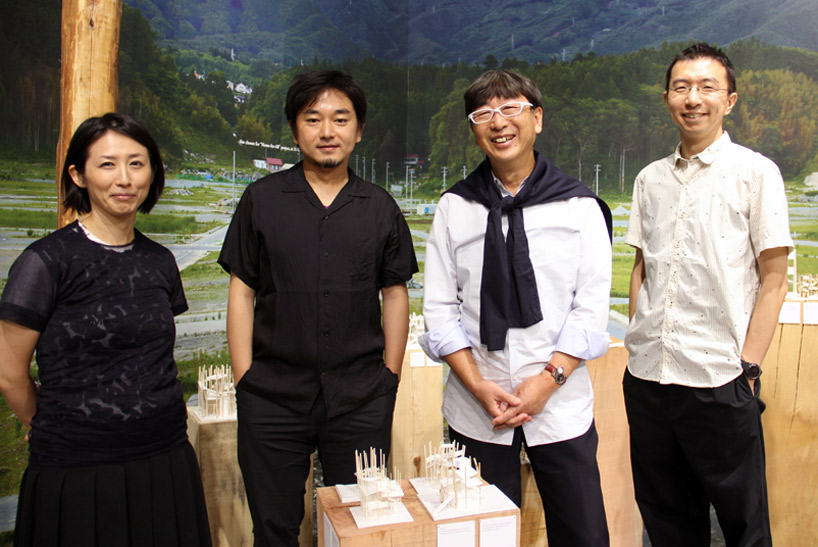 left to right: architects kumiko inui, akihisa hirata, commissioner toyo ito, architect sou fujimoto image © designboom
shop
your own online design shop — no sales commission collected