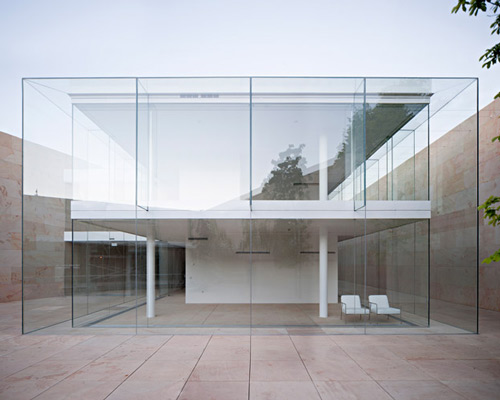
alberto campo baeza: offices in zamora
set in stone looking towards the sky, the office building uses air as its primary building material to create a serene work environment.
‘offices in zamora’ by alberto campo baezaimage © javier callejas sevillaall images courtesy of alberto campo baezas
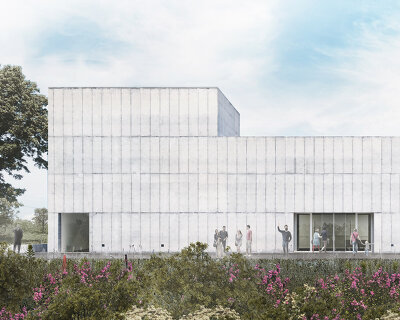
situated within the medieval center of the city of zamora, spain, the new office building occupies the old church garden, near the river and facing the cathedral and its square. the architects, madrid-based studio alberto campo baeza, played with a simple and powerful dichotomy of material and space, the synchronicity and unity of heavy and light, earth and air. a mammoth stone wall encloses the angular footprint of the site with simple voids strategically creating apertures in the solid membrane, creating moments to view the outer world.
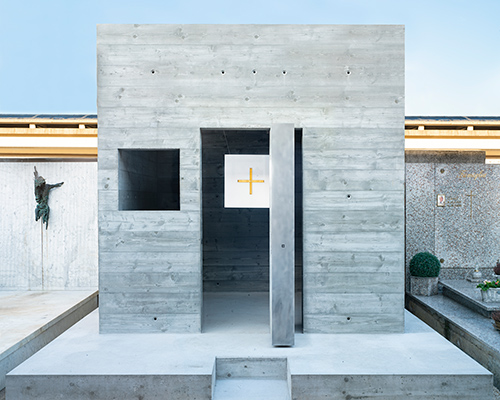
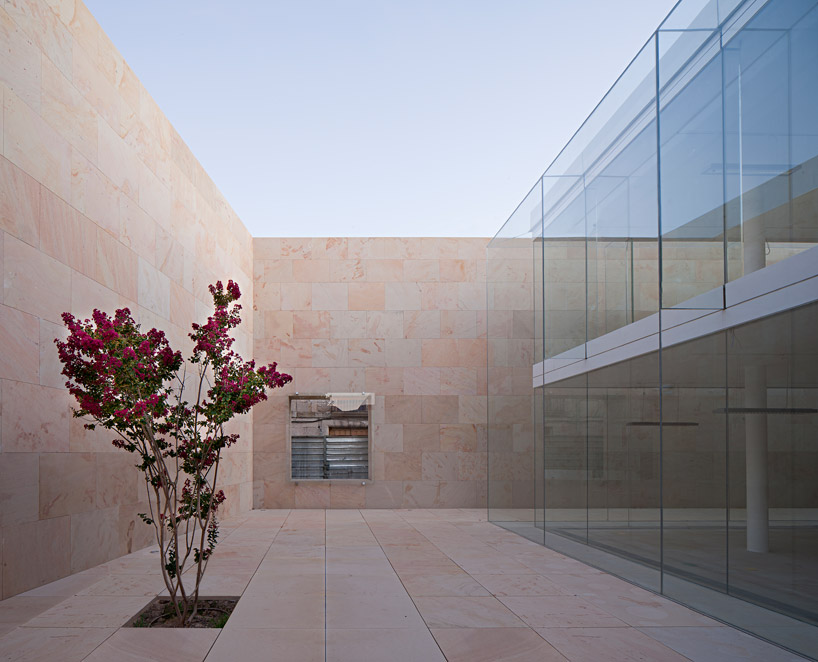
at the entrance, a cornerstone with the phrase ‘HIC LAPIS ANGULARIS MAIO MMXII POSITO’ engraved into it’s face, representing the past, deeply rooted into the soil: the memory. upon crossing the colossal threshold the feeling of weight and solidity are lifted in a serene courtyard where the floors and walls are made of the same tranquil rock, interrupted on occasion by a tree whose color is intensified by the soft neutral tones of the surroundings.
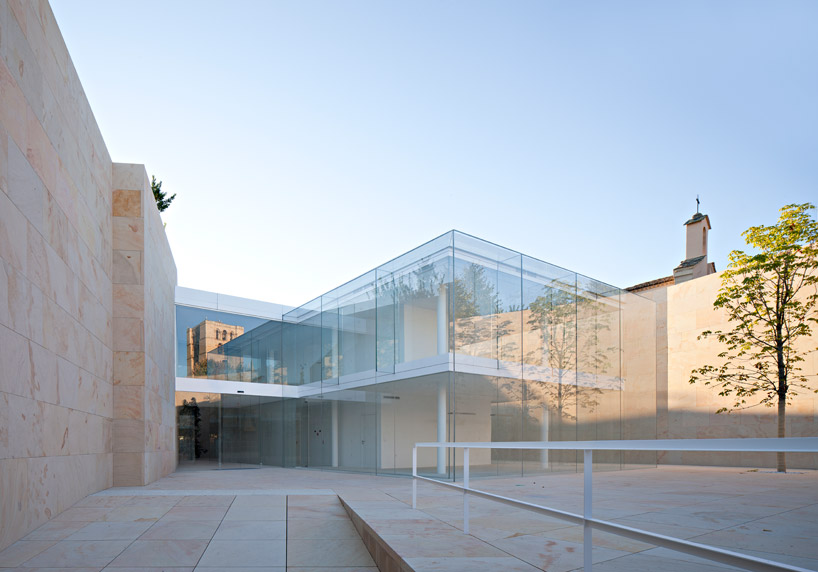 entry to the office buildingimage © javier callejas sevilla
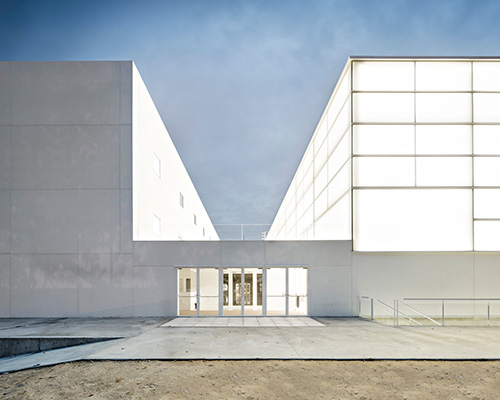
in the middle, white slender columns support thin floor planes wrapped in a double glass skin made up of panels measuring 6 meters by 3 meters, 1.2 centimeters thick. its crystalline structure is composed entirely of glass planes and clear structural silicon, including the corners, trapping within the interstitial gap the true material of the building: air. a complete inversion from the outer wall that defines the property, the office spaces in turn offer complete thermally controlled transparency, on the corner of which ‘HOC VITRUM ANGULARIS MAIO MMXII POSITO’ is marked with acid looking towards the sky: the future.
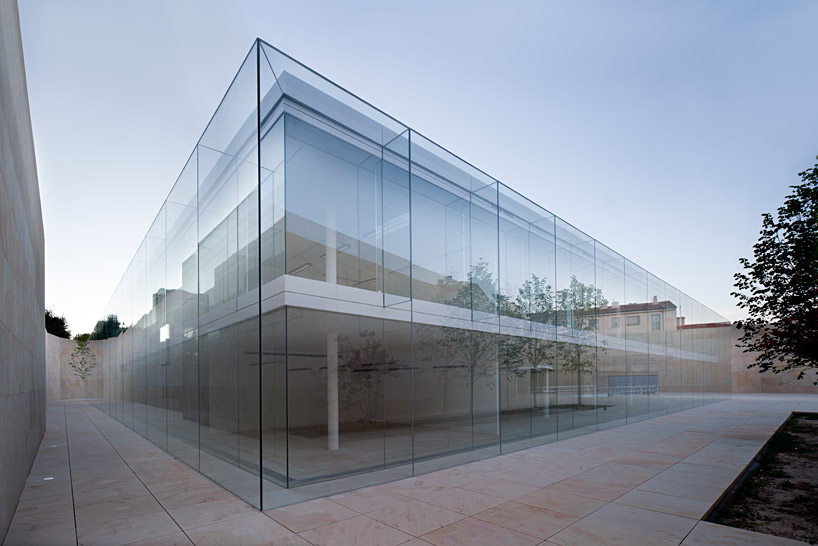 a double glass skin wraps the constructimage © javier callejas sevilla
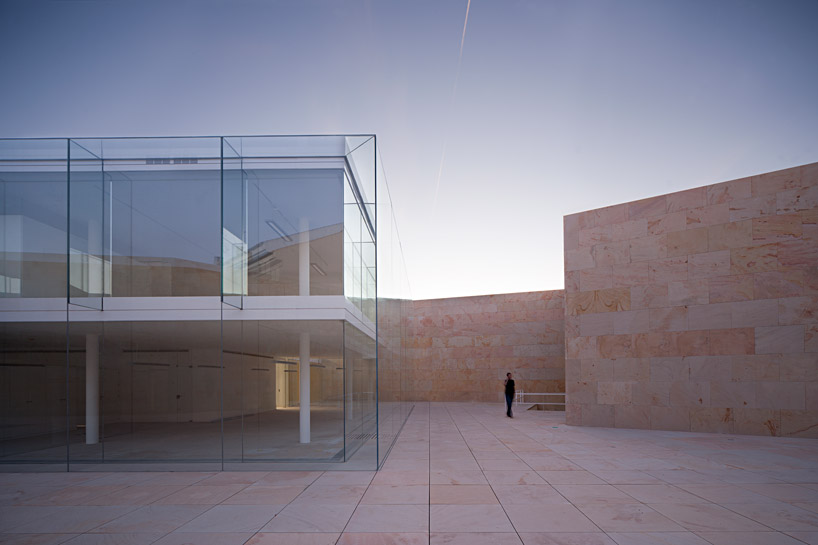 tranquil exterior courtyardimage © javier callejas sevilla
 void in the outer wallimage © javier callejas sevilla
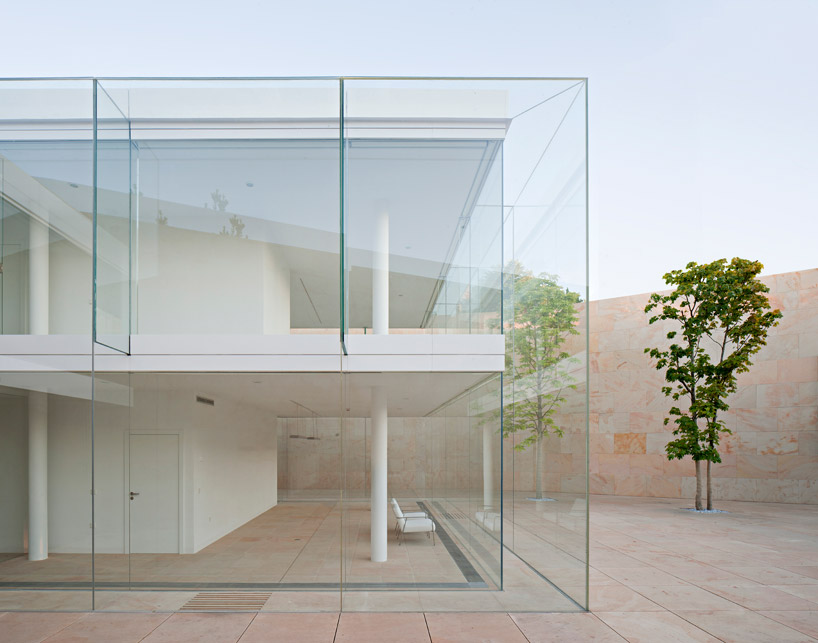 image © javier callejas sevilla
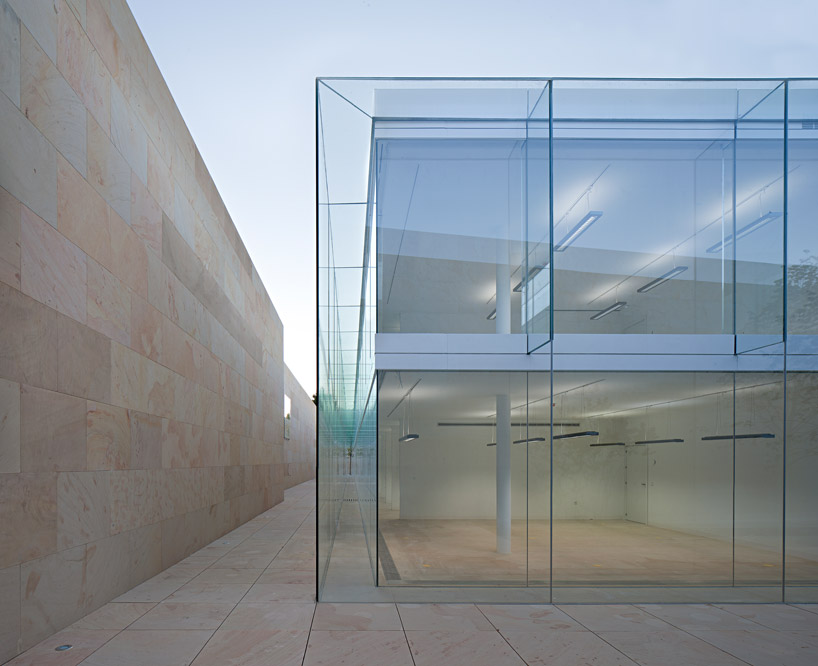 an air space between the double skin system helps regulate temperatures image © javier callejas sevilla
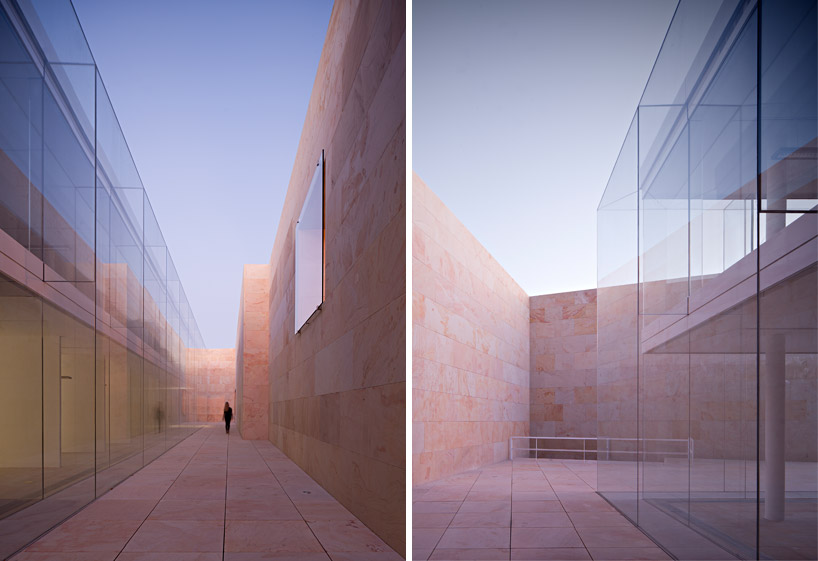 image © javier callejas sevilla
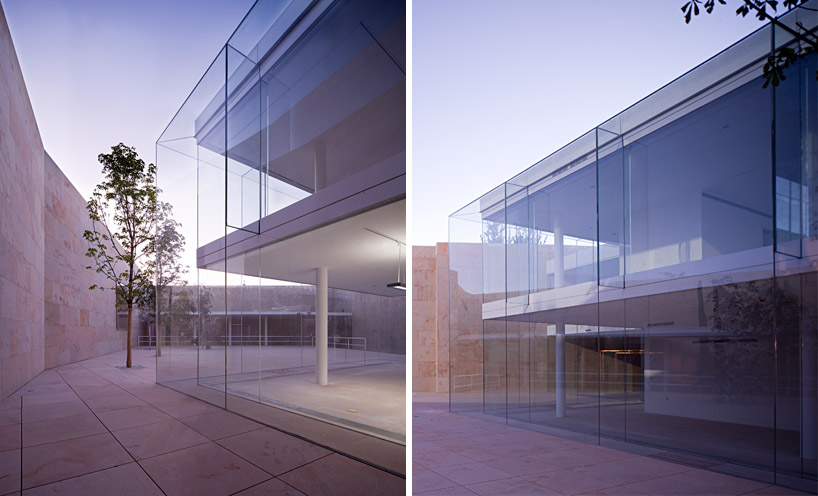 image © javier callejas sevilla
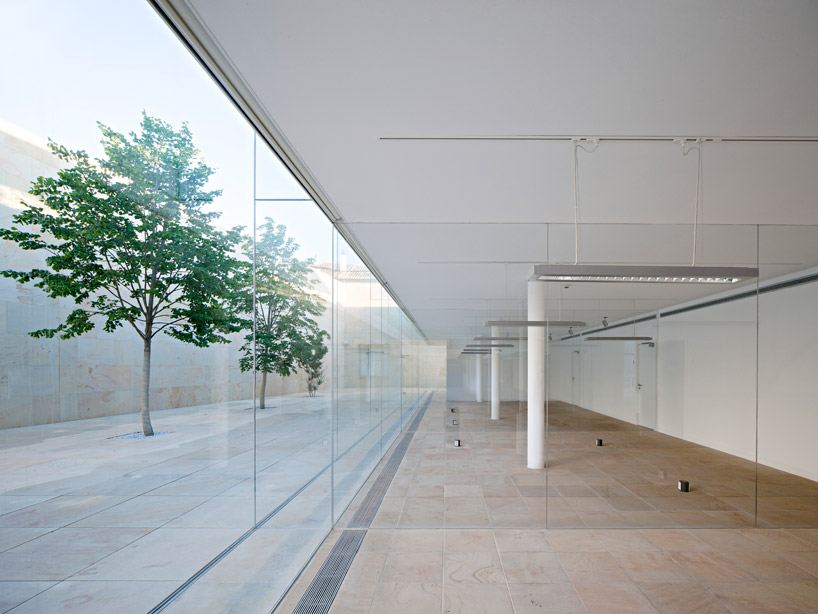 interior offices with transparent partitionsimage © javier callejas sevilla
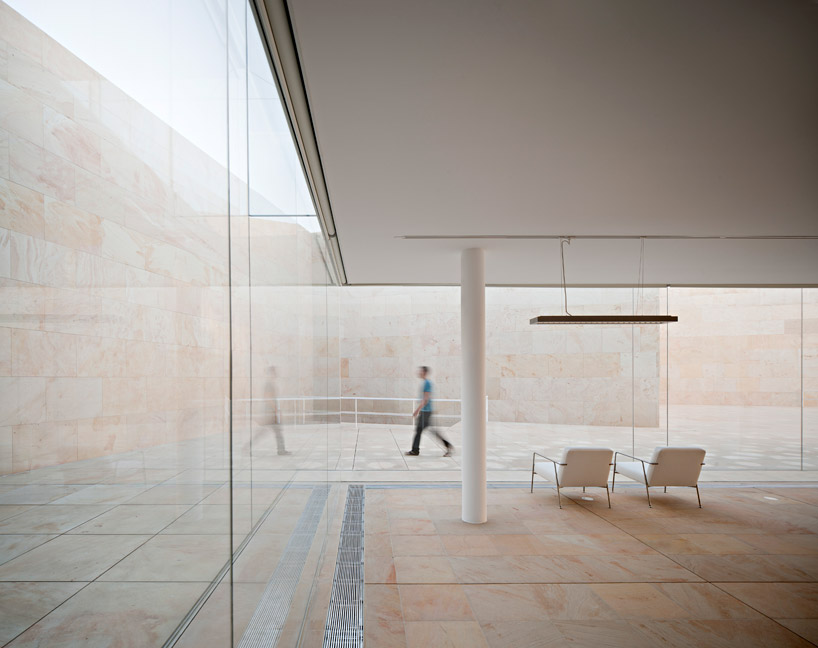 inset columns create an open flexible spaceimage © javier callejas sevilla
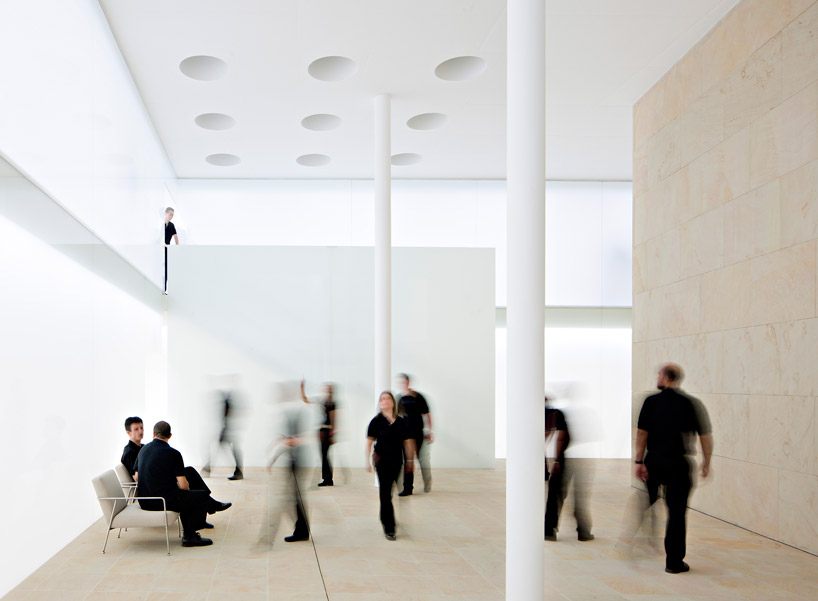 image © javier callejas sevilla
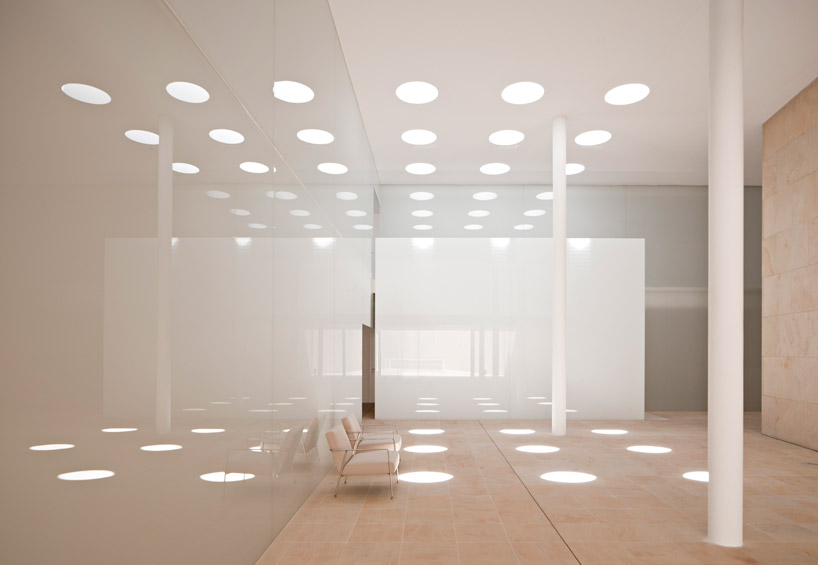 lobbyimage © javier callejas sevilla
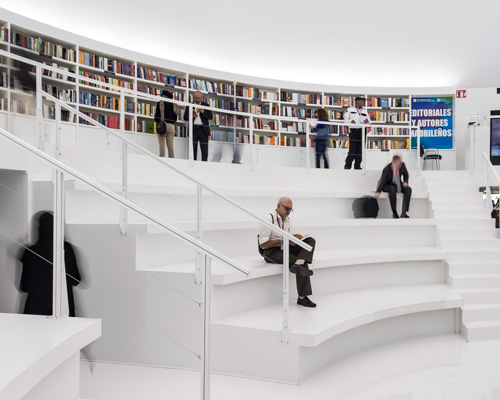
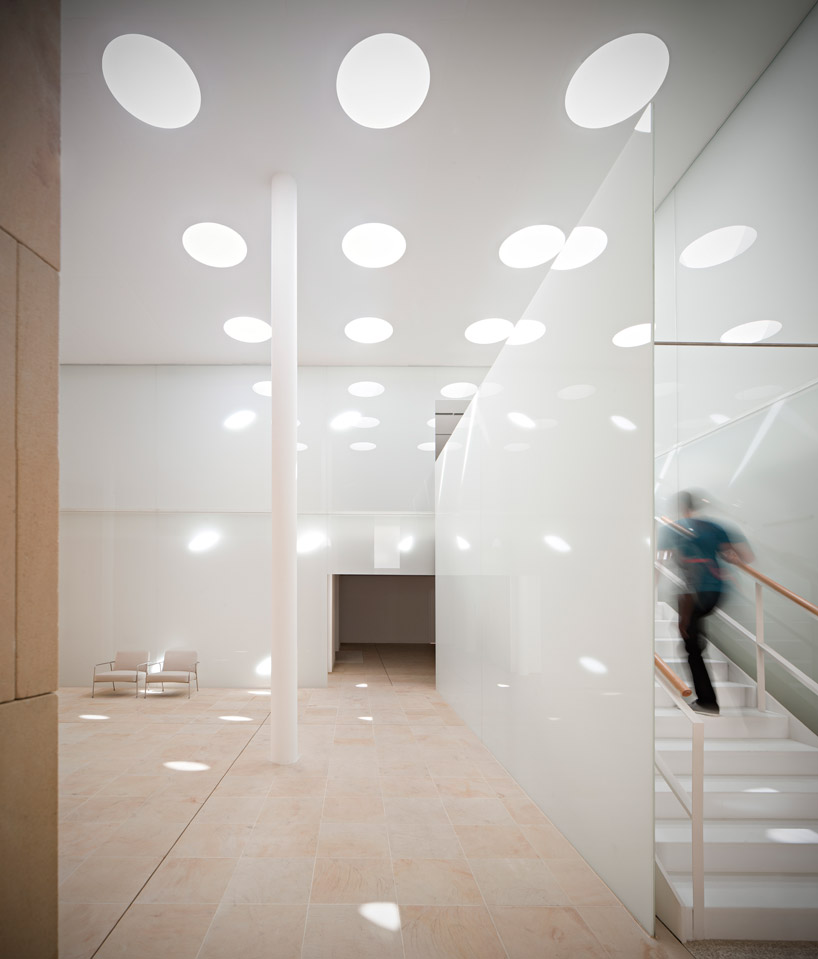 interior common space and stairsimage © javier callejas sevilla
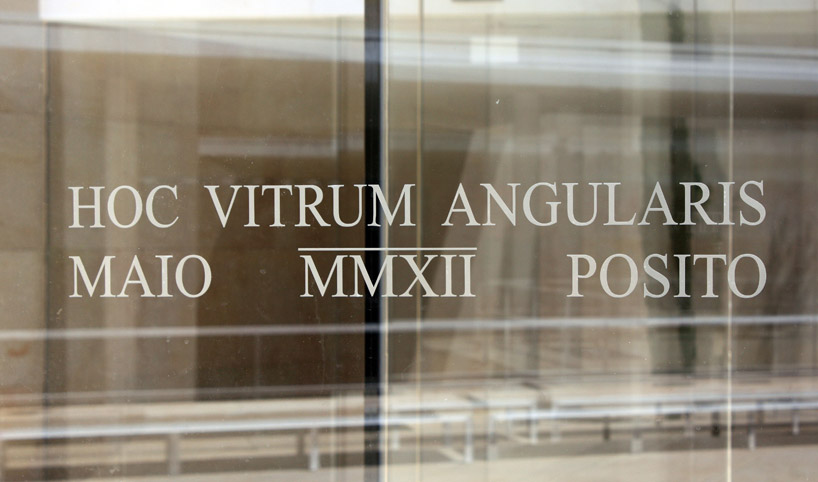 glass inscription: the futureimage © javier callejas sevilla
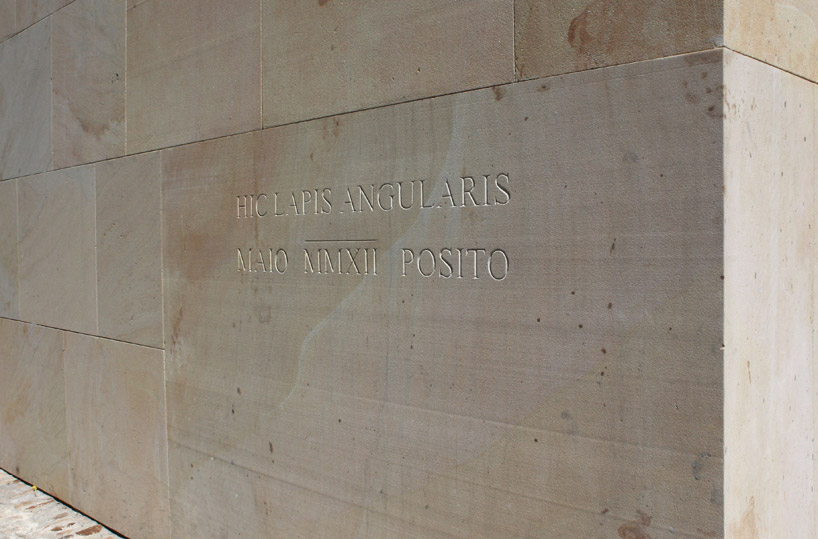 stone inscription: the memoryimage © javier callejas sevilla
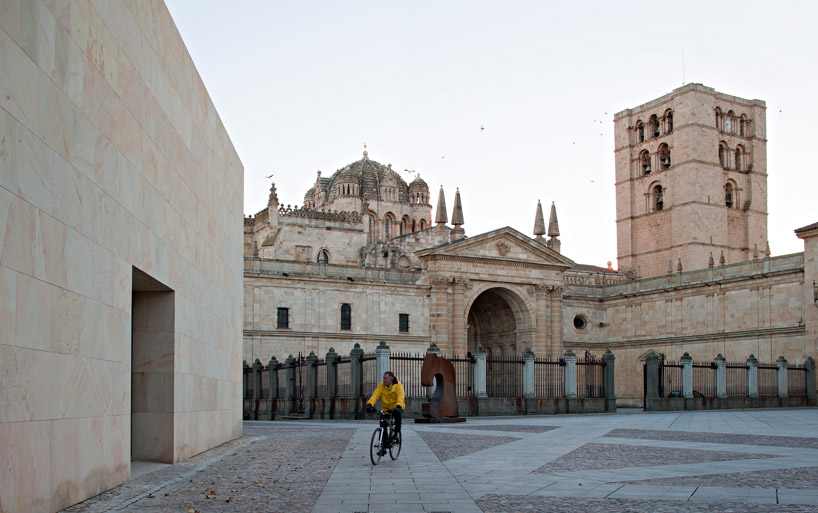 entry at the cathedral squareimage © javier callejas sevilla
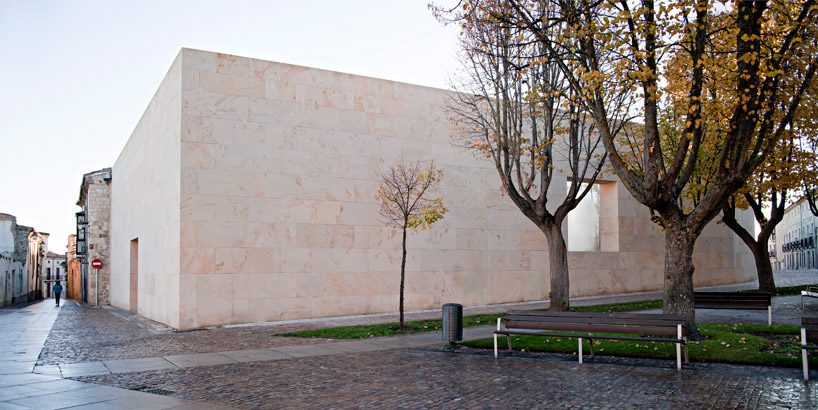 image © javier callejas sevilla
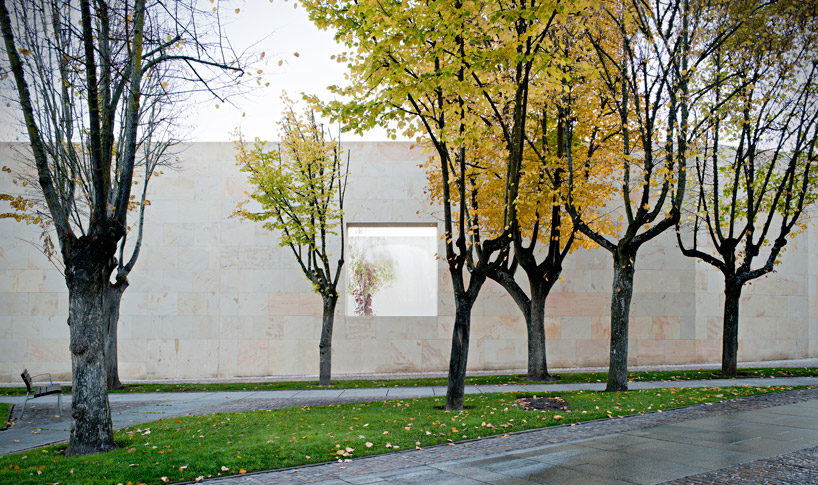 image © javier callejas sevilla
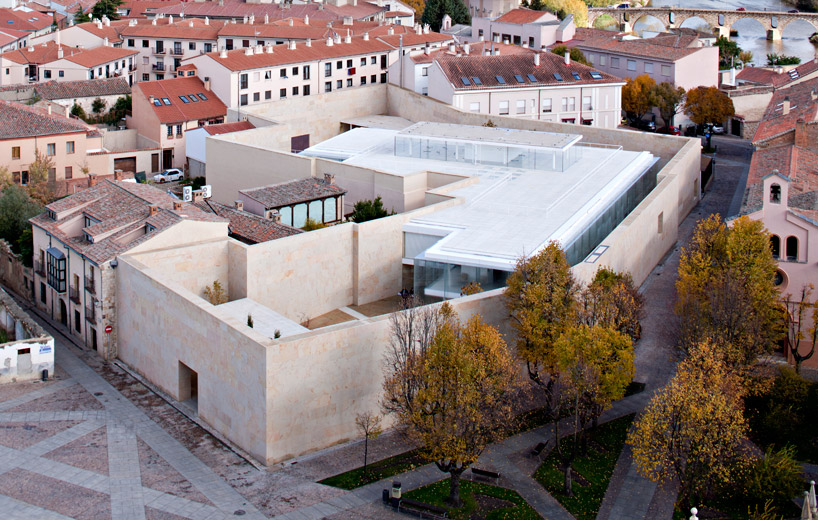 bird’s eye viewimage © javier callejas sevilla
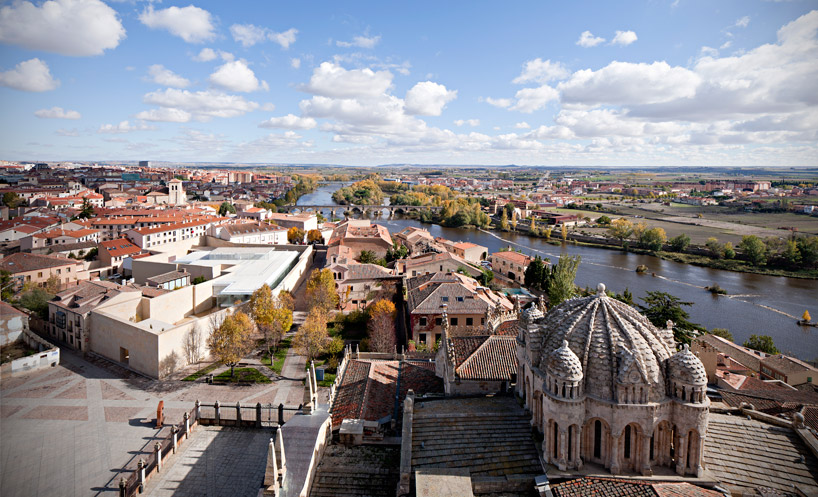 set within the medieval town centerimage © javier callejas sevilla
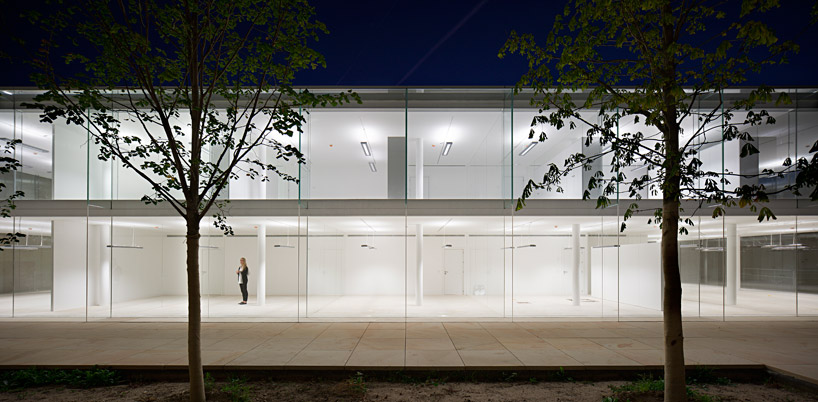 elevation at nightimage © javier callejas sevilla
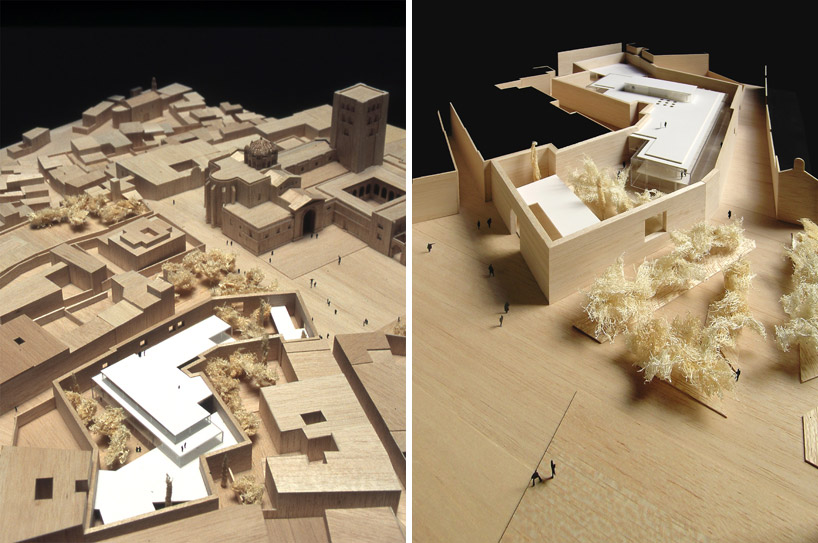 modelimage © alberto campo baeza
 modelimage © alberto campo baezas
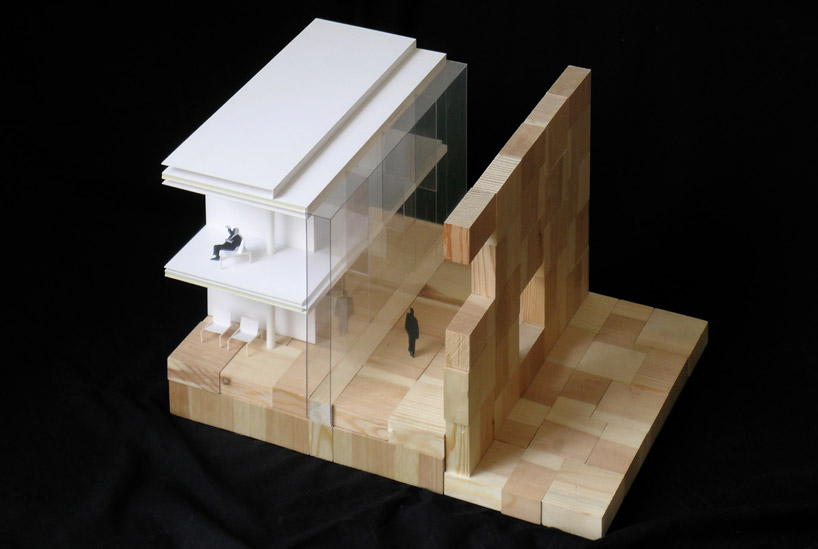 section modelimage © alberto campo baezas
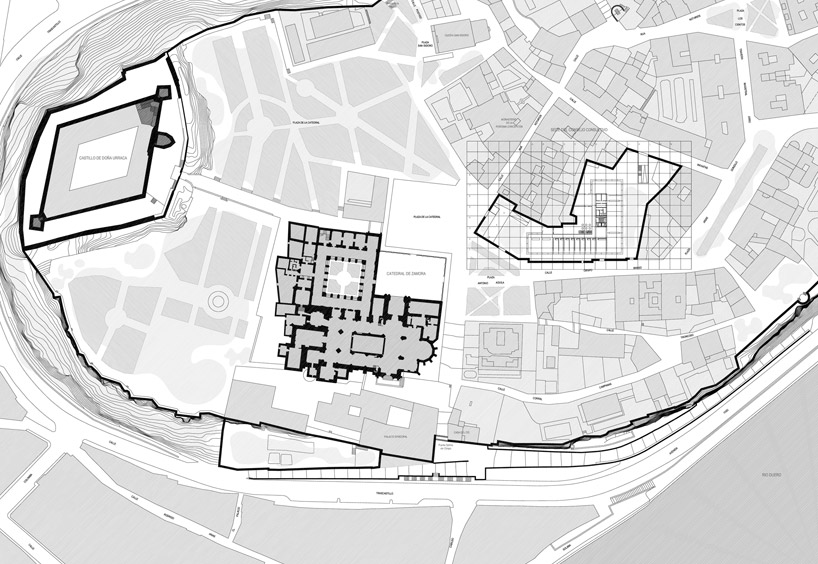 site plan
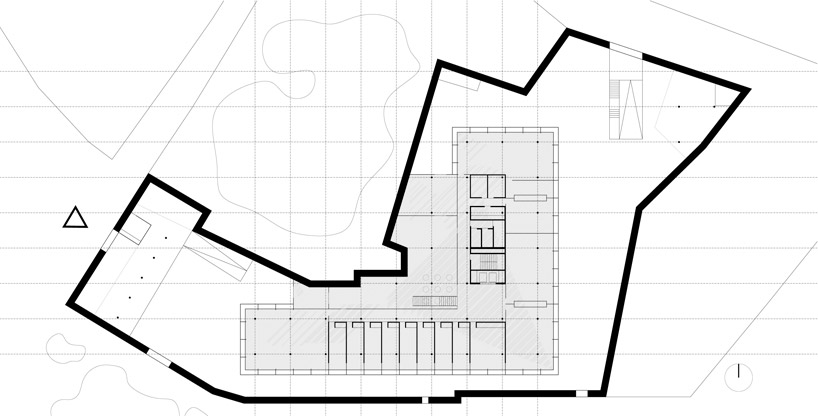 floor plan / level 0
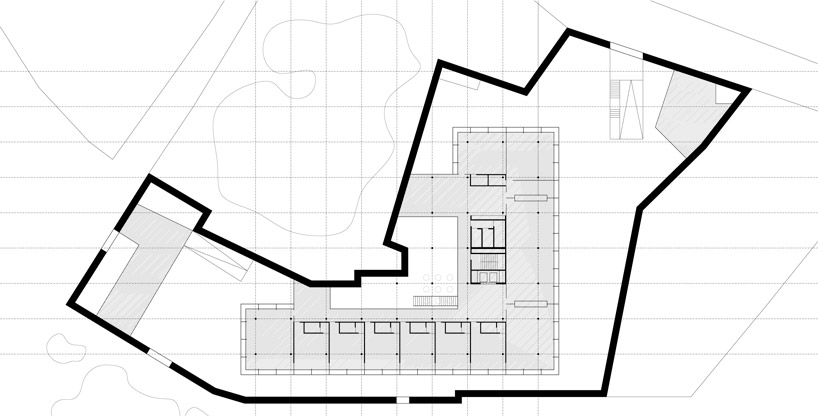 floor plan / level 1
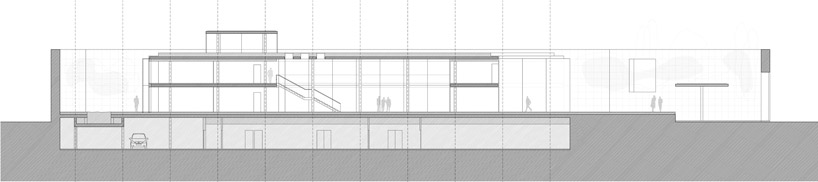 section
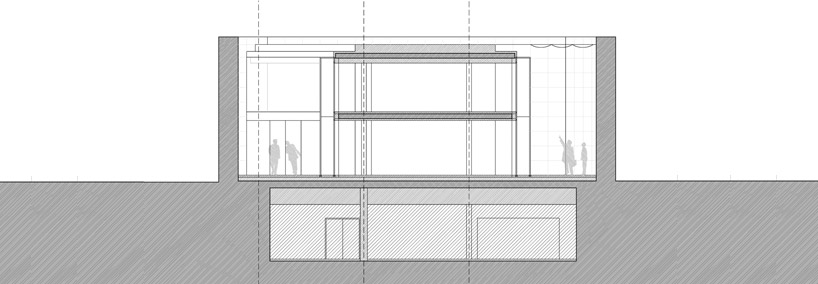 section
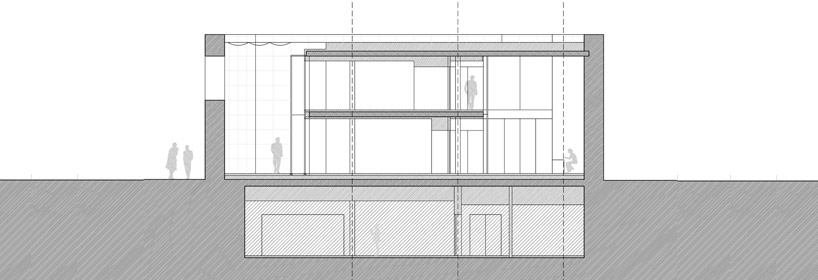 section
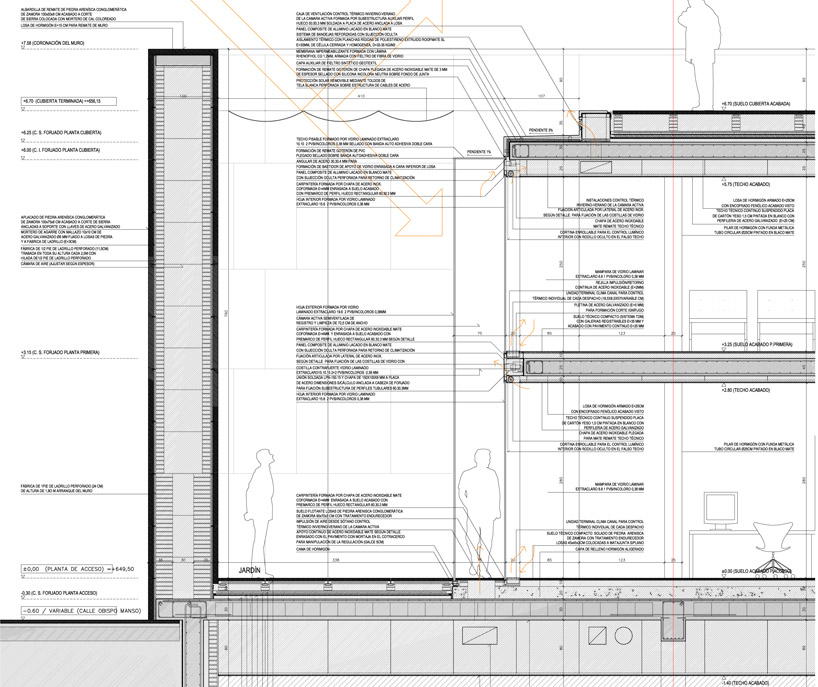 construction detail
project info:
architects: alberto campo baeza, pablo fernández lorenzo, pablo redondo díez, alfonso gonzález gaisán, francisco blanco velascolocation: obispo manso, 1. zamoraclient: junta de castilla y león. consejería de haciendacompetition: 2004project: 2006construction: 2008-2012 area: 12.100 m2architects collaborators: ignacio aguirre lópez, miguel ciria hernándezother collaborators: alejandro cervilla garcía, emilio delgado martos, petter palander, sergio sánchez muñozstructural engineer: eduardo díez – ideeemechanical engineer: úrculo ingenierosquantity surveyor: juan josé bueno crespoglass consultant: josé pablo calvo busellocontractor: ute edificio consejo consultivo: dragados – san gregoriostone work: areniscas de los pinaresglass curtain: proinllerroofing installation: intemperstainless steel work: dacinconcrete paving: argaprefpainted resin paving: rinol rocland suesco, s.l.gypsum board work: zamorana de aislamientos termo-acústicoswood work: hnos. garcía santiago, s.a.elevators: schindlerhvac: atil cobralighting: agosafurnitures: nuar (sellex), dacin, ciprés (formica)gardening: viveros gimeno salamanca s.l.awning/curtains: ladis protección solar s.l.
shop
your own online design shop — no sales commission collected