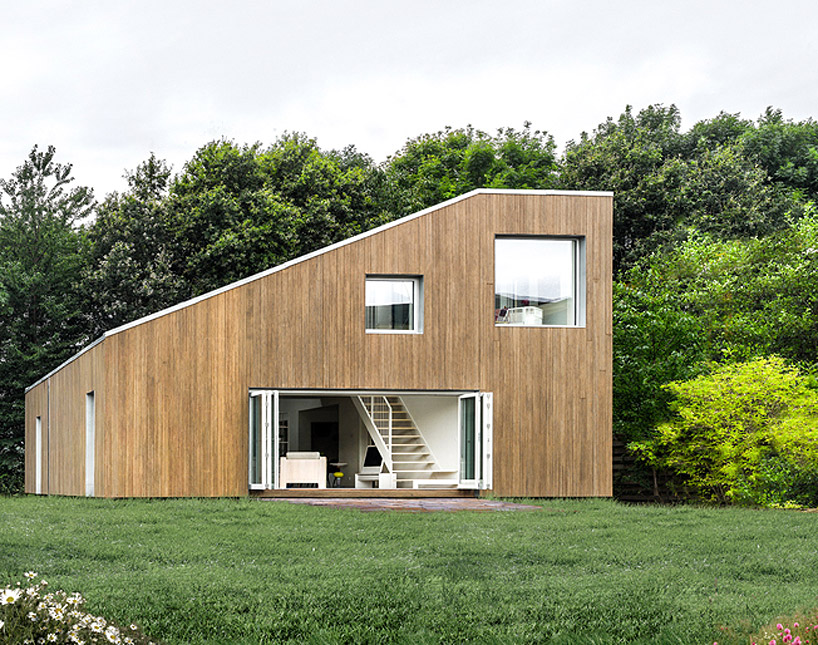
‘WFH house’ by arcgency, wuxi, china images courtesy of arcgency
copenhagen-based arcgency takes to task the enormous percentage of the world’s resources used in the making of architecture. in keeping with a self-imposed policy of ‘resource conscious architecture’ the ‘WFH house’ is an exportable dwelling made up of three stacked shipping containers. the carbon-neutral prefabricated house was underwritten by worldFLEX home, a danish consortium which touts a plethora of modular zero-energy residences. in keeping with changing european energy policy, the architecture is designed to produce more energy than it consumes through the use of upcycled shipping containers as a steel frame, a sustainable bamboo facade, a rainwater collection system, solar cell-clad green roof and permeable paving. skylights and optimal orientation also work with the flexible structure to adapt to sites worldwide, including earthquake-prone areas. the modular units allow for a variety of typologies, from the individual villas like the WFH house to multi-storey townhouses. for the first time, the sustainable concept of prefabrication meets a housing system that exceeds the demands of ‘active house’, the international environmental building standard. helped by a short construction period, the dismountable home can follow the client in true cradle-to-cradle fashion. programmatically, the project is organized around a mixed-use, double-height space containing the kitchen, living and dining room. the generously lit area is punctured by glazed doors, inviting the greenery into the minimalist geometry of the building. while infinitely configurable, the basic form of the structure consists of two rows of 40 foot high standard modules, subdivided into bedrooms and a landing on the mezzanine floor. the result is a home of startling self-containment and a testament to the potential of architecture to seamlessly weave into its immediate and global context.
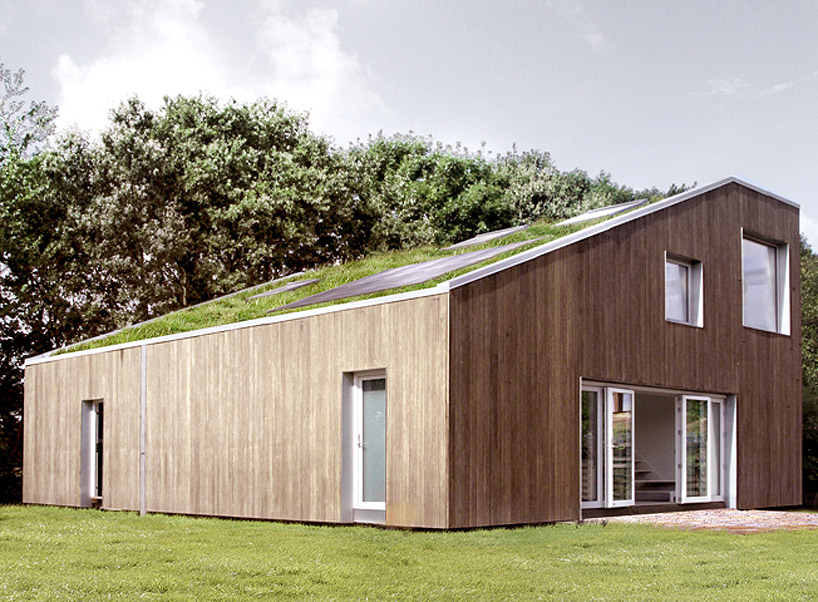
a view of the completed house on site in china
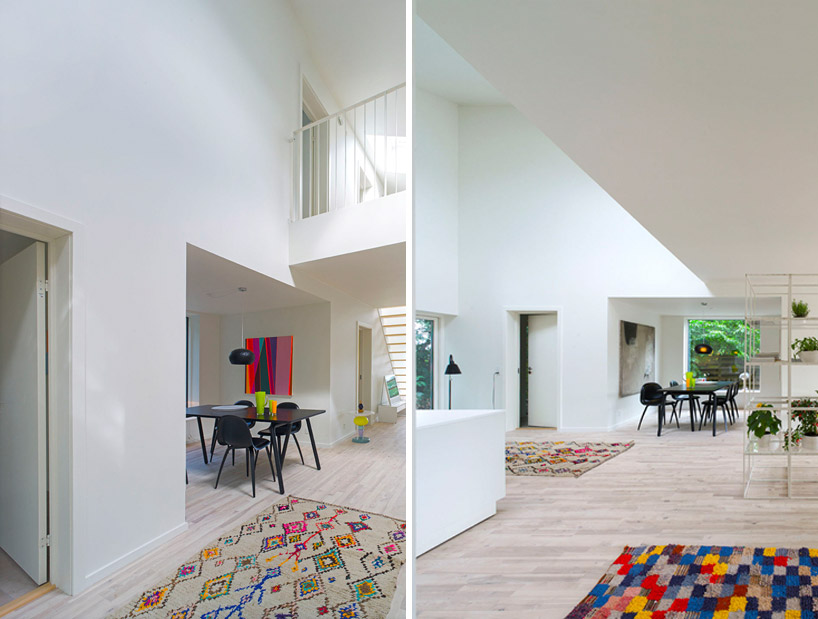
dubbed the ‘FLEX space’ the double height ground level allows access to multiple parts of the program
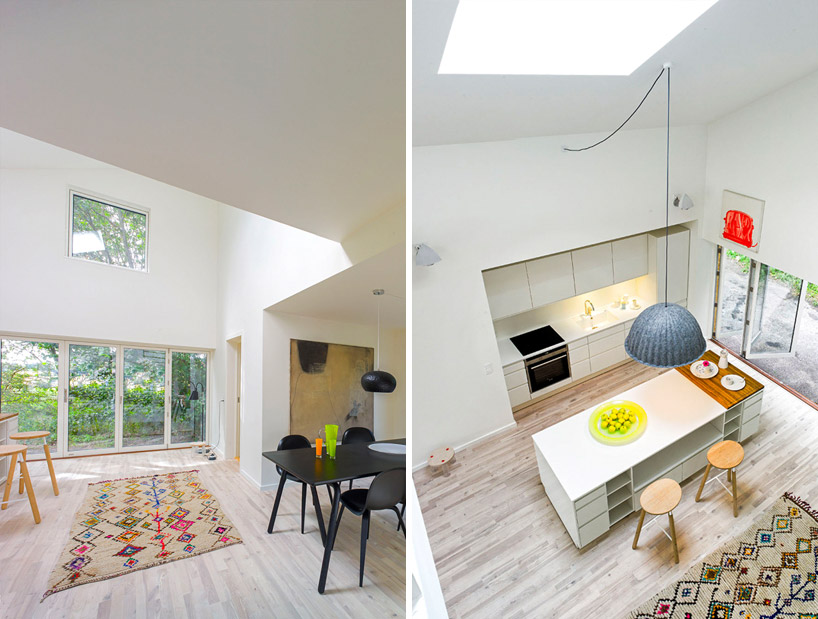
(left): glazing allows outdoor views between the kitchen and dining areas(right): a view of the kitchen island, fitted with a wired module for appliances
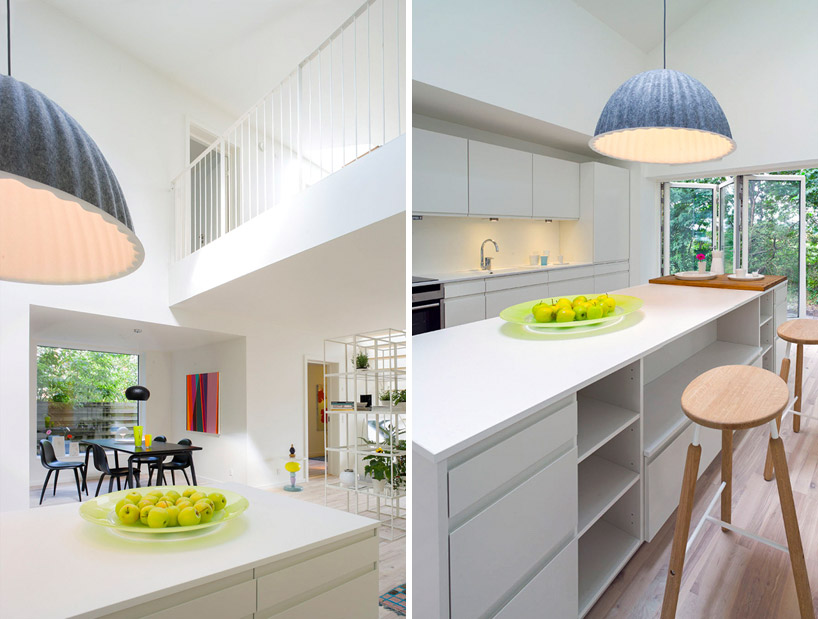
(left): view of the open dining space from the kitchen (right): the kitchen allows for casual dining
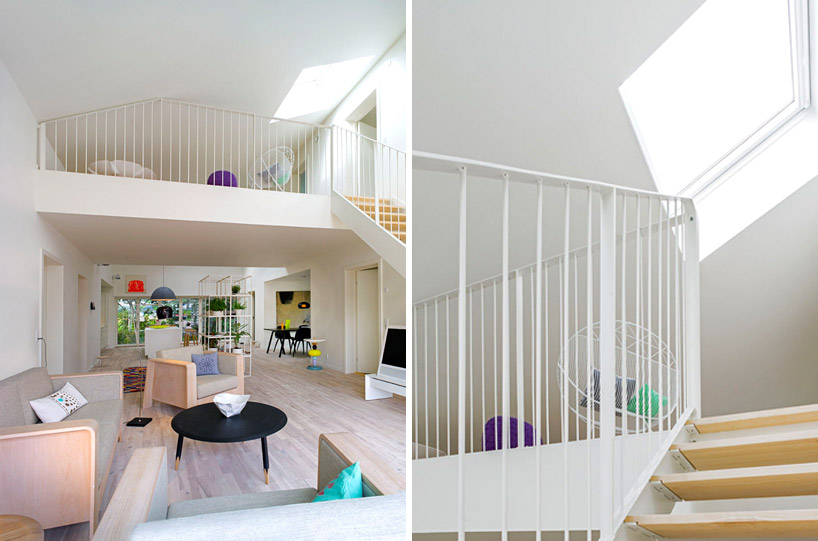
the landing retreats from the living area and can be used as an additional space for play and relaxation
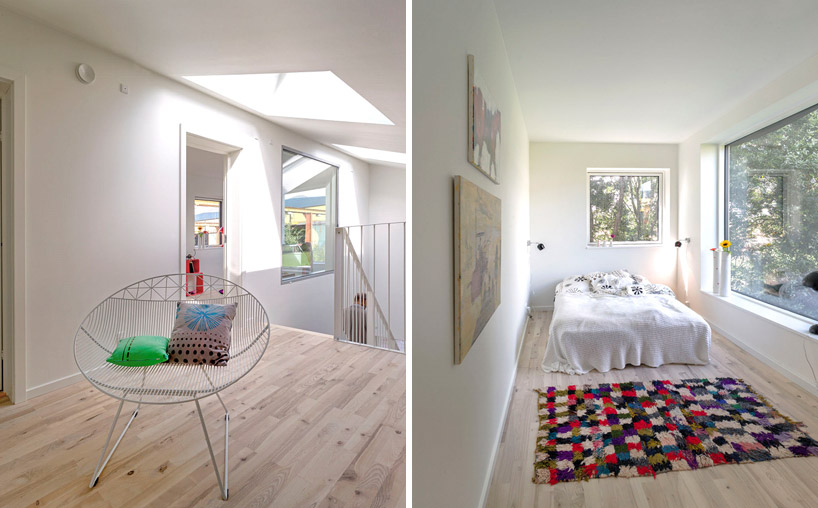
(left): skylights allow ample interior lighting(right): the bedroom are 15 square meters– half the area of a shipping container
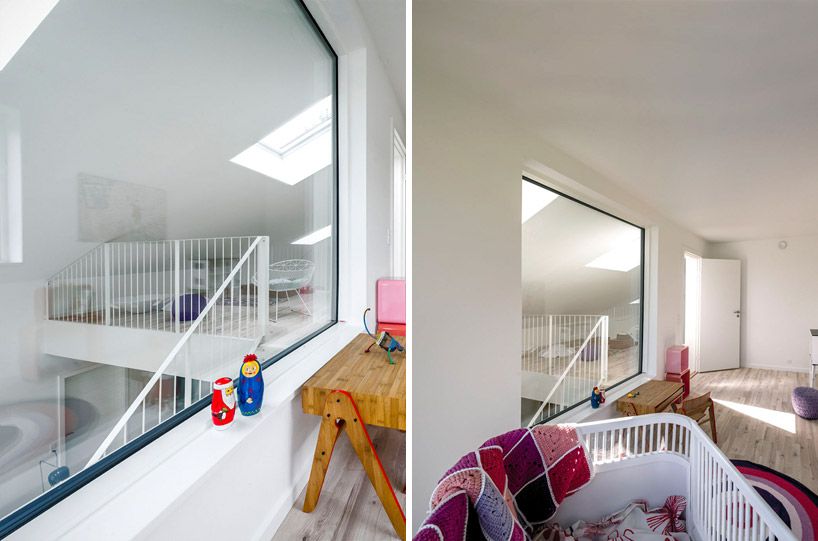
interior views from the children’s room


pre-planned apertures are cut into the shipping containers before they are laid out on site
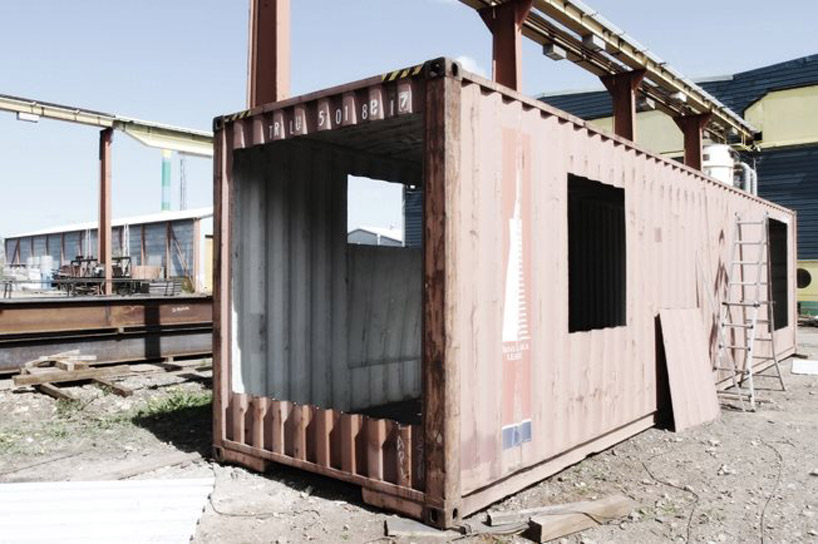
average ISO containers are the primary steel framing for the structure
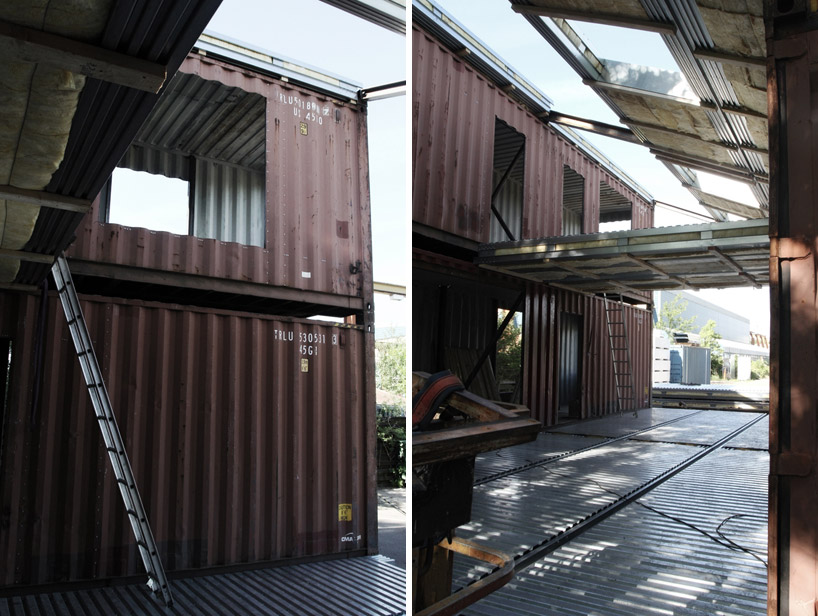
stacked modules are fitted with insulation
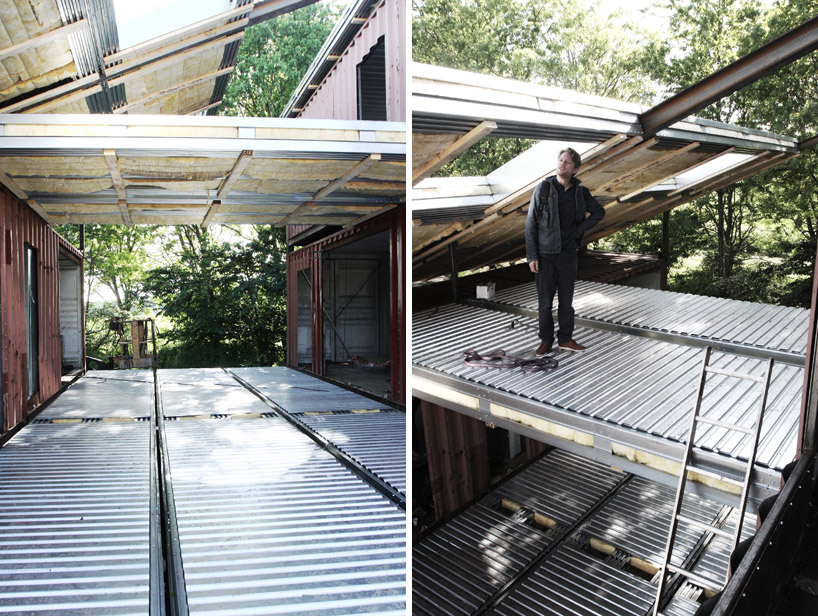
the modules can be arranged to fit a client’s needs, this case a simple lofted level
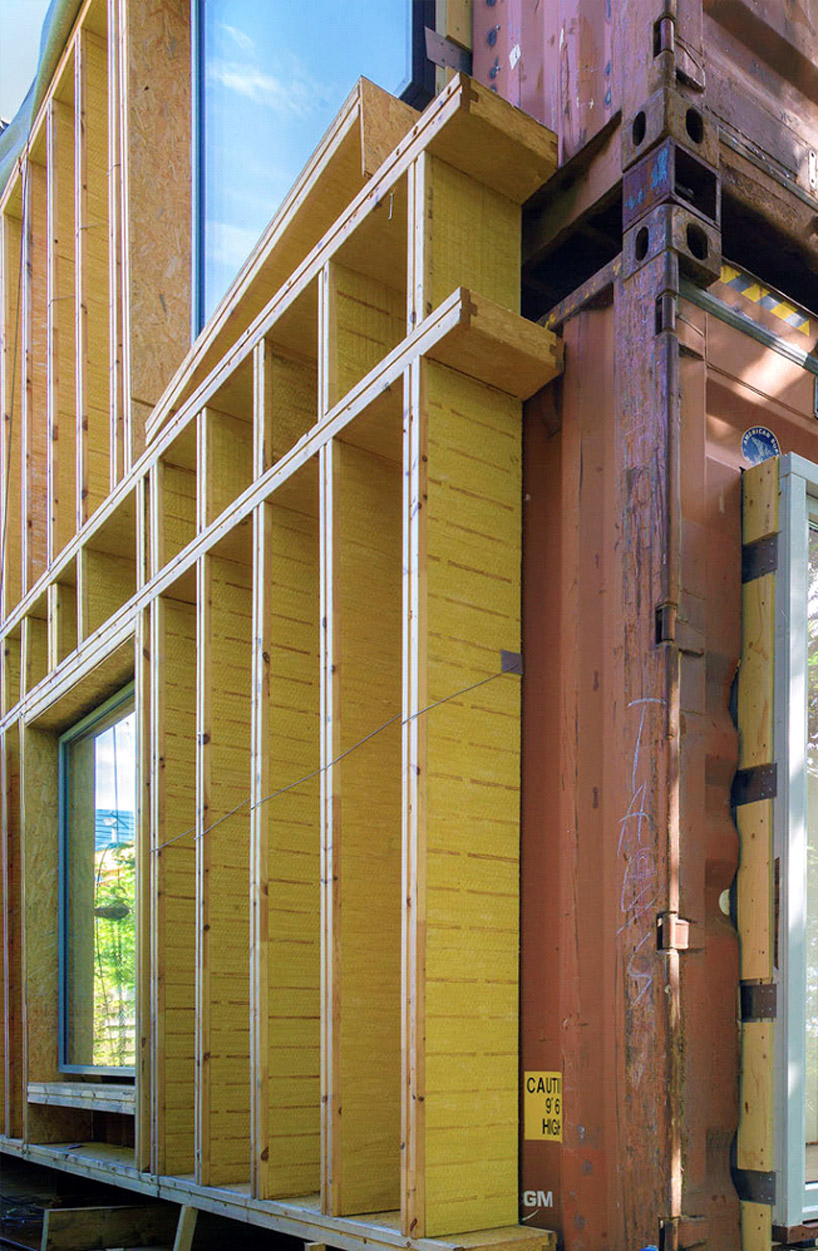
light-wood framing techniques help the steel transcend its prescribed dimensions

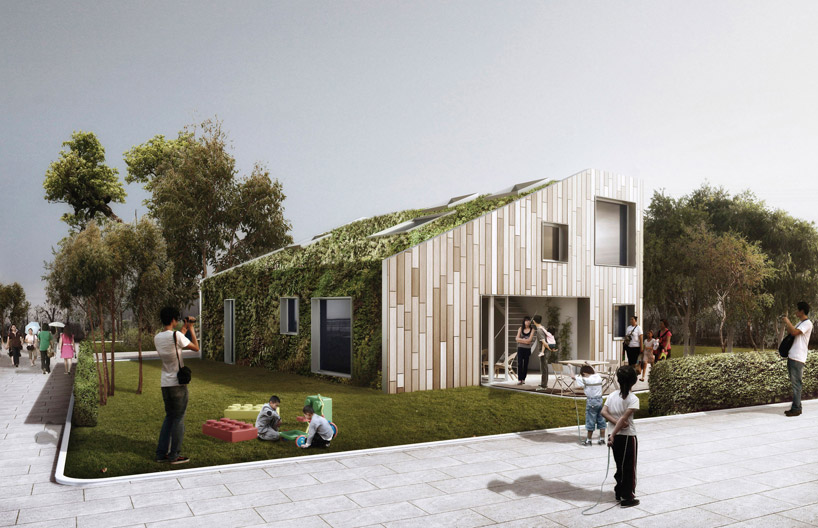
rendering of a sample houseimage courtesy of worldFLEXhome
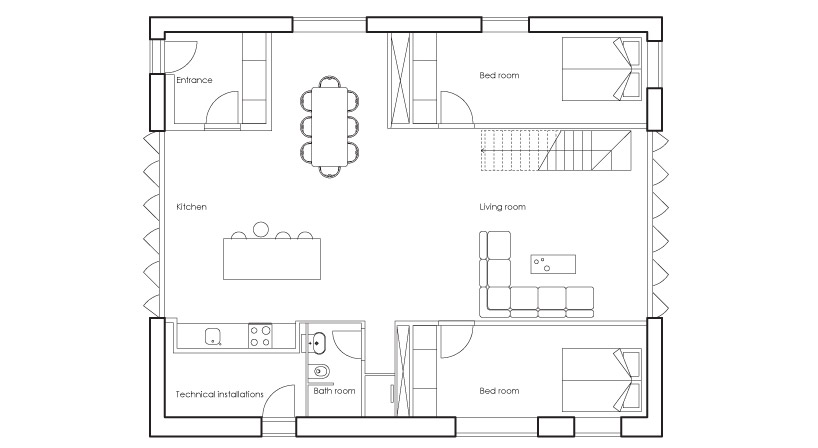
plan level 0
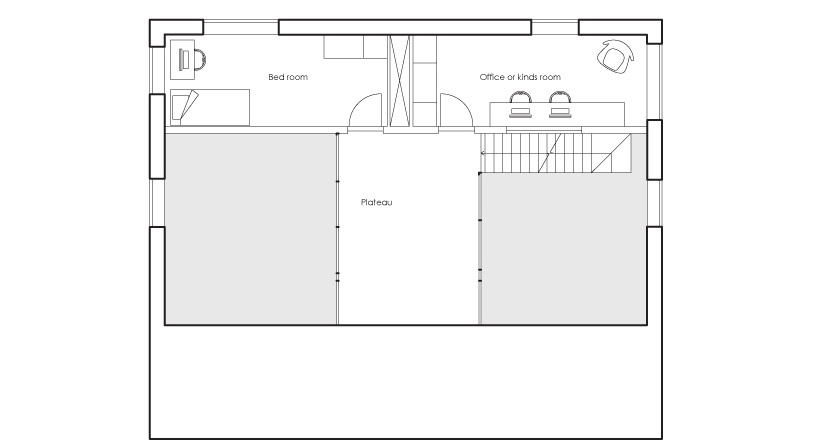
plan mezzanine level

‘WFH house’ by arcgency, wuxi, china

elevation 1

elevation 2

elevation 3
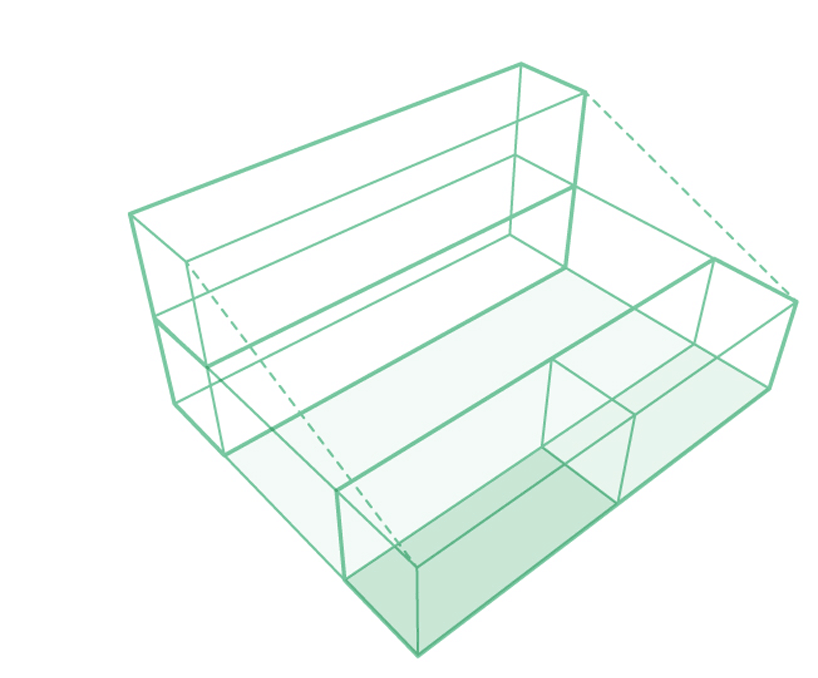
configuration diagram

typology diagram- villa to multi-storey townhouses
ARCGENCY STUDIO (8)
 Jan 05, 2022
 Nov 19, 2020
 Aug 01, 2017
 May 27, 2015
 Jan 07, 2015
SHIPPING CONTAINER ARCHITECTURE (196)
 Apr 04, 2024
 Mar 31, 2024
 Nov 30, 2023
 Sep 12, 2023
 Nov 04, 2022
PRODUCT LIBRARY
 Apr 02, 2024
 Mar 31, 2024
 Mar 21, 2024
 Mar 20, 2024