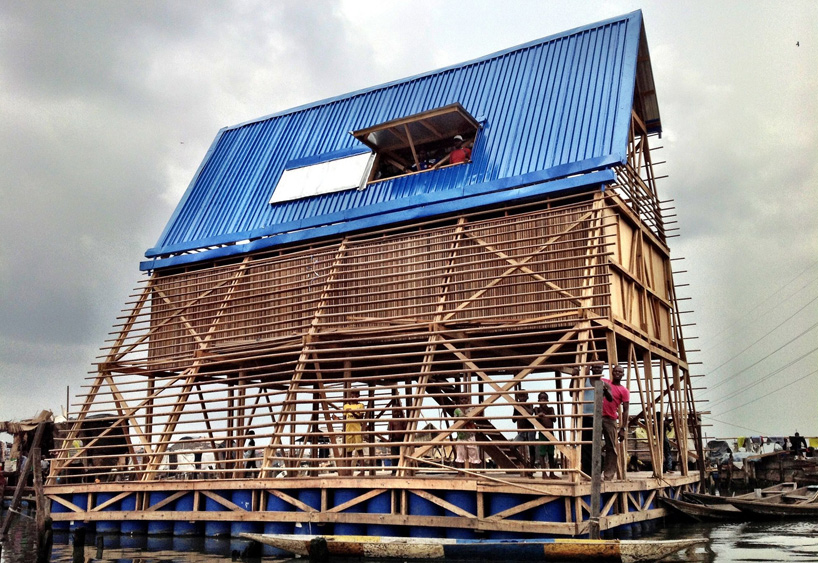
NLÉ architects presents makoko floating school
the buoyant school is the first part to a three-phase plan that will create an entirely floating community in response to flood zone solutions around the world.
prefer designboom on google[FEATURED]
in a geographically changing world where water levels are steadily rising, many coastal and waterfront communities are finding themselves inundated with the problem of adaptive housing solutions that withstand swelling tides and swift currents. flood-proof schemes are floating around most commonly implementing various stilt systems to elevate the structure above predetermined water lines, but even this solution becomes static at a certain point. NLÉ architects has been working on a three-phase plan for the waterfront community of makoko in lagos, nigeria that will transform the already buoyant city into a contemporary community on the water’s surface with independent floating structures made of local materials applied in new ways.
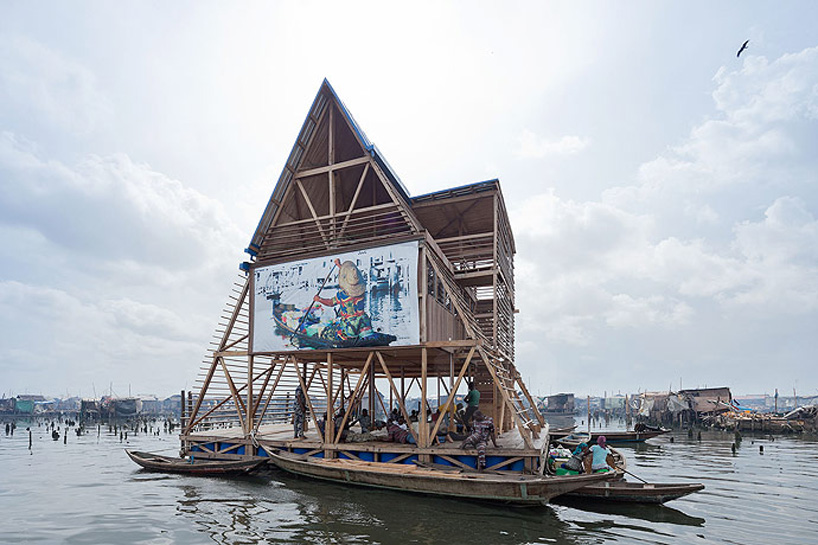
the timber structure on the lagos, nigeria waterfront
image © iwan baan | main image © NLÉ architects
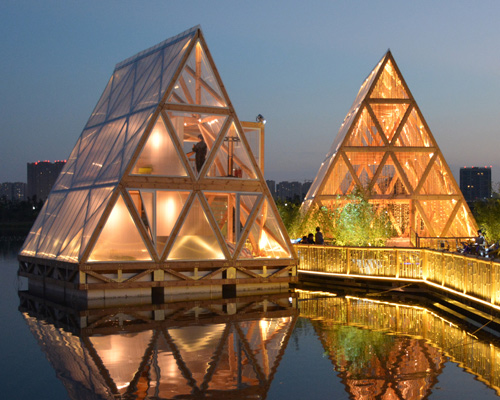
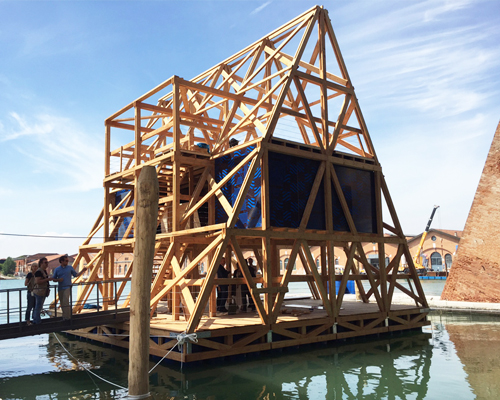
phase one of the project involves the realization of the ‘makoko floating school,’ a triangular form in section constructed with a parallel series of timber A-frames on a platform supported by emptied blue barrels. the three-storey structure contains classrooms on the middle level in enclosed volumes flanked by public green space and playground below, and an additional open-air rooftop classroom above. rooftop PV cells on the roof collect solar energy, coupled with water catchment systems make the dynamic educational facility partially self sustainable. slender wooden slats create a shading device along the outer envelope along with well ventilated spaces to maintain a comfortable interior environment.
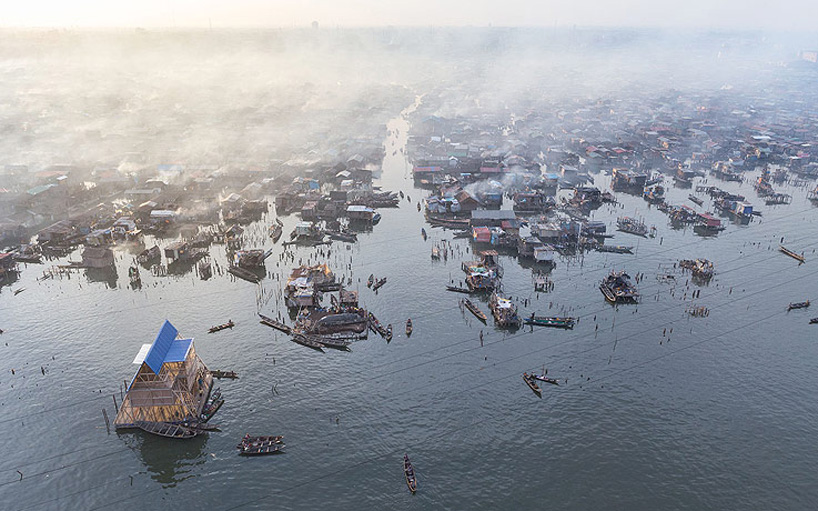
an aerial view of the floating school
image © iwan baan
phase two includes the construction of floating housing units that can be interlocked or float independently. following the same aesthetic and functional principles as the school, the houses will also contain a state-of-the-art device designed by japanese company air danshin systems inc that detects certain movements (such as earthquake tremors) and activated a compressor that pumps air into a chamber below the structure so that the dwellings may navigate safely over a flood plain. the final phase will see the creation of an entire floating community fully equipped to deal with flooding problems while maintaining an improved quality of life. scheduled for completion for the end of 2014, the master plan is expected to mark a new wave in resilient architecture in high-water zones.
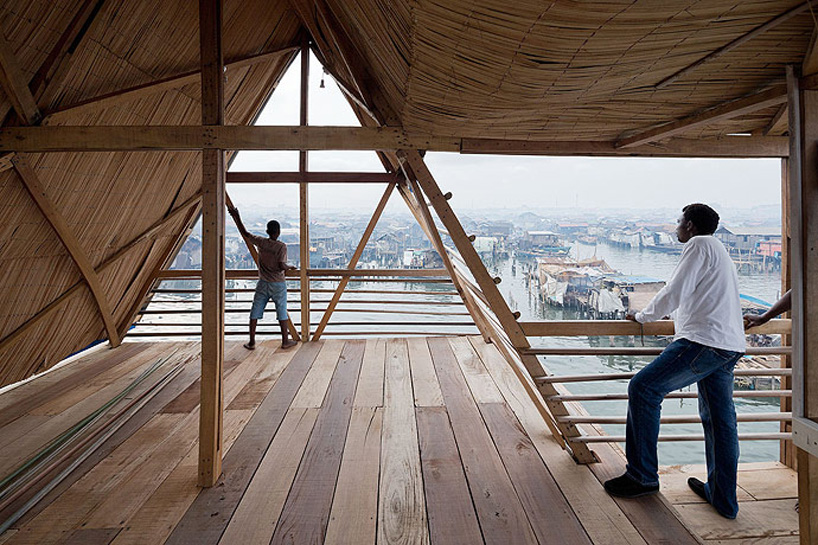
lookout from the interior
image © iwan baan
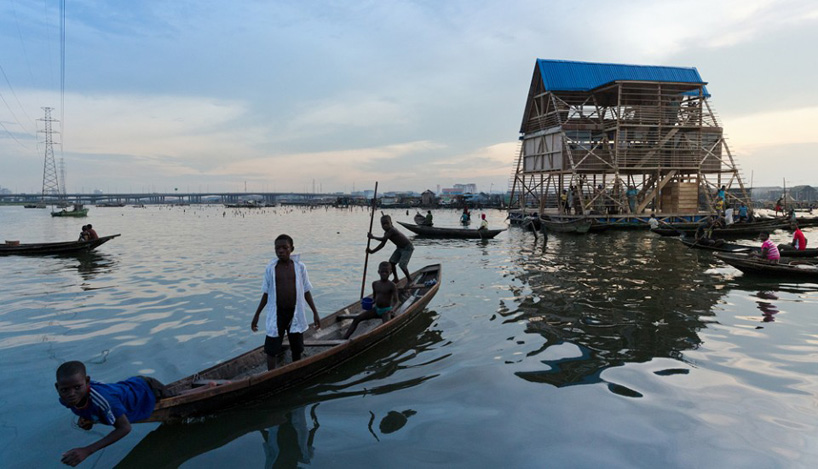
‘makoko floating school’ in its lagos, nigeria waterfront context
image © NLÉ architects
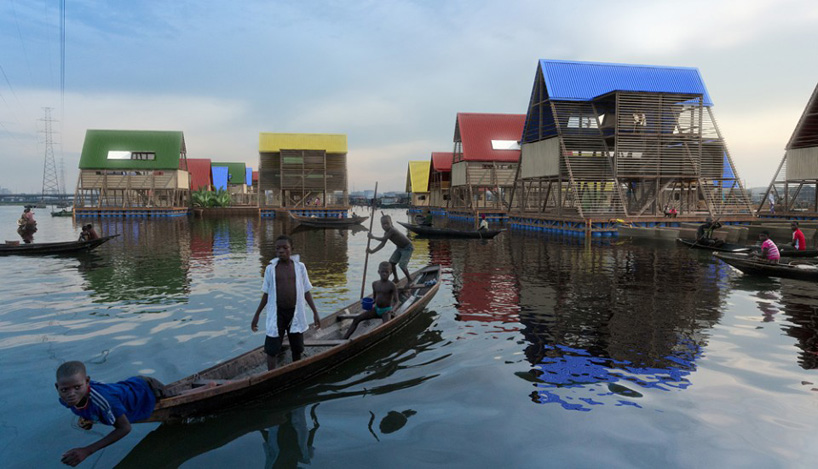
rendering of the project’s potential expansion
image © NLÉ architects
kunlé adeyemi of NLÉ architects discuses the ‘makoko floating school’ project
video courtesy of daryl mulvihill
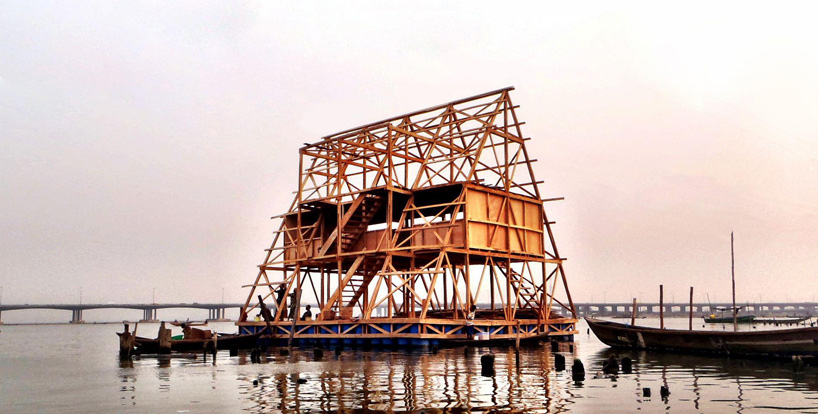
the school before roof construction
image © NLÉ architects
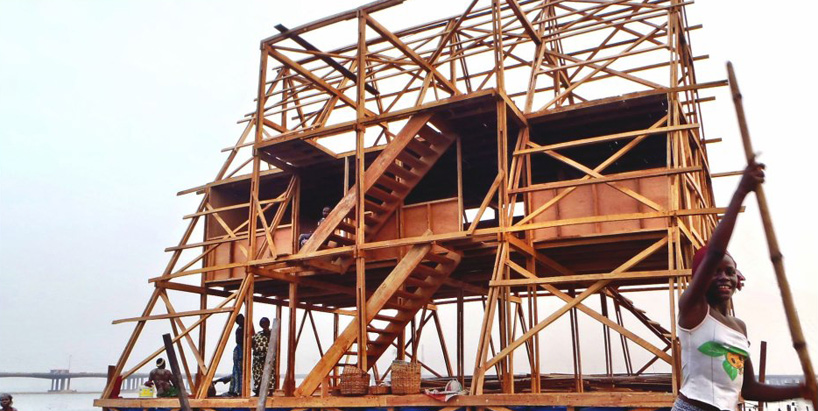 classroom construction
image © NLÉ architects
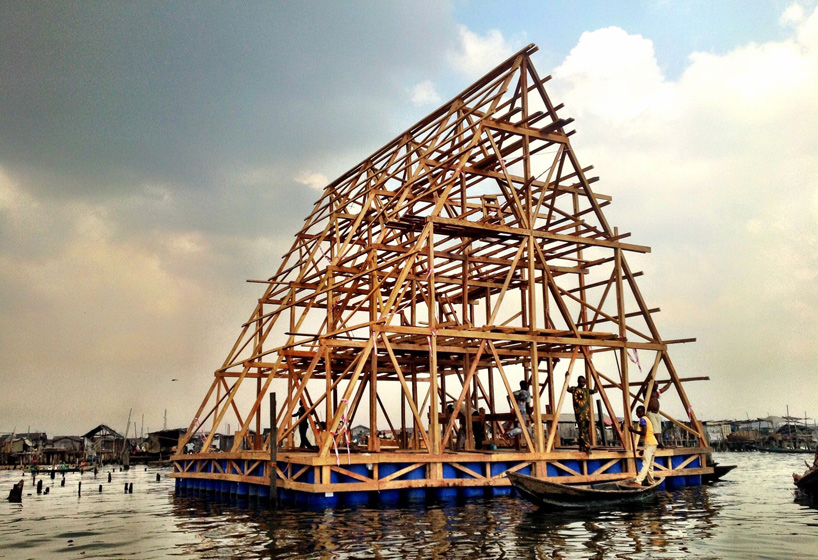 primary structural frame
image © NLÉ architects
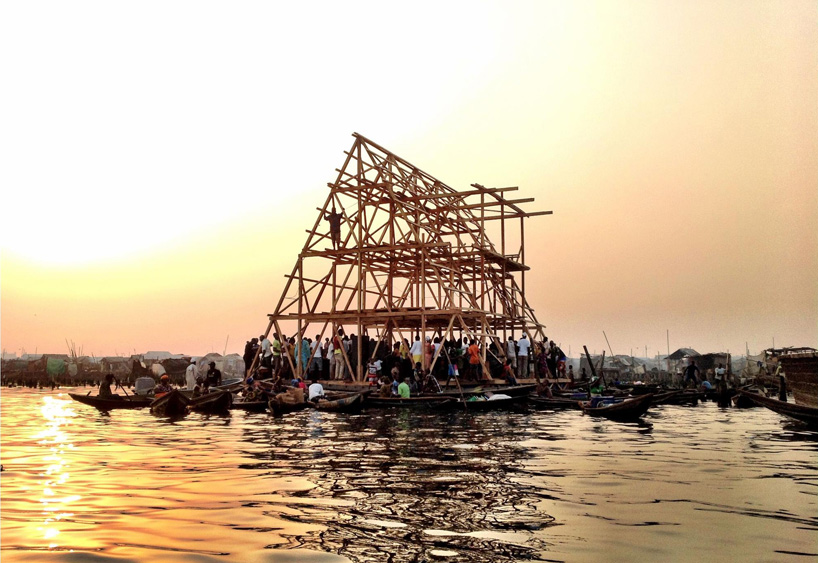 community involvement in construction
image © NLÉ architects
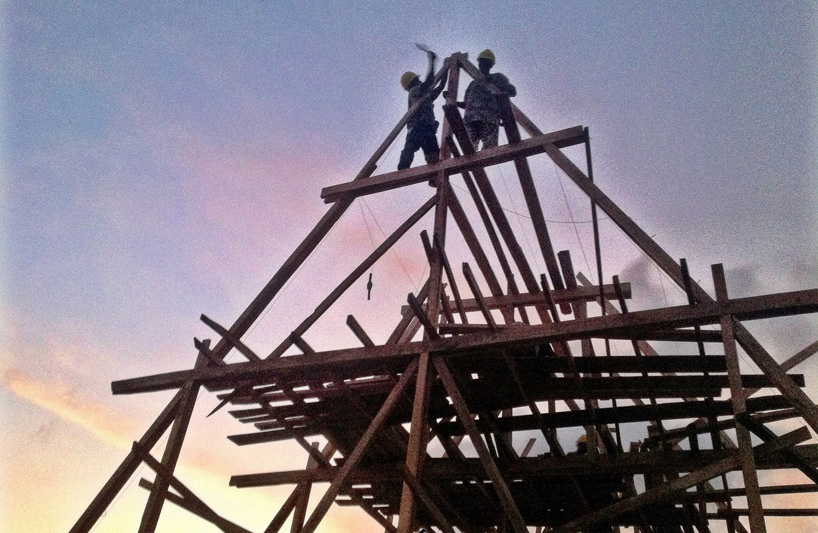 local labor and materials
image © NLÉ architects
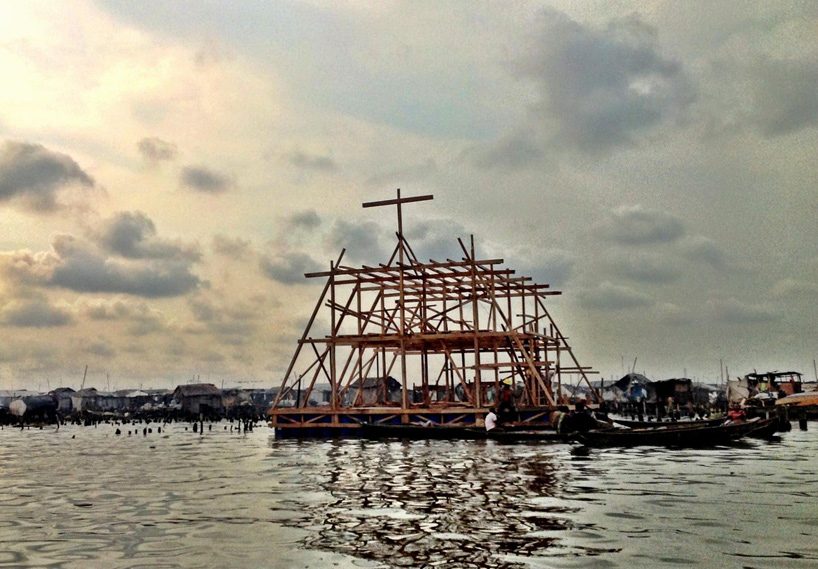 image © NLÉ architects
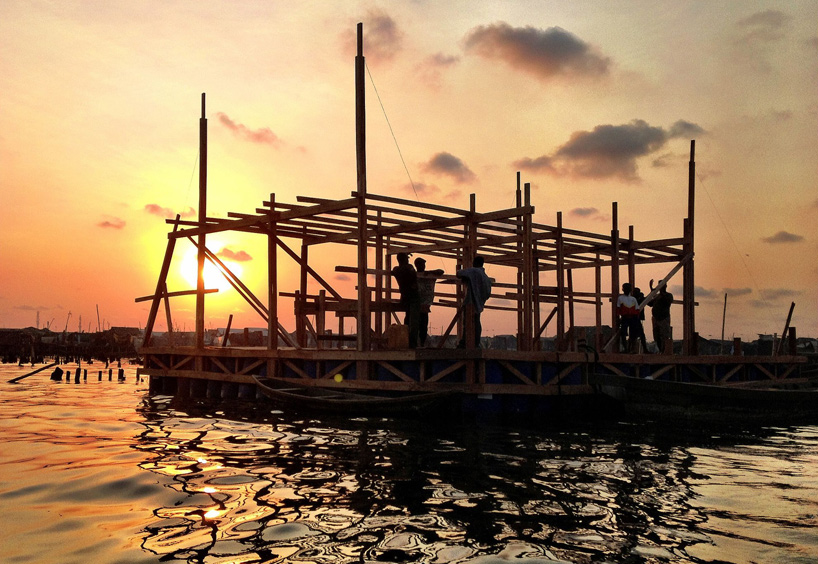 building the first level
image © NLÉ architects
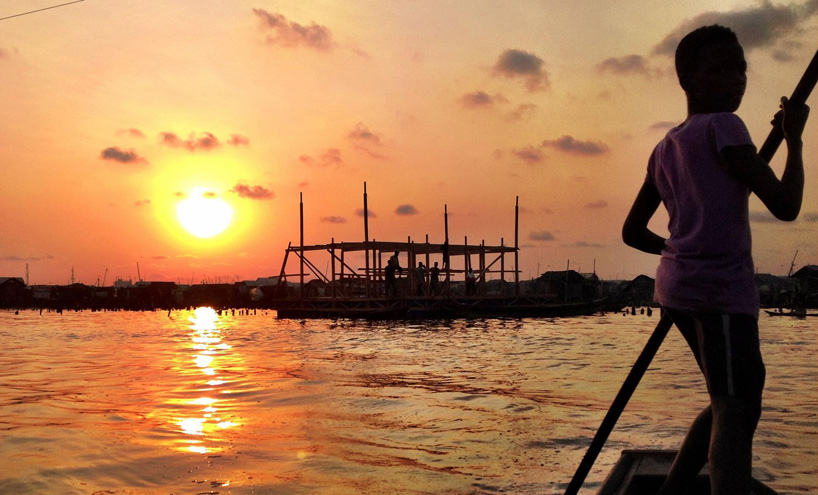 image © NLÉ architects
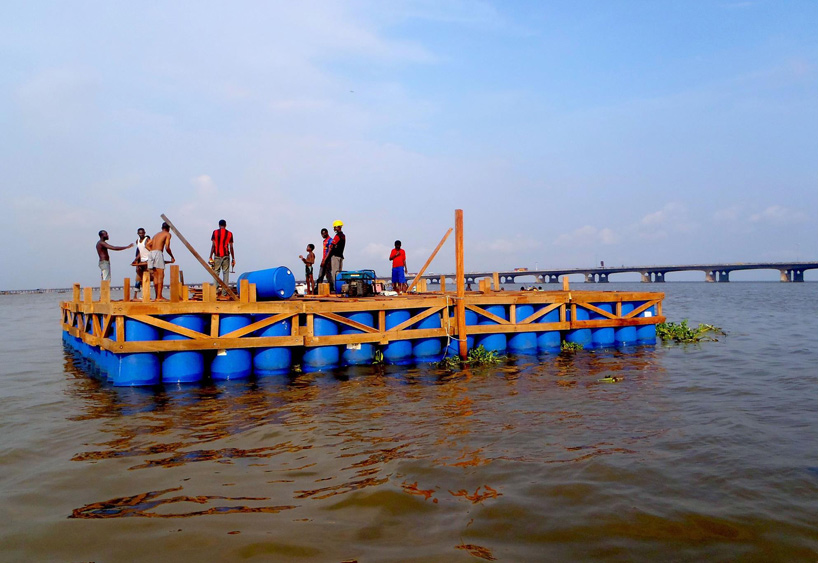 completed floating foundation
image © NLÉ architects
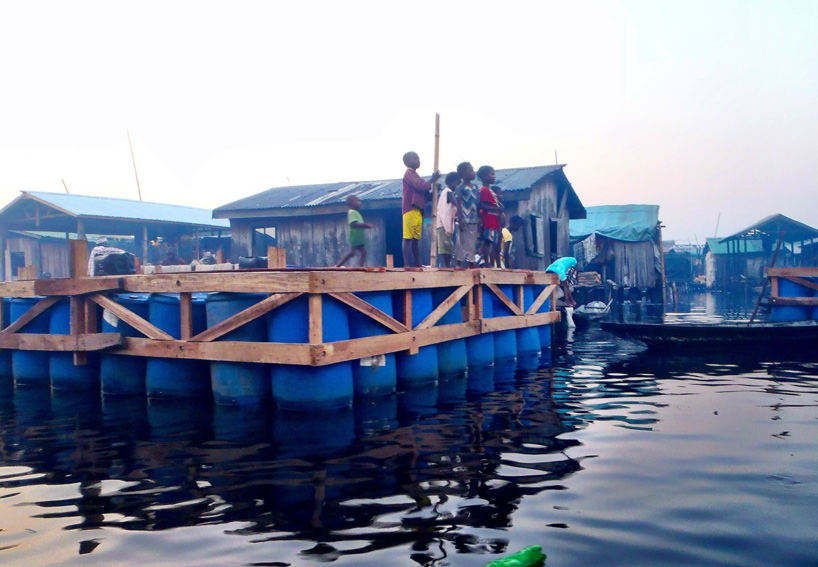 image © NLÉ architects
 construction of floating base prototype
image © NLÉ architects
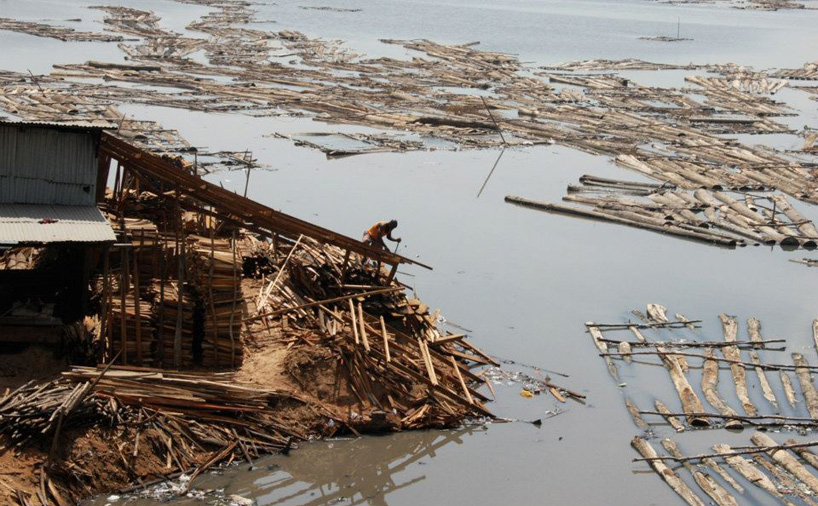 acquisition of local material
image © NLÉ architects
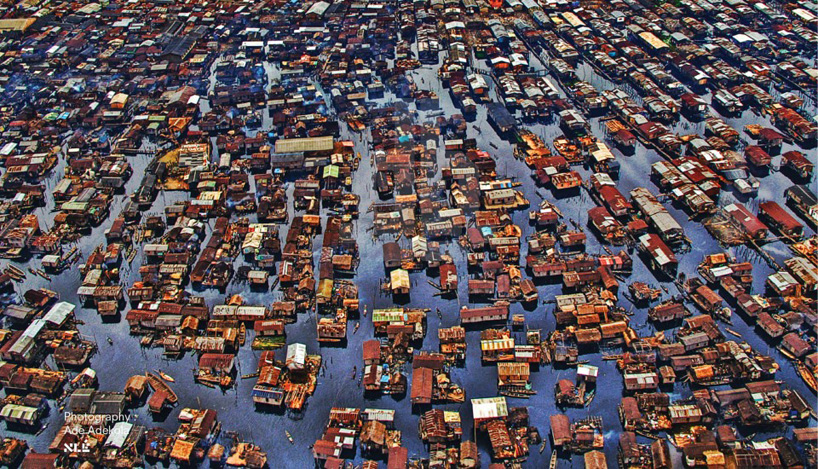 aerial view of the waterfront community in lagos
image © NLÉ architects
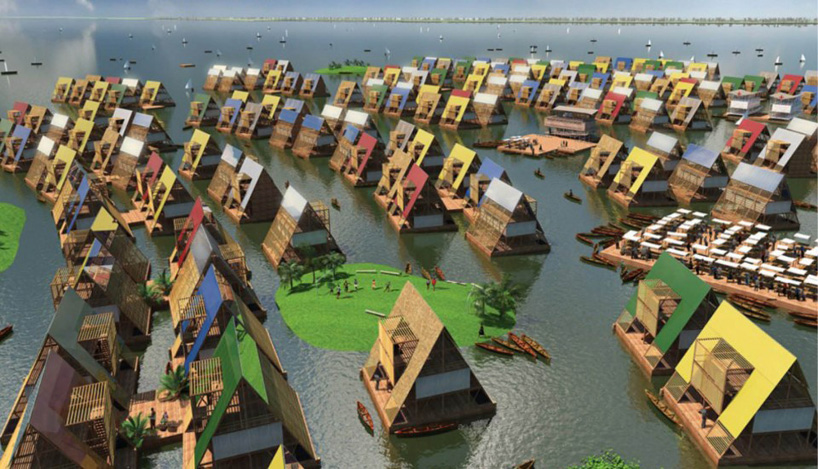 phase 2 plan
image © NLÉ architects
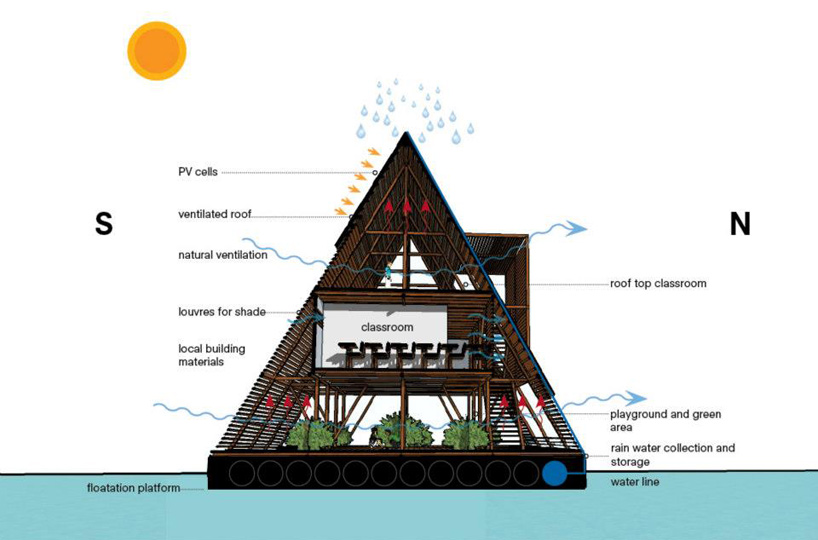 sustainable strategies
image © NLÉ architects
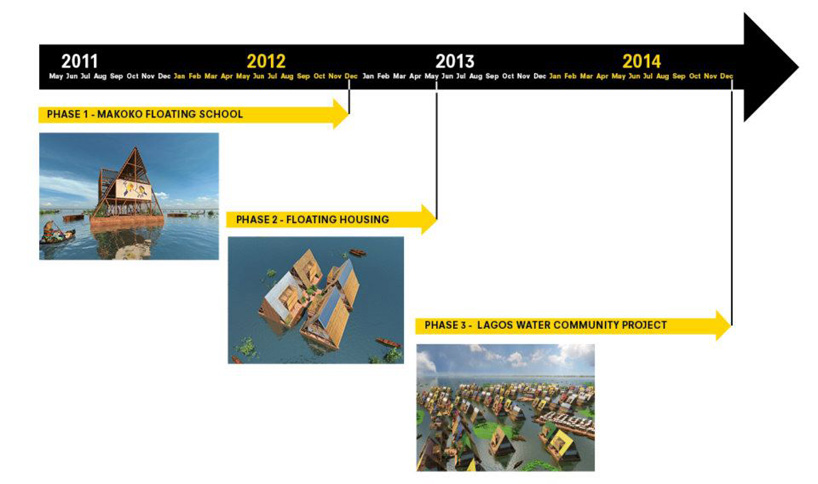 master plan diagram
image © NLÉ architects
kunlé adeyemi: we are living in interesting times in africa
video courtesy of design indaba
update: NLÉ architects’s ‘makoko floating school’ has been presented at the 2014 design indaba expo under theme of ‘africa is urban‘ (one of five major topics explored at the event), which investigates the growth and development of africa’s megacities. the architectural project was featured within the expo’s ‘africa is now’ exhibition that offered a snapshot of creative work being produced across the continent.
the annual design indaba expo is south africa’s premier showcase of high-end design, exhibiting the homegrown wares of all the creative sectors under one roof.
shop
your own online design shop — no sales commission collected