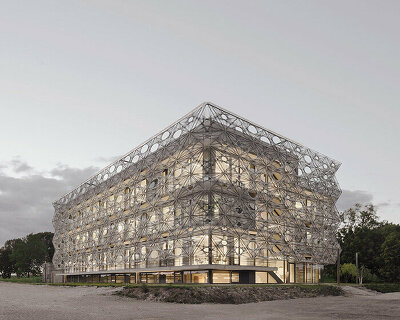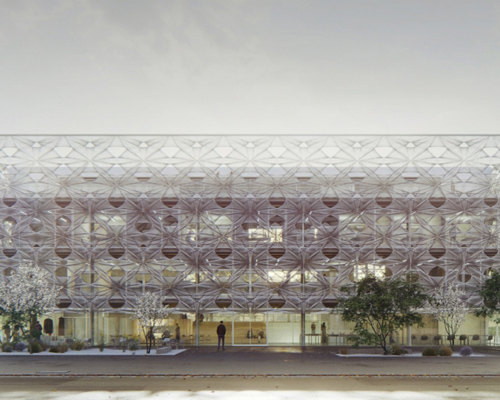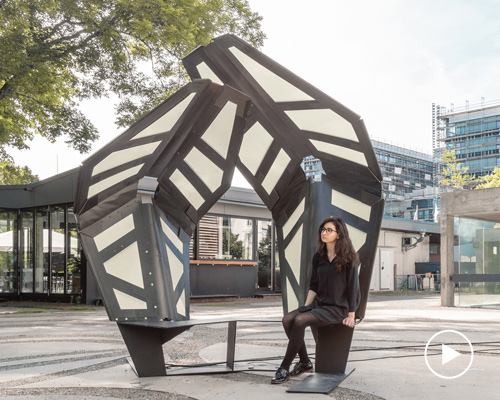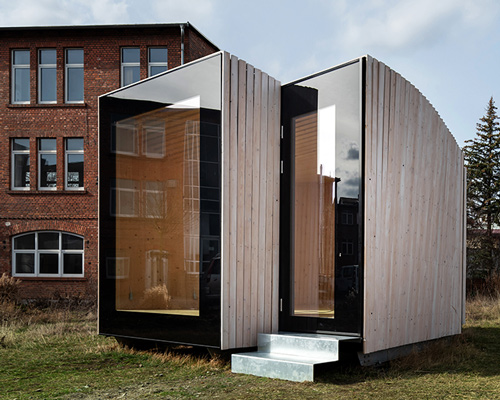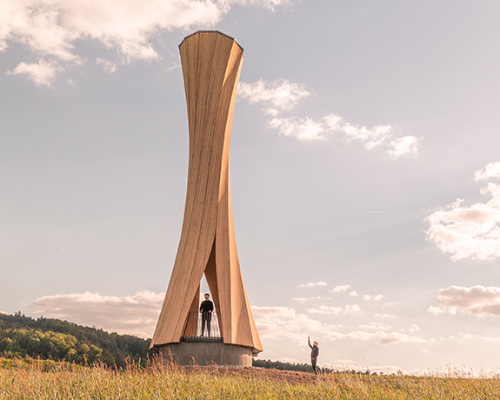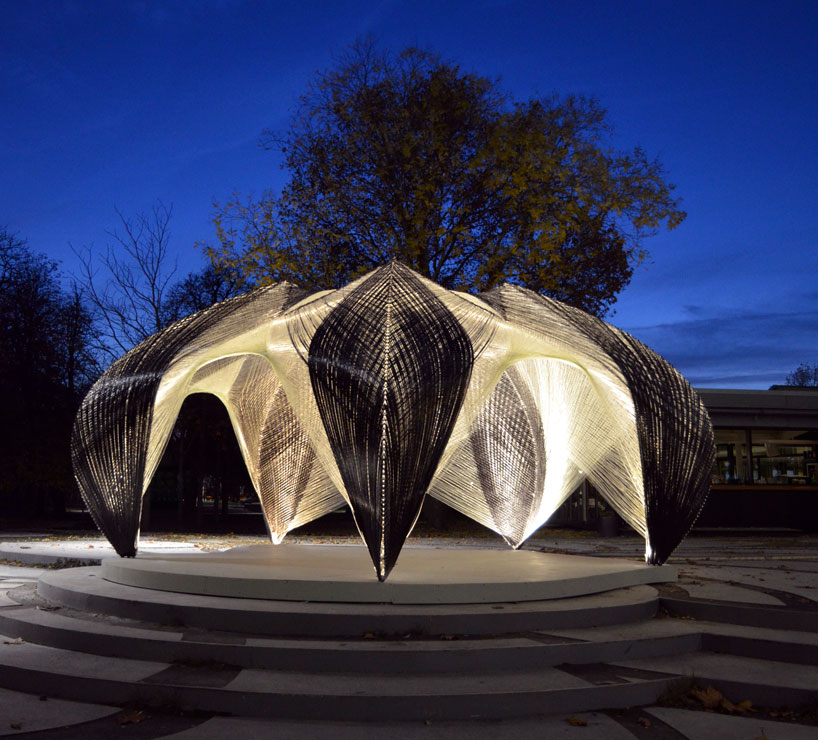
robotically fabricated carbon and glass fibre pavilion by ICD + ITKE
the assembly of the shelter was performed on-site by a 6-axis robot coupled with an external sevenths axis, built entirely by an innovative carbon and glass fibre winding process.
[FEATURED]
robotically fabricated carbon and glass fibre pavilion by ICD + ITKE
architecture students at the institute for computational design (ICD) and the institute of building structures and structural design (ITKE) at the university of stuttgart have completed a research pavilion that is robotically fabricated from carbon and glass fibre composites. the development of the structure focused on the material and morphological principles of arthropods’ exoskeletons as a source of exploration for new construction compounds in architecture.
the assembly of the shelter was performed on-site by a 6-axis robot coupled with an external sevenths axis. as part of the process the materials were saturated with resin, run through a bath of the synthetic polymer directly prior to their placement by the robot. after the completion of the filament winding process and subsequent tempering of the fibre-resin blend, the temporary steel frame could be disassembled and removed. the automatically fabricated, but locally differentiated structure resulted in an extremely thin shell of just 4mm thickness.
the robotic fabrication of the pavilionvideo courtesy of ITKE
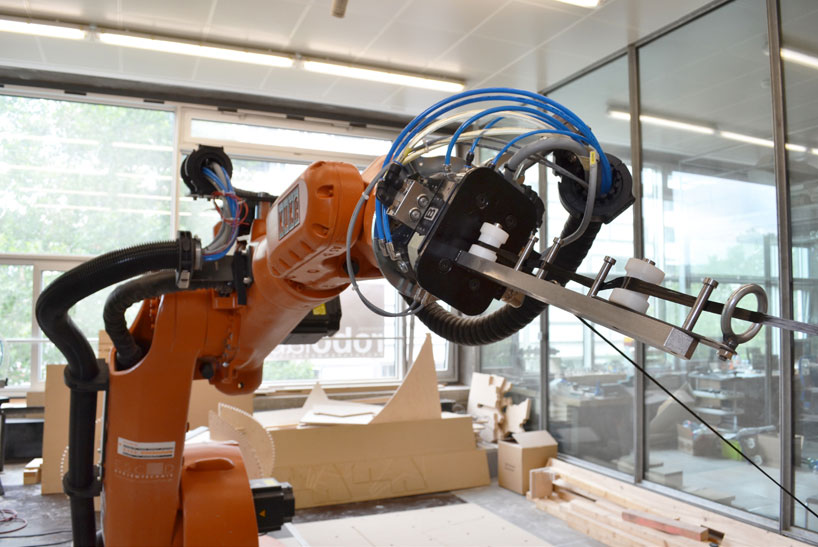 preliminary testing – filament winding system showing the effector
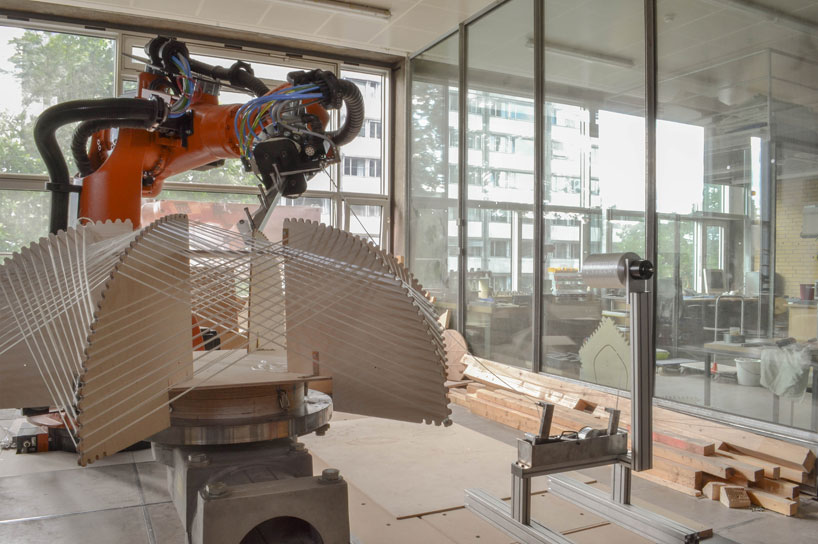 preliminary testing – small scale winding
 dry winding tests – the setup shows the 6-axis robot coupled with an external seventh axis which turns the entire frame
 previous sequences of the winding process serve as an integral mould for subsequent layers for specific structural purposes
entrance wrapping simulationvideo courtesy of ITKE
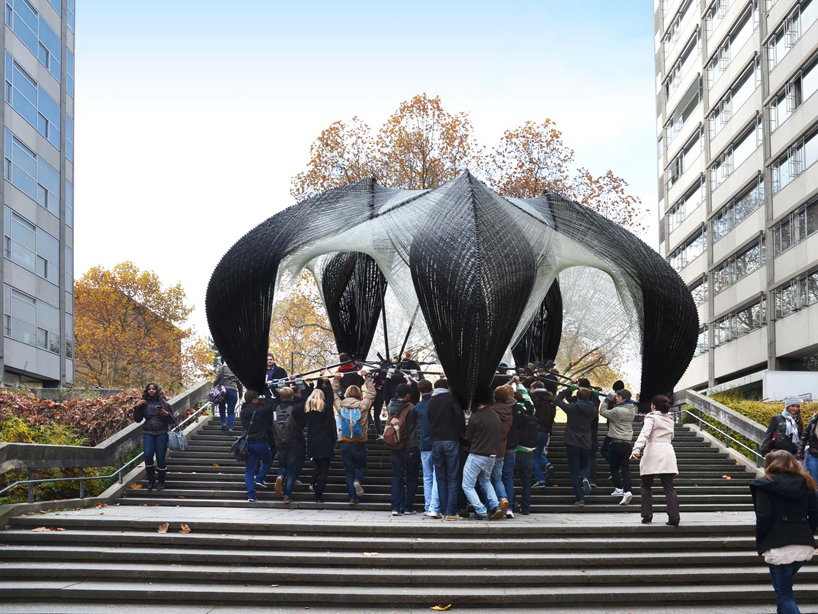 transportation from the construction site to the final location
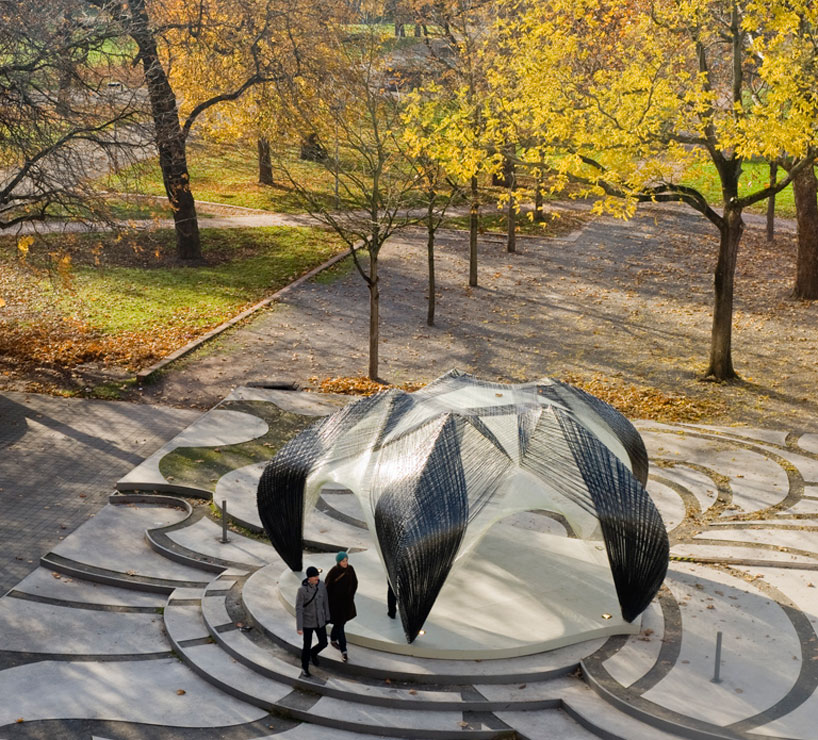 top view of the finished pavilion
 east elevation
 interior view
 close up of the woven glass and carbon fibres
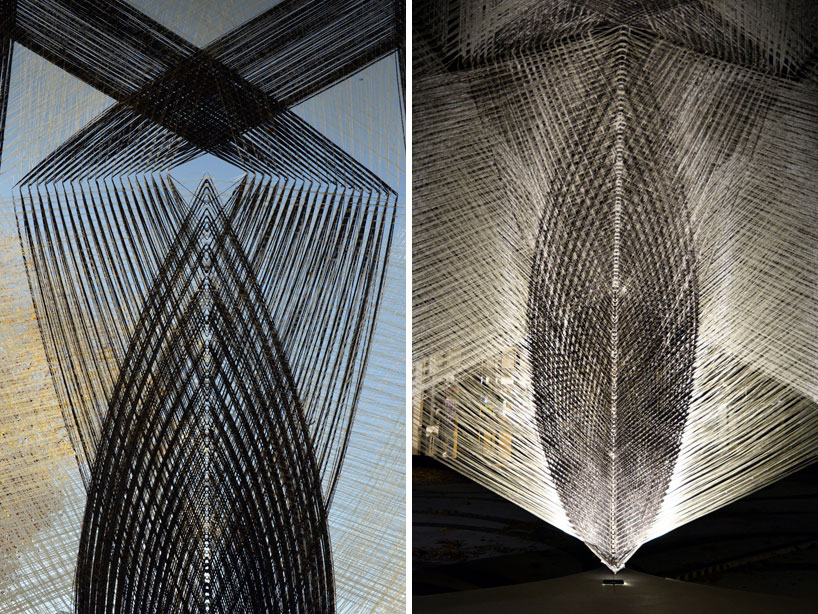 (left): close up of roof connection(right): night view from inside
 (top): the whole digital process was linked in an information chain, also including the input parameter(bottom): within this chain the winding logic was developed and optimized, consisting of five patterns
project team:
institute for computational design (ICD) – prof. achim mengesinstitute of building structures and structural design (ITKE) – prof. dr.-ing. jan knippers
concept development: manuel schloz, jakob weigele
system development & realization: sarah haase, markus mittner, josephine ross, manuel schloz, jonas unger, simone vielhuber, franziska weidemann, jakob weigele, natthida wiwatwicha with the support of michael preisack and michael tondera (faculty of architecture workshop)
scientific development & project management: riccardo la magna (structural design), steffen reichert (detail design), tobias schwinn (robotic fabrication), frédéric waimer (fibre composite technology & structural design)
designboom has received this project from our ‘DIY submissions‘ feature, where we welcome our readers to submit their own work for publication. see more project submissions from our readers here.
shop
your own online design shop — no sales commission collected