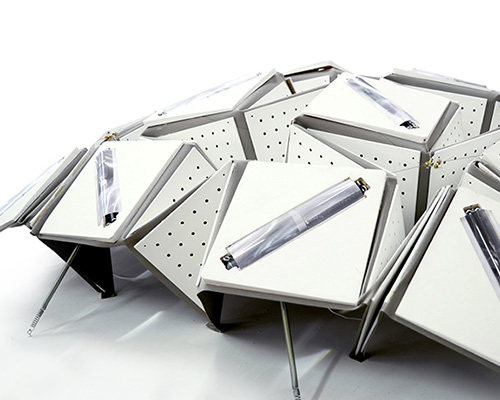
self-adaptive membrane utilizes kinetic joints responsive to solar radiation
the membrane is the result of research into the space memory alloy nitinol -- nickel and titanium -- which was used to develop a passive kinetic motor capable of adapting in response to environmental cues.
prefer designboom on google[FEATURED]
self-adaptive membrane utilizes kinetic joints responsive to solar radiation
all images courtesy of IAAC
the need to make buildings function in harmony with the environment is inarguable, however, using technology as a way to increase efficiency towards a zero-energy state isn’t the solution. at least, that’s what master’s candidates nohelia gonzalez and shreyas more of IAAC think.
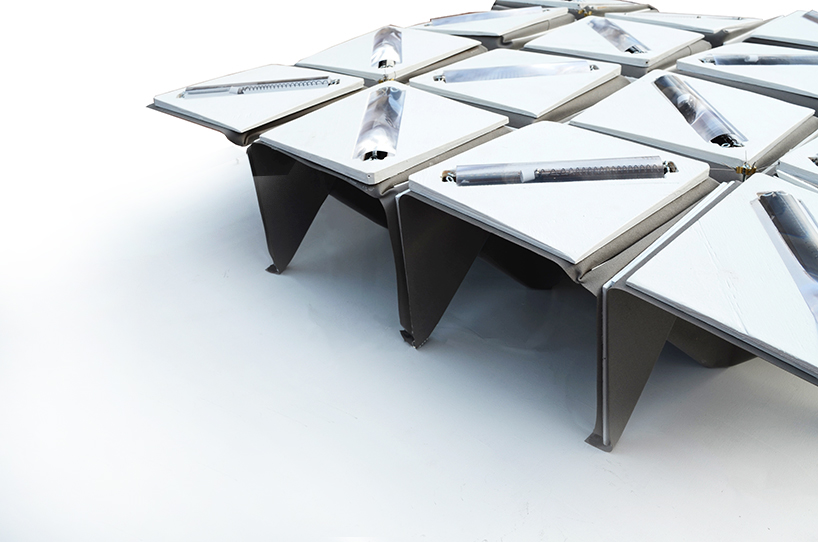
inactive performative model
technology and the built environment are quickly merging, and in the process, establishing an entirely new design paradigm. this has created a methodology that is not only sensitive towards changing situations over time, but has the capacity to actively identify problems and respond to them in real-time. designing active solutions in architectural roles has proven to be massively effective but in many cases are energy intensive.
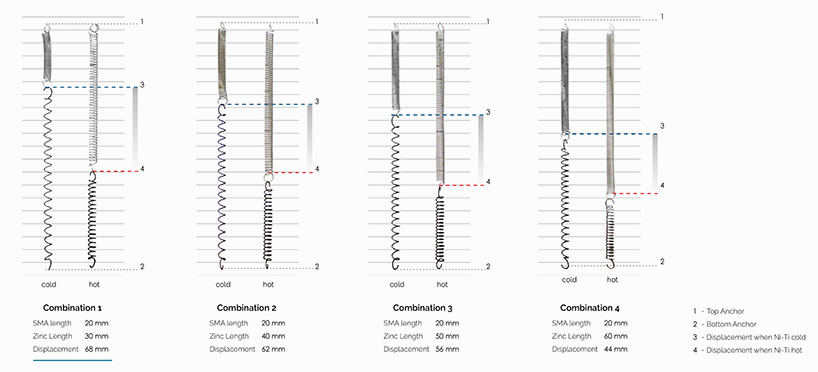
nitinol-zinc spring test under heat
the path that gonzalez and shreyas have embarked on unifies active performance and passive strategies of architecture. the ‘self-adaptive membrane’ is the result of their research into the space memory alloy nitinol — nickel and titanium — which was utilized to develop a passive kinetic motor capable of adapting in response to environmental cues.
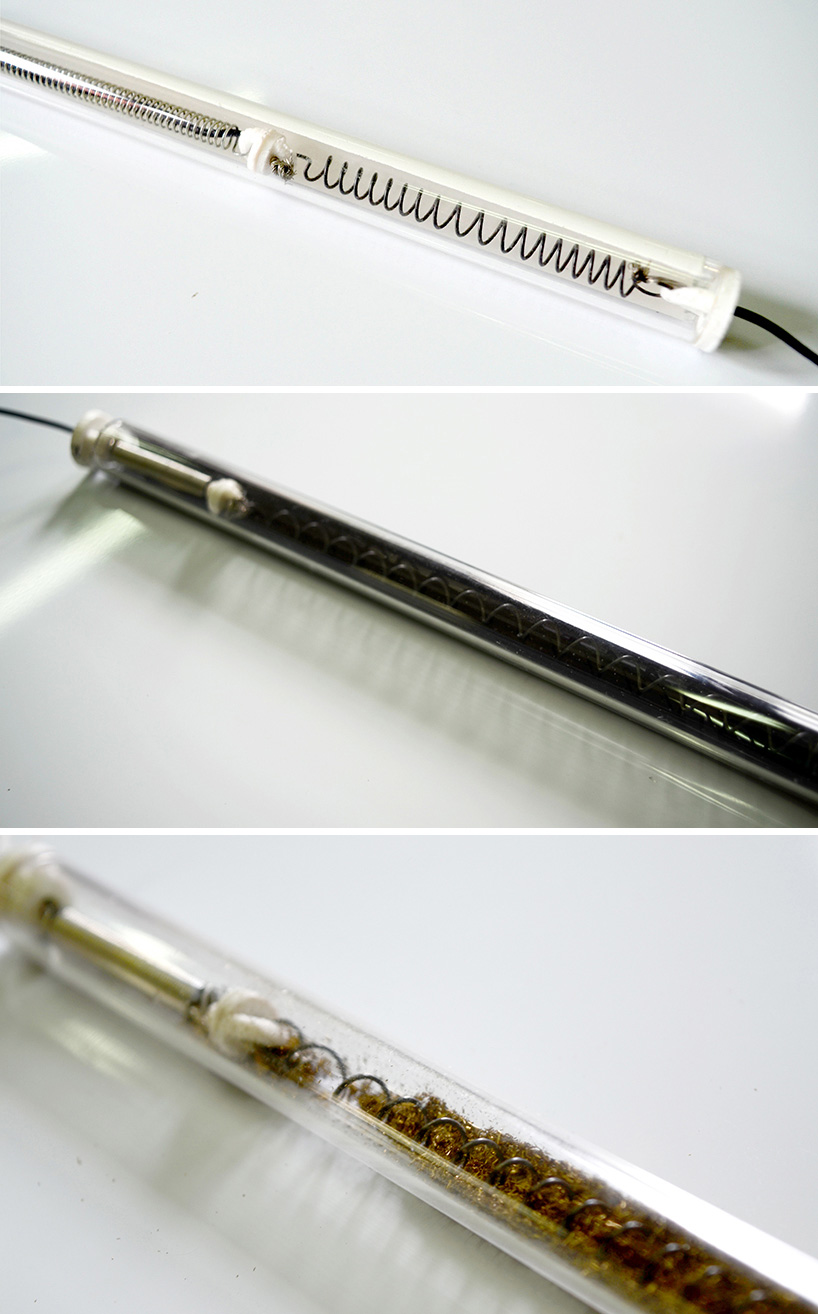
experimental nitinol joints
the ‘self-adaptive membrane’ is composed of two vital components: kinetic nitinol joints and folding tessellation geometry, which work together as a singular, integrated system. without diving too deep into technical jargon, these two parts react in response to the presence or absence of solar radiation. thus, creating a deployable unit that is both physically adaptable in real time, and energy autonomous.
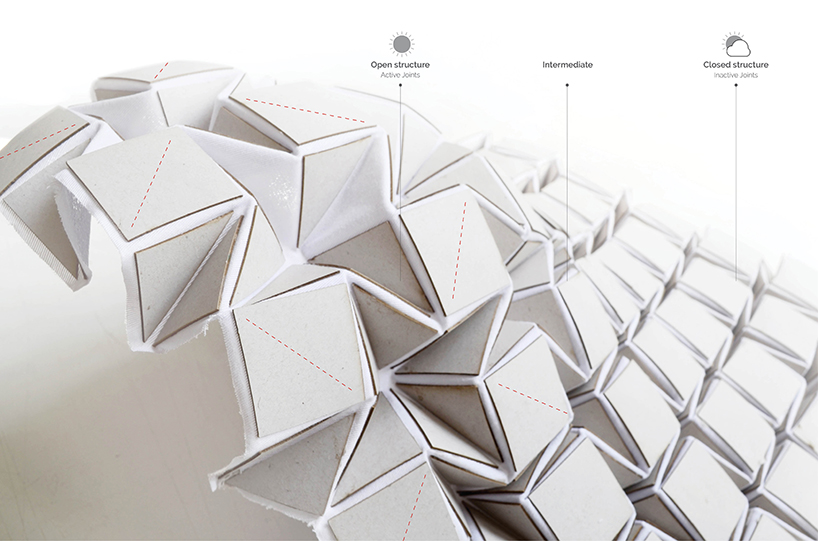
deformation of geometry
the team envisions the ‘self-adaptive membrane’ to open possibilities for adaptive architecture that is inexpensive in construction, lightweight, and capable of transforming built environments according to the relative position of the sun.
video courtesy of shreyas more
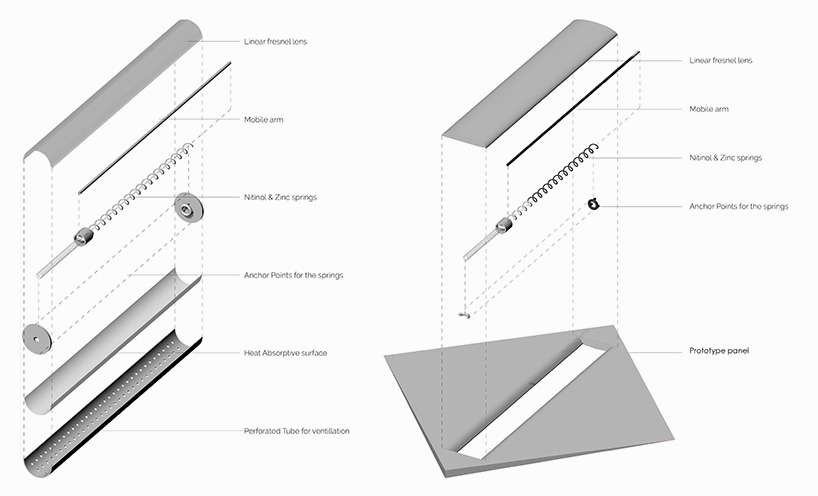
exploded industrial joint and component
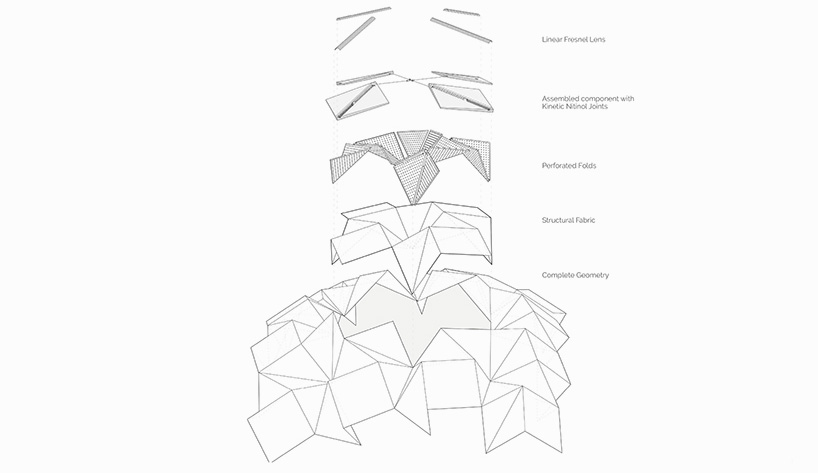
exploded performative model
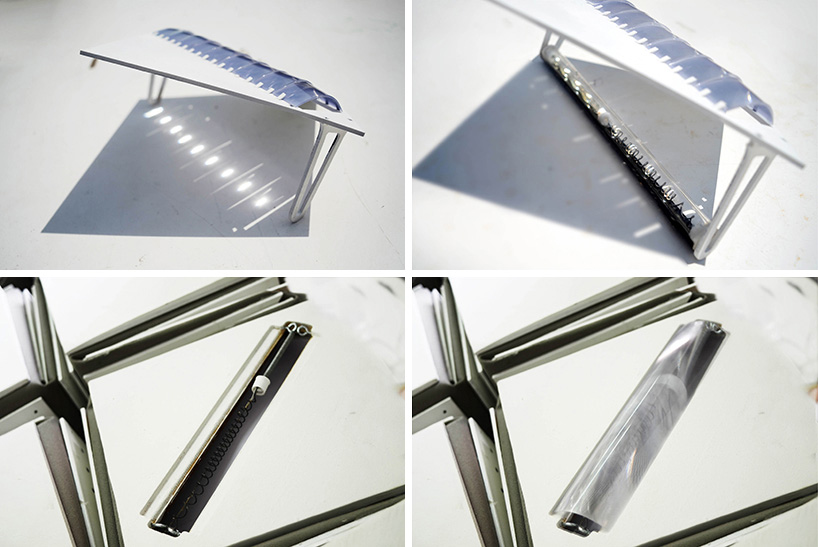
nitinol passive test component & prototype
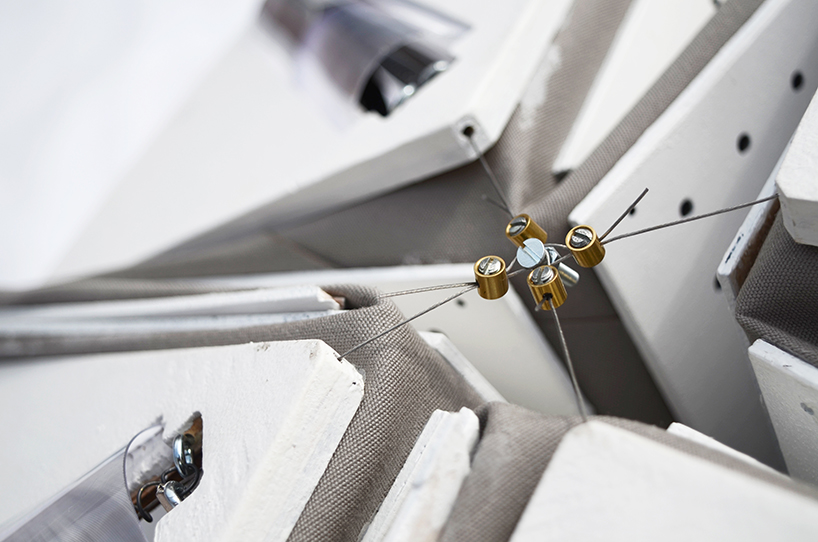
expansion joint

wearable applications of passive nitinol joint
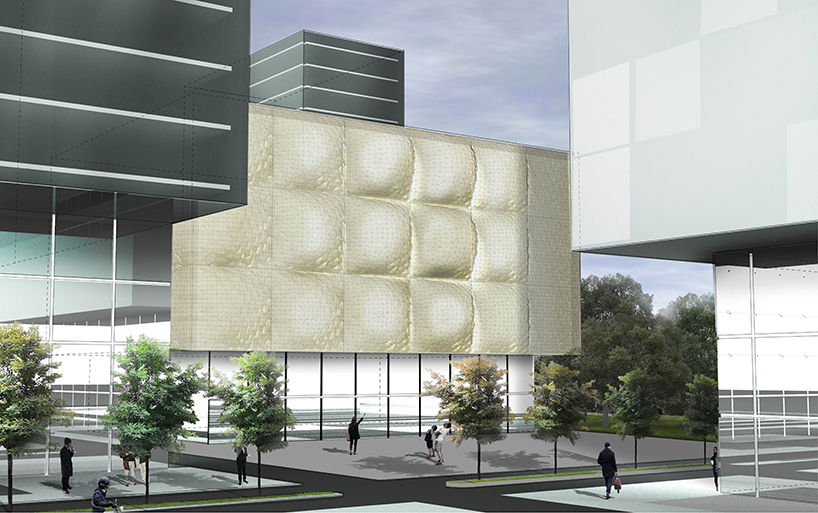
passive building façade application

single person deployable units
project info:
images: courtesy of institute for advanced architecture of catalonia, spain
director of MAA & senior faculty: areti markopoulou
assistant faculty: alexandre dubor
computational expert: carlos bausa
team: nohelia gonzalez, shreyas more
designboom has received this project from our DIY submissions feature, where we welcome our readers to submit their own work for publication. see more project submissions from our readers here.