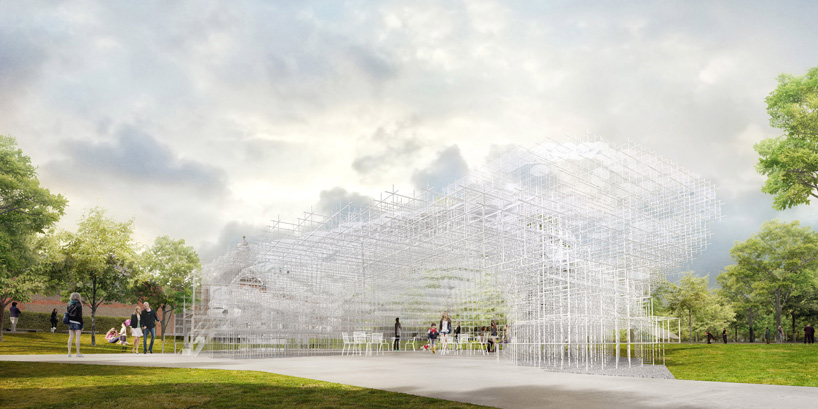
‘2013 serpentine pavilion’ by sou fujimoto, london, englandimage © sou fujimoto
the prestigious temporary serpentine pavilion in london’s kensignton gardens will be designed in 2013 by japanese architect sou fujimoto, the youngest designerin history to take part in the three month installation. the transparent irregular cloud structure will take up approximately 350 square meters with a delicate metal lattice structure made of 20 mm pipes that will create an interactive architectural landscape. hosting a variety of events, the pavilion willbe deeply embedded contextually into the site as well as into its social facets, resulting in an engaging structure that almost floats above and around itsvisitors.
architect sou fujimoto explains his concept:
‘for the 2013 pavilion I propose an architectural landscape: a transparent terrain that encourages people to interact with and explore the site in diverse ways. within the pastoral context of kensingtongardens, I envisage the vivid greenery of the surrounding plant life woven together with a constructed geometry. a new form of environment will be created, where the natural and the man-made merge; not solely architectural nor solely natural, but a unique meeting of the two.
the pavilion will be a delicate, three-dimensional structure, each unit of which will be composed of fine steel bars. it will form a semi-transparent, irregular ring, simultaneously protecting visitors from the elements while allowing them to remain part of the landscape. the overall footprint will be 350 square-metres and the pavilion will have two entrances. a series of stepped terraces will provide seating areas that will allow the pavilion to be used as a flexible, multi-purpose social space.
the delicate quality of the structure, enhanced by its semi-transparency, will create a geometric, cloud-like form, as if it were mist rising from the undulations of the park.from certain vantage points, the pavilion will appear to merge with the classical structure of the serpentine gallery, with visitors suspended in space.’
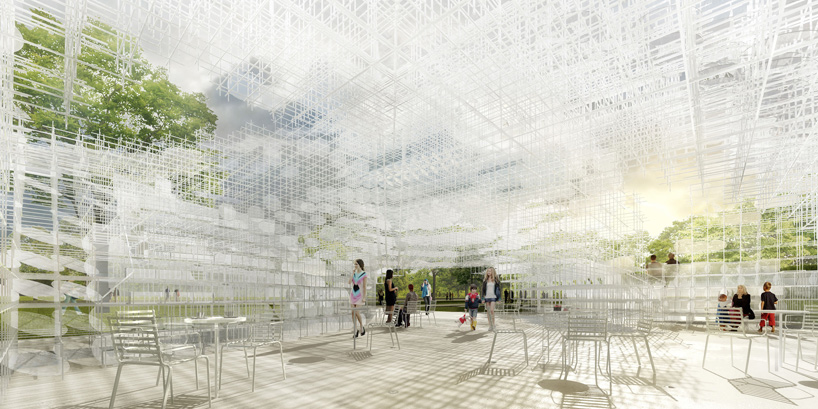 interiorimage © sou fujimoto
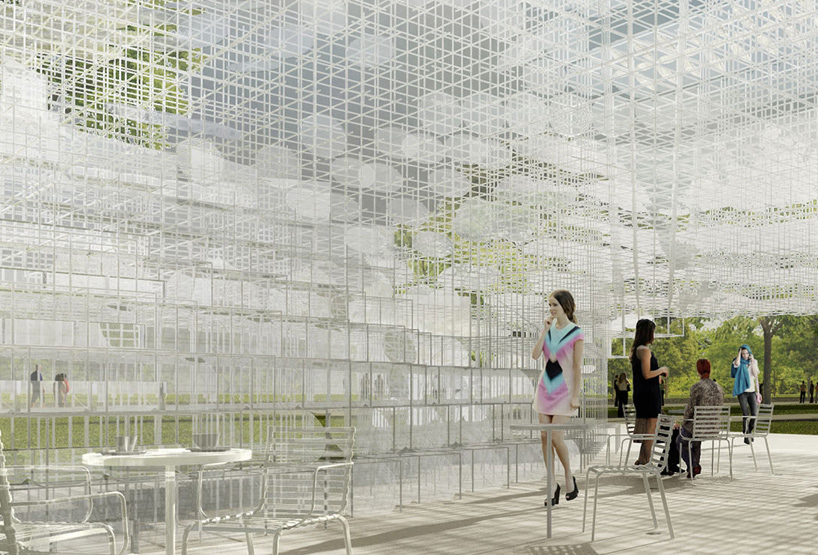 interior is protected from the elements while providing a feeling of being part of the landscapeimage © sou fujimoto
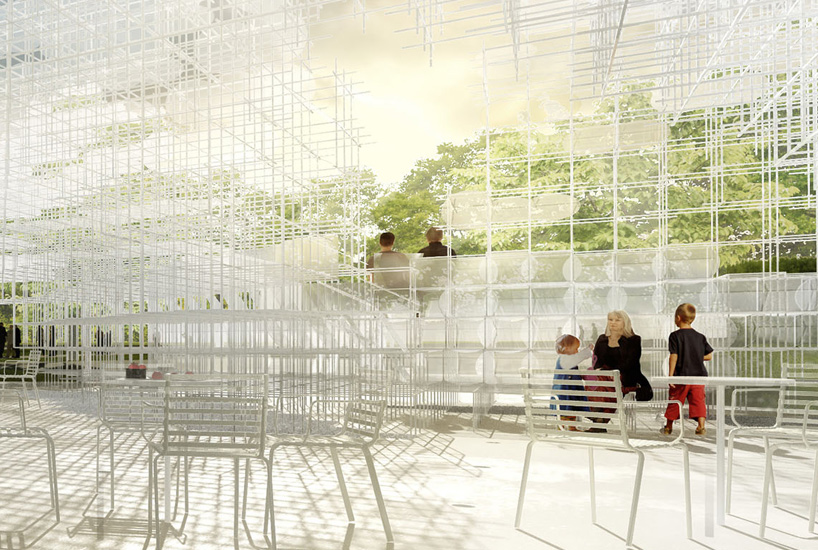 made up of a regular 3D grid of slender metal tubes creates varying levels of transparencyimage © sou fujimoto
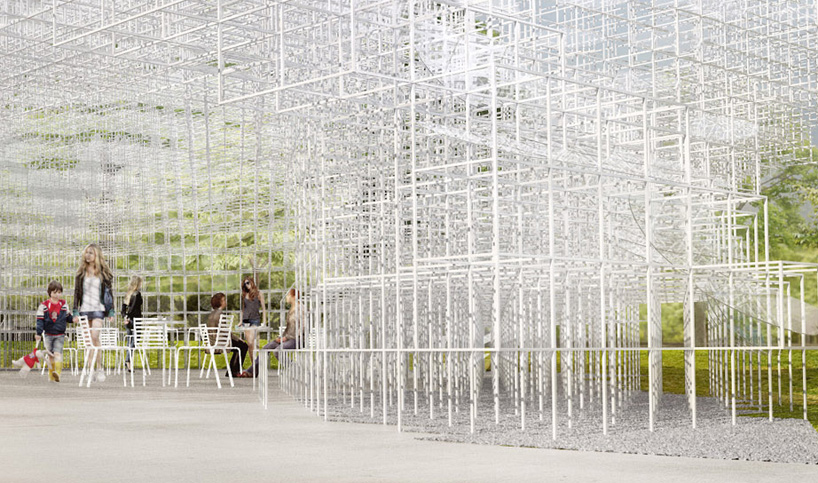 image © sou fujimoto
SERPENTINE GALLERY PAVILION (47)
 Mar 04, 2024
 Jan 31, 2024
 Jan 22, 2024
 Jun 05, 2023
 Jun 05, 2023
SOU FUJIMOTO (95)
 Mar 29, 2024
 Dec 12, 2023
 Sep 21, 2023
 Sep 05, 2023
 Sep 04, 2023
PRODUCT LIBRARY
 Apr 02, 2024
 Mar 31, 2024
 Mar 21, 2024
 Mar 20, 2024