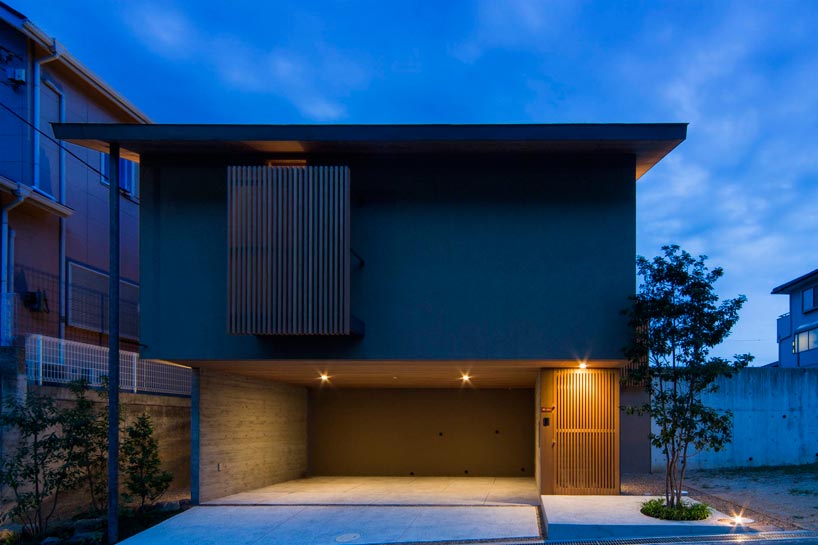
‘sakai house’ by uemachi laboratory, sakai city, minaminu-ku, osaka, japanimage © kazushi hirano all images courtesy of uemachi laboratory
guided by the philosophy to ‘design with necessity’ and driven by intuitive modules, hyogo-based firm uemachi laboratory created a domestic architecture centered around aperture and layering. while the ‘sakai house’ is located in the residential southern ward of minami-ku, the dimensions and circulation of the space are designed by the senses. the open plan of traditional japanese architecture is visually tempered by the strategic placement of glazing, grilles and blinds.
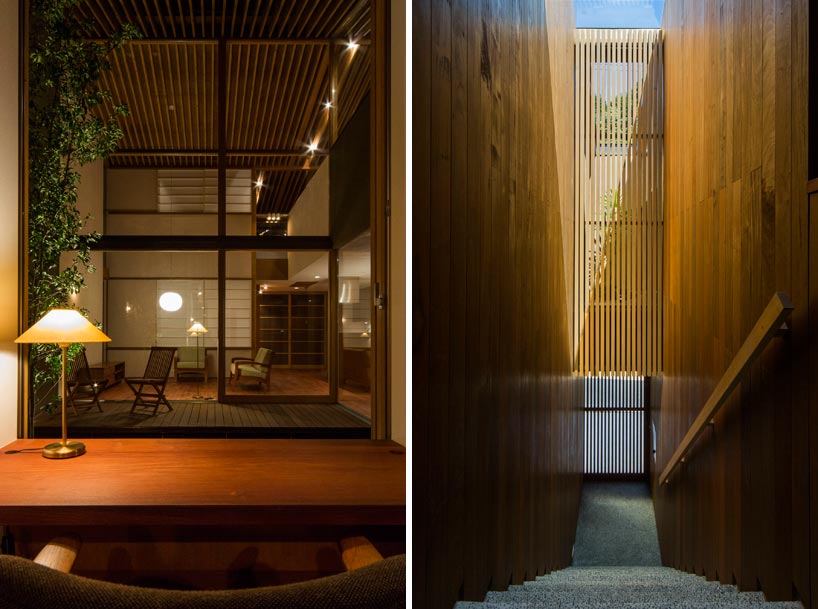 (left) view from the master bedroom, across the atrium and into the living room and mezzanine level. (right) looking down to the entrance from the top of the stairsimage © kazushi hirano
the language of wooden slats is present from the front door and pervasive throughout the house. the entrance plane acts as light and wind-shielding screen–its verticality continued through the grain and board pattern of the staircase and hallway. exposed wooden beams on the ceiling visually counterbalance the layers of interior and exterior volumes of framed space in the living room and master bedroom as well as direct paths of visual and actual movement in the mezzanine level. the house is spatially organized around an open atrium containing greenery, modeled after a temple garden. popularly known as a so-called zen garden, the courtyard is fundamentally a place of interiority, where a single, manicured gesture of foliage is made to extend the line of sight to nature.
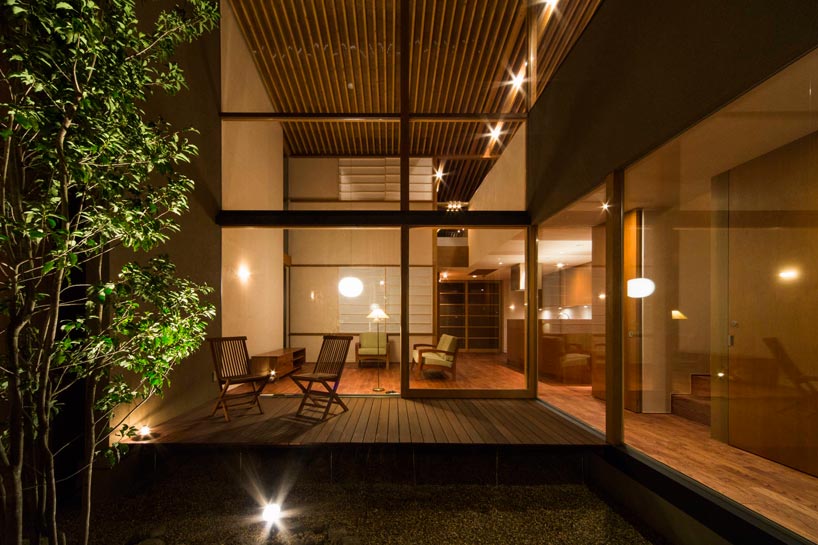 the ‘temple garden’ is the center of the plan and ties all of the spaces together by visually layering the programimage © kazushi hirano
these notions are helped by the reflections of lush neighboring landscapes on the large spans of fenestration. the small garden, open to the sky, asks the viewer to feel the room and extend their gaze to the very limits of the architecture. the home is meant to reveal the extent of nature and makes a statement that the interior space of the home need not inherit the harried quality of everyday life. the space is not an exercise in minimalism, but rather a careful orchestration of warm wood grains, the lines of the built volume, changing light and moving sounds.
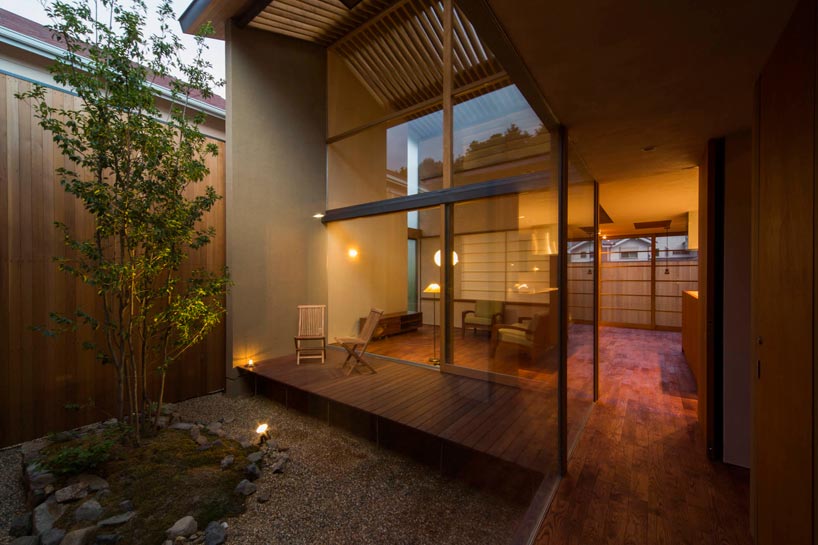 the openness of the plan lends views to the living room, kitchen, and through the house to the neighboring propertyimage © kazushi hirano
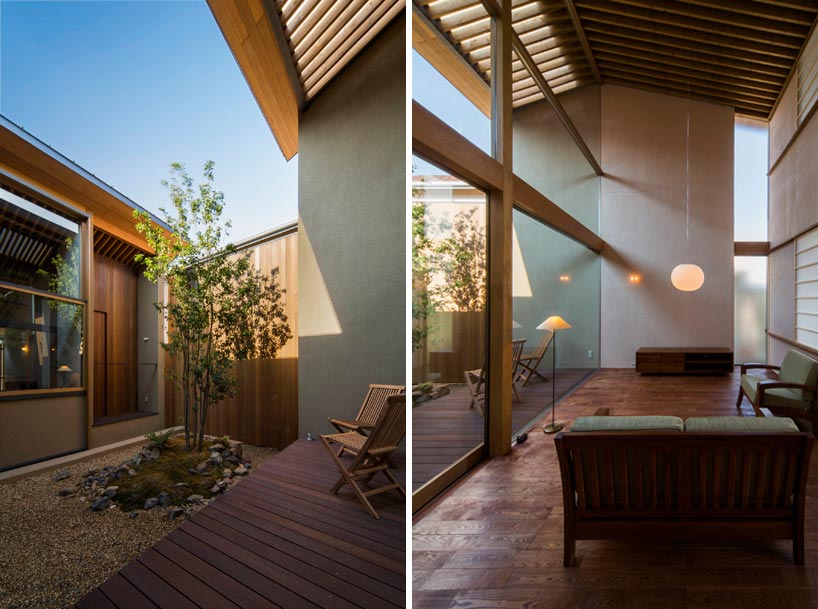 (left) a single moment of vegetation is seen from the porch(right) the porch is an extension of the living area, differentiated by different hardwood floors and glazingimage © kazushi hirano
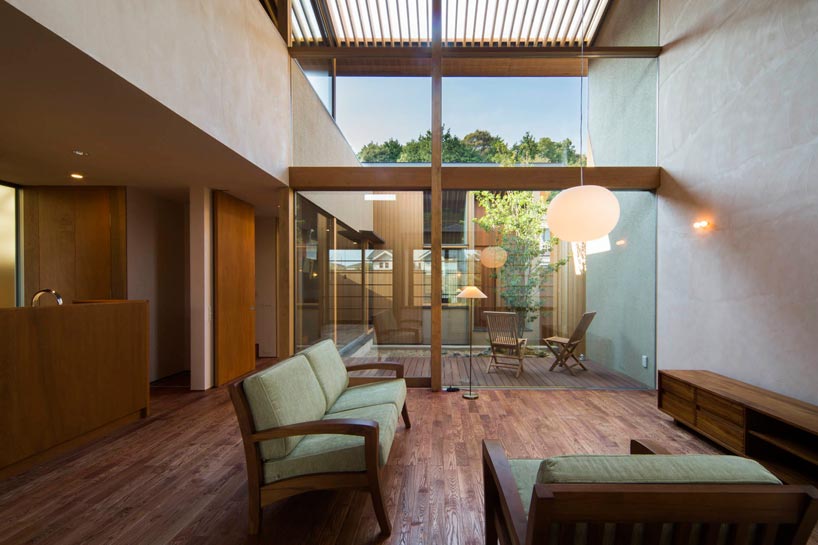 the atrium allows the space double high ceilings and reflections of the surrounding greeneryimage © kazushi hirano
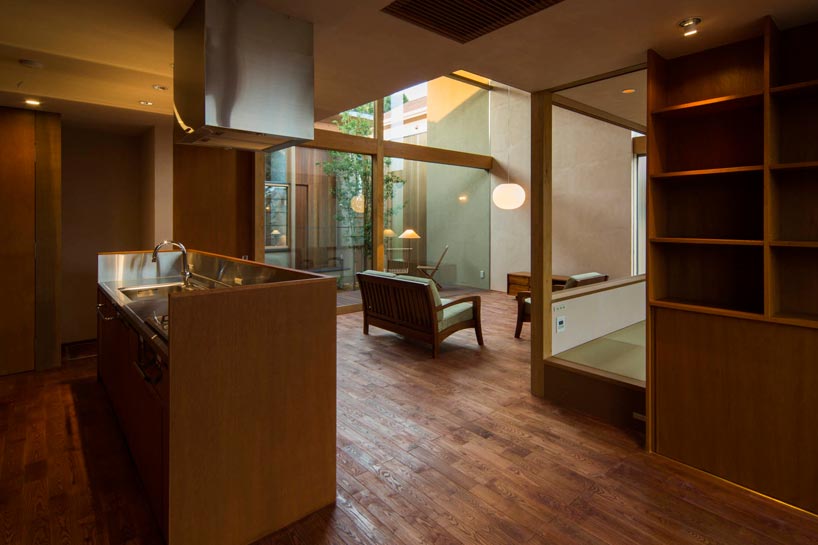 view from the kitchenimage © kazushi hirano
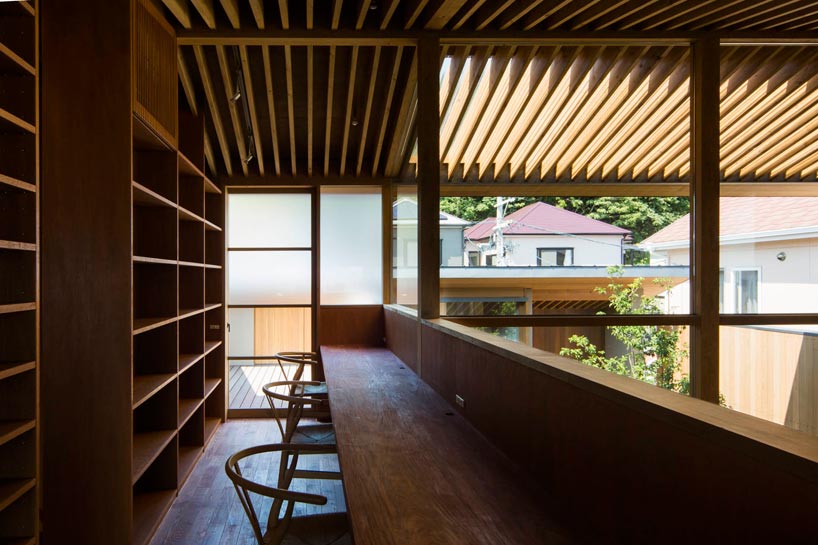 the view of the study shows that exposed beams delimit lines of sight and create passive lighting systems image © kazushi hirano
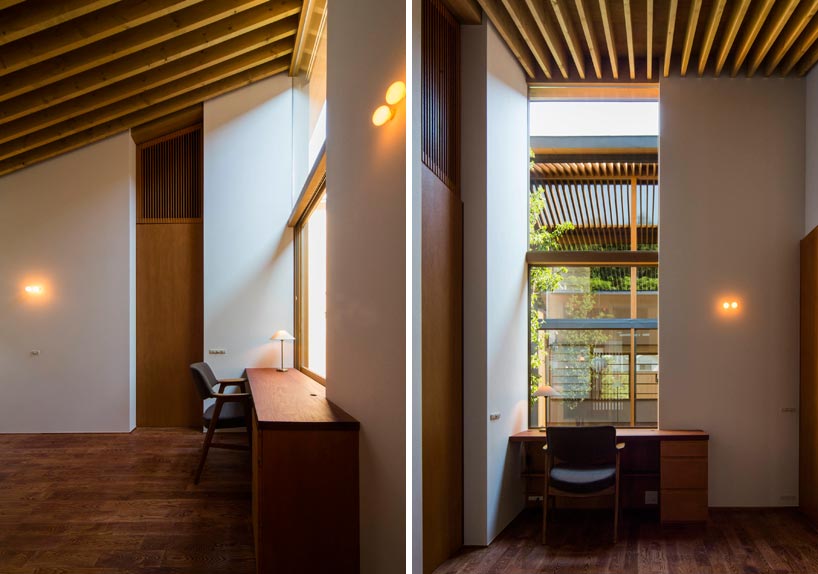 view of the study in the master bedroom, mezzanine levelimage © kazushi hirano
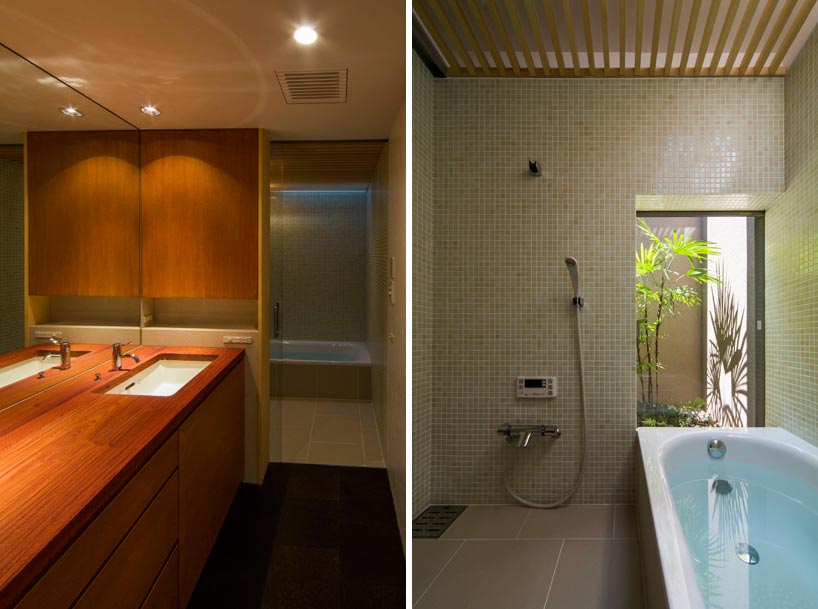 (left) washroom(right) connected bathroom image © kazushi hirano
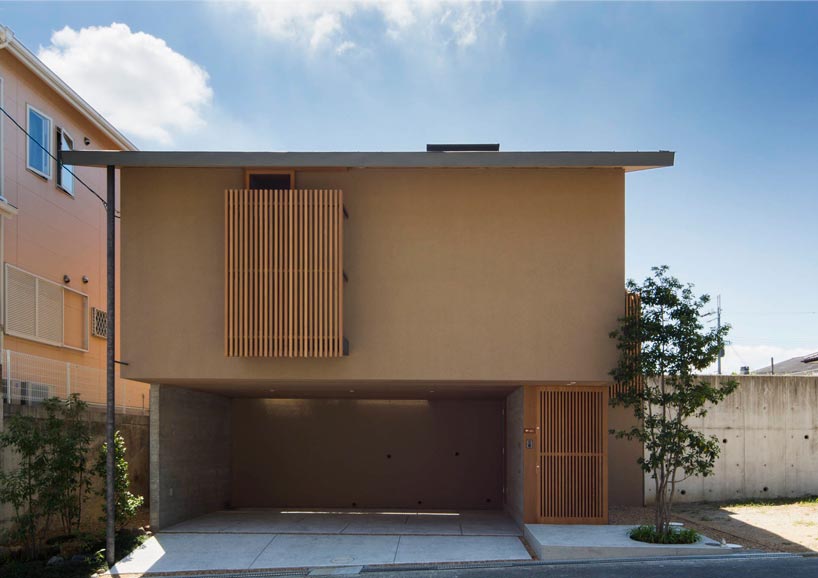 exterior daytime view shows the types of slatted screens used through the house image © kazushi hirano
PRODUCT LIBRARY
 Apr 02, 2024
 Mar 31, 2024
 Mar 21, 2024
 Mar 20, 2024