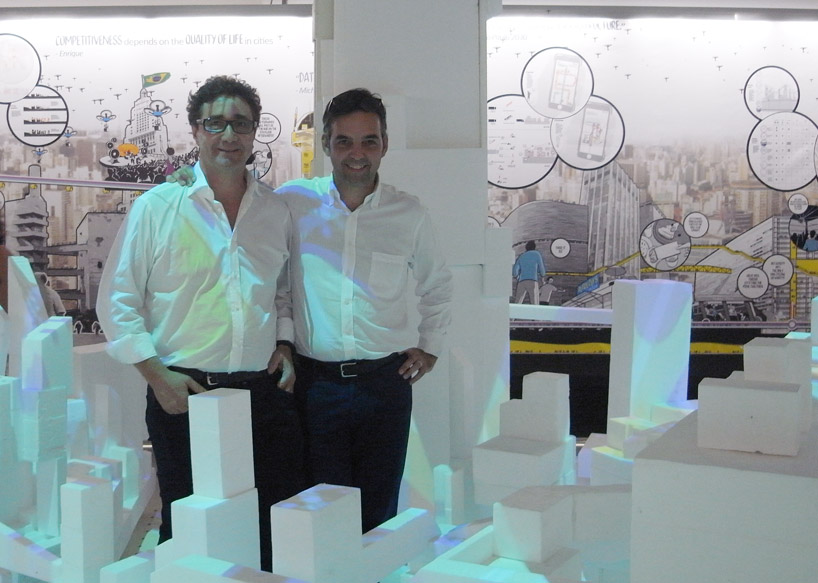
alfredo brillembourg and hubert klumpner image © designboom
alfredo brillembourg and hubert klumpner of são paulo-based firm urban-think tank have recently presented their ‘urban parangolè – the mobile village’ at the audi urban future award 2012, in istanbul, curated by stylepark. as one of the five architectural offices selected to develop a vision on the prospects of inner-city travel, the team was asked to address the current mobility situation in the são paulo metropolitan region and its specific infrastructure.
 ‘urban parangolé – the mobile village’ by urban-think tank image courtesy of urban-think tank
the duo outlined their research of the existing condition of the city and proposed a strategy which targets specific zones in the downtown core which takes advantage of abandon and unused spaces. understanding that são paulo is a global city with social disparities, both vibrant and wild, the team looked at the informal sector for qualities which could be applied to the networking system. they introduced a ‘mobile village’ which will liberate areas of the contemporary metropolis by engaging with all three dimensions of mobility.
‘urban parangolè responds to the human need and desire for movement by offering creative strategies that redefine the individuals relationship with the urban environment. ‘if mobility is the answer…what was the question?’ – urban-think tank
urban-think tank present their vision for sao paulo video © designboom
by linking the city through a series of seamless loops of connectivity, the project creates multi-scalar mobility systems and digital communication technologies that transform basic movement into a dynamic activity. it seeks to foster interactions between formal and informal networks by using flexible spaces where the potential and influence for multi-functional hubs increase social engagement. by providing people with new nodes of connections, it motivates residents to imagine their transportation as a productive journey and not just a unit of time and distance.
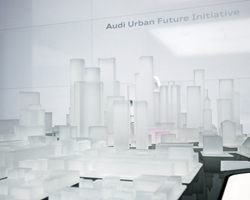
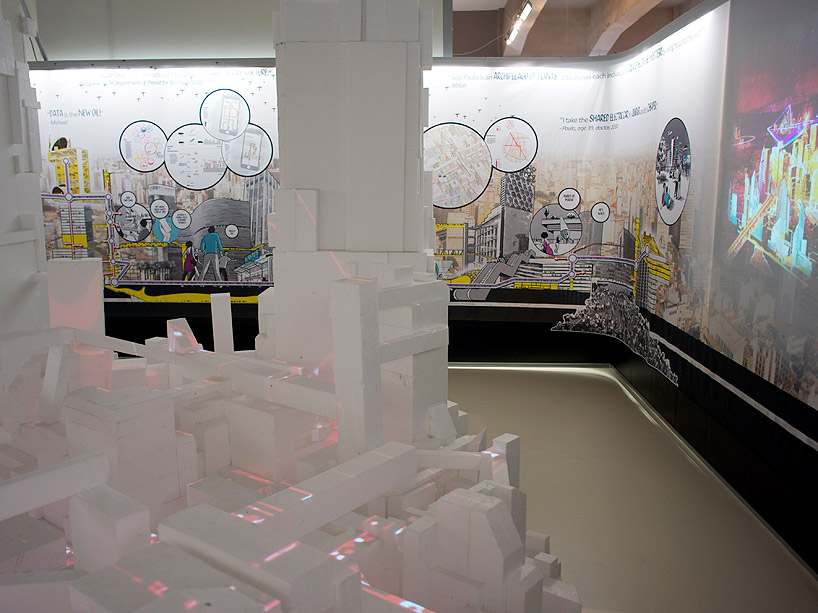 scale model with a surrounding graphic telling the story of são paulo as a mobile cityimage © designboom
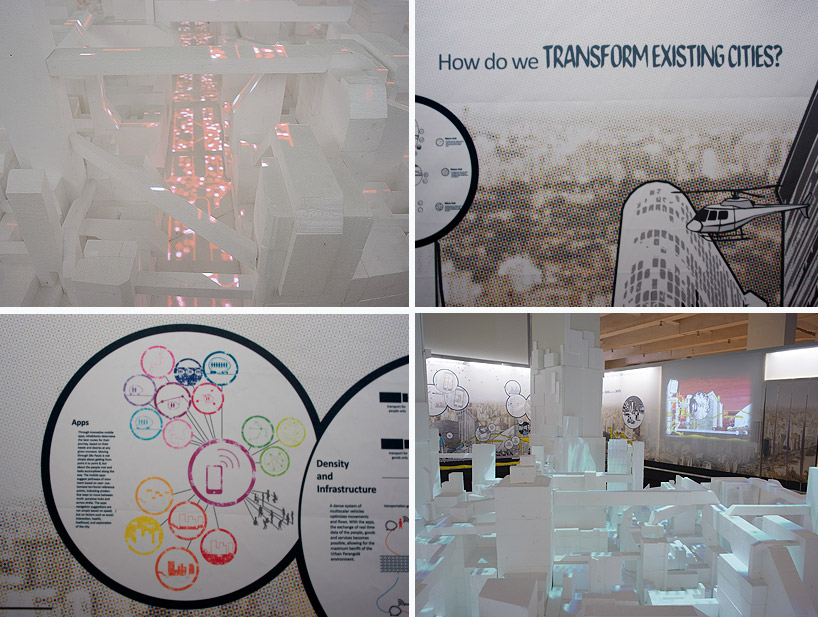 image © designboom
 a color coded city reflects the communication system of the mobile networks
 the ‘urban parangolé – the mobile village’ stratifies transportation network into a multi-dimensional landscapedrawing courtesy urban-think tank
 drawing courtesy urban-think tank
by engaging with the environment it encourages the residents to dance with the city which pays homage to the work of brazilian artist helio oiticica’s idea that life is movement. through this added level of playfulness it makes the community more productive, healthy and vibrant. by providing a level of choice and multiple pathways of motion that relate to transformative technologies, local culture and grassroots creativity it will give birth to the ‘syncratic city’ which will produce a new form of urban lifestyle.


drawing courtesy urban-think tank
 drawing courtesy urban-think tank
 drawing courtesy urban-think tank
 drawing courtesy urban-think tank
 drawing courtesy urban-think tank
 horizontal and diagonal systems of movement take advantage of unused spaces in the downtown coredrawing courtesy urban-think tank
 drawing courtesy urban-think tank
 apps will provide residents with optimal travel routesdrawing courtesy urban-think tank
to determine the most optimal route, residents can use mobile apps to suggest pathways of movement based on user-customized territorial reference points – indicating productive ways to travel between multi-purpose hubs and across strata. each node develops organically, implementing a program relevant to the communities needs. programming possibilities include, public space, sports, work, urban farms, markets, gyms, cafes, cultural centers, and shops. the interface with these hubs are public, private and share mobility systems: the metro, cable cars, small scale drones, electric cars, bicycles, helicopters and motorcycles as well as alternative typologies such as workstations, markets and restaurants.
 drawing courtesy urban-think tank
 a highly connected citydrawing courtesy urban-think tank
project info:
urban-think tank: alfredo brillembourg and hubert klumpner curator: ligia nobre research and design lead: lindsey sherman team: mariana albuquerque, michael contento, alessia finckenstein, fabiola cedillo espin, hannes gutberlet, sudipta iyer, andré kitagawa, philipp kremer, pauline launay, scott lloyd, rafael machado, ilana millner, lea rüfenacht, daniel schwartz, torunn vaksvik skarstad, maria abadia suanzes-‐ carpegna, dominik weber with the students from the international summer academy 2012, ETH zurich, department of architecture and the participants of the são paulo ANCB workshop consultants: thomas auer (transsolar), daniel dendra (anotherarchitect)maximilian jezo-‐parovsky (tenten), federico parolotto (mic), scott ritter (ssr) presentation booklet: ruedi baur, gina donzé (intégral ruedi baur) in partnership with the city of são paulo, secretaria municipal de habitação(SEHAB), elisabete frança and maria teresa diniz special thanks to the communities of santa ifigênia, paraisópolis and the great city of são paulo
AUDI (137)
 Sep 05, 2023
 Jul 11, 2023
 Dec 02, 2022
 Nov 26, 2022
 Aug 18, 2022
AUDI URBAN FUTURE INITIATIVE (10)
 Nov 20, 2015
 Nov 12, 2014
 May 15, 2014
 Apr 10, 2014
 Jan 16, 2014
URBAN-THINK TANK (16)
 May 31, 2016
 Oct 30, 2015
 Oct 21, 2015
 Jun 12, 2014
 Jun 05, 2014
PRODUCT LIBRARY
 Apr 02, 2024
 Mar 31, 2024
 Mar 21, 2024
 Mar 20, 2024