verso est: contemporary chinese architecture at the MAXXI museum
curated by chinese art and architecture critic fang zhenning, the exhibition at the MAXXI museum in rome surveys contemporary chinese architecture, interrogating its points of dialogue with global practices.
prefer designboom on google[FEATURED]
verso est: chinese architectural landscapecurated by fang zhenning MAXXI museum, rome, italyon now through october 23rd, 2011
curated by art and architecture critic fang zhenning, the exhibition ‘verso est‘ marks the first time an exhaustive survey of contemporary chinese architecture has been presented abroad, interrogating the experimental techniques adopted by many young chinese architects, the historical and philosophical threads that continue to infuse chinese practices, and the mutual impact that chinese and international architecture have on one another.
virtual tour of the ‘verso est’ exhibition
‘verso est’ is organized around twelve themes: urban transition, the new architectural movement, emerging chinese architecture, shan shui city, post-disaster rebuilding, architecture and memory, architectural rationalism, architecture and poetic space, the museum building, public art and the landscape, humanity and nature, and architectural photography.
 ‘relief tent’ by liu jiakun, with video installation by liu jiakun and furniture by zhang leiimage © designboom
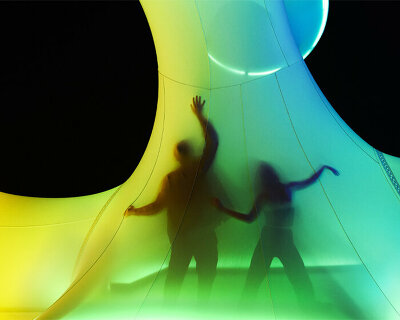
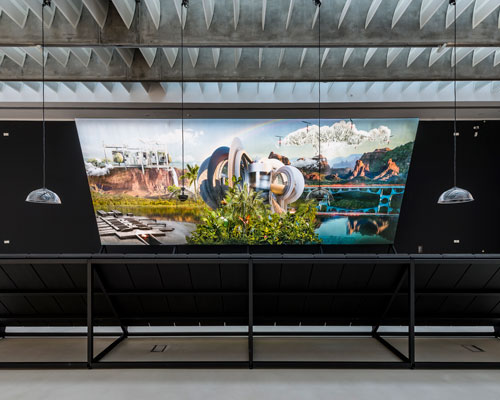
these concepts are presented through the exhibition of digital prints and photographs, videos, models, animations, and installations of the work of thirty chinese architects. the format of the exhibition itself suggests the mutually influential culture of chinese architecture today, as the boundaries of individual projects are softened as works are united into single spaces to be experienced. liu jiakun’s relief tent serves as housing for the viewing of the architect’s video ‘hu huishan memorial house’, in which he talks with the family and friends of 15-year-old student hu hishan, who died in the may 12th, 2008 sichuan earthquake and for whom jiakun built the like-titled memorial house. the corrugated cardboard furniture of xixi artists’ clubhouse by zhang lei is situated within ‘relief tent’ for visitors’ use, as well as used elsewhere in the exhibition as seating for an exhibition overview video and footage from the documentation of the design of the phoenix international media center by BIAD_UFo.
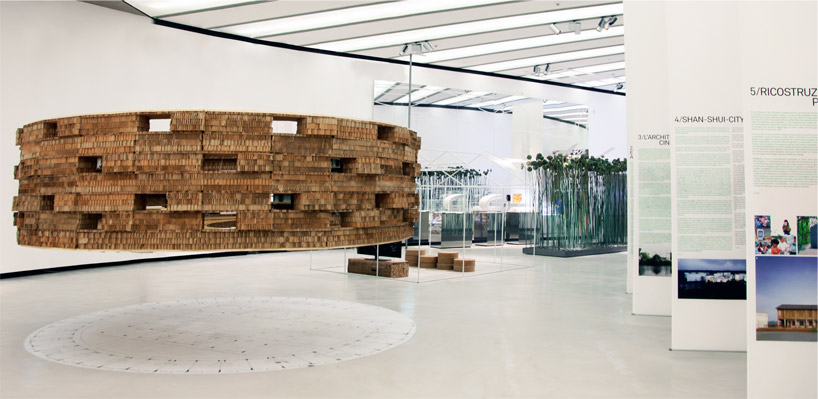
 ‘squarely sphering’ by architect wang shu recalls the construction methods typical of wetlands architectureimage © designboom
in addition to the many contemporary chinese architects represented, the exhibition examines the work of international designers doriana and massimilinao fiksas, zaha hadid, and rem koolhaas, who have marked chinese cities with important architectural works.
 front view, ‘squarely sphering’image © designboom
 ‘ordos 20+10 P23’ by wang yun serves to house a video installation by zhangn xiaotaoimage © designboom
 view from the back wall, with ‘xixi artists’ clubhouse’ cardboard furniture by zhang leiimage © designboom
 photographic prints of chinese architectural projectsimage © designboom
 ‘is it possible for them to live together’ by xu jiangimage © designboom
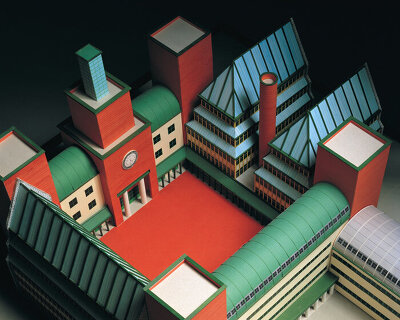
 ‘urban forest’ maquette by MAD architects; see more about the project here image © designboom
 ‘fish tank’ by ma yasong (MAD architects)image © designboom
exhibition view of ‘urban tulou’ by urbanusimage © designboom
360-degree interior view of ‘urban tulou’ by urbanusvideo © designboom
 close interior view of ‘urban tulou’ by urbanusimage © designboom
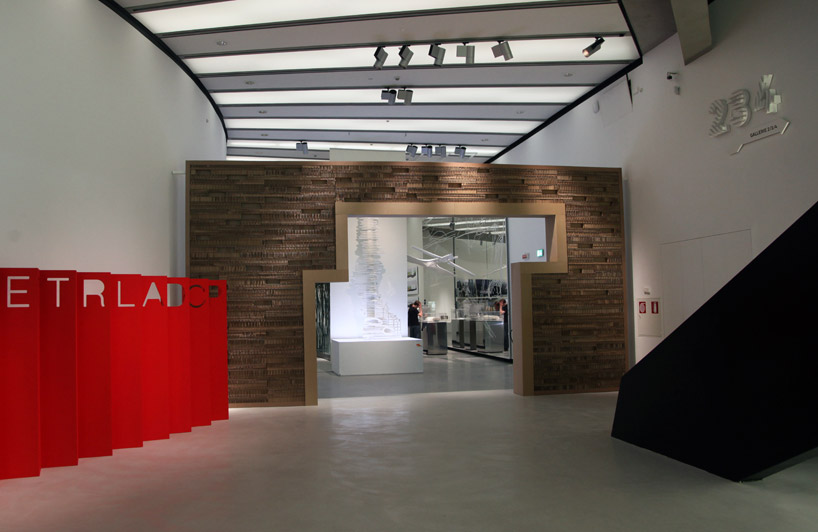
 entrance foyerimage © designboom
—
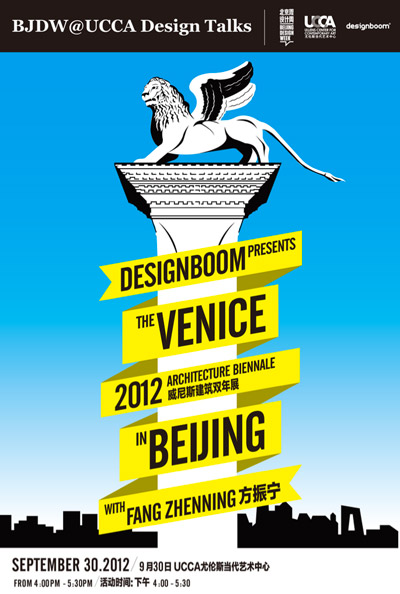
during beijing design week 2011, designboom is hosting a conversation with the exhibition’s curator fang zhenningand five of the most influential contemporary chinese architects, all of whom had work featured in ‘verso est’:ma yansong (MAD), zhu pei, liu jiakun, wang yun and liu xiaodu (urbanus). with the talk we hope to extend the dialoguepresented in the exhibition at the MAXXI.
‘designboom conversation:contemporary chinese architecture from the outside in’
is there a new, more flexible urban ideal? one in which the greatnessof cities is seen to arise from a clash of architectural visions,built up from spontaneous and unregulated taste and problems ofdensification? many of the new generation, overseas-educated chinesearchitects have decided to stay in china and are internationally knownfor their experimental building processes and indigenous use of materials.from recycling-based construction methods to the mass creation of newhigh-rise buildings, contemporary chinese architecture is a progressiveforce in society, and has begun to make its own, unique mark on 21stcentury global architecture.
view the talk announcement for more information!