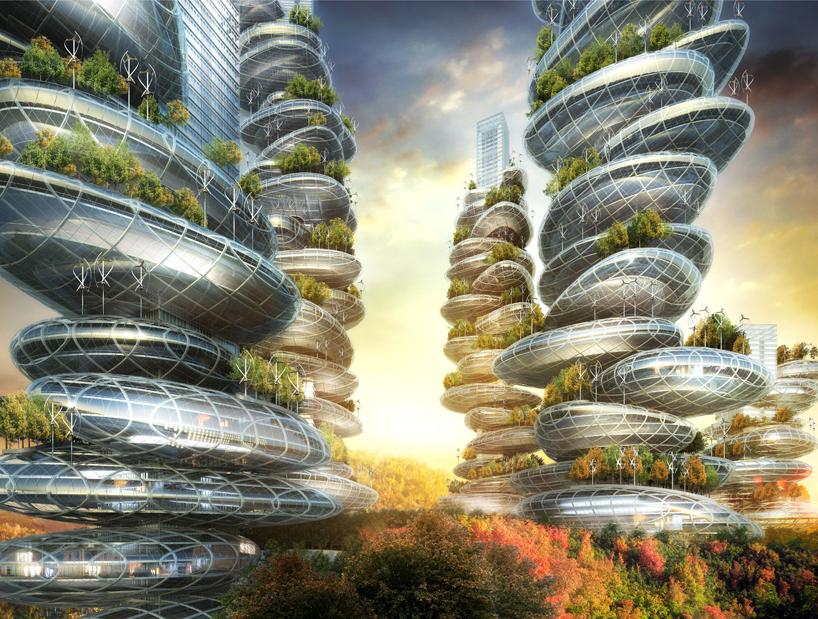
‘asian cairns’ by vincent callebaut architectures, shenzen, chinaimages © vincent callebaut architectures
belgian architect vincent callebaut is renown for taking on issues of urbanity and reframing them within an ‘eco-vision.’ his recent project ‘asian cairns’ takes aim at recurring mass rural exodus and unrestrained urbanization by proposing sustainable ‘farmscrapers’ that produce more energy than they consume via food production, wind harnessing and solar power. assuming that density is inversely related to energy consumption, the towers in ‘asian cairns’ use biomorphism and bionics to make an architecture that becomes cultivable in the emerging chinese megalopolis of the pearl river delta. comprised of hong kong and shenzhen, the burgeoning megacity is in a favorable position to house callebaut’s stacked, egg-like design; itself informed by structure of cairns, a residual neolithic practice of piling stones into tall markers. these conical rock piles take on a new life as megalithic modules that form six mixed-use towers serving to pile up housing, offices and leisure spaces.
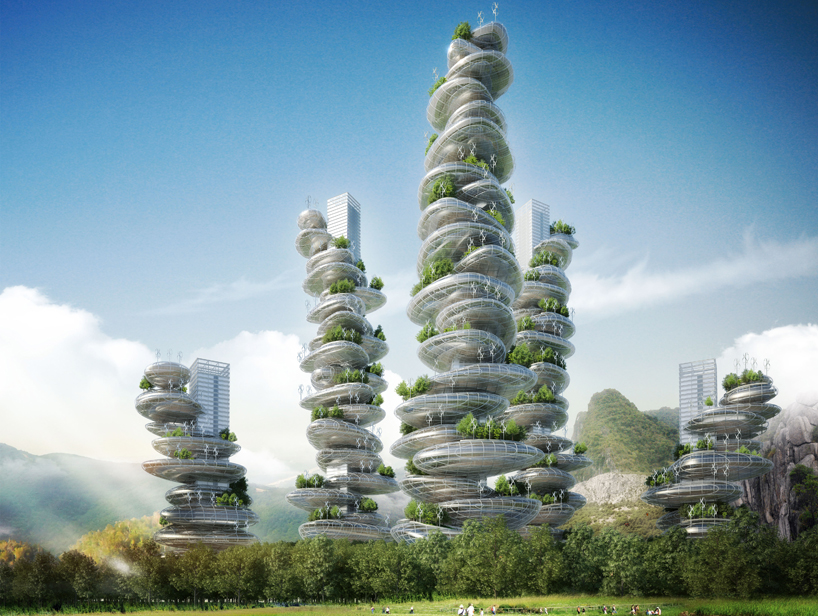 the towers in the delta context images © vincent callebaut architectures
the buildings are the acme of three interlaced eco-spirals, implanting biodiversity and density in an expanse of public orchards and urban agriculture fields. grey water from the pod-farms will be harvested in basins and recycled using phyto-depuration, a combination of biological, physical and chemical means wherein pollutants are removed by favoring the most efficient microbial and plant sedimentation, absorption and assimilation processes. the structural framework for each tower is a central vertical boulevard, orthogonal in shape and optimized for composting and circulation. each ‘pebble’ attached to this spine is a microcosm of the eco-city. steel rings delineate space around double decking and are enclosed by a glazed skin encrusted with a field of solar cells and a forest of wind turbines. hanging gardens fill interstitial spaces and welcome a variety of urban farming programs. the architecture posits a solution to the problem of exponential growth and large-scale consumption– that cities can be viable ecosystems with city blocks mimicking forests and buildings emulating the efficiency of trees.
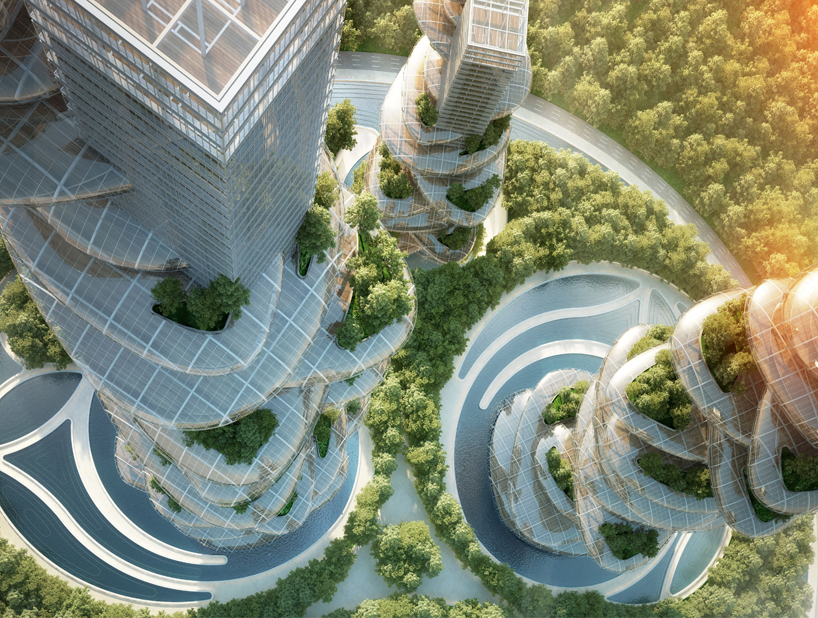 each tower rises from a series of eco-spirals images © vincent callebaut architectures
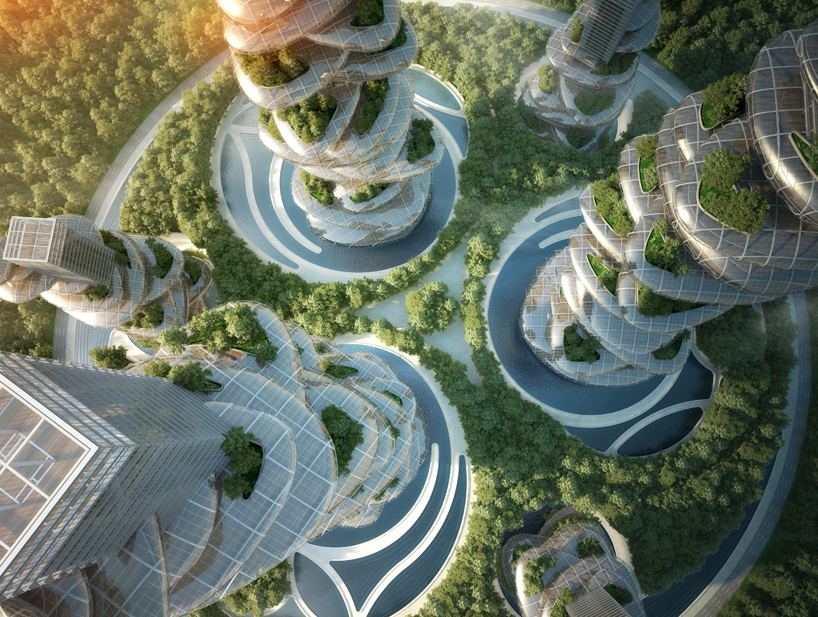 the orchards and greenery are rampant images © vincent callebaut architectures
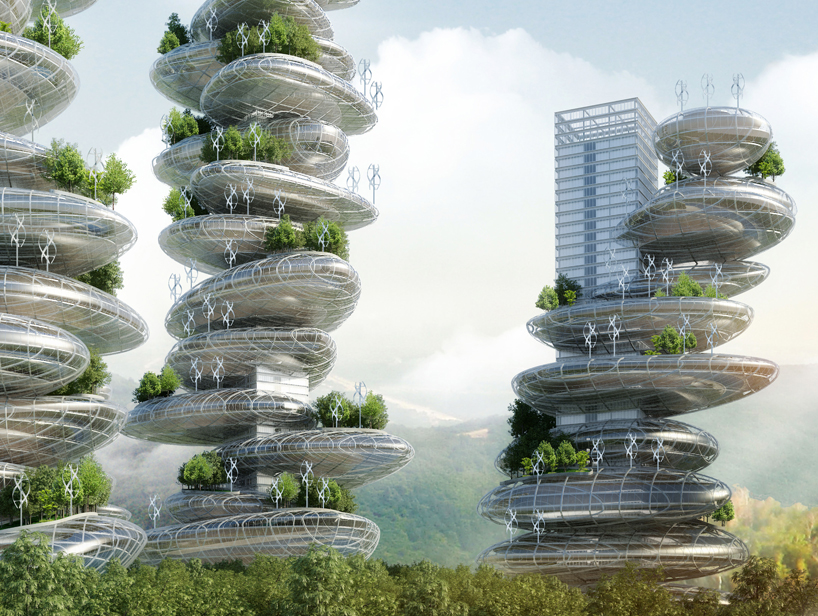 mimicking the prehistoric form of cairns, the ‘stacked’ pods make space images © vincent callebaut architectures
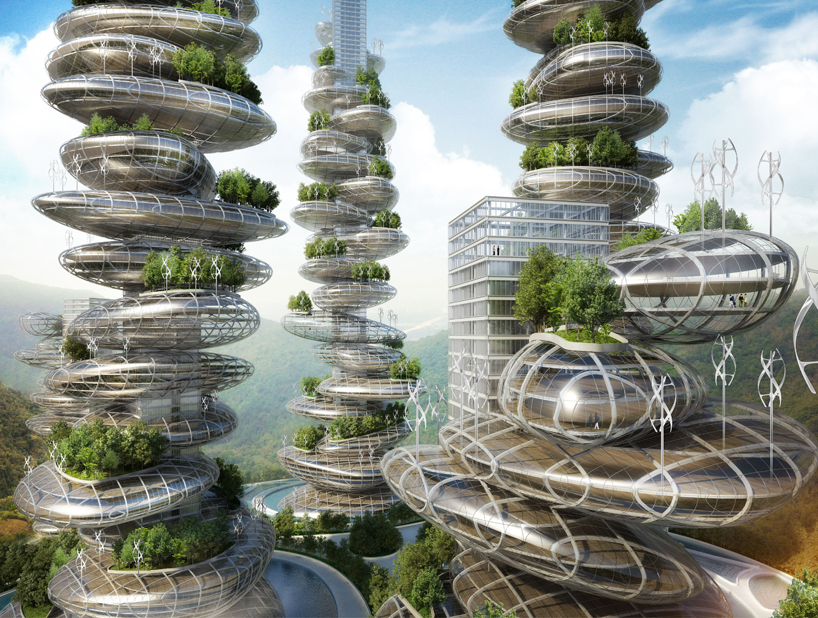 glazing, wind turbines and ample greenery enclose the double-decker pebble images © vincent callebaut architectures
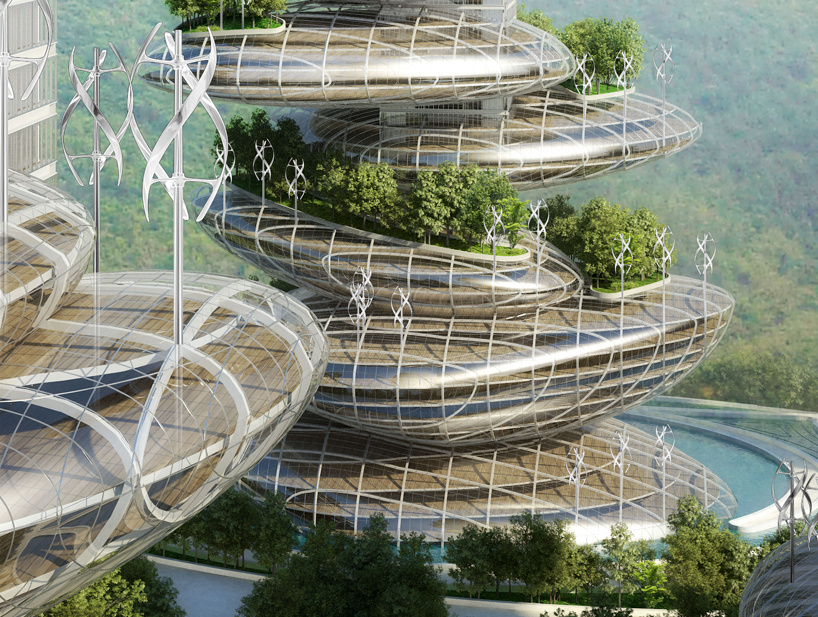 habitable stones pile and create program images © vincent callebaut architectures
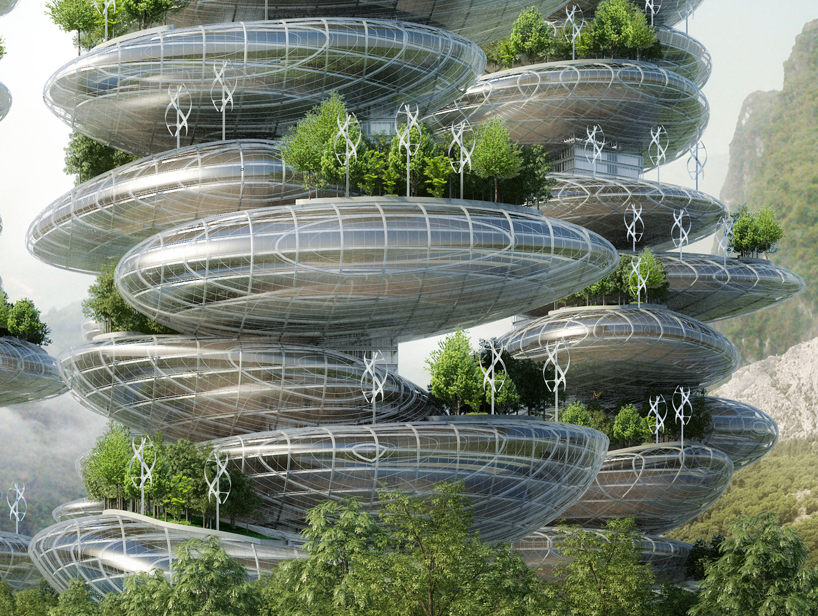 the project strives to be energy producing images © vincent callebaut architectures
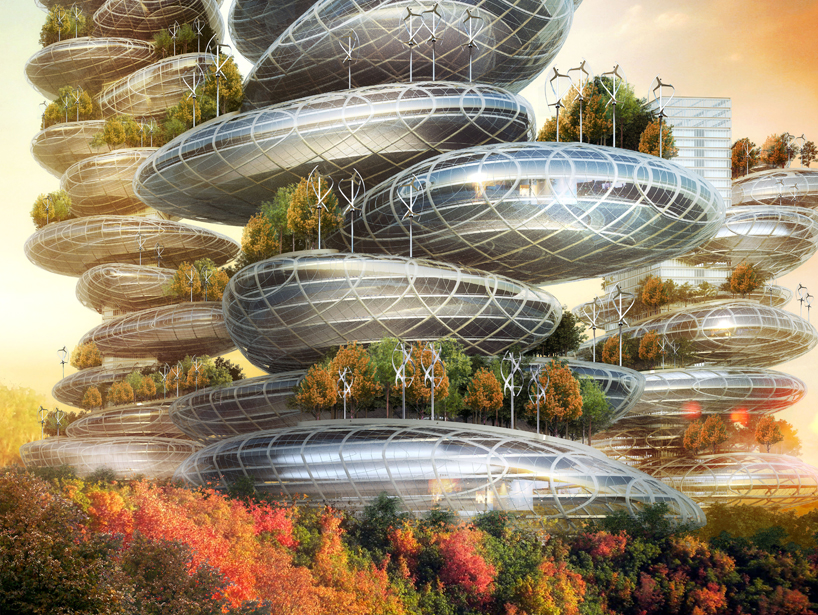 fall viewsimages © vincent callebaut architectures
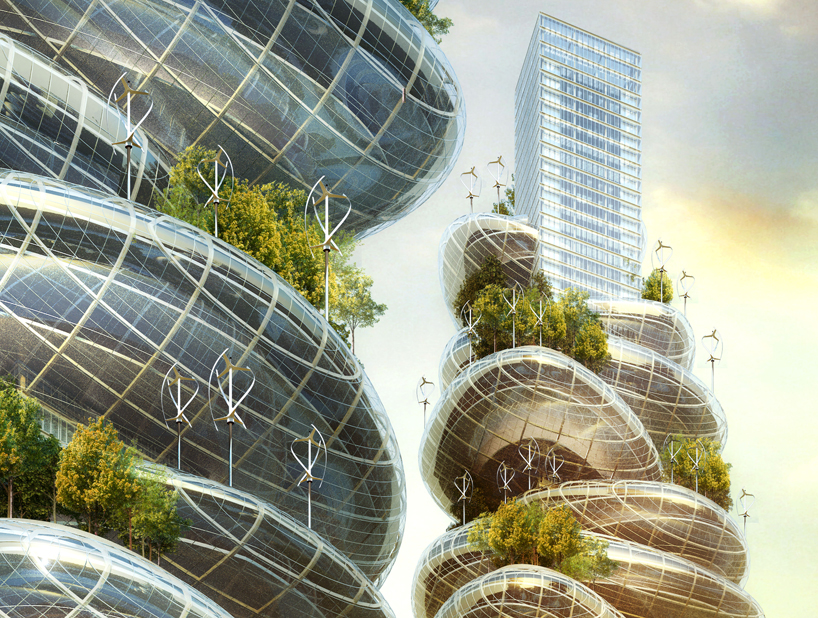 the vertical boulevard is the backbone of the curved formsimages © vincent callebaut architectures
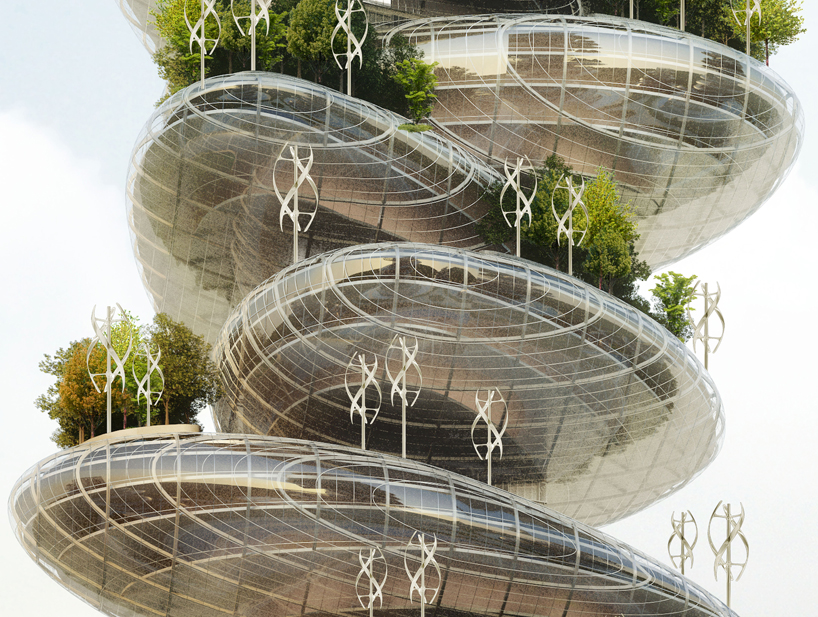 the forms accommodate the possibilities for urban agriculture images © vincent callebaut architectures
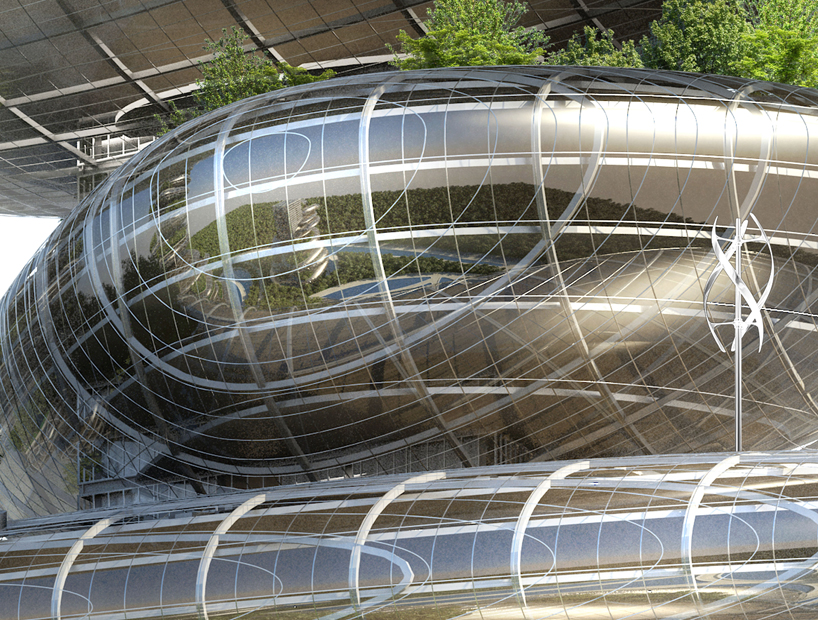 reflections of the towers on each other images © vincent callebaut architectures
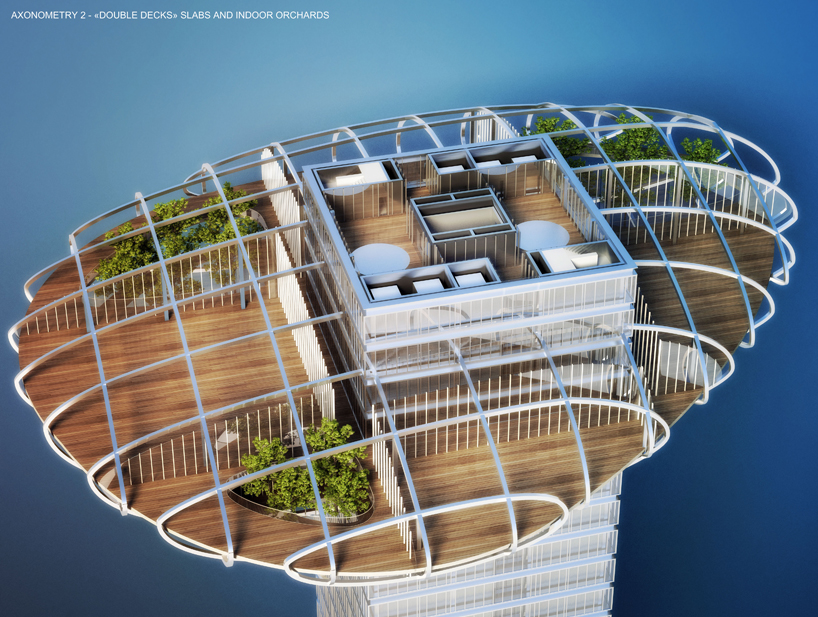 the pod’s structure and first deck images © vincent callebaut architectures
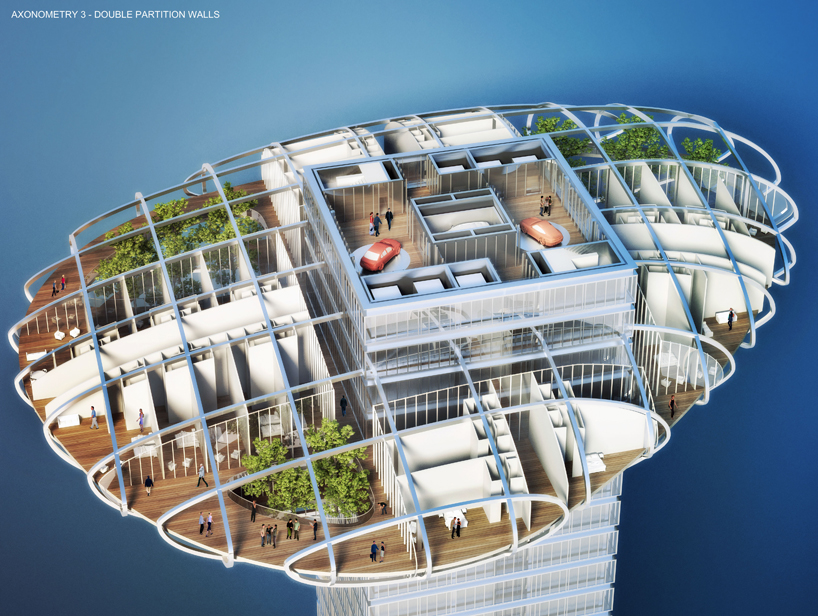 pods with building systems integration images © vincent callebaut architectures
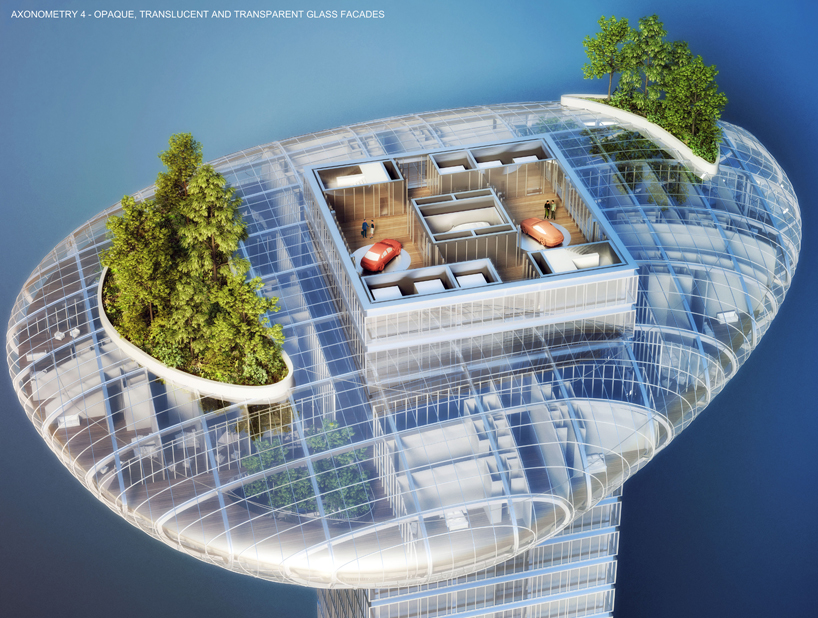 pod envelope images © vincent callebaut architectures
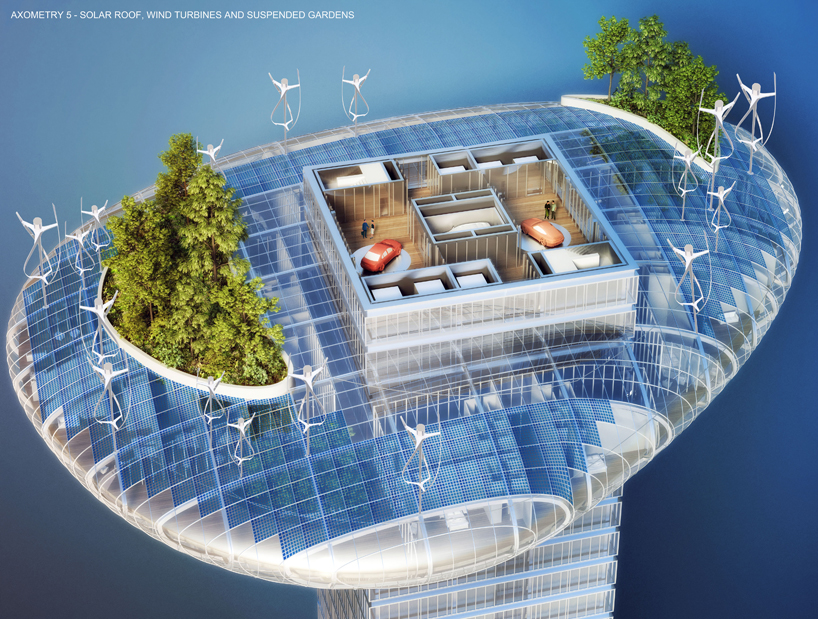 glazing is bolstered by photovoltaic cells and axial wind turbines images © vincent callebaut architectures
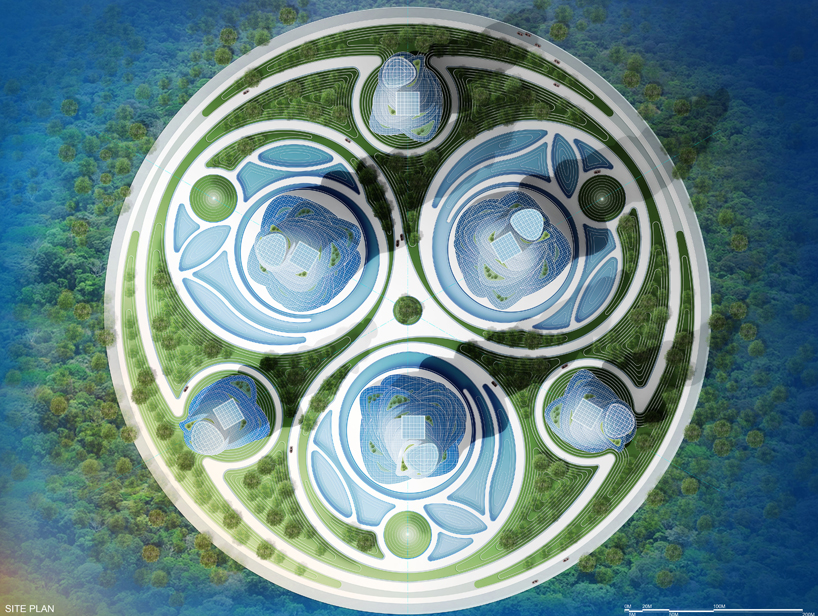 site plan images © vincent callebaut architectures
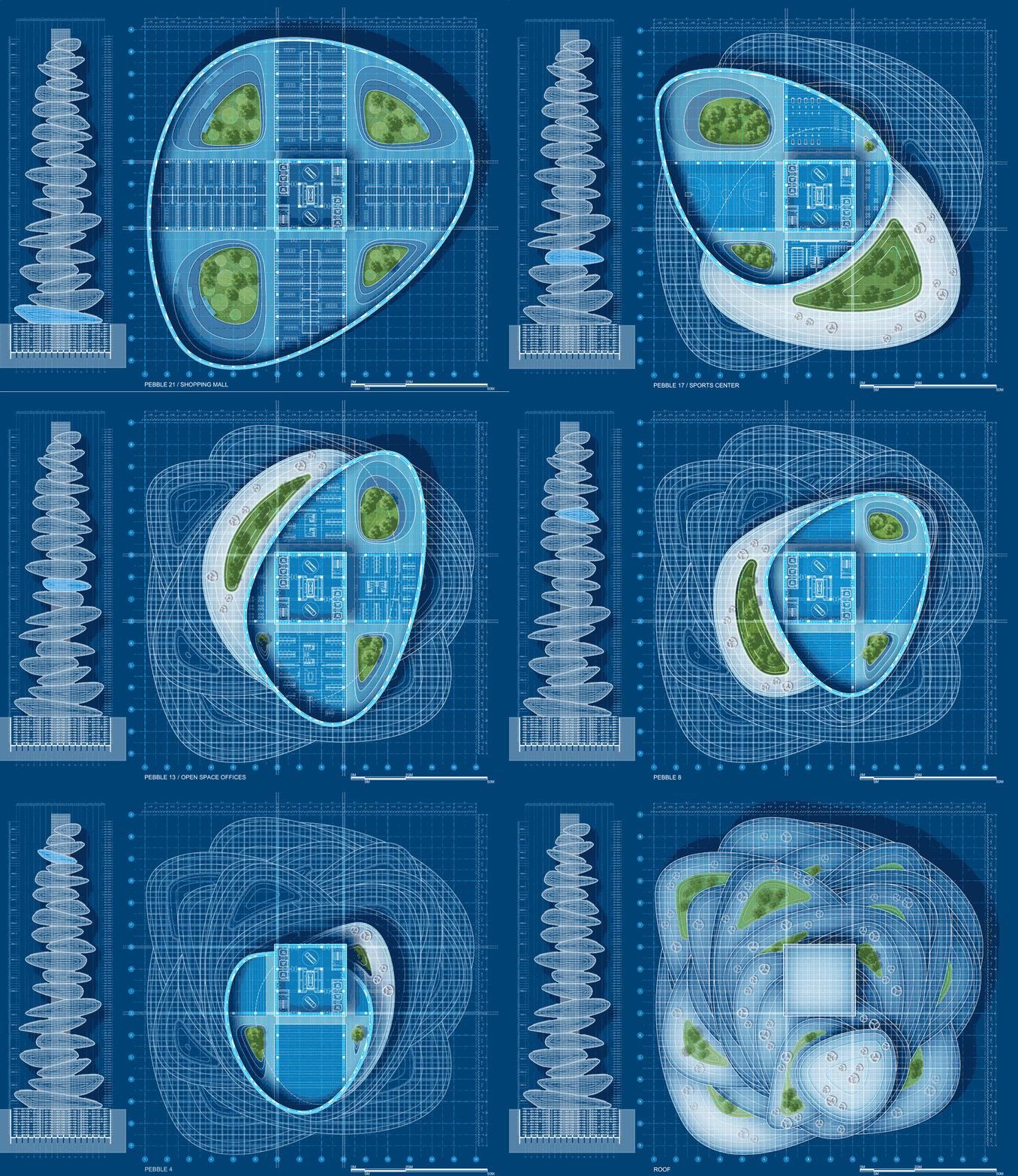 plans of the 21 pebbles in the cairnimages courtesy of vincent callebaut
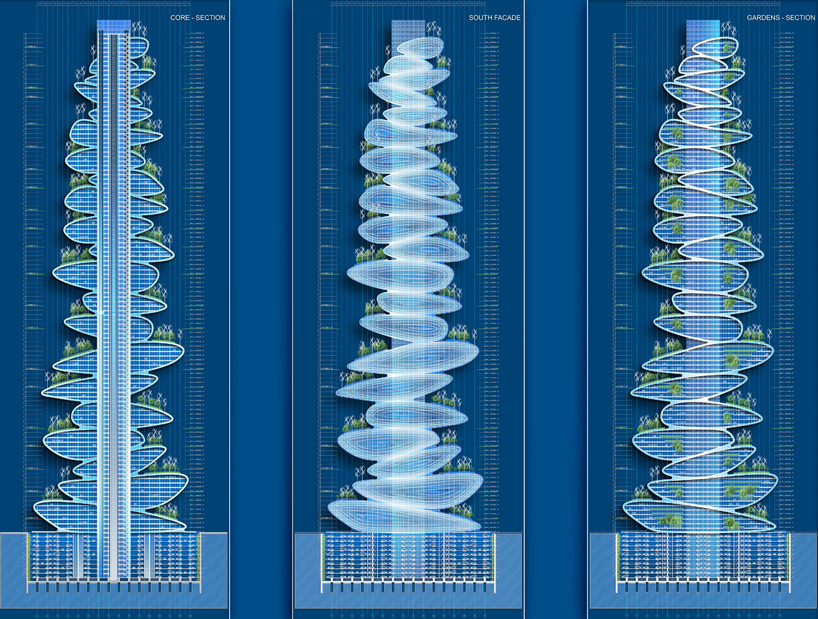 sections of the towersimages © vincent callebaut architectures
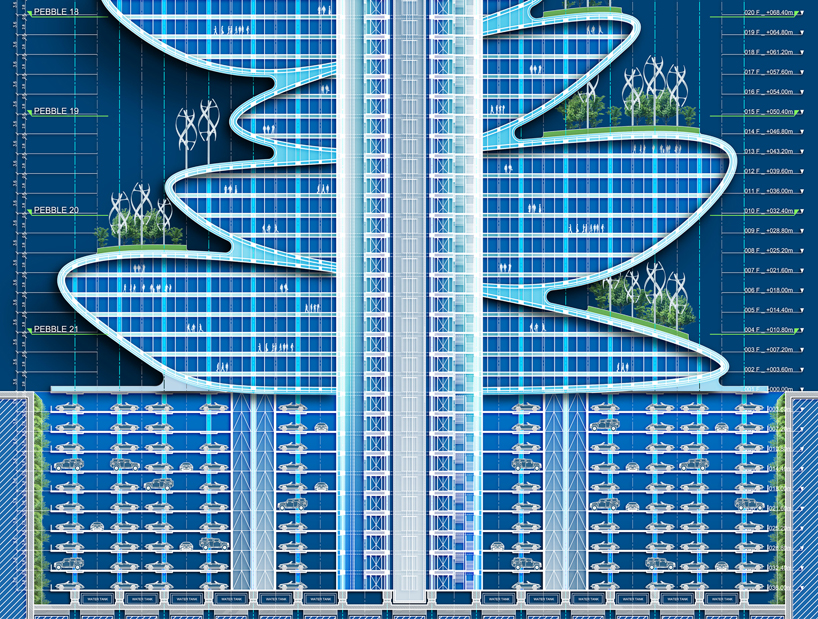 section detail of the ground level garage space images © vincent callebaut architectures
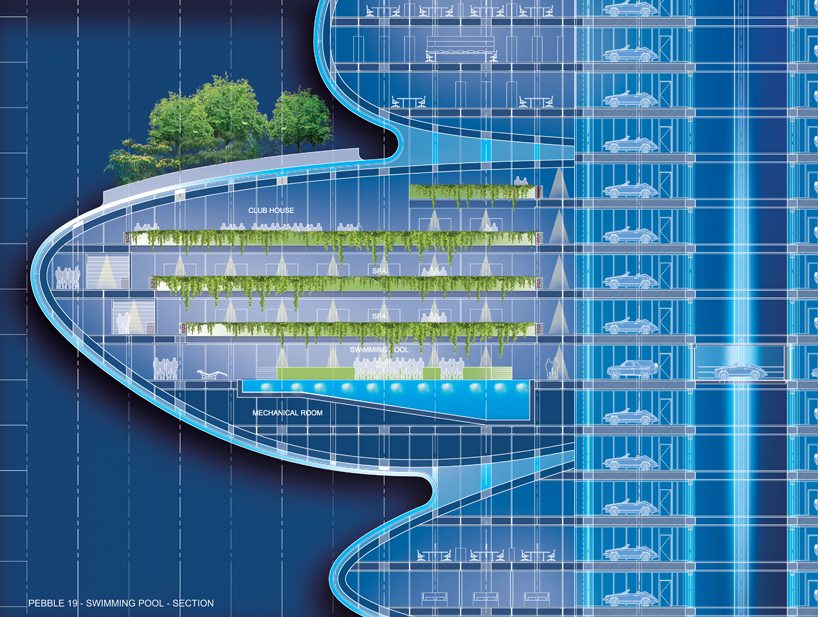 section of common areas / swimming poolimages © vincent callebaut architectures
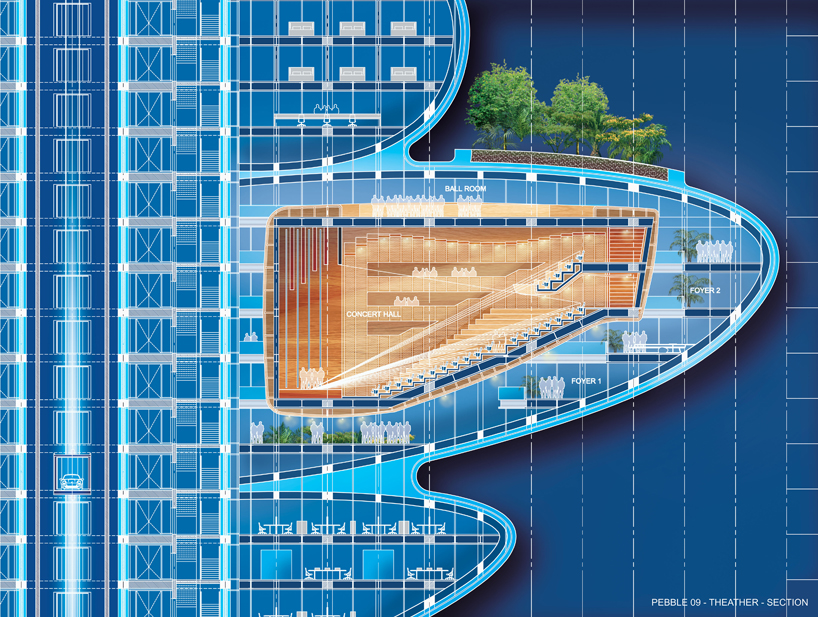 section of concert hall images © vincent callebaut architectures
URBAN FARMING (84)
 Oct 05, 2023
 Aug 18, 2023
 Mar 12, 2023
 Dec 22, 2022
 Dec 14, 2022
VINCENT CALLEBAUT ARCHITECTURES (36)
 Feb 03, 2024
 Sep 25, 2023
 May 03, 2023
 Mar 13, 2023
 Jan 10, 2023
PRODUCT LIBRARY
 Apr 02, 2024
 Mar 31, 2024
 Mar 21, 2024
 Mar 20, 2024