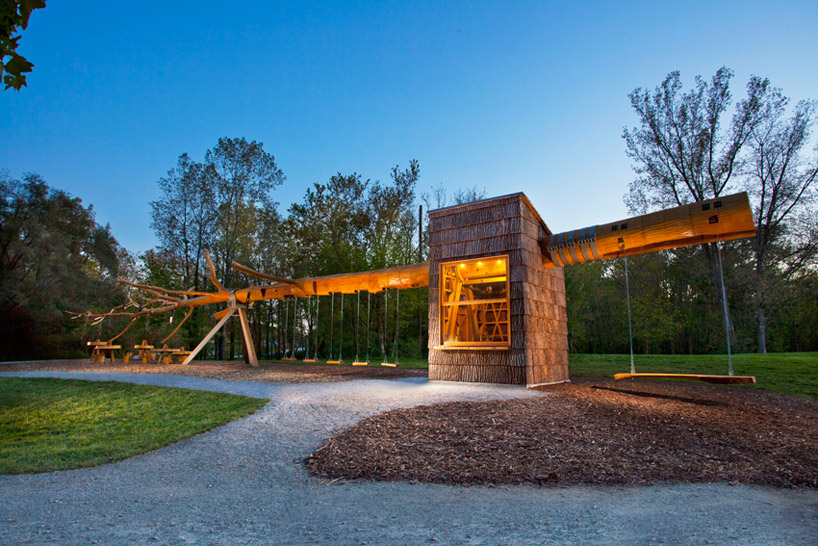
visiondivision: chop stickall images courtesy of visiondivision
commissioned by the indianapolis museum of art to erect a concession stand for their 100 acres: the viriginia b. fairbanks art & nature park, swedish architecture firm visiondivision (anders berensson and ulf mejergren) have realized ‘chop stick’, a design based on the universal notion of that you need to sacrifice something in order to make something new.
‘every product is a compound of different pieces of nature, whether it is a cell phone, a car, a stone floor or a wood board; they have all been harvested in one way or another. our project is about trying to harvest something as gently as possible so that the source of what we harvest is displayed in a pure, pedagogic and respectful way—respectful to both the source itself and to everyone visiting the building,‘ the architects say.
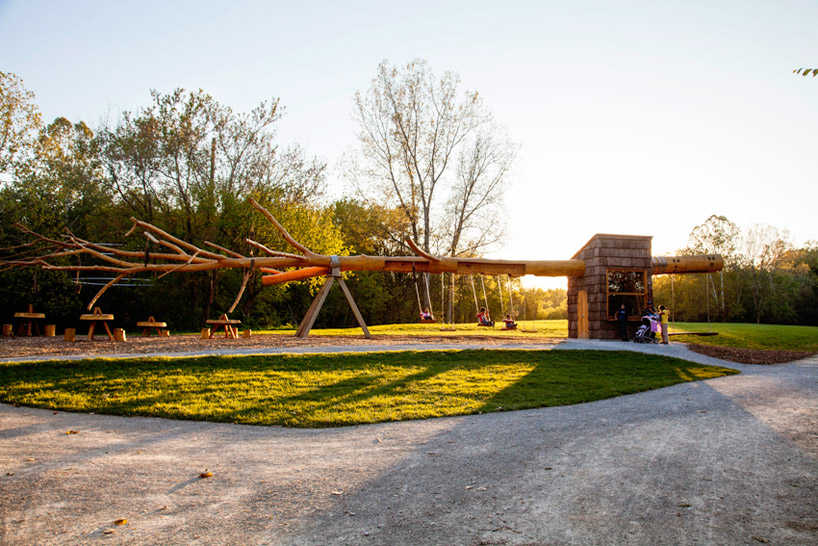 exterior viewimage courtesy of visiondivision
the raw material selected for the structure is a 100-foot yellow poplar, the state tree of indiana which is regarded for its beauty, respectable size and good properties as a hardwood. visiondivision found their ideal tree in anderson, indiana, transforming it into a useful building.
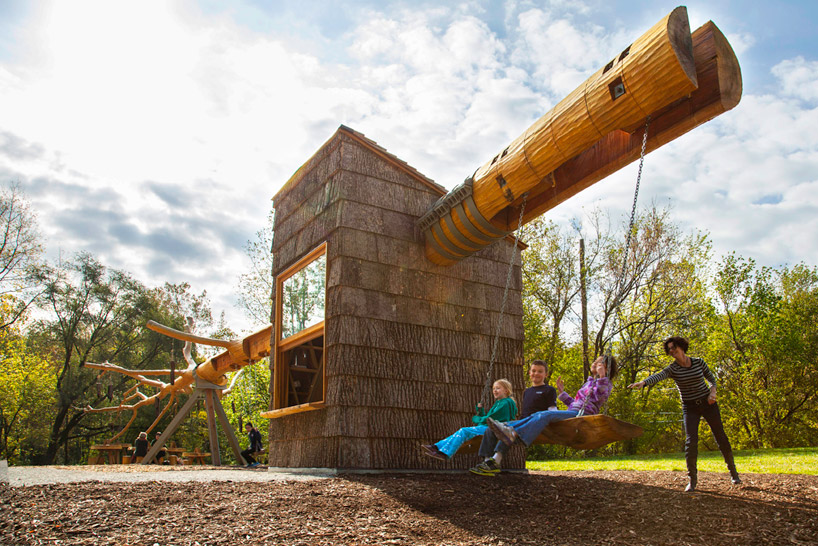 swings made from part of the trunkimage courtesy of visiondivision
the tree was transported to the park site, where it was suspended as a horizontal beam, the structure to be made almost entirely out of the tree itself. the bark was removed from its surface, in order that it does not fall on bystanders, a process which naturally occurs as the moisture content in the wood drops, causing the tree to shrink and the bark to lose its grip. craftsmen loosened entire cylinders of bark from the trunk which were then flattened and cut into standard shingle length, carefully stacked and placed under pressure to avoid curling. the stacks are then kiln dried to the proper moisture content, sterilized and kept in climate controlled storage until ready for use. bark shingles are very durable, lasting up to 80 years, and are maintenance free. once debarked, pieces of wood are extracted from the suspended tree and used for various components of the concession stand; structural support of the entire construction, as pillars and studs for the kiosk, swings under the tree for kids, benches and tables to be placed under the tree’s crown, from which special fixtures made out of branches will hang.
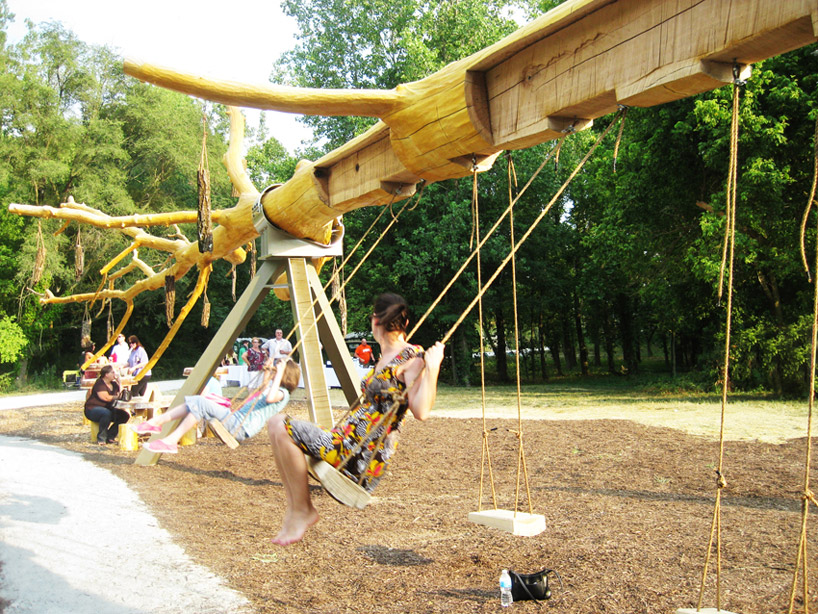 swings made from part of the trunkimage courtesy of visiondivision
on a smaller level, berensson and mejergren are exploring ways in which they can use other parts of the tree in the concession stand including its root system, which is separated from the tree when it is cut down. for example, the roots have many edible features, such as rot bark which could be used to make tea and tonics sold at the kiosk. pressed leaves and flowers taken from the tree will act as ornaments on the front glass of the structure. there is also the possibility to extract honey from the poplar tree flowers. branches less than five inches in diameter are cut away to prevent eventual rotting, and those remaining used for details such as legs for chairs and tables, or ground down into sawdust for use as insulation.
yellow poplar syrup was extracted from the tree and will be sold from the kiosk, giving visitors the opportunity the eat the building.
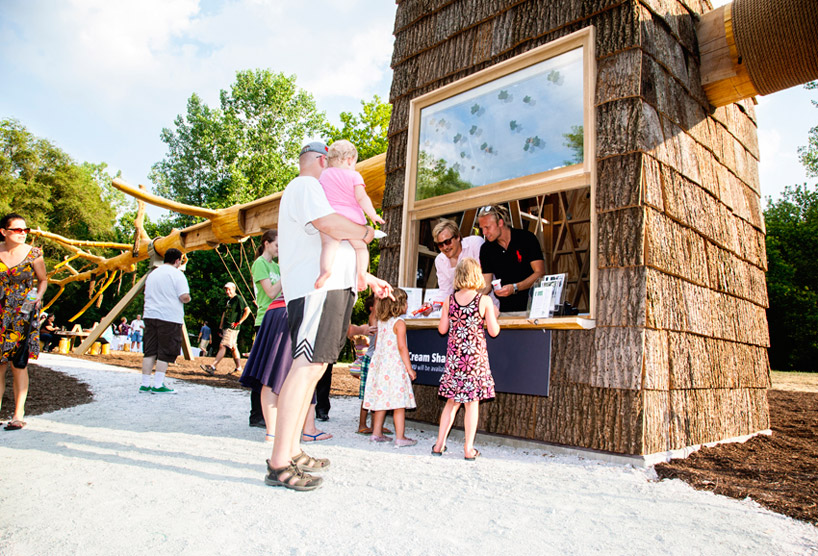 the VD-team handing out ice cream at the opening partyimage courtesy of visiondivision
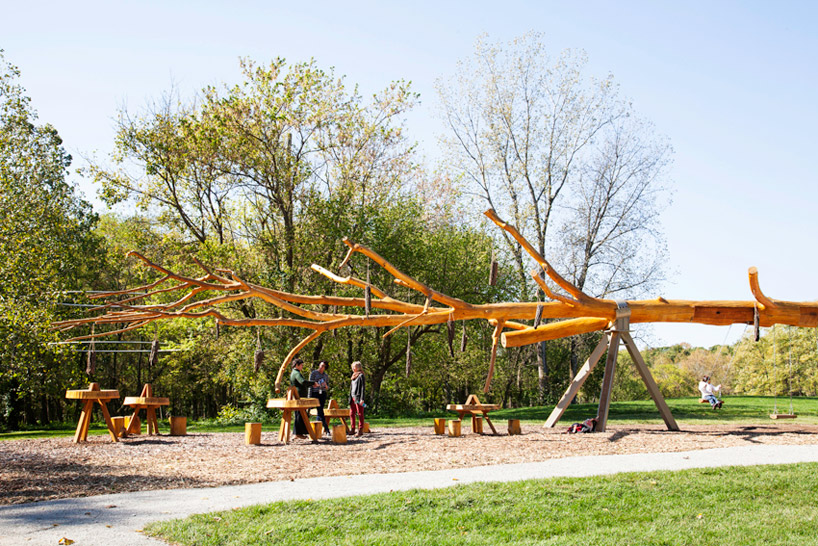 the top part of the tree with tables and chairsimage courtesy of visiondivision
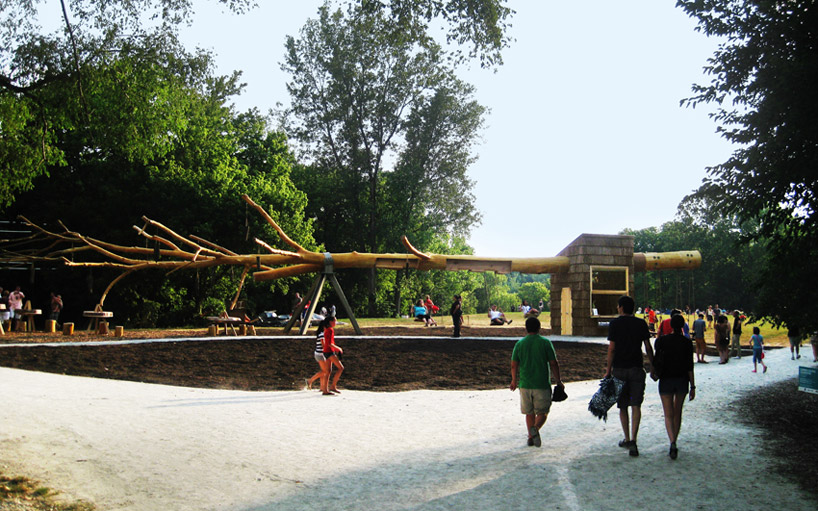 typical summer afternoonimage courtesy of visiondivision
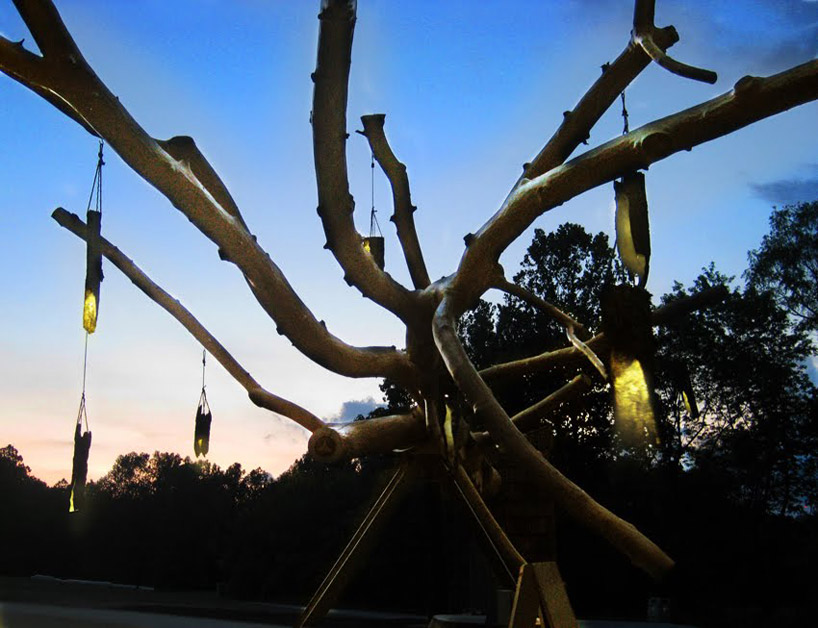 at night time with the lamp shades from the bark of the smaller limbsimage courtesy of visiondivision
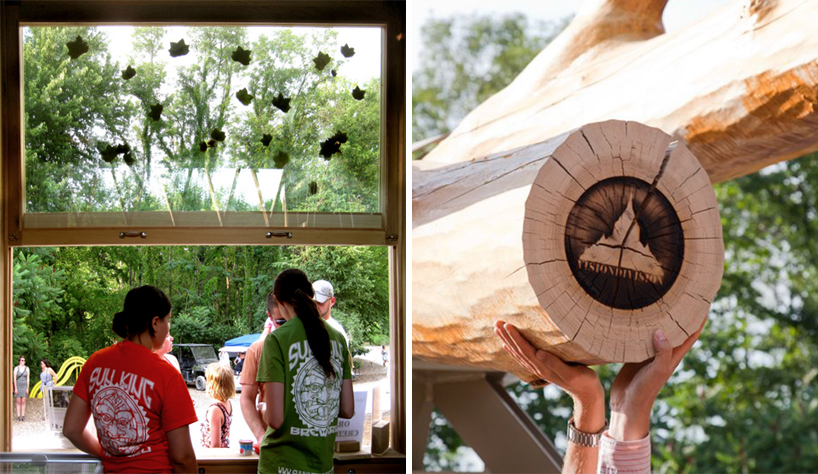 (left) interior of the kiosk(right) exterior branding
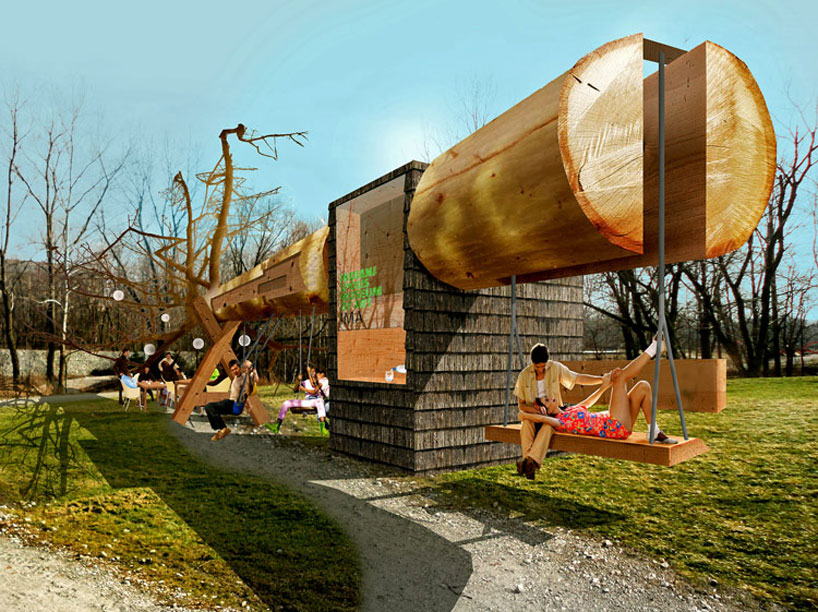 visual rendering of the ‘chop stick’ concession stand by visiondivision for the indianapolis museum of artimage courtesy of visiondivision
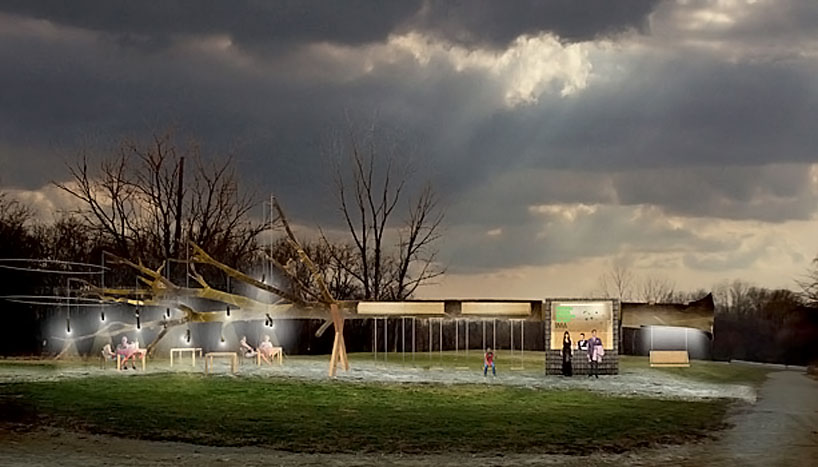 image courtesy of visiondivision
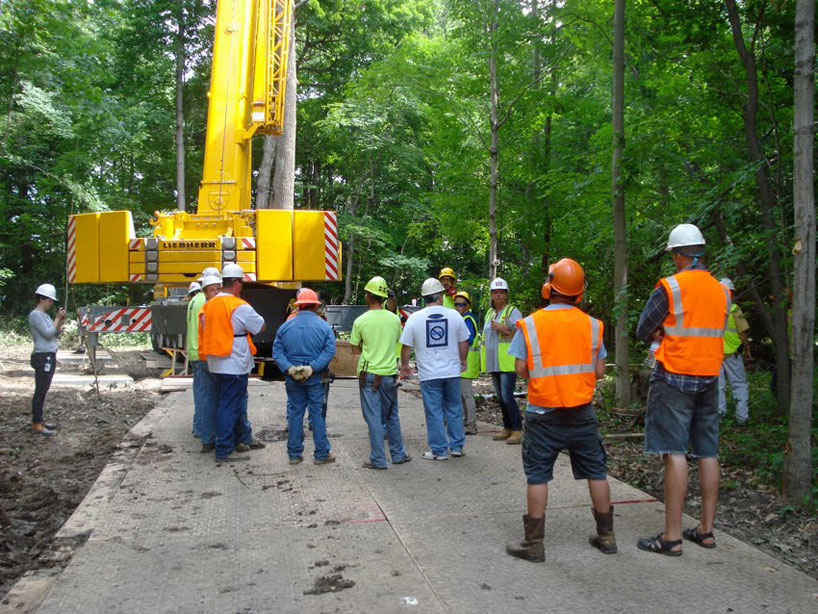 conference before the removal of the selected poplar treephoto by donna sink
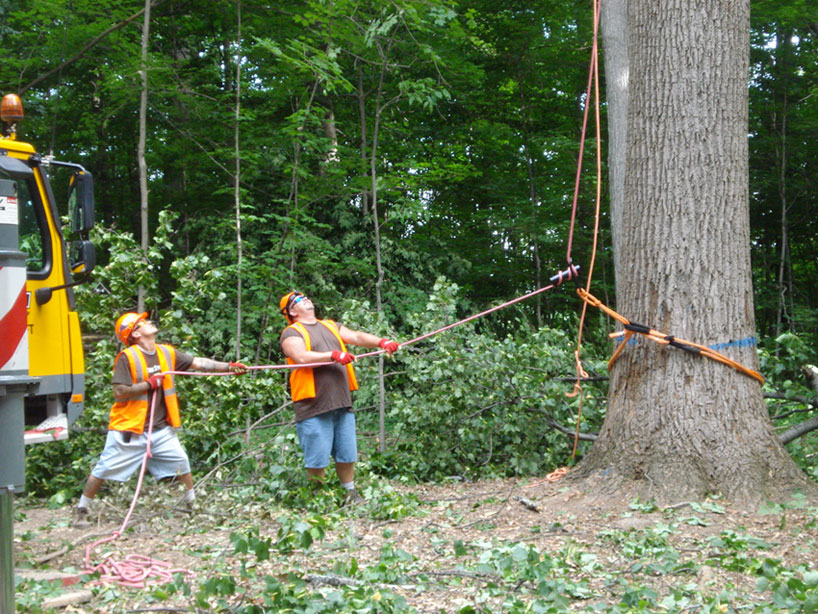 preparing the tree to be cutphoto by donna sink
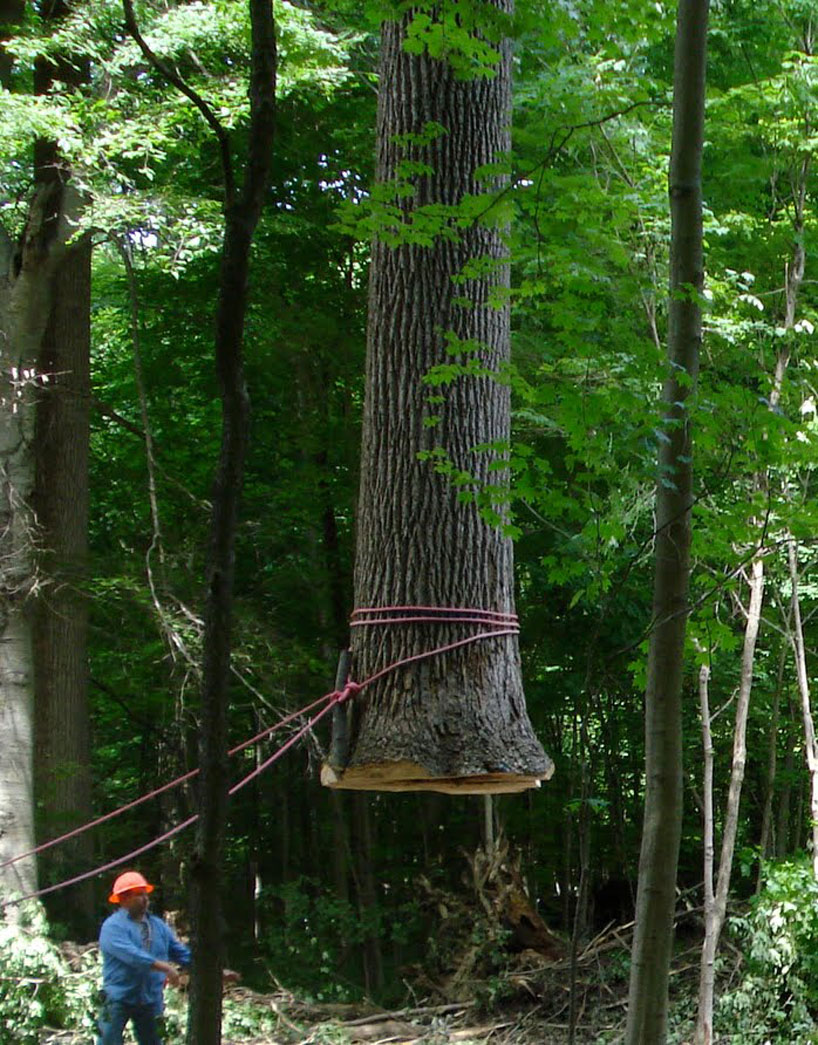 once cut the trunk was pulled away from its roots raised by a large cranephoto by donna sink
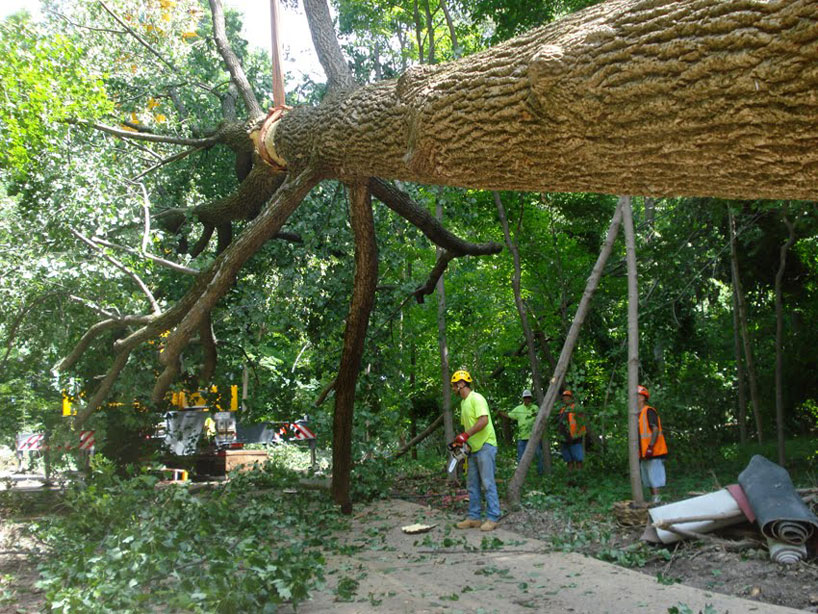 arranging the tree horizontallyphoto by donna sink
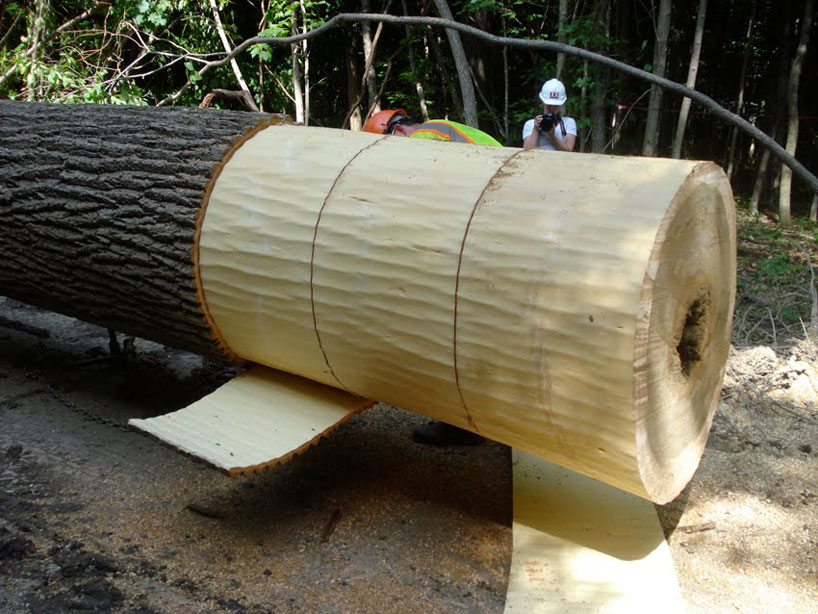 debarking the tree in stripsphoto by donna sink
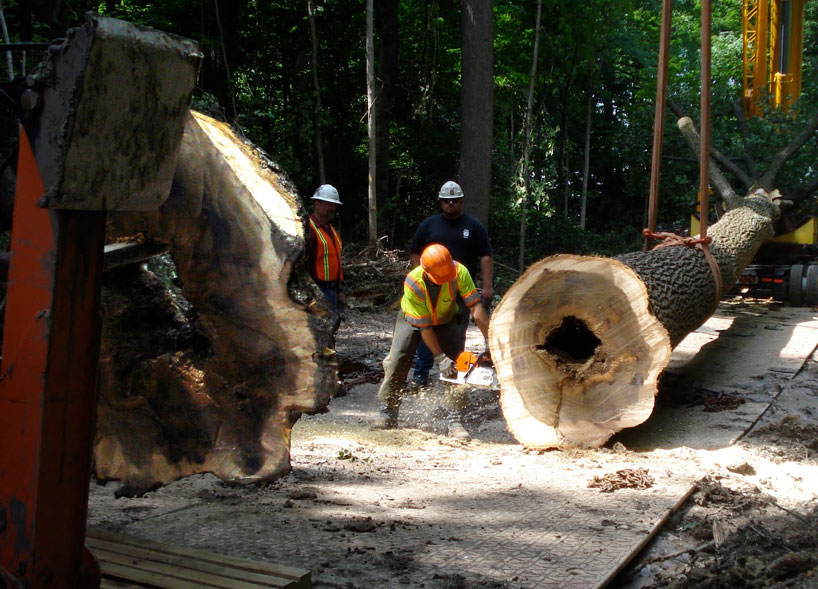 cutting excess wood to make tables for the kioskphoto by donna sink
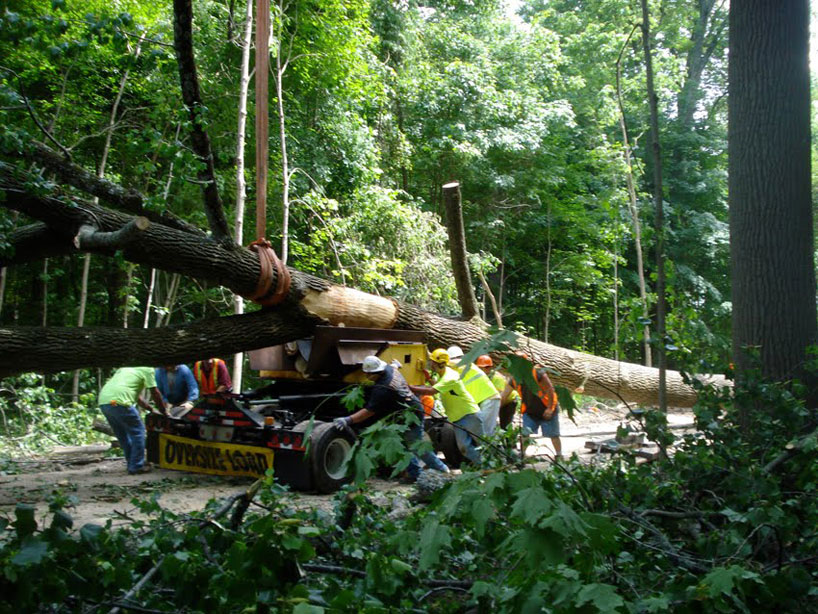 preparing the tree for transportation to the park sitephoto by donna sink
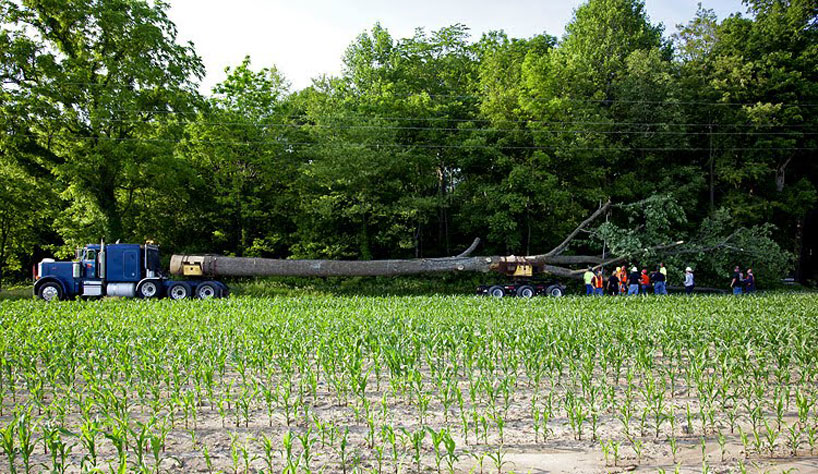 preparing the tree for transportation to the park sitephoto by donna sink
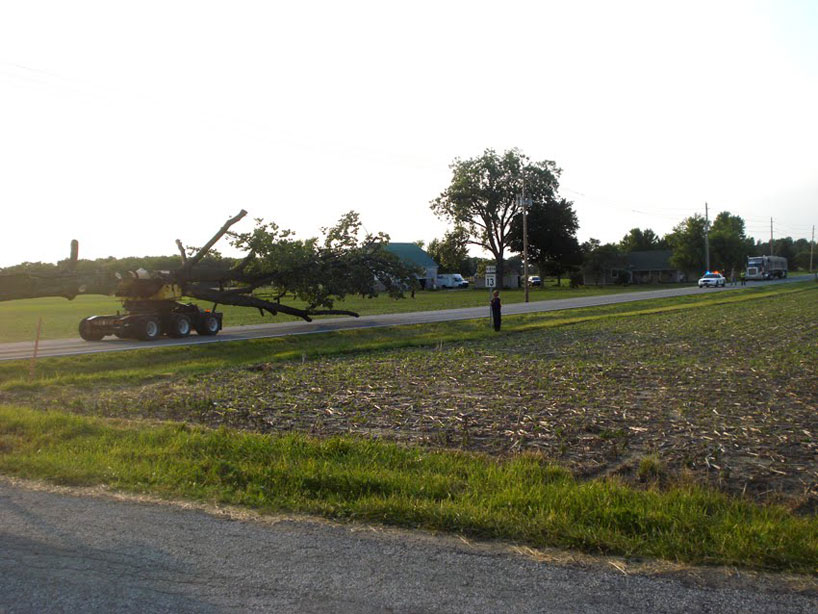 en route to the park sitephoto by donna sink
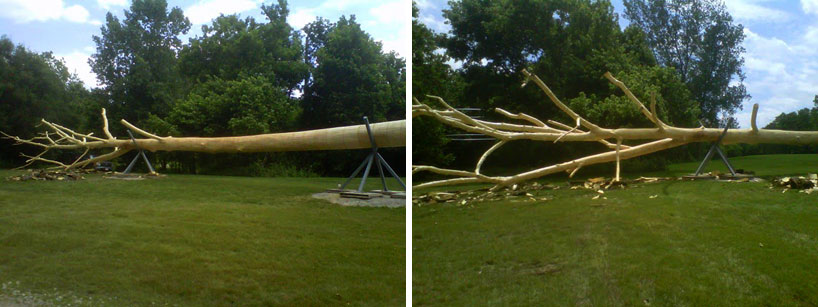 the debarked tree on locationphoto by donna sink
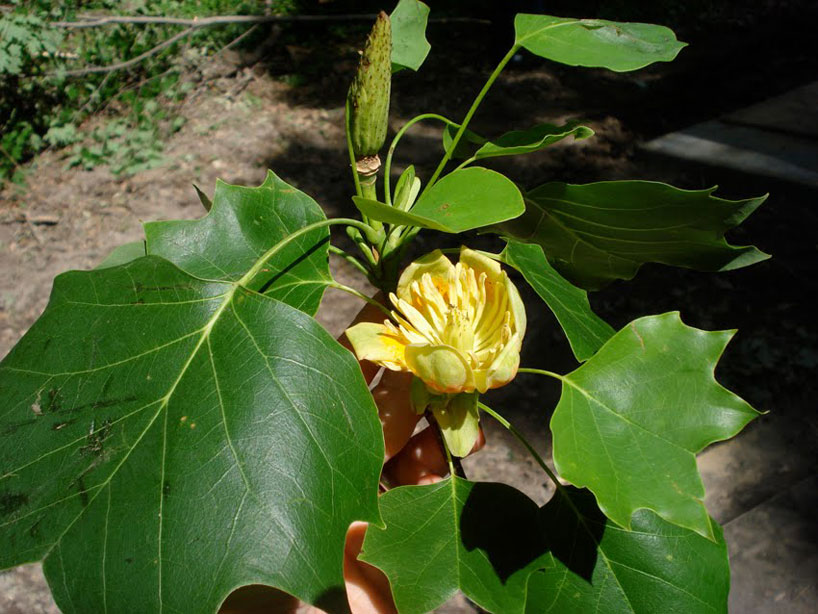 poplar tree flower in which honey could be extracted from for sale at the concession standphoto by donna sink
the making of ‘chop stick’
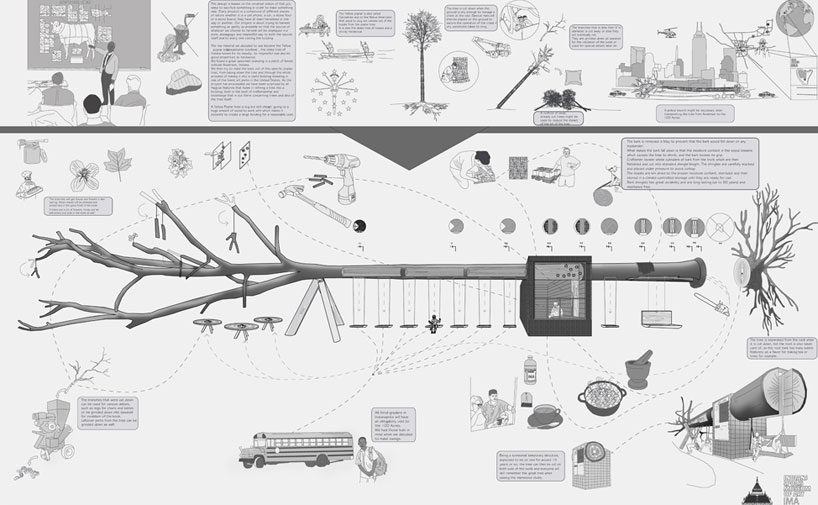 diagram of the entire process of removing the tree and transforming it into a architectural structureimage courtesy of visiondivision
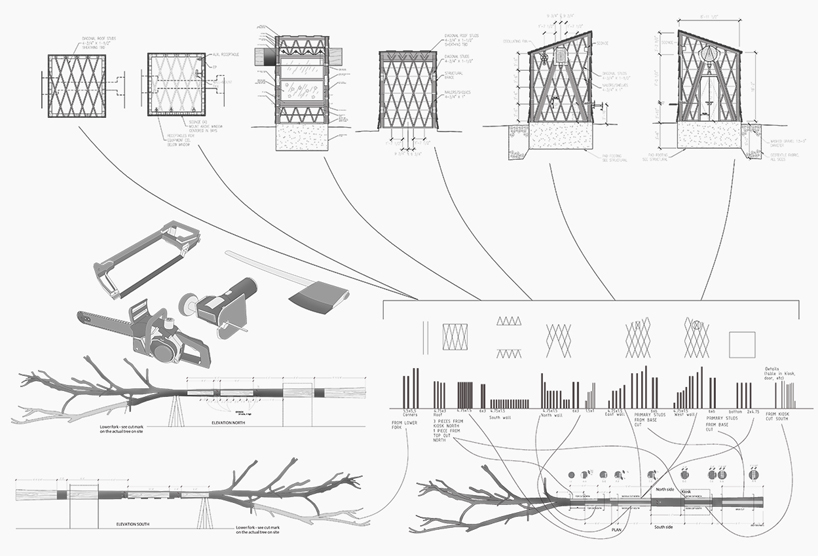 the varying cuts made to the wood
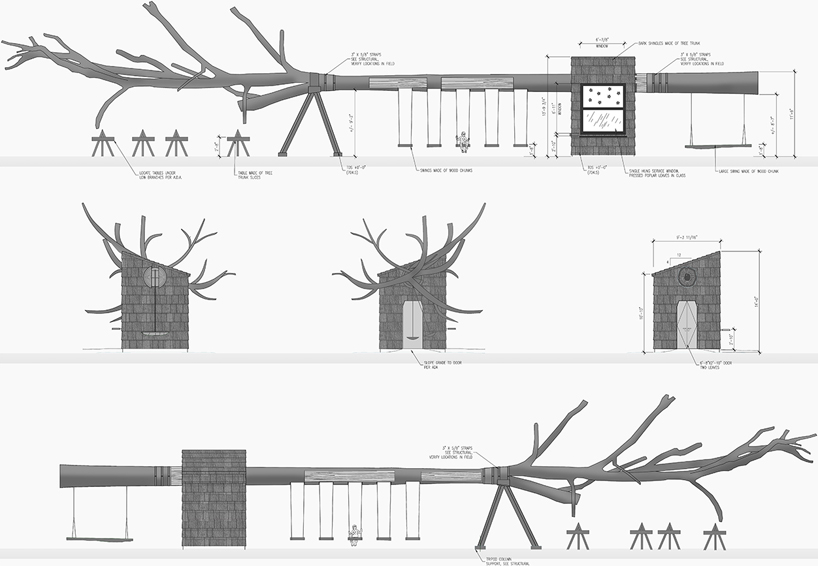 the varying facades of ‘chop stick’
project info:
architects: visiondivision / anders berensson & ulf mejergrenlocal architect: donna sink client: indianapolis museum of artslocation: 100 acres; the virginia b. fairbanks art & nature park at the indianapolis museum of arts, indianapolis, in, usacurators: lisa freiman & sarah greenstructural engineer: dave steiner contractor: the hagerman grouplogger: dave and dave images: eric lubrick (ima), donna sink, visiondivision
VISIONDIVISION (31)
 Sep 10, 2014
 Feb 03, 2014
 Oct 29, 2013
 May 17, 2013
 Oct 08, 2012
PRODUCT LIBRARY
 Apr 02, 2024
 Mar 31, 2024
 Mar 21, 2024
 Mar 20, 2024