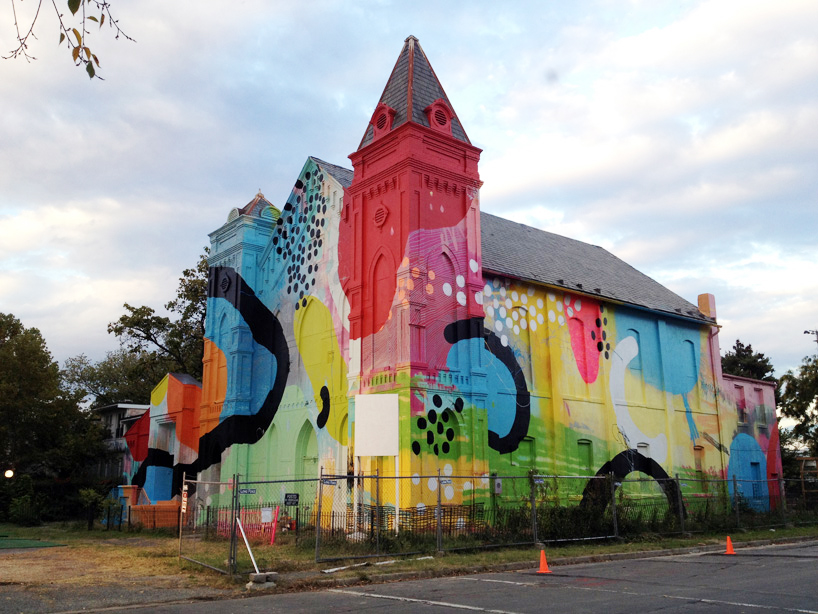
700 delaware by HENSE
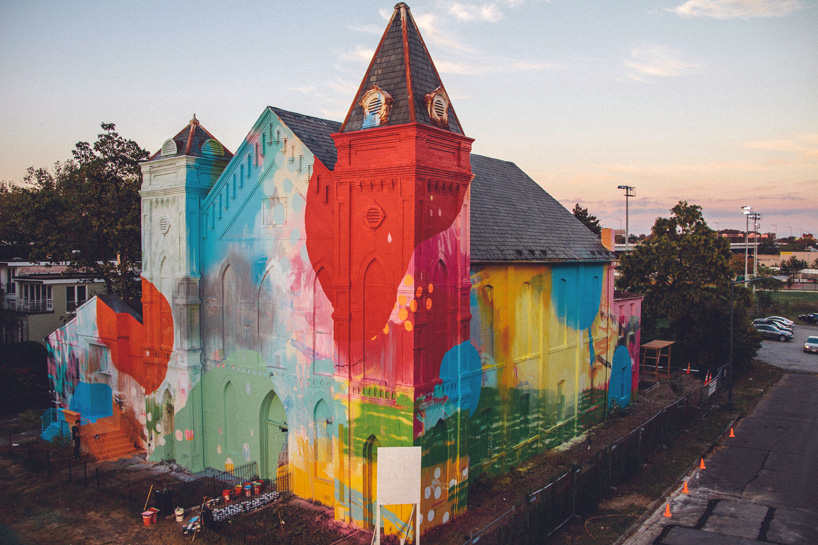
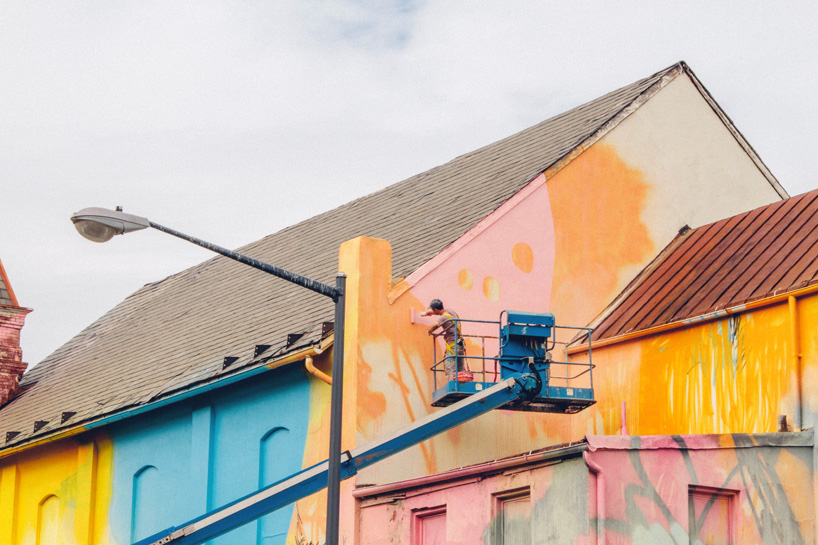
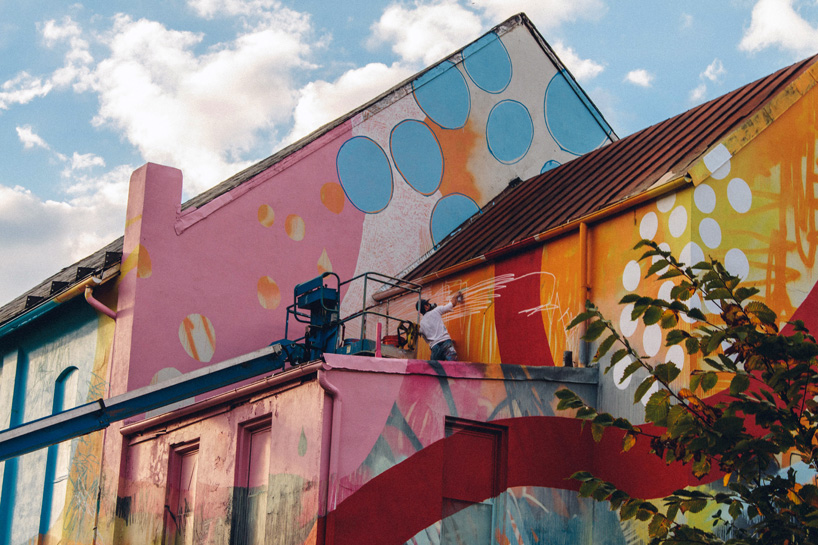
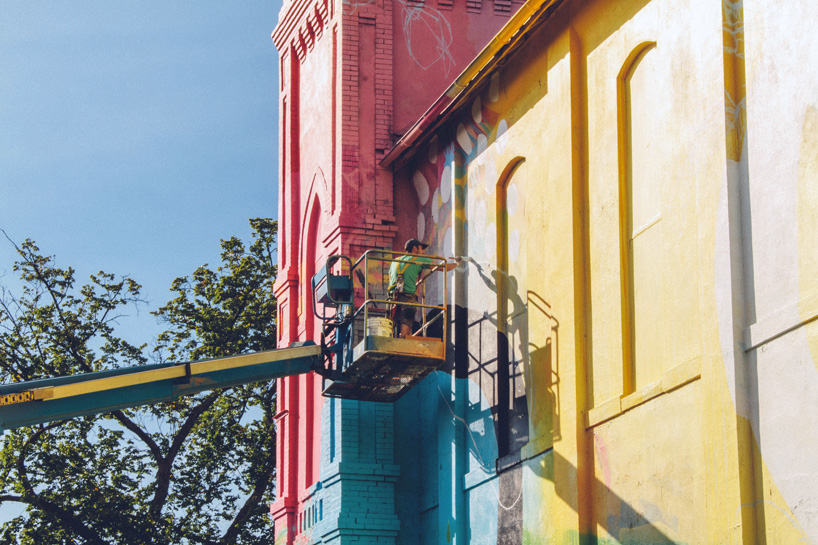
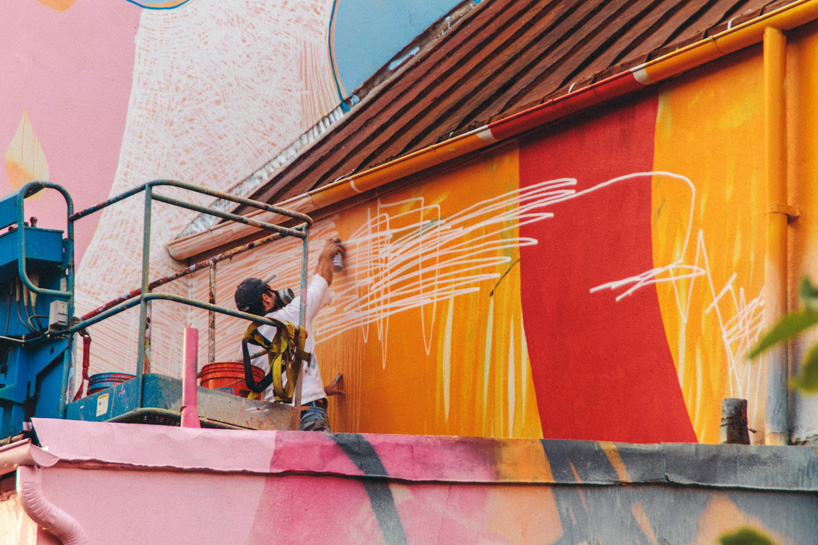
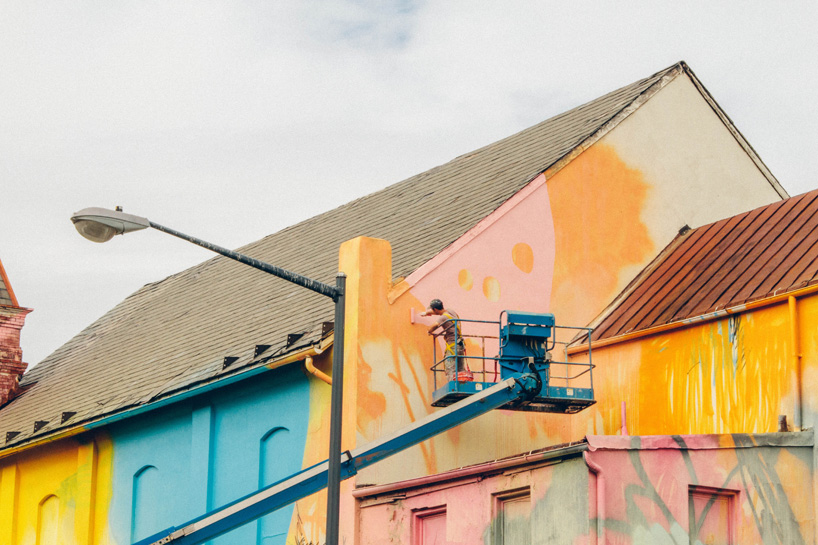
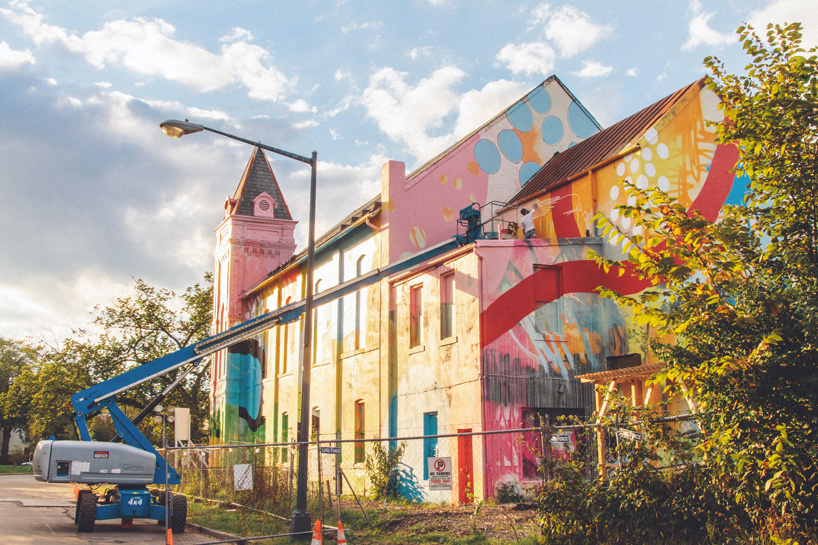
last year HENSE was commissioned to transform an abandoned church into art installation.the building is located directly across the street from a planned 20,000sqft museum that will house the rubell’s collection of art and a newly planned hotel.
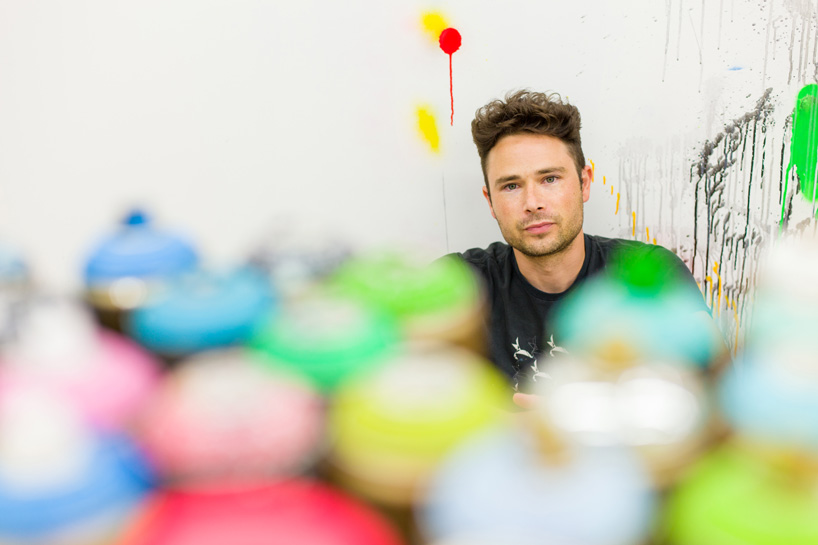
the artist explained the project in more detail to designboom…
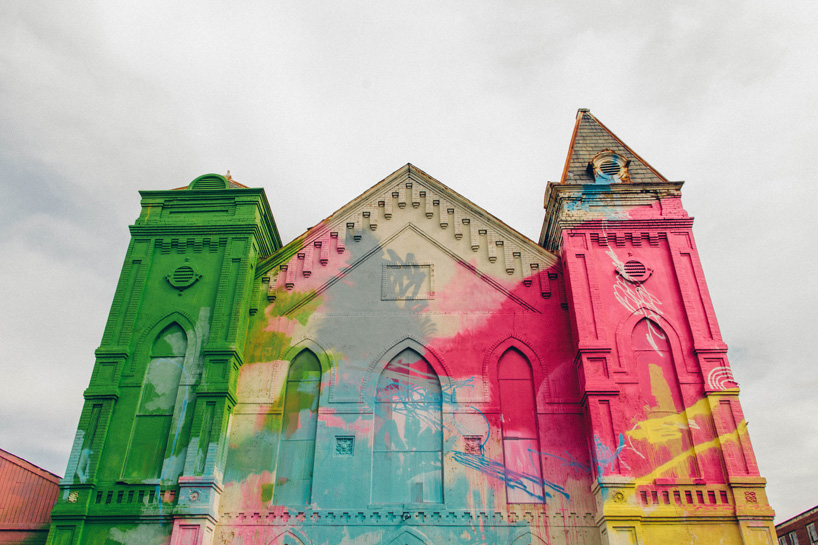
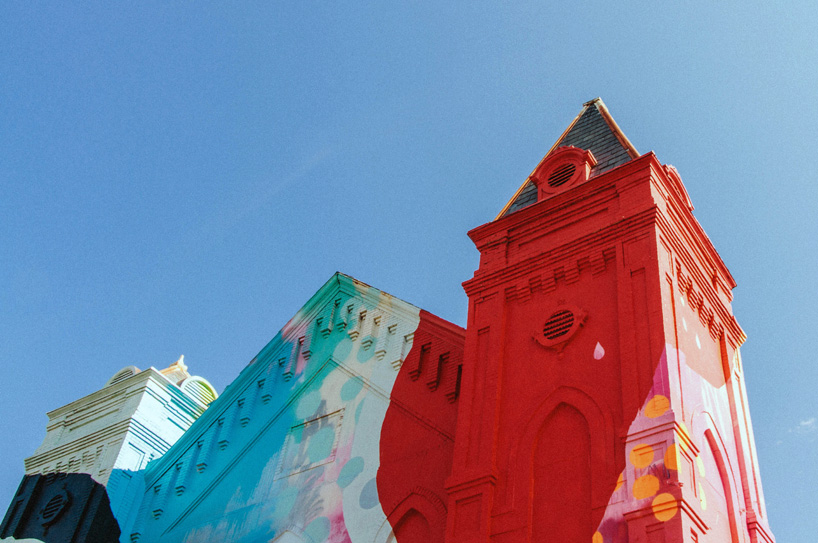
‘the project in washington DC was a fun one and I worked with a small crew to complete it. the area where the chruch is located in washington is a part of town that has huge potential to be the next arts district and this project is the first step in bringing some life and color into the area. taking an existing building like the church and painting the entire thing re-contextualizes it and makes it a sculptural object. we really wanted to turn the church into a three-demential piece of artwork. with projects like this one, we really try to use the existing architecture as inspiration for the direction of the painting.’
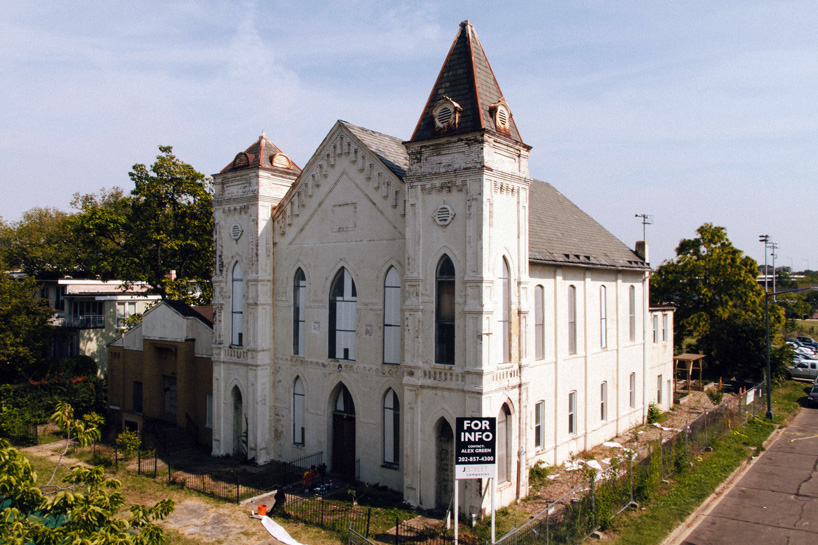
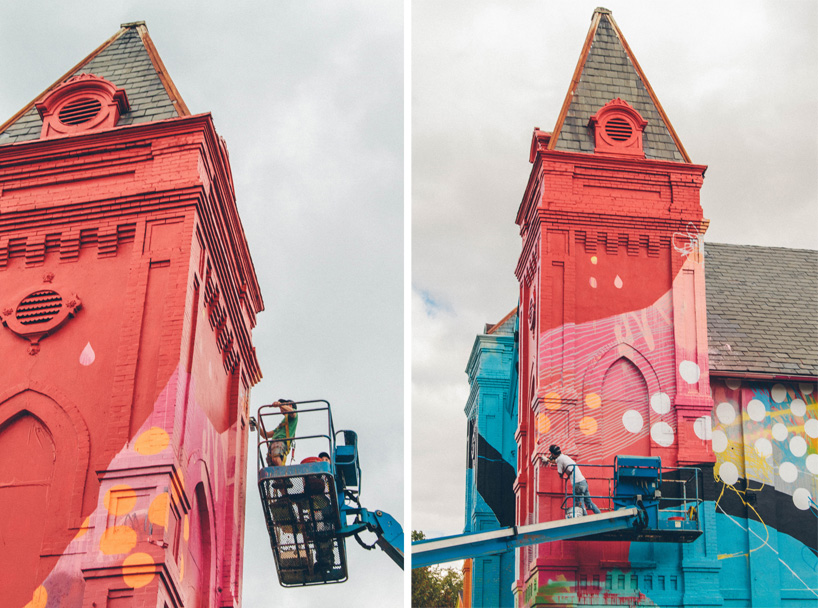
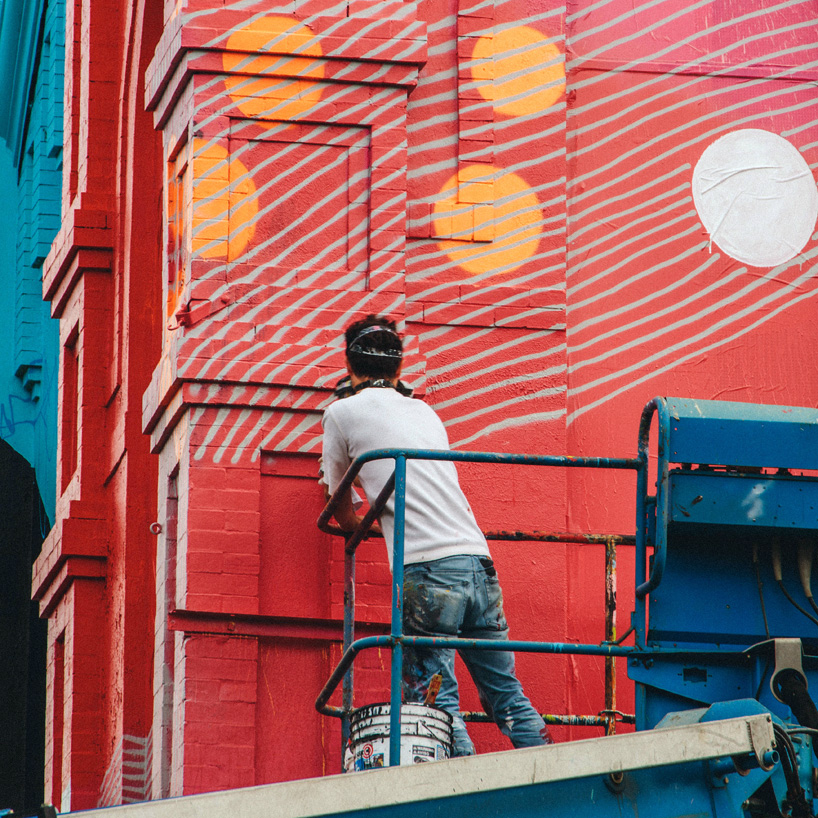
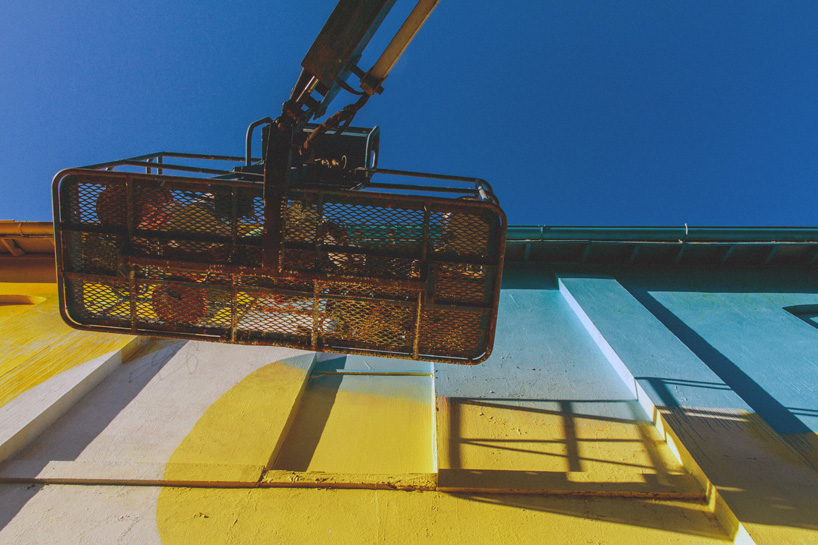
‘I did several concept drawings for the church to present to the owner as rough ideas of aesthetic direction and knew that visually, I wanted it to be drastically different from what it looked like before painting it. I also wanted to use very bright and bold colors to catch a viewers attention from far away. most of my works are done in layers and I’m never afraid to change the image. the first step was to just get paint and color on every side and surface of the building. we then started developing large shapes and gestures that would takes days to paint. the entire process took several weeks of layering and working.’
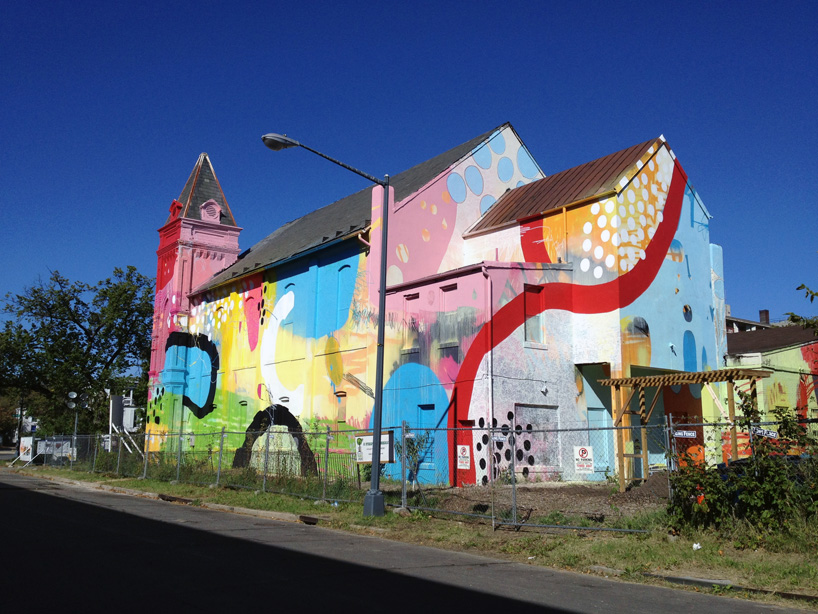
‘most of the tools I use in my murals and paintings are the same tools I learned to use by working in the street in the early years. I use rollers, brushes, spray paint, inks, acrylics, mops, enamels, paint sprayers and other various mediums and tools. scale has always been an important component in my work and I’ve continued to try to push that with my newer projects. almost everything I work on is completely spontaneous and I rarely use a preconceived sketch or concept. recently I’ve been experimenting in treating my exterior works similarly to my paintings.’
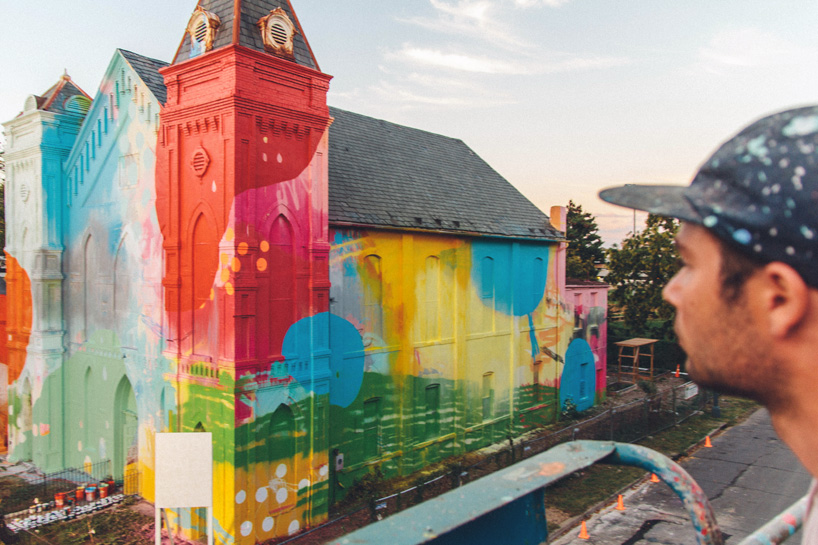
‘I received mostly positive reactions from people there in washington DC who came to see the progress in person. there were a few people who thought of it as desecrating on the church. although once it was explained that it was a work in progress and had positive thought behind the gestures, colors and marks, they generally understood.the nature of creating public art is that you are dealing with many different feelings and opinions on art and that can be very subjective. ‘
 HENSE
HENSE
HENSE (10)
 Dec 28, 2018
 Jan 01, 2018
 Jun 09, 2017
 Jul 14, 2016
 May 08, 2015
street art (263)
 Jul 23, 2026
 Sep 08, 2025
 Sep 08, 2025
 Jul 10, 2025
 May 30, 2025
 Sep 14, 2026
 Sep 08, 2026
 Sep 02, 2026
 Aug 25, 2026