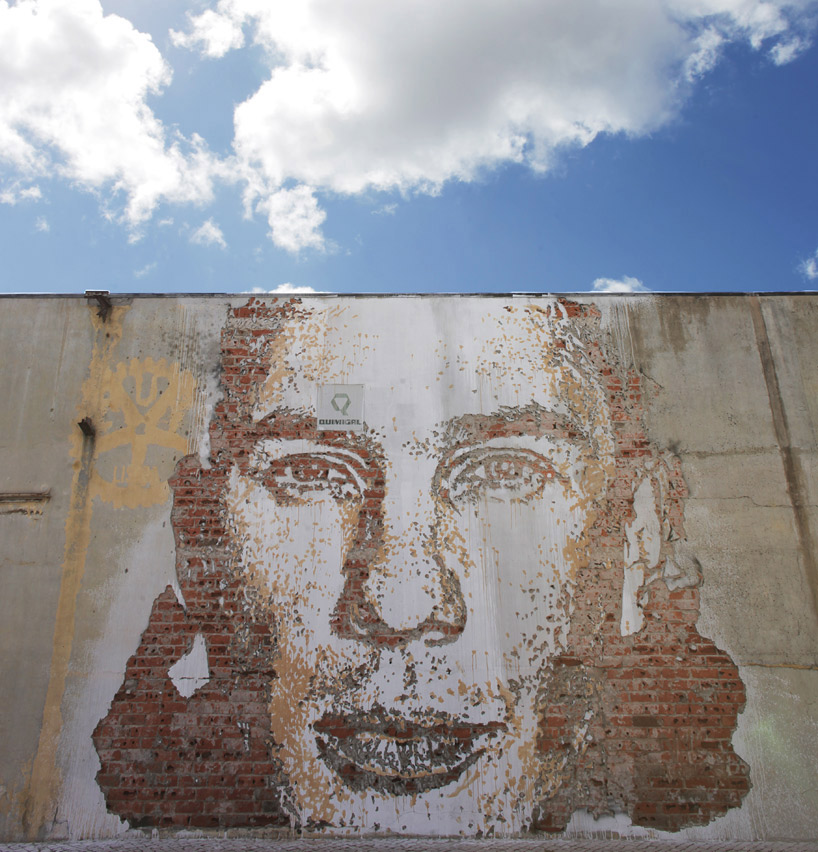
‘avero tex’ by vhils, may 2012 all images courtesy the artist
vhils, aka alexandre farto, has shared with designboom several of his new reduction graffiti works from his continued series ‘scratching the surface’. the portuguese-born and london-based artist chips away from flat surfaces to reveal intimate portraits which seems to unearth the face of the sitter from the essence of the structure. vhils says of his work, ‘the intention is to engrave the idea of life on a wall, creating an iconographic piece of symbolism that will endure — bringing to life the idea of life on a lifeless surface. in the un-organic and grey landscapes of the urban world it is easy to loose track of what our nature really is and where we came from…‘
to actualize his re-conception of art and urbanity, vhils creates by a means of deconstruction. first, the artist reclaims derelict surfaces from various cities as his primary material, projecting an image upon a wall. he then follows the lines of this illuminated stencil to paint a life form upon the building’s surface. upon completing the stencil work, vhils then chips away from the work with hammers, pneumatic drills, chisels, and other tools, removing segments of the wall in varied sizes to unearth his work. ultimately, the artist’s series is formed from a combination of both a particular metropolitan environment and the human life which informed the organization of this area– in a modern and vertical archaeological dig, vhils reveals the forgotten faces and human dimensions often overlooked in expansive urban spaces.
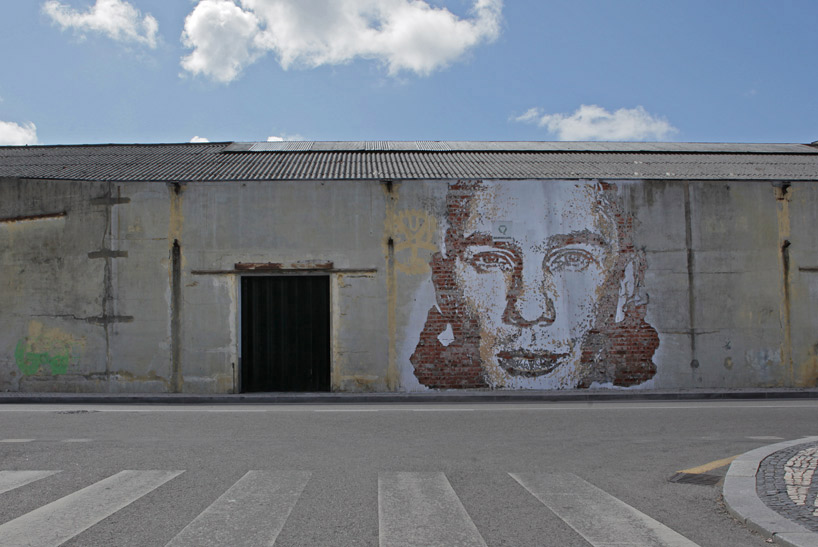 the face of the young man seems to be revealed from the interior of the industrial structure
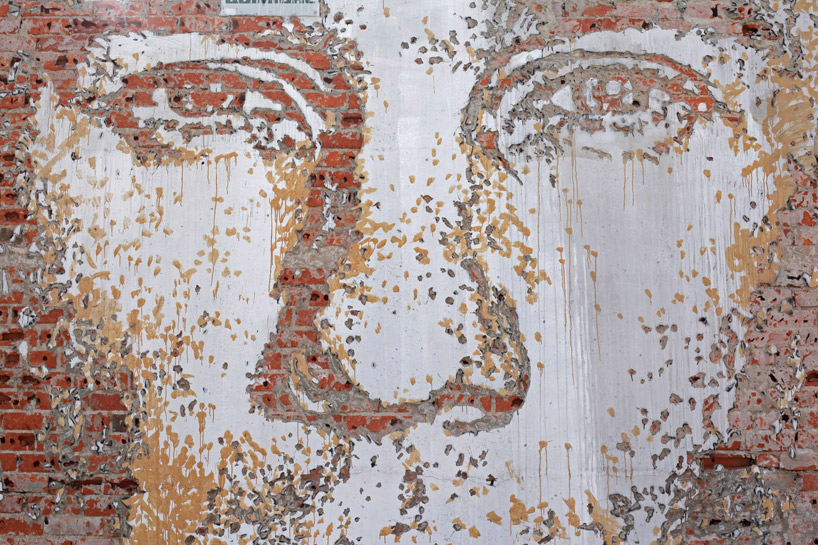 a detailed view of the work
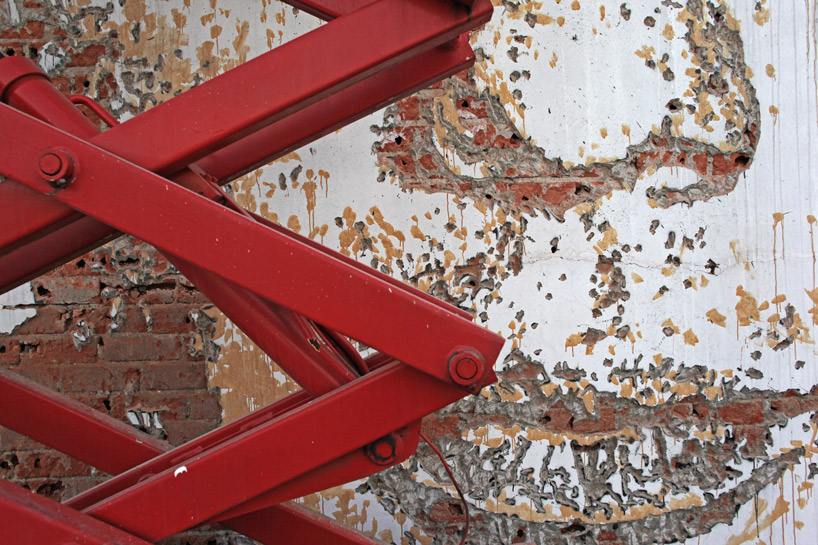 ‘avero tex‘ in progress
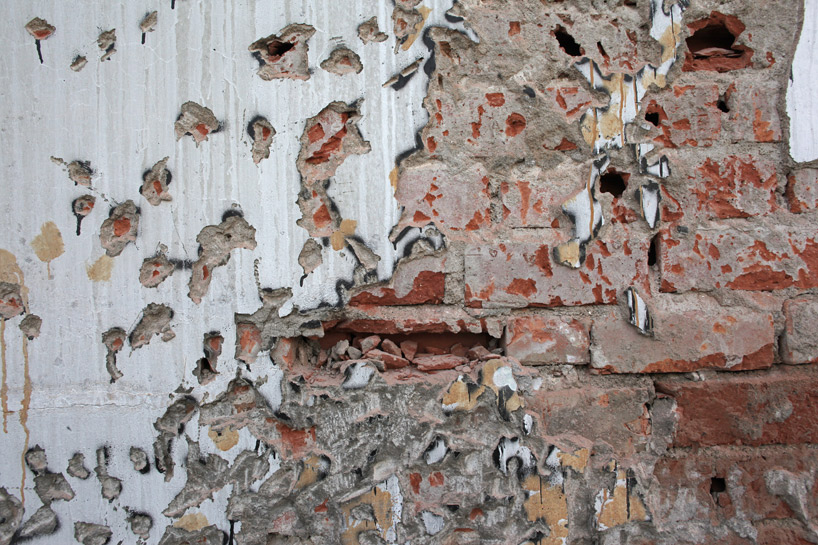 the artist first paints upon the surface, chipping away from the work to reveal an intimate portrait
‘in my work, I always try to have a fixed element (the stencil which is applied to the poster, the wall which is chiseled away), but also variable elements such as the nature of the materials which change and dictate the final form of the piece. it’s never me who determines the final form of a piece. I never have and never want to have absolute control over what I’m doing – i like the unexpected and the uncertain. I am interested in working with what one can’t control; it is this ephemeral character which I’m interested in exploring: the inconstancy and impermanence of matter. my pieces are in permanent transformation – an intentional transformation. the entire scope of human endeavor has been aimed at fixating, at creating institutional structures which can oppose change, maintain. and nature is the exact opposite of this, a permanent state of transformation, mutation, change. I’m interested not only in highlighting this ephemeral condition, but also in instigating it, in encouraging it.‘ -alexandre farto aka vhils
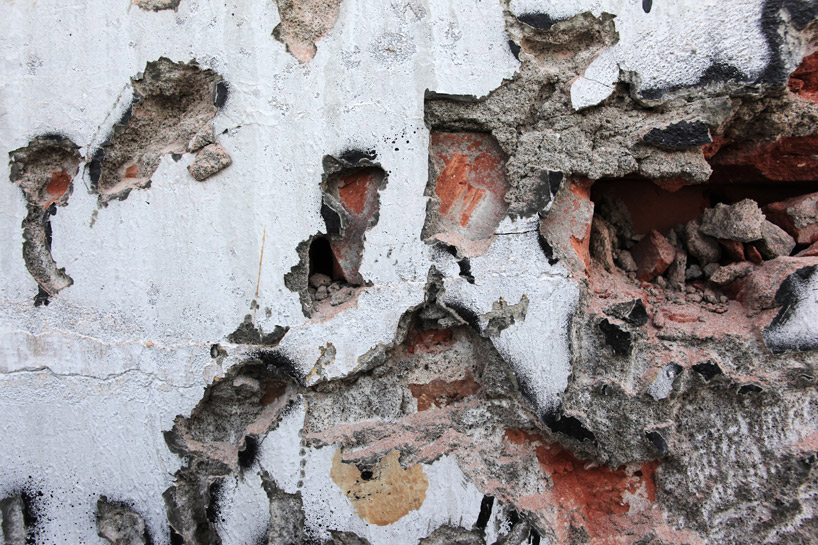 additional detailed perspective of the reduction portrait
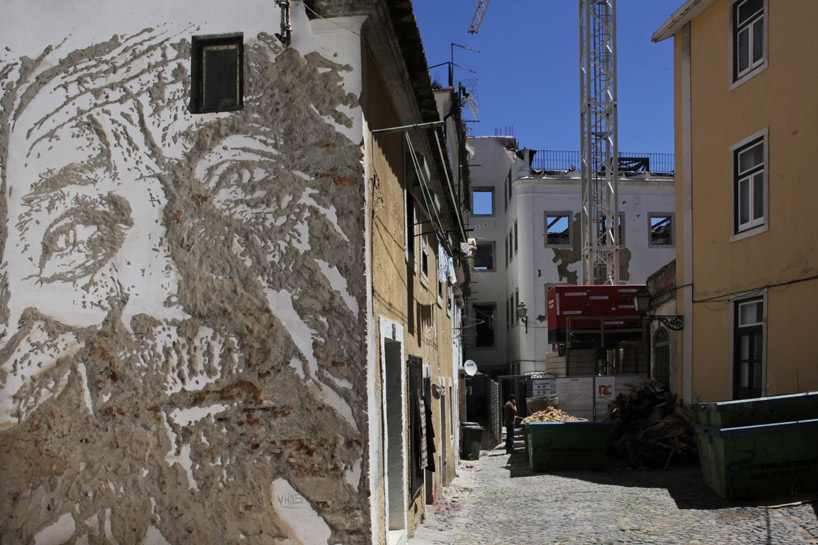 ‘alfalma’, may 2012
vhils says of the series it ‘consists of a series of pieces, mostly based on human portraits and images of urbanity, that have been carved onto the surfaces of walls in chiselled simple contrasts, revealing the rough layers that lie beneath‘.
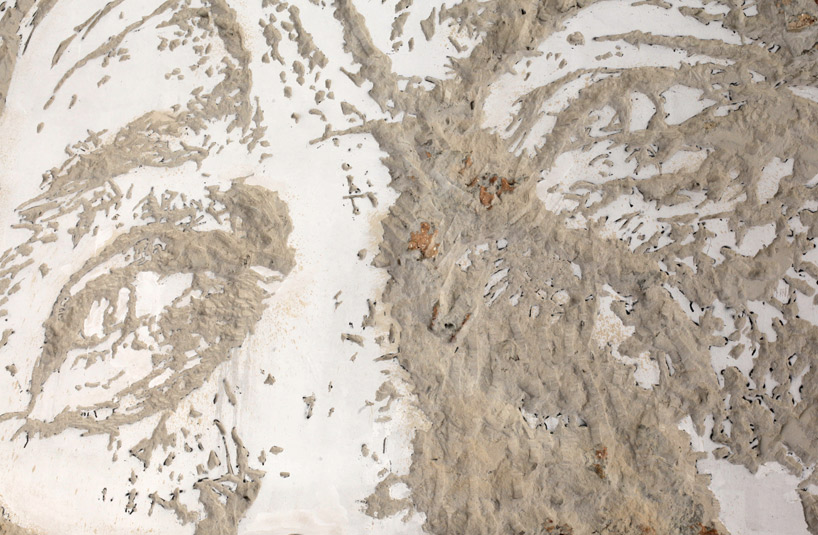 detailed perspective of ‘alfalma’
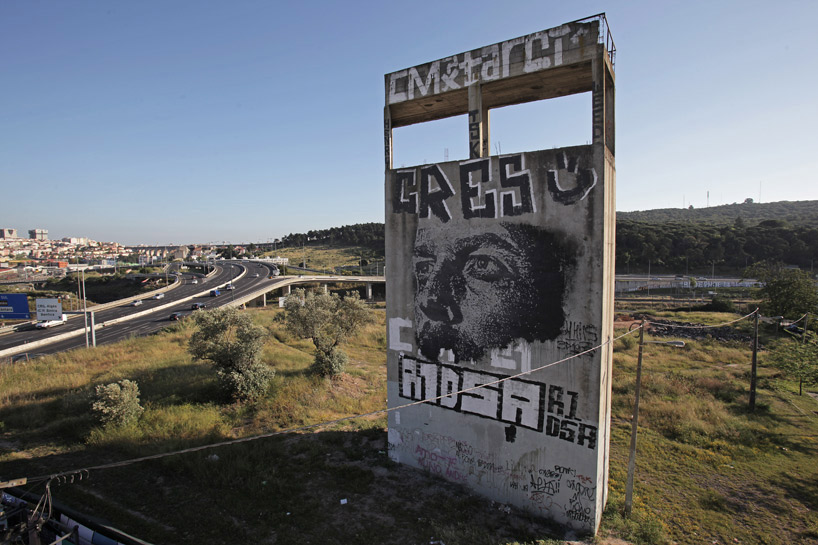 ‘sete rios’, 2012
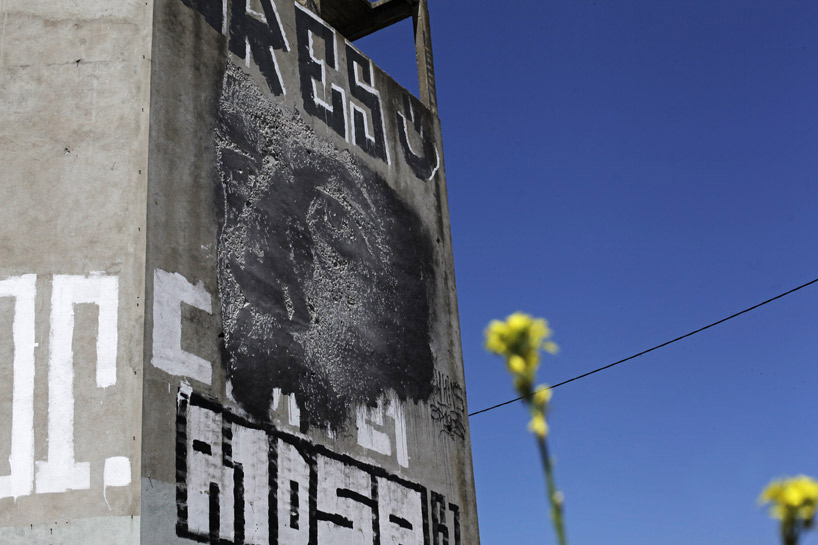 in ‘sete rios’, vhils employs more painted space to better picture the likeliness of this bearded man
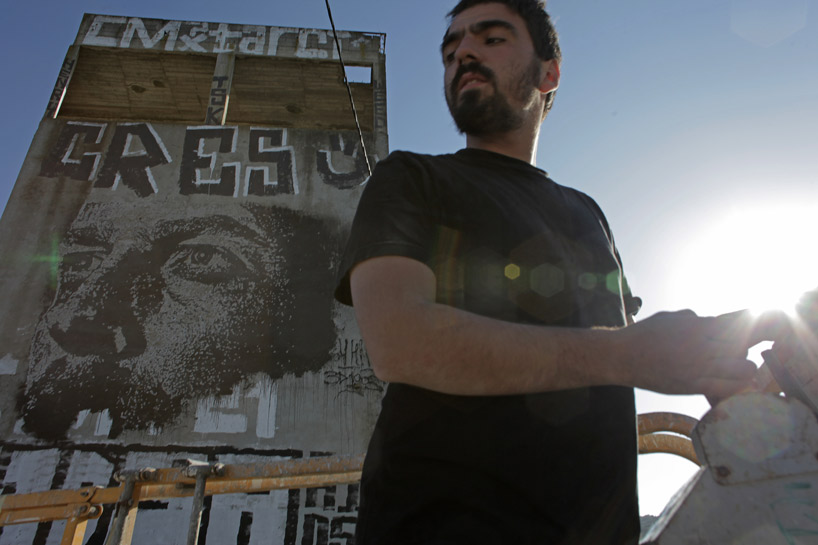 a picture of the artist on location, following the completion of his work
‘in this act of excavating, it’s the process itself which is expressive, more than the final result. it’s a process of trying to reflect upon our own layers. its aim is not to come up with solutions but to conduct research, to confront systems, materials, processes, elements, to create friction and confront the individual with the process, with the system: an active critical process that stems from the same environment upon which it aims to reflect.‘ -alexandre farto aka vhils
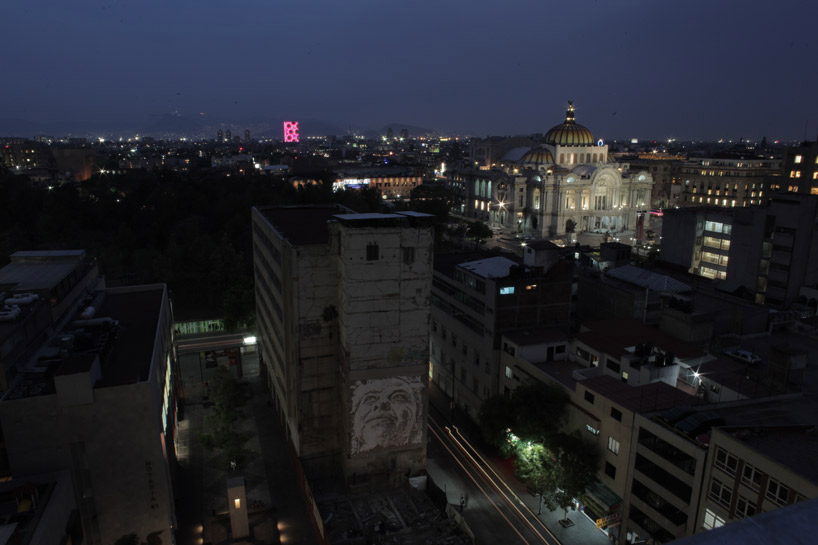 a nighttime perspective of the ‘mexico all city canvas’ mural, may 2012
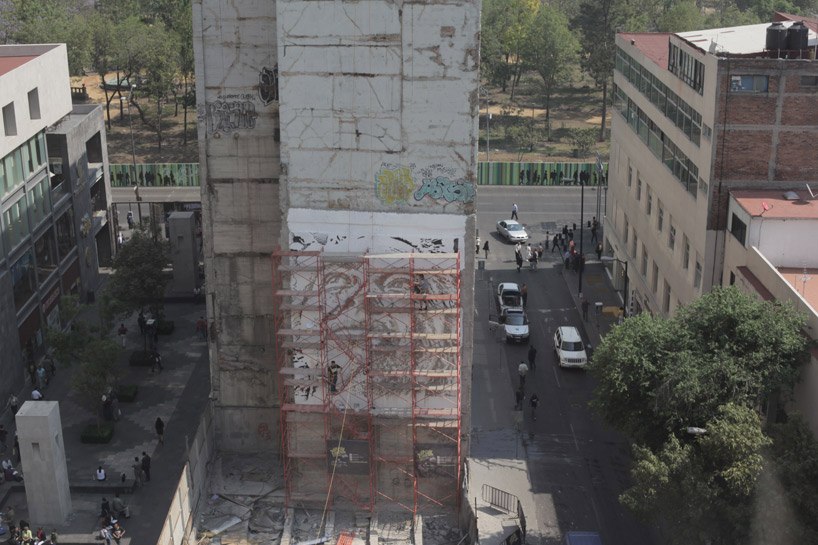 ‘mexico all city canvas’ in progress
STREET ART (245)
 Jan 28, 2024
 Sep 22, 2023
 May 09, 2023
 May 05, 2023
 May 03, 2023
VHILS (ALEXANDRE FARTO) (11)
 Jul 26, 2020
 Jun 27, 2020
 Dec 06, 2018
 Jun 20, 2018
 Apr 12, 2018
PRODUCT LIBRARY
 Apr 17, 2024
 Apr 09, 2024
 Mar 27, 2024
 Feb 29, 2024