interview with artist adam neate
adam neate is a british conceptual artist whose multi-dimensional artworks shape-shift depending on the viewers vantage point.
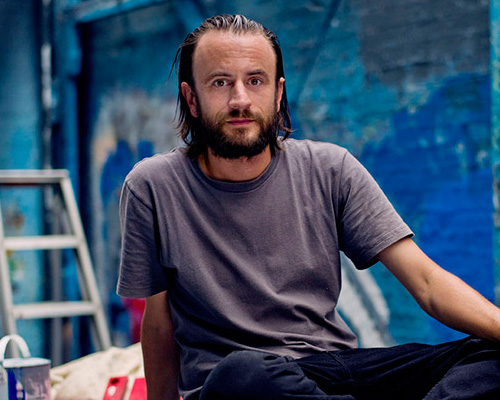
adam neate at his studio
© elms lesters painting rooms
adam neate is a british conceptual artist who first became known in the 1990s for leaving his artworks in the streets for anyone to collect. since then neate has focused his attentions on ‘dimensionalism’ – his multi-dimensional artworks made from different materials, that shape-shift depending on the viewer’s vantage point.
designboom: please could you tell us a bit about your background?
adam neate: I had always loved drawing and painting from about the age of 3. it was far easier to express myself with a drawing than spend time writing a page of words to convey something. creating something from nothing is a nice feeling.
I left school at 16 to go and study graphic design and then got a job as a graphic designer to pay the rent and put food in the fridge so that in the evening I could spend my time painting.
I started leaving my paintings on the streets of ipswich around 1997. I then moved to london and left over 5000 paintings on the streets up until 2006. the same year I quit my day job and stopped the ‘street art’ and started exploring paint in a different way. in 2009 I started painting in dimensionalism – which I continue to explore to this day.
dimensionalism by adam neate at elms lesters painting rooms, london until 18th october
DB: how would you describe your approach?
AN: for me personally the whole point of being an artist is to be creative and to create, to invent new ways of seeing and showing the world. to keep pushing forward with your work by trying new things. making problems for yourself and trying to solve them.
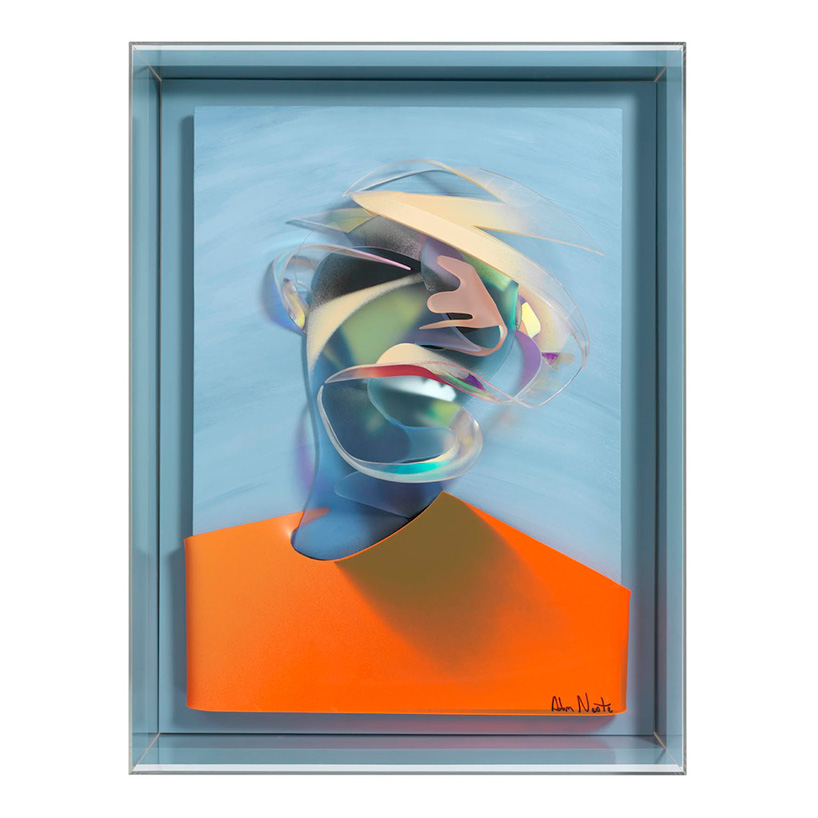
dimensional portrait, 2012
© elms lesters painting rooms
DB: who or what has been the biggest single influence on your way of thinking?
AN: I am always open to reading about new ways of thinking. I recommend carl jung and alan watts.
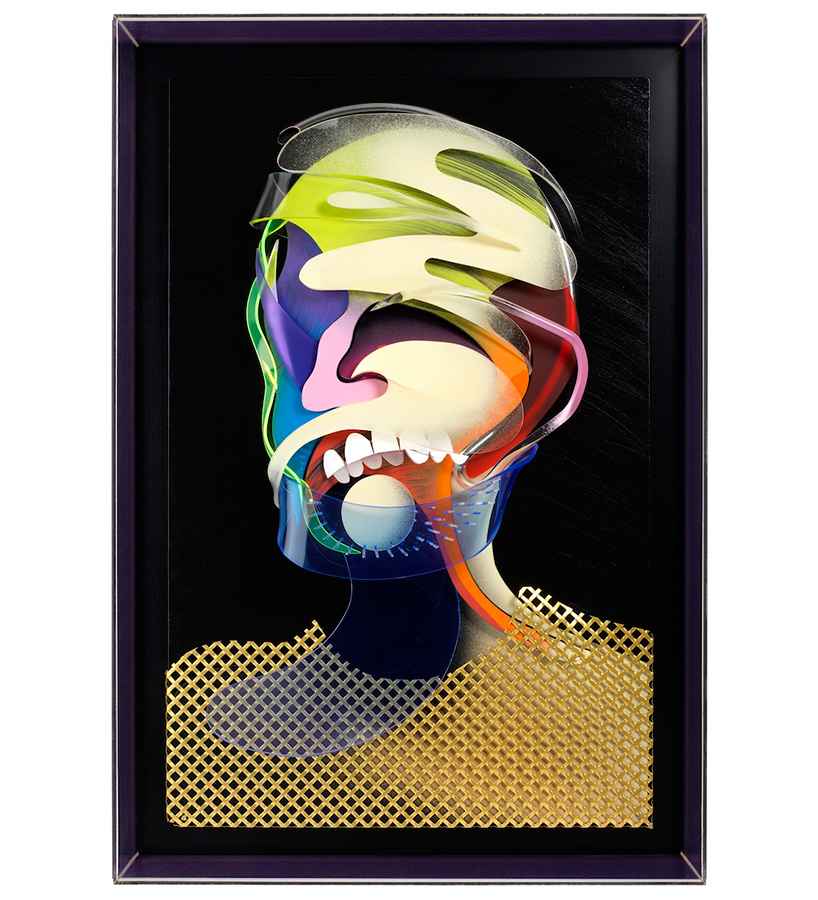
3D black self portrait, 2010
© elms lesters painting rooms
DB: what would you say is your strongest skill?
AN: to embrace every mistake you make and somehow turn it into a positive learning experience each time.
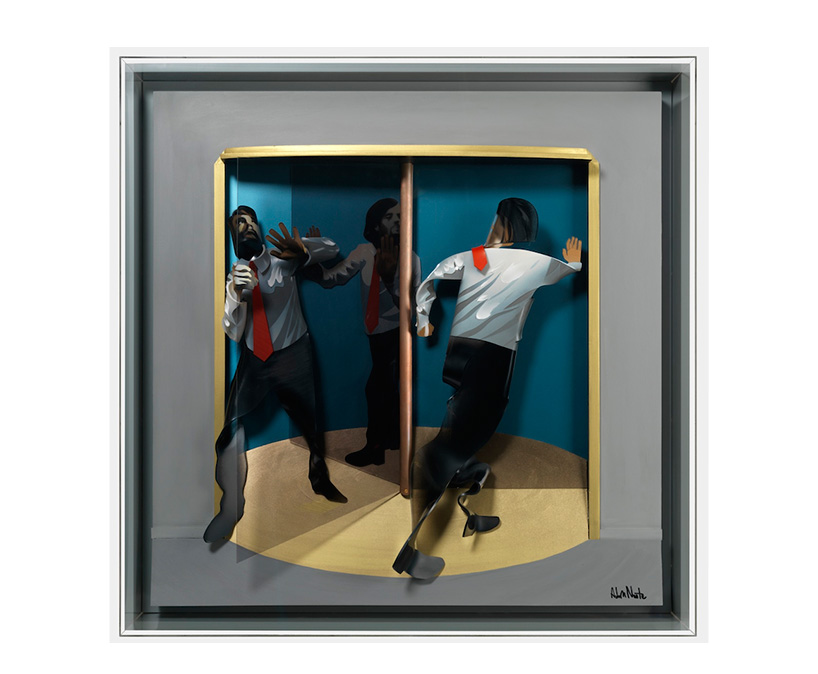
revolving door, 2011
© elms lesters painting rooms
DB: what materials do you enjoy working with the most?
AN: I love to paint with my bare hands. it is a great feeling of moving cold, wet paint with your fingers across a canvas. pure raw and animalistic expression! and great fun too! so much emotion and feeling is lost through the use of a brush.
DB: what materials would you like to explore in the future?
AN: vantablack! … still waiting to get my hands on some.
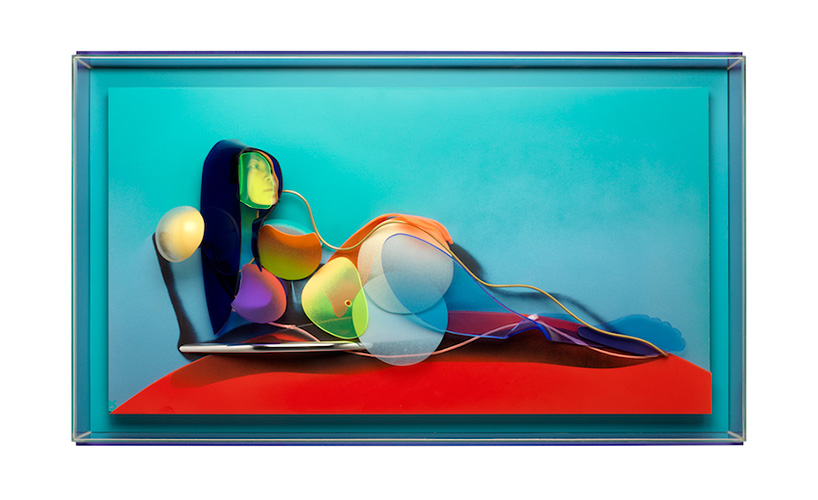
blue reclining nude, 2011
© elms lesters painting rooms
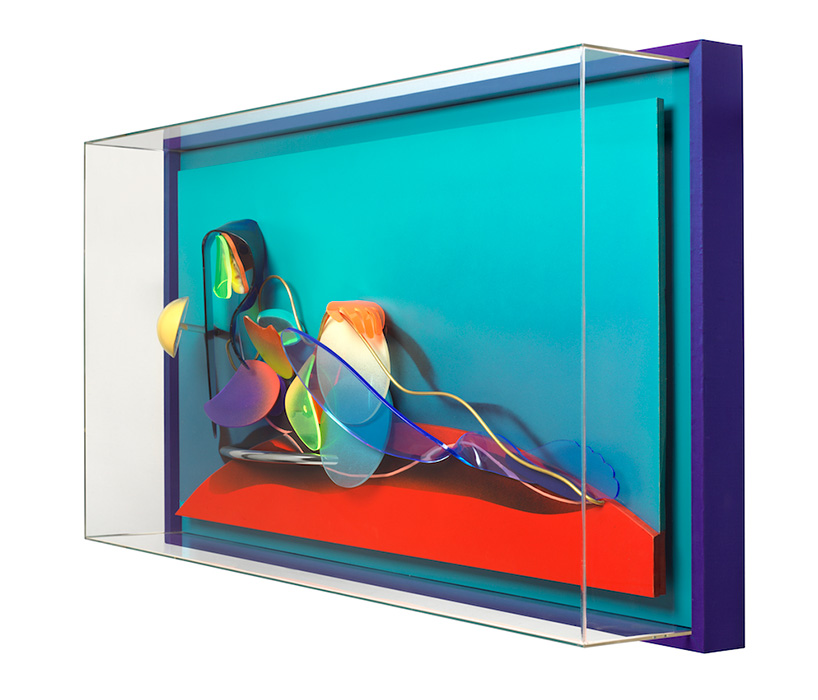
blue reclining nude, 2011
© elms lesters painting rooms
DB: how do you think online design resources have influenced the art being produced today?
AN: for myself personally I think we are entering a very interesting time in the visual arts. if you go back to the advent of photography, there was no longer a need for a traditional painter to paint a life like family portrait when the technology of the camera could capture a 2D reality perfectly. for painting to survive the painter would have to paint what the camera could not capture. new ways of painting developed like cubism, expressionism, fauvism etc. the painter had to paint his way around the new technology.
today the internet has become the new media and medium. we have seen the birth of post-internet art. how does a painter paint what the internet cannot capture? people no longer need to leave their homes to go and see a gallery opening show. they can look at photos or videos online. a post-internet-painting has to challenge or accept these notions.
within my dimensionalism paintings I want to create a painting that can only be fully seen and understood by seeing it in person. photography or video can not document my work fully. within dimensional space you have the traditional dimensions of height, width and depth. within 4-dimensional space you are adding time to the equation. within my work the viewer plays the part of time in space as he or she moves around the painting, space and form changes and distorts depending on the position of the viewer. the painting reacts to how the viewer views it.
or to quote confucius: ‘I hear and I forget. I see and I remember. I do and I understand.’ basically, we have to experience something ourselves in person to fully understand it.
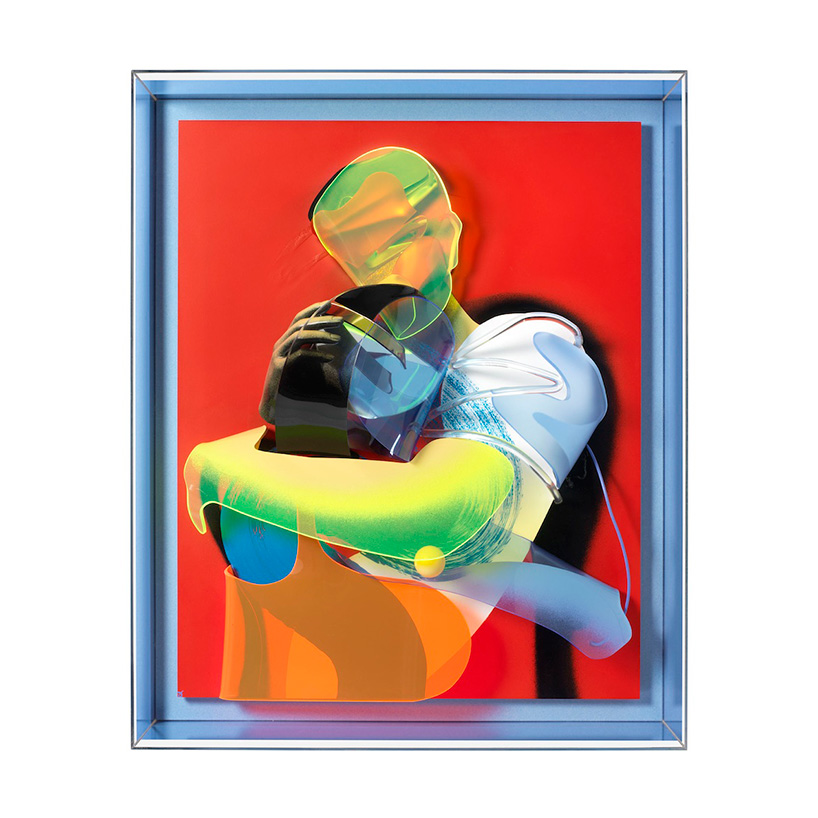
the hug, 2011
© elms lesters painting rooms
DB: what are your thoughts on specialization vs generalization?
AN: I think it pays to be adaptable. you could be the biggest expert in your specialized field of a certain technology. but if that technology changes then what? you have to be prepared for the change.

canvas crucifix, 2011
© elms lesters painting rooms
DB: what are you currently fascinated by and how is it feeding into your work?
AN: perdurance theory and gunky time theory fascinates me. some of its concepts I am hoping to visualize within dimensionalism.
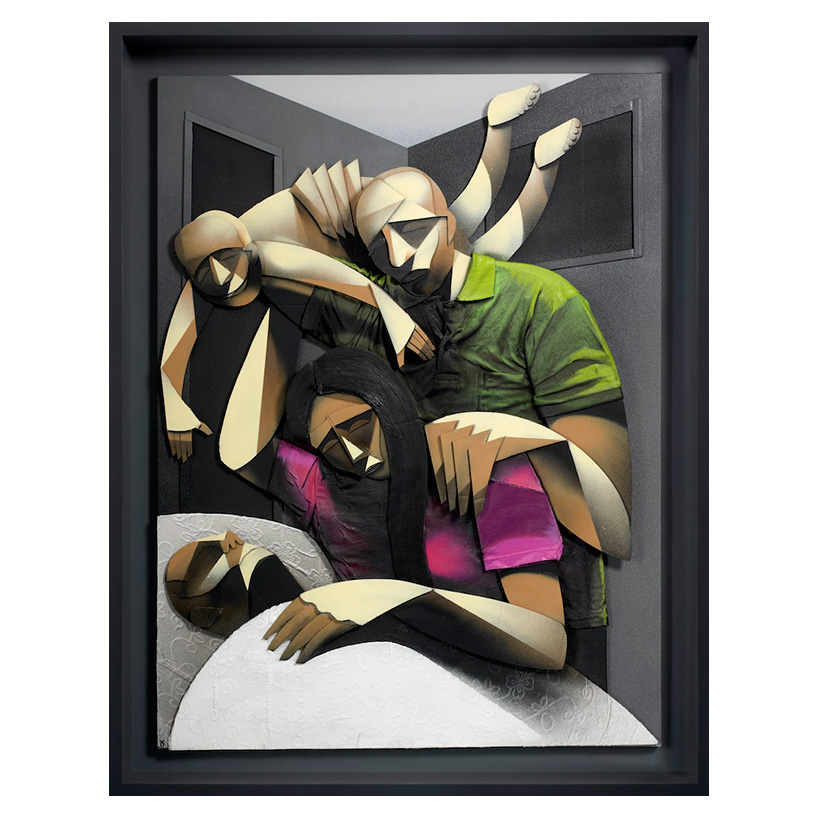
family circle, 2009
© elms lesters painting rooms
DB: what are you passionate about besides your work?
AN: music! music! music!
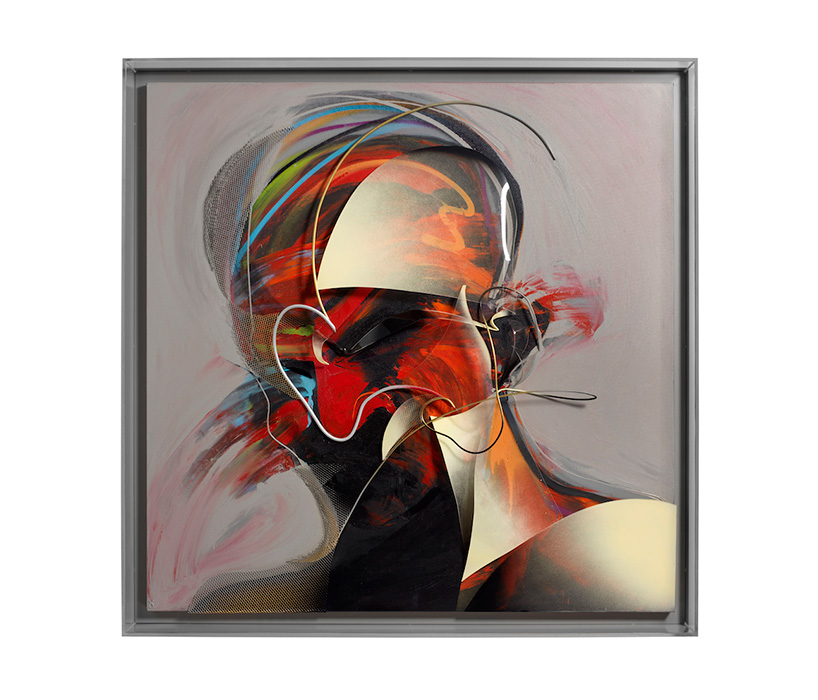
grey portrait, 2009
© elms lesters painting rooms
DB: do you have any superstitious beliefs or rules that you live by?
AN: magpies! if I see a lone magpie [which is considered bad luck] I pretend I didn’t see it, or desperately look around for a second one! so basically I only become superstitious if it’s in my favor to believe so… a classic human trait.
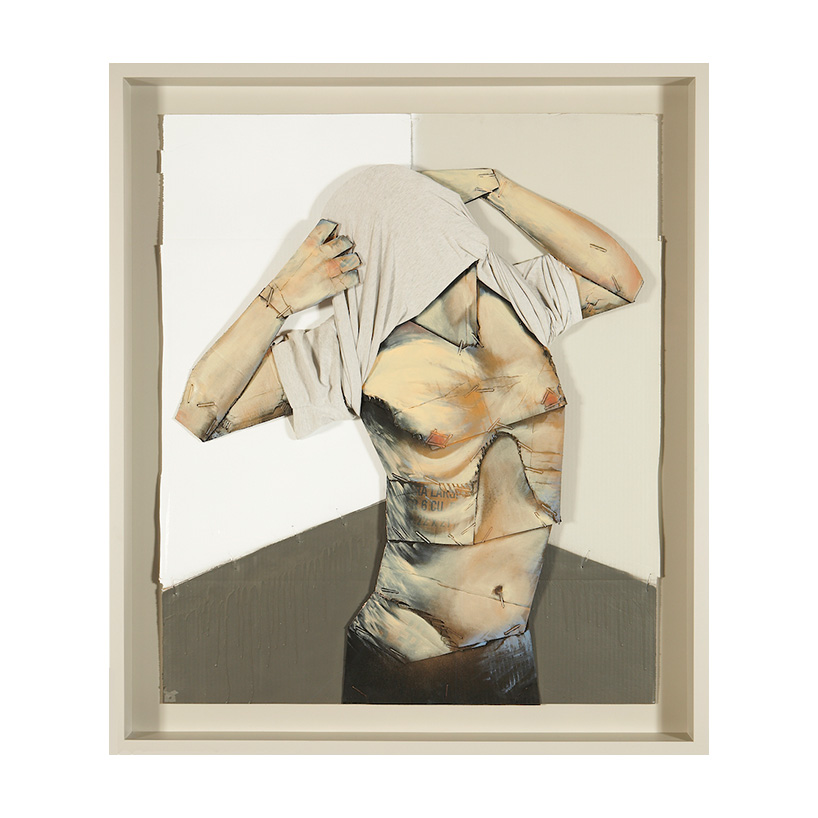
t-shirt, 2007
© elms lesters painting rooms
DB: what’s the best piece of advice you have ever heard?
AN: ‘illegitimi non carborundum’ it’s most probably the only piece of latin you need to know.
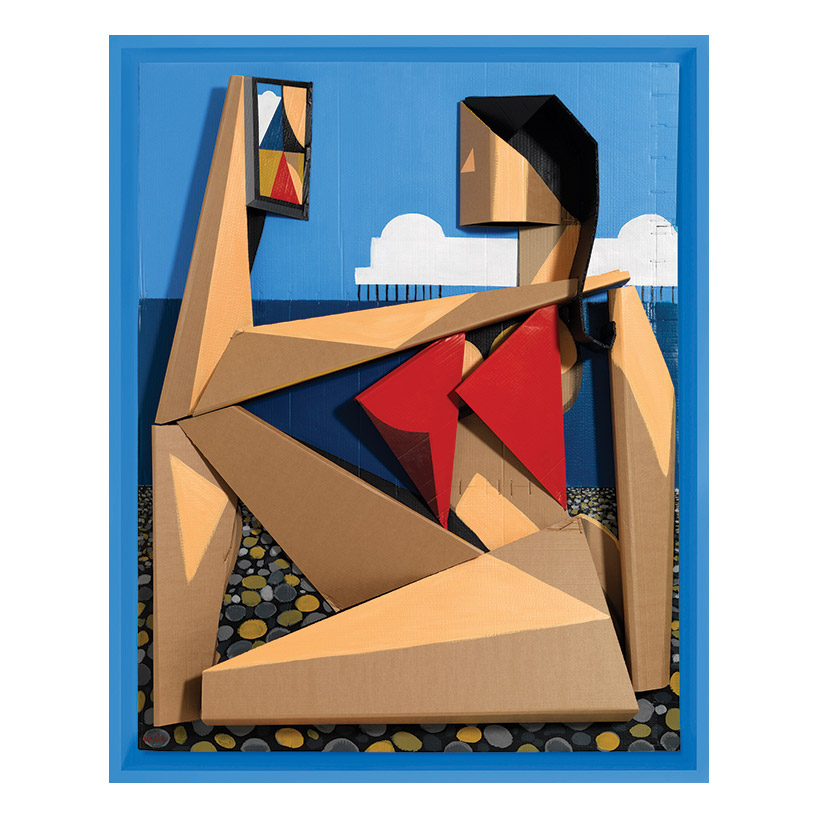
selfie, 2014
© elms lesters painting rooms
DB: what’s your personal motto?
AN: believe nothing of what you read and only half of what you see.
more
dimensionalism by adam neate
at: elms lesters painting rooms, london
from: now – 18th october
shop
your own online design shop — no sales commission collected