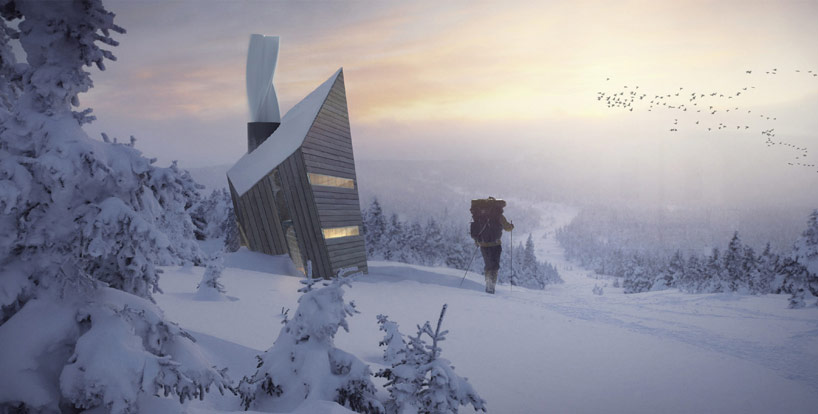
huba mountain shelter by malgorzata blachnicka + michal holcer
based on a compact alpine hut, the design of 'huba' by malgorzata blachnicka + michal holcer includes an independent, self generating energy system.
prefer designboom on google[FEATURED]
huba compact mountain shelter by malgorzata blachnicka + michal holcer
all images courtesy of malgorzata blachnicka + michal holcer
completely self sufficient, the compact mountain shelter ‘huba’ by industrial designers malgorzata blachnicka & michal holcer is able to generate its own energy. the design is based on traditional alpine architecture, with the small size and materials used aiming to minimize its impact on the surrounding environment. intended to be located above 1000m, where the average wind speed is about 6 m/s reaching up to 30 m/s, the shelter is equipped with an effective vertical wind turbine. the annual rainfall in the mountains exceeds 1200 mm/m2 and this abundance of wind and water in such an extreme climate allows the structure to benefit from the natural resources. the energy produced by the generator is stored within a battery and is used to supply the building’s heating, lighting and water pump. specially arranged roof tiles enable rainwater to easily be collected within the tank, which is then filtered and safe for drinking.
the dynamic character of the structure’s interior is formed by intersecting planes, with no right angles. small windows run along the side of the building, breaking up the walls with narrow streams of light. frosted glass provides a sense of privacy on the inside, while a LED strip light provides illumination after sun down. the shelter provides four resting places, including two hanging beds hidden in the wall, a washbasin, and also, referencing traditional mountain huts a built-in water heater.
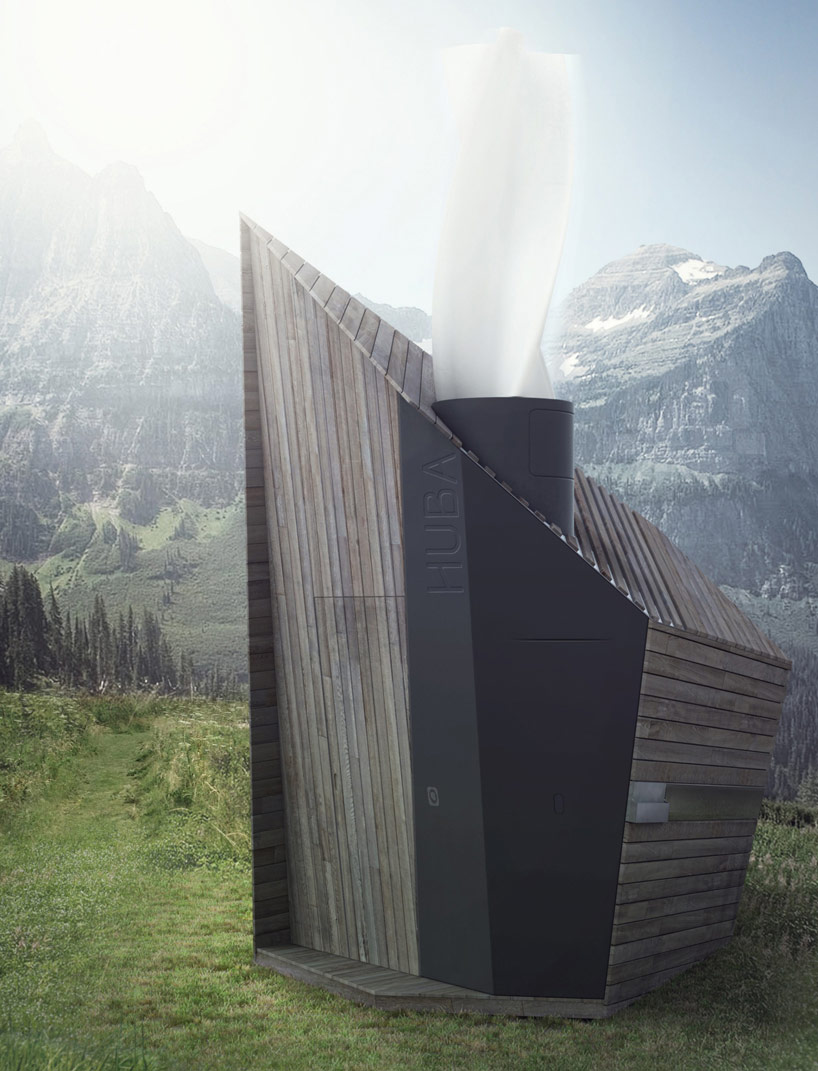
exterior perspective of the fully self sufficient mountain shelter concept
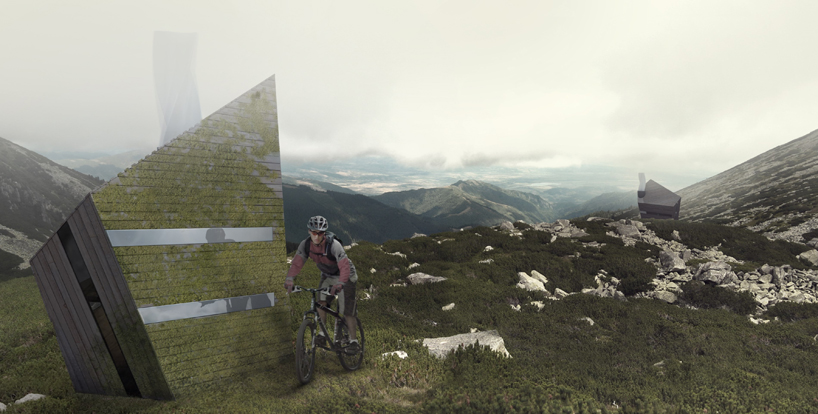
view showing ‘huba’ in its intended alpine context
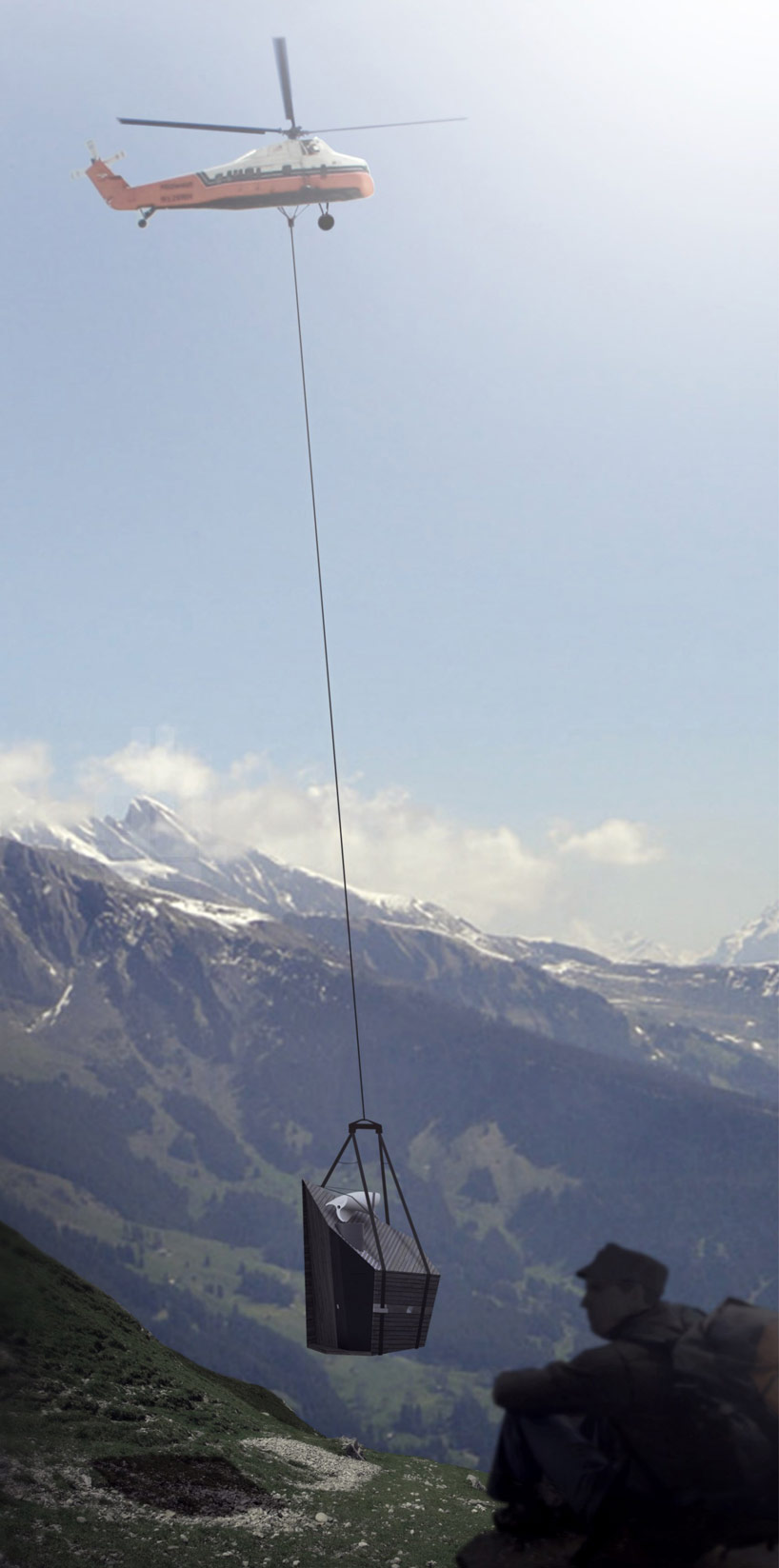
huba can easily be placed into high mountain terrain
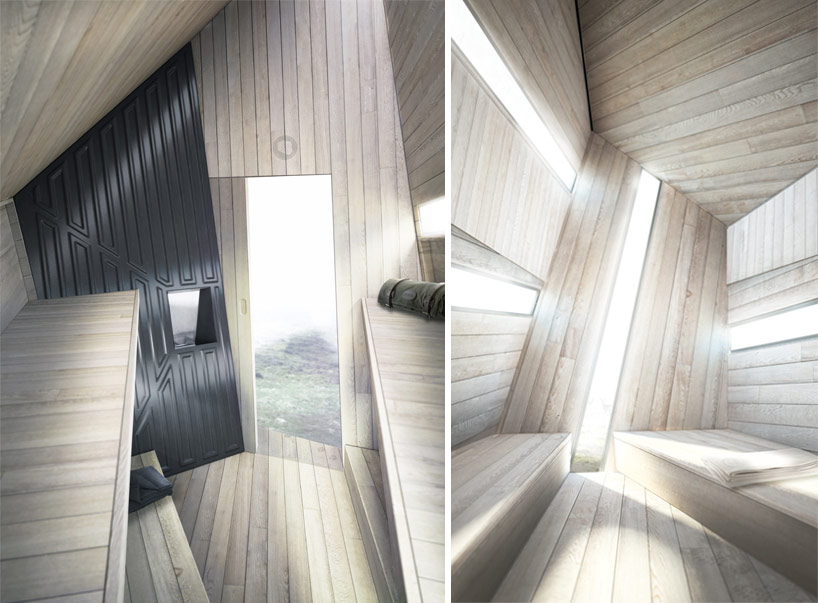
the cozy interior provides four resting places, including two hanging beds hidden in the wall
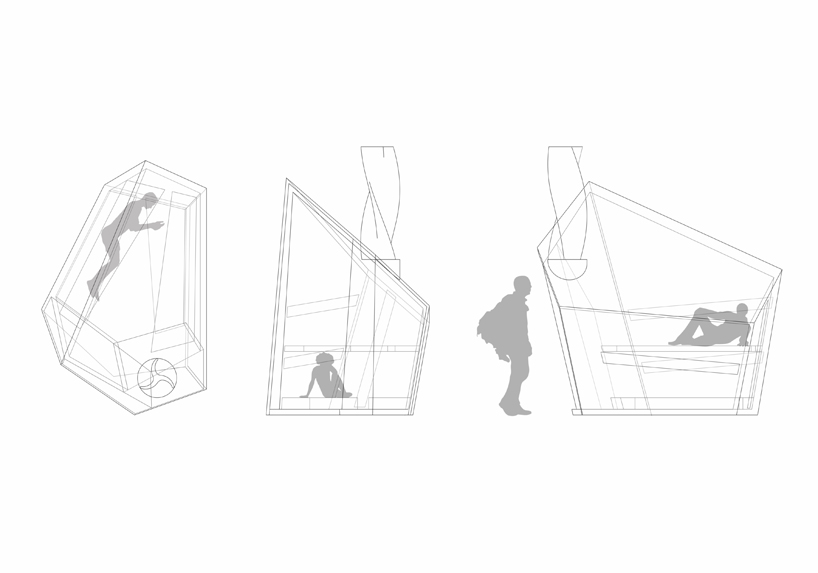
sketches of the layout

illustration showing what is inside power module
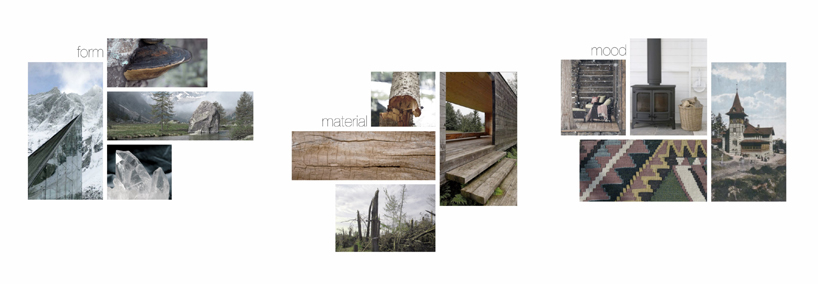
mood board
designboom has received this project from our ‘DIY submissions‘ feature, where we welcome our readers to submit their own work for publication. see more project submissions from our readers here.
shop
your own online design shop — no sales commission collected