kaikado: 6th generation tea caddy maker
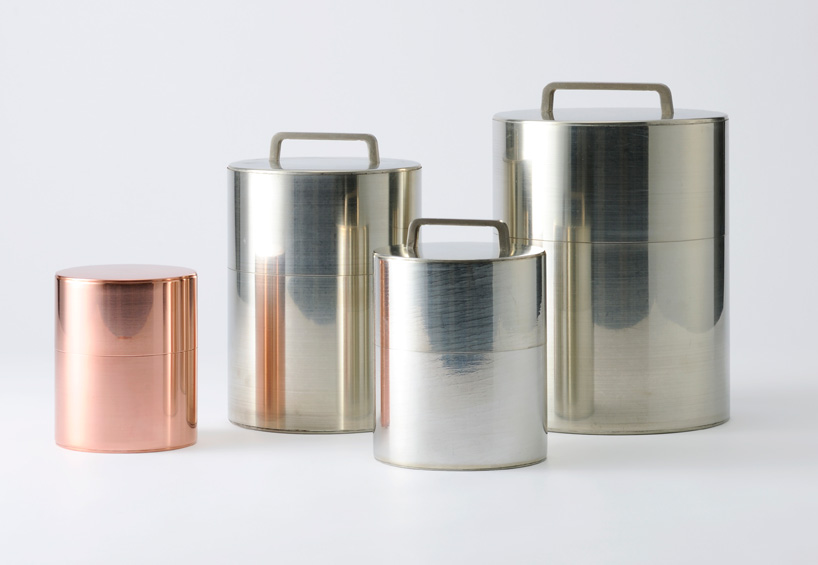
in the japanese edo era, canisters were made from tin were a commonplace means of storage for tea. it was kiyosuke who first designed the tin tea caddy and made it into a commercially available item.
kaikado: 6th generation tea caddy makers
the company kaikado was established in 1875 in kyoto, japan. in japan the highest level of skills and crafts have been applied to everyday utilitarian objects, and, there were no exceptions for tea preparing – and their containers. in the edo era, chazutsu canisters were made from tin and were a commonplace means of storage for tea. it was the company’s founder, kiyosuke, who first designed the tin tea caddy and made it into a commercially available item. until today, each chazutsu, with its precise functionality, is made by hands.
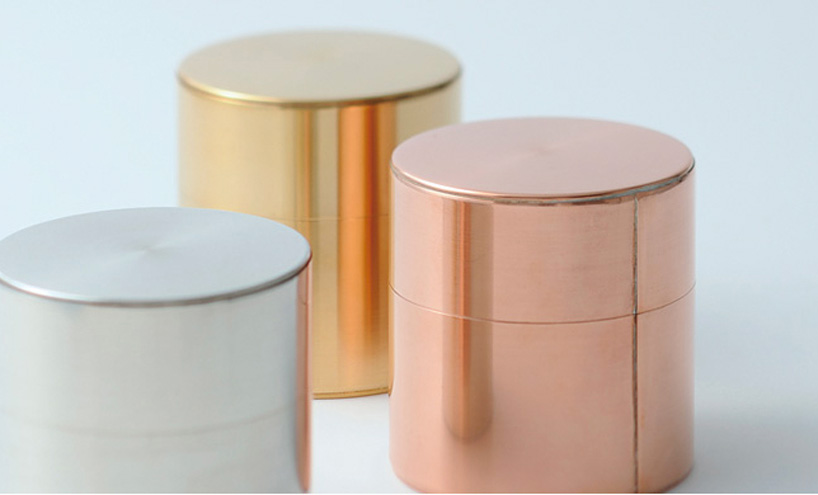 caddies (chazutsu containers)the iconic chazutsu containers quickly became THE caddy and has been copied by many companies in japan, but their quality was never equaled.
the double-walled construction guarantees excellent air tightness and will protect tea leaves from humidity whilst helping them to maintain their scent. in addition to being used for storing tea leaves, the caddies canbe used to hold a wide variety of foodstuffs. they can also be used to store english or chinese tea, as well as coffee, spices, and grain.
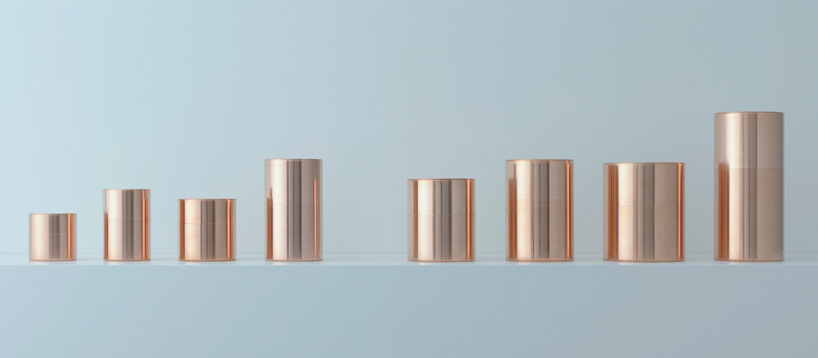 this superb airtight feature has remained unchanged over a century
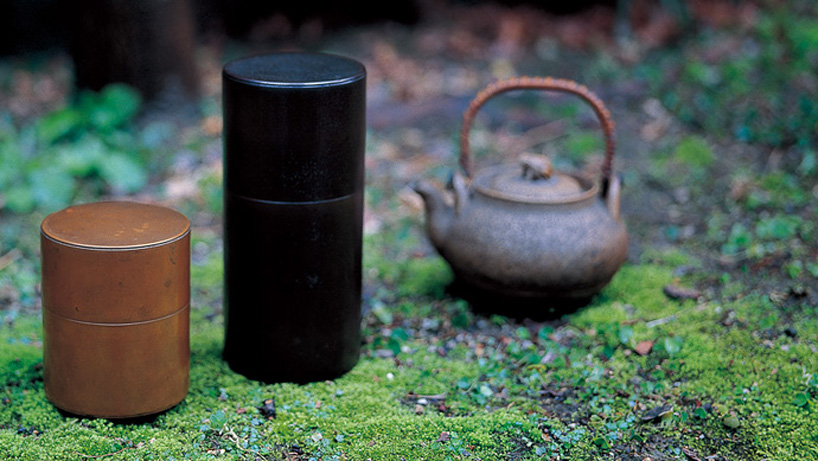
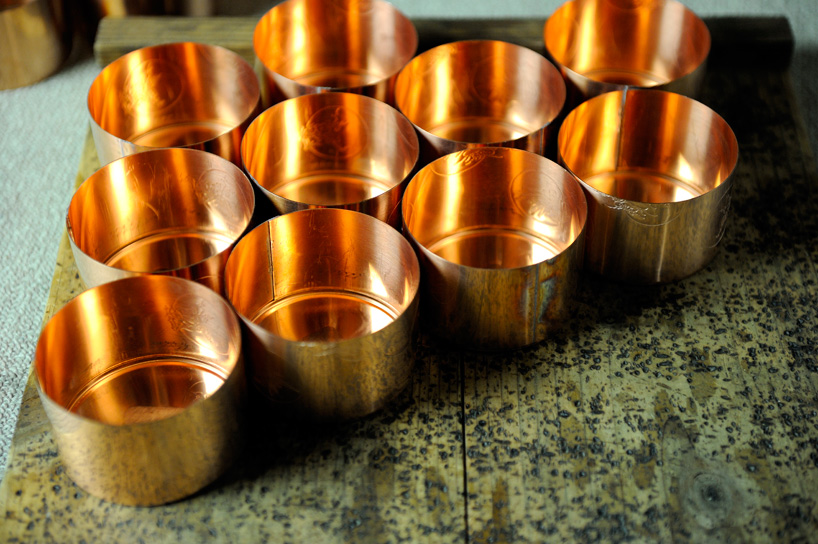
the ‘family’ of copper tea caddies, each one is the preserve of a different kind, so none are ‘contaminated’ …
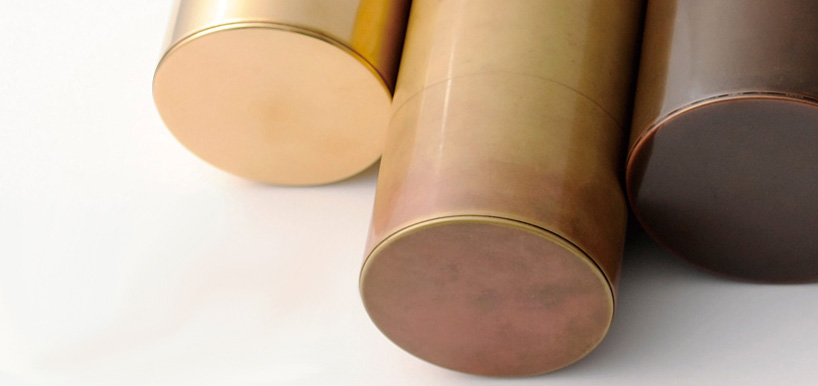
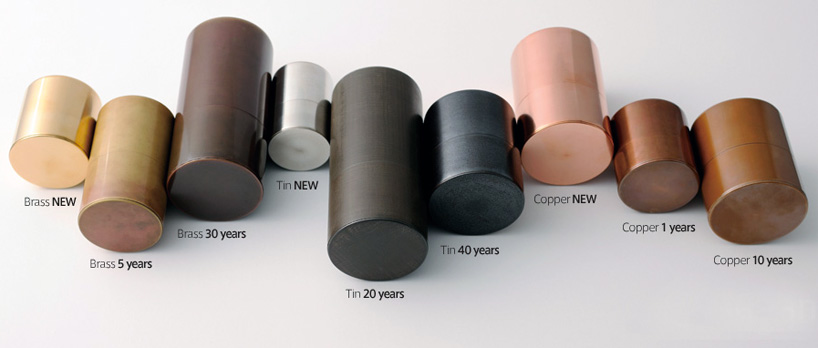 beauty increasing over time
after using the containers you will perceive a normal yet subtle change in the colour tone of the chazutsu: copper in 2-3 months, brass in 1-2 years and tin in 3-5 years.
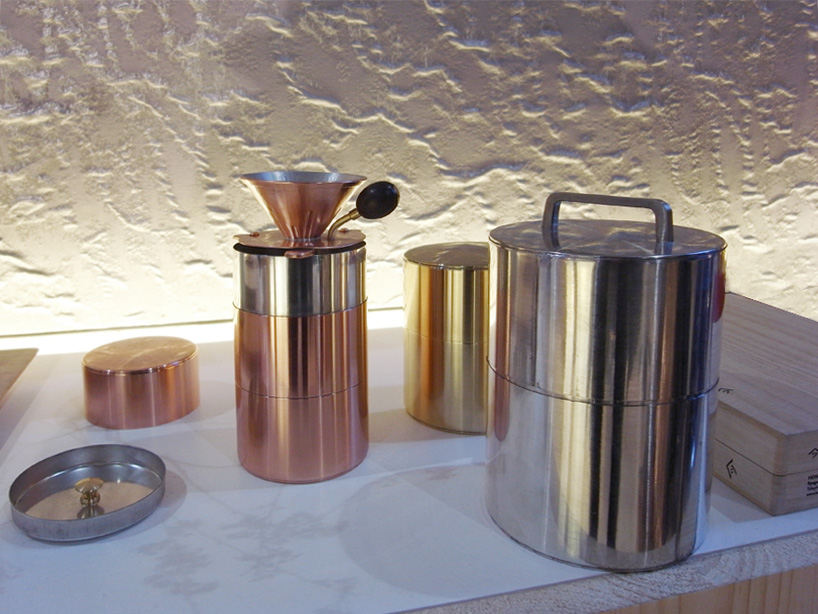 coffee drip image © designboom
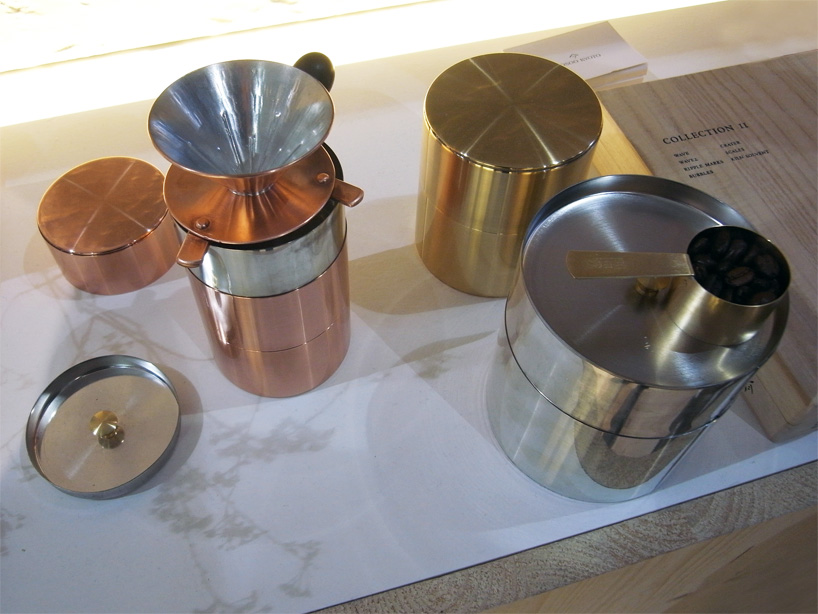 coffee drip image © designboom
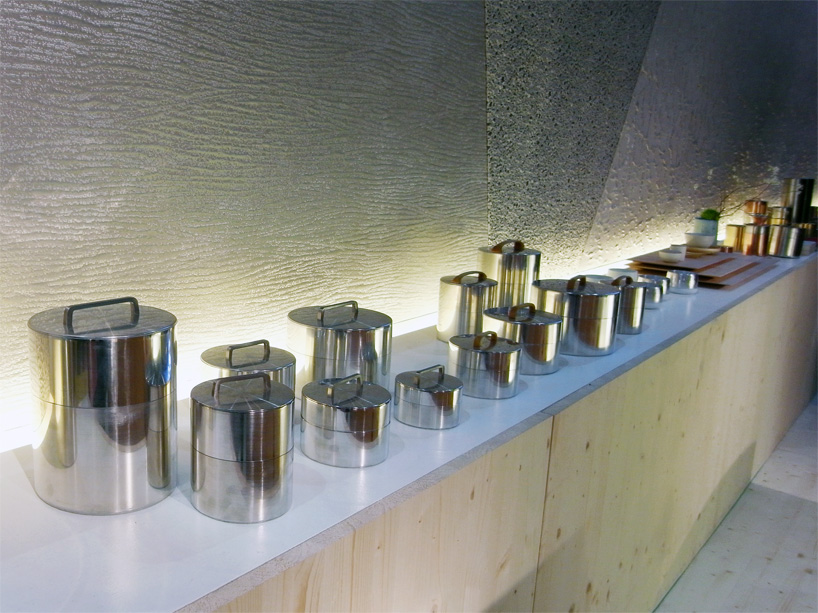 caddies with handles image © designboom
today, the fifth and sixth generations , seiji and his son takahiro yagi work with two other craftsmen in their kyoto workshop to produce their caddies in tin, brass, copper, and silver.
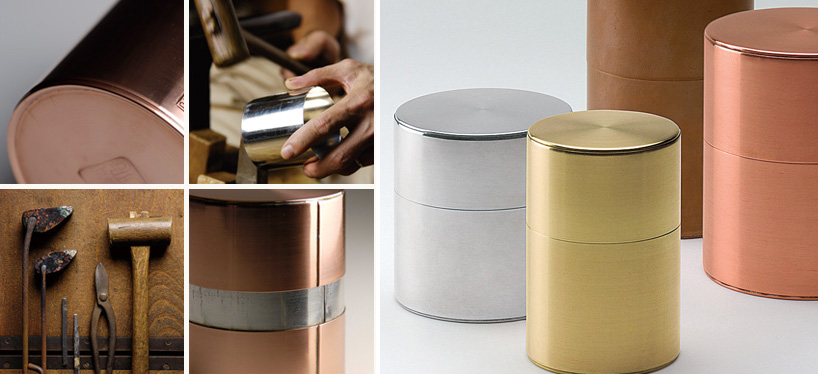 there are more than 130steps in the process of making
a manufacturing process that involves anywhere between 130 to 140 steps, the hand-made tea caddies have virtually remained true to the designs established by kaikado’s founding generation. the die and mold used in the early years of the company is still in use today, whilst some shapes of tea caddy used 130 years ago are still in production today.
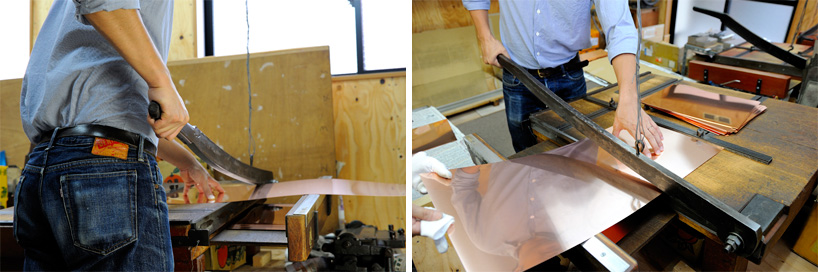
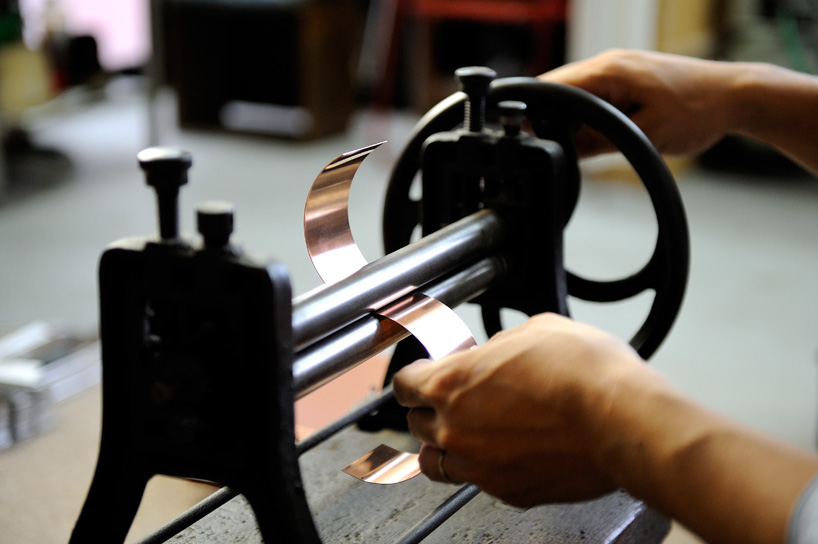
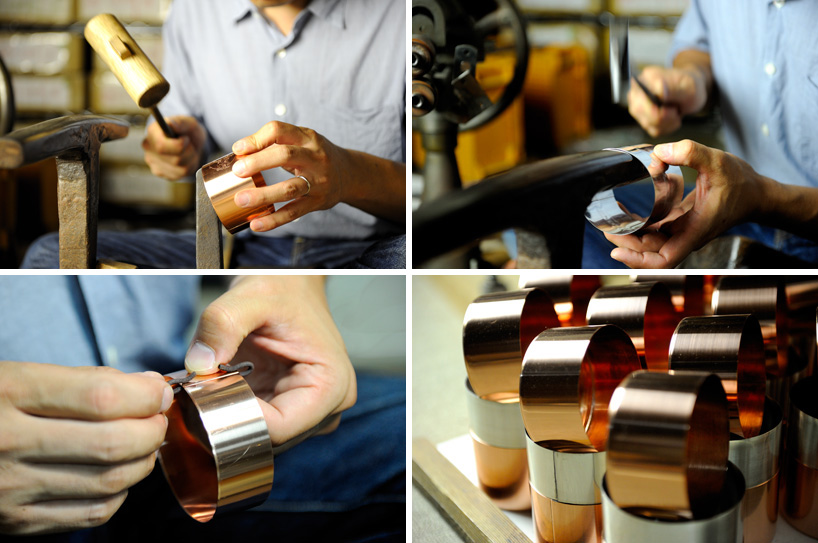
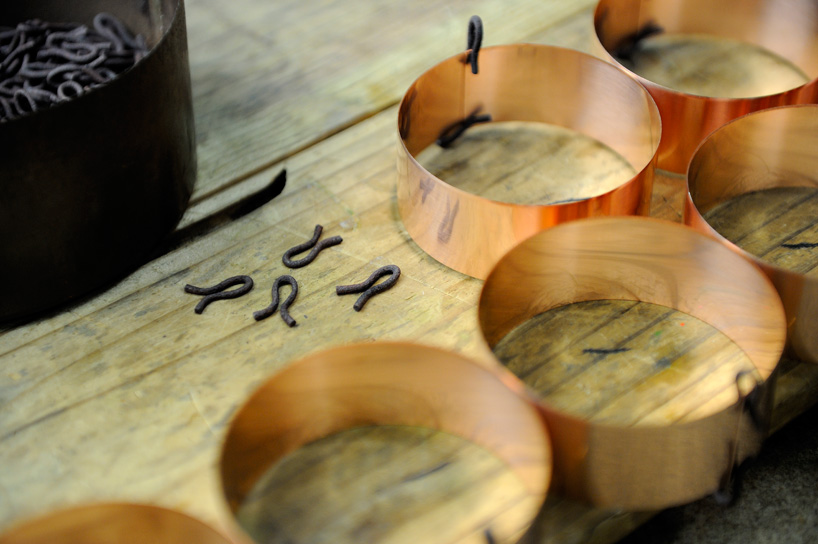
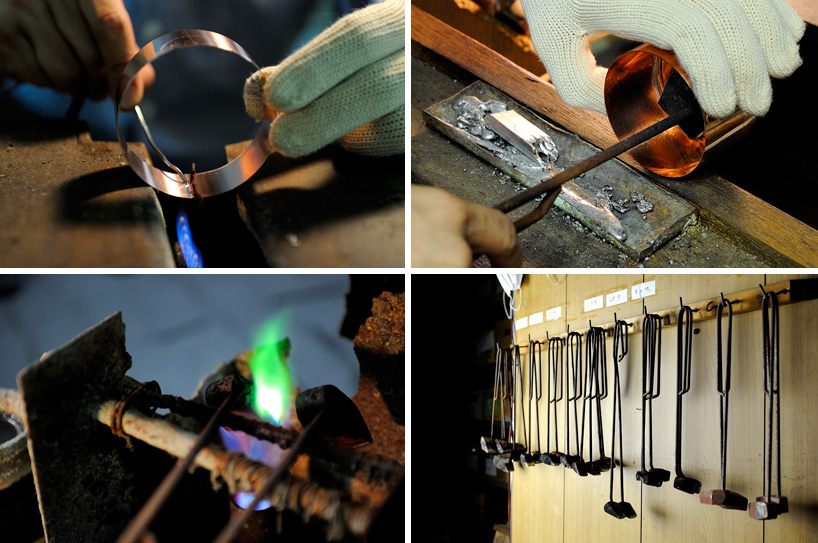 these images clearly illustrate the sophisticated technique and artistic sense of the craftsmen
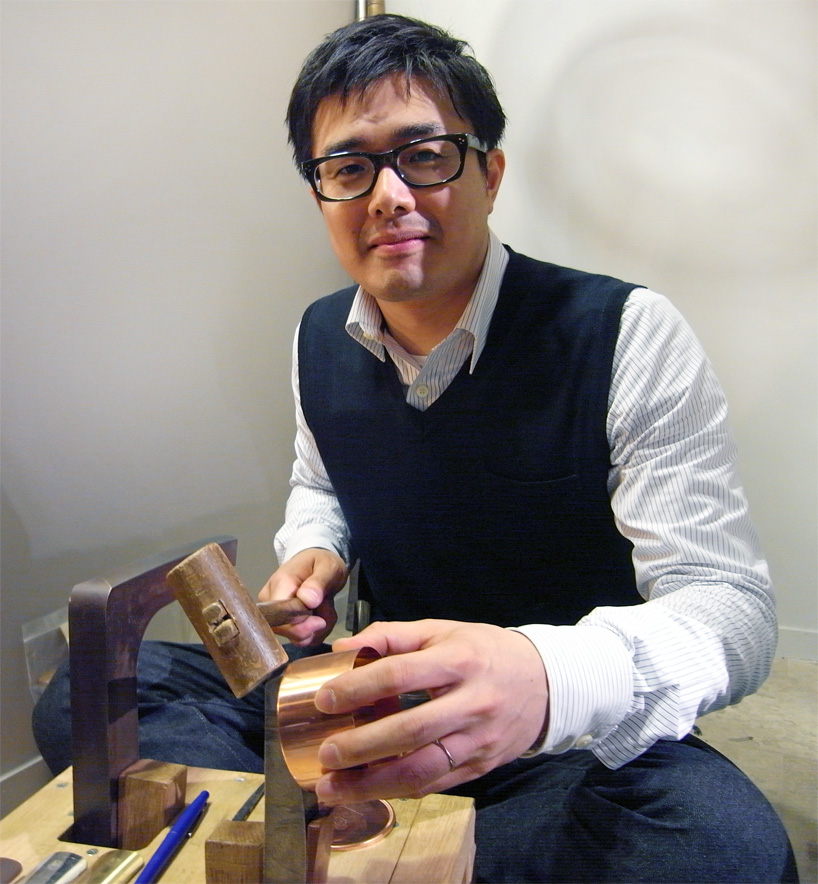 takahiro yagi of kaikado co. ltd, 6th generation tea caddy maker image © designboom
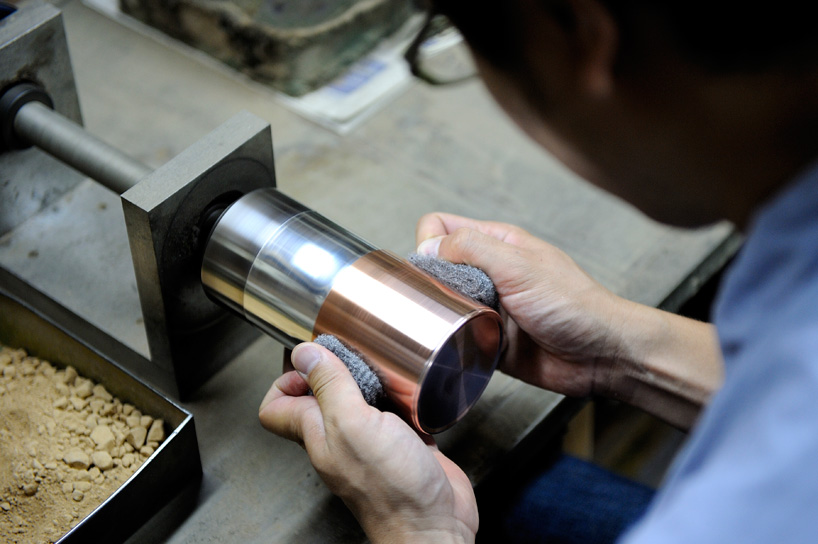 from hand-cutting the sheet metal to soldering and polishing
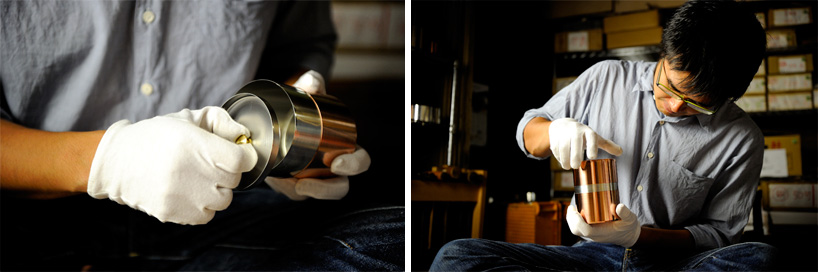 finally, as the joints of the lid and body are lined up, the lid descends to the exact level in a silky and silent motion all the while slowly expelling superfluous air from the caddy.
video – making of the signature on the tea scoop in copper
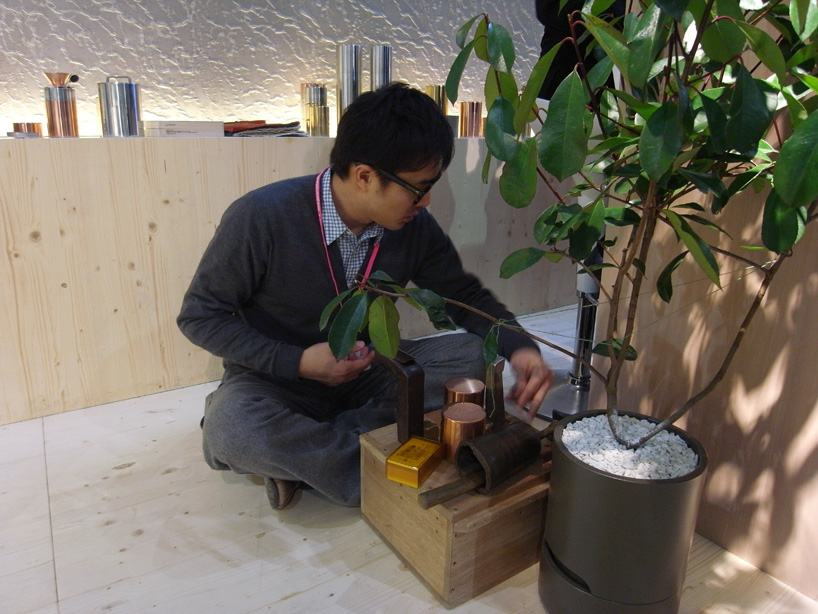 takahiro yagi of kaikado co.ltd is showing designboom the engraving technique : he wrote the characters for the chinese translation of ‘BIRGIT’image © designboom
takahiro yagi, the seventh generation of the family, explained how the caddies are handmade and engraved customer’s names on kaikado’s beautiful tea scoops.
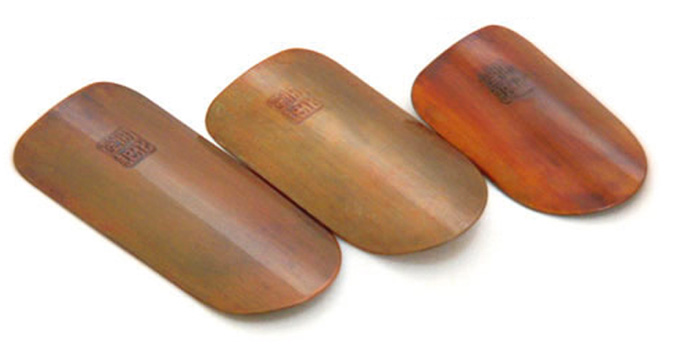 various patina of the tea scoops in copper
kaikado have exhibited in europe at maison et objet in january 2011 and 2012 and in may in the US at the ICFF in new york, where they have won the 2012 editor’s award for best craftsmanship.