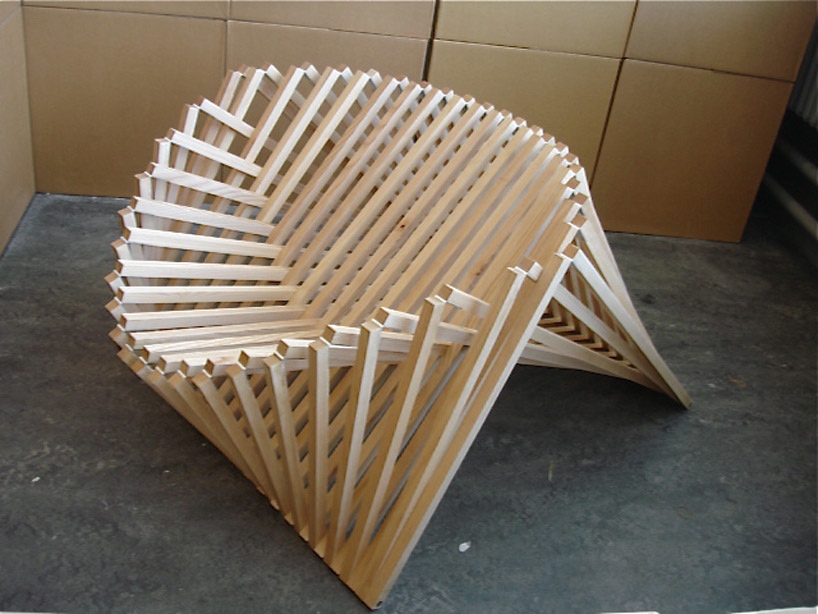
robert van embricqs: rising chair
to what degree is the object you're creating capable of dictating its own design? is it even possible for an object to 'tell' for which form its best suited? and if so, what will the end result be...?
prefer designboom on googlefront‘to what degree is the object you’re creating capable of dictating its own design? is it even possible for an object to ‘tell’ for which form its best suited? if so, what will the end result be?‘ following this train of thought designer robert van embricqs developed ‘rising chair’.
in the designer’s own words: ‘the foundation of any chair is the flat surface you’ll eventually sit down on. using this notion as a starting point, I made several cuts in the flat surface and pulled up the different beam-like strands of cut the surface. this created the preliminary but already distinct features of any chair: back, seat and legs. the rhythm of the wooden beams gives the chair an organic shape. the cuts are most visible when the chair is still down. however at that stage of the construction, I still didn’t know what shape the chair would take in the end. this was determined by the various arches of the wooden beams the chair is made up of. as a creator, I felt a special connection to the material I was working with. molding the chair into its definitive form, it felt like a special, hard to define partnership between myself and the material.
I came across the seat design when I was experimenting with the various angles of the wooden beams. I wanted to see if it was possible to create a surface-like structure with them. the solution was to turn every odd-numbered beam in the exact opposite direction of its neighbour. this way the seat most resembles the petals of a flower. this again emphasizes the nature vibe I wanted this chair to exude.
the seating area of the chair can be called to attention by applying different colours. in its flat state, using a variety of colors can help define the areas on the beam that create the seat. it’s also possible to underline the contrast between the sides of the chair and the top. this can be done by picking different colors for them.’
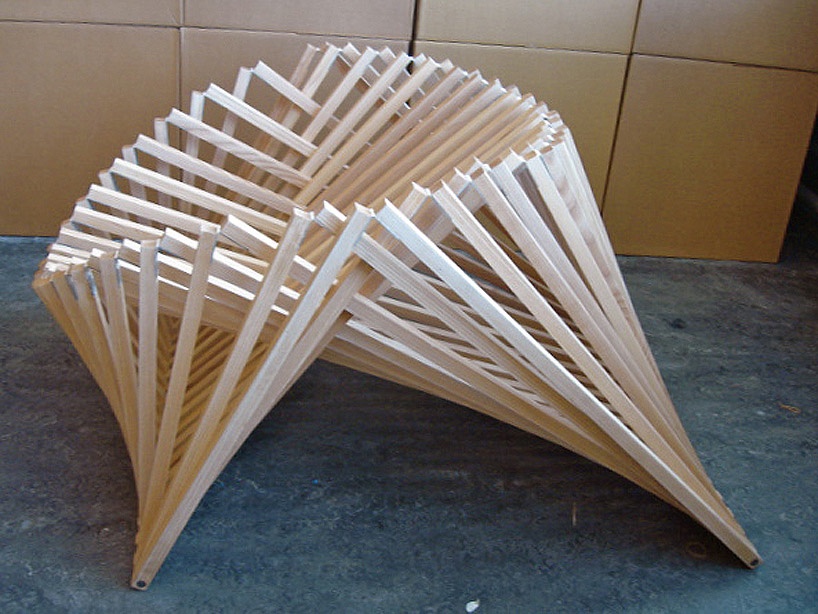 side
side
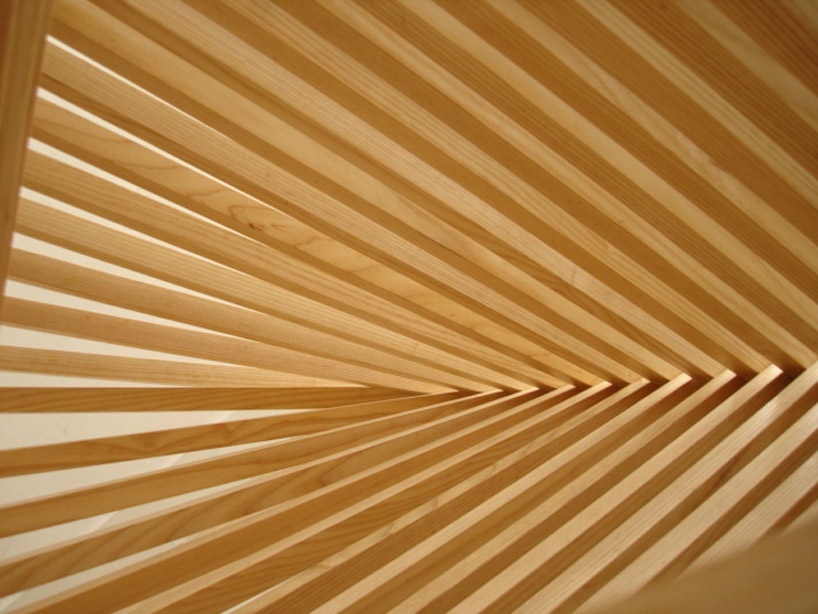 a look through the slates
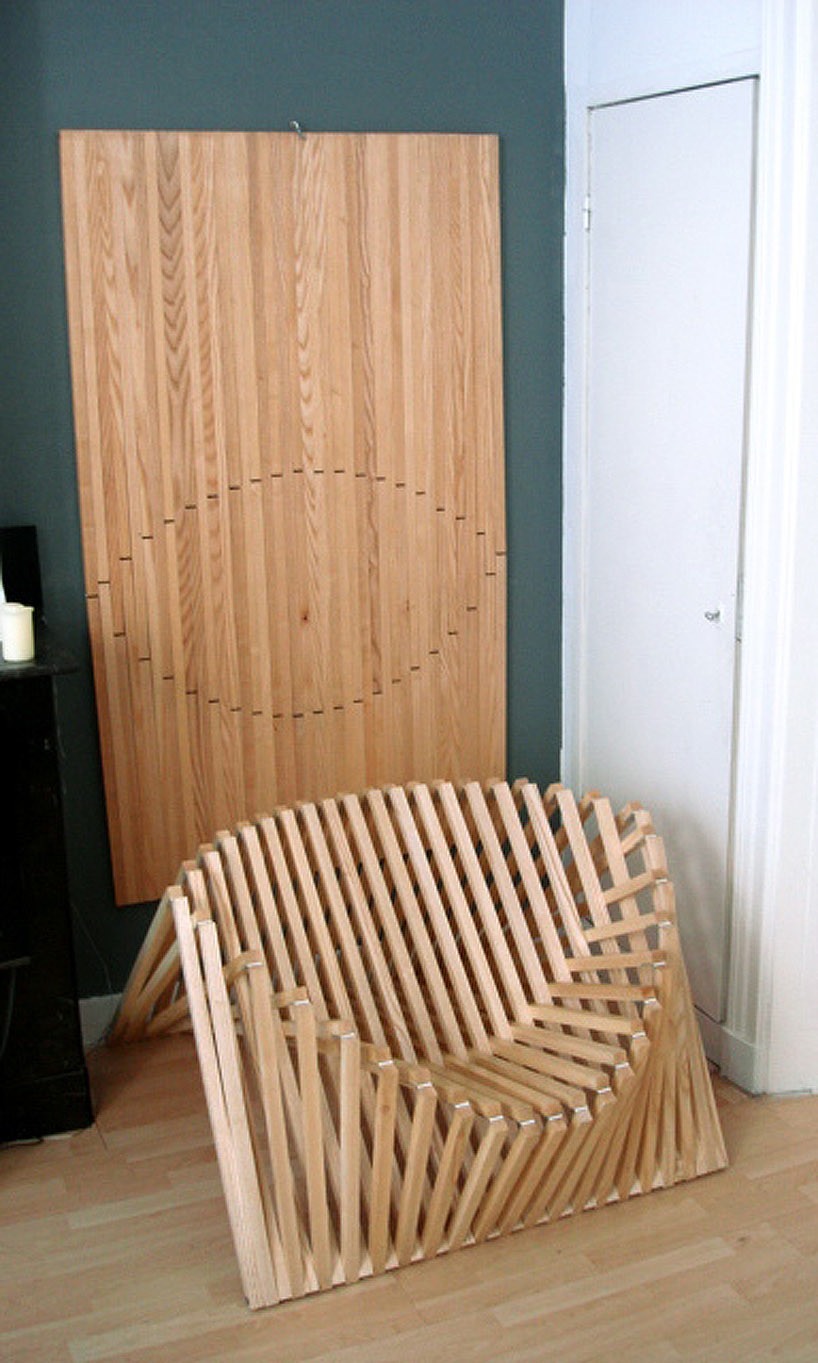 flat and 3-D construction
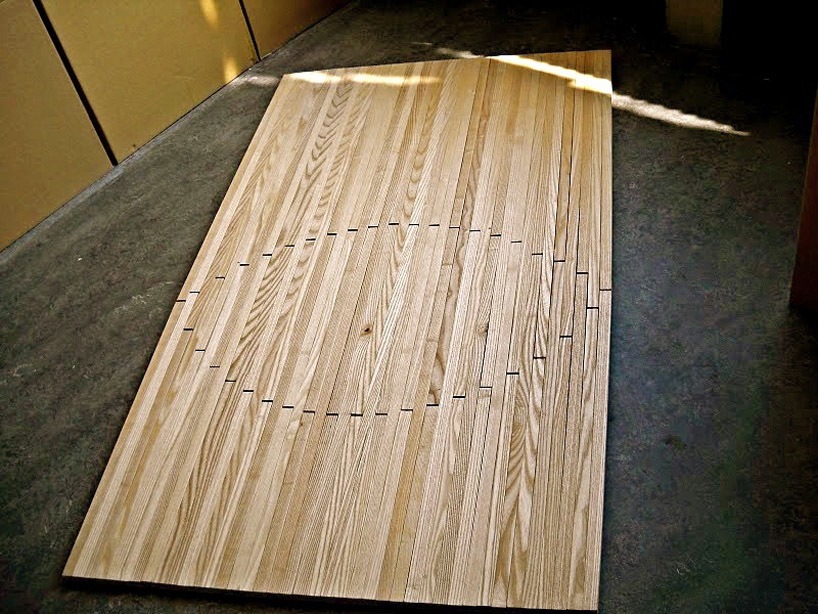 laying flat before construction
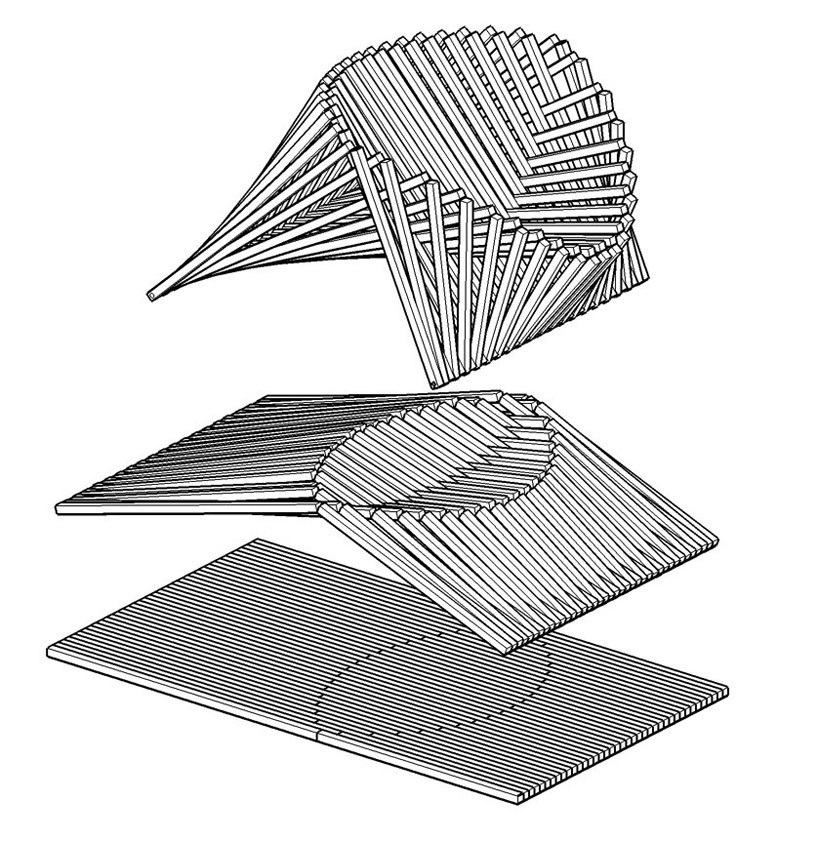 rendering of the chair’s transformation ‘rising’ from flat to 3D
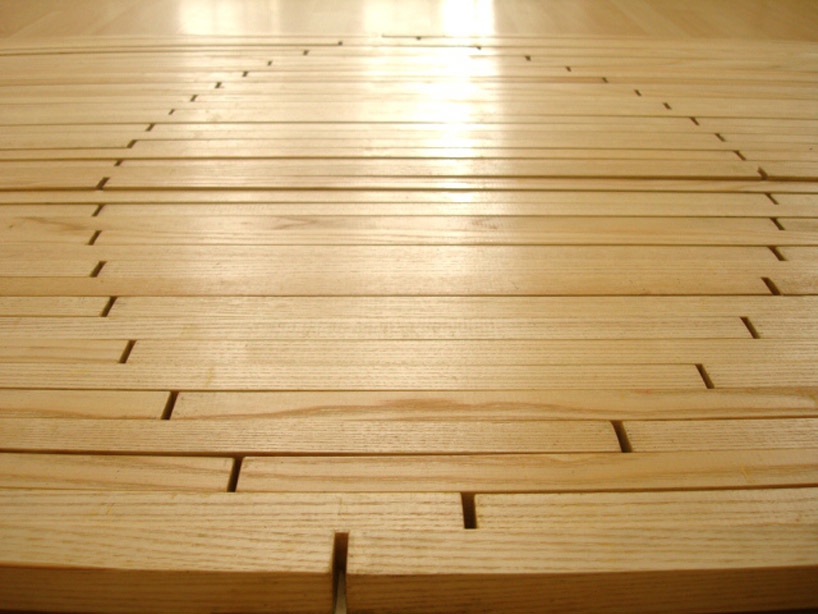 cuts
cuts
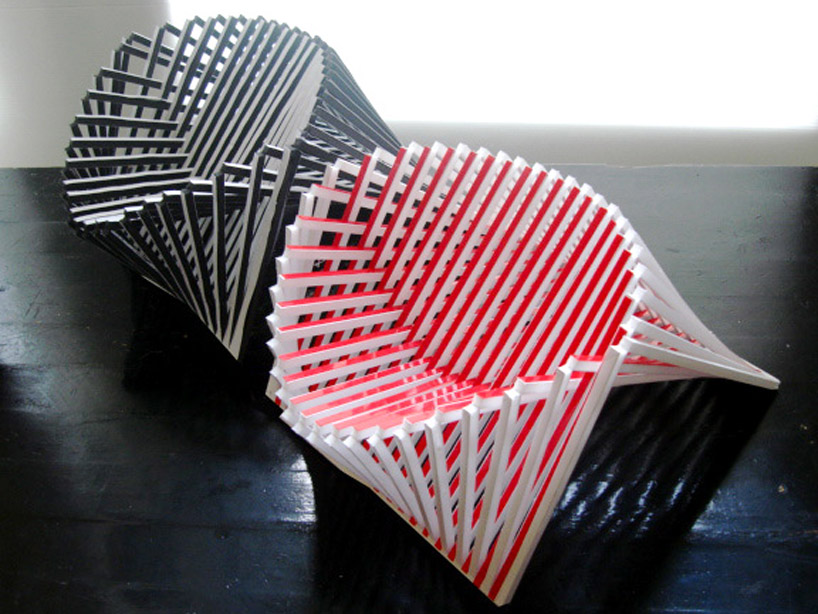 colored versions
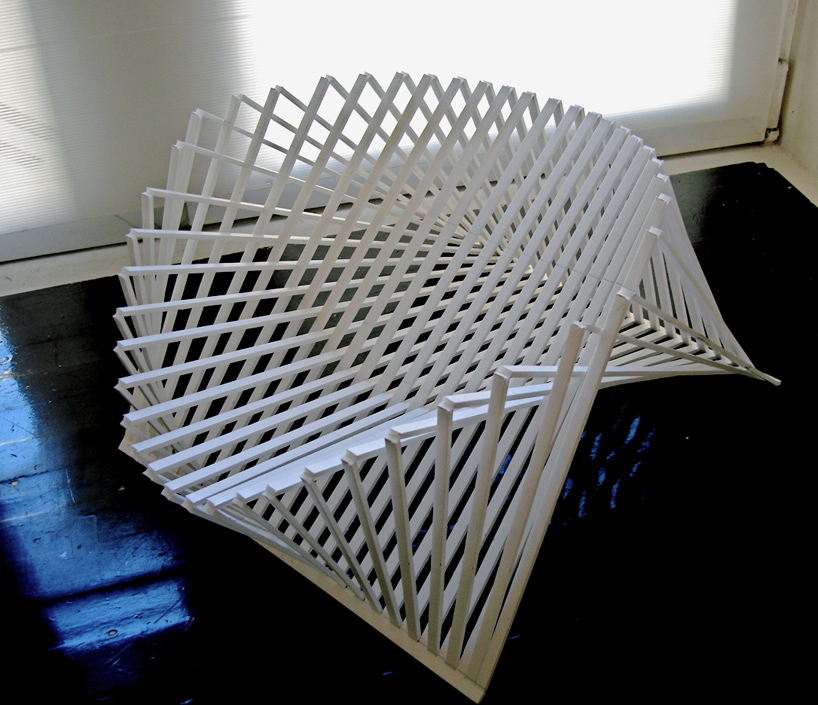 model1
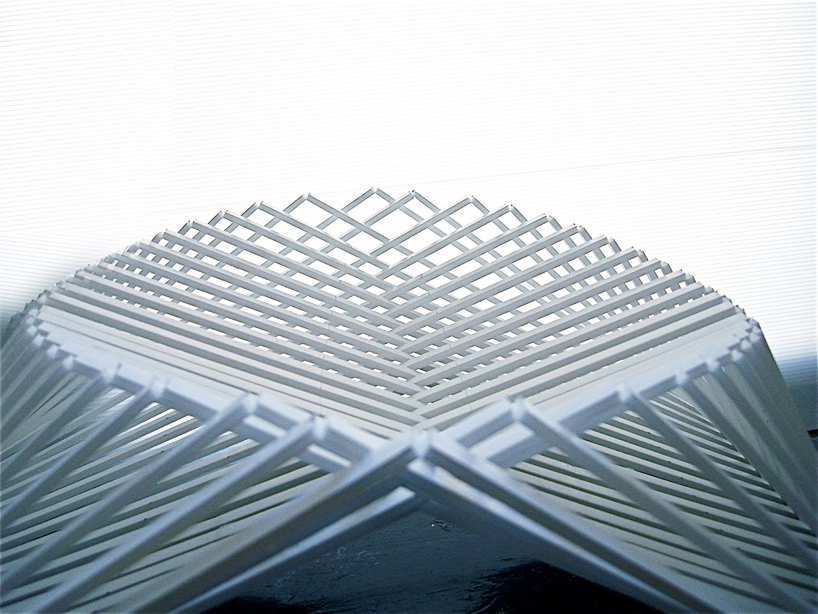 model2
designboom has received this project from our ‘DIY submissions‘ feature, where we welcome our readers to submit their own work for publication.
shop
your own online design shop — no sales commission collected