stefan radev + partners craft tube amplifier for apple and android devices
the smooth surface language of wood and metal takes each intricate detail into consideration.
prefer designboom on google[FEATURED]
stefan radev + partners craft tube amplifier for apple and android devices
all images courtesy of stefan radev + partners
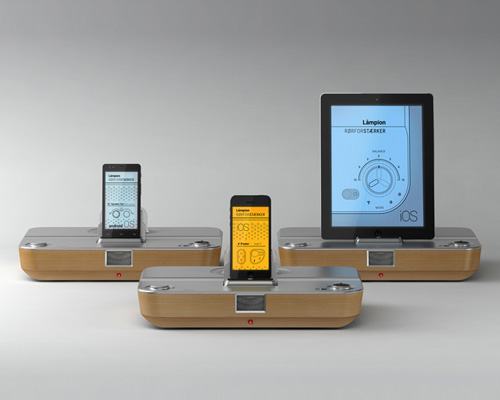
a danish start-up asked stefan radev + partners to develop the design of their first audio vacuum tube amplifier. the brief included key words like high-end, premium, contemporary, compatibility with apple and android devices, to offer the luxury audio equipment user a hybrid device that could be used as stand alone or together with his or her existing system.
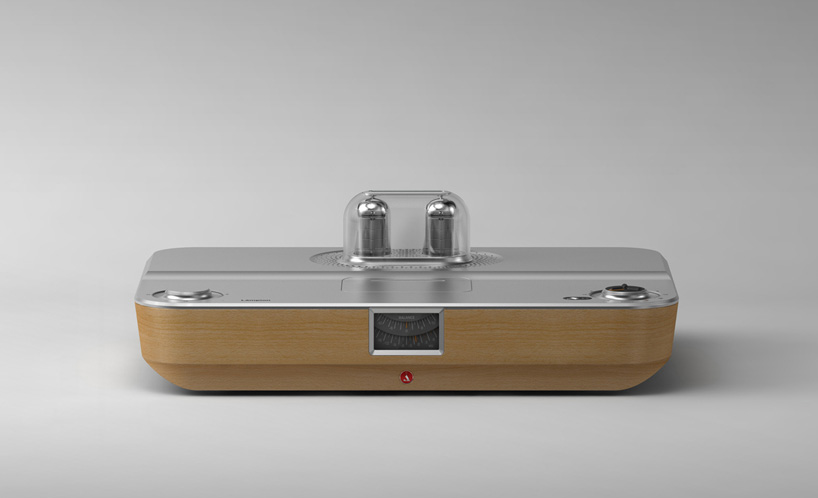
front view
the interpretation has resulted in a balanced choice of proportions, materials, and accents. as the product should be versatile, allowing the user to play music from mobile devices, wirelessly or connected, the firm was able to hide the dual dock into the compact case, so it is easy enabled when needed. the aimed design direction required the controls to be more subtle, so they are embedded them in the top plate, slightly recessed to support the discreet and compact style.
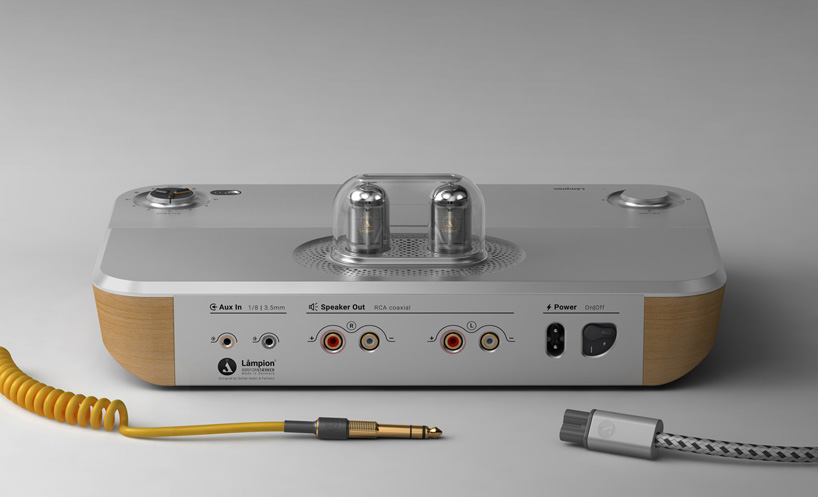
back view
only two type of materials were appropriate to achieve a premium high-end appeal: aluminum to assist cooling, and wood to reflect the warm sound that is created by the amplifier. the large top and bottom shells of alloy aid the temperature gauging process. they are additionally perforated where the escape of air is most needed due to the hidden circuitry inside the case. in order to enable a better ventilation, the lower left and right sides of the bottom surface are slightly raised. the vacuum tubes are prominently present, but as they are fragile, they needed a sleek invisible protector. knowing that a glass cover seemed to be an obvious solution, but would need to be ventilation-friendly, the designers cut the upper quarter area to aid the cooling process and the integrated metal bezel.
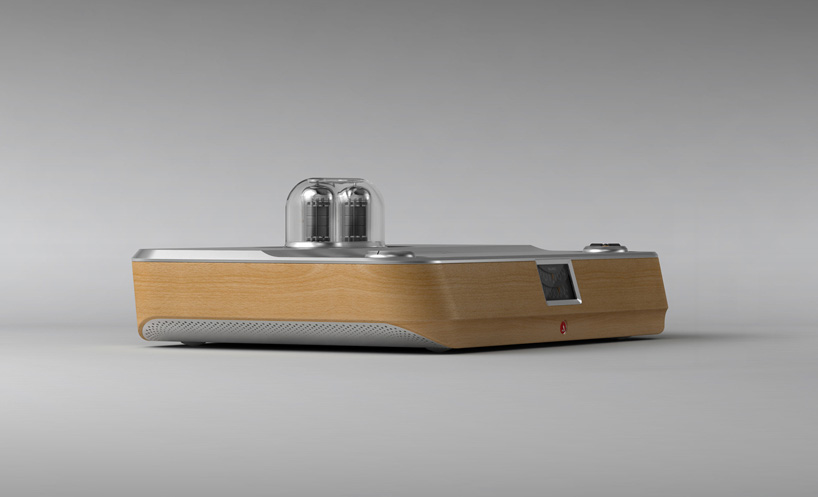
side view
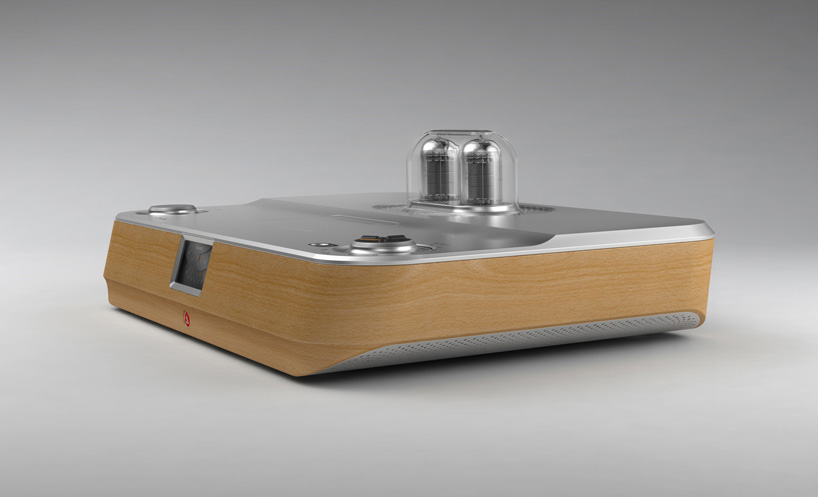
perspective view
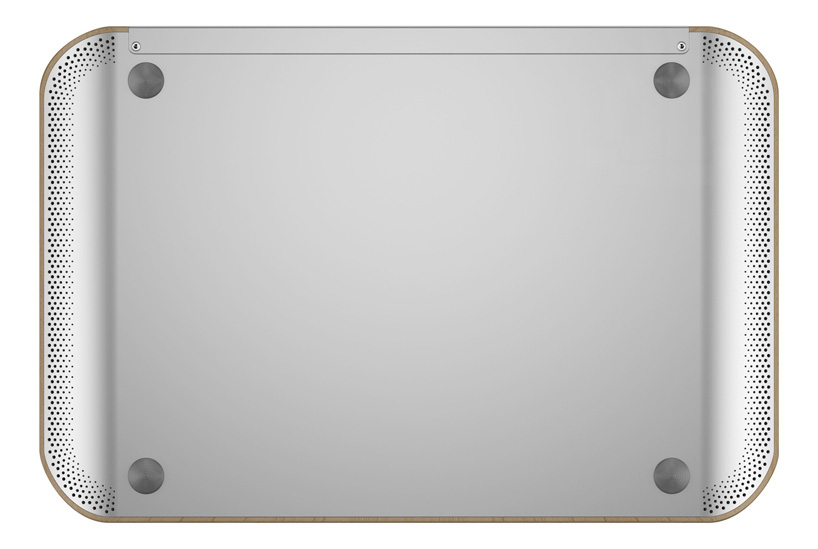
bottom view
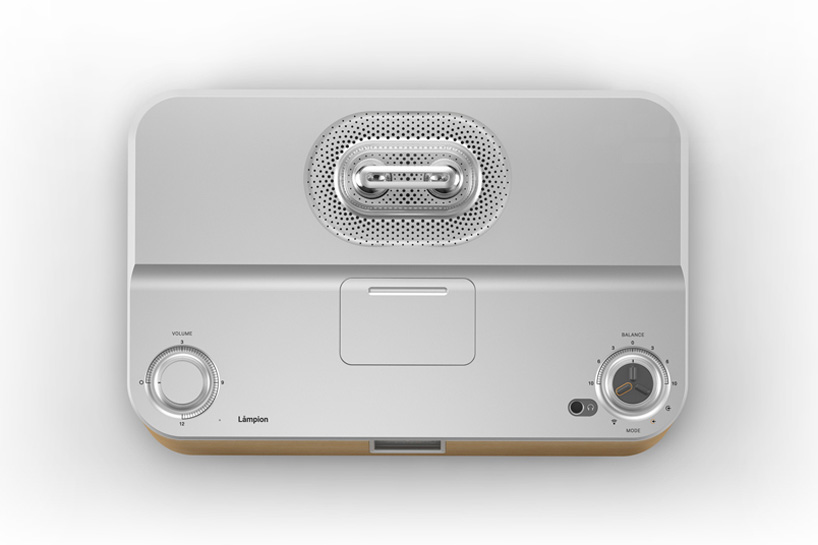
top view
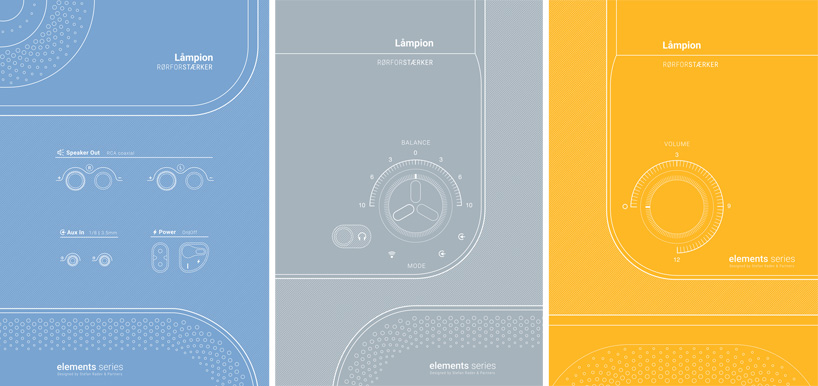
elements posters
designboom has received this project from our ‘DIY submissions‘ feature, where we welcome our readers to submit their own work for publication. see more project submissions from our readers here.
shop
your own online design shop — no sales commission collected