hitoshi abe interview
designboom:what is the best moment of the day? afternoon. between 2pm and 4pm.
prefer designboom on google[FEATURED]
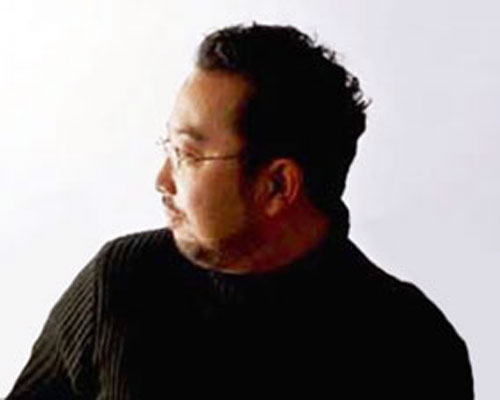
hitoshi abe,image courtesy atelier hitoshi abe.
designboom interviewed hitoshi abe on october 11th, 2006.
what is the best moment of the day?
afternoon.between 2pm and 4pm.
what kind of music do you listen to at the moment?
black eyed peas
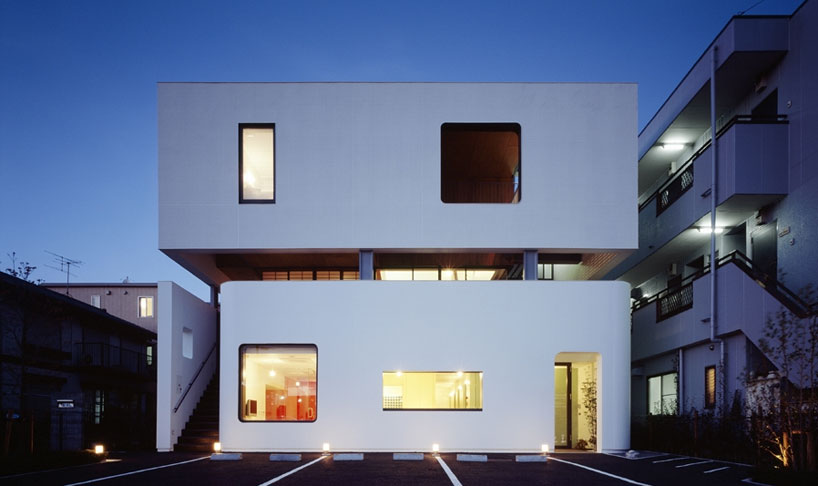
KCH whopper in saitama, 2006.the building accommodates a pediatric clinic on ground floor, and the clientfamily’s private space on second and third floor.a terrace is enclosed along the horizontal axis -the exterior is captured inside, protected from the bustle of the surroundings.the floating third-floor volume has the same proportion as the ground floorand comes with various holes that introduce sunlight to from a variety of angles.
do you listen to the radio?
yes.
what books do you have on your bedside table?
I prefer to read novels on chinese history.
do you read architecture and design magazines?
yes, occasionally.
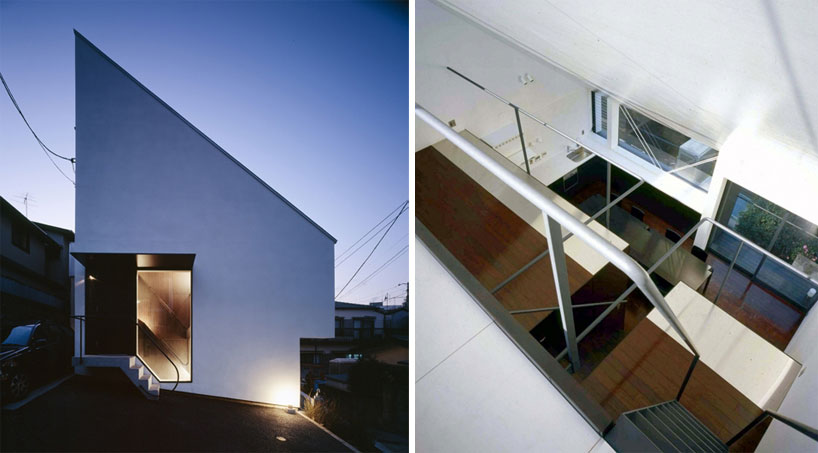 house kado, in ebisu, tokyo, 2005
where do you get news from? Newspapers?
usually from TV and internet.
I assume you notice how women dress.
do you have any preferences?
I do not have any specific preferences.I like clothing that fits. when women feel well in somethingthat they are wearing.
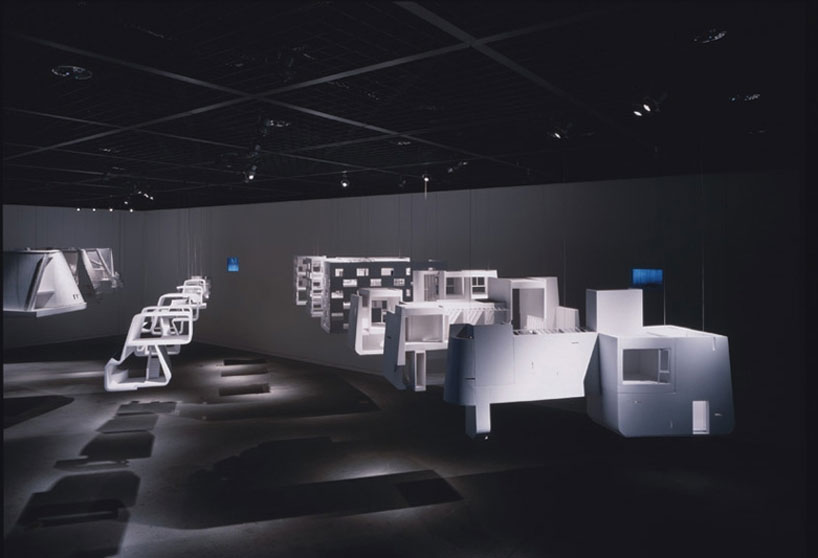
‘body’ exhibition at the ma gallery, tokyo, 2005
what kind of clothes do you avoid wearing?
I do not wear horizontal strip patterns.
do you have any pets/ animals at home ?
no.
when you were a child, what did you want to be?
did you always want to be an architect?
since I was a child, I always wanted to become eitheran architect or a thomas alva edison.
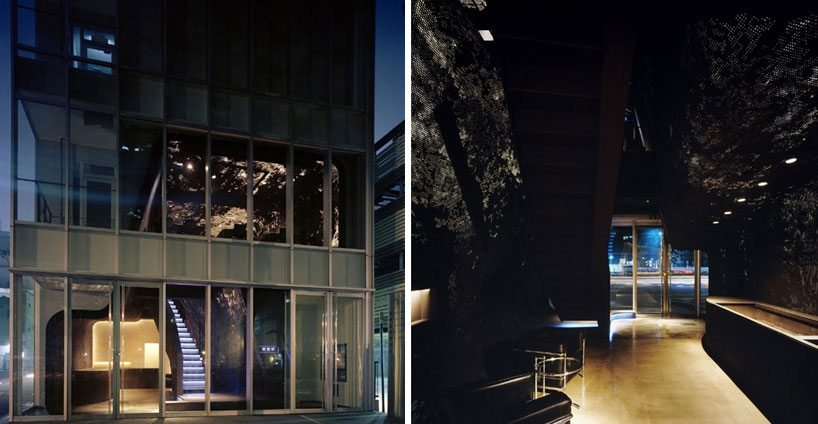
restaurant ‘aoba tei’, sendai, 2005
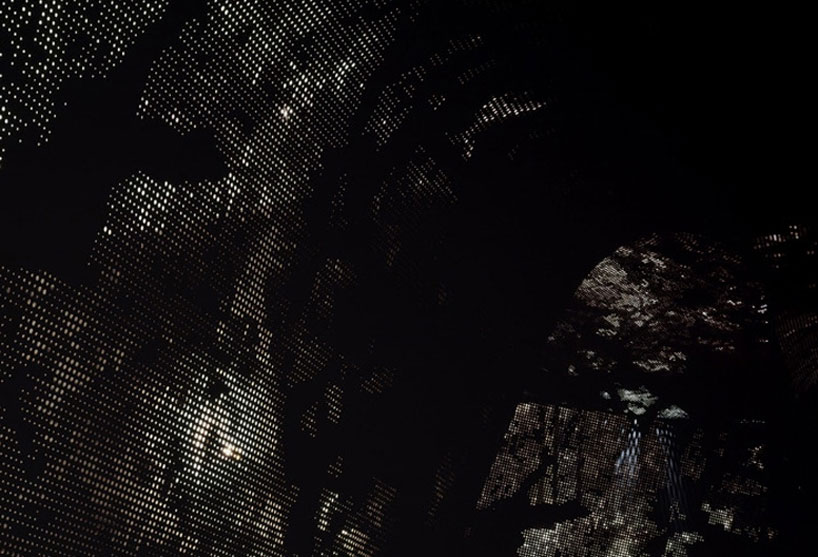
‘aoba tei’ (which means ‘leafy place’) features walls and ceilings decoratedwith images of leaves and branches, perforated through steel sheets.
who would you like to design something for?
for anybody, anywhere.
do you discuss your work with other architects
and designers?
yes.
describe your style, like a good friend of yours
would describe it.
hard and loose.
the surreal quality is present in most of your
buildings, and especially evident in the miyagi
stadium in sendai.
could you summerize in a few words the
design concept?
we wanted to express the openness of the universe.what we tried here was loosening the stadium-building-type,which has remained essentially unchanged since the romans.we thought we could loosen this rigidity by superimposingthe opposite kind of type.we simply reversed the stadium, and it became a hill.what are the visitors seeing, a hill or a stadium?a landscape or an architecture?we also did’nt want to maintain the circle shape of allstadium plans, usually regarded as strictly necessary forgood viewing. it is boring and it creates a strong senseof enclosure. in our project the circle became a swirl.also, we kept the roof size minimum, just covered the seats,which are of blue colour, fading gradually from dark blueto white to reflect the sky above.
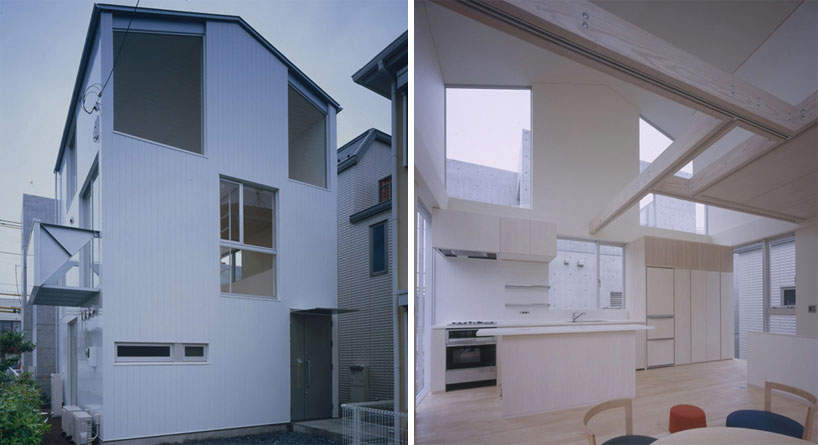
left: 9 tobohouse (tall), chigasaki, kanagawa prefecture, 2005.the prototype for this project is a house that the japanese master architect makotomasuzawa built for himself in 1952, during the period of material scarcity in japanthat immediately followed the second world war. it was intended as a‘minimum dwelling’ to be built by anyone, anywhere.right: interior of the 9 tobohouse.this new twenty-first century version is aimed at enhancing possibilitieswith regard to the diversity and fluidity of lifestyles in contemporary society.no new specifications were added; the room divisions were just taken from theoriginal plan, but their height extended to 3,056 mm and the volume of spacecorrespondingly increased, in order that the compactness of the original prototypewas preserved intact.http://9tubohouse.com/lineup/abe/ha_newdesign.html
in your exhibition ‘body’ you showed ‘slices’
of walls and architectonic details without providing
any information on the buildings to which they belong
to …
when the object is removed from its context the viewer isforced into an unmediated and direct communicationwith its sculptural form.people are trying to capture architecture through a filterof conceptions such as a structure or a programme,following an existing meaning, but it doesn’t allow the humanbody to interpret the significance of the space that is presented.the body is the only interface of communication betweenhumans and nature. architecture, when stripped from context,is capable of interfacing with the human body and of addinga meaning to the ‘space’.
what project has given you the most satisfaction?
the satisfaction is different in each project.so it is impossible for me to pick one specific project.my refusal to fall back on a template or any style constantlymakes me seeking new solutions and new modes ofexpression for each new projects I undertake.
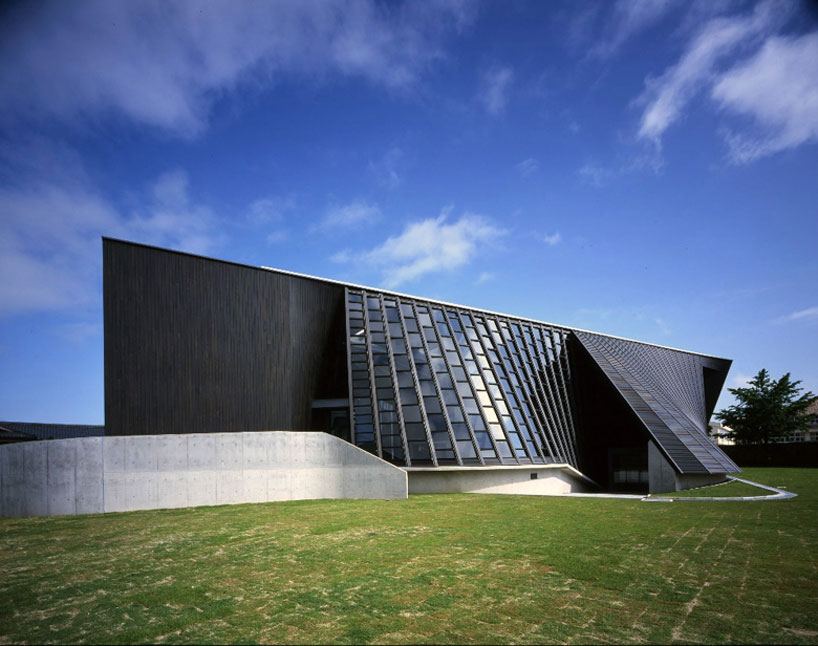
reihoku community hall, 2002in reihoku, amakusa-gun, kumamoto prefecture, japanby atelier hitoshi abe and yasuaki onoda.
can you describe an evolution in your work from
your first projects to the present day?
I think it is getting more simple, …more aggressive, …and more easy.
is there any designer and/or architect from the past,
you appreciate a lot?
there are so many designers and architects to mention.
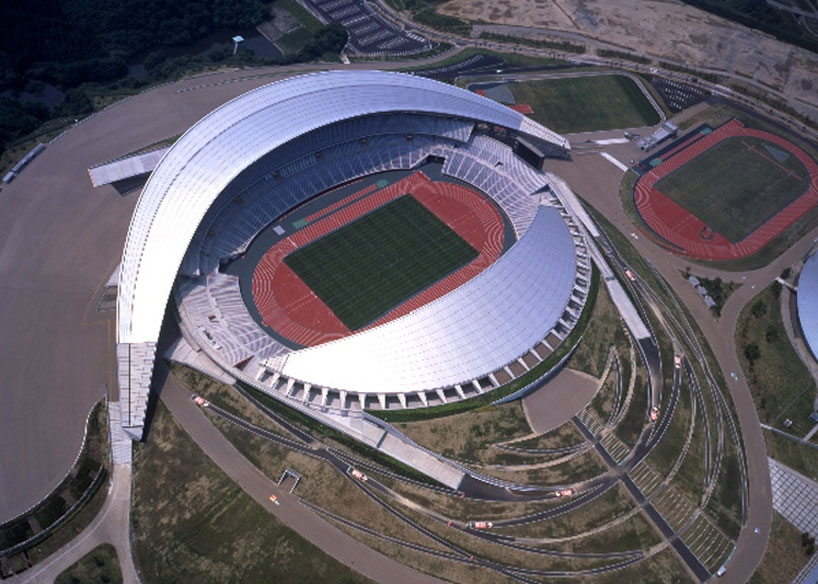
miyagi stadium, sendai, 2000
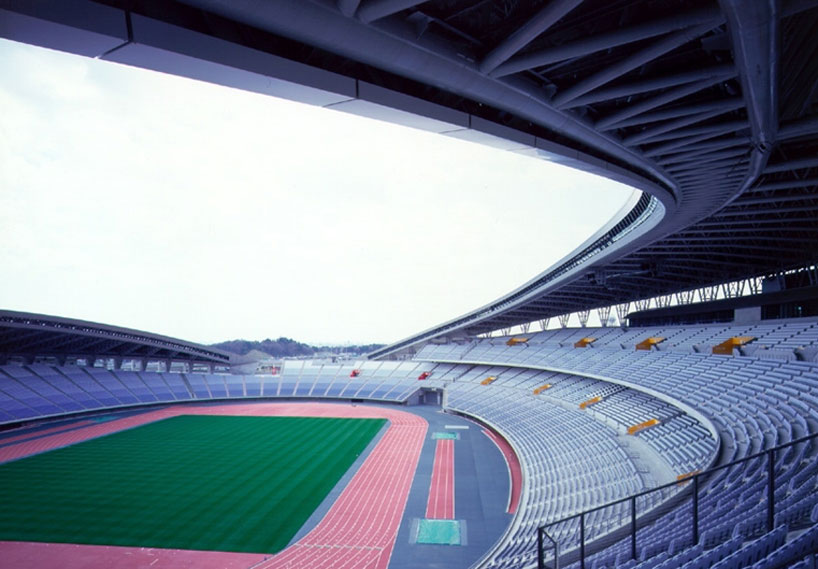
miyagi stadium, sendai, 2000
and from today’s scene?
those currently working in this field?
there are so many designers and architects to mention.
any advice for the young ?
I am still too young to advise anybody.
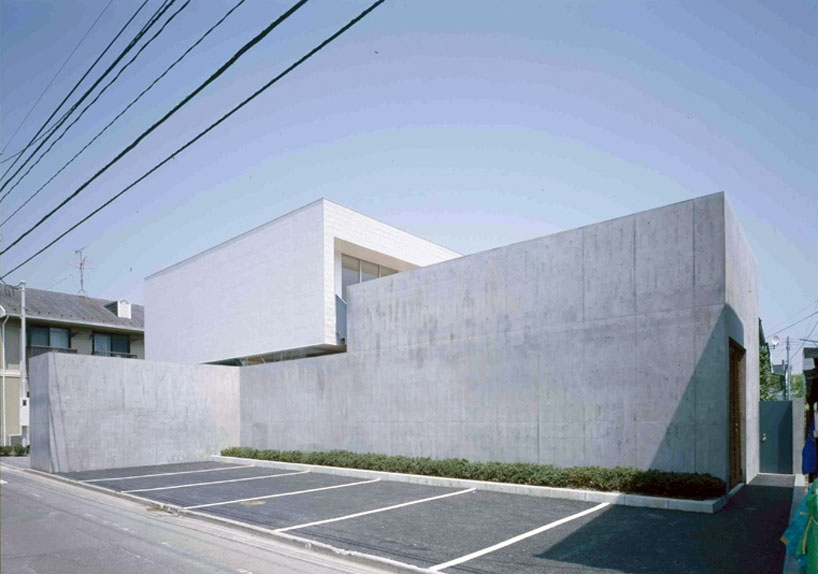
K-house, sendai, 2003the concrete wall defines the boundary between the public parking lot and a protectedprivate courtyard.
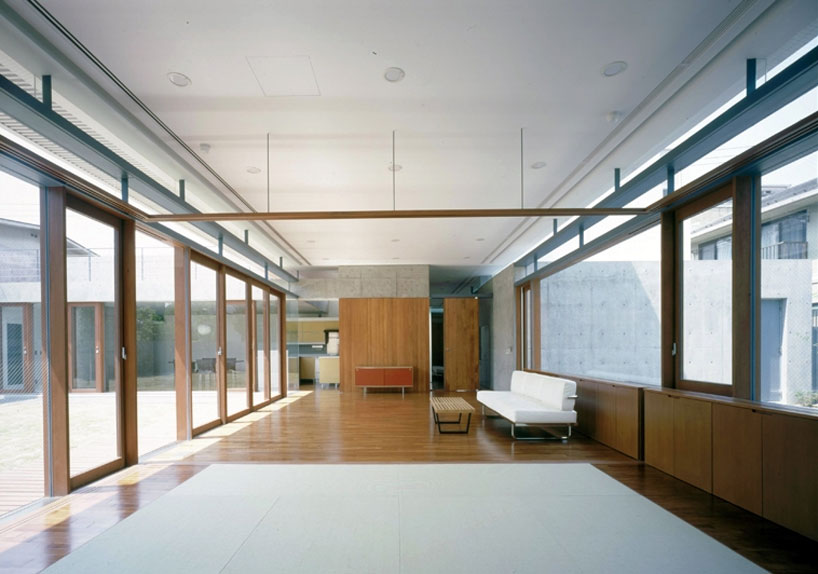
interior of K-house.the first floor is a L-shaped single space with living room, dining room, kitchenand a japanese style room. it opens up towards the courtyard and becomes a singlecontinuous space.
what are you afraid of regarding the future?
I am afraid that people are loosing the capacityto practice tolerance towards other people.

shop
your own online design shop — no sales commission collected