mira nakashima-yarnall .........................................................................................................................................................................................................

......................... shop .................. competitions .............. education ................ interviews ................... snapshots ................... history .......... contemporary


---

mira nakashima-yarnall
designer, daughter and apprentice of george nakashima.


mira was born in seattle, washington and brought up mostly in new hope,
pennsylvania. as a child she spent most of her time in the workshop
(george nakashima woodworker, founded in 1943).
after graduating from harvard in1963 and achieving a masters degree in
architecture from waseda university in tokyo in 1966, mira returned to
work in the nakashima studio.
mira is fully embracing her father's philosophy, that,
'the woodworker's responsibility is to the tree itself, which has been
sacrificed to live again in the woodworker's hands...'
contrary to popular belief, the nakashima woodworking concern
was a one-man operation only in the beginning.
george nakashima employed some of the
world's finest craftsmen who remain devoted to the man and his ideas,
and after 40 years of service are still working at the nakashima studio today.
after george nakashima's death in 1990 the studio is operated by his daughter,
mira nakashima-yarnell, along with her brother kevin and her mother marion.
in addition to raising 4 kids and enjoying 2 grandchildren,
mira nakashima-yarnall designed and built a memorial reading room
at the michener museum in 1993, curated and constructed several shows
and built and sent two peace altars / tables to india and russia
in 1996 and 2001.
she is currently working on a retrospective show of george nakashima's
work to open in october 2003 at the mingei international museum
in san diego as well as on a book on george nakashima to be published
by harry abrams in 2003 and on a documentary film with cousin
john terry nakashima.
http://www.nakashimawoodworker.com
---
george nakashima (1905-1990)
japanese-american woodworker, internationally known for his
innovative furniture designs as well as his meditative architectural interiors.
no two pieces are alike. each furniture design is adjusted to the
natural features of the wood (the natural, free-form contours ...)
so the design features the wood, not the other way around.
---
see the biography of george nakashima
http://www.designboom.com/portrait/nakashima_bio.html
and george nakashima's peace altars
http://www.designboom.com/portrait/nakashima.html


-------------------------------------------------------------------------------------------------
mira nakashima-yarnall answered the designboom questions on july 23, 2002.
----------------------------


what is the best moment of the day?
when I take my swim at the end of the work day,
floating on my back and looking up at the sky
and trees.

what kind of music do you listen to at the moment?
I listen to classical and folk music.
my favorite instruments are guitar,
flute and piano, as I play them myself.
my favorite composer has always
been j.s. bach, but I also love vivaldi, mozart,
and beethoven. I find very powerful the east iIndian
vocal chants with tabla and tambour.

do you listen to the radio?
I listen to the classical stations only usually in the car,
and am so fussy about what is played
that I often turn it off in favor of my own tapes.

what books do you have on your bedside table?
sacred contracts, by carolyn myss and
casa barragan by yutaka saito.
I wish I had more time to read.

do you read design magazines?
not very often, unless there are articles about
nakashima featured.


where do you get news from?
the newspapers, occasionally radio and television.

do you notice how people are dressing?
do you have any preferences?
yes. simple, with style.

what kind of clothes do you avoid wearing?
uncomfortable, unflattering.
I am fond of east indian garb, and japanese textiles.

do you have any pets?
not at the moment.
when my children were young, we had a cat, a dog,
two rabbits, a family of gerbils, and goldfish.
as a child, I only had goldfish.

when you were a child, what did you want to be?
someone with a great future.

your father was propelled by a religious fervor,
please tell us more about it and about your own devotion.

my father considered himself a citizen of the world and
did not believe in religious sectarianism.
although I play guitar and flute at a roman catholic church
once a week, it is my morning meditation which quiets my
soul and centers me, releasing creative energy as a
prayer throughout the day.

who would you like to design something for?
my children and grandchildren.

do you discuss or exchange ideas with other creatives?
unfortunately, no. my father's good friends included
ben shahn, harry bertoia, and william a. smith,
with whom he exchanged ideas and insights.
since my oldest son satoru has come into the business,
he has become my chief advisor and critic.
most the artists I know are older, in different
fields, and are mentors more than friends.

describe your style, like a good friend of yours would describe it.
a continuation and development of my father's work.
more angles and curves have complicated construction somewhat,
but I still listen to the voice of the wood itself.
I am perhaps more tolerant of client input than my father was,
but I have not been able to push the limits of solid wood technology
further than he did.

please tell us more about the community you live and work in.
most people here, like me, are involved in their owns lives and work,
and not very interactive.

which of your work has given you the most satisfaction?
my children.

is there any designer and/or architect, you appreciate a lot?
my father, junzo yoshimura, and mario salvadori

and those still active, are there any particular ones you appreciate?
michael gabellini, yutaka saito, and william mcdonough

any advice for the young?
tend your soul, mind the environment.

what are you afraid of regarding the future ?
destruction of the natural environment and basic human values.


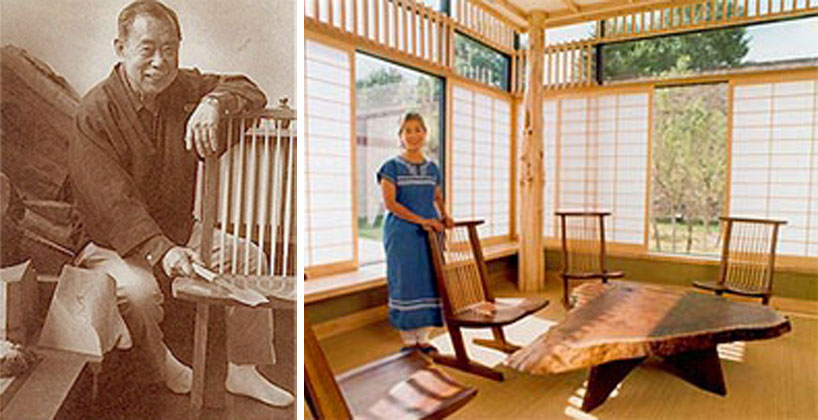
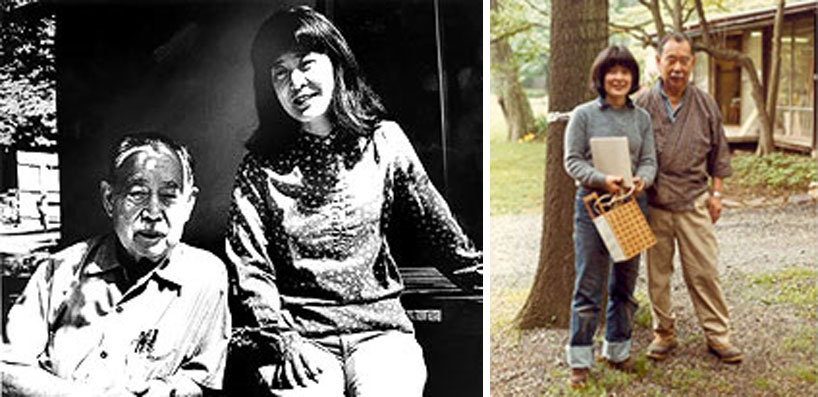
george and mira nakashima
courtesy mira nakashima-yarnall


george and mira nakashima
outside of workshop, 1982
courtesy mira nakashima-yarnall


george nakashima
courtesy mira nakashima yarnall


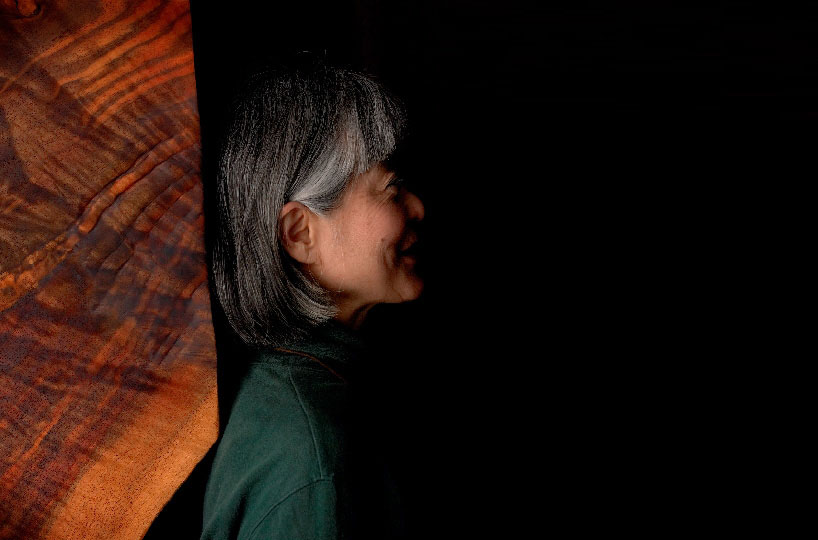
mira in the nakashima memorial room at the
james a. michener art museum, designed 1993.
'keisho michener claro' walnut burl coffee table in foreground.
courtesy mira nakashima-yarnall


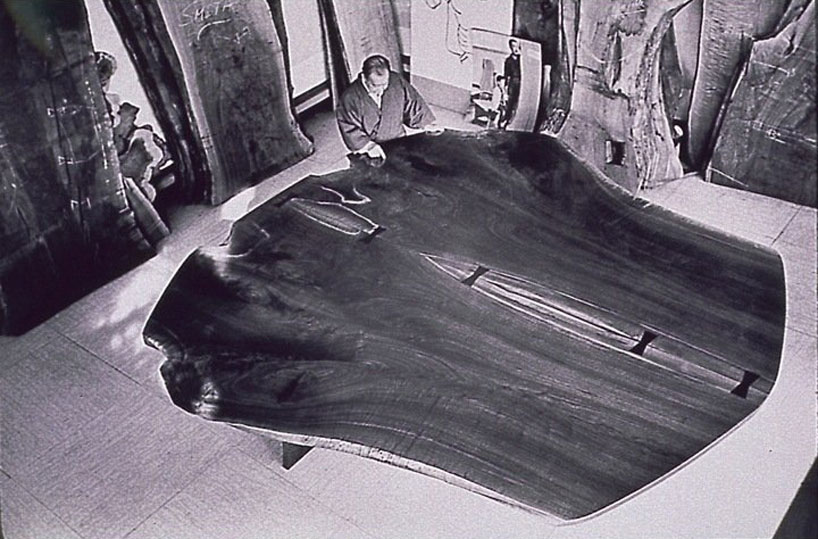
world peace table, 1986 by george nakashima
courtesy mira nakashima-yarnall


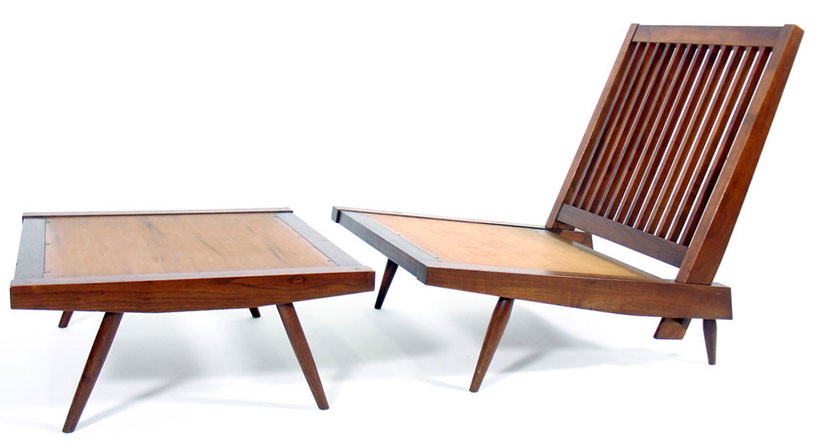
walnut spindle-back armless lounge chair
(cushions are missing) and ottoman, 1960
by george nakashima

---
the questionaire of marcel proust (1871 - 1922) .......................................................................................................................................................
(in age of fourteen proust was given an english album "confessions : an album to record thoughts, feelings".
seven years later marcel proust published this questionaire)
in the literary salons in nineteenth century paris, this parlour game was a popular amusement.
for designboom mira nakashima-yarnall has answered these 'old fashioned' questions.
................................................................................................................................................................................................................................................


the main traits of my character
.
persistence and patience.

a quality I desire in a man
.
passion.

a quality I desire in a woman.
sensitivity.

what I appreciate most among my friends.
open hearts.

my principal defect.
avoiding conflict.

my favourite occupation.
playing or listening to music.

my dream of felicity / happiness.
being in love.

what would be the biggest misfortune for me.
losing contact with my family.

who I would like to be.
powerful and free.

where I would like to live
.
right where I am.

the colour I prefer
.
red and blue.

the flower I love.
roses.

the bird I prefer.
bluebird.

my favourite authors.
shakespeare, sri aurobindo

my favourite poets.
w.b. yeats, john o'donohue

my heroes in fiction.
luke skywalker

my heroines in fiction.
princess leia

my favourite composers.
j.s. bach, antonio vivaldi, w.a. mozart,
ludwig van betthoven, maurice ravel, claude debussy.

my favourite artists.
vincent van gogh, charles ward, vincent ceglia

my heroes in real life.
stephen hawking, the dalai llama.

my heroines in history.
hildegard of bingen, mother theresa.

my favourite names.
shanti.

what I dislike the most.
insincerity.

the historic characters I dislike most.
hitler.

the military enterprise I like the most.
none.

the reformation I appreciate the most.
landmark education.

nature’s gift I would like to have.
to play music by ear and improvise.

how I would like to die.
peacefully.

my soul's present condition.
compromised.

the faults I can bear.
making mistakes.

my motto.
do your best.


'keisho bryfogle' dining table, in walnut, 1998.
'keisho" means 'continuation' in japanese and refers to the newer designs created by mira since george's death in 1990.
courtesy mira nakashima-yarnall


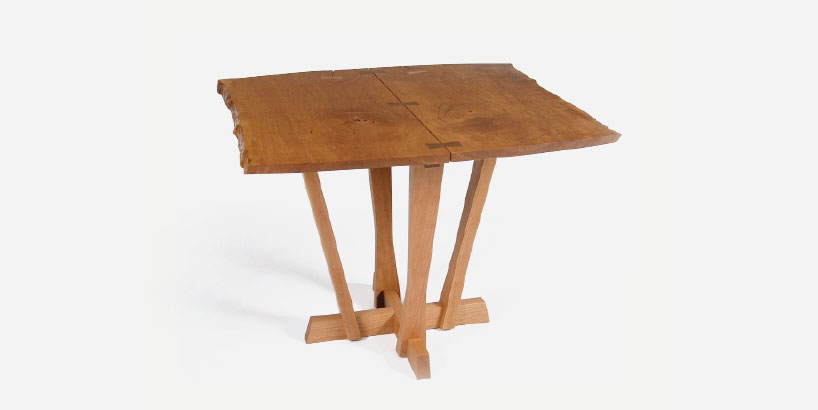
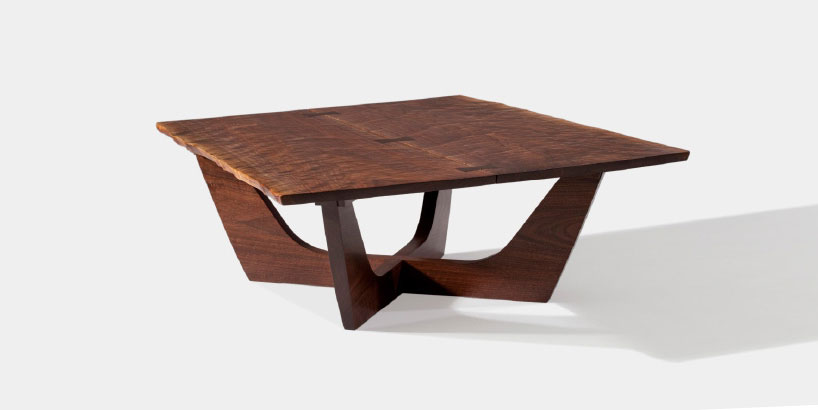
'keisho simon' coffee table, figured bubinga and cherry, designed 1992.
('keisho' / newer design created by mira nakashima-yarnall), courtesy mira nakashima-yarnall


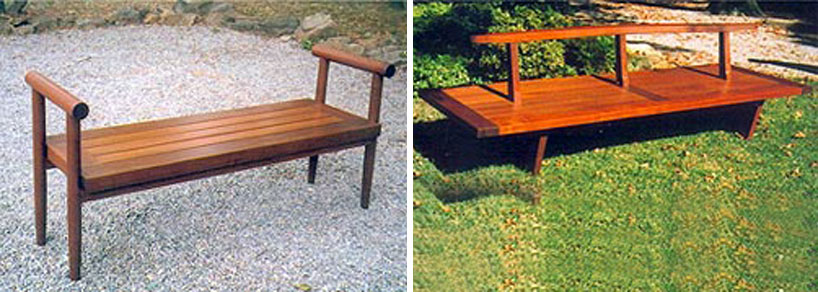
outdoor bench 'keisho chanoyu', in ipe, 1999.
('keisho' / newer design created by mira nakashima-yarnall), courtesy mira nakashima-yarnall


'keisho arboretum' bench for out-of-doors, in ipe,
designed 1998.
('keisho' / newer design created by mira nakashima-yarnall), courtesy mira nakashima-yarnall


---


-------
monthly designboom newsletter
-------


-------
? comments and contact us ?
-------