interview with franco maria ricci in 2001
designboom: what is the best moment of the day? franco maria ricci: the evening, because I tend to wake up very late...
franco maria ricci interview
image © designboom
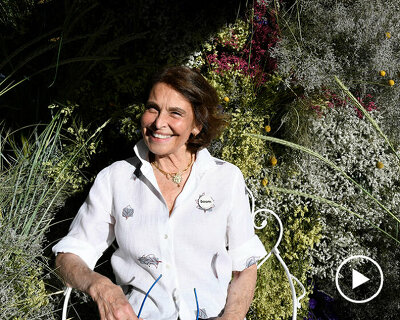
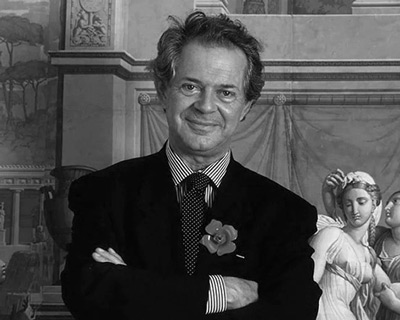
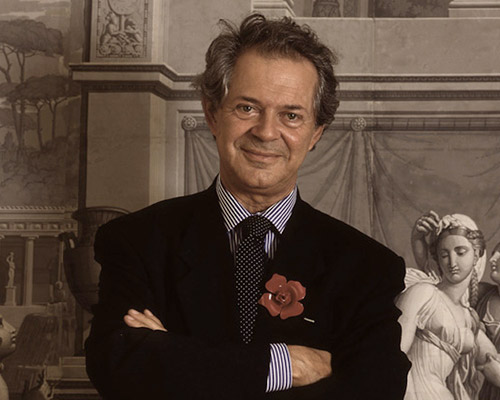
we met franco maria ricci at his milan headquartes in july 2001.
designboom (DB): what is the best moment of the day?
franco maria ricci (FMR): the evening, because I tend to wake up very late. the few times that have to get up early is because I have to take a plane, even if I always try to take flights after 1pm. I sleep in the morning, I come to the office at 1pm and I work until 10pm or so. then I have dinner and around midnight. at 1 or 2am, I am at my best.
DB: what kind of music do you listen to at the moment?
FMR: I only listen to classical music, especially from 1600-1700, some from 1800 and a little opera, since I am from parma, but I don’t listen to the entire opera, only the arias. I don’t like contemporary music, the songs from san remo…
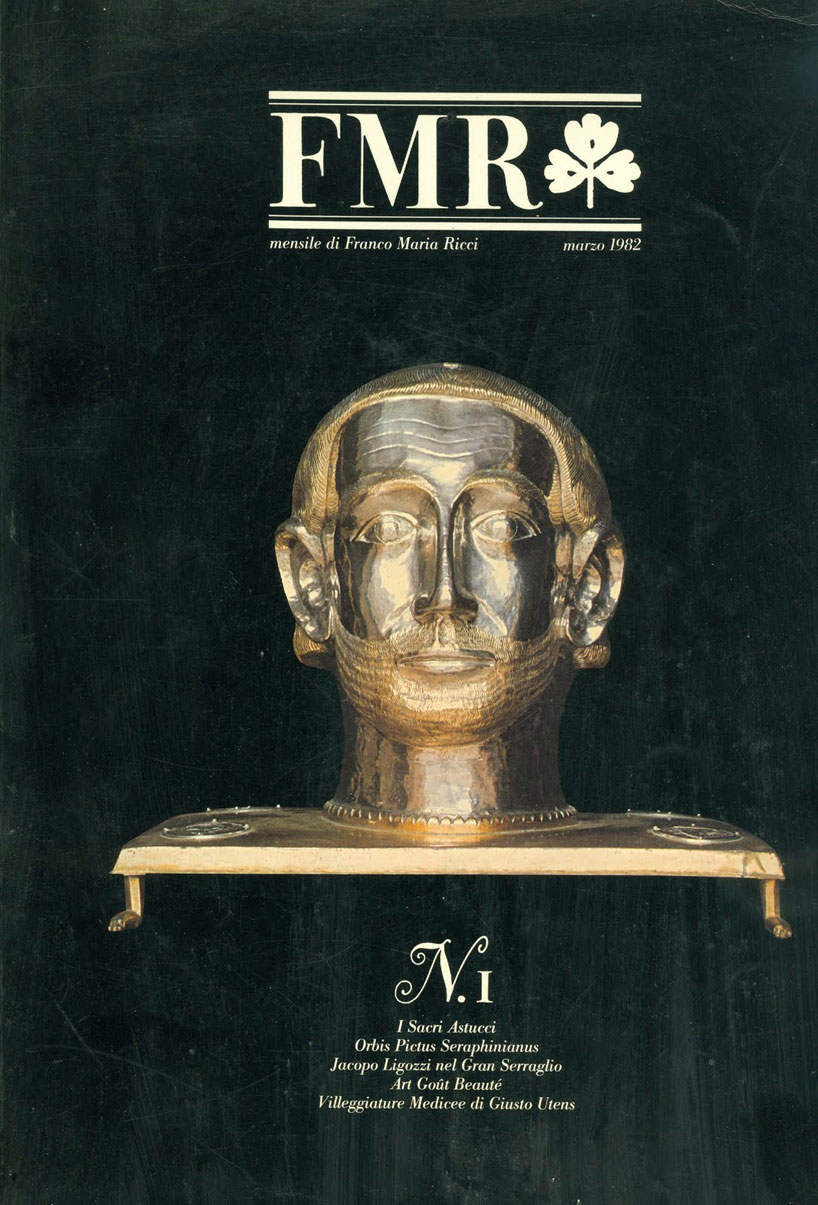
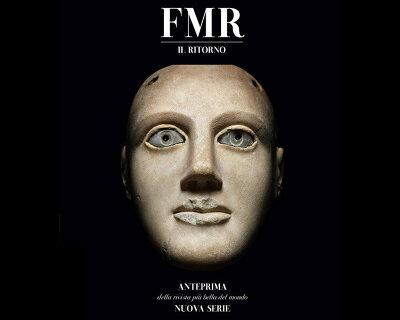
FMR nr.1, march 1982
DB: do you listen to the radio?
FMR: the radio in my car
DB: what books do you have on your bedside table?
FMR: next to my bed there aren’t any books. I can’t read in bed. I fall asleep immediately. in my room there is a bookshelf with a small table where I usually read. I read 10 pages from one book, 3 from another, 5 pages from that one…sometimes novels, but usually books on art history. if I decide to do a book about fez, I study the other books others have written about fez. I decide how to paginate the photos, how to photograph details…
DB: do you read design magazines?
FMR: no, I am not interested in what the others do. I don’t know anything about design, or publishing.
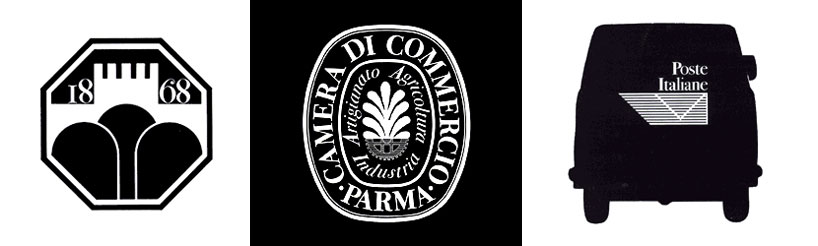
left: steinhauslin bank trademark, 1979
center: parma chambre of commerce trademark, 1979
right: italian post trademark, 1993
DB: as publisher of FMR and a graphic artist, can you give us your opinion about the current panorama of art magazines?
FMR: the panorama is terrible. in fact, one of the reasons I decided to create FMR 20 years ago was because I realized that there was a good sex magazine: playboy; a good fashion magazine, vogue — good in the sense that they carried out their tasks with dignity — but there wasn’t a good art magazine. all of the magazines were filled with news, gossip, faces, and small photos. art was humiliated. so I decided never to show anyone’s face. I decided to publish monographic articles — so if I decide to do an article about the cathedral of parma, I show 30 pages on the cathedral, not just two photos and a short article. I have never worked with journalists, but I have always used texts from real writers (borges, calvin, eco…) or art historians. I try to use high-quality images with simple, readable texts which are high quality — not accounts of gossip. my magazine is completely different from the others, and it has survived. I wanted my magazine to be worth the price of those who read it, and love it, are asked to pay. there is a bit of advertising (cartier, a watch or two, a few cars), but I do not have a structure for gathering advertisements. my magazine, only available by subscription, costs €108 for six issues, so each issue costs €18. whoever buys my magazine pays €18 instead of paying €7 and getting a load of advertising. the concept of a magazine has been completely overturned by FMR. I don’t want to teach art history, I want people to become accustomed to seeing the beauty of art. I wanted my magazine to become a sort of school for taste, for showing that the world is full of beautiful things. later I decided not to publish contemporary things, to avoid pressure and advertising from the art world (galleries and painters) because otherwise the message is contaminated.
DB: do you think that art web sites will take the place of printed magazines?
FMR: I don’t think that humanity will accept spending one’s life in front of the screen. the pleasure of paper is also the pleasure of touch, of flipping the pages, of possessing something. information via internet is fundamental for my work. if we print something about hayez, and I want to get some information about his biography. the internet is a fantastic tool. I’m a book lover and the internet serves to buy out-of-print and rare books. but, the pleasure of seeing something is different. books win in the end.
smeg trademark, 1977
DB: do you notice how women are dressing? do you have any preferences?
FMR: I do have preferences, but my eyes are not satisfied by what I see in the street. people are dressed very badly, especially young people. the model has been lost. what is called fashion today is junk that mostly young people buy. at one time, young people had no access to fashion — it was something reserved for the wealthy. then they understood that the real money was to be had from the poor, and so today fashion is that garbage. the aim is to sell ugly things to poor people. fashion shows justify the ugliness that one finds in stores.
DB: what kind of clothes do you avoid wearing?
FMR: I dress very normally. the elegance of the late 1800s and early 1900s doesn’t exist any longer. men have no choice other than pants and a jacket, or they can go for a more casual look. women have been more fortunate. they have more choices. this is why it is important to promote the love of beauty, because if one always saw beautiful things — beautiful architecture, beautiful art objects, beautiful sculptures, beautiful photographs — it would become a way of judging, but this has been destroyed by the television. if I go into a clothing store, I can tell right away whether something is beautiful or ugly.
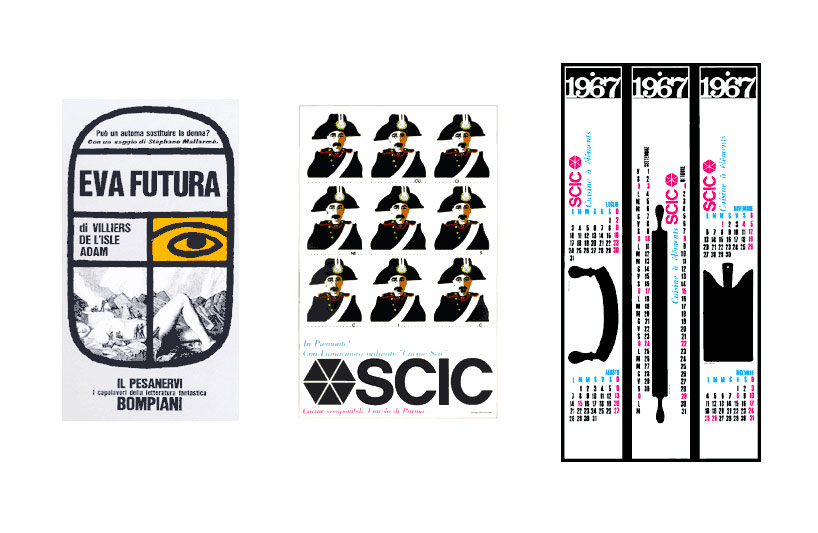
left: pesanervi series for bompiani publisher, 1965
center: scic advertising campaigns, with piero crida
right: scic advertising campaigns. calendar 1967
DB: do you have any pets?
FMR: my wife and I have the most beautiful dog in aesthetic terms, a fox terrier, but it is a difficult, disobedient dog.
DB: where do you work on your designs and projects?
FMR: everywhere, here, at home, on planes, at night. I always have some paper where I make signs that help me to see.
DB: who would you have liked to design a graphic project for?
FMR: I publish books because I choose the themes that I find fascinating. I have always published books that I would have liked to have had. designing for third parties is linked to something commercial, but books…I have done books that everyone said I was crazy to do, like the encyclopedia by diderot and d’alembert. I thought it was important for our culture to reprint the encyclopedia and in fact we sold 3,000 sets. very few have remained. every now and then the french president orders a few copies as state gifts.
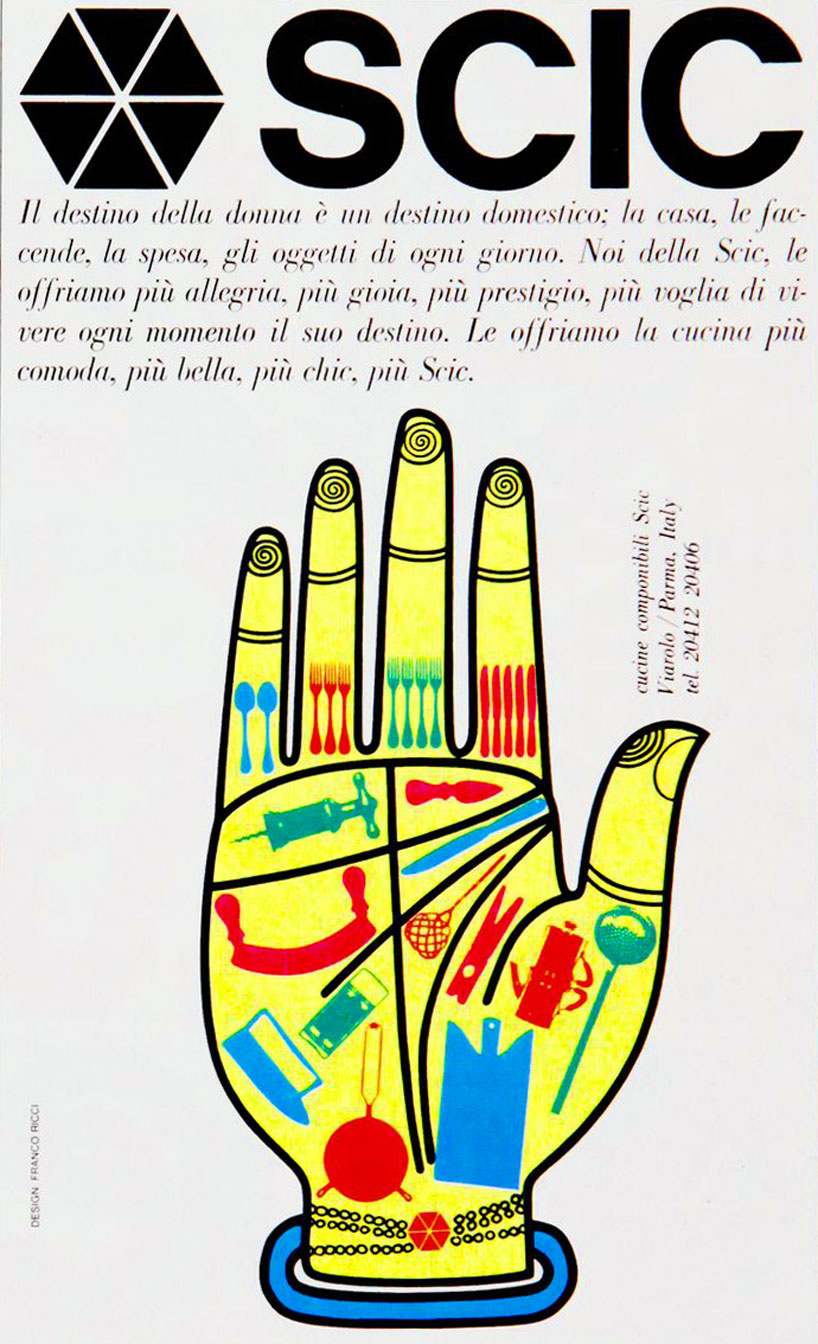
scic trademark and advertising campaigns, 1965.
DB: was this the project that satisfied you the most?
FMR: it was very satisfying because everyone was against me. they said: you are nuts to spend so much money to reprint a book from the 1700s. nobody believed in it.
DB: do you have contact and discussions with other publishers?
FMR: no, nobody. I don’t know who runs other publishing houses. I don’t have a press office, I don’t do interviews, I don’t make TV appearances. I’m doing this with you because I’m very curious about the internet.
DB: describe your style, like a good friend of yours would describe it.
FMR: trying to do a good job, working like crazy, not for the money, for the pride. in 200 years when they study the graphics of this era they will have to cite FMR, which is one-of-a-kind. I know that I will remain a model for graphics and book publishing, also helped by the fact that there is no competition — nobody makes beautiful things anymore.
DB: when you were a child, what did you want to be?
FMR: I didn’t want to become anything. I always had a passion for art. when I was 12 my father gave me 1000 lire and told me to go to lucca. I took the train, and in the evening when I returned home, my father asked me what I had seen in lucca, or pavia. the whole family thought my father was crazy. I knew art very well by age 15. everyone thought I was going to study architecture or art history, but since I was weak in the sciences, I decided to study that and I studied geology. after graduation, I spent four months alone in the mesopotamian desert surrounded by sickness and poverty, where I made a lot of discoveries about the hittites. when I realized that being a geologist meant looking for oil for the americans, I quit. I returned to parma and the first book I did, out of print now (antiques dealers sell it for 4-5 million lire) was the manual by bodoni. at that time I worked as a graphic designer and I earned good money, but I hadn’t been able to find bodoni’s manual. so I asked the ministry of public education for permission and I reprinted the manual. even back then everyone said I was crazy to spend all that money. but that’s how I became famous in bookshops all over the world. the first time I went to new york, I was about 25. the director of the new york public library came to get me at the airport. from the beginning, I decided to do numbered books — 2,000-3,000 copies — because I know that in the world there are 3,000 people who love that subject. against the grain at that time, in 1968 when they only published books about maoism, small and for 500 lire, and I published books that cost 50,000.
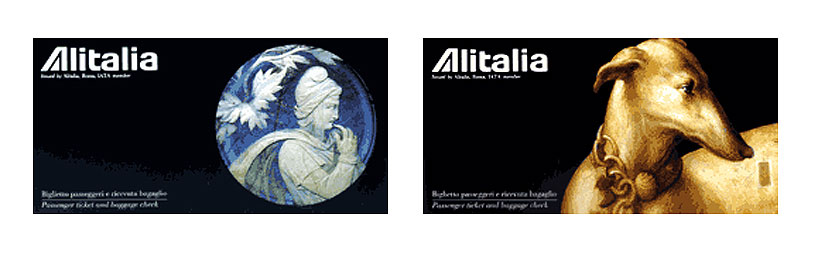
alitalia passenger ticket
DB: any advice for young graphic artists and designers?
FMR: graphics are a cultural fact. today manual ability is worthless, because you can use a computer to give form to your ideas. I would encourage the young to get educated — read dante, joyce, calvino…and above all, to go to museums and look at beautiful things. if you aren’t cultured, you can’t be a designer.
DB: is there any architect or designer you appreciate a lot?
FMR: in the field of graphic design, I was trained by a friend, giulio confalonieri. I took a lot from him, especially the idea that a design has to be a single, synthetic idea. in italy, I have always respected the castiglionis, zanuso, but also eames, le corbusier…
DB: on the news broadcast they said that italians are afraid of unemployment, criminality and pollution. what are you afraid of regarding the future?
FMR: I would say that the important thing is health. if you are healthy and not stupid, you can make money, defend yourself from attackers — and if you are healthy, that means that pollution doesn’t exist otherwise you wouldn’t be healthy.
shop
your own online design shop — no sales commission collected