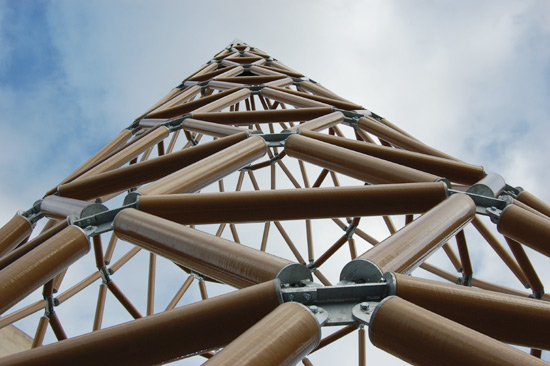
looking up the paper tower image © designboom
shigeru ban‘s paper tower is part of the size + matter project which matches leading architects and designers with a chosen material, asking them to push the boundaries of that material’s potential, and to also challenge our perception of those materials by demonstrating new applications and forms for them.
the japanese architect was selected to work with cardboard manufacturer sonoco, constructing a 22m high cone-shaped tower made from hundreds of compressed cardboard tubes. by taking a humble material typically used to make boxes, ban utilizes the cardboard to construct something which soars above the south bank skyline.
presented as part of london design week, the tower will be on view until october 18th, 2009 at the southbank centre, london.
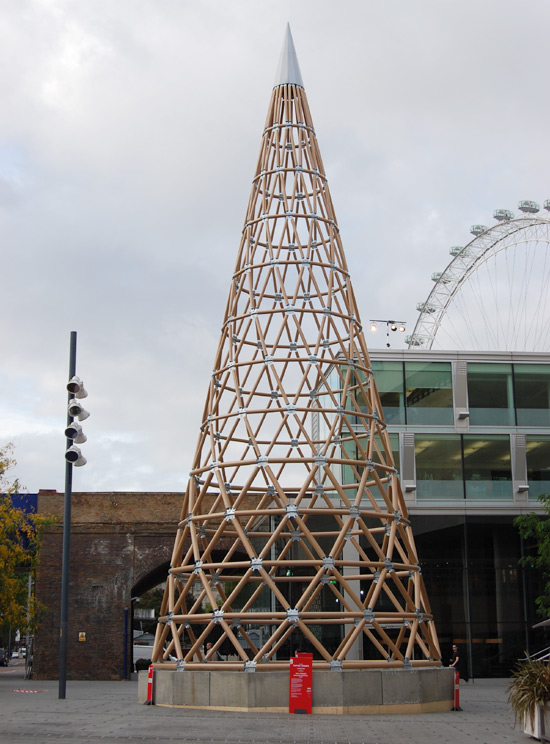 the paper tower in its entirety image © designboom
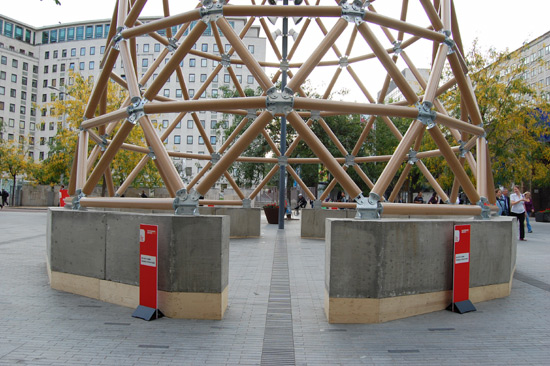 openings in the base of the structure allow visitors to enter image © designboom
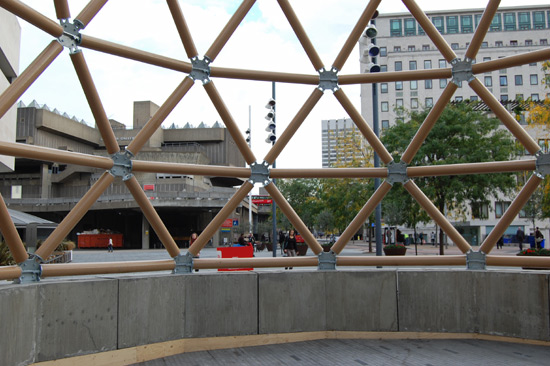 looking out of the tower image © designboom
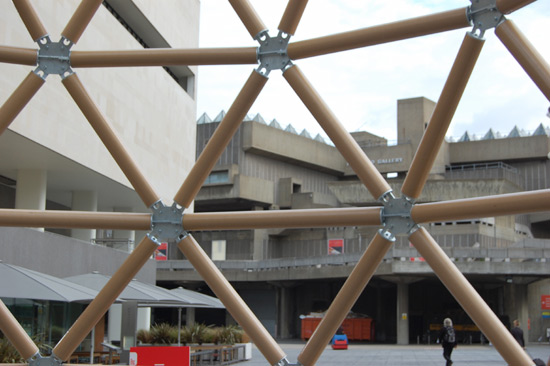 the triangular patterning of the cardboard tubes image © designboom
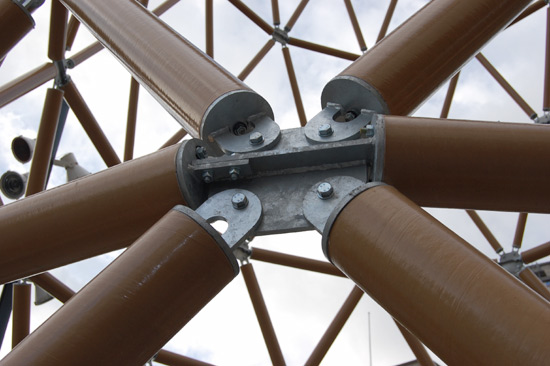 detail of the metal joints used to hold the cardboard tubes together image © designboom
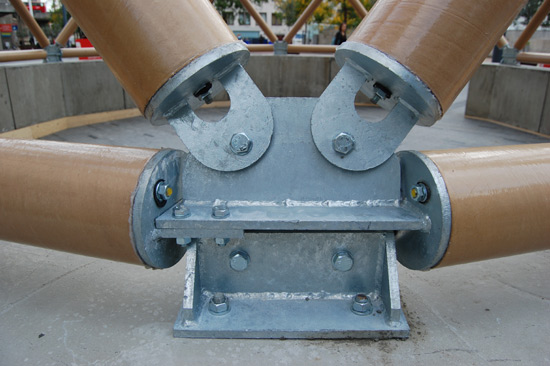 image © designboom
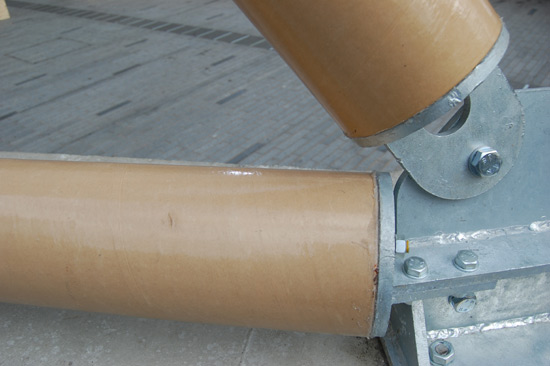 cardboard tubes and metal joints image © designboom
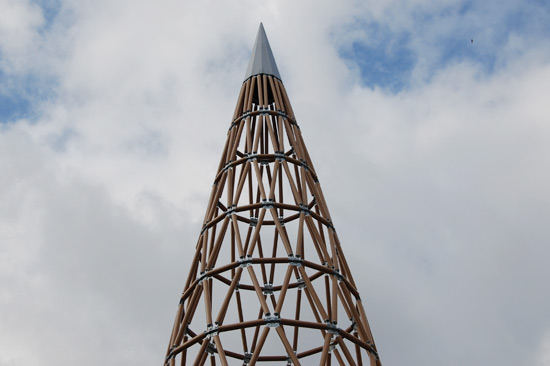 the point of the tower image © designboom
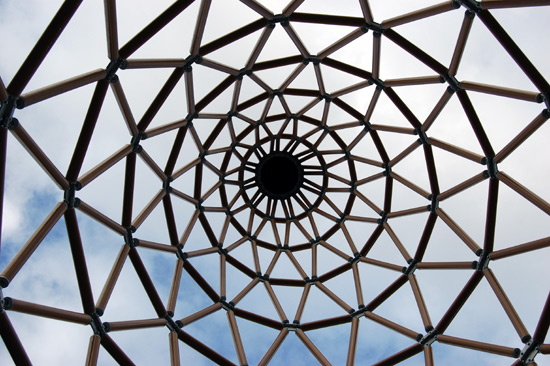 looking up the tower from inside image © designboom
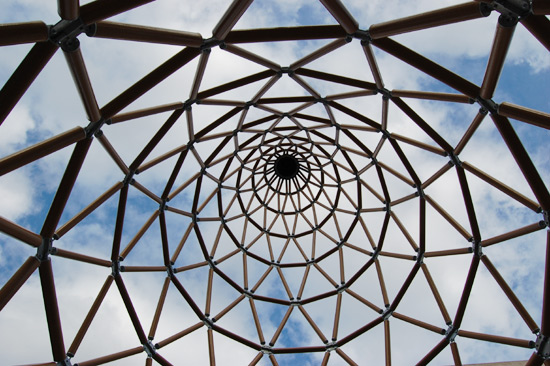 image © designboom
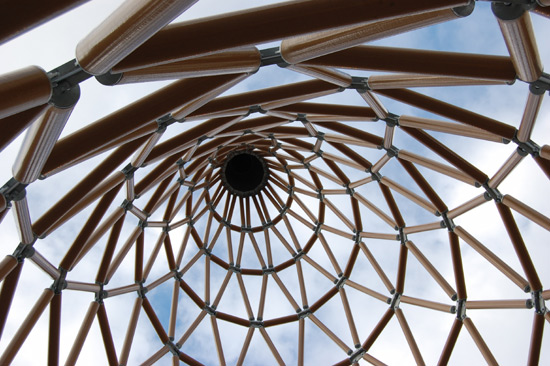 image © designboom
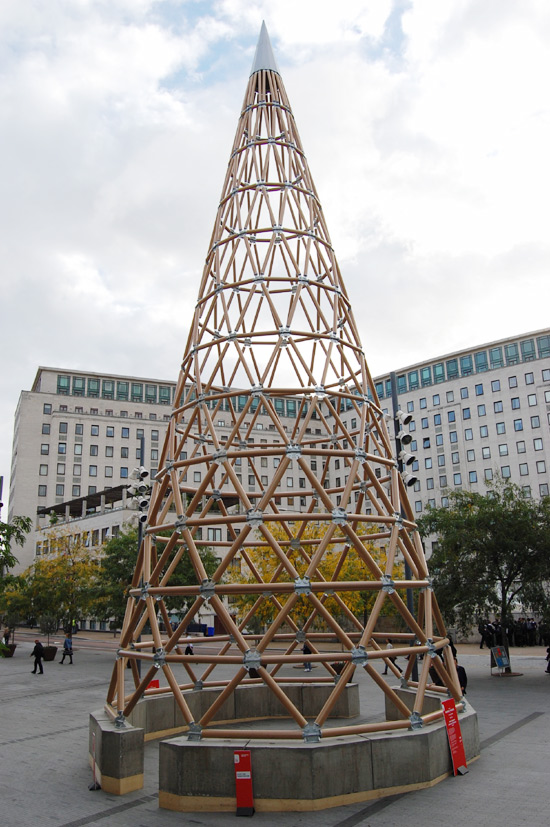 alternate view of the tower image © designboom
cardboard (101)
 Jul 24, 2024
 Jun 26, 2024
 May 03, 2024
 Feb 06, 2024
 Sep 29, 2023
london design week 09 (49)
 Oct 31, 2009
 Oct 27, 2009
 Oct 26, 2009
 Oct 24, 2009
 Oct 19, 2009
shigeru ban (124)
 Apr 17, 2025
 Dec 02, 2024
 Oct 29, 2024
 Jun 01, 2024
 Dec 14, 2023
 Mar 12, 2026
 Mar 11, 2026
 Feb 24, 2026