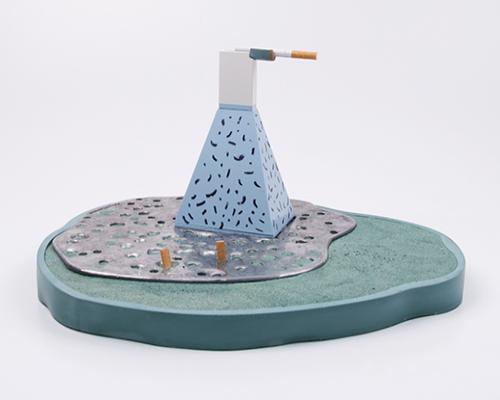
jessie derogy's sculptural ashtrays are a tribute to death
the engaging artwork causes the smoker to recognise themselves as the active participant between the two mundane yet symbolic objects.

5 stories
all news and projects related to cigarettes
[FEATURED]
the engaging artwork causes the smoker to recognise themselves as the active participant between the two mundane yet symbolic objects.
your own online design shop — no sales commission collected




 The Architect’s Chair Stockholm Furniture Fair Edition $ 9,120.00 USD deadline: january 5th, 2027
  2026 Rome Design Awards Season 2 deadline: december 10th, 2026
  2026 Tokyo Design Awards Season #2 deadline: october 15th, 2026
  New York High Falls Riverfront Market $ 10,000.00 USD deadline: january 18th, 2027
  WDC 2028 Busan Pavilion International Design Competition $ 46,666.00 USD deadline: october 26th, 2026
  Museum of Emotions #9 $ 9,140.00 USD deadline: february 22nd, 2027
  L A M P International Lighting Design Competition deadline: october 31st, 2026
  Wonder Global Design Awards 2026 Season 2 deadline: january 31st, 2027
  Buildner’s Unbuilt Award 2027 $ 56,305.00 USD deadline: october 18th, 2027
  TACTICAL URBANISM NOW! 2026 $ 10,000.00 USD deadline: october 30th, 2026