carbon fiber chairs by alberto meda ....................................................................................................................................................................................

......................... shop .................. competitions .............. education ................ interviews ................... snapshots ................... history .......... contemporary


design history
alberto meda's carbon fiber chairs


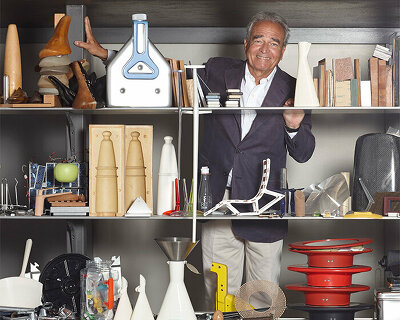
'I have always been against the idea of the engineer
as a person concerned only with technical matters.
engineers are not generally expected to have an
aesthetic attitude; and I suppose this limitation stems
from the kind of training they get, whereby an engineer's
job is to deal with production processes, calculations
and structures...
I have always found that unacceptable and rebelled
against it, because it means separating thinking from
doing...
it wasn't easy to get myself accepted as a designer
because until then everybody had thought of me only
as a consultant or technologist.' alberto meda said.

the enthusiasm, research and inventions of the italian
engineer alberto meda are illustrated in a recently
published volume; with fine photographs, sketches and
critical essays, compiled by francesca picchi.
(series of publications, entitled 'prontuario',
edited by enrico morteo and published by editrice abitare
segesta http://www.abitare.it )

---
results of experimentation with carbon fiber

'lightnes makes us dream,
its secret cannot be revealed.
lightness leads to unpredictable solutions.'

meda began, halfway through the 1980s, to experiment
with new uses for carbon fiber composites
- a sandwich with honeycomb core of nomex (a special type
of polyamide) and unidirectional carbon fabric coverings --
usually utilized to make strong, light components for the
aerospace, racing sectors and most recently in the sporting
world (tennis rackets, skis and fishing poles).
in these industries it pays to manufacture products that
are light and resistant.
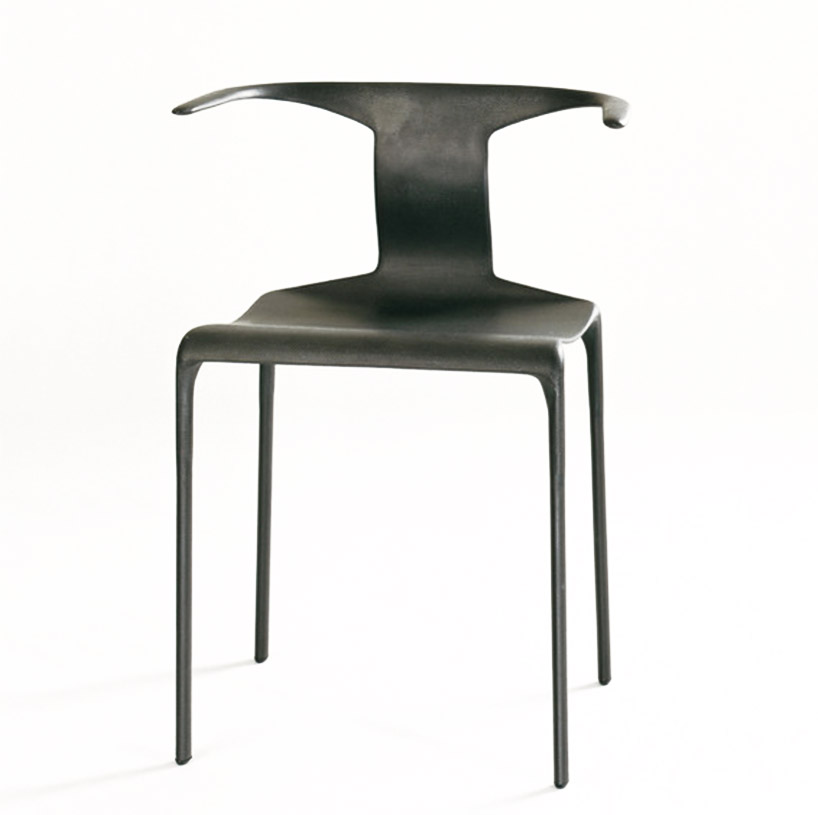
his idea was to investigate possible uses of composite
technology in creating everyday objects.
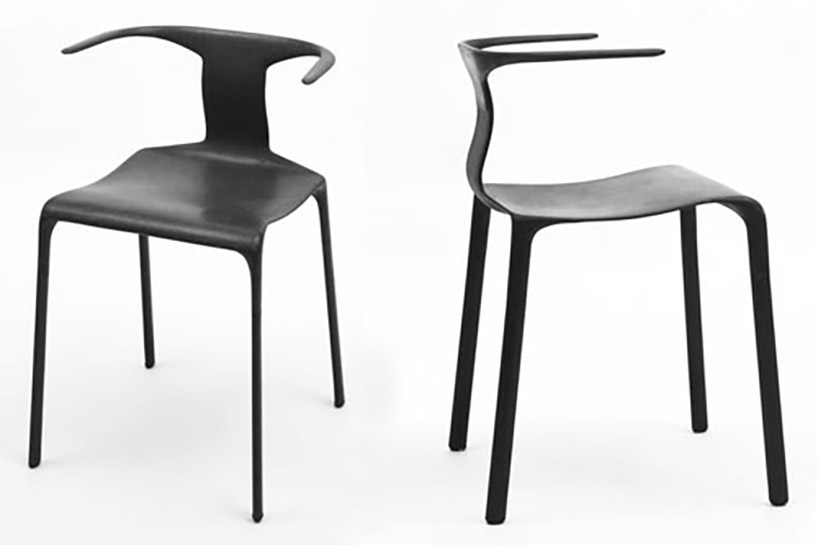
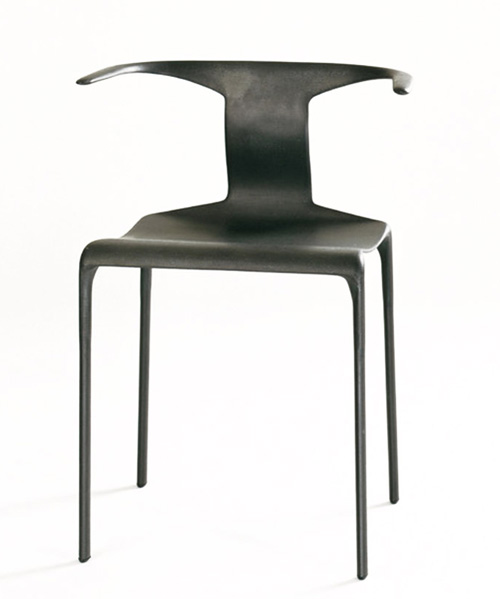
alberto meda's 'lightlight' (1989) and 'softlight' (1989)
chairs were manufactured using this process and were
among the first applications of composite materials in the
furnishing industry.


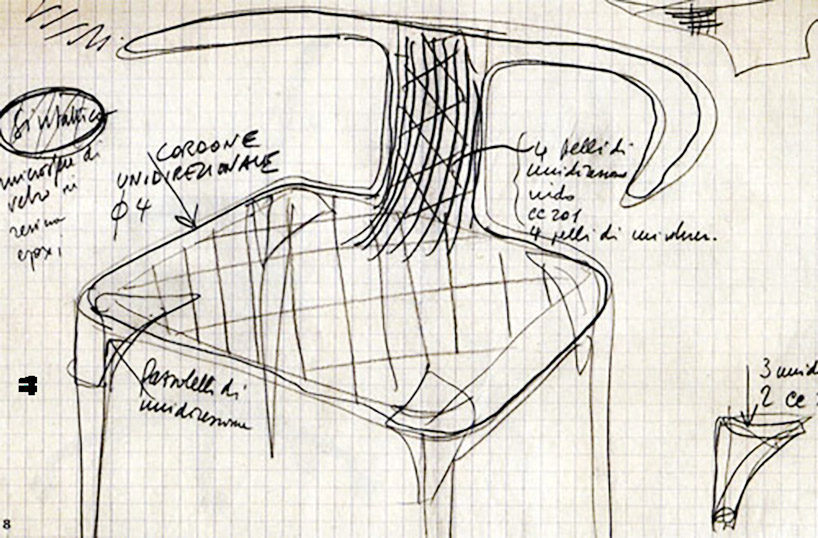
the 'lightlight' experimental chair demonstrates the use
of carbon fabrics in an epoxy resin mould with unidirectional
meshing in carbon to achieve a useful, comfortable and
very light chair.
it is the user's weight directly stresses the structure.
in order to accomplish this, meda chose to maximise
weight-containing capacity, and to show structural performance.
for this reason the sections were reduced as much as possible.
by distributing the material in relation to the strain, he was
allow ed extraordinary creative freedom.
and the manufacturer alias accepted the risk that went along
with the project - unfortunately costs of production were high,
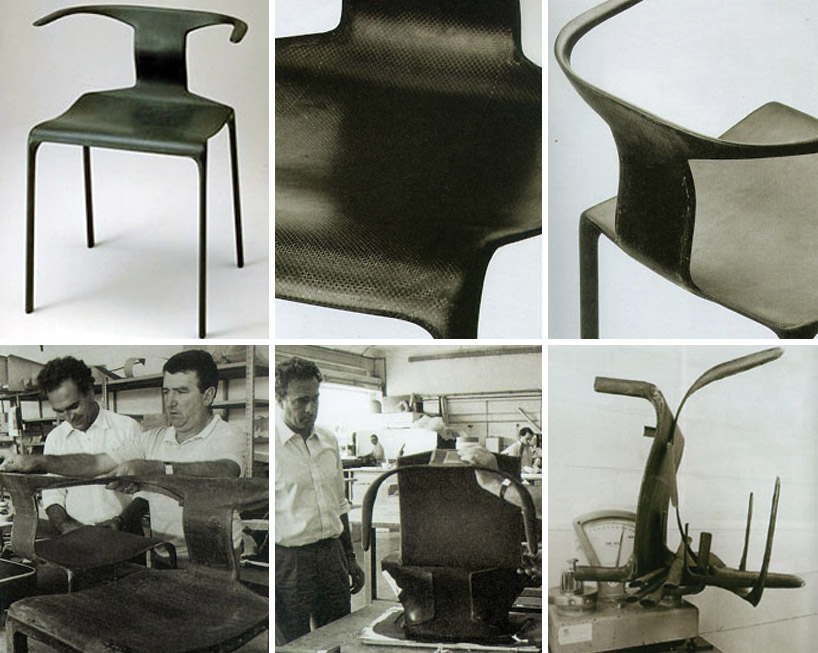
because of the use of genuine craftsmanship;
it required strong manual skill to place the material in the
mould in a controlled manner.

during the second, the 'softlight' project, meda tried to simplify
construction, using forms that ease cutting and laying out the
carbon materials and aluminium honeycomb material during
the lamination phase.
in addition, he introduced material with elastic support to
improve the seat's comfort factor. this material's weft is made
up of elastomeric monofilaments and it's warp of in polyester
yarn. Sso, its performance is equal to that of a spring system,
but without the disadvantages of the space it requires, nor its
weight and cost.
he used low-thermal-inertia aluminium moulds to improve its
level of finishing. in order to contain the production cycle,
alberto meda designed thermo-expandable shapes to insert
into the mould so he could avoid the labour-intensive
construction. the search to industrialise this product is on-going
and its manufacturing process is still a manual job.


---

book
'alberto meda' by francesca picchi,
italian and english texts,
editrice abitare segesta, milan 2003


from left to right : rolf fehlbaum (vitra), alberto meda, franco raggi, ezio
mancini and andrea branzi at the book presentation, triennale, milan, italy.


---
interview with alberto meda
http://www.designboom.com/eng/interview/meda.html


---


-------
monthly designboom newsletter
-------


-------
? comments and contact us ?
-------


alberto meda, engineer...


'lightlight' chair
by alberto meda for alias, 1987
molded carbon fibers in an epoxy-resin matrix
and nomex honeycomb.
image courtesy alberto meda


alberto meda is controlling the piece
image courtesy alberto meda


weight 980 gr.
image courtesy alberto meda


removal of the piece from the mould
image courtesy alberto meda


the mould
image courtesy alberto meda


detail
image courtesy alberto meda


detail
image courtesy alberto meda


sketches
image courtesy alberto meda


sketches
image courtesy alberto meda


nomex honeycomb


'softlight' chair by alberto meda for alias,
1989, molded carbon fibers in an epoxy-resin
matrix, aluminum honeycomb, and dymetrol
elastic fiber.