3D printed organs from regenerative living cells

designboom
3D printed organs from regenerative living cells
original content
3D printed organs from regenerative living cells
2

first image

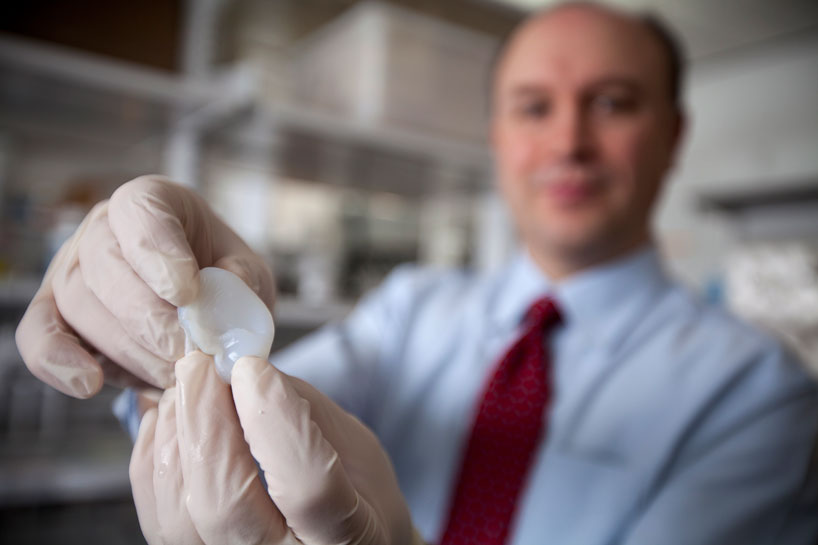
scientists at cornell university 3D print artificial ears
image © lindsay france


in the most recent medical development in artificial organ creation, a team of scientists and physicians
from cornell university have engineered 3D printed life-like ears used to treat children born with a congenital
deformity called microtia, or help individuals who have lost part or all of their external ear in an accident or
from cancer. the artificial body tissue is made by processing additive gels found within living cells - with collagen
derived from rat tails and cartilage taken from cow ears.


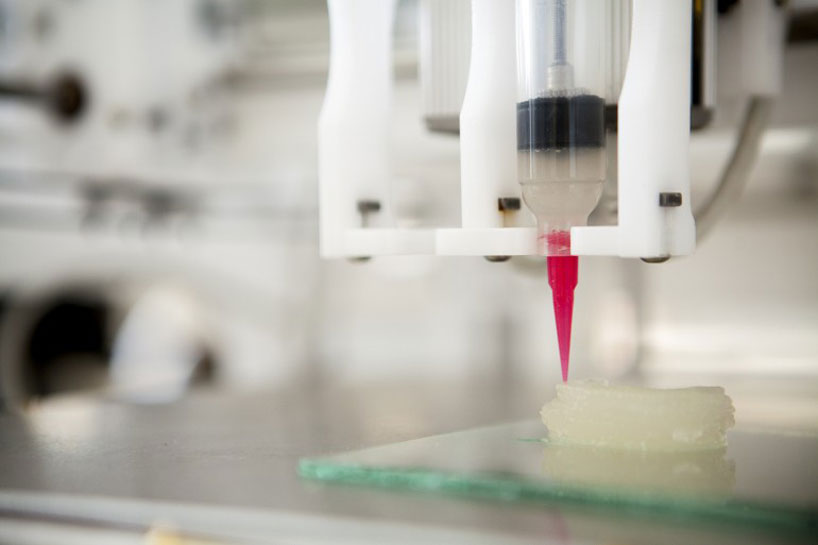
the modelling process is digitized into an assemble-able human ear, where then high-density gel, similar
to the consistency of jell-o is injected into a mold - resulting in flesh resembling that of a human-being.
in the future, the engineers will look at new ways to develop populations of human ear cartilage cells from
patients instead of cow cartilage, which would reduce any possibility of rejection.


lawrence bonassar, associate professor of biomedical engineering adds: 'it takes half a day to design the mold,
a day or so to print it, 30 minutes to inject the gel, and we can remove the ear 15
minutes later. we trim
the ear and then let it culture for several days in nourishing cell culture media before
it is implanted.'


injection process
image © lindsay france


early stages of bio-printing ears at cornell university
image courtesy BBC


3D printed embryonic stem cells
image courtesy heriot-watt university


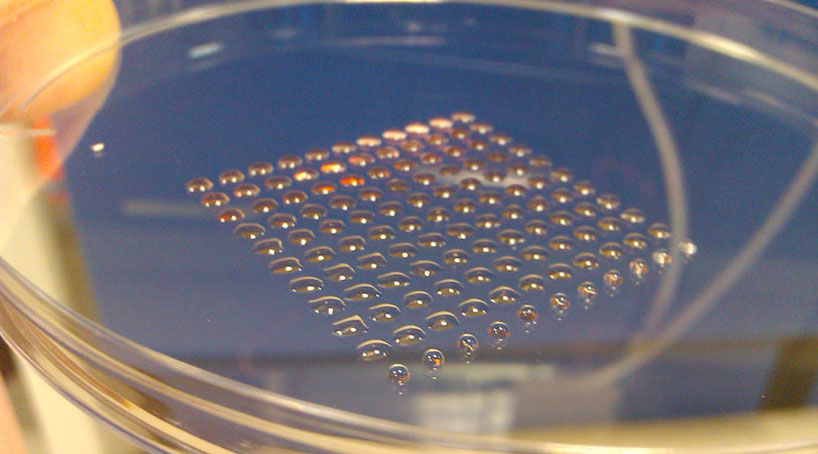
a 3D printing technique developed by scientists at the heriot-watt university in edinburgh produces clusters of human
embryonic stem cells - a breakthrough which could pave the way to purpose-built replacement organs for patients,
eliminating the need for organ donation, immune suppression and the problem of transplant rejection. the technique
will enable more accurate human tissue models to be created - which are essential for drug development and toxicity-testing.
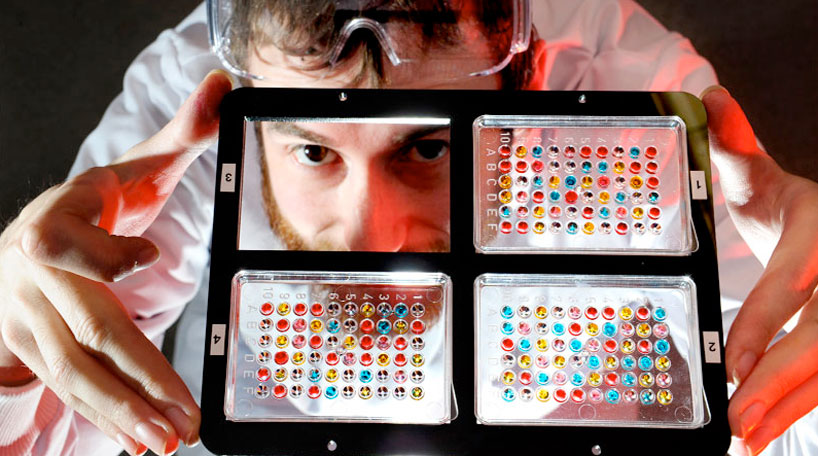


artificial samples of 'livers on a chip'
image courtesy heriot-watt university


the team, led by heriot-watt university's dr. will shu is also working towards creating the world’s first artificial human
livers for drug testing, drastically cutting the amount of live animals used and getting life-saving medicines into
the clinic faster. the process aims to develop miniature human liver tissues - where eventually ‘livers-on-a-chip’,
could be implemented using technology that will ‘print’ the cells in three-dimension onto testing surfaces.
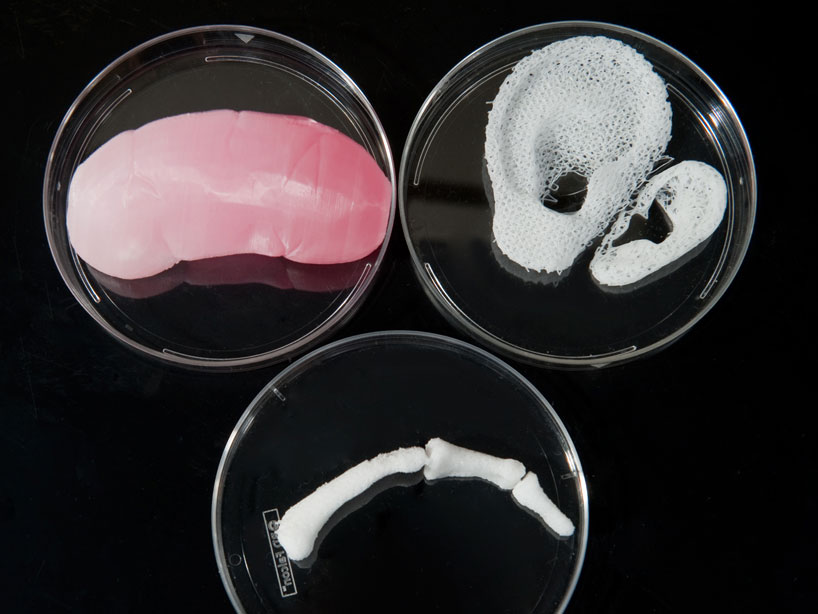


regenerative livers grown with 3D printers
image courtesy wake forest institute


in the earliest technological investigation, physicians and scientists at the wake forest institute for regeneration were
the first in the world to conduct and engineer laboratory-grown organs that were successfully implanted into humans.
currently, the team is working towards engineering more than 30 different replacement tissues and organs - including
bladder, trachea, cartilage and heart healing therapies to cure disease. since 2006, cases such as implanted bladders,
urine tubes and spinal cords have been successfully transplanted into patients, with long term success being reported
in the clinical trials.
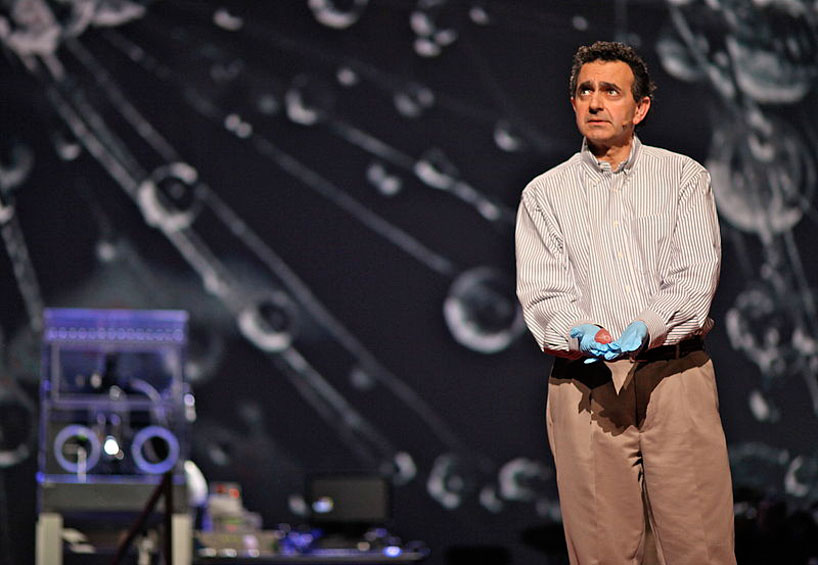


anthony atala, professor and director of wake forest institute for regenerative medicine - holding a 3D printed kidney during his TED talk in 2011


anthony atala 's TED talk
video courtesy TED


engineering tiny livers in the lab
video courtesy WFIFR

(14 articles)
2
  • Absolutely mind boggling. Life saving in the health care front. Limitless possibilities in all other human activities including human cloning. Scary.

    nelsondreyes architect says:
  • I have been following the progression of 3D printing for sometime now and I have witnessed some great ideas and seen plenty of objects that have been created that are not really all that useful. I do understand that at the moment 3D printing is still in its infancy and many of the inanimate objects that are created are mainly about research and developing new ideas for the future uses of the technology.

    My view is that 3D printing is about to change so many things in so many ways that its difficult to get the head around it, things that we haven’t even thought about yet, not just on the medical front but pretty much everywhere in our day to day lives will be affected in some way when this 3D technology gathers momentum and huge investment.

    This article is truly amazing and I’m sure the research here will have great benefits for many people, out of all the advances coming through from this technology it is the medical advances that interest me the most, its amazing what can be done when you pass this technology to the right person with the right innovative brain….Long may it continue.

    Great article.

    Michael Harrison says:

comments policy

tips:
- to start a new line press enter
- to create a link type www
designboom's comment policy guidelines
generally speaking, if we publish something, it's because we're genuinely interested in the subject.
we hope you'll share this interest and if you know even more about it, please share!
our goal in the discussion threads is to have good conversation and we prefer constructive opinions.
we and our readers have fun with entertaining ones
. designboom welcomes alerts about typos, incorrect names, and the like.
the correction is at the discretion of the post editor and may not happen immediately.

what if you disagree with what we or another commenter has to say?
let's hear it! but please understand that offensive, inappropriate, or just plain annoying comments may be deleted or shortened.

- please do not make racist, sexist, anti-semitic, homophobic or otherwise offensive comments.
- please don't personally insult the writers or your fellow commenters.
- please avoid using offensive words, replacing a few letters with asterisks is not a valid workaround.
- please don't include your website or e-mail address in your comments for the purpose of self-promotion.
- please respect jury verdicts and do not discuss offensively on the competition results
(there is only one fist prize, and designboom usually asks renown professionals to help us to promote talent.
in addition to the awarded designs, we do feel that almost all deserve our attention, that is why we publish
the best 100-200 entries too.)

a link is allowed in comments as long as they add value in the form of information, images, humor, etc.
(links to the front page of your personal blog or website are not okay).
unwelcome links (to commercial products or services of others, offensive material etc. ) will be redacted.
and, ...
yes, spam gets banned.
no, we do not post fake comments.

LOG IN VIA

login with designboom

(14 articles)

3-D collagene mask editor
COLLAGENE is a software written to create adaptive and customizable masks, connecting computer code's (read more)
world's first 3D printed snowboard
using a carbon-based additive process, a series of 3D printed puzzle-like pieces are bonded together (read more)
nanoscribe: nanoscale 3D printed microstructures
using direct laser writing, the technology uniquely prints structures in three-dimension on (read more)
3D printed wall lamps - waelice by nodesign
each of the elements contain an IP address which allows the user to modify the light intensity and (read more)
4D printed self-assembling objects by MIT
MIT and stratasys have developed a method of 4D printing programmable entities that self-actuate on (read more)

POPULAR TODAY TECHNOLOGY

aston martin cc100 speedster concept
the british automaker celebrates its centenary by introducing a V12 speedster concept derived from the >>
MIT senseable lab: makr shakr robotic bartender
the robotic bartending system allows users to create real-time personalized cocktail recipes using a >>
aspekt modular SLR camera system
the 24 megapixel mirrorless camera system is divided into specific functional components, redesigned as >>
BMW pininfarina gran lusso coupe
paired with a V12 engine, generous surface design and contours highlight the luxury coupe body with >>
fairphone by bas van abel: creating a conflict-free smartphone
the system takes a step-by-step journey to making the world's first fairly designed and conflict-free >>
SHOW NAVIGATION
architecture
design
art
technology
Twitter
Facebook
Pinterest
Rss
China
Japan
Vietnam
designboom © 2012
Twitter
Facebook
Pinterest
Rss