IAAC student designs hydro-membrane textile for passive cooling
developed by luisa roth, hydro-membrane explores the potential for moisture sensitive 'hyrdromorph' polymers for a range of cooling applications.
prefer designboom on google
IAAC student designs hydro-membrane textile for passive ventilation
all images courtesy of luisa roth
the current architectural preference for glazed facades corresponds with the human desire for natural daylight. however, glazed treatments admit large amounts of solar energy which warm the building’s interior. solar induced warming coupled with high humidity levels in tropical regions further stress cooling units resulting in substandard performance and high energy usage.
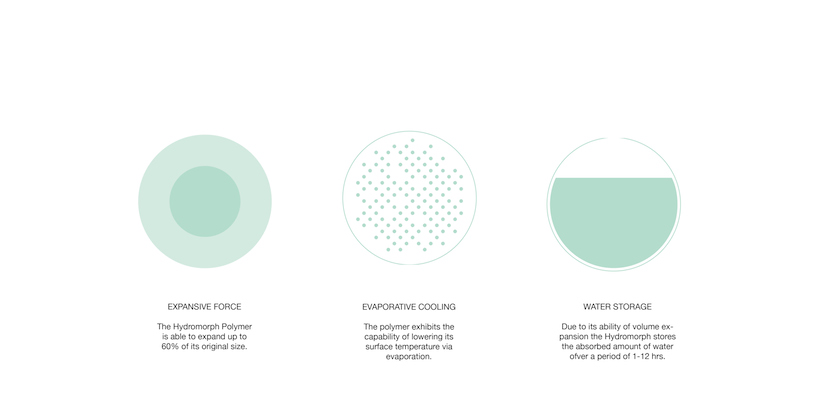 main features of the polymers
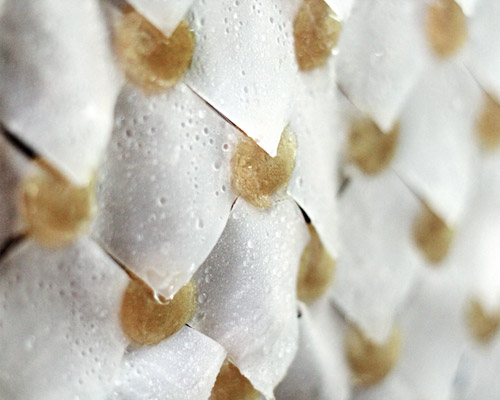
luisa roth from the institute of advanced architecture of catalunya has developed a humidity sensitive composite system titled ‘hydromembrane’. the membrane is composed of three materials organized in six different layers which results in distinct chemical and physical properties. the resulting material, when exposed to moisture, responds with aperture deformations that increases water absorption and evaporation rates, creating a passive cooling system.
video courtesy of luisa roth
three layers of silicone coated elastic, measuring just .05 mm thick, binds three layers of hydromorph stacks. by layering the material, high levels of efficiency can be achieved while providing the flexibility necessary for the units to expand and contract depending on moisture conditions.
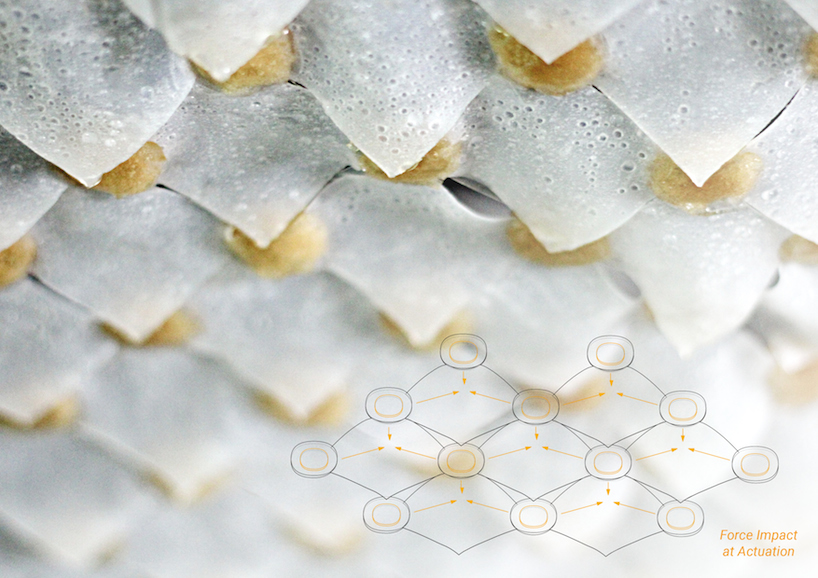 force impact at actuation
the purpose of the research was to develop a passive material with cooling capabilities which is versatile and durable enough to be employed in a range of applications. the layered hydro-membrane exhibits shape ‘memory’ which results in the material to assume specific forms depending on conditions. the versatility of the material is exhibited in its capacity to both serve as an exterior coating for buildings or as a next generation smart textile.
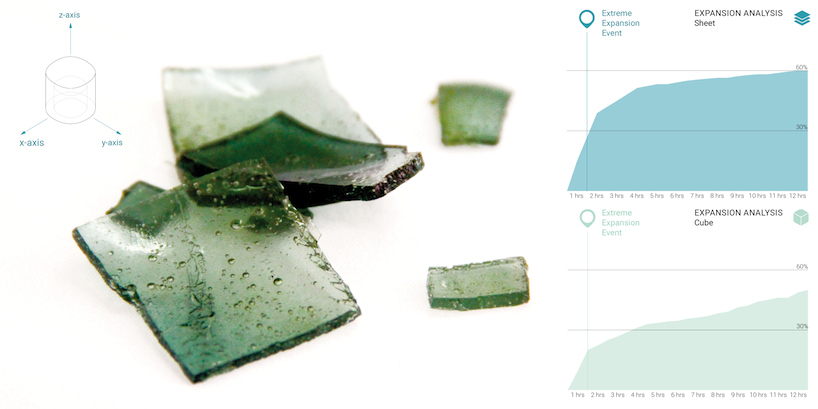 expansion analysis
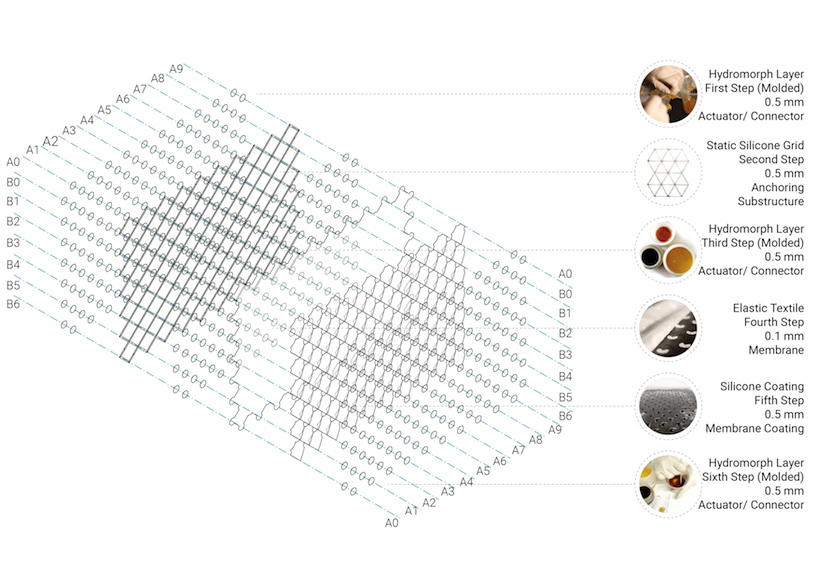 layering of ‘hydromembrane’ composite
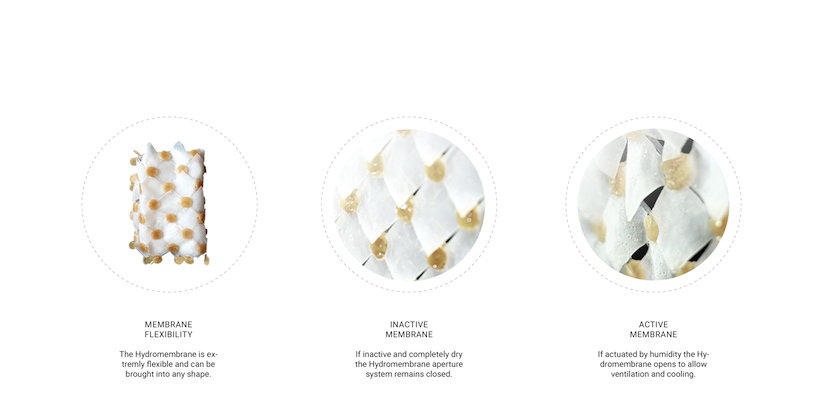
features of the membrane
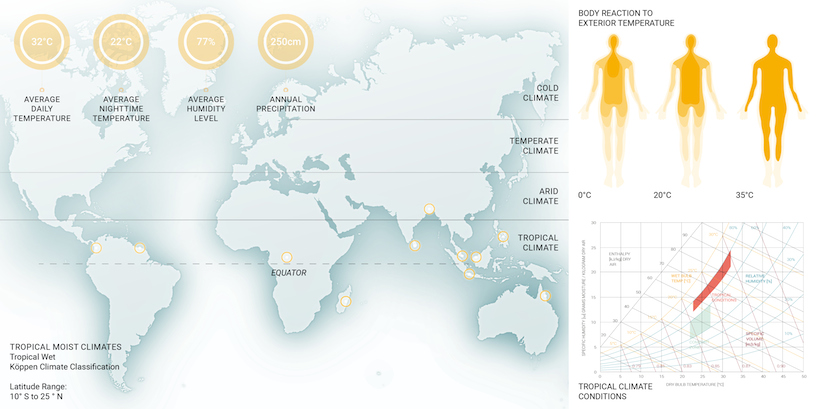
analysis of potential application
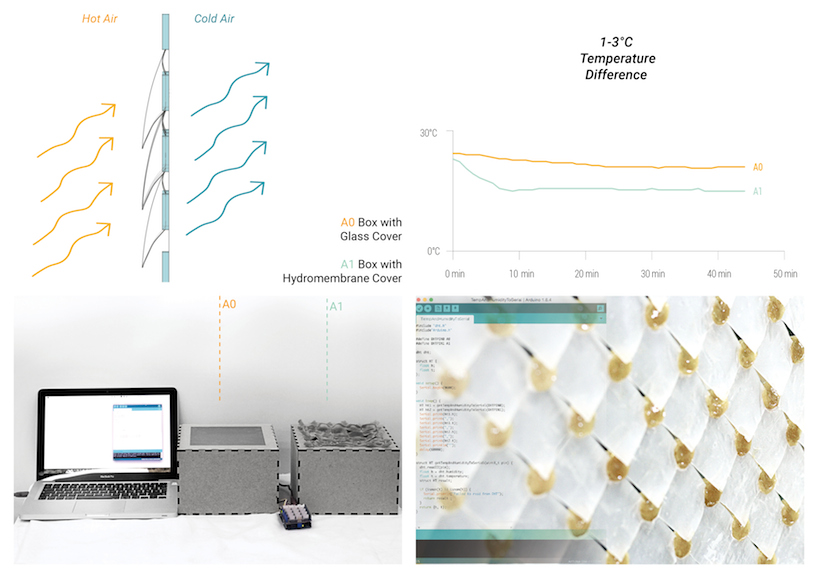
analysis of cooling capacity via evaporation

application as facade envelope for ventilation
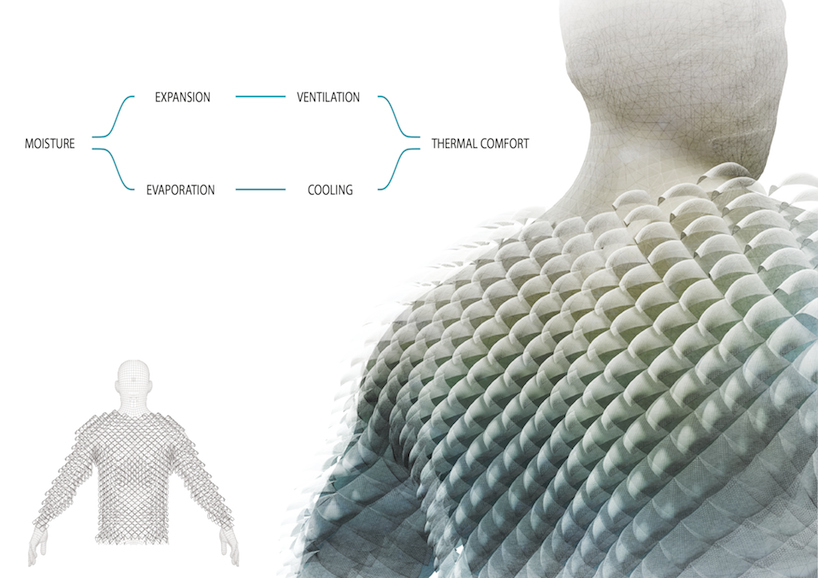
application as smart textile
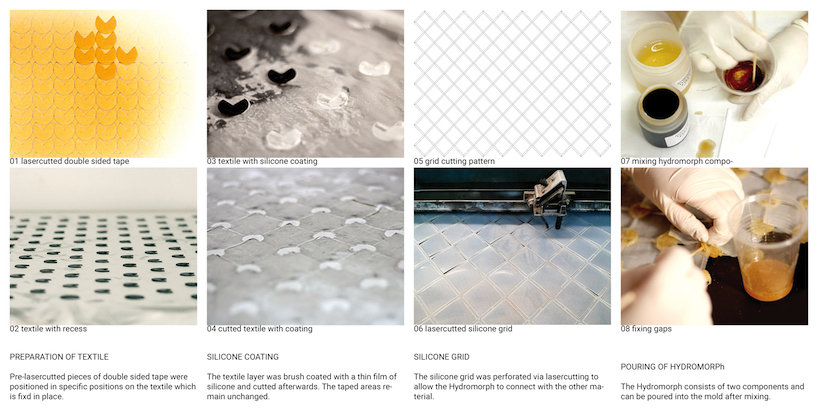
manufacturing process
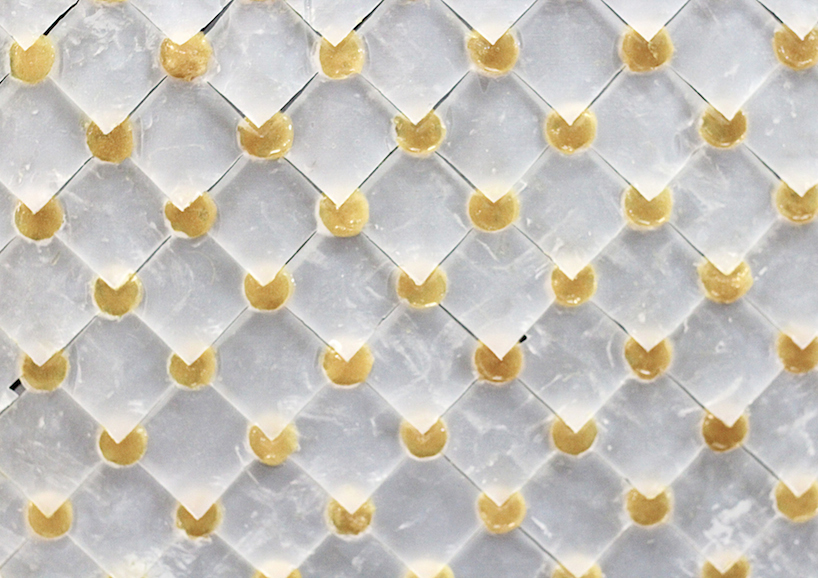
Hydromembrane at inactive stage
shop
your own online design shop — no sales commission collected