suppose design office: house in takaya

'house in takaya' by suppose design office, hiroshima, japan
all images courtesy suppose design office
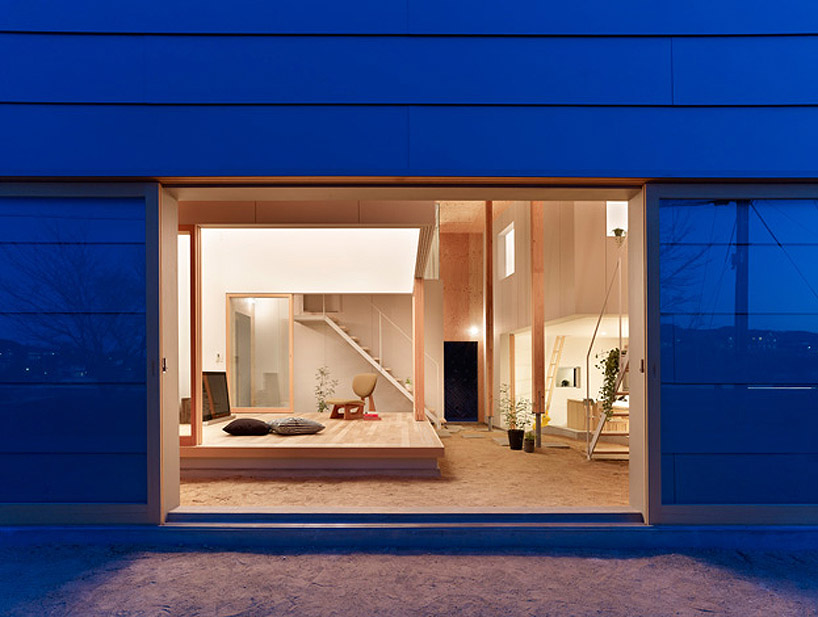
japanese practice suppose design office has recently completed 'house in takaya', an introverted single family residence
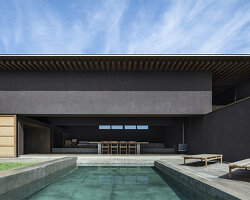
in hiroshima, japan. an entry yard comprised of a layer of sandy earth directs inhabitants towards the primary portal
formed with two large sliding glass doors. contained within a discreet rectangular box clad with monochromatic siding,
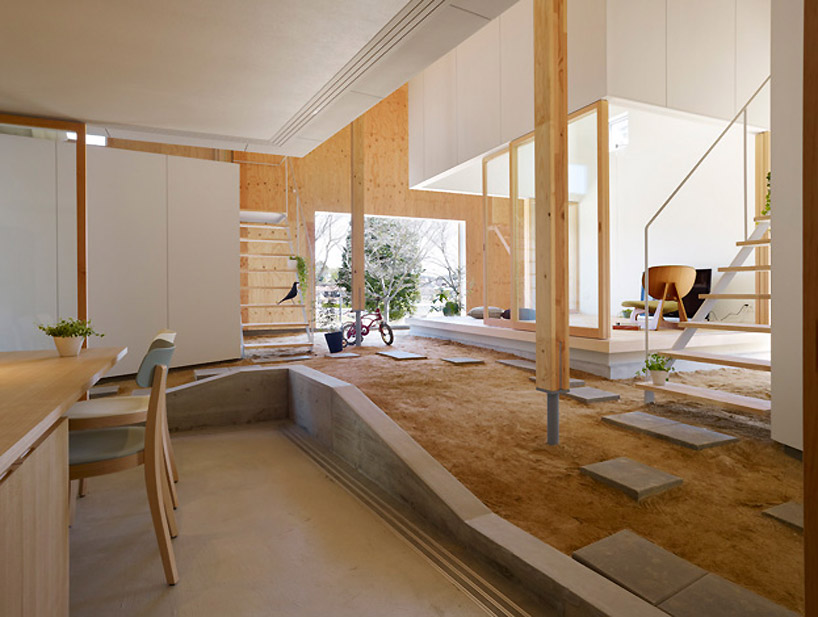
visitors discover the textured ground plane continues and transitions to the interior of the home, dissolving the distinction
between the external and internal environments. found in traditional japanese homes, this contemporary update to the doma
floor incorporates stepping stones to circulate between and around the spaces, minimizing the movement of the soil particles.
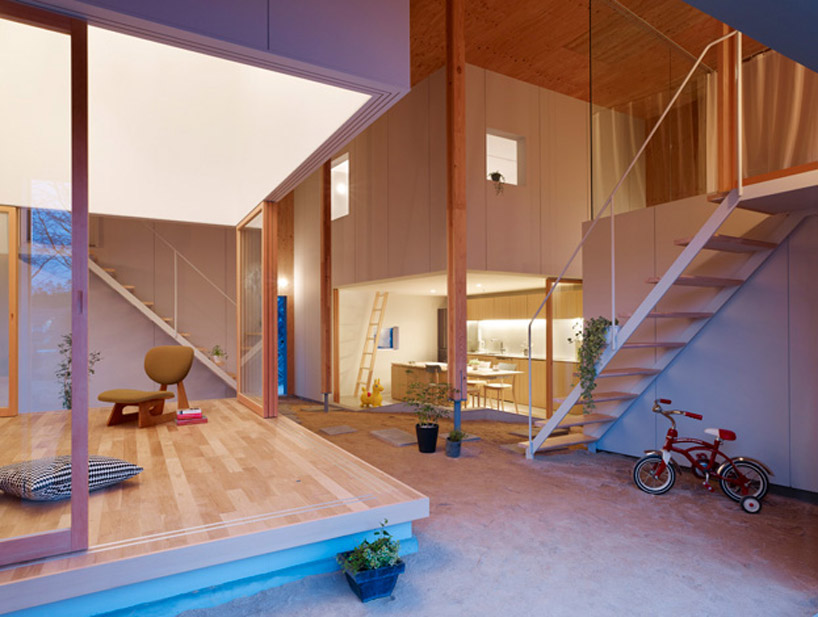
living area with textured ground floor
bordered with transparent sliding panels, the living room is elevated upon a platform and can become an enclosed cube
illuminated with a small clerestory window to the exterior. across the corridor of square tiles, a recessed kitchen bound
with a low profile and angled retaining wall of concrete prevents the loose granules from passing between the areas.
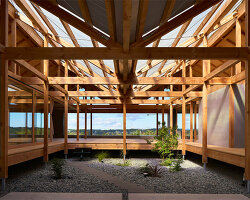
open riser stairways lead to the lofted bedroom and upper level bathroom. a finished plywood surfaces the walls of the
double story volume complimenting the color palate of the natural flooring.
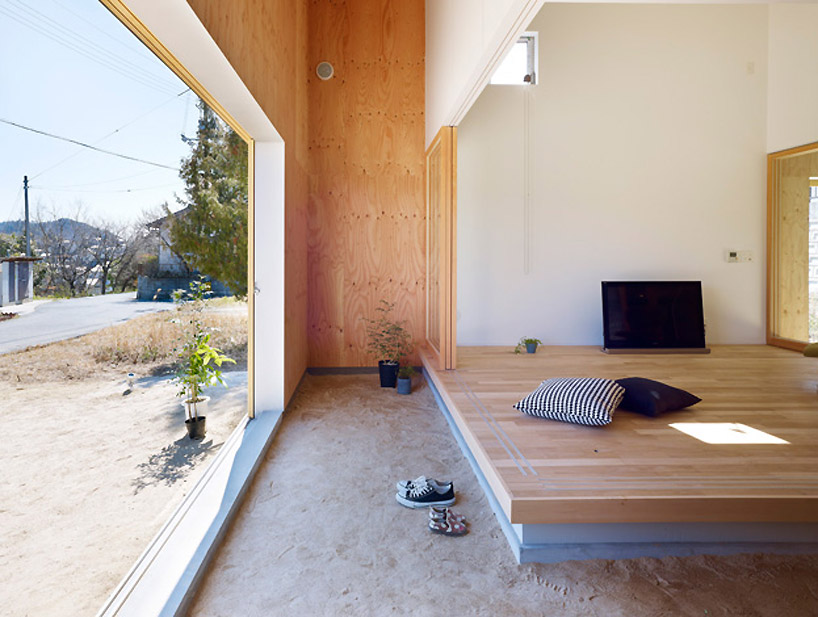
primary portal to the dwelling
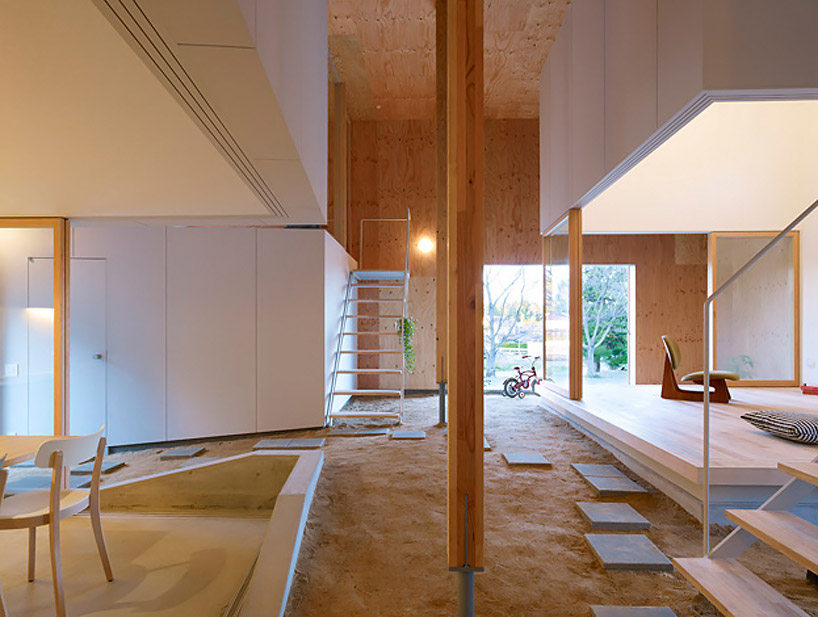
stepping stones through the earthen floor dictates movement through the space
recessed kitchen
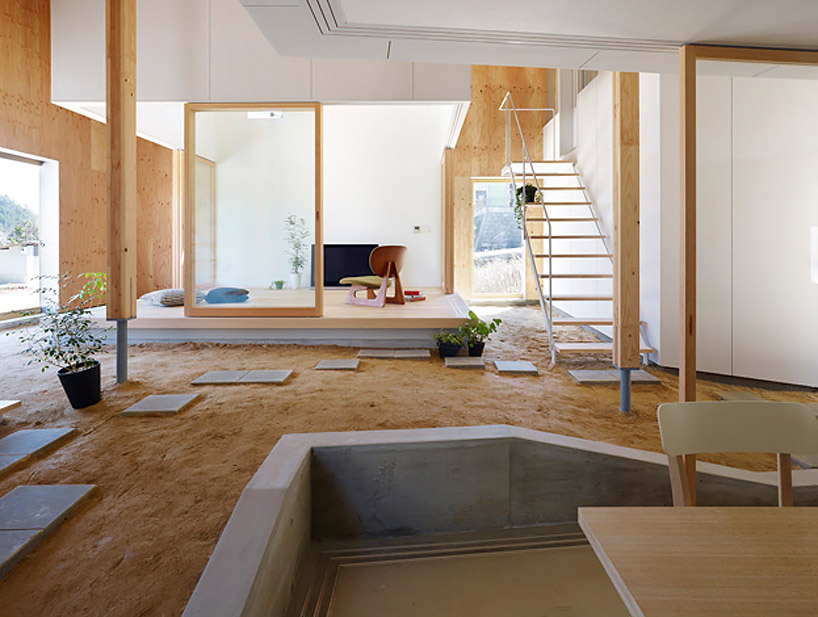
view of living room platform from kitchen
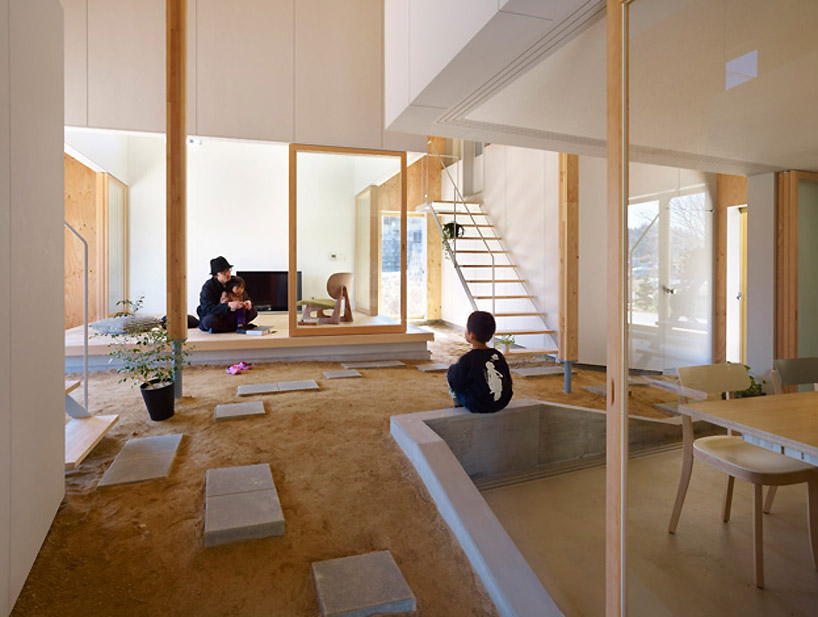
inhabitants within the islanded rooms
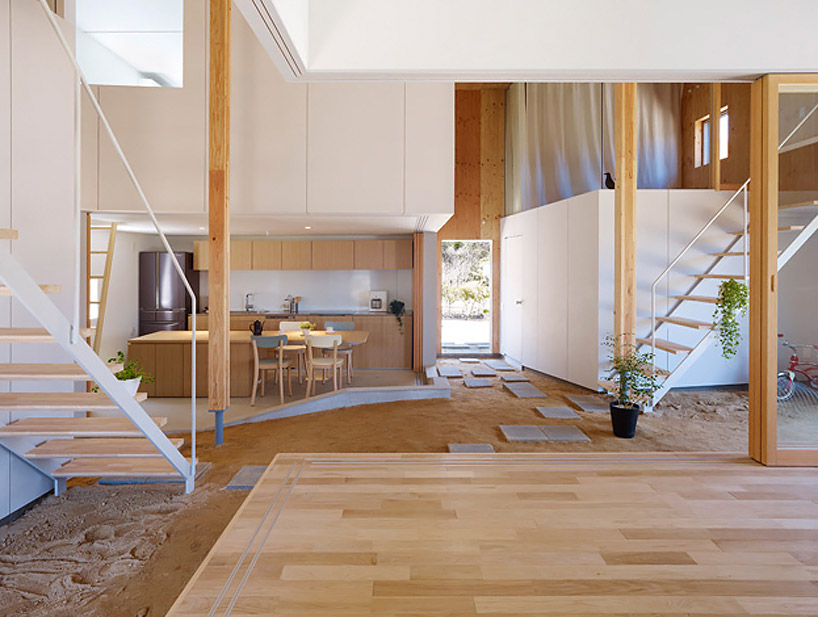
view of kitchen from living room platform
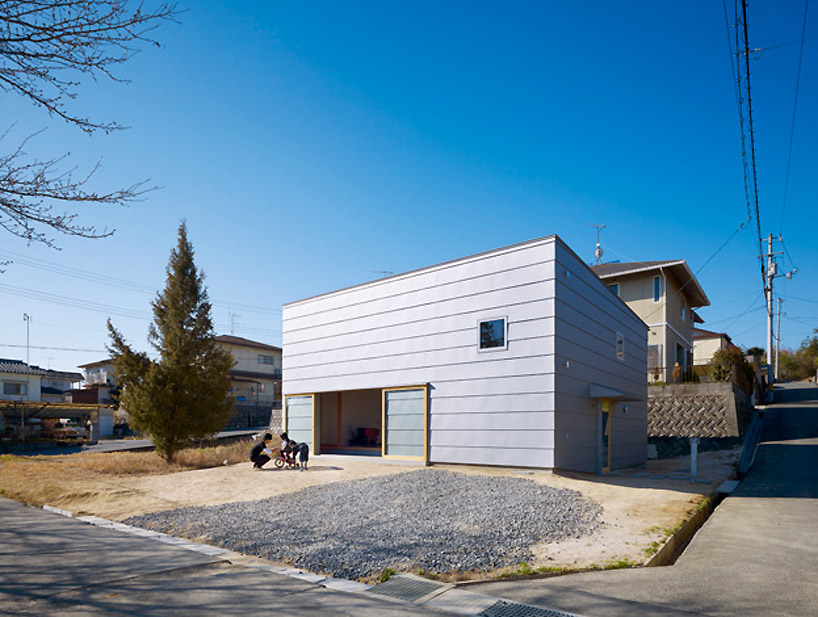
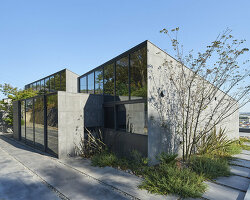
exterior from the street
Secondly, I have to say you are both comments so far are obviously by Western Ignoramuses! It clearly states that it is a re-interpretation of a traditional Japanese building condition. The sandy floor internally is a ‘contemporary update to the doma’. The Architects are playing with the traditional idea of the ‘minka’, itself now a generalized term for what was once a set of very specific type of residential property.
The interior of a ‘minka’ was traditionally divided into two sections of differing height. Firstly, a lower level of compacted earth (in this case the sandy part) traditionally referred to as the ‘doma’. Then there is a raised floor, normally about 50 cm higher than the ‘doma’, covered in tatami or mushiro mats. In this modern update, the matting is represented by the timber floorboards.
Apologies all round, though I still love the project and stand by everything else I said.
oh mama, this is not what I have in my mind as "cool house", so I hate it...oh....oh...oh no no no!!!!
But while this looks amazing now..... hmmm somehow I don't think its practical long term. Cleaning, hygiene, safety... not sure how they consiedered these things.
toshiba @ milan design week 2012
developed by architect makoto tanijiri of suppose design, lighting designer izumi okayasu, and producer yahoko sasao, the interactive light installation during milan design week 2012 lets visitors experience 'the mo...
suppose design office: kiddy shonan C/X nurse
composed of volumes reminiscent of the archetypal house, each 'dwelling' functions as a classroom or playroom, their arrangement being much like that of a small neighbourhood.
suppose design office: house in saka
enclosed with a windowless facade, the exterior of this dwelling discreetly lifts from the ground to introduce natural light into the living spaces.
atelier du pont: tres honore restau
a space filled with elements of fantasy and make believe. it is a world of fairly tales and new experiences. a wonderland for y...
the camerette collection by florens
design time breil award ceremony
curved visions digital art competit
GRAPHIC DESIGN - may 17 - july 17
SHOPPING - may 17 - july 17
keep up to date with recent articles and upcoming events.
to receive both newsletters please check 2 boxes.
no contents, including text, photographs, videos, etc. may be reproduced in whole or in part without the written consent of designboom. in addition,
no material or contents may be reproduced on the world wide web by techniques of mirroring, framing, posting, etc. without the written consent of designboom.

submit a project
publish a project
email
RSS
facebook
twitter