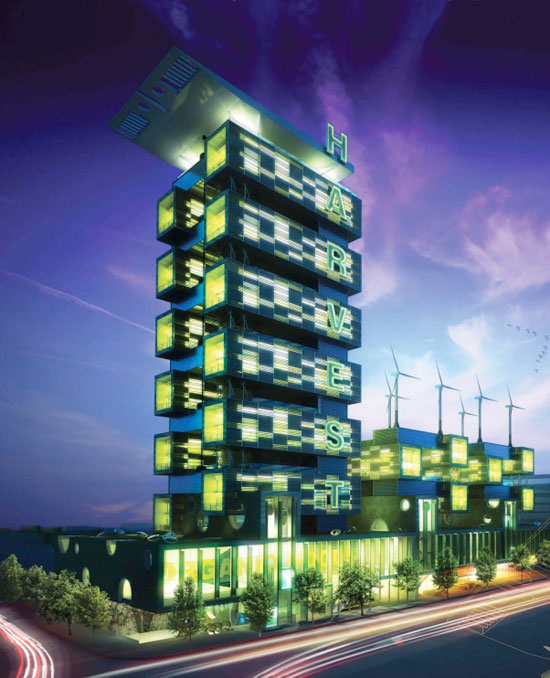
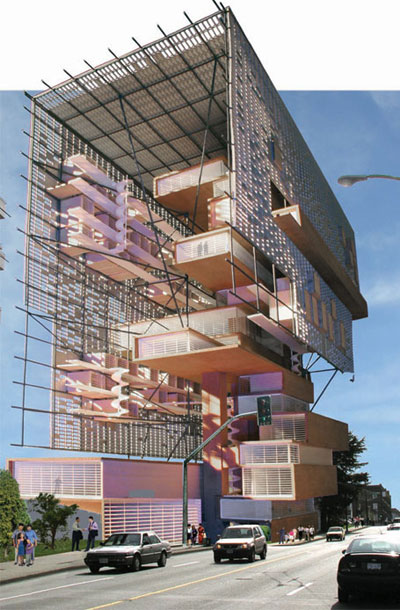
harvest green project, vancouver by romses architects image courtesy romses architects
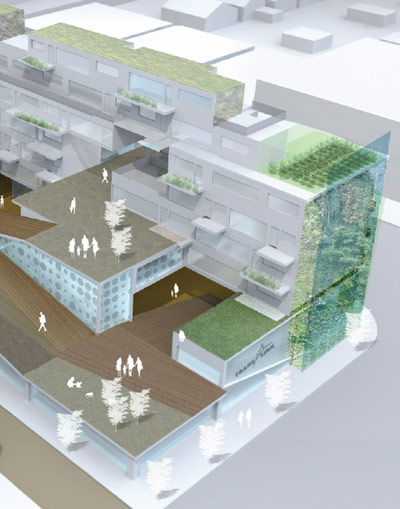
the ‘harvest green project’ by romses architects was a winning entry in a recent competition held by the city of vancouver ‘the 2030 challenge’ to address climate change plans and to guide greener and denser development, reducing carbon emissions for the future.
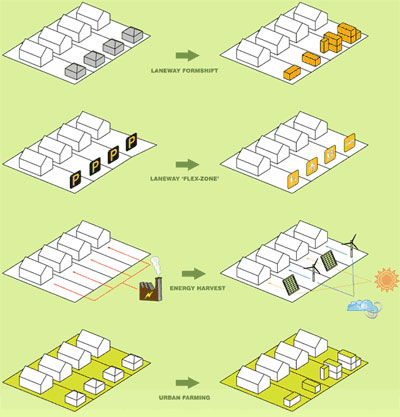
the concept of ‘harvest’ is explored in the project through the vertical farming of vegetables, herbs, fruits, fish, egg laying chickens, and a boutique goat and sheep dairy facility. in addition, renewable energy will be harvested via green building design elements harnessing geothermal, wind and solar power. the buildings have photovoltaic glazing and incorporate small and large-scale wind turbines to turn the structure into solar and wind-farm infrastructure. in addition, vertical farming potentially adds energy back to the grid via methane generation from composting non-edible parts of plants and animals. furthermore, a large rainwater cistern terminates the top of the ‘harvest tower’ providing on-site irrigation for the numerous indoor and outdoor crops and roof gardens.
while the harvest green project supports the city mandate for compact mixed-use communities in and around transit hubs, it further enhances the mixed-use programming to include urban farming as a reaffirmation of the importance of the connection of food to our culture and daily life. in addition to food and energy harvesting, the proposal purposefully incorporates program uses for residential, transit, a large farmers market and supermarket, office and agricultural research and educational facilities, and food related retail/hospitality. the result will be a highly dynamic synergy of uses that compliment and support each other.
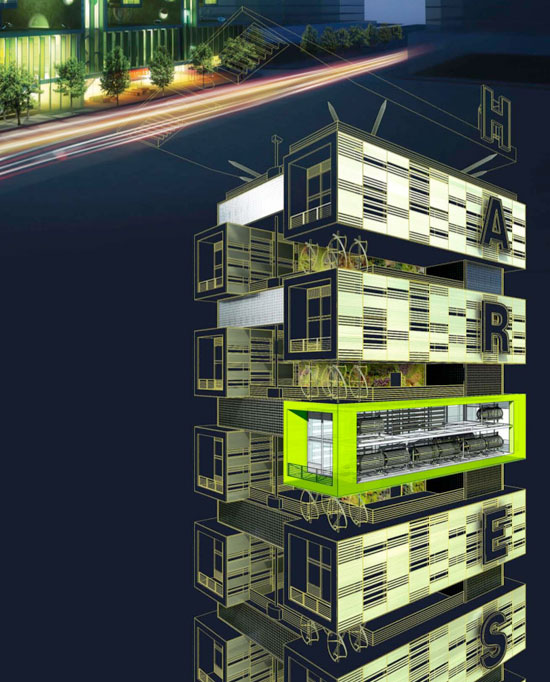 harvest green project image courtesy romses architects
 harvest green project image courtesy romses architects
 harvest green project image courtesy romses architects
 harvest green project image courtesy romses architects
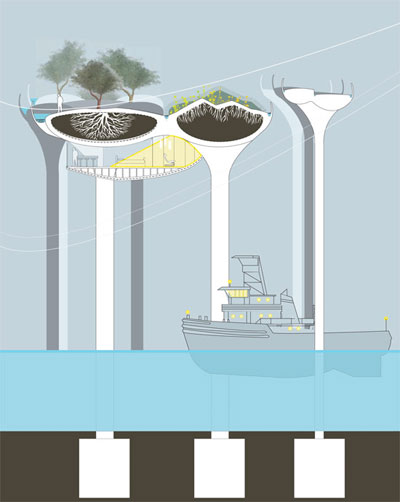
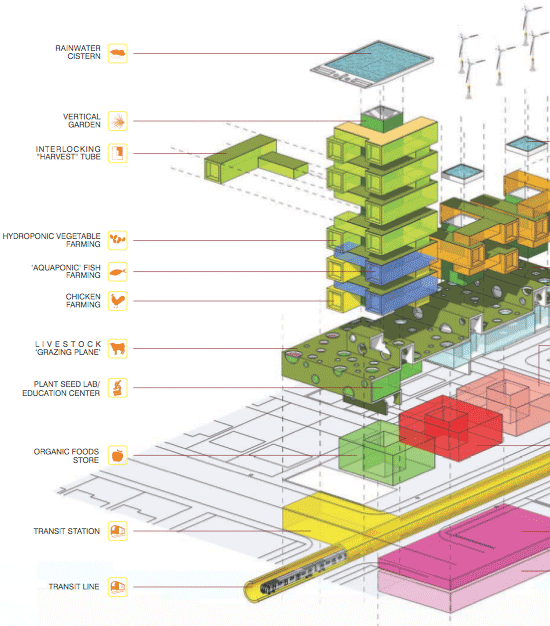 harvest green project – sections image courtesy romses architects
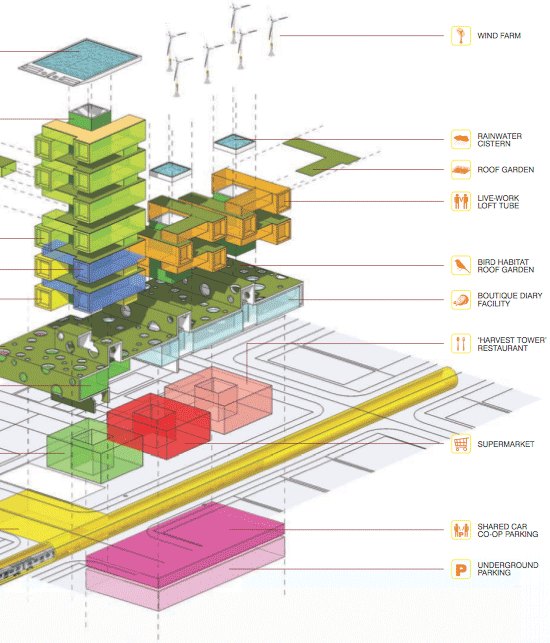 harvest green project – sections image courtesy romses architects
URBAN FARMING (84)
 Oct 05, 2023
 Aug 18, 2023
 Mar 12, 2023
 Dec 22, 2022
 Dec 14, 2022
VANCOUVER 2030 (5)
 May 18, 2009
 May 13, 2009
 May 12, 2009
 May 08, 2009
PRODUCT LIBRARY
 Apr 02, 2024
 Mar 31, 2024
 Mar 21, 2024
 Mar 20, 2024