chat architects’ oyster-tasting pavilion draws on traditional bamboo scaffolding in thailand
set as a new eco-tourism prototype, the project offers an opportunity to revitalize a local village's fishing and seafood heritage.
[FEATURED]
Angsila Oyster Scaffolding Pavilion by chat architects
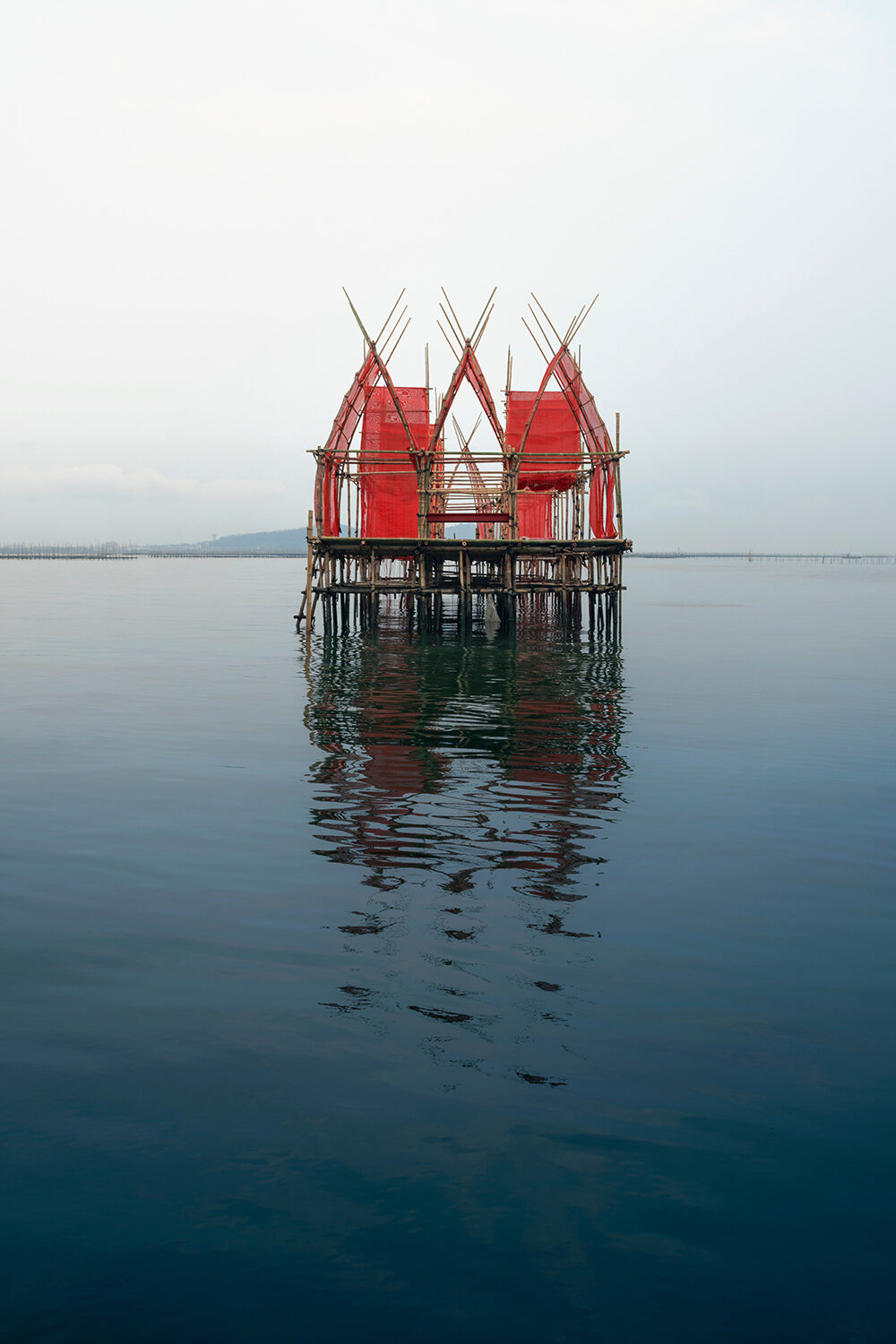
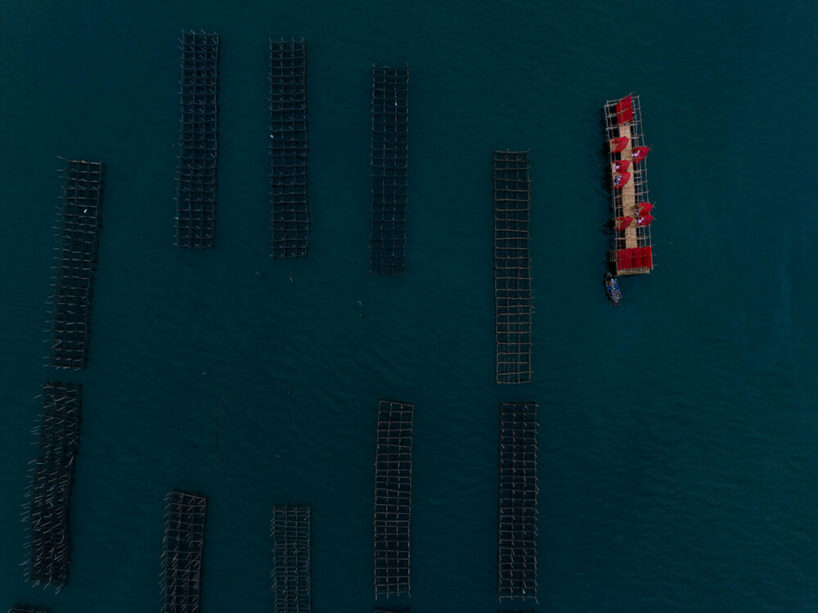
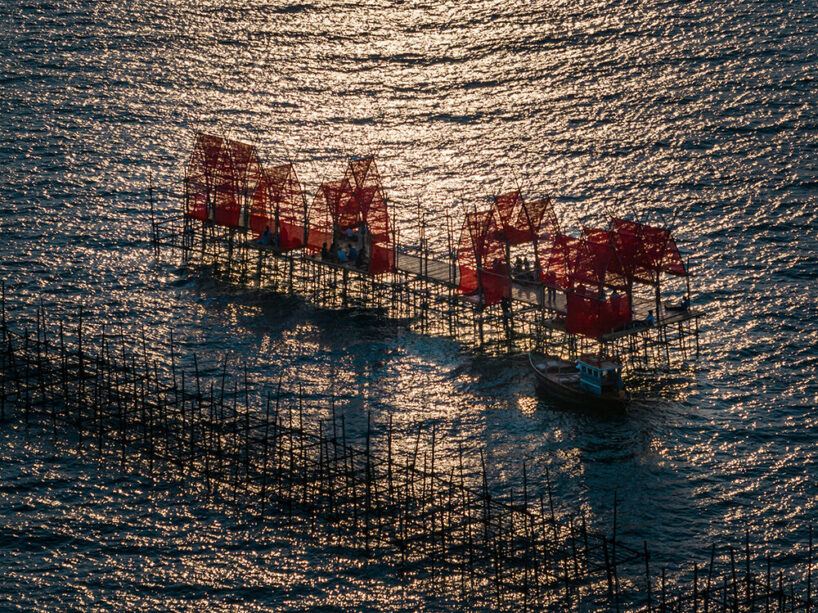
Bangkok-based Chat Architects completes its latest project, the Angsila Oyster Scaffolding Pavilion, rising off the coast of the historic Angsila fishing village in Chonburi, Thailand. Once a thriving small-scale fishing town, the community has struggled in past decades to sustain its way of life. On an ecological scale, unfiltered waste from nearby factories and new suburbs get released into the rivers and canals, feeding directly into the Angsila Bay. The resulting diminished water quality and decreased aquatic life and profitability in seafood cultivation has forced the village to abandon traditional fisheries, particularly its youth, whose ambitions are driving them to seek profitable jobs in factories, offices, or retail businesses near Bangkok. In light of those conditions, the pavilion seeks to revitalize the village’s struggling fishing/seafood industry thanks to a new oyster eco-tourism bamboo prototype,
awarded Best of Best at the Seoul Design Award 2023 and also awarded the International Building Beauty, Special Prize category, at the World Architecture Festival (WAF) 2023.
revitalizing a village’s fishing and seafood heritage
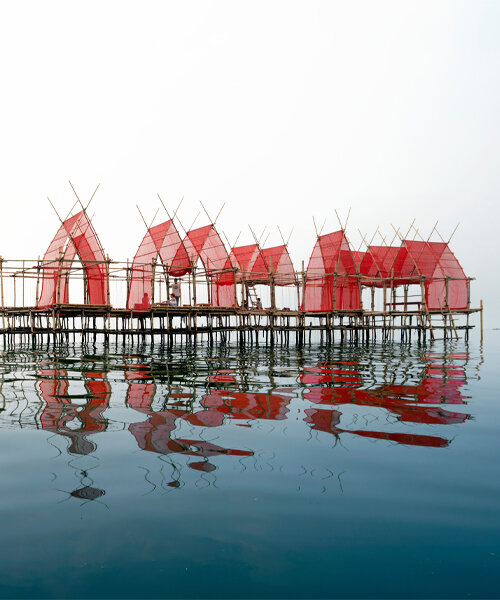
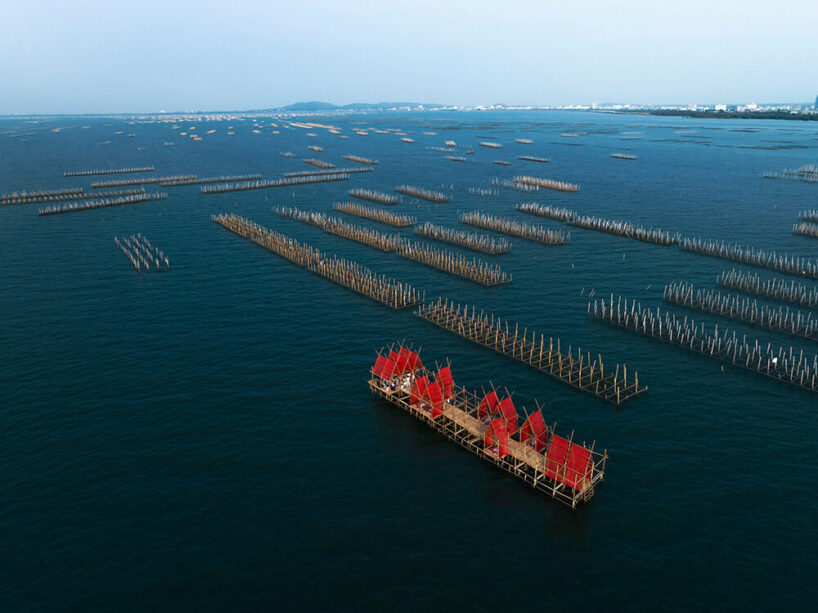
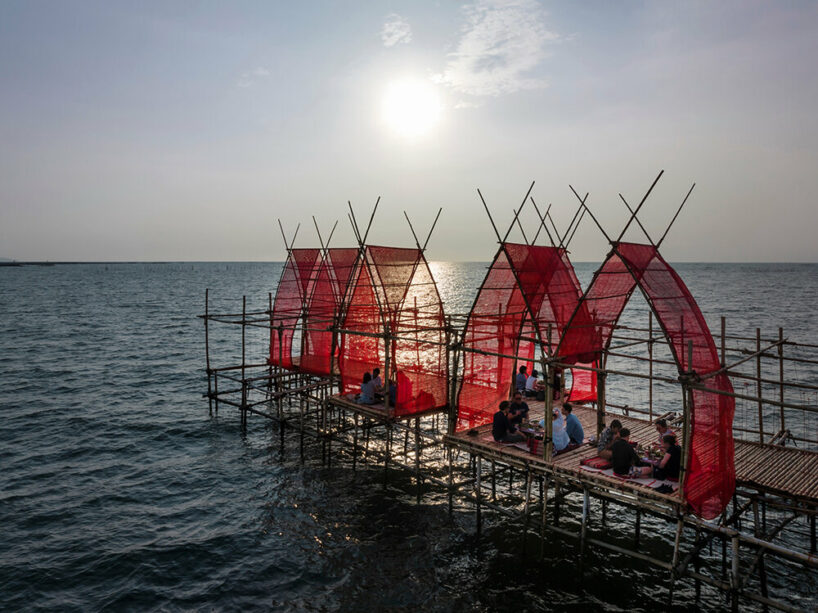
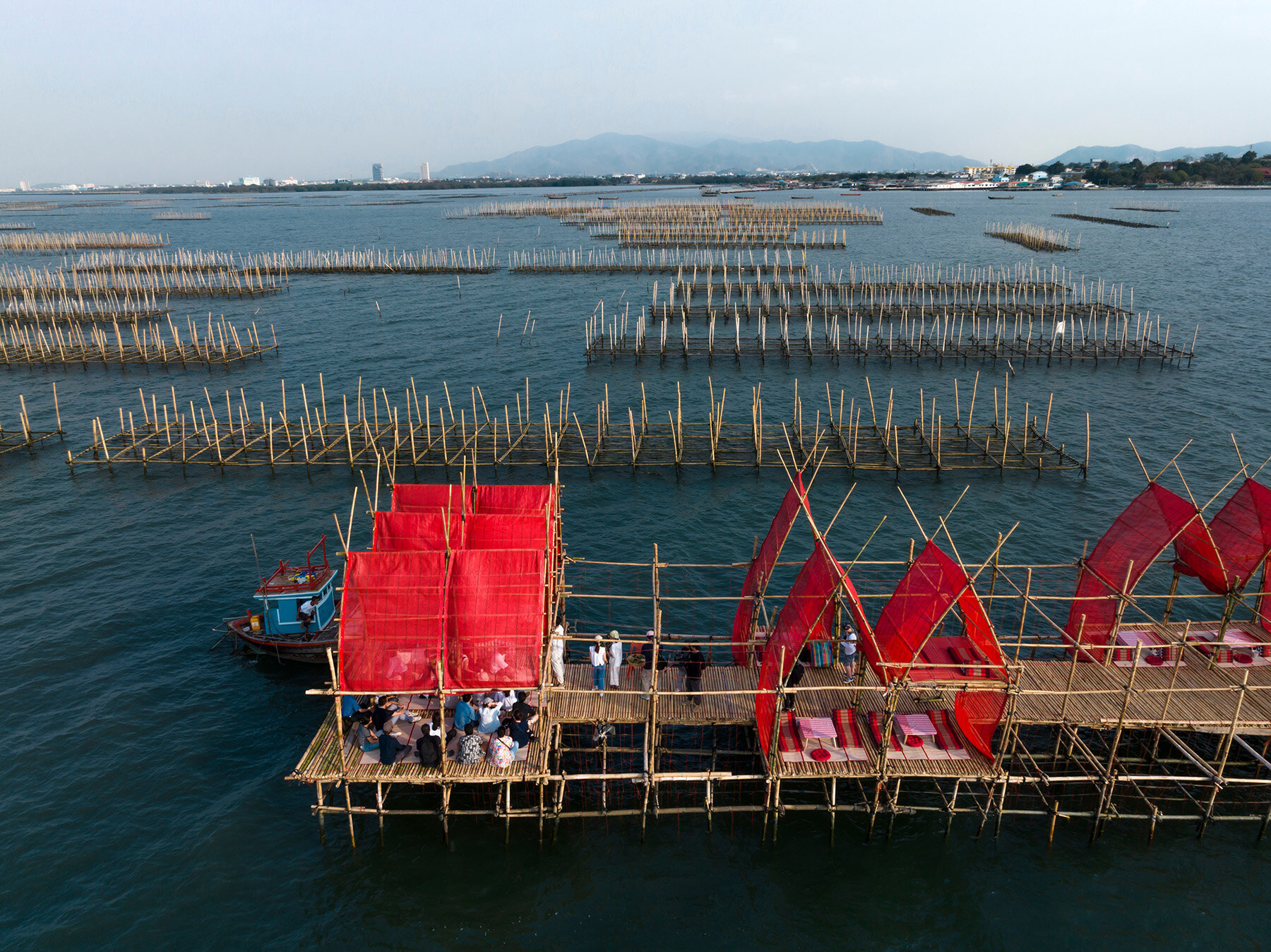
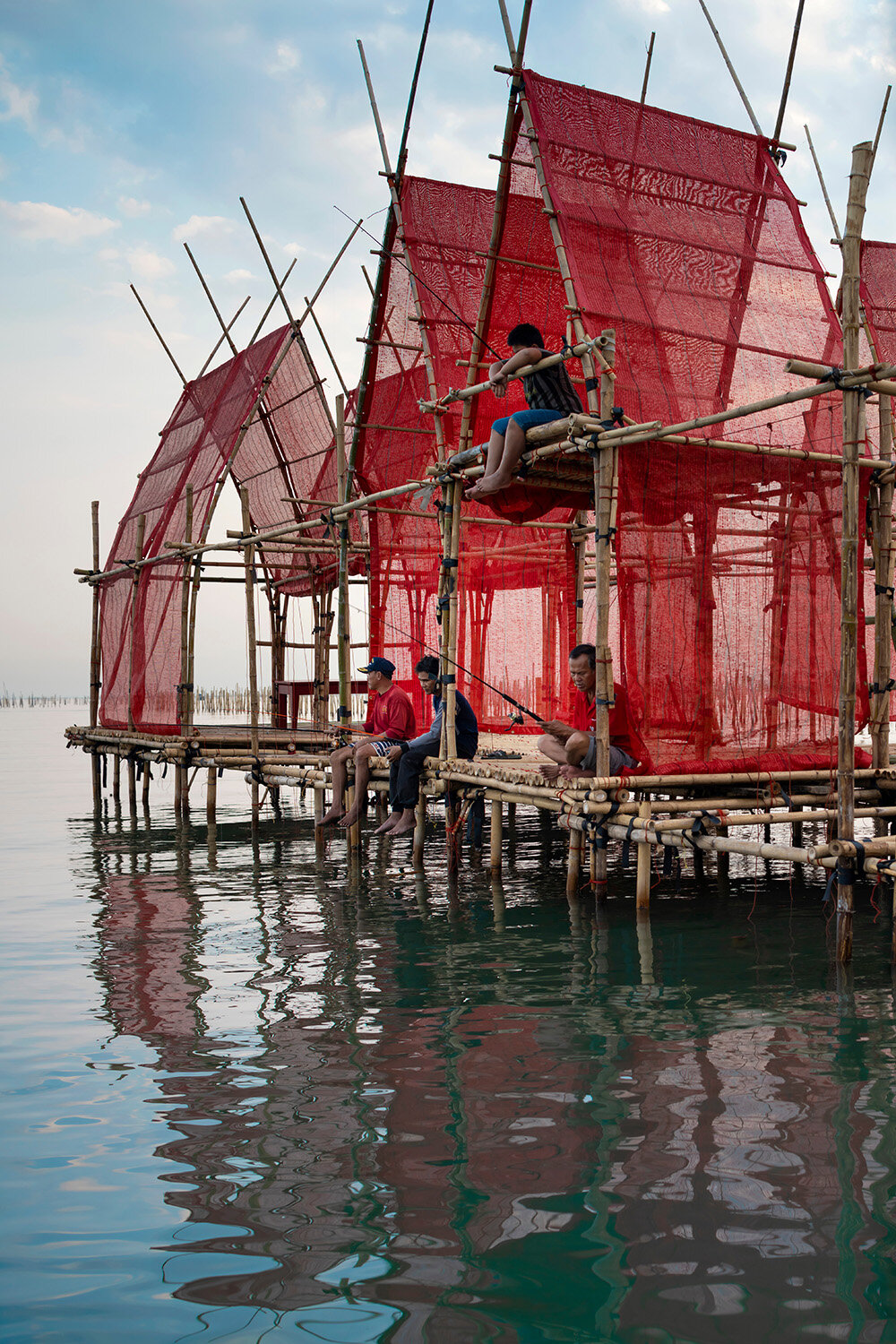
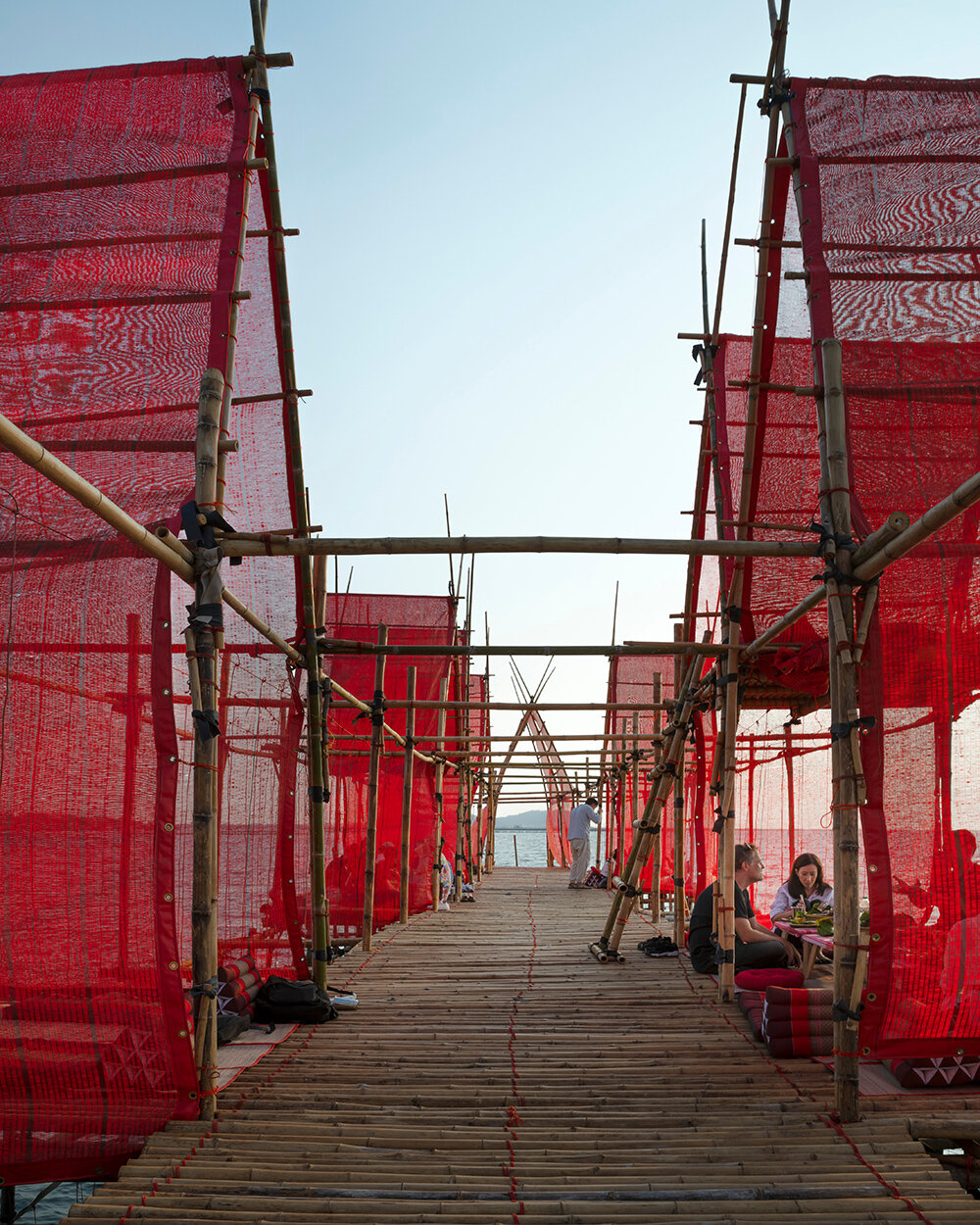
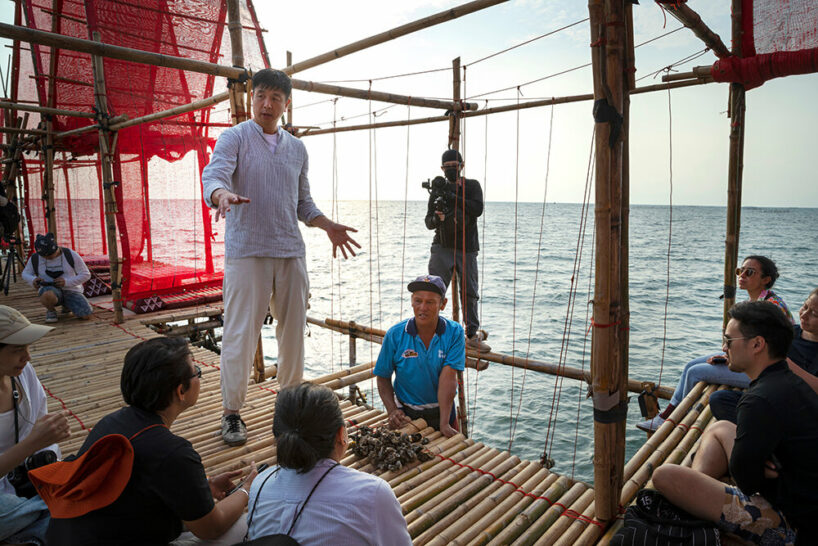
The Angsila Oyster Scaffolding Pavilion by Chat Architects (see more here) draws on and ‘bastardizes’ the widely deployed bamboo scaffolding traditionally used for oyster cultivation. When in use, local fishermen bring small groups of visitors from Angsila to the pavilion, where they can handpick oysters pulled from the ocean below, which are then prepared fresh to eat. This new oyster-tasting experience opens up visitors to the fisherman’s history and heritage through novelty and interactions. Serving shellfish cultivated right on the scaffolding also ensures seafood freshness for tourists, while providing the Angsila Fishermen with an opportunity to campaign for the protection of Angsila Bay’s sensitive coastal ecology. When not in use, the covered platforms convert to recreational piers for local fishermen, who bring along their families with fishing poles, bait, and hooks.

bamboo scaffolding meets repurposed material, like tarp
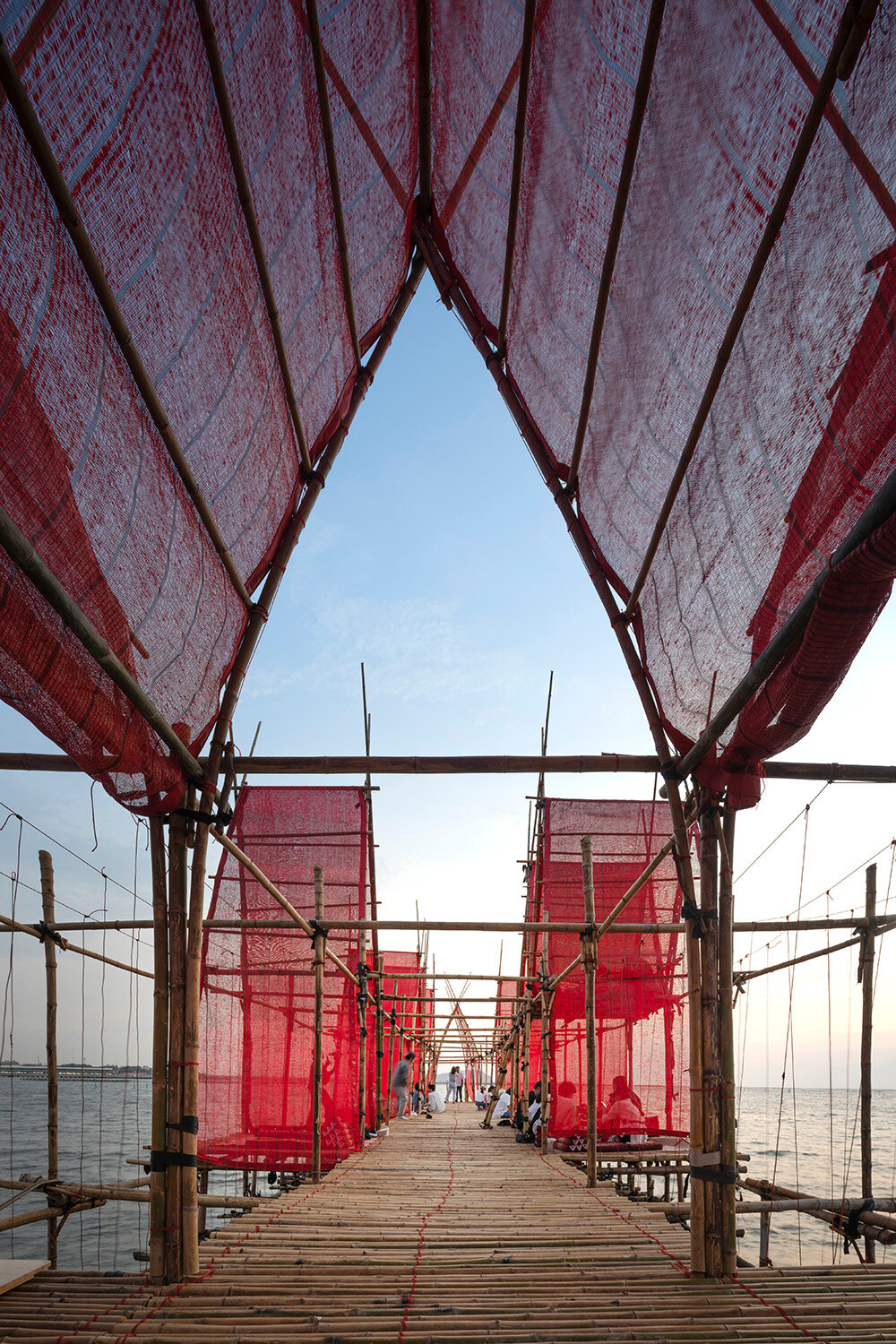
The pavilion design innovates from existing every day, sustainable, inexpensive materials, labor, and construction techniques. Like traditional oyster scaffoldings, the new scaffolding is built entirely by Angsila fishermen, utilizing local shallow-ocean bamboo construction techniques that require no power tools. The fishermen manually drive each bamboo column into the ocean floor, ‘pogo-stick’ style. Rejected car seatbelts, acquired at a discount due to discoloration from local auto plants, are used to tie all of the bamboo members together. A graphic red (complimenting the greenish bay waters), light-filtering agricultural tarp, commonly used in nearby nurseries, shades visitors from the ocean sun yet allows for the passage of ocean breezes.







1/7
project info:
name: Angsila Oyster Scaffolding Pavilion
location: Chonburi, Thailand
architect: Chat Architects
winning project
organization: Seoul Design Foundation
organization: World Architecture Festival (WAF)
shop
your own online design shop — no sales commission collected