plastc lab conjures volcanic silhouettes from recycled plastic waste at we design beirut
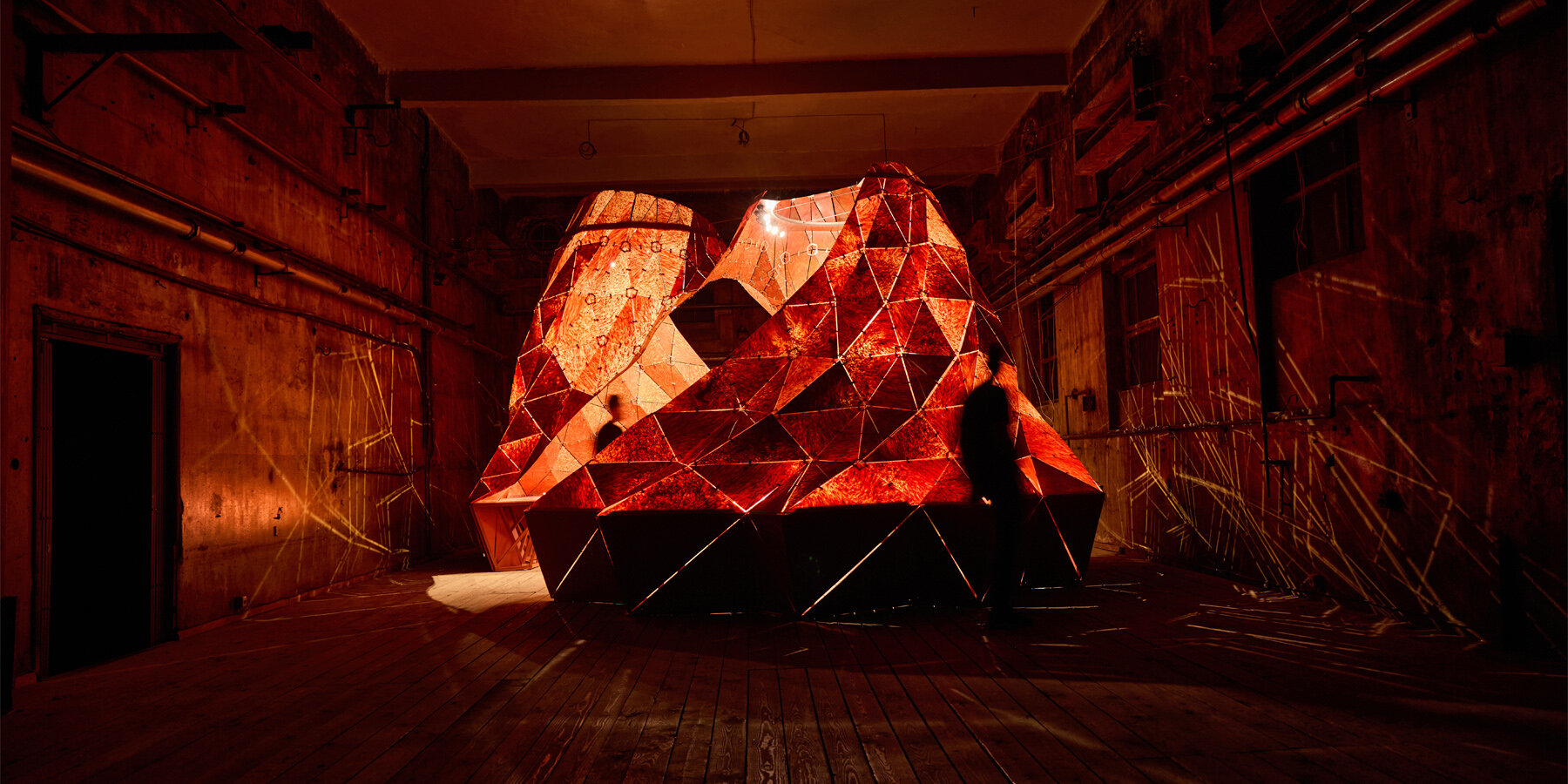
set against beirut's historic abroyan factory, magma plastique is the product of 1.1 tons of recycled plastic waste cut and sculpted using computational tools.
prefer designboom on google[FEATURED]
magma plastique exhibited at Abroyan Factory
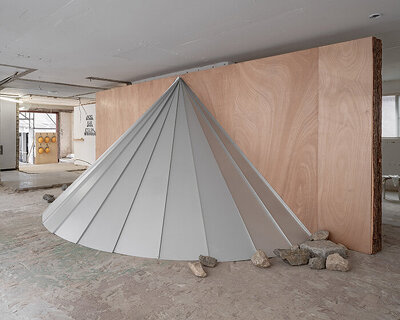
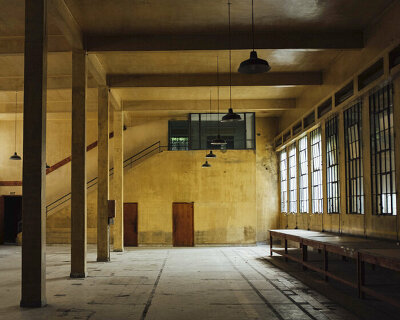
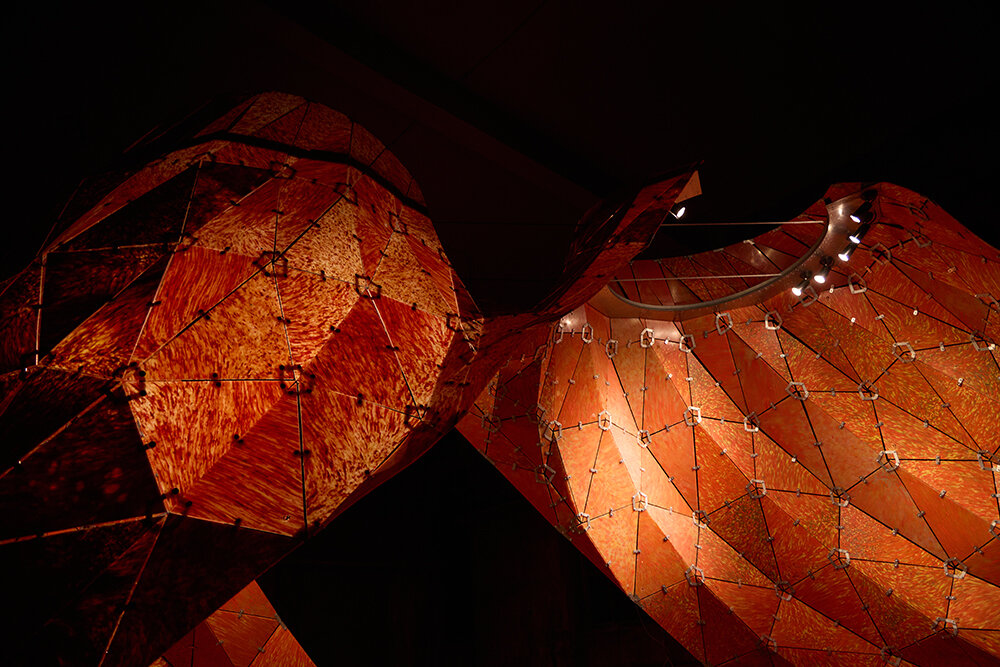
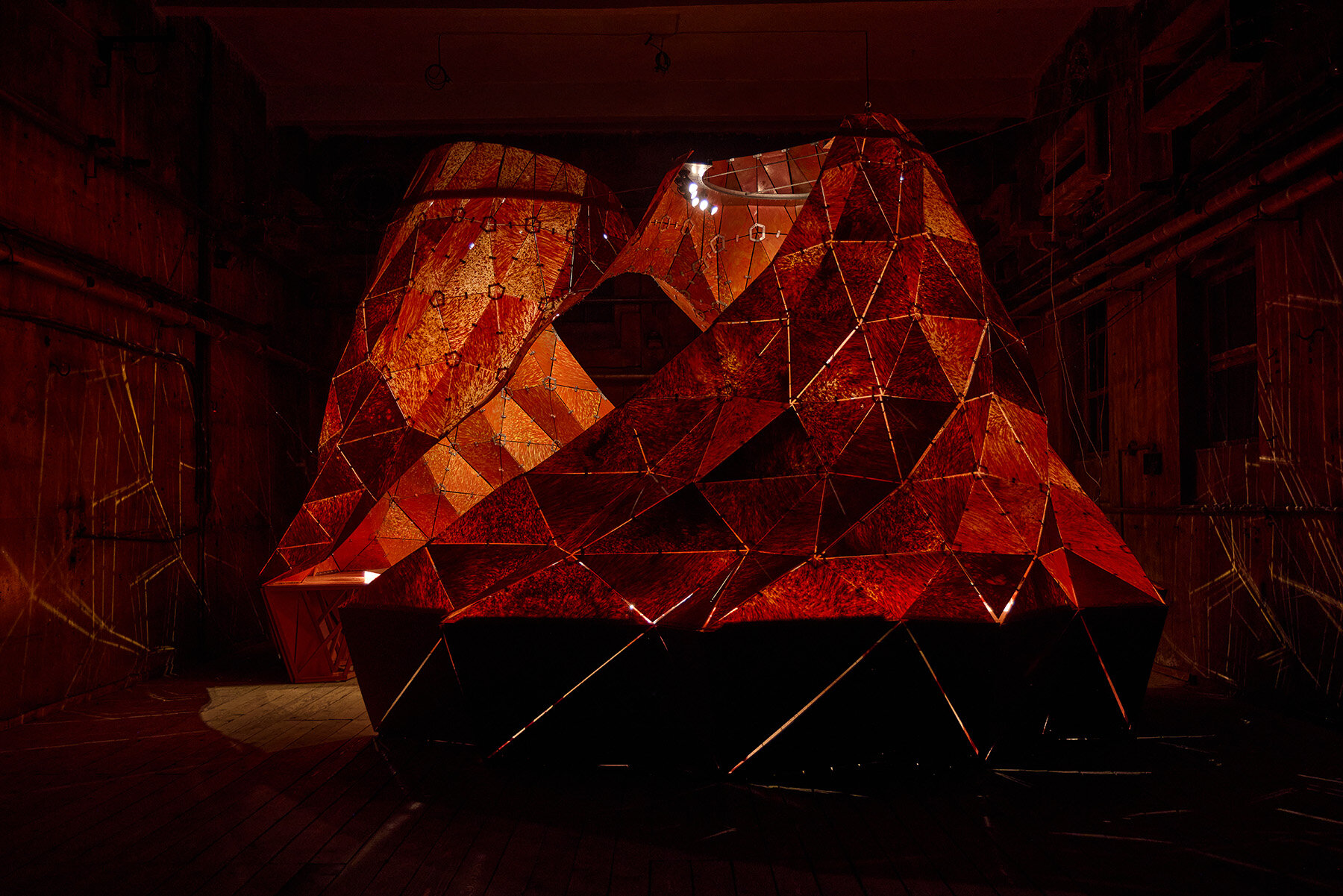
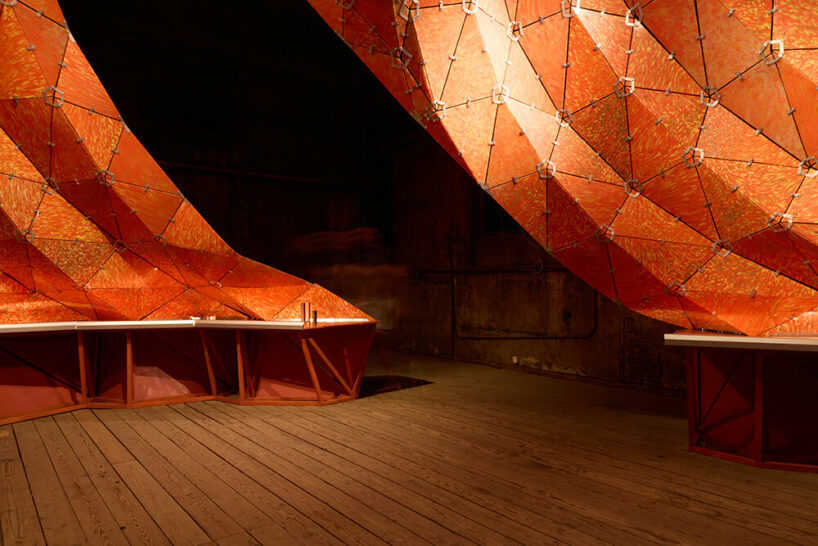
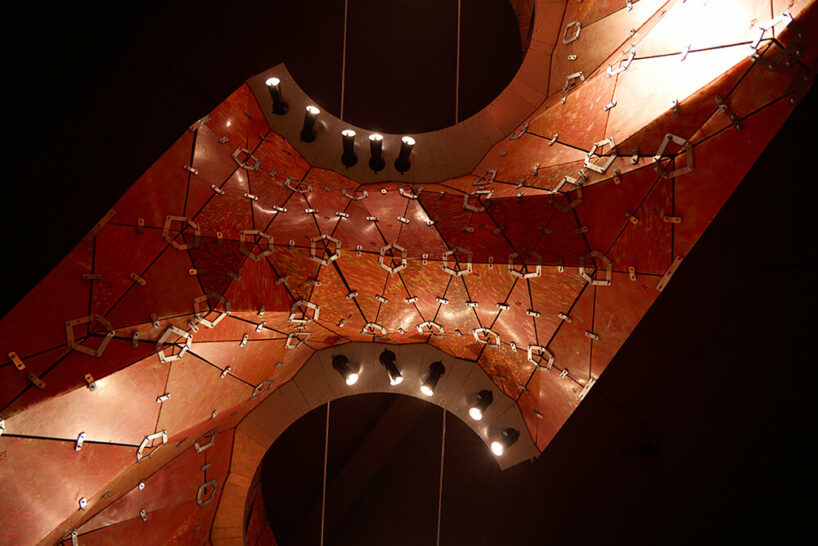
Recycling group Plastc Lab has joined We Design Beirut’s inaugural edition with a micro-pavilion made predominantly from recycled plastic waste. The installation, dubbed Magma Plastique, was part of the Materials Exhibition at the historic Abroyan Factory, once a bustling textile workshop, offering a compelling narrative deeply rooted in the juxtaposition of decay and renewal. The factory’s revival as a cultural hub echoes the transformation of the recycled materials that compose the installation. Emerging as two conjoined and magmatic volumes that twist and diverge, the geometry nods to the silhouettes of truncated smoke stacks, characteristic of industrial architecture. Beyond its form, Magma Plastique ‘embodies the urgency to fundamentally reconsider creative and production processes in light of sustainability imperatives,’ shares the group.
how plastc lab tackles the waste crisis
Plastc Lab (see more here) emerged from the collective determination of a biochemist, environmental planner, and mechanical engineer. What started as a backyard workshop quickly evolved into an operation responsible for recycling over 110 tons of plastic waste into construction and design materials. Effectively, their work can be described as a commentary on environmental degradation and the urgent need for sustainable solutions. Plastic, once praised for its versatility, now threatens to leave irreversible damage for years to come. Lebanon’s waste crisis, meanwhile, exacerbated by political instability, corruption, and governance failures, reached a critical juncture in 2015 with the closure of the Naameh landfill.
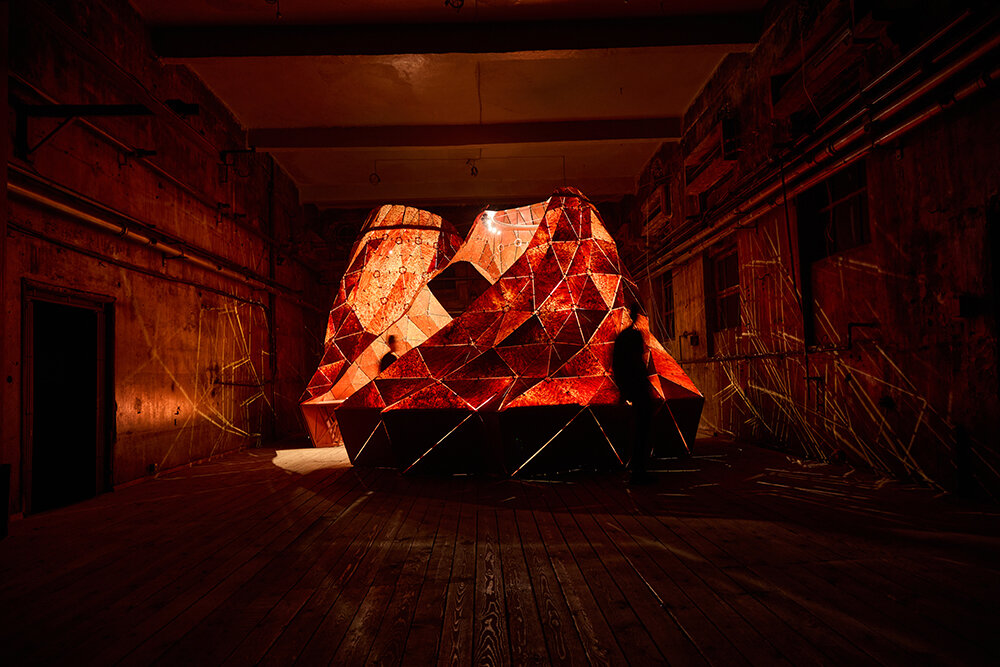
two conjoined volumes echoing volcanic landscapes
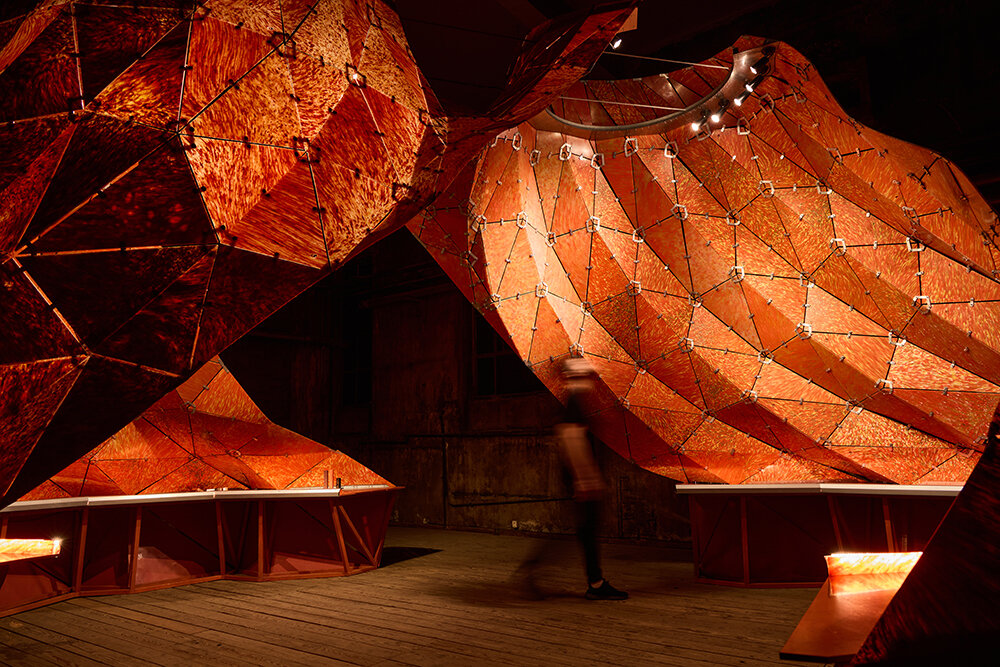
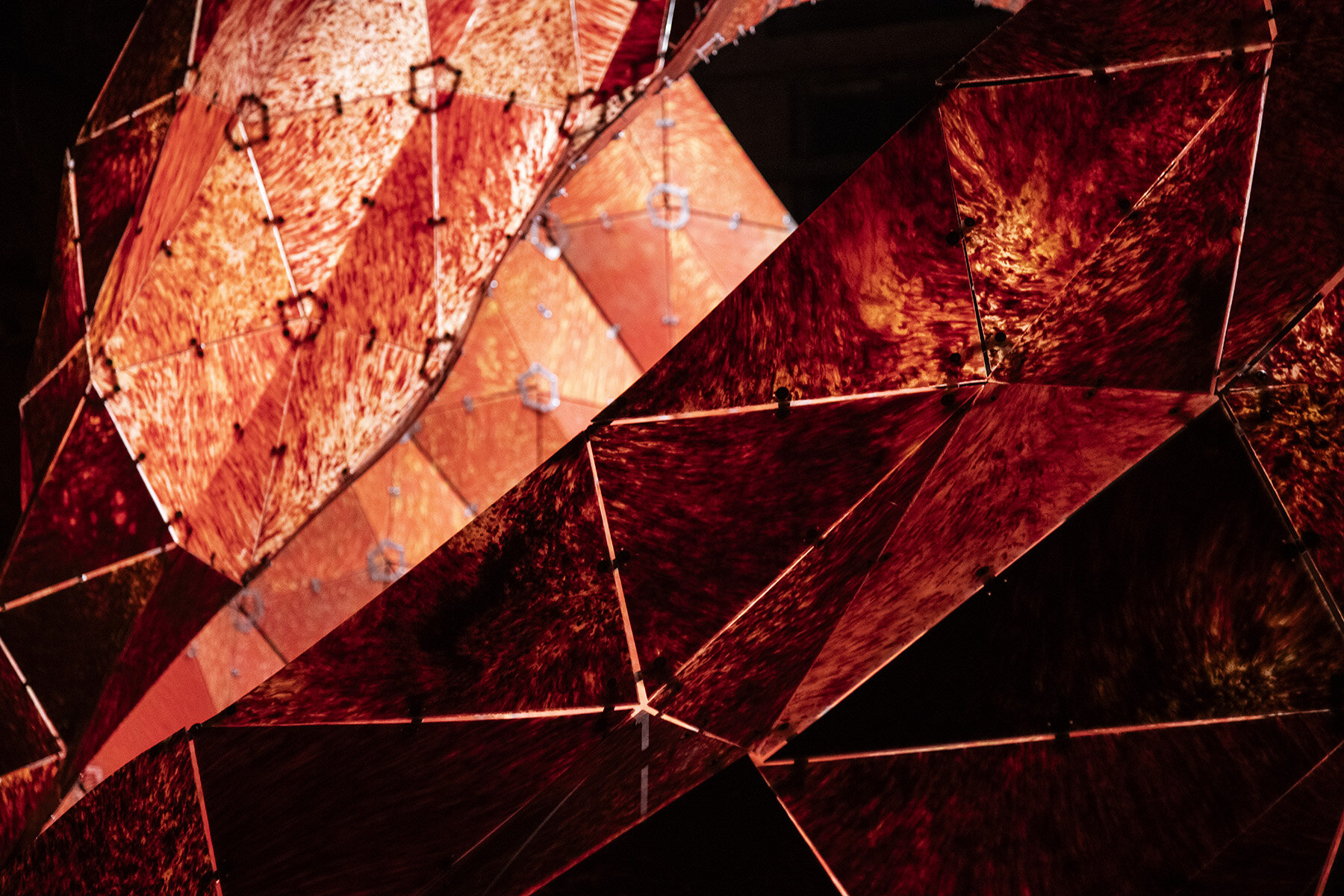
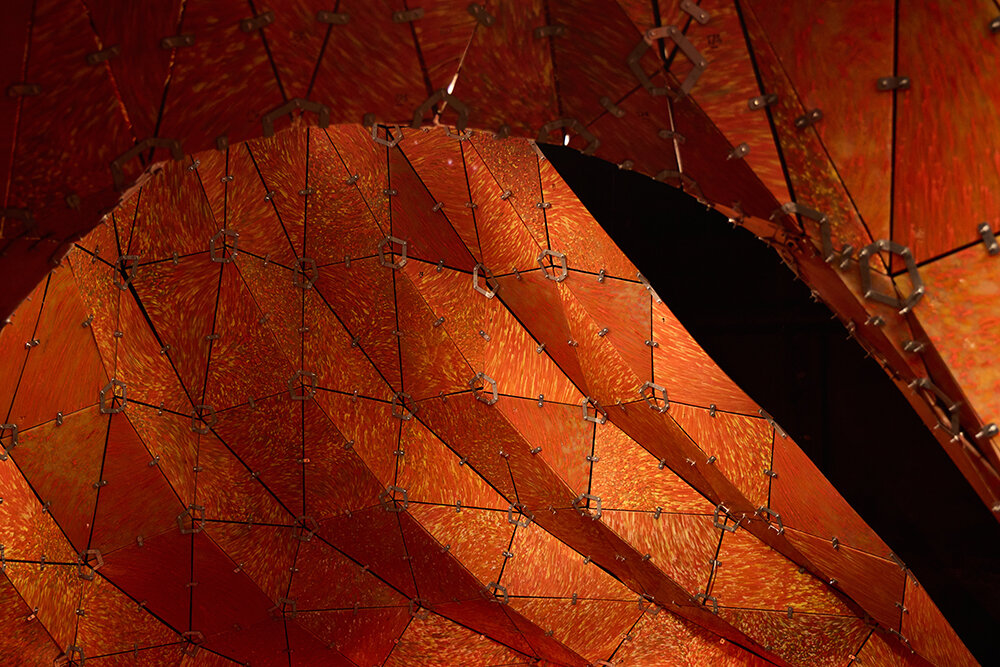
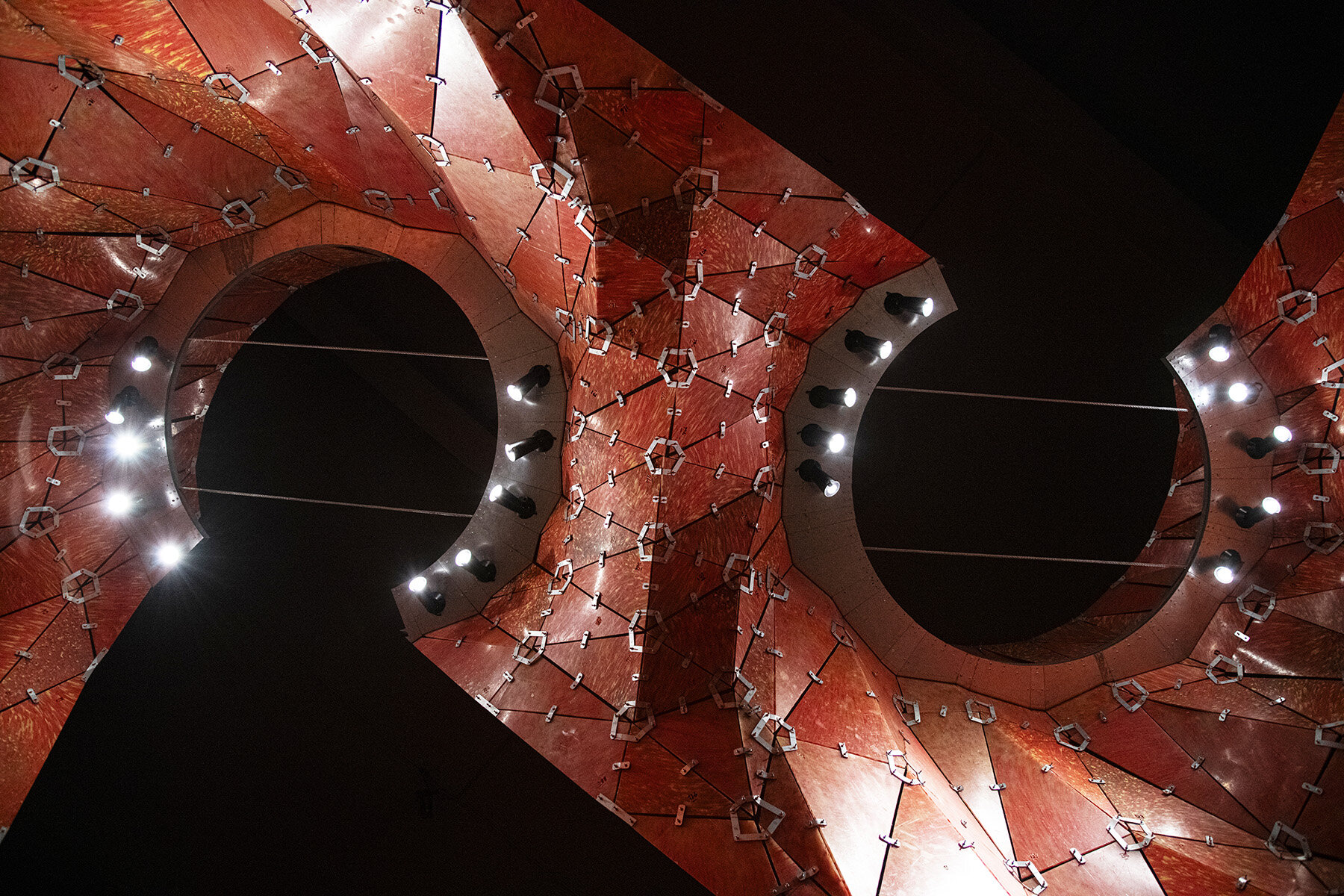
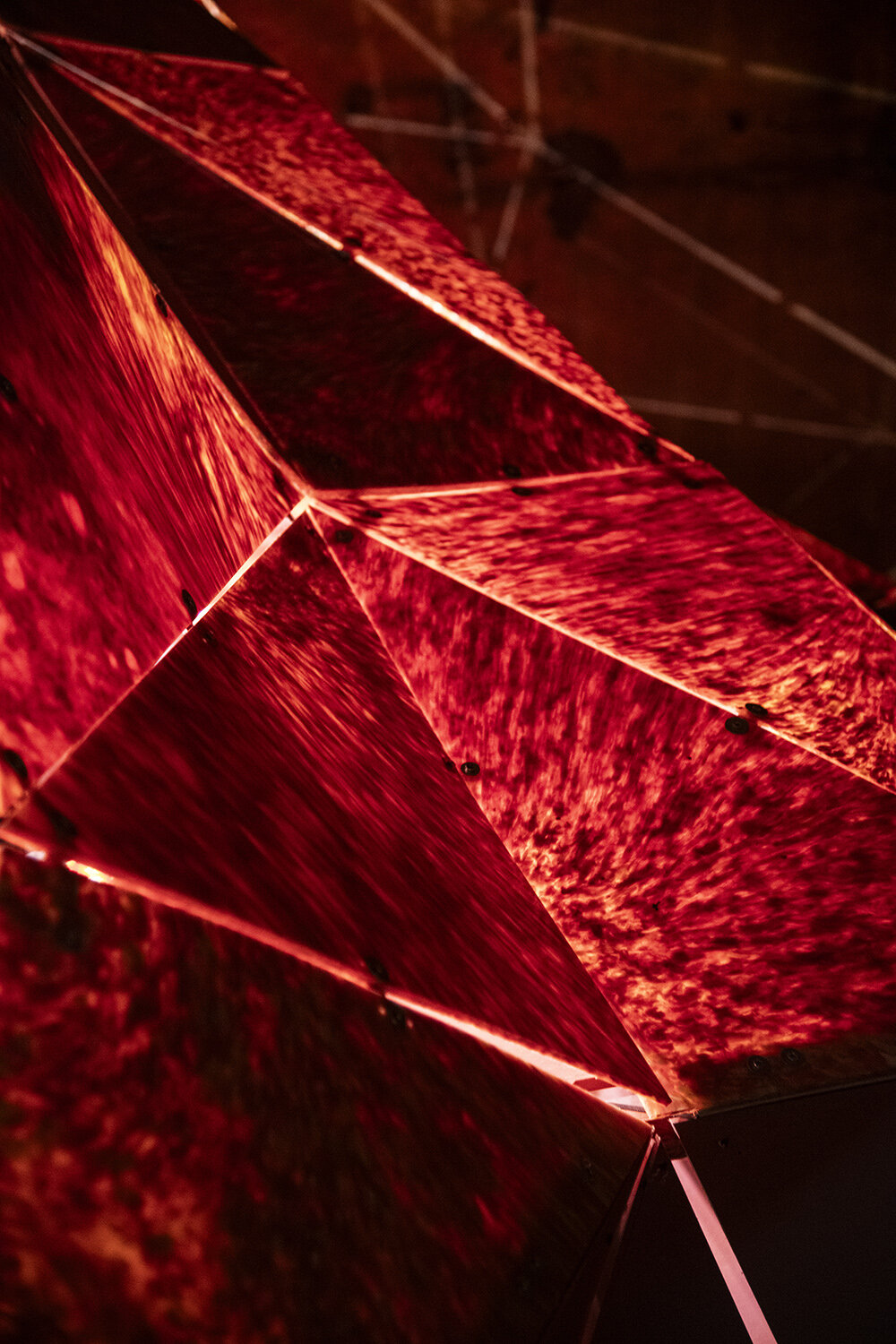
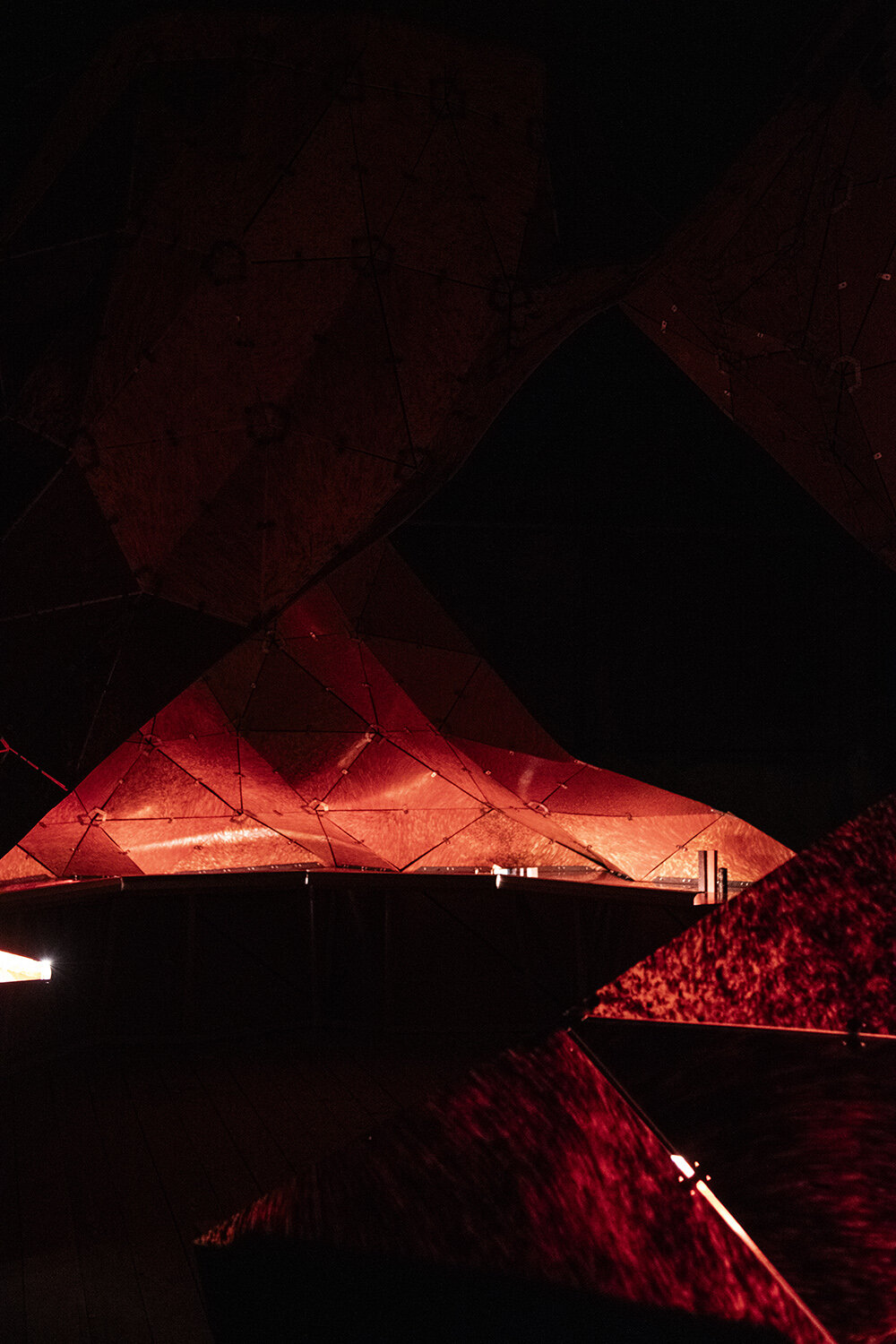
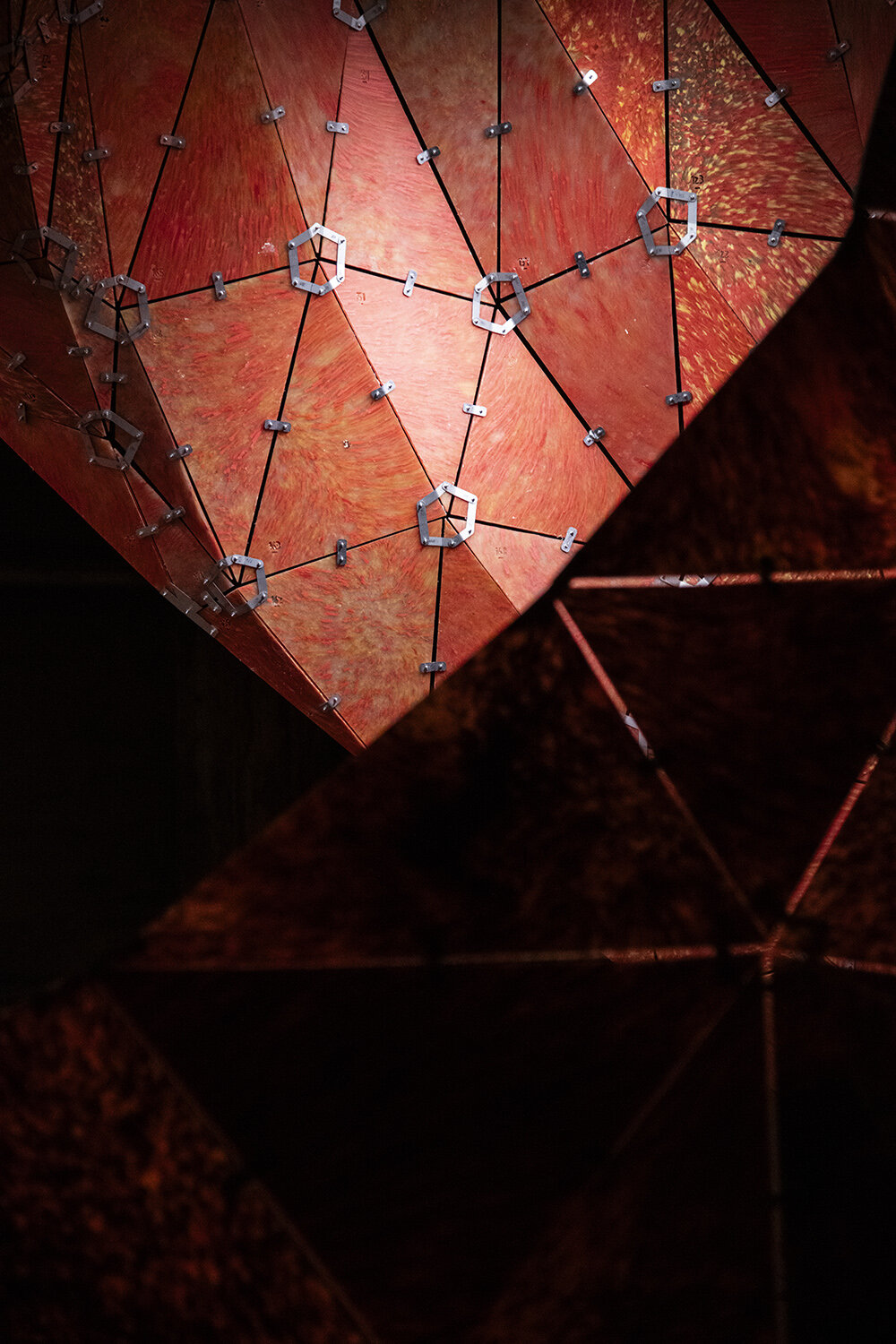
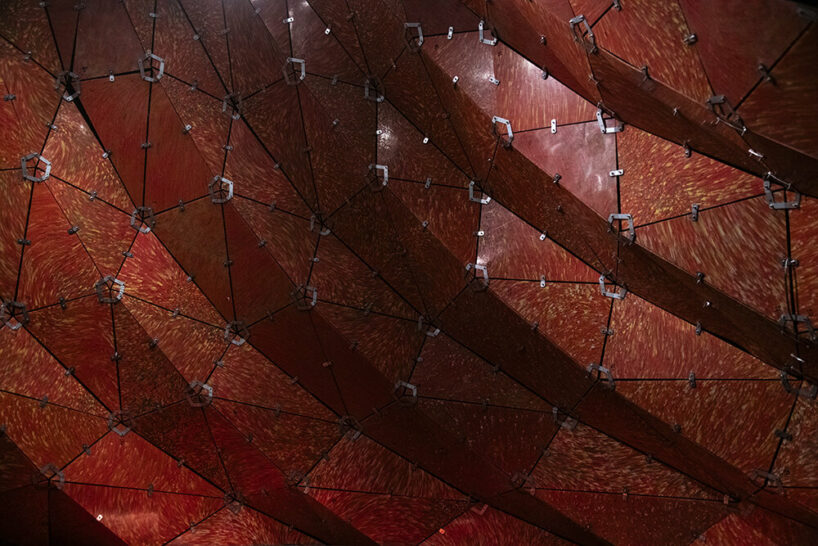
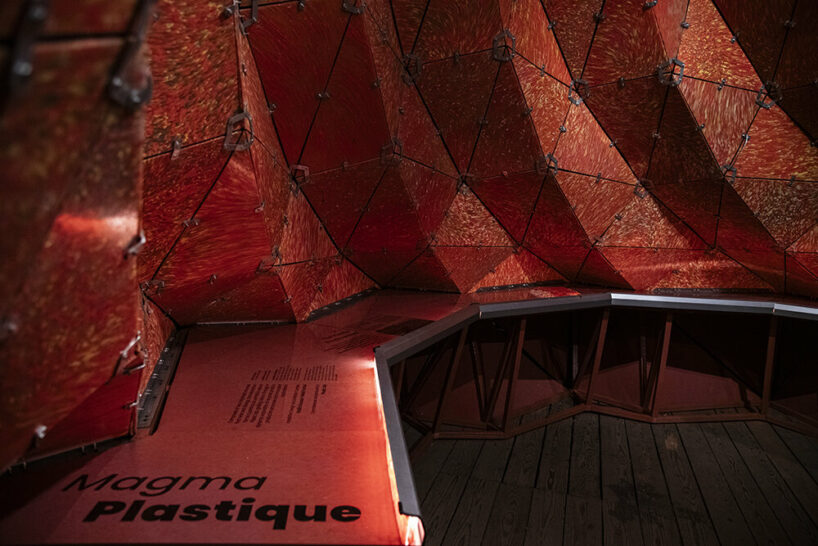
In this context, repurposing plastic waste as a material offers a promising avenue to mitigate the crisis — and together with architects Rabih Koussa and Nabil Farhat, Plastc Lab has created and curated Magma Plastique for We Design Beirut‘s Materials Exhibition as a monumental expression of the climate crisis. The warm hues radiating through the polypropylene skin echo the disintegrating forms of volcanic landscapes through a play of light and shadow. The installation’s strategic placement near the walls amplifies this effect, with shattered strokes cast beyond the enclosure to create a dialogue between the structure and its containment. ‘This visual spectacle not only serves as a compelling reminder of the environmental emergency but acts as a call for immediate climate action,’ notes the team. Lighting consultancy émotions lumineuses has completed the immersive experience with indirect illumination and a custom diffuser that traces the exhibition display and subtly reveals its contents — accentuating the contrast between interior and exterior across the two volumes.
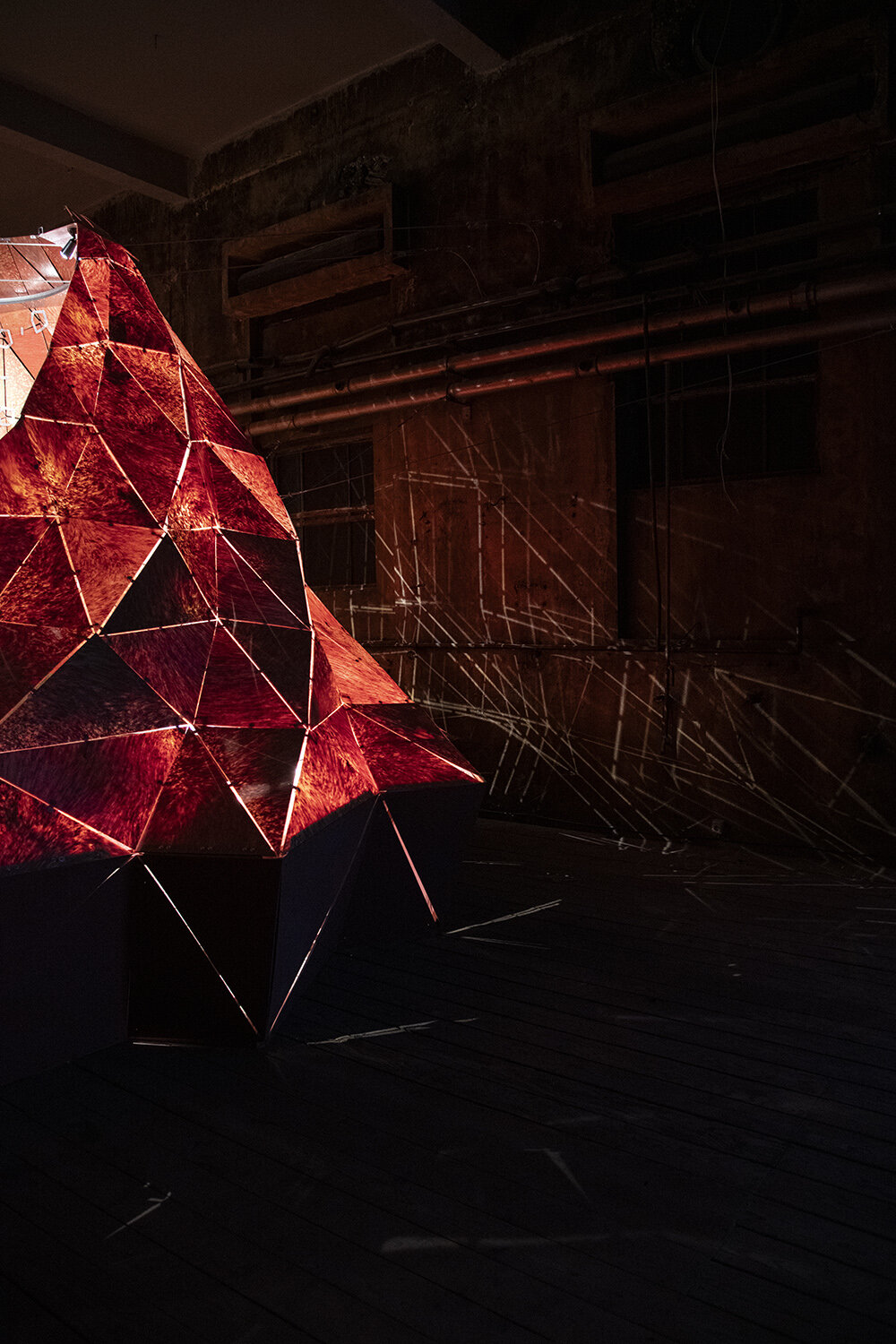
magma plastique meets computational design
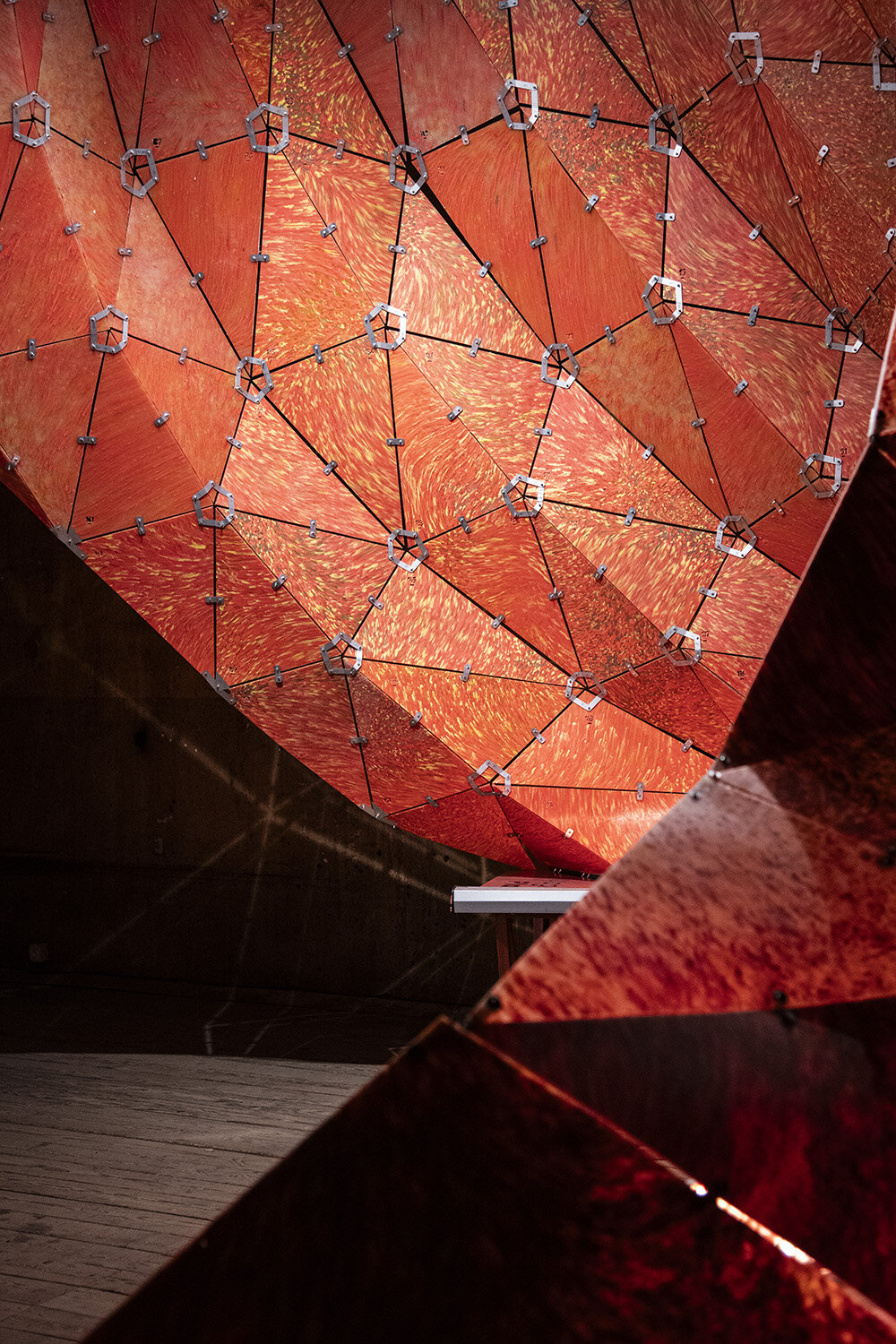
The design process relies on custom computational tools to mediate design intent, structural integrity, fabrication constraints, and sustainability objectives. These tools facilitate form-finding strategies to meet architectural requirements, allowing for quick iteration through numerous solutions and ensuring design feasibility without significant challenges. The enclosure, resulting from the non-coplanar and non-concentric base and rim circles, combines 224 geometrically unique triangular components. Plastc Lab optimized the CNC milling planning by embedding knowledge of fabrication constraints to achieve minimal off-cuts. The parametric model also enables the extraction of production and assembly instructions, including the bending angles and directions for 1540 custom-cut and bent galvanized steel connectors. These parts are designed for easy disassembly, creating a structure that can be flat-packed, shipped, and reassembled.
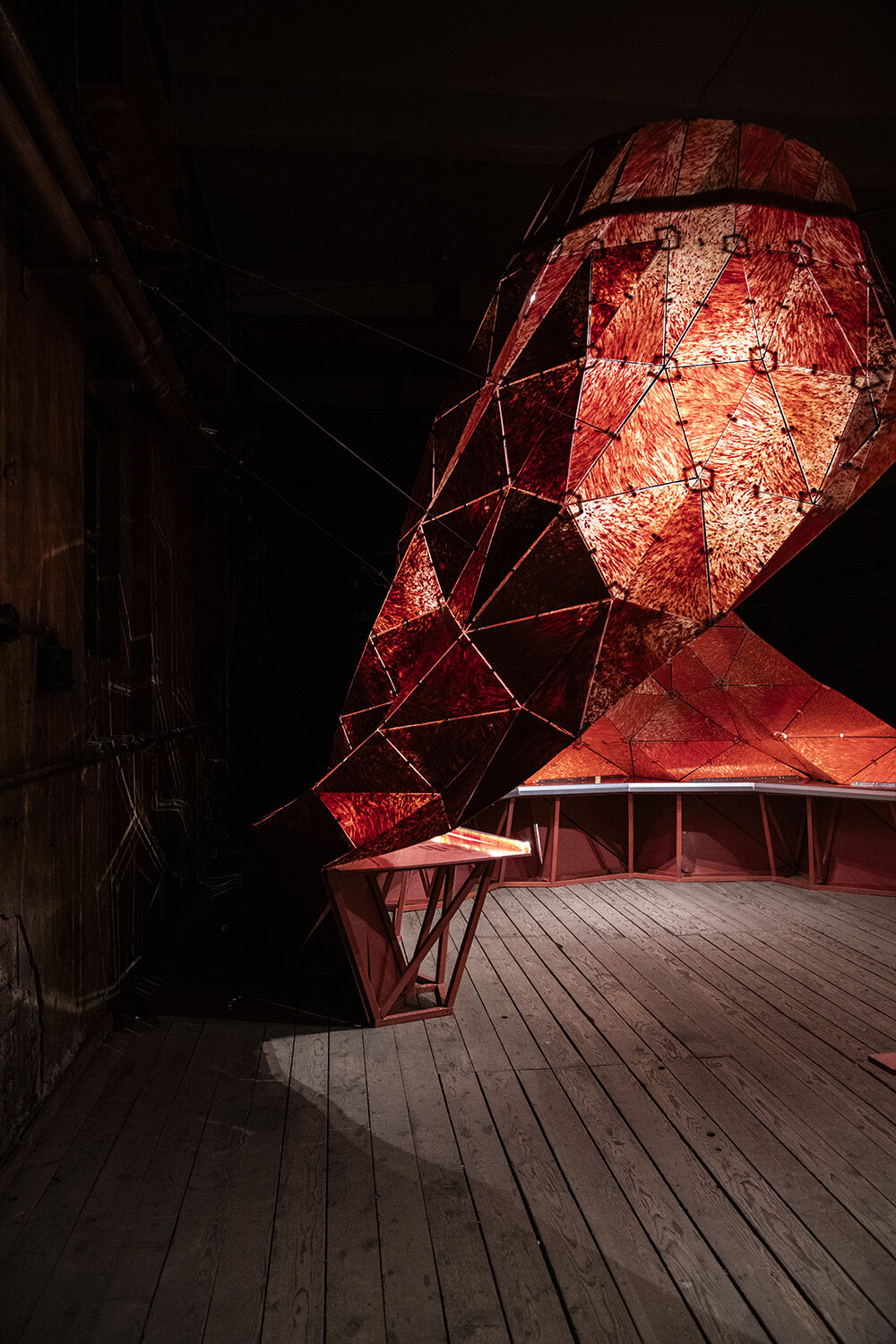
highlighting collaborations at we design beirut
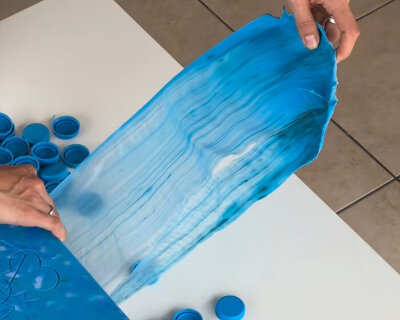
Presented as panels of short, accessible texts – coupled with supporting images, material samples, and physical prototypes – the first half of the exhibition provides a comprehensive overview of the recycling and production processes. The steps involved are sorting, shredding, washing, and molding plastic waste into high-quality, reusable, and recyclable new products – from sleek sheets to sturdy beams – reducing the demand for raw material. The second half of the panels showcase the lab’s practical endeavors in collaboration with local designers. Also included on display is a custom threaded connection that could replace steel parts and a flat-packed, deployable, and modular furniture concept.
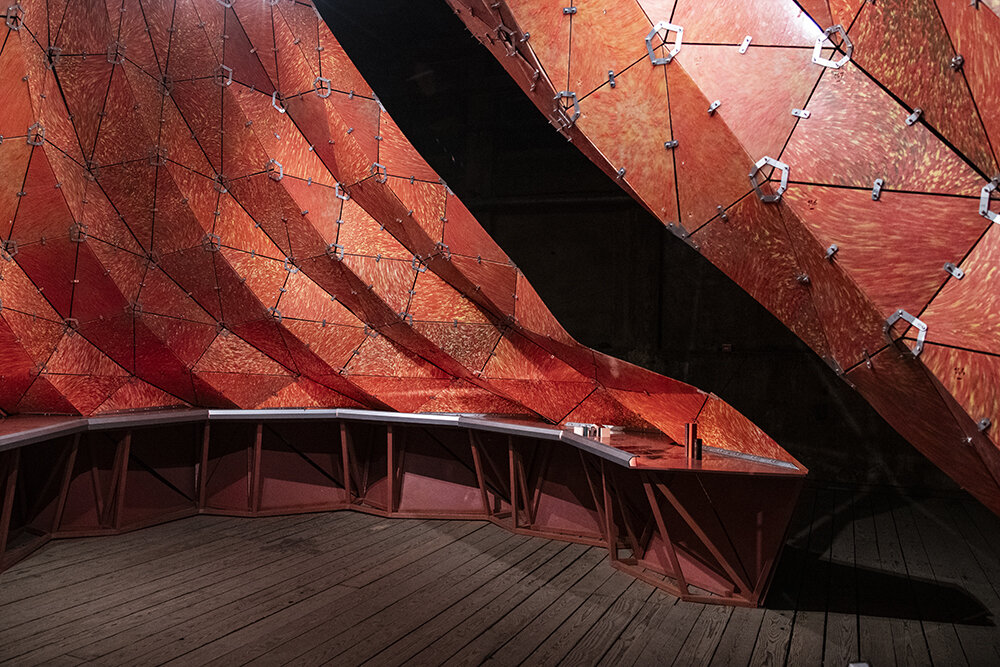
The show concluded with the architects highlighting how their previous partnerships with Plastc Lab served as a playground for pursuing novelty in the design and fabrication realms and how these investigations shaped Magma Plastique. ‘Sustainable principles must no longer be viewed as optional but rather as an integral aspect of contemporary design practice. Every collaboration with Plastc Lab acts as a laboratory for understanding the limitations, innovative applications, and potentials of the material‘ reaffirm Rabih Koussa and Nabil Farhat. Magma Plastique is the product of 1.1 tons of recycled plastic waste, saving 800 kg of CO2 emissions in the process.
1/7
project info:
name: Magma Plastique
location: Abroyan Factory, Beirut, Lebanon
commissioning and production: Plastc Lab | @plastc_lab
installation design and exhibition curation: Rabih Koussa | @rabihkoussa, Nabil Farhat | @nabilfarhatt
lighting design: émotions lumineuses | emotions_lumineuses
exhibition: We Sustain – Materials Exhibition
program: We Design Beirut | @wedesignbeirut
viewing dates: May 23 – 26, 2024
shop
your own online design shop — no sales commission collected