mycelium has electrical signals that can control biohybrid robots and make them move
researchers from cornell university and the university of florence have used fungal mycelia and their innate electrical signals to complete three robot tests.
prefer designboom on google[FEATURED]
biohybrid robots can have a ‘brain’ of their own with mycelium
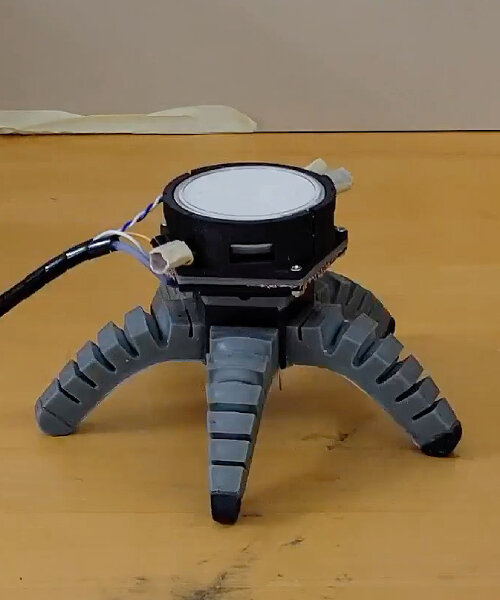
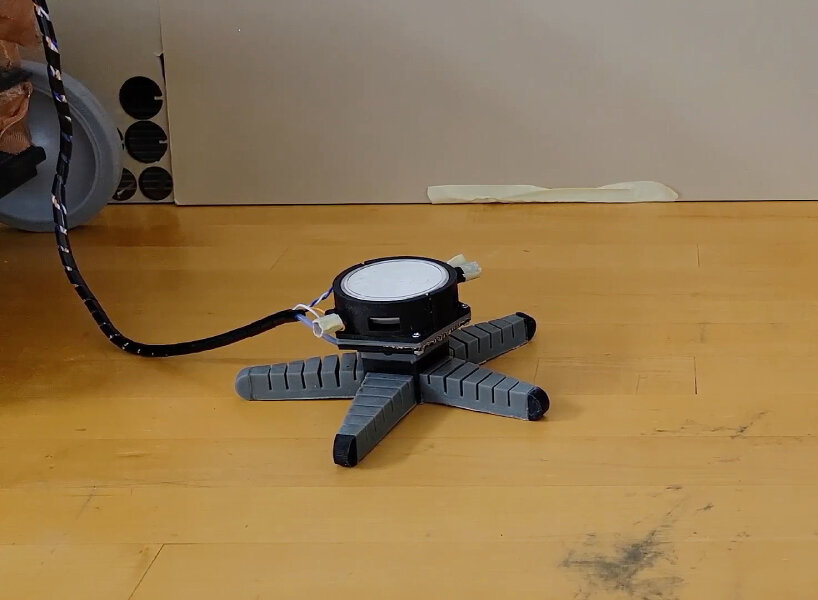
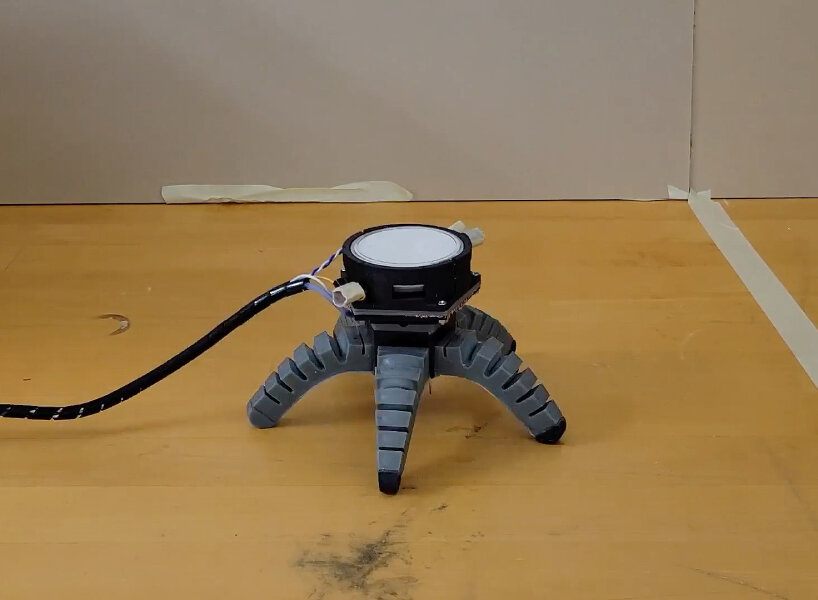
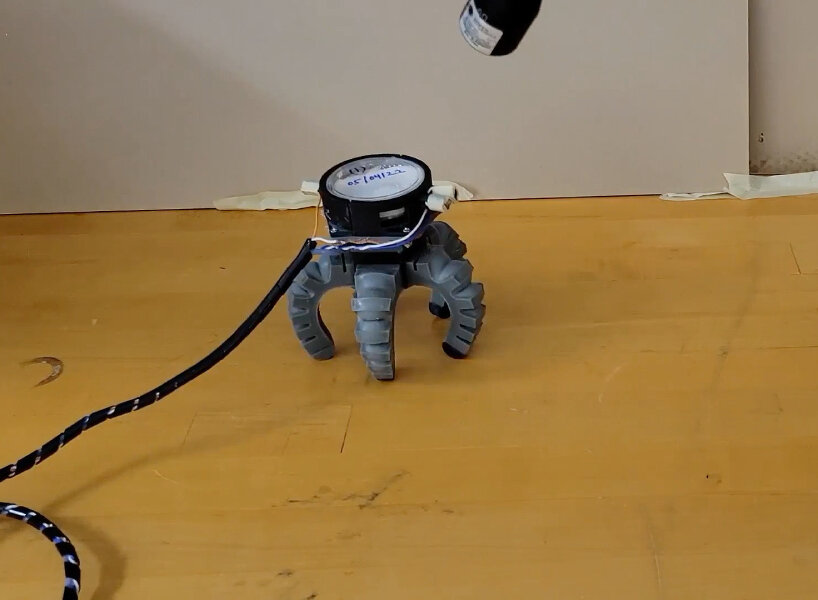
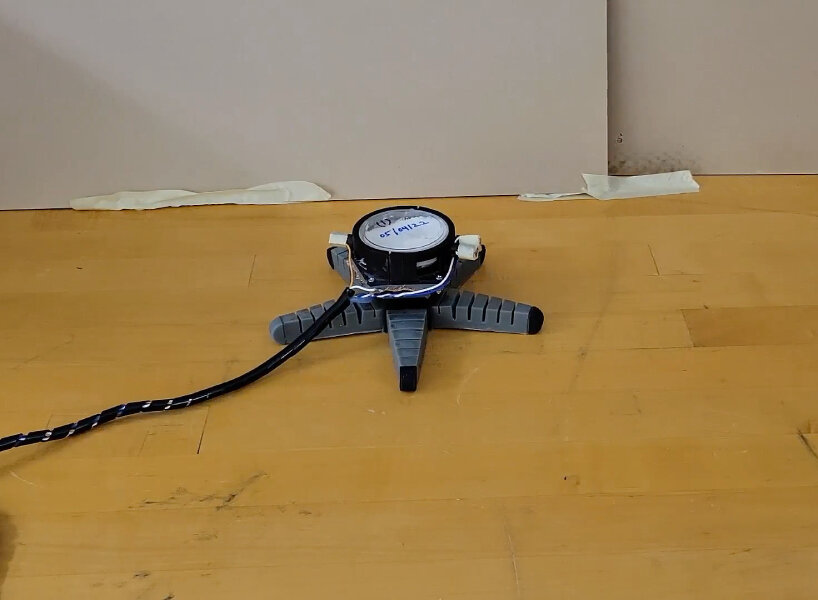
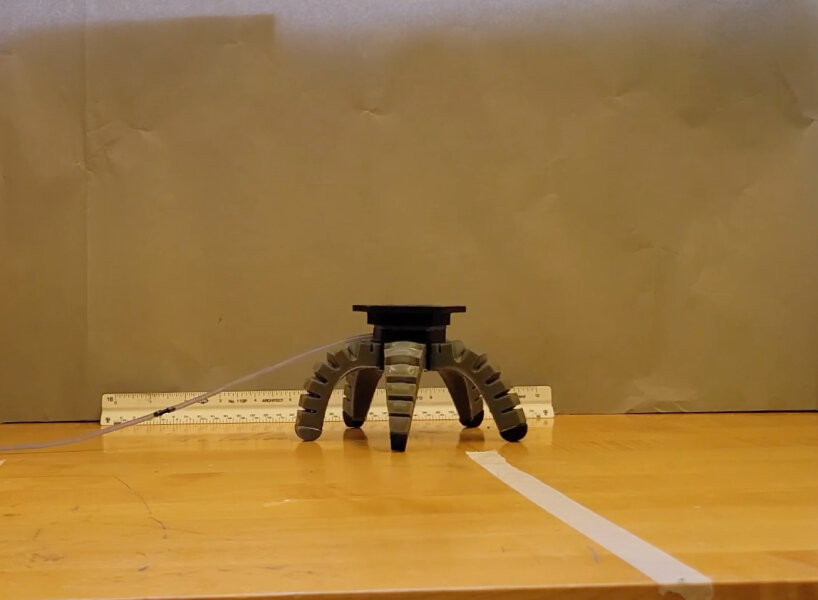
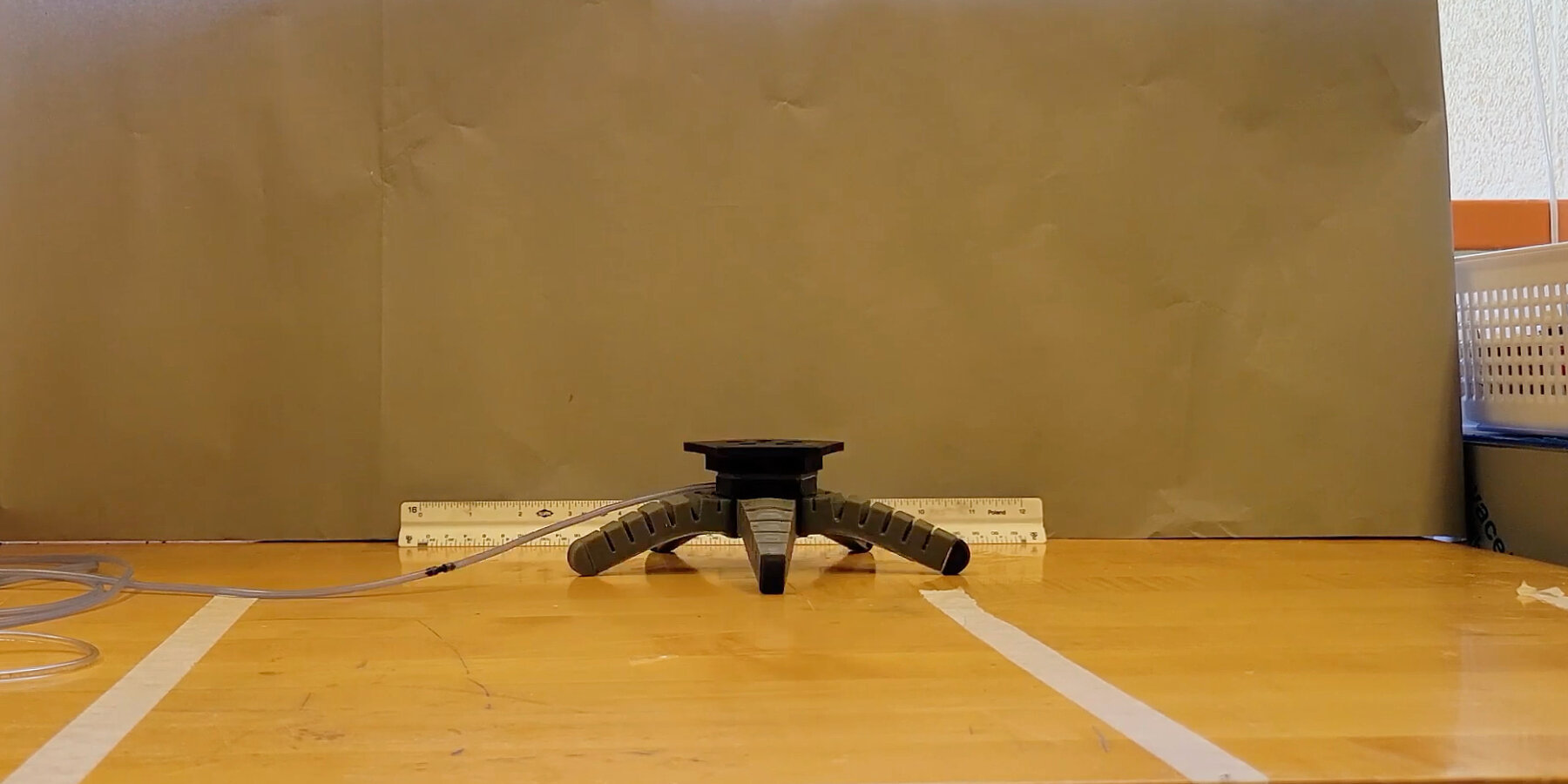
Researchers from Cornell University and the University of Florence have used fungal mycelia and their innate electrical signals to control biohybrid robots, or machines with biological and synthetic components, and make them move with minimal supervision. In their recent study, the paper’s senior author, Rob Shepherd, says that by growing mycelium into the electronics of a robot, these biohybrid machines can start to sense and respond to their surroundings. In this case, they used light as the input to which the robot, shaped like a spider and moving and crawling like a jellyfish, reacts.
The researchers see that mycelium in biohybrid robots can help devise machines that detect soil chemistry in row crops, for example. With this, the robots decide on their own when and where to add more fertilizer to the soil and do so autonomously, as they can move their bodies using mycelium’s electrical signals as their ‘brain.’ In a way, the fungal mycelia give these biohybrid robots their own minds, enabling them to react to their environment.
Electrical signals can control robots’ mechanisms
The researchers – comprising Anand Kumar Mishra, Jaeseok Kim, Hannah Baghdadi, Bruce R. Johnson, Kathie T. Hodge, and Robert F. Shepherd (more here) – say that mycelia, which are the underground vegetative parts of mushrooms, have the ability to sense chemical and biological signals and respond to multiple inputs. To apply them to the robot and make it move, lead author Anand Mishra has developed a system that uses the electrical signals from mycelium to control the biohybrid robots.
He built an electrical-interface device that can read these signals and block any external factors that could interfere with the reading, such as vibrations and electromagnetic fields. He also produced a controller inspired by Central Pattern Generators, or the networks of neurons in animals that can produce rhythmic signals used to control repetitive movements, including walking and breathing. With these two mechanisms, they convert the electrical signals from mycelium into ‘digital’ signals. They are sent to the biohybrid robots’ actuators, the parts that move or control mechanisms such as the legs, so that these machines can crawl and perform other specific actions.
mycelium is capable of ‘understanding’ its environment
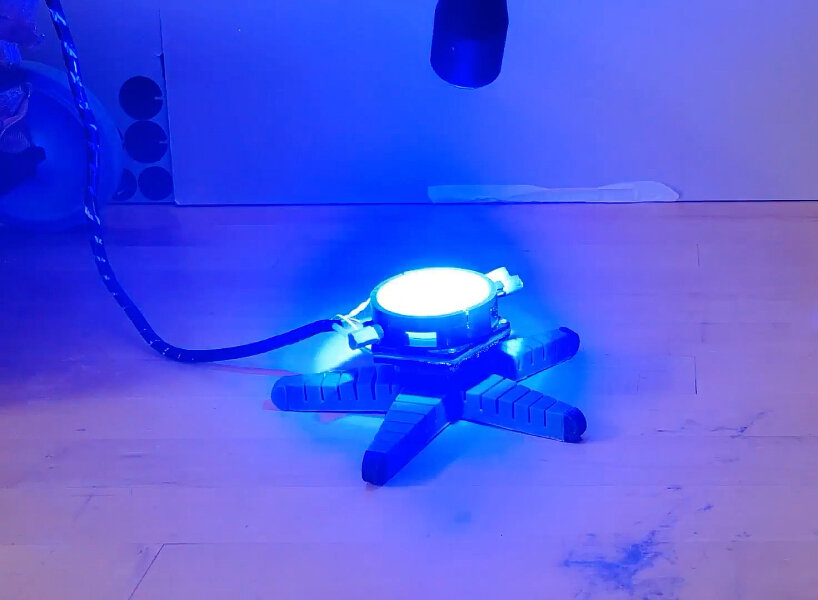
So far, the researchers have created two biohybrid robots: a soft robot shaped like a spider that moves like a jellyfish, and a robot with wheels. These robots have completed three experiments. In the first run, they walked and rolled in response to the mycelium’s electrical signals. In the second, the researchers used ultraviolet light. When the beam hit the robots, it caused the biohybrid machines to change the way they moved. For the researchers, this means that the mycelium is capable of ‘understanding’ and responding to changes in its environment.
In the third experiment, the researchers were able to take control and replace or suppress the electrical signals found in mycelium with their own inputs. This approach suggests that users may be able to control what the biohybrid robots can do. Anand Mishra adds that their project isn’t just about controlling a robot. ‘It is also about creating a true connection with the living system. Because once you hear the signal, you also understand what’s going on. Maybe that signal is coming from some kind of stress. So you’re seeing the physical response, because those signals we can’t visualize, but the robot is making a visualization,’ he adds.
project info:
name: Mycelium in Biohybrid Robots
researchers: Anand Kumar Mishra, Jaeseok Kim, Hannah Baghdadi, Bruce R. Johnson, Kathie T. Hodge, Robert F. Shepherd
institutions: Cornell University, University of Florence | @cornelluniversity, @unifirenze