les caryatides de guyancourt: a photo essay on the postmodernist complex of suburban paris
designboom visits les caryatides in guyancourt to explore the iconic building in person and unveil its beauty and peculiarities.
LES CARYATIDES DE GUYANCOURT BY Manuel Núñez Yanowsky
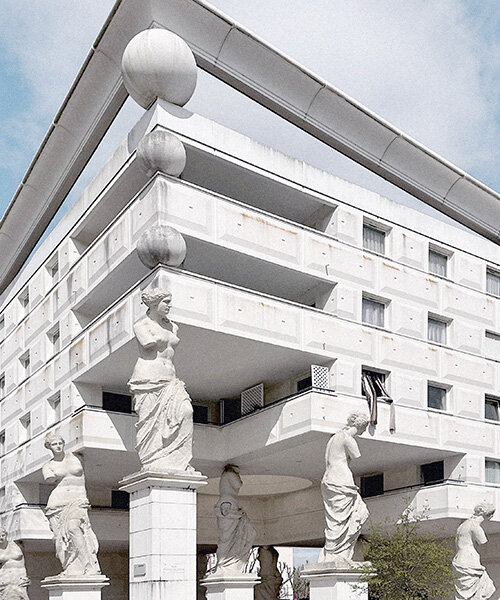
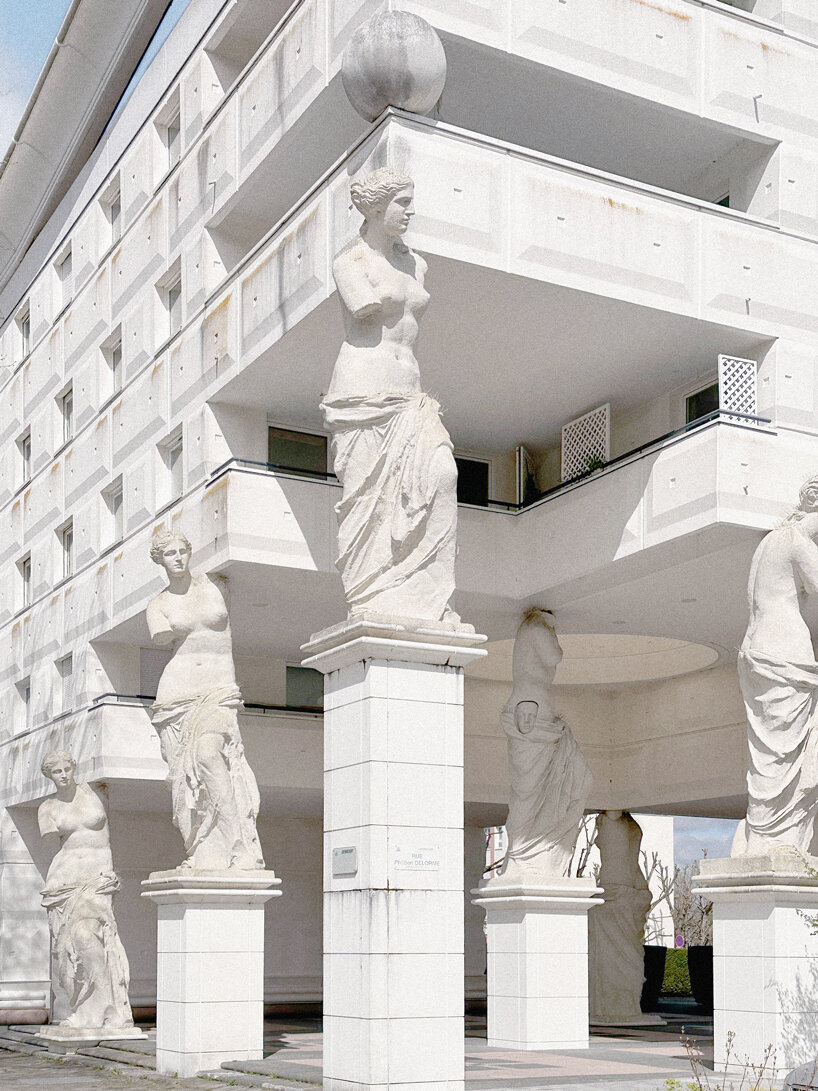
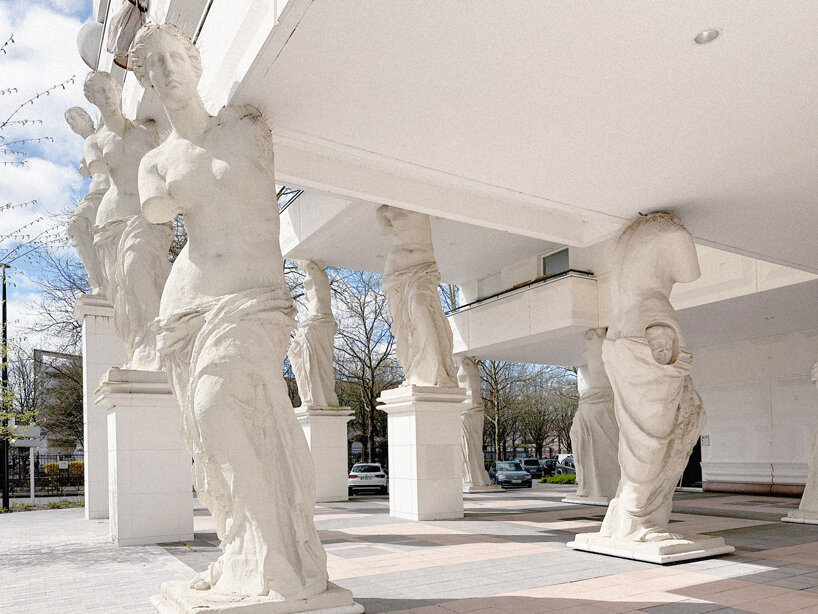
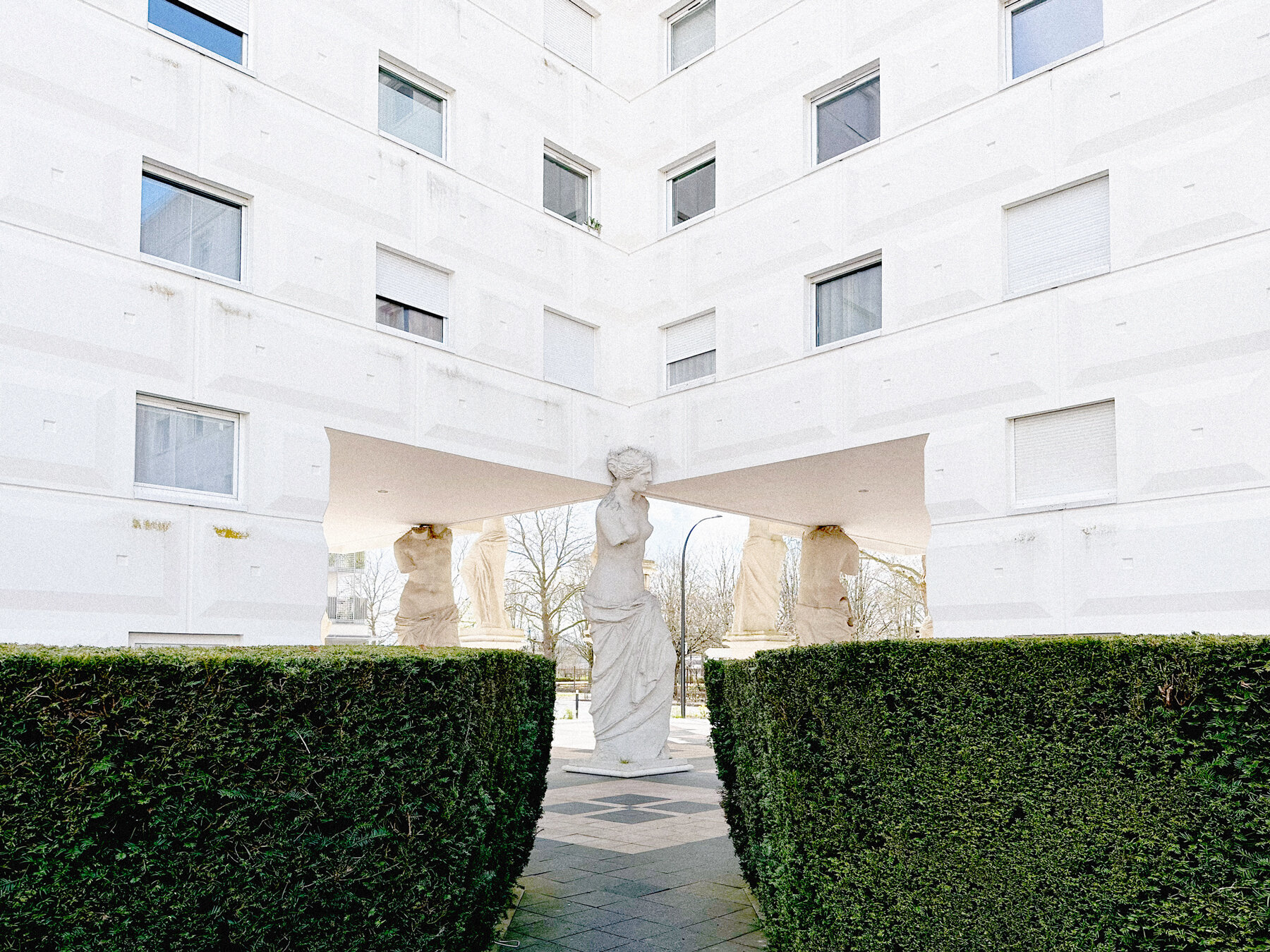
Just southwest of Paris, at the intersection of Andrea Palladio and Frank Lloyd Wright streets in the suburb of Guyancourt, 18 colossal female figures stand together to support one of the most surreal manifestations of postmodernist architecture.
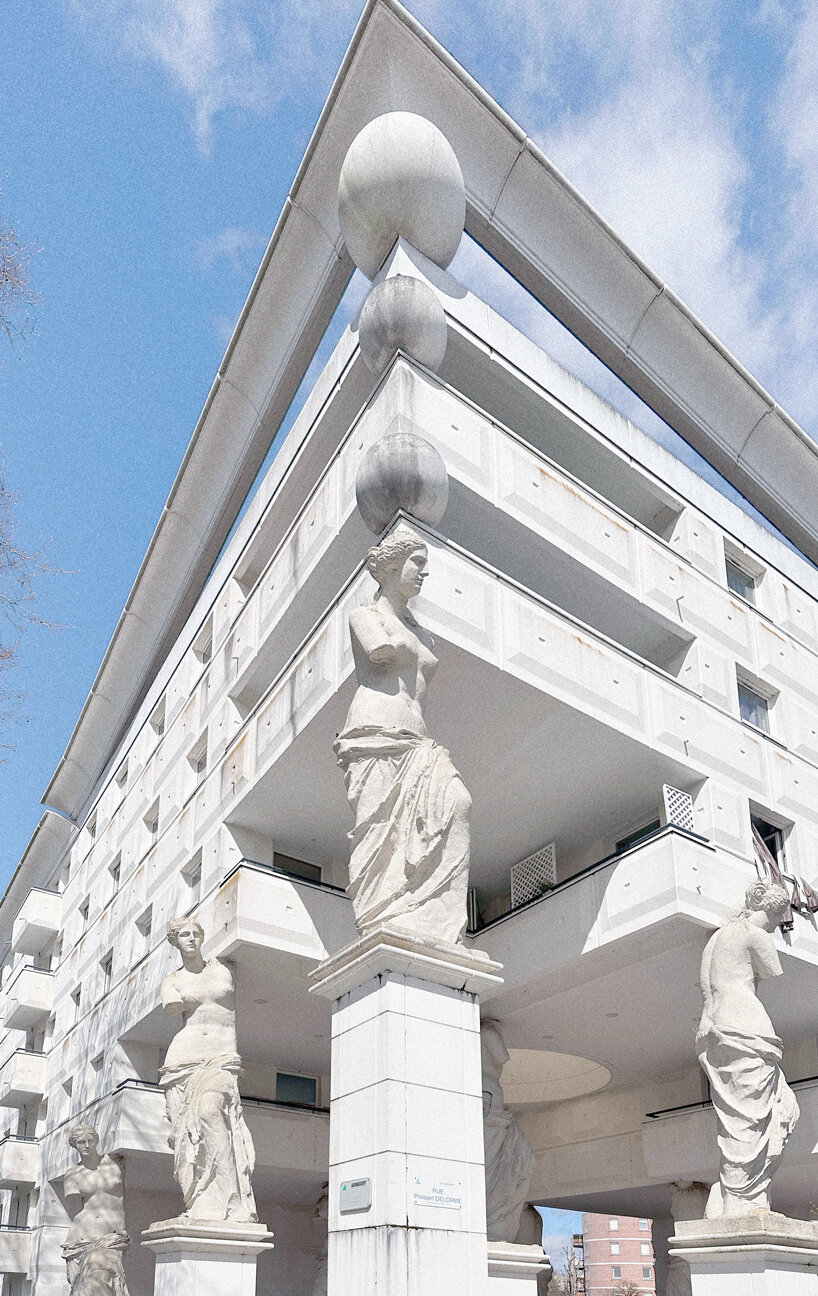
Together, the monumental replicas of the Venus de Milo compose Les Caryatides, two identical apartment blocks standing across from each other, performing their own kind of concrete theater in full view of the public. The project was designed in 1992 by architect Manuel Núñez Yanowsky, who was one of the original team members of Ricardo Bofill’s Taller de Arquitectura in early 1960s Barcelona, and went on to develop several important works, including the iconic Arènes de Picasso in Noisy-le-Grand on the outskirts of Paris. More than three decades after its construction, Les Caryatides de Guyancourt remains legendary to some, absurd to others, but undeniably unforgettable. For its admirers, the project rethinks classical forms and motifs. For its critics, it’s kitsch masquerading as grandeur, a surreal eyesore amid the suburban landscape. As with much of Yanowsky’s work, this project demands attention.
The architect himself calls the building Venus 18, a title that deepens the intrigue. In an Instagram post, he plays with mystery, asking, ‘Is it because she’s 18 years old? Because she’s 2 meters and 18 centimeters tall? Or because she has 17 friends just like her?’ As big fans of the work, designboom paid a visit to Les Caryatides in Guyancourt to explore the building in person and unveil its beauty and peculiarities in the following photographic essay.

venus de milo as structural element
Spanish-born architect Manuel Núñez Yanowsky’s apartment dwellings are instantly recognizable for their oversized take on classical sculpture. Equal parts theatrical and ironic, the structures critique the enduring performative power of architecture.
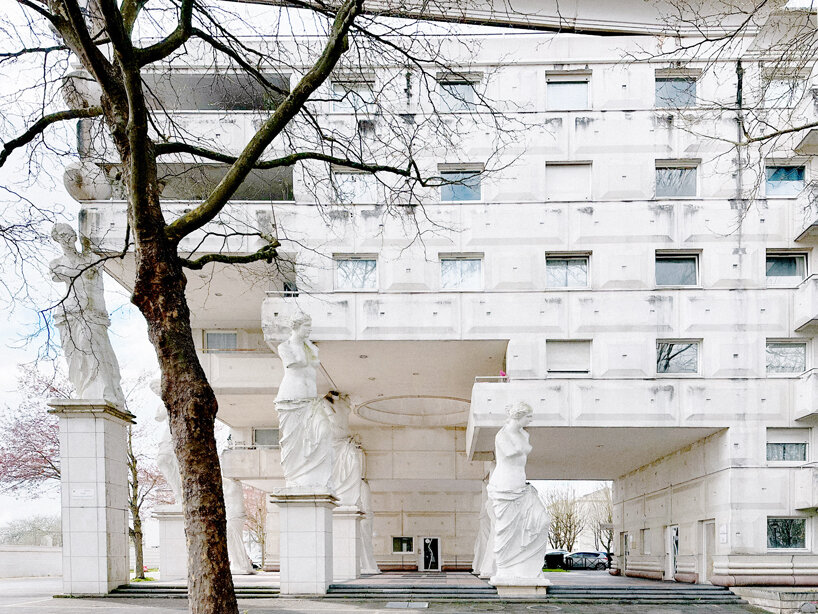
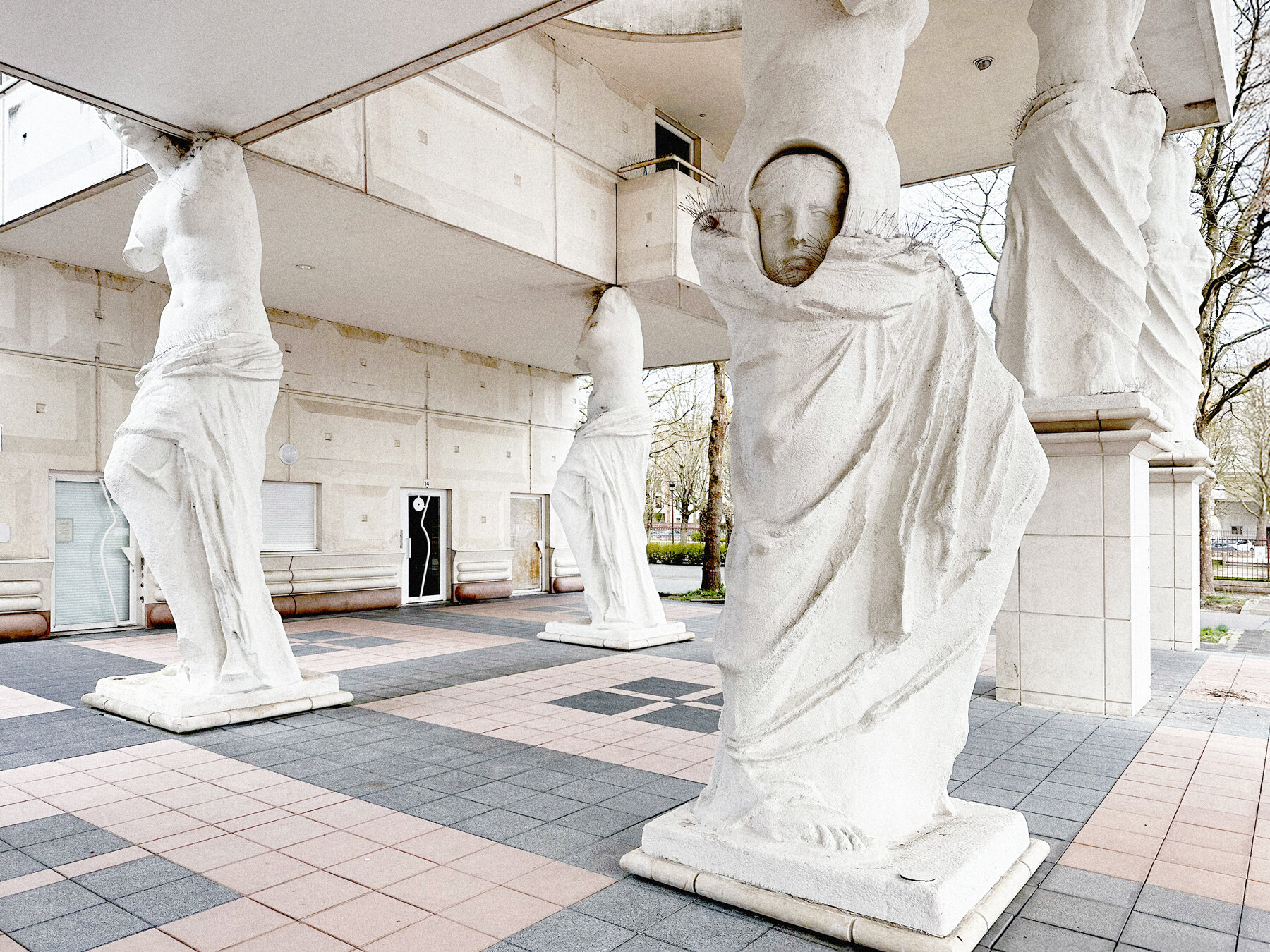
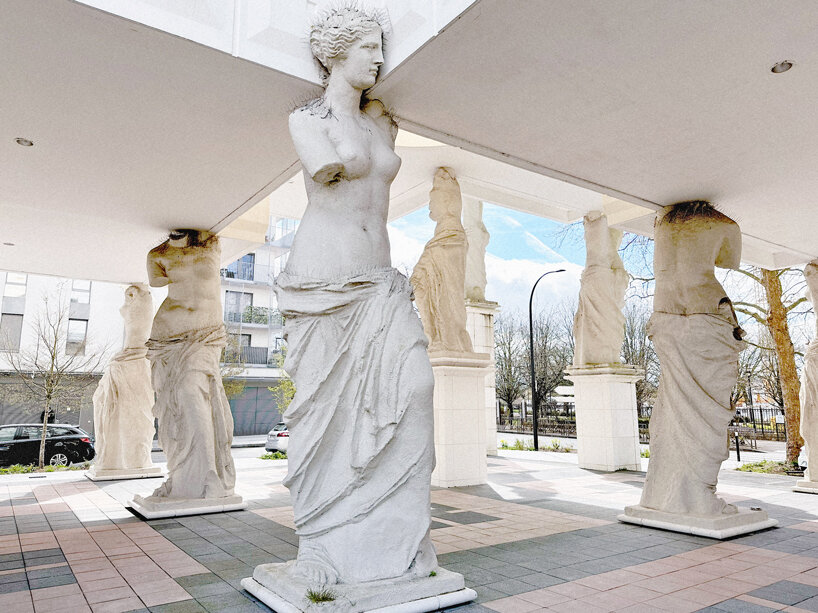
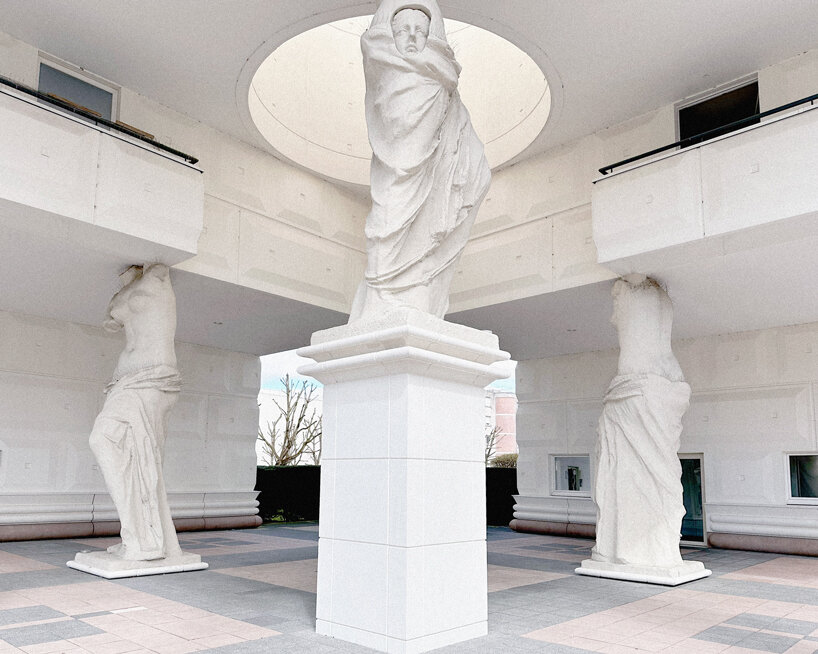
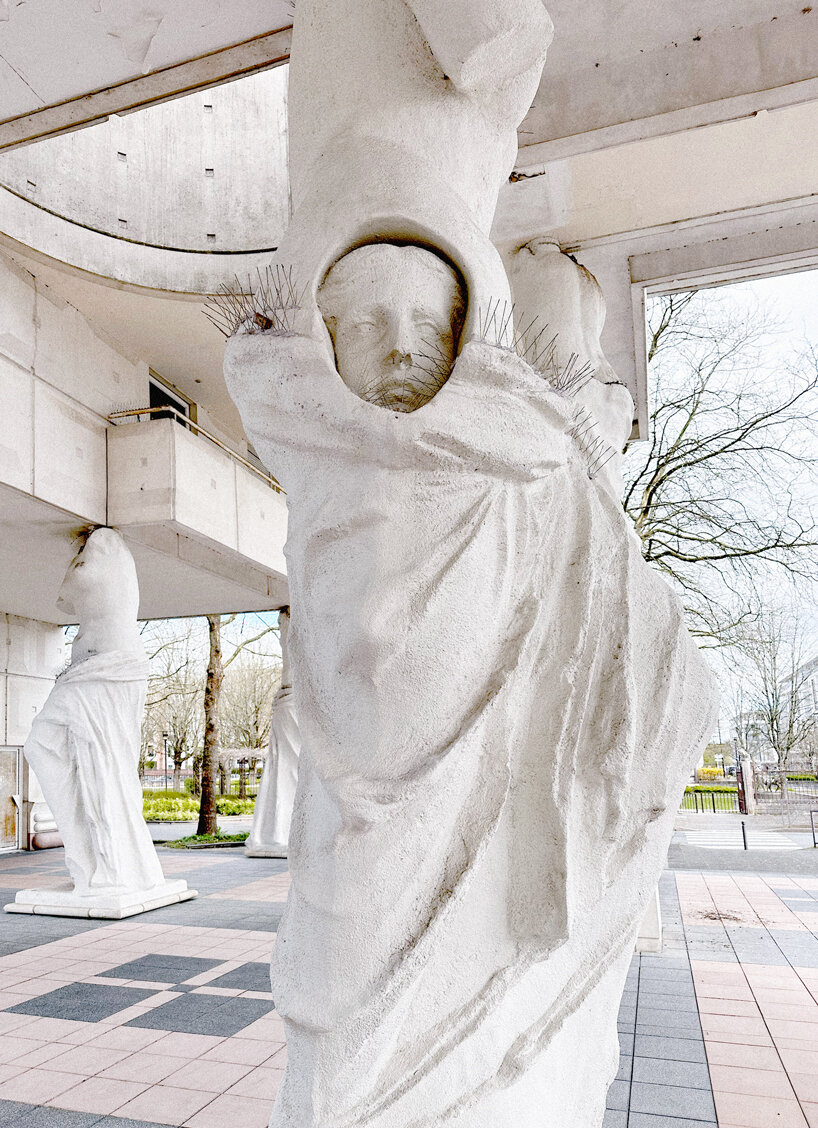
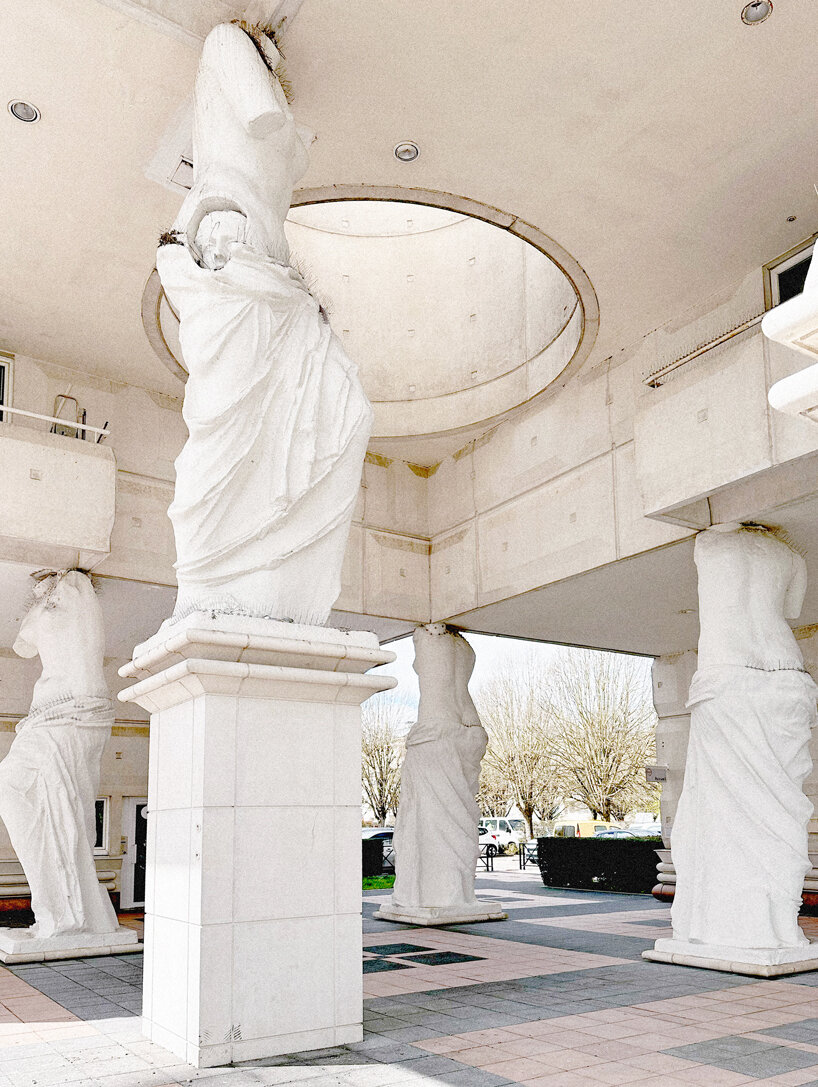
The rigid, modular facades of the buildings, punctuated by square windows and recessed panels, rest atop colonnades of towering sculptures, monumental replicas of the Venus de Milo, that icon of broken-limbed antiquity. Each Venus is rendered at an exaggerated scale, perched atop oversized plinths that elevate them from art object to architectural load-bearer. They hold the residential superstructures like postmodern Atlases, serene, idealized, and surreal in context. The figures face outward, indifferent to the weight above or the traffic below, wrapped in flowing drapery that echoes their classical origins. Their missing arms, a signature of the original sculpture, are left uncorrected, heightening the sense of theatrical irony.
France’s grands ensembles and villes nouvelles
Set within the Villaroy district of Guyancourt, Venus 18 occupies a unique place in the timeline of French urbanism. The project forms part of the new town of Saint-Quentin-en-Yvelines, one of the post-war initiative ‘villes nouvelles’ developed around Paris from the 1970s onward. These satellite cities were conceived to decentralize the capital, manage population growth, and correct the failings of the earlier ‘grands ensembles’ housing boom.
While Les Caryatides emerge from the same lineage, they mark a definitive stylistic and conceptual departure. Unlike the austere, repetitive blocks typical of the grands ensembles era, Yanowsky’s design embraces ornament, irony, and historical reference, reimagining the caryatid, borrowed from ancient Greek architecture, as a postmodern load-bearing icon.
With just 110 apartments, the scale of Les Caryatides is more intimate than its mid-century predecessors, yet its ambition is no less radical. The project reflects the goals of the villes nouvelles: to humanize suburban life, inject architectural diversity, and create urban environments rich in meaning and memory. Set within this context, Les Caryatides questions the assumptions underlying post-war housing. These were never meant to be faceless dormitory suburbs; they were envisioned as vibrant urban futures. Yanowsky’s intervention revives that ambition. Why shouldn’t social housing be monumental? Why can’t everyday architecture embrace theatricality? These provocations are etched into the very fabric of the building.
monumental housing before les caryatides
Les Caryatides isn’t Yanowsky’s only foray into urban mythology. Just a few years earlier, he completed another monumental housing complex outside Paris: Les Arènes de Picasso in Noisy-le-Grand (1980–1984). Nicknamed le Camembert by locals, supposedly because Yanowsky showed Jean Nouvel a round of the famous cheese during a site visit, the building is made up of 540 social housing units clad in boldly patterned, precast concrete. The elevation panels were designed to override the regular grid with a strong visual identity, a tactic Yanowsky used to mask repetition with theatricality. The structure’s circular form and sculptural flourishes seem almost extraterrestrial. In a tongue-in-cheek anecdote relayed by critic Philip Jodidio, Yanowsky joked that the rotating disc of the central structure tilts 15° every morning at 7:00 a.m., launching residents from their beds to the toilet, then to the kitchen, and finally into their cars on the way to work. It’s a myth, of course, but like much of his architecture, it blurs the line between satire and speculation.
irony becomes infrastructure
Postmodernism looms large over Les Caryatides, bringing with it the era’s embrace of irony, ornament, and symbolic form. But while many postmodern facades stop at surface-level play, Manuel Núñez Yanowsky embeds his classical references deep into the structure.
The project sits squarely within the wave of French postmodernism that crested in the early 1990s. Architects like Ricardo Bofill and Christian de Portzamparc were reintroducing historical motifs, geometric symbolism, and theatrical scale into a landscape dominated by functionalism. Yanowsky aligns with this ethos but pushes it further with a literal, more surreal, and deliberately more provocative approach.
At first glance, the sculptural colonnade may seem like a whimsical gesture. But these stylized Venus de Milo figures serve a structural purpose, bearing the weight of the apartments above. Echoing ancient Greek caryatids, they are reimagined through the lens of late-20th-century monumentalism, transformed into hyperbolic load-bearers that are both expressive and functional.
Cult classic or suburban spectacle?
More than 30 years on, Les Caryatides endures as a landmark dressed in enigma. Tourists stumble across it with disbelief. Locals pass it by without fanfare. Architecture students dissect it as an example of how far and how oddly public architecture can go. Whether loved or dismissed, the building continues to perform.
Public response has always been mixed. For some, it’s a refreshing break from the sterile rationalism of post-war planning. For others, its scale and visual language feel jarring, even alien, within the suburban fabric. But this friction is exactly what gives the project its vitality. Yanowsky refuses the notion that public housing must be modest or invisible, arguing for grandeur in the everyday.
Today, Les Caryatides has achieved a kind of cult status among architecture fans and urban explorers. Its arresting imagery circulates widely on social media, often labeled one of France’s most unexpected buildings. Yet beneath the spectacle lies a serious architectural proposition: that form can provoke thought, that symbolism can enrich lived experience, and that history, handled with both rigor and irreverence, still has the power to shape the city.

project info:
name: Les Caryatides / Venus 18
architect: Manuel Núñez Yanowsky | @manolonunezyanowsky
location: Guyancourt, Île-de-France, France
year: 1992
This article is part of designboom’s MODES OF HABITATION chapter, exploring how the spaces we inhabit can reshape the ways we live together. Discover more stories rethinking domesticity, shared living, and the many forms a home can take here.
shop
your own online design shop — no sales commission collected