Bindu Reinterprets Indigenous Water Practices Through Design
Bindu is a design project by Akhil Krishnan examining water as both a material and a cultural element, drawing on references from Sanskrit cosmology, where the term denotes an origin point. As a water droplet, it holds the tension between ephemeral presence and eternal origin. A quiet metaphor for renewal, reverence, and the infinite within the minimal. In this context, it is used to frame water as a source from which material practices, forms, and rituals can emerge.
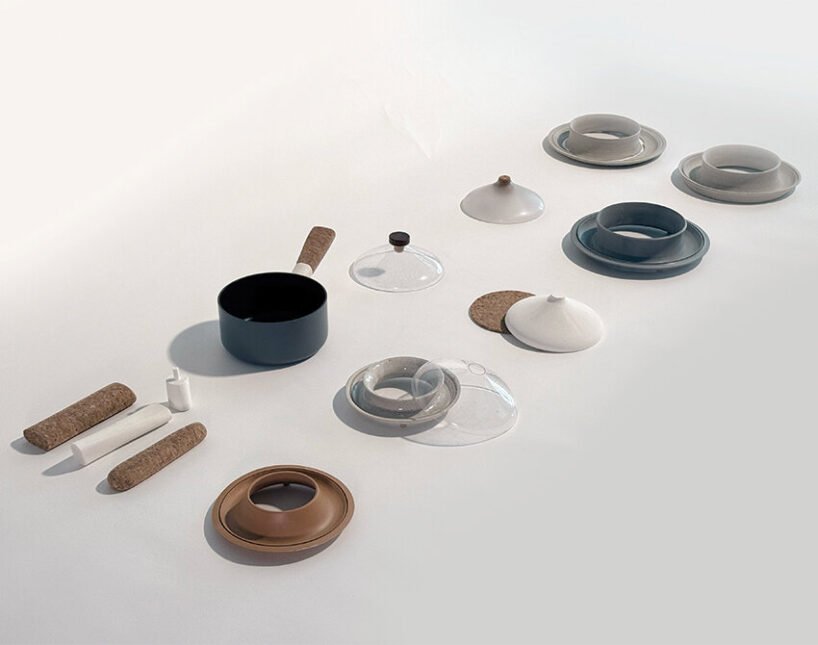
The project reinterprets domestic water-related practices through three designed objects, Pāvita, Sanchaya, and Kalasha, each developed to investigate alternative approaches to water use, material recovery, and resource efficiency. The design process integrates elements from Indigenous water-use traditions with contemporary kitchen contexts, aiming to reduce dependency on synthetic materials and high-consumption habits. The project favors Indigenous wisdom and challenges Western anthropocentrism, weaving history and cultural memory into design.
all images courtesy of Akhil Krishnan
Akhil Krishnan designs Objects for Water-Conscious Living
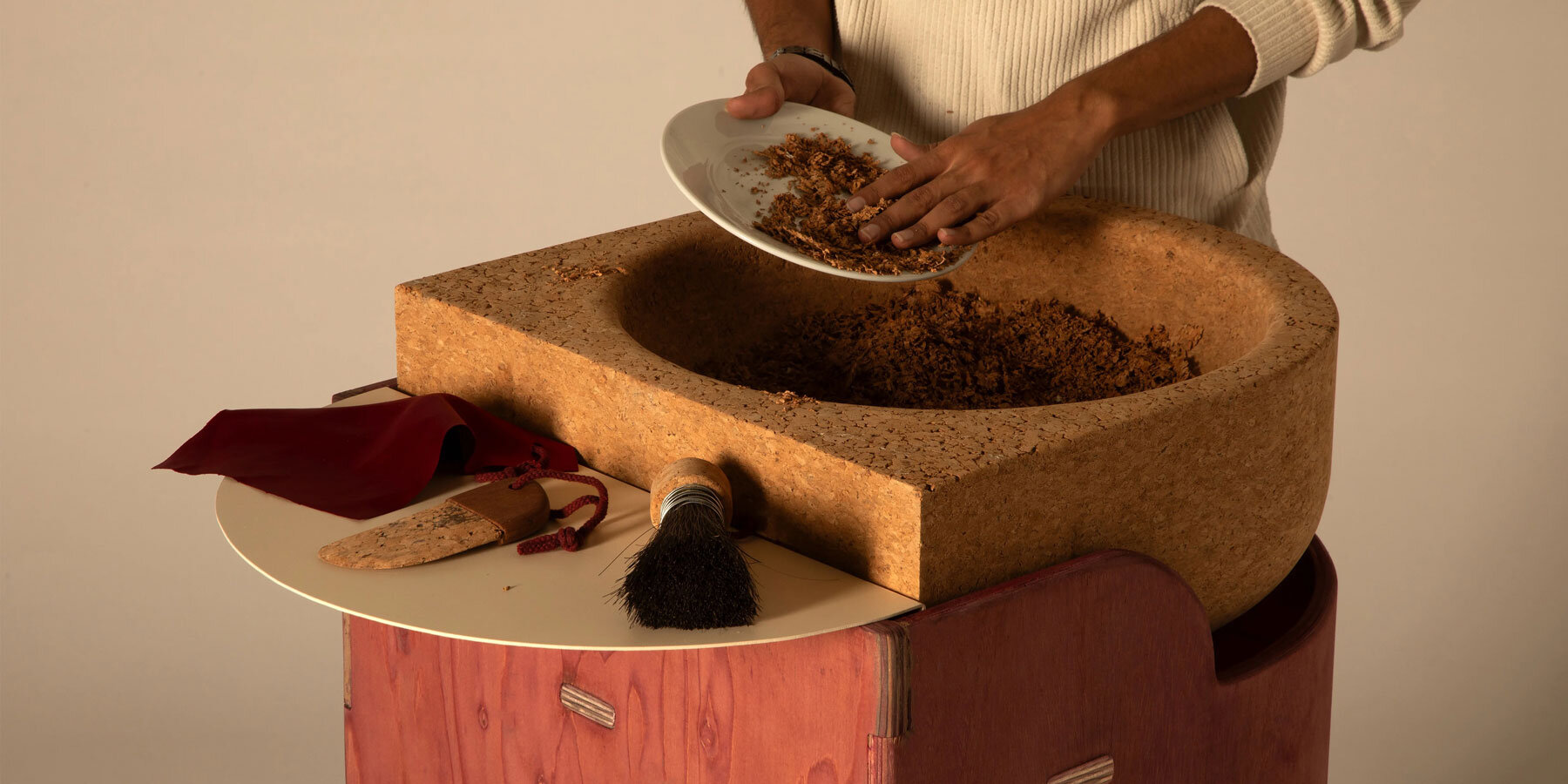
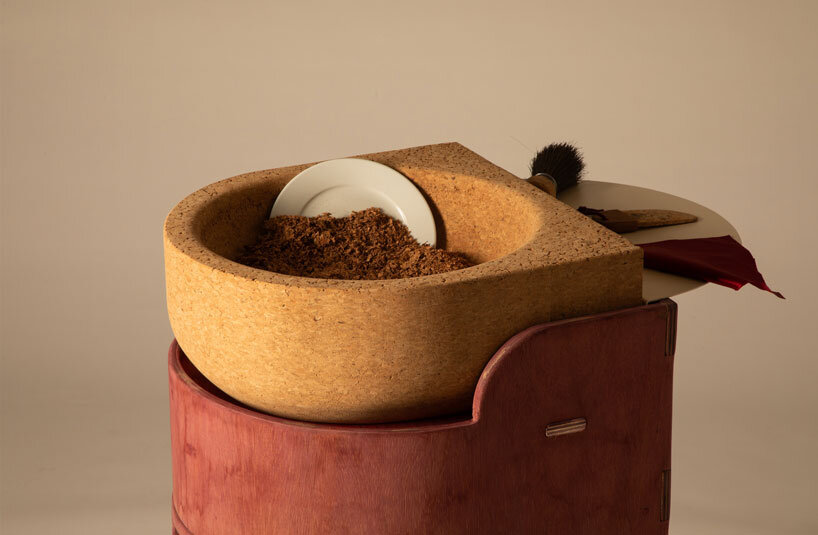
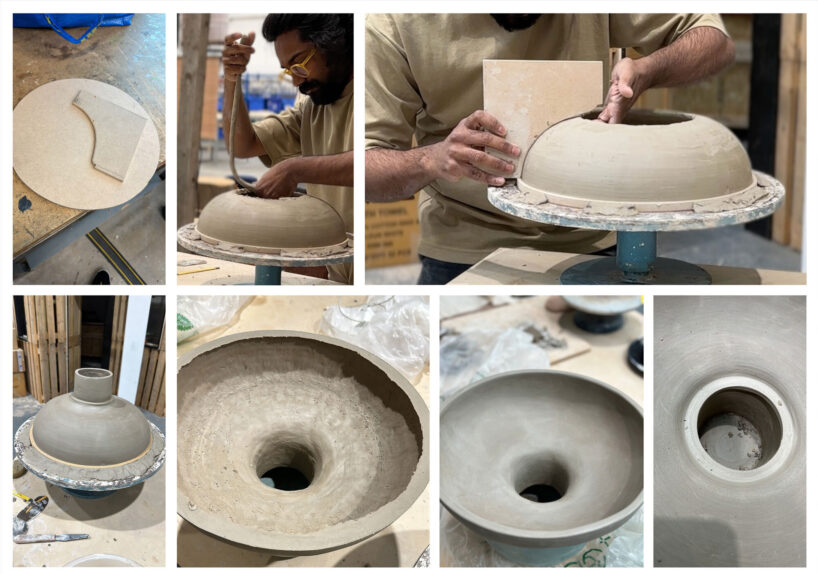
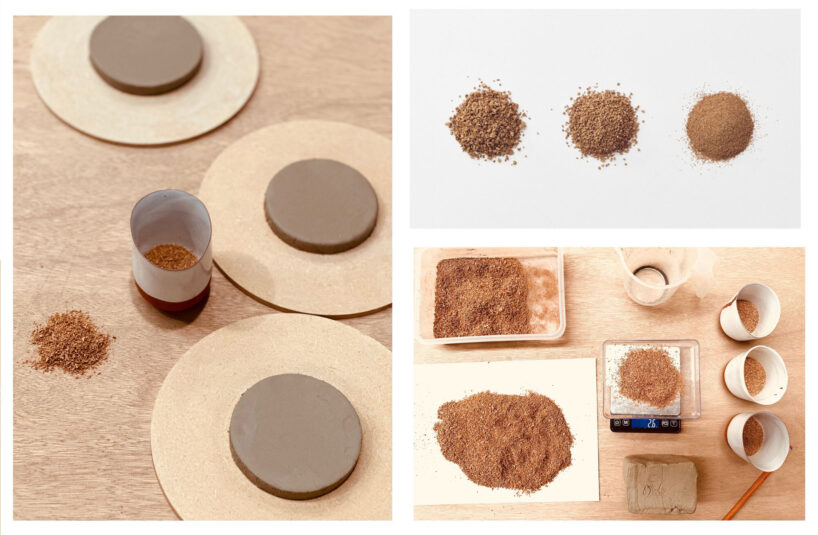
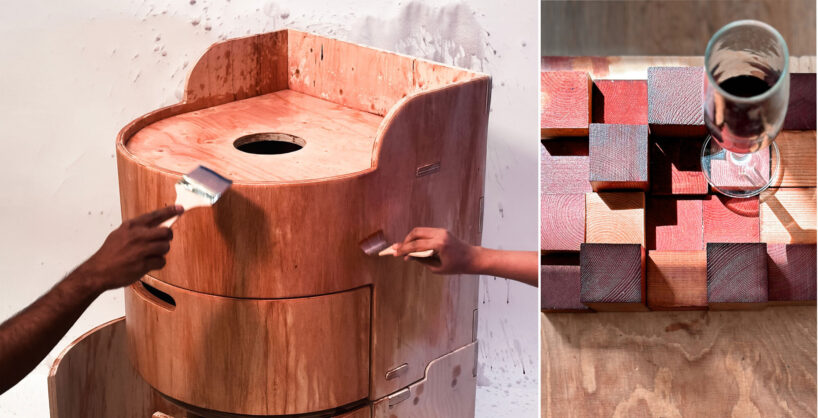
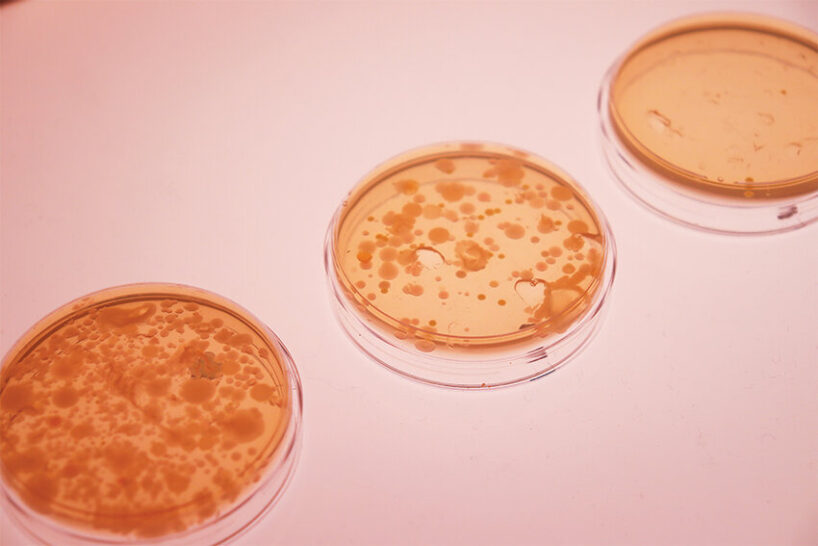
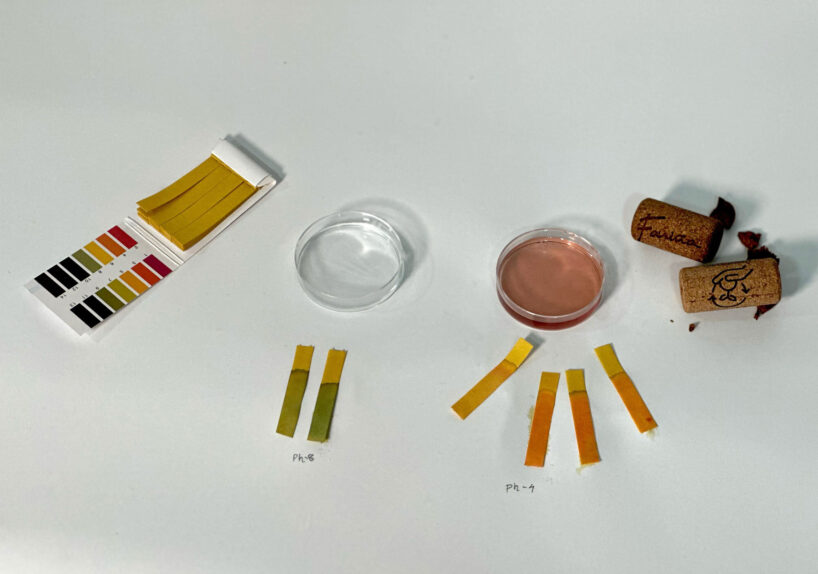
Pāvita is a dry-cleaning tool for dishes that repurposes used wine corks. Ground into granules, cork replaces water in certain cleaning processes, drawing inspiration from practices in water-scarce regions such as Rajasthan. The material’s natural composition, rich in suberin and aged with tartaric acids, provides degreasing, abrasive, and antimicrobial qualities. In addition to reducing water use, the design addresses the environmental impact of wine waste, which can damage wastewater systems due to high acidity and ethanol content. Collected red wine residues were also repurposed as a wood stain, producing an ombre finish sealed with shellac. Sanchaya is a cooking lid that condenses steam from boiling food into reusable water. Developed with reference to ancestral distillation methods, it features a transparent glass top and a ceramic reservoir to store collected water. The object is intended to make visible the process of evaporation and recovery within everyday cooking. Kalasha is a combined grey-water vessel and wash bowl, informed by traditional Indian forms such as the lota. Made from clay reclaimed from London construction sites, it incorporates a filtration system using terracotta, charcoal, and ground cork. The vessel is designed for kitchen integration, offering a means to reuse water and encouraging slower, more deliberate handling of resources.
Across the three artefacts, Bindu by designer Akhil Krishnan employs reclaimed and biodegradable materials, visible construction methods, and processes that foreground resource cycles. The designs are intended to operate within contemporary domestic environments while retaining references to historical practices, creating a link between material culture, water management, and ecological responsibility.
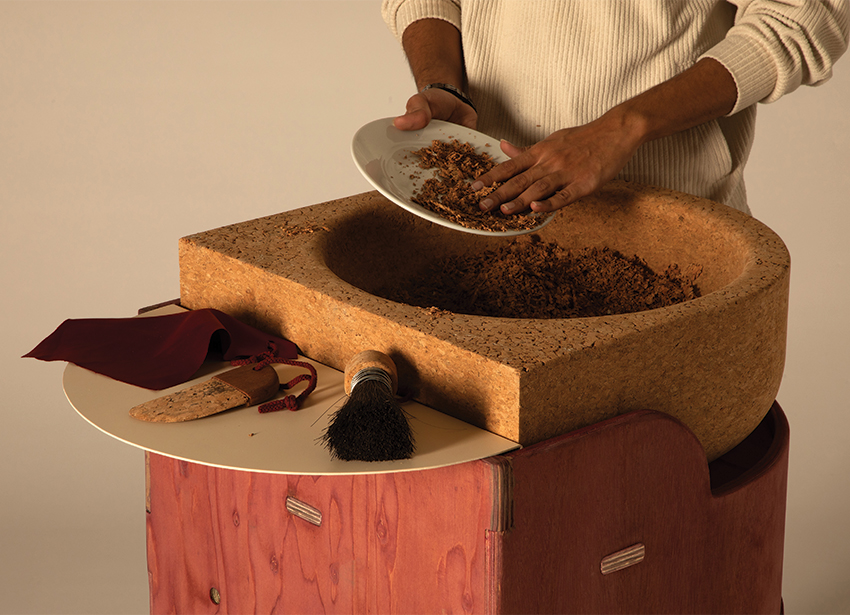
Pāvita is a dry-cleaning tool for dishes that repurposes used wine corks
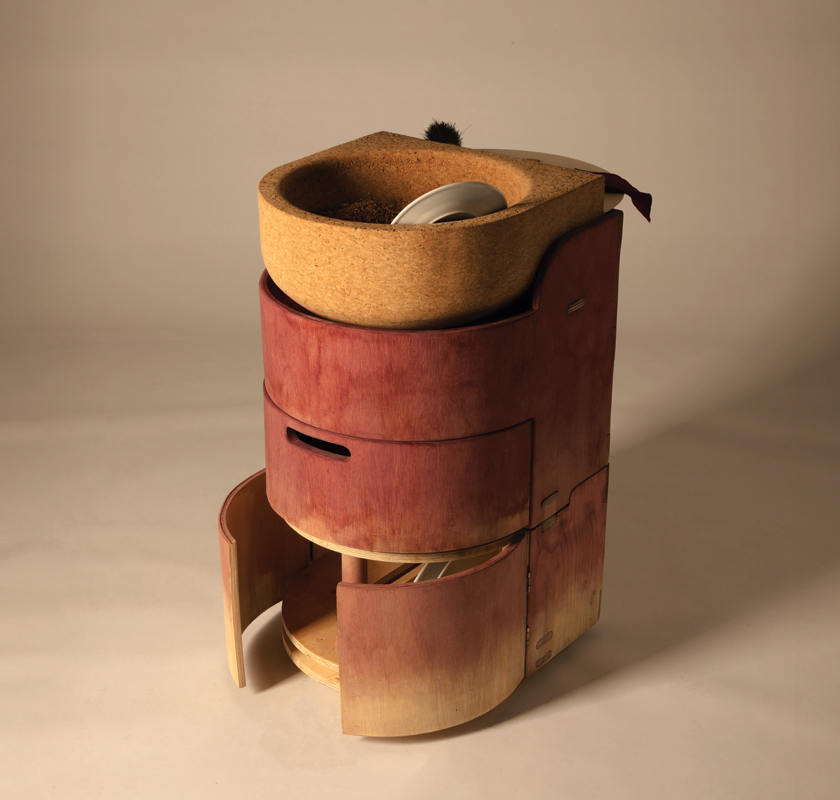
the object is inspired by dry-cleaning traditions from Rajasthan
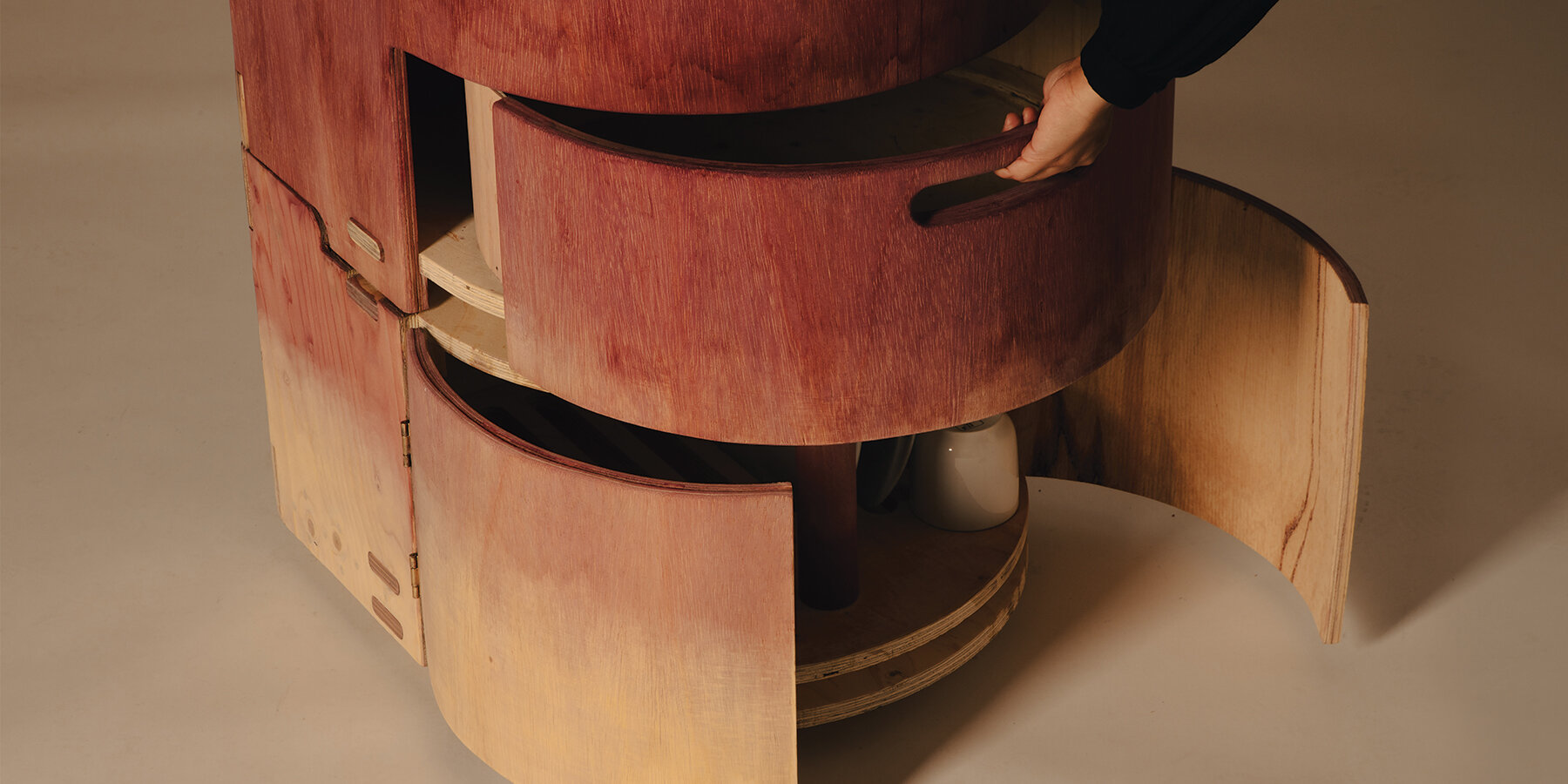
red wine residue used as a natural wood stain
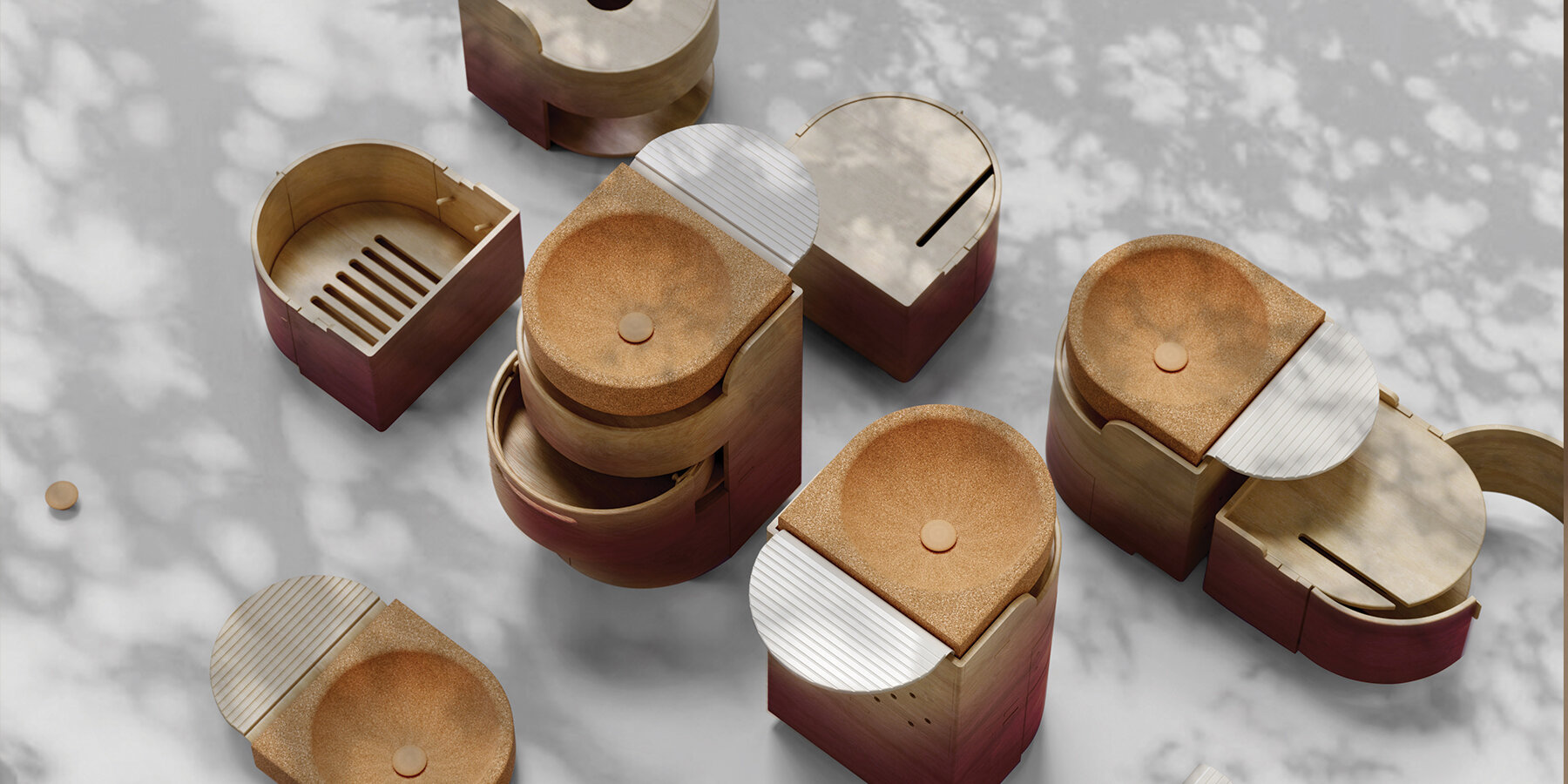
cork’s suberin content offers natural antimicrobial qualities
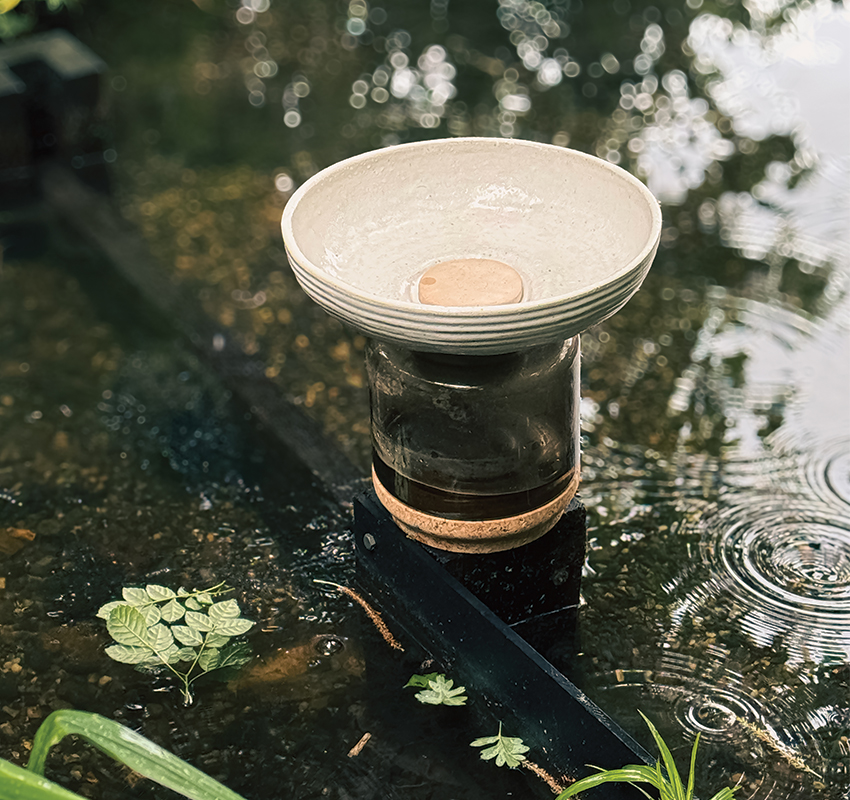
Kalasha is a clay vessel for reusing grey water
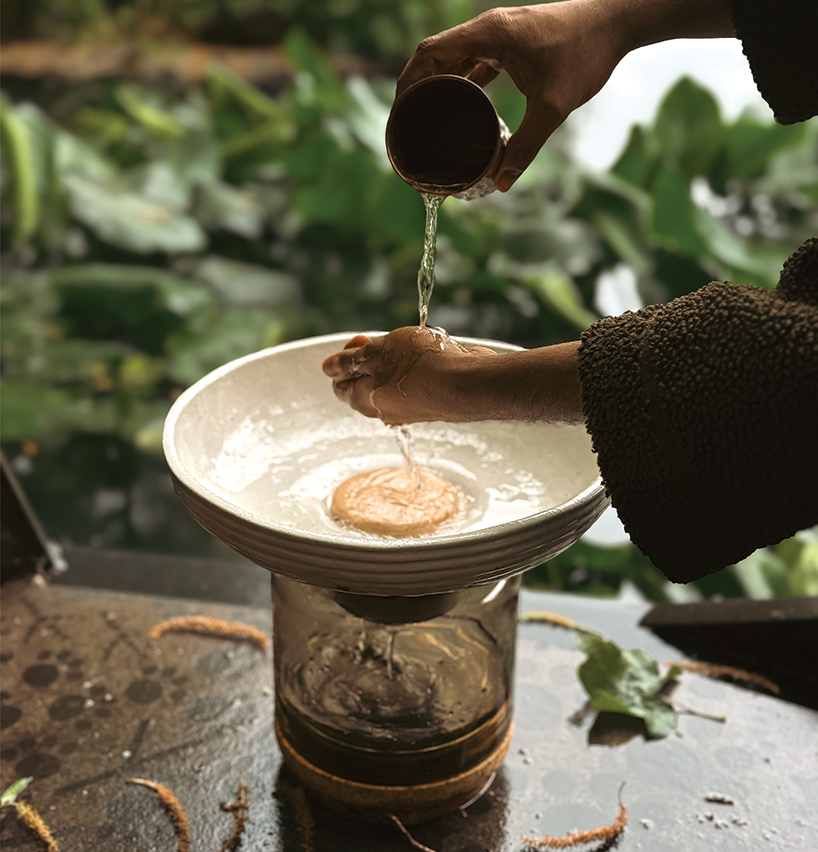
Kalasha creates a low-tech, sustainable material ideal for non-potable water reuse in domestic settings
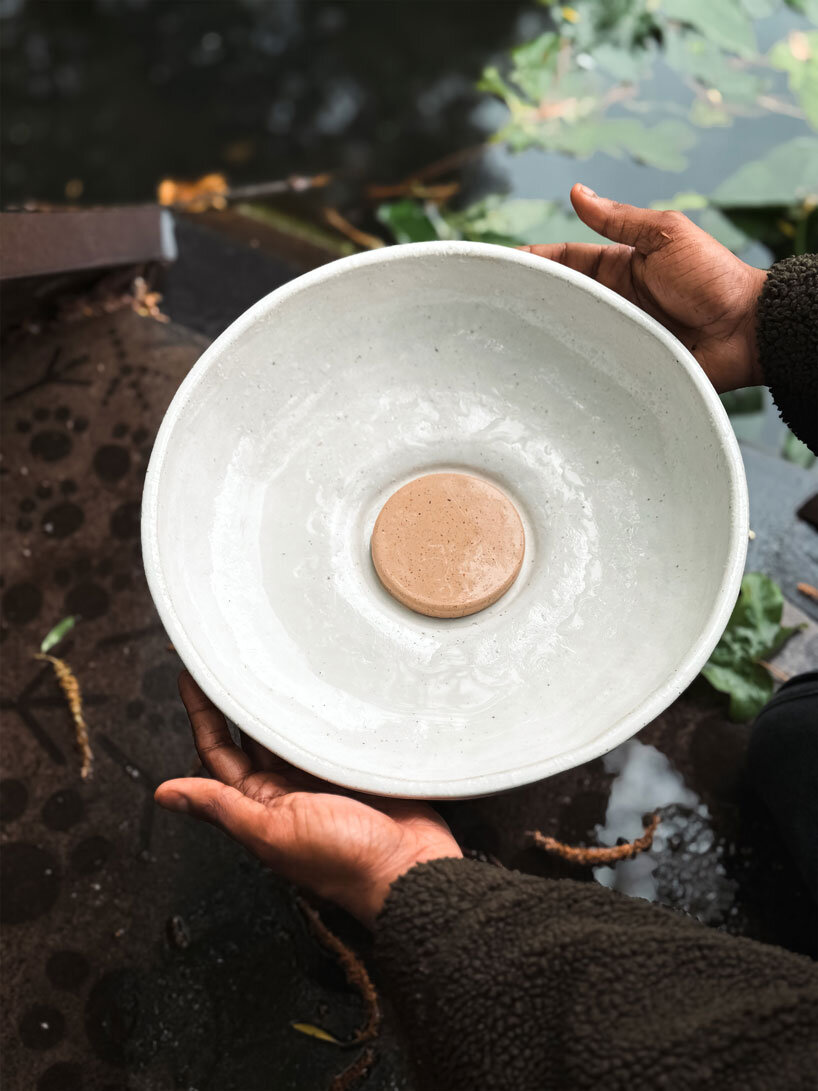
porous terracotta blended with cork granules filters water by trapping particles and microbes
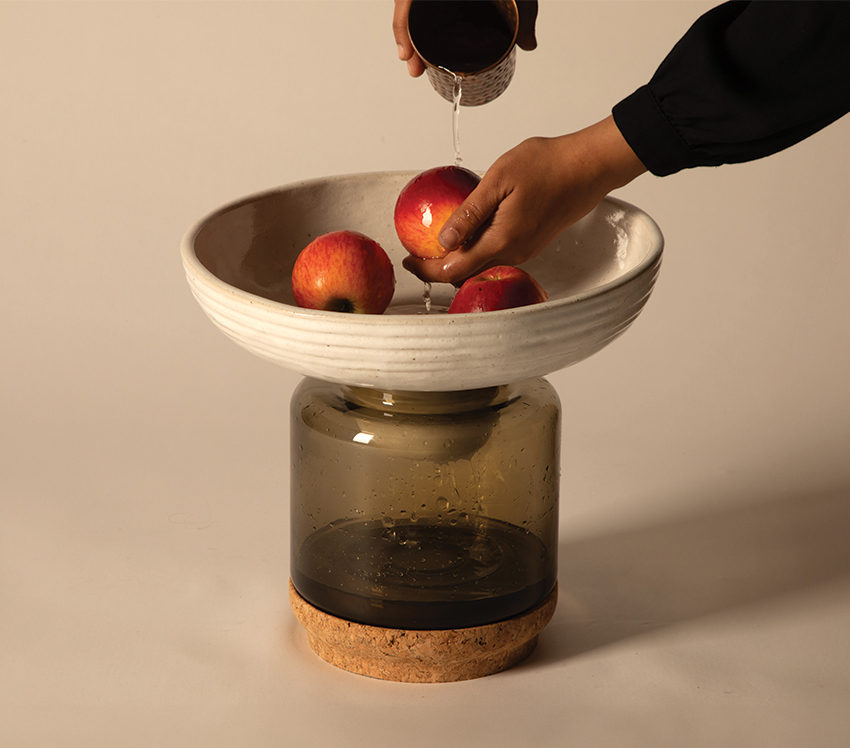
Kalasha ritualises everyday actions, encouraging measured use, ecological care, and frugality in domestic life
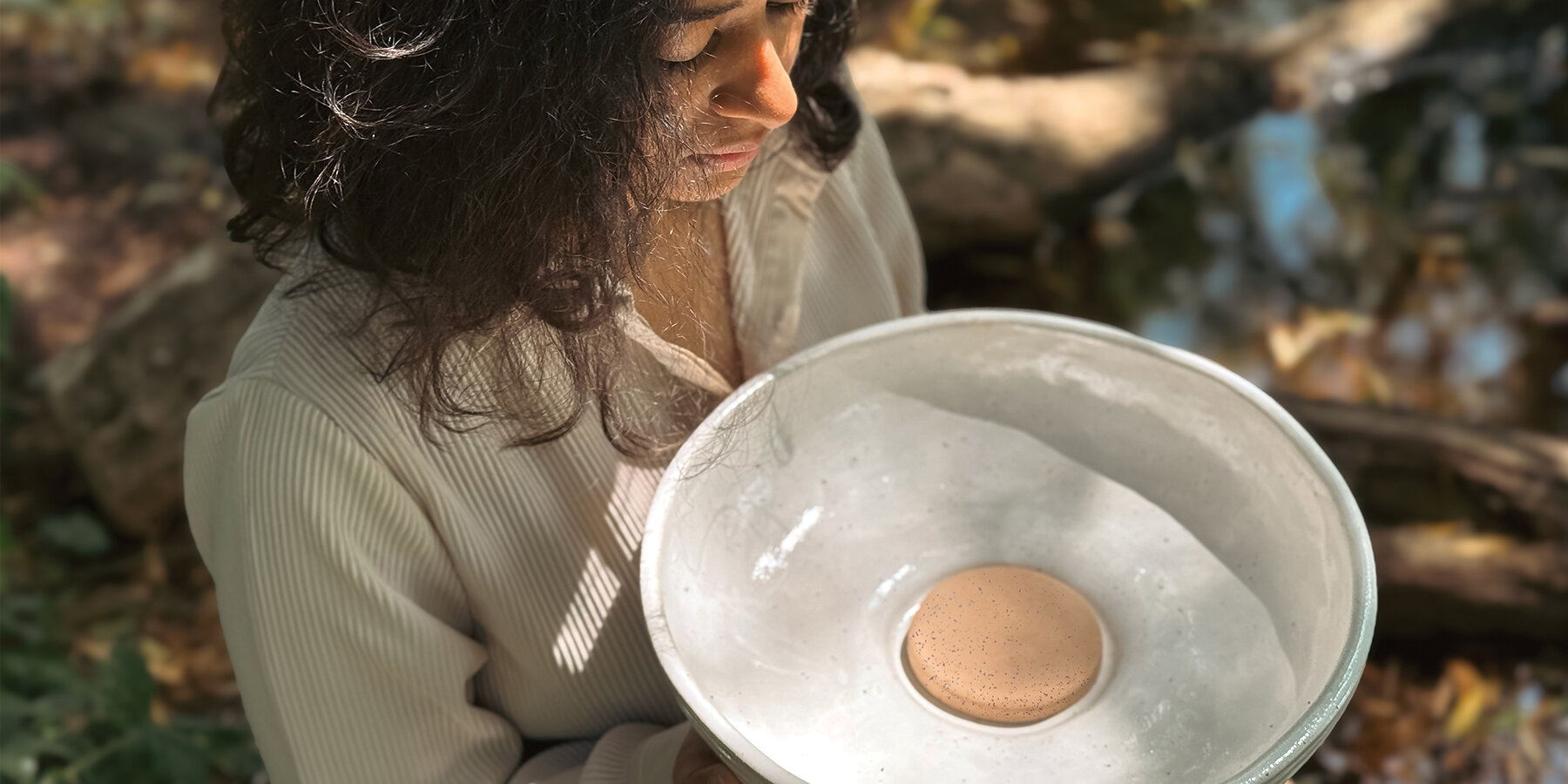
Kalasha’s form is inspired by traditional Indian lota vessels
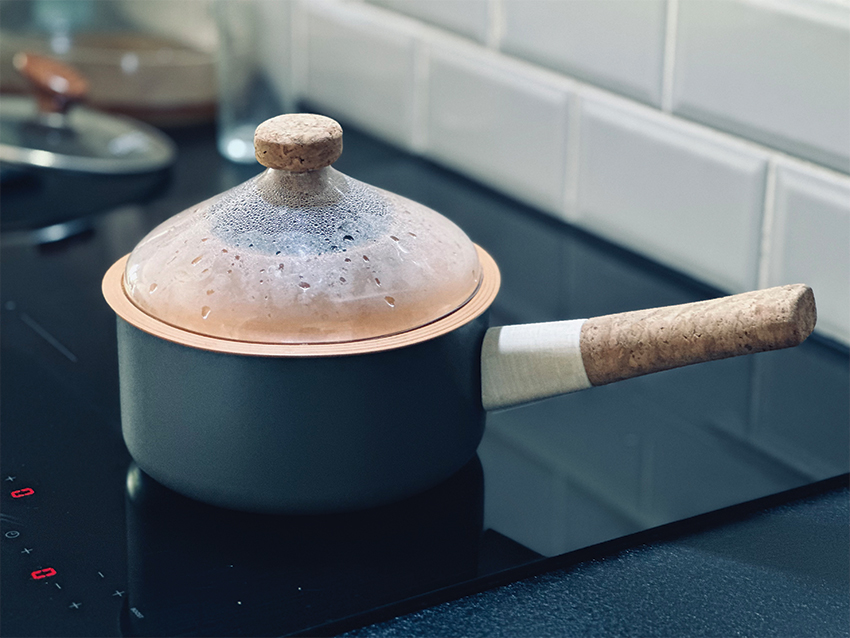
Sanchaya is designed to capture steam and condense it into usable water
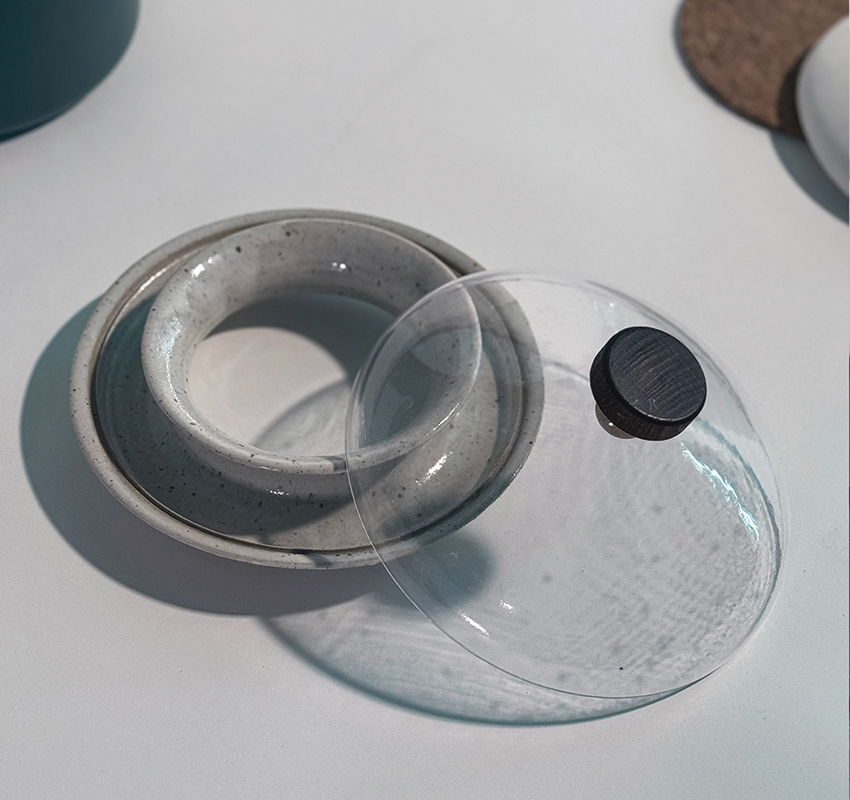
transparent lid reveals the process of evaporation
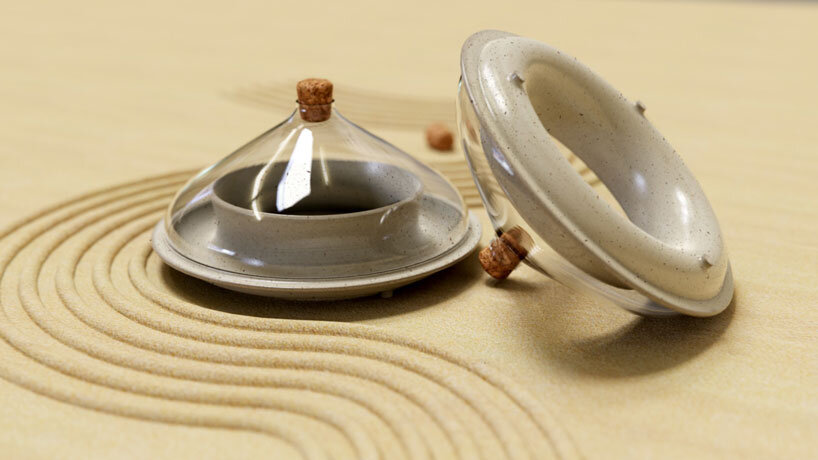
a ceramic reservoir stores condensed droplets
project info:
name: Bindu – ‘Each drop a memory, each object a pause’
designer: Akhil Krishnan | @akhilkrishna_jayanth
designboom has received this project from our DIY submissions feature, where we welcome our readers to submit their own work for publication. see more project submissions from our readers here.
edited by: christina vergopoulou | designboom
 Feb 18, 2026
 Jan 28, 2026
 Jan 02, 2026
 Dec 28, 2025