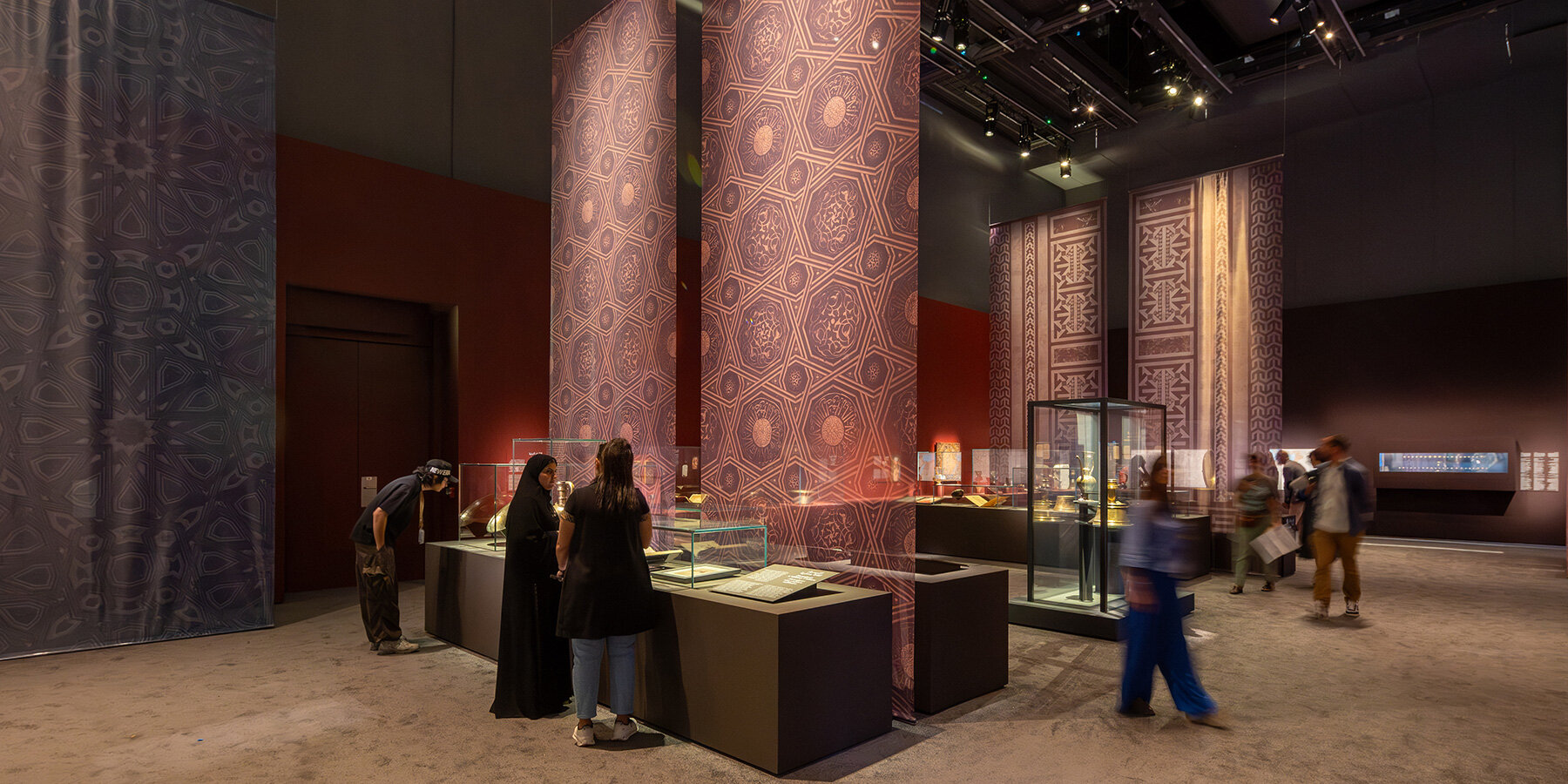
Louvre Abu Dhabi hosts Mamluks: Legacy of an Empire
Mamluks: Legacy of an Empire at Louvre Abu Dhabi is the first exhibition in the Gulf devoted to the Mamluk Sultanate (1250–1517). Spanning over two and a half centuries of history, the show, on view until January 25th, 2026, traces how a dynasty of former slave soldiers came to rule vast territories, leaving behind a cultural and artistic legacy of extraordinary reach. Curated by Dr. Souraya Noujaim and Dr. Carine Juvin, the exhibition builds on its earlier presentation at Musée du Louvre in Paris while expanding with works from regional collections shown exclusively in Abu Dhabi.
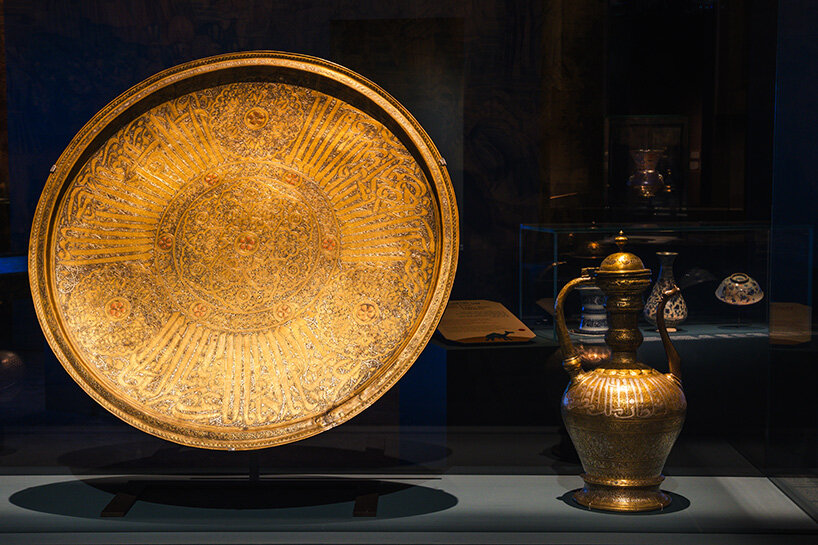
Gathering over 270 works from 34 institutions worldwide, from metalwork and manuscripts to carpets, glass, and ceramics, the show reframes the dynasty as cultural innovators whose visual language resonates with contemporary design. During the preview of Mamluks: Legacy of an Empire at Louvre Abu Dhabi, designboom discusses the contemporary relevance of Mamluk art with Scientific Curator Dr. Carine Juvin. The curator describes the Mamluks as ‘great designers, great graphic designers. Their art is made of rich color, geometry, and complex motifs, which are still very appealing to the modern eye.’
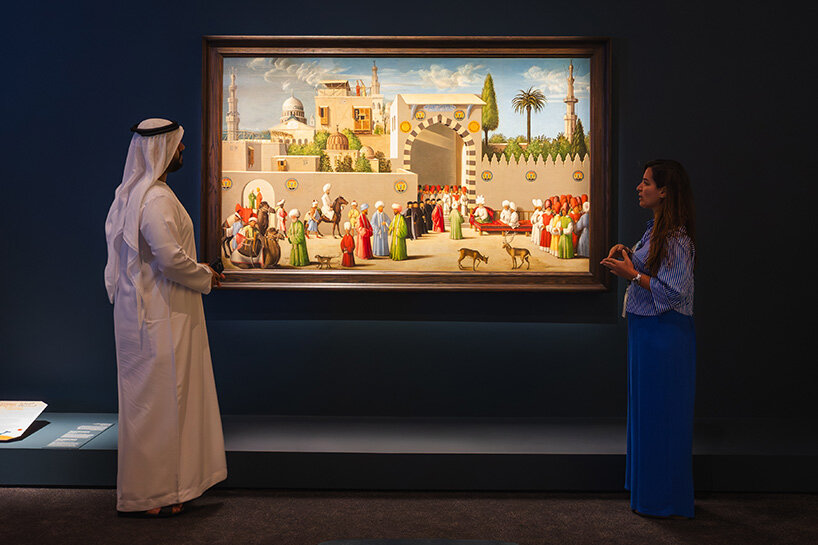
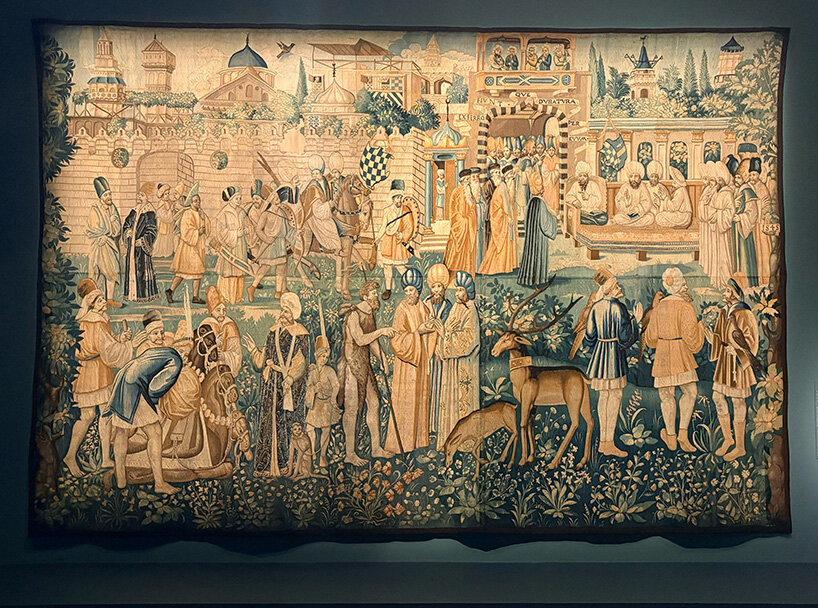
Venetian School, A Venetian Diplomatic Mission Received by the Governor of Damascus Italy, Venice, 1511 Oil on canvas Paris, Musée du Louvre, Department of Paintings, INV-100 | all images by Daryll Borja-Seeing Things © Department of Culture and Tourism–Abu Dhabi
From Military Slaves to Cultural Architects
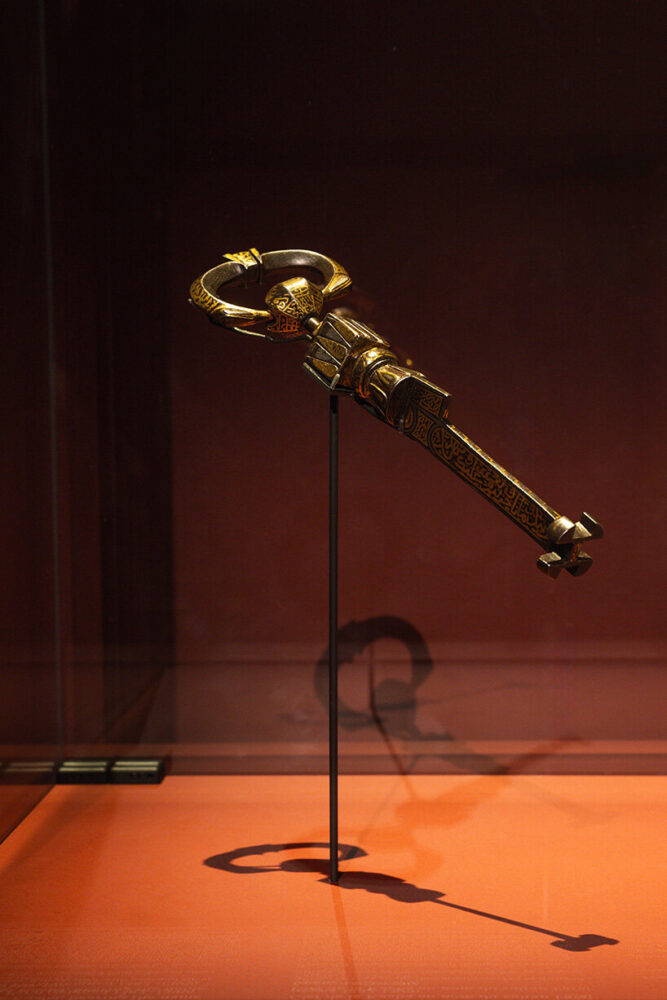
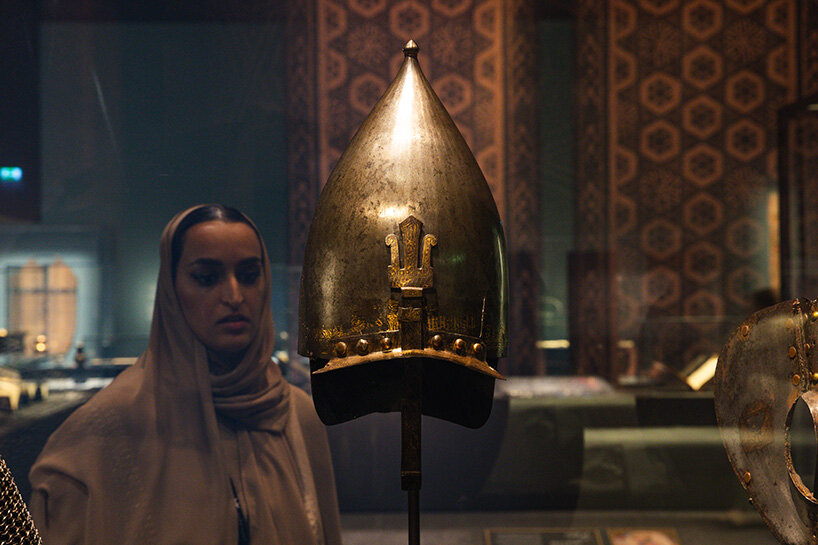
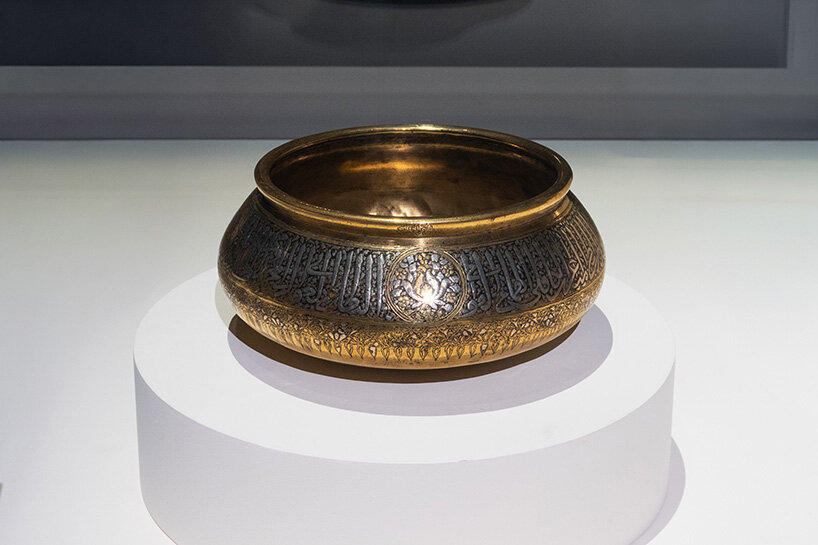
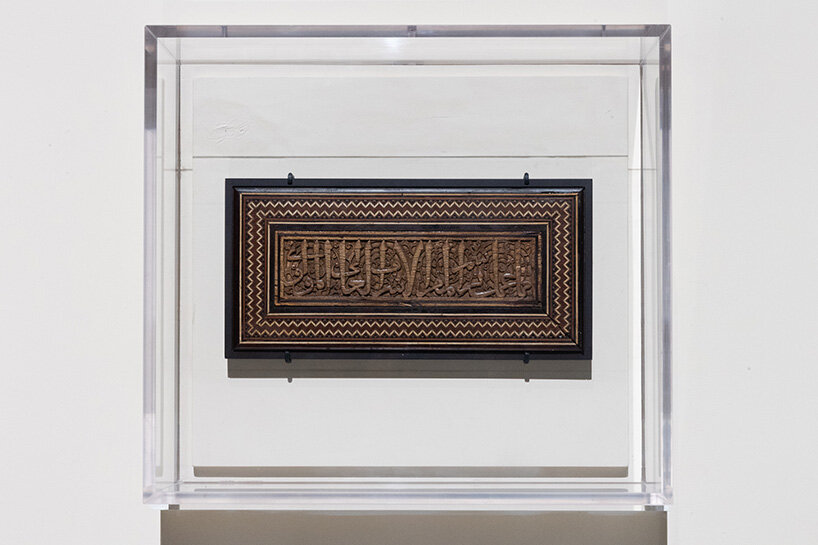
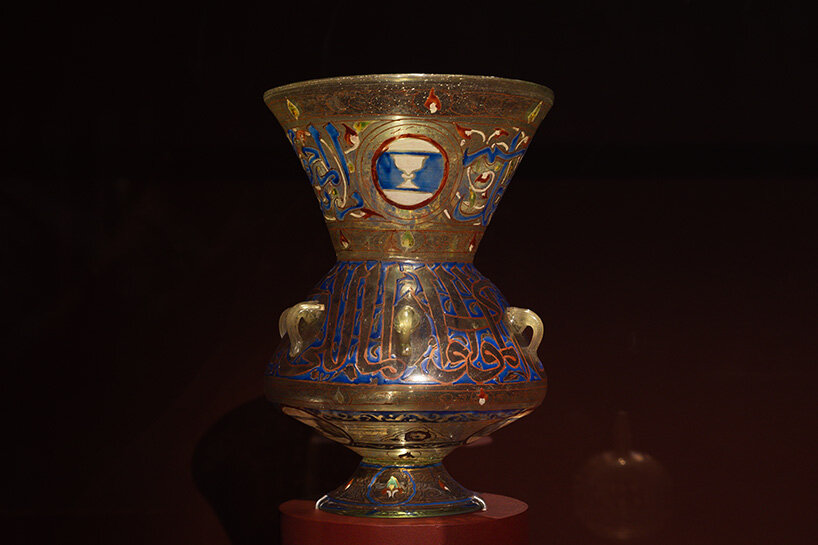
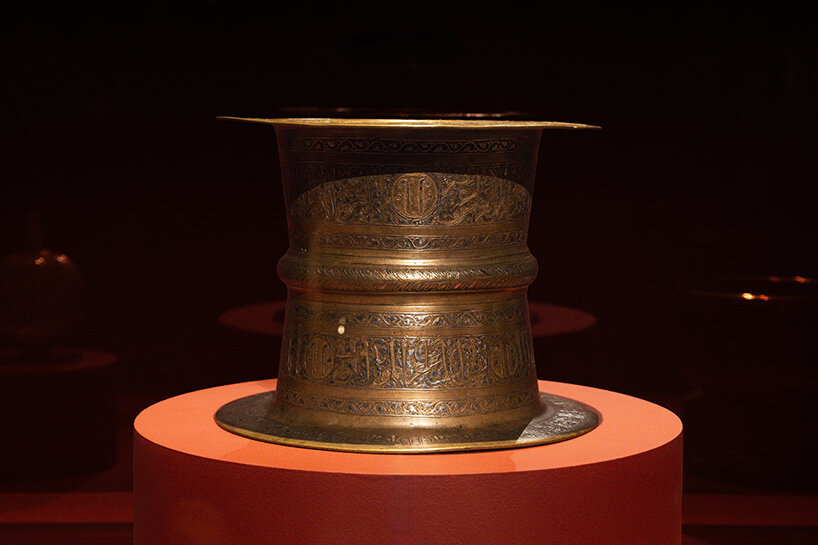
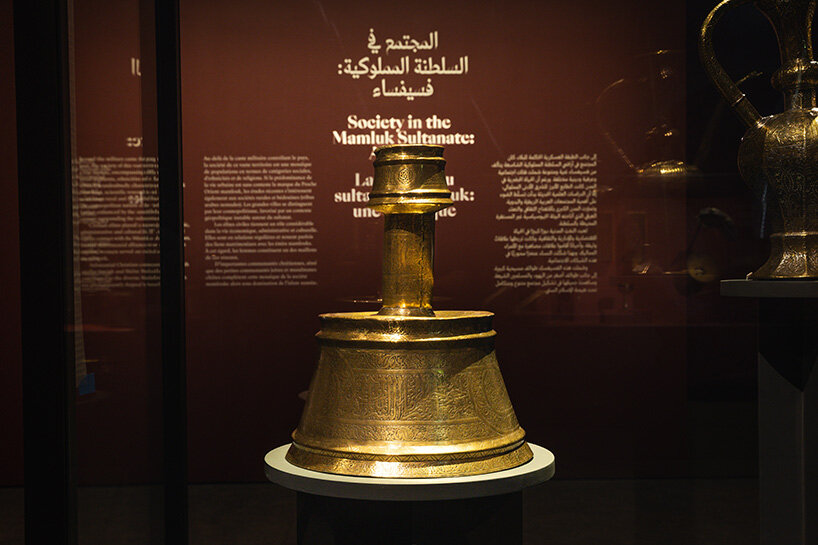
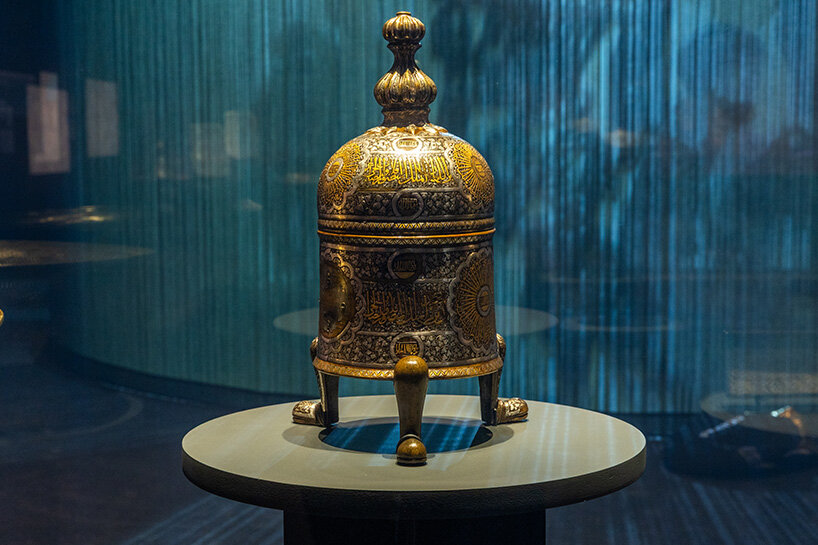
The exhibition at Louvre Abu Dhabi opens with a shadow play theater, evoking popular entertainments of the period, and situates visitors within the Mamluks’ origin story. They were young slaves brought from Central Asia or the Caucasus who rose to power in Cairo and Damascus. Juvin guided us through short ‘first-person’ biographies of key rulers, including Baybars, the founder of the sultanate, and Al-Nasir Muhammad ibn Qalawun, whose reign marked the dynasty’s apex. Objects commissioned under these rulers include inlaid incense burners, helmets, and mosque lamps that reveal how script itself became design, with radiating inscriptions symbolizing solar power.
Blazons, meanwhile, functioned like proto-logos: emblems that identified emirs and were stamped on architecture, arms, and everyday objects. ‘The Mamluks had a remarkable ability to transform language and symbols into design devices of authority,’ Juvin explains during the tour.
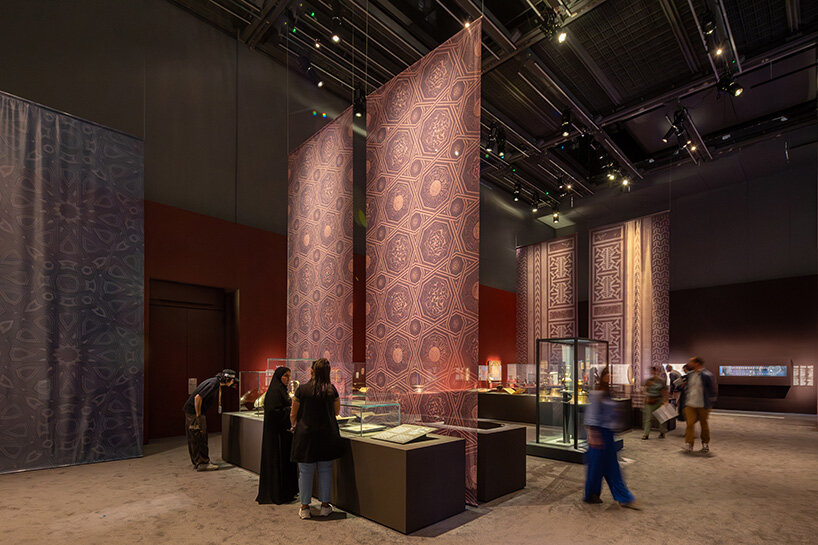
Mamluks: Legacy of an Empire at Louvre Abu Dhabi is the first exhibition in the Gulf devoted to the Mamluk Sultanate
Society Beyond the Elite
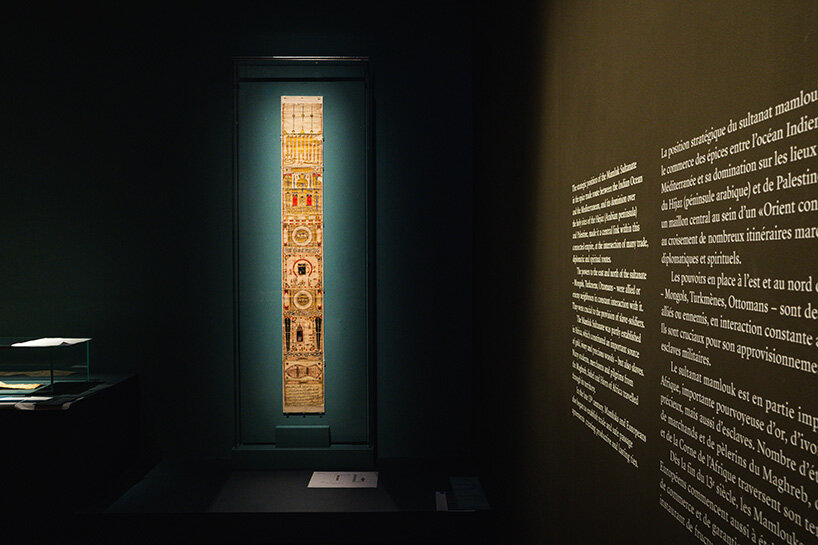
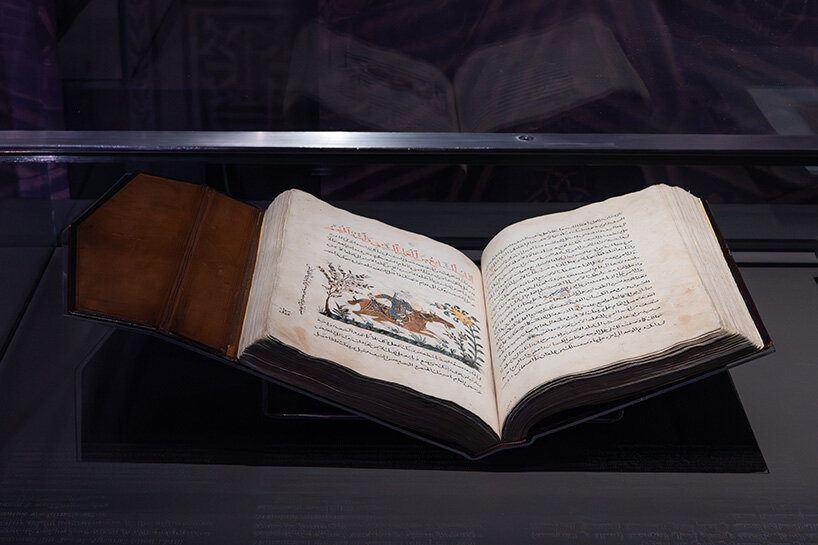
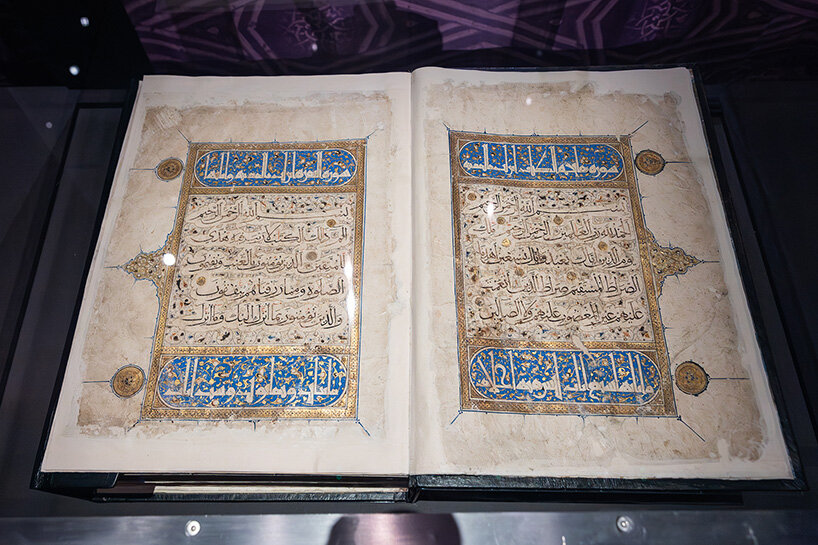
Moving beyond rulers, the curator highlights a more complex society. Manuscripts commissioned by women, including a Qur’an ordered by a powerful court supervisor in 14th-century Cairo, and objects made for Qaytbay’s wife with distinctive garden motifs expand the narrative. Religious minorities also contributed to a shared aesthetic, from Coptic Bibles to Jewish pilgrimage scrolls. ‘I wanted to emphasize the whole Mamluk society, not just the governing elite,’ Juvin tells designboom. ‘Their art reflects exchanges with many cultures while still developing a strong identity.’
Trade routes, pilgrimages, and diplomacy positioned the Mamluk Sultanate as a hub between Asia, Africa, and Europe. Objects in Mamluks: Legacy of an Empire carry these stories through Chinese-inspired lotus blossoms on glassware, a Hajj certificate commissioned by a woman pilgrim, Mamluk metalwork unearthed in West Africa, and a Venetian painting depicting an embassy in Damascus with photographic precision. ‘The sultanate was really a node point in global exchange,’ Juvin notes, ‘and this cosmopolitanism is inscribed in their design.’
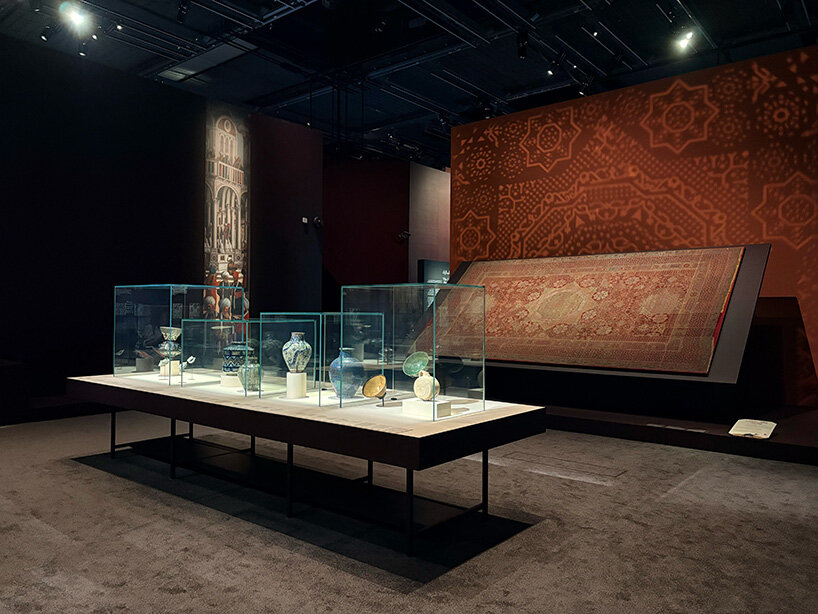
the show traces how the dynasty came to rule vast territories | image © designboom
Scenography as Storytelling
The Abu Dhabi edition, adapted from its first presentation in Paris, adds interactive screens, a gaming table for blazons, and architectural details that punctuate the display. These elements, Juvin says, were developed to ‘engage the public with individual stories inside the larger history.’
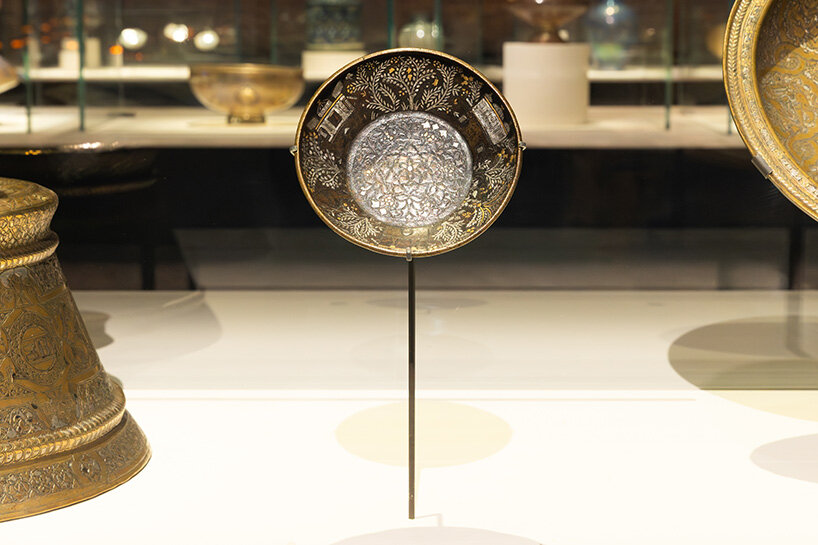
The exhibition culminates with the Baptistery of Saint Louis, a monumental 14th-century basin densely engraved with figures and animals, later repurposed in France for royal baptisms. Its hybrid biography, an Islamic masterpiece entwined with European history, mirrors the show’s central theme that revolves around the mobility of objects and the power of design to cross cultures.
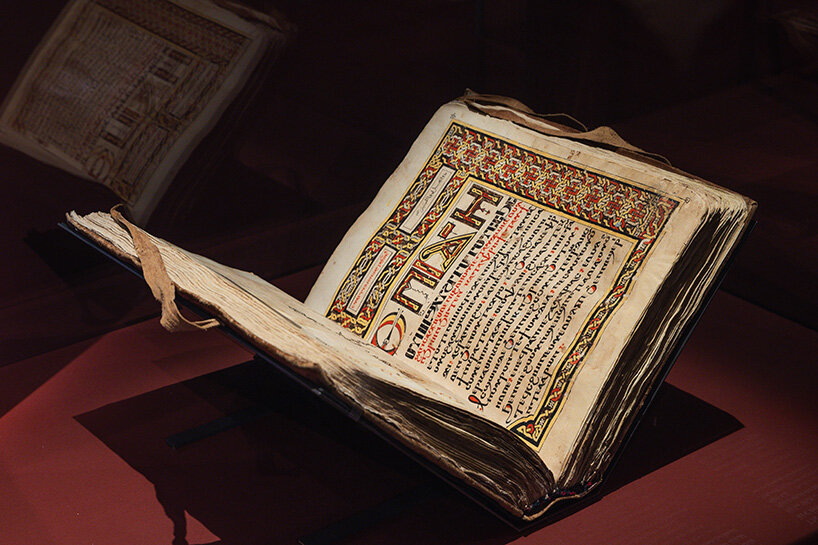
The four gospels in coptic Egypt, Wadi el-Natrun 982 (Year of the Martyrs) /1266 CE Ink and pigments on paper Abu Dhabi, Louvre Abu Dhabi
the museum’s mission to connect civilizations
For Manuel Rabaté, Director of Louvre Abu Dhabi, the exhibition aligns with the museum’s mission to connect civilizations. ‘Our permanent galleries are a time machine, telling 10,000 years of humanity. These temporary exhibitions are our deep dives, into a moment, a rupture, a civilization. With the Mamluks, we wanted to show how connected they were and what universal relevance their story holds today,’ he tells designboom. He emphasizes the resonance of showing the Mamluks in the Gulf. ‘When we present them here, we are touching the heart of the Emirati, the Arab, the Muslim — but also revealing to international visitors the complexity and diversity of this society. It makes sense here,’ he reflects.
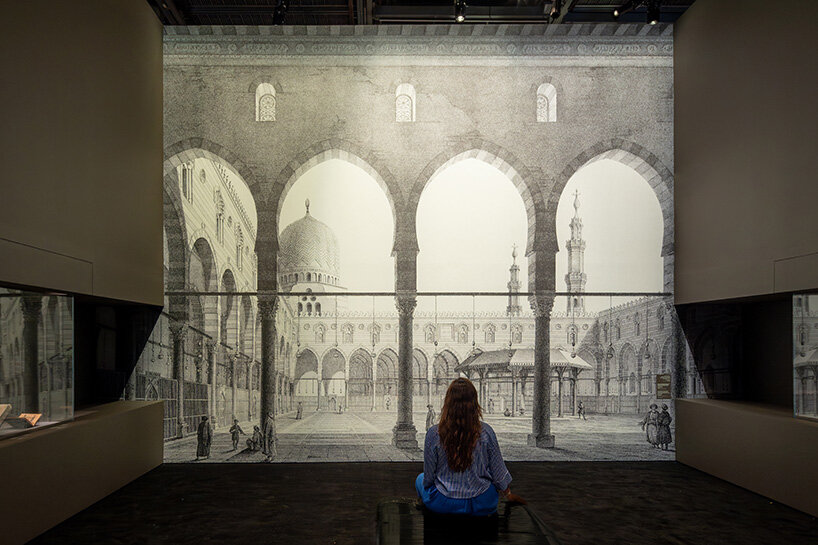
gathering over 270 works from 34 institutions worldwide
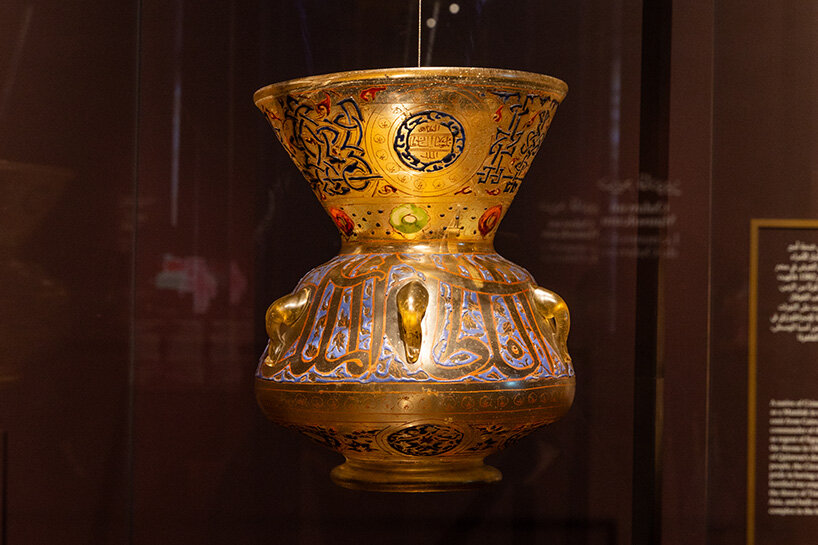
Lamp bearing the name of Sultan Barquq (r. 1382–1399) Egypt, Cairo C. 1386 (from the Mosque of Sultan Barquq) Blown glass, enamelled and gilded Paris, Musée du Louvre, Department of Islamic Art, OA 7568
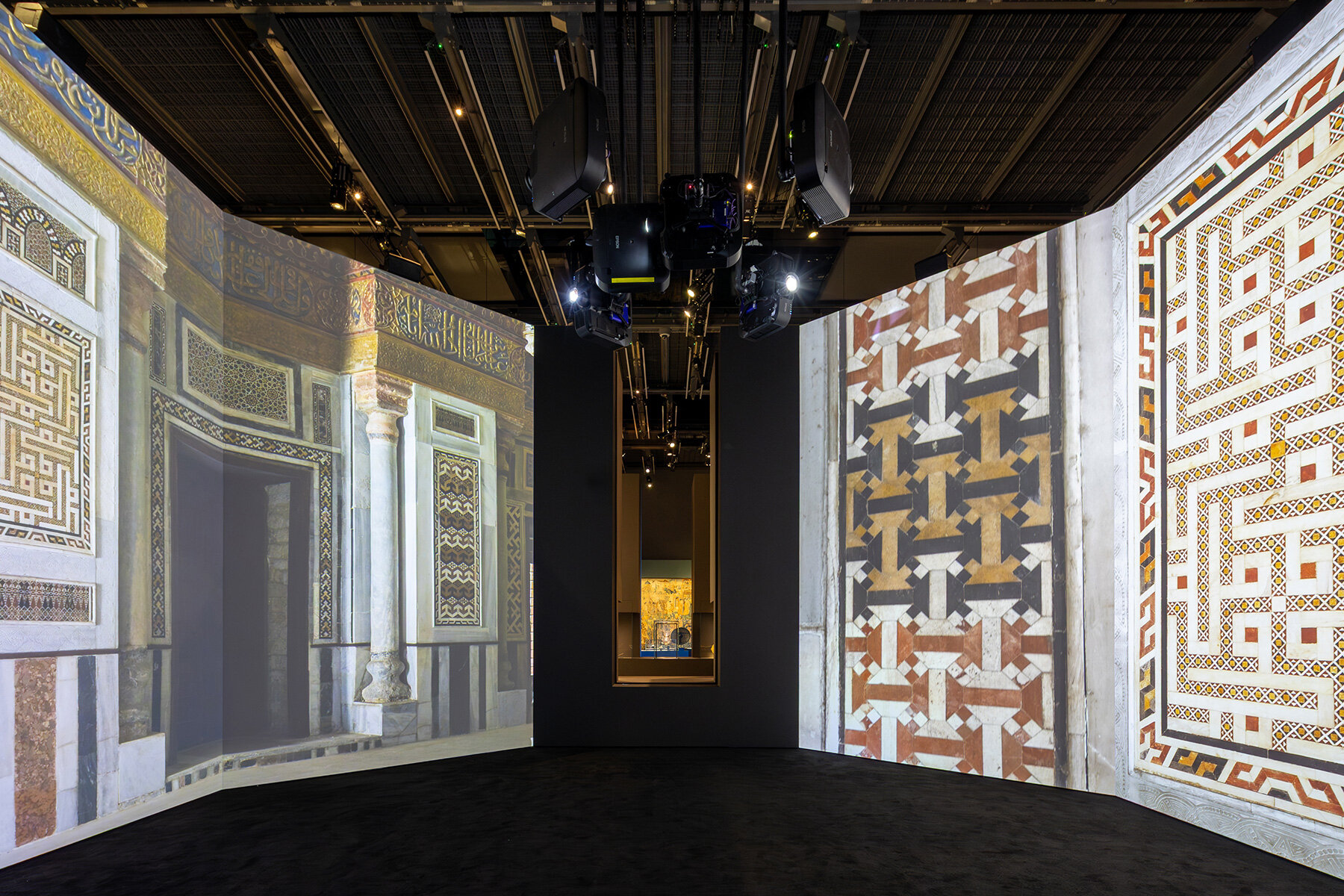
blazons functioned like proto-logos
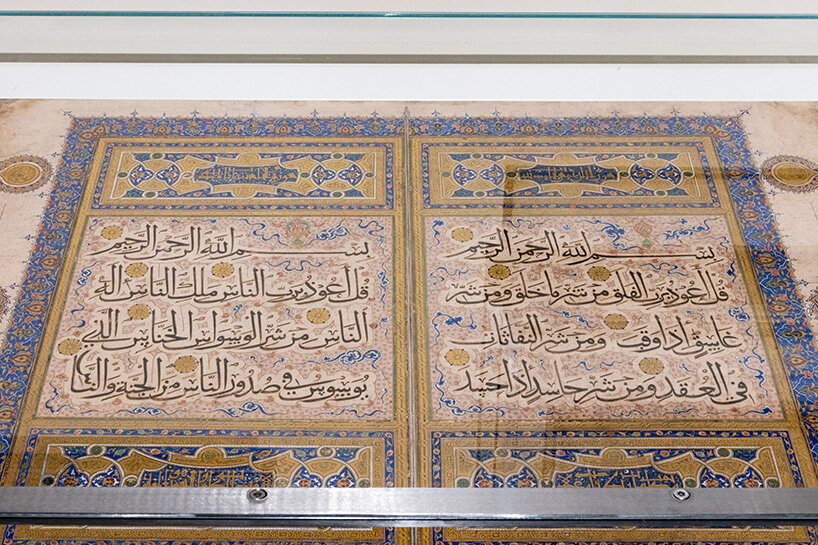
Double closing page of a monumental Quran Egypt, Cairo C. 1360–1380 Ink, pigments and gold on paper Dublin, Chester Beatty Library, CBL IS 1628
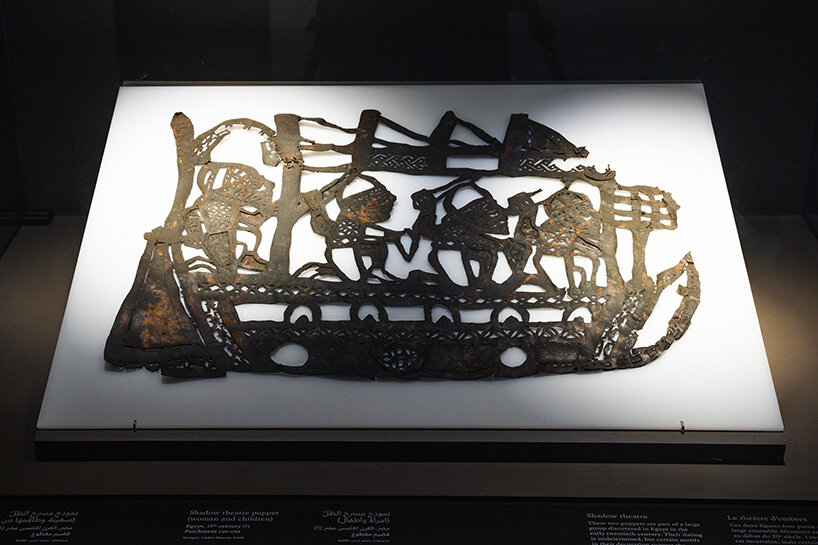
Shadow theatre puppet (ship and crew of warriors) Egypt 15th century, Parchment cut-out Stuttgart, Linden-Museum, 84682
the show reframes the dynasty as cultural innovators
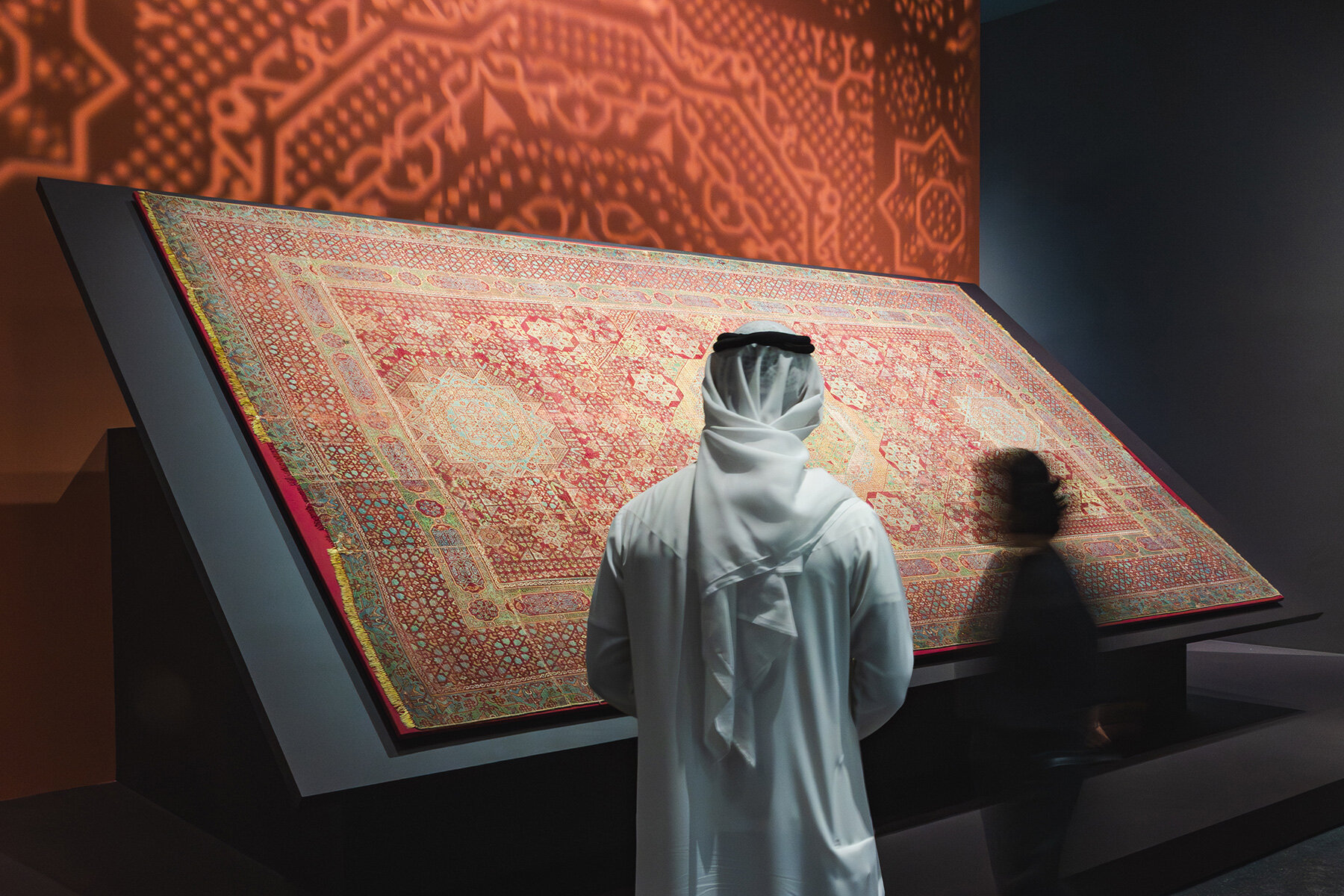
Carpet decorated with three medallions Egypt, Cairo Second half of 15th century Knotted wool Abu Dhabi, Louvre Abu Dhabi
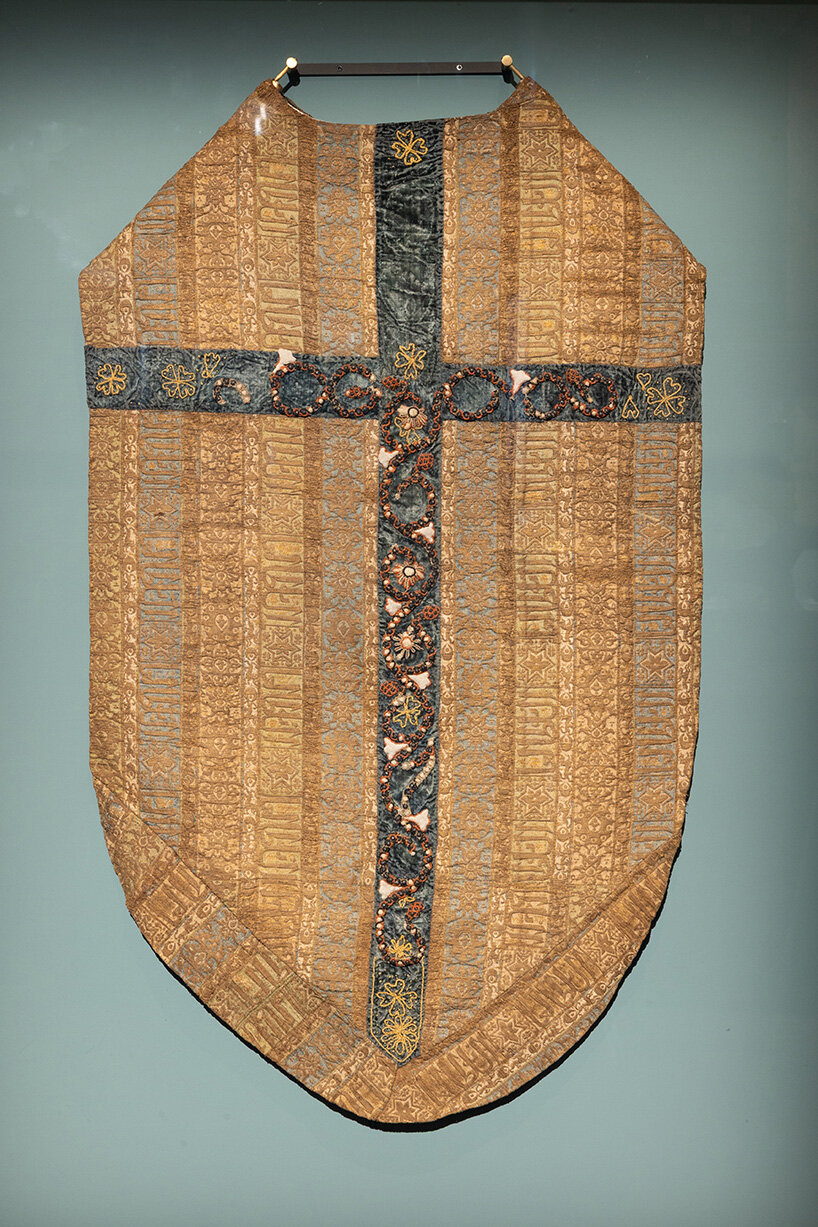
Chasuble Syria, Egypt or Iran (?) 14th century Lampas, silk and gold thread European addition: silk velvet, pearls, gold, glass, coral Copenhagen, The National Museum of Denmark, CXXXVII
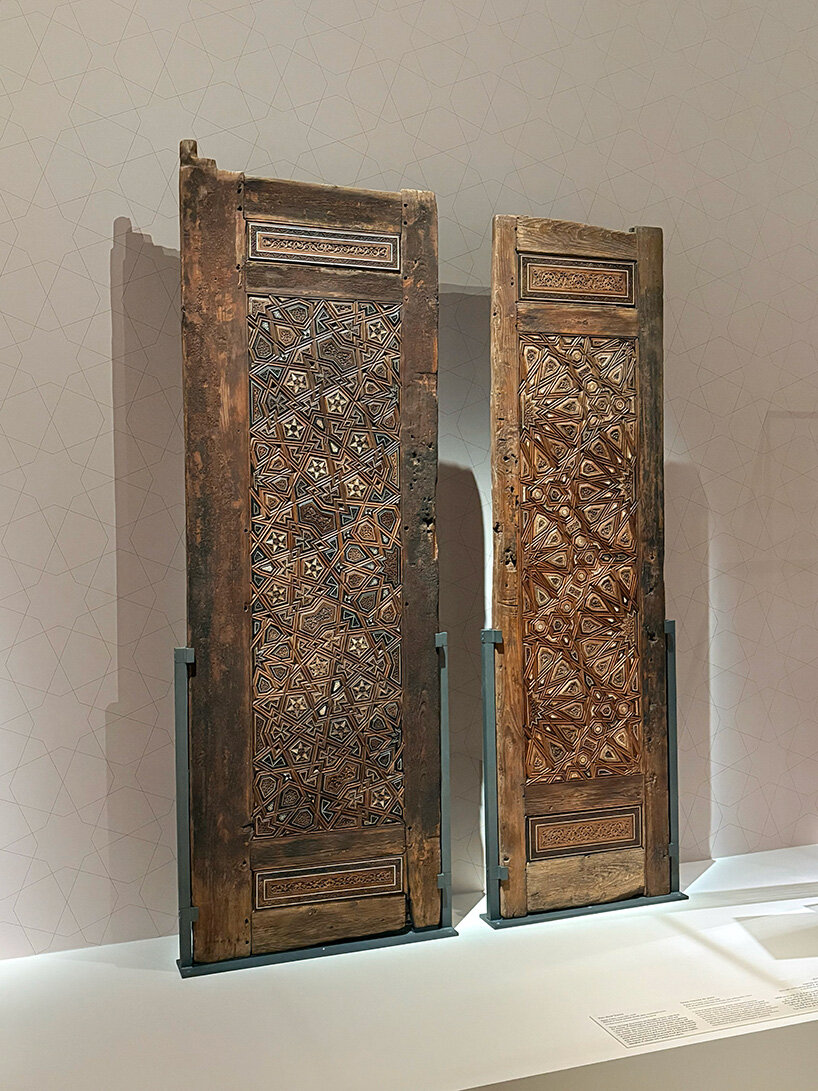
the exhibition aligns with the museum’s mission to connect civilizations | image © designboom
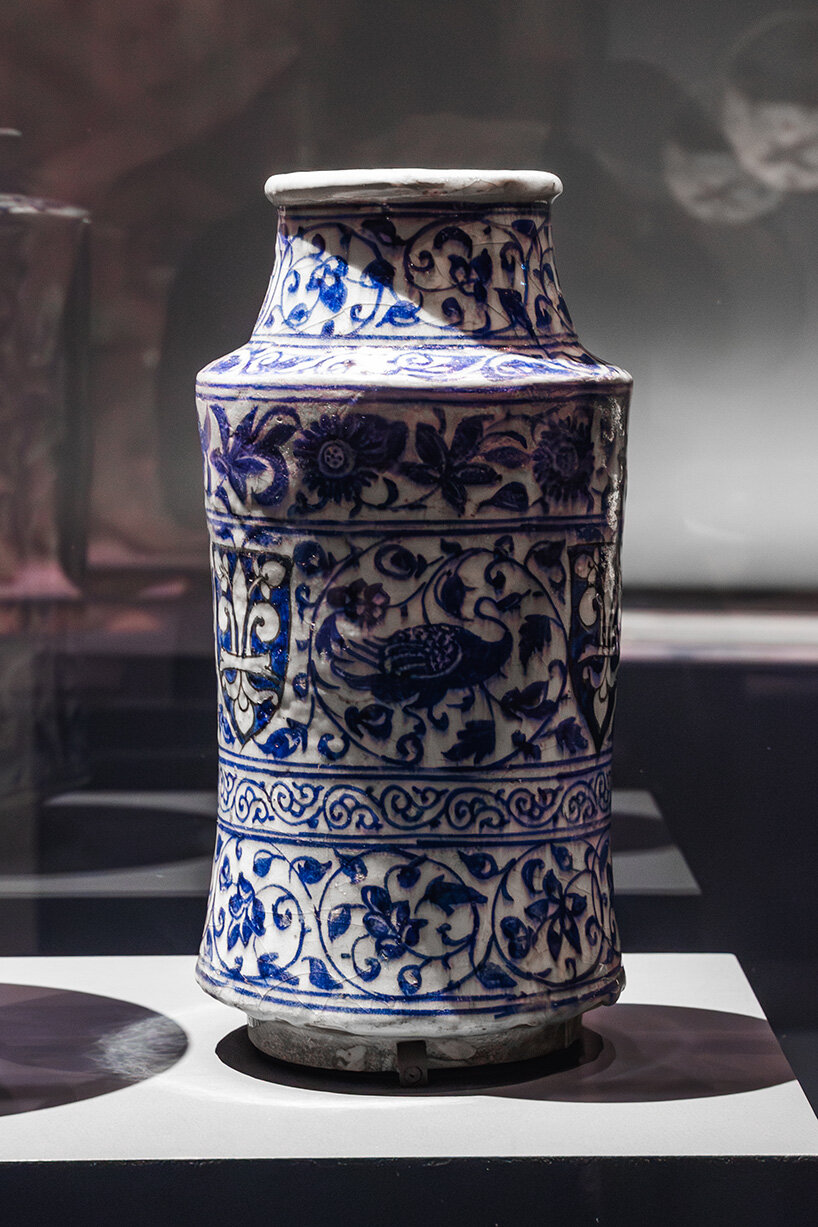
Albarello with coat of arms decoration Syria, Damascus 15th century Fritware, underglaze painted decoration H. max. 15 cm, D. 31.7 cm Abu Dhabi, Louvre Abu Dhabi
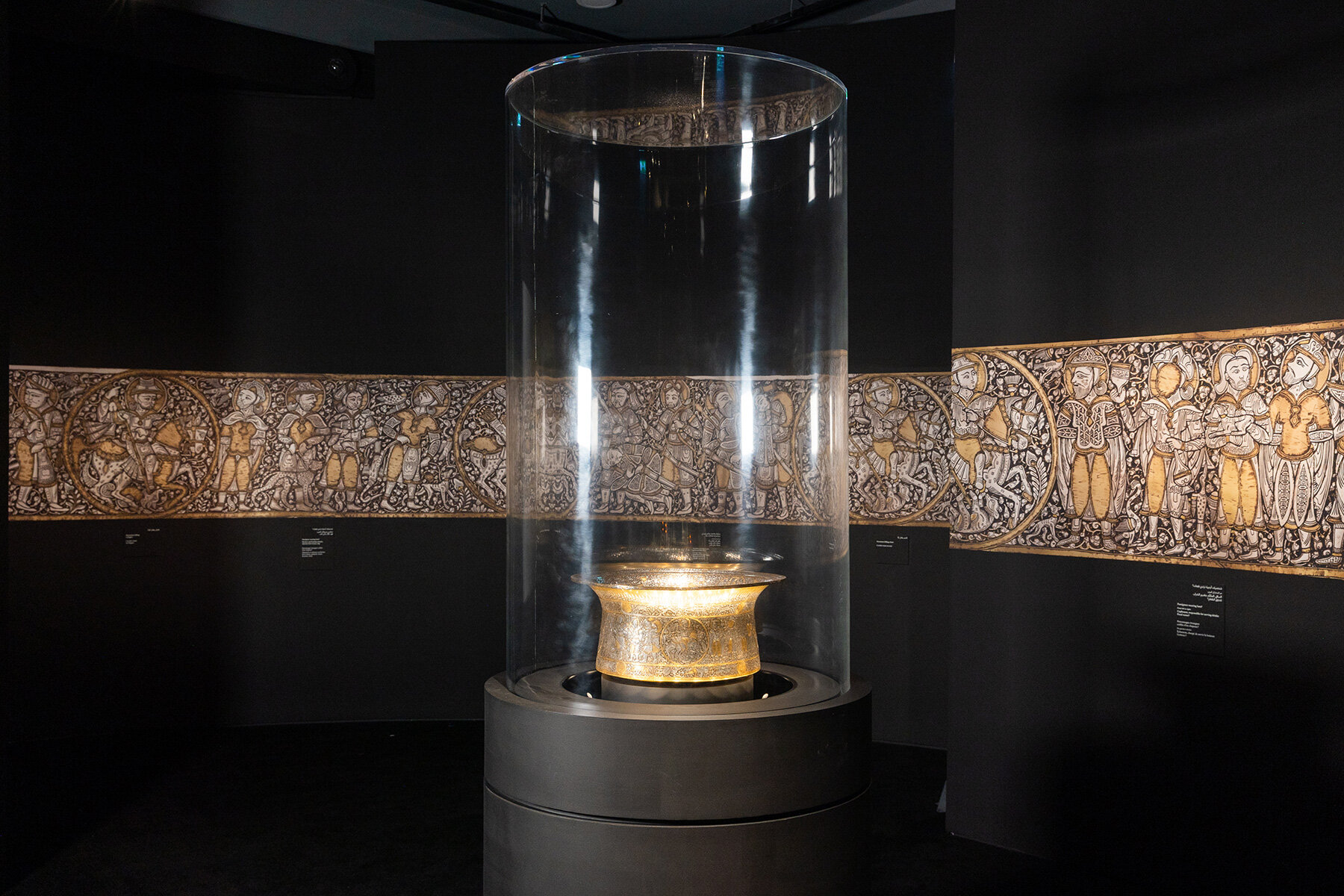
Basin known as the “Baptistère de Saint Louis.” Signed: Muhammad ibn al-Zayn Syria or Egypt C. 1330–1340 Chased copper alloy, inlaid with silver, gold and black paste Paris, Musée du Louvre, Department of Islamic Art
project info:
name: Mamluks: Legacy of an Empire
location: Louvre Abu Dhabi | @louvreabudhabi, Saadiyat Island, Abu Dhabi, UAE
dates: September 17th 2025 – January 25th 2026
organisers: Louvre Abu Dhabi in partnership with Musée du Louvre | @museelouvre and France Muséums
curators: Dr. Souraya Noujaim (general curator), Dr. Carine Juvin (scientific curator)
support: Fakhera Alkindi, senior curatorial assistant, Louvre Abu Dhabi
art and architecture in abu dhabi (25)
 Dec 21, 2025
 Dec 03, 2025
 Nov 27, 2025
 Nov 21, 2025
 Nov 18, 2025
exhibitions (174)
 Jan 29, 2026
 Jan 29, 2026
 Jan 23, 2026
 Jan 22, 2026
 Jan 22, 2026
 Jan 01, 2026
 Nov 27, 2025
 Nov 14, 2025