TOP 10 pavilions of 2025
from bamboo vaults rising in flood-prone villages to inflatable dream temples, here are ten pavilions reshaping how we think about space right now.
the pavilion projects steering 2025’s design conversation
Pavilions are architecture’s fast, experimental structures that test ideas long before they scale up to cities. This year’s highlights push that spirit further, blurring the lines between sculpture, shelter, ritual space, and ecological device. From bamboo vaults rising in flood-prone villages to inflatable dream temples, from wind-driven feather structures on remote islands to LEGO-built playscapes in London, the pavilion becomes a tool for storytelling.
Across the ten projects, a set of shared themes emerges: material reinvention, circular design, and a renewed focus on community. Bread waste becomes structure, bamboo becomes climate infrastructure, and woven rattan becomes a water-harvesting system. Some pavilions introduce new behaviors, gathering, dreaming, resting, learning, while others revive old rituals like bathing or communal reading. What ties them together is their willingness to ask what a temporary space can do, and how it can shift our relationship to place, resources, and each other. Here are ten pavilions reshaping how we think about space.
LINA GHOTMEH’S EXPO PAVILION TAKES GOLD IN OSAKA
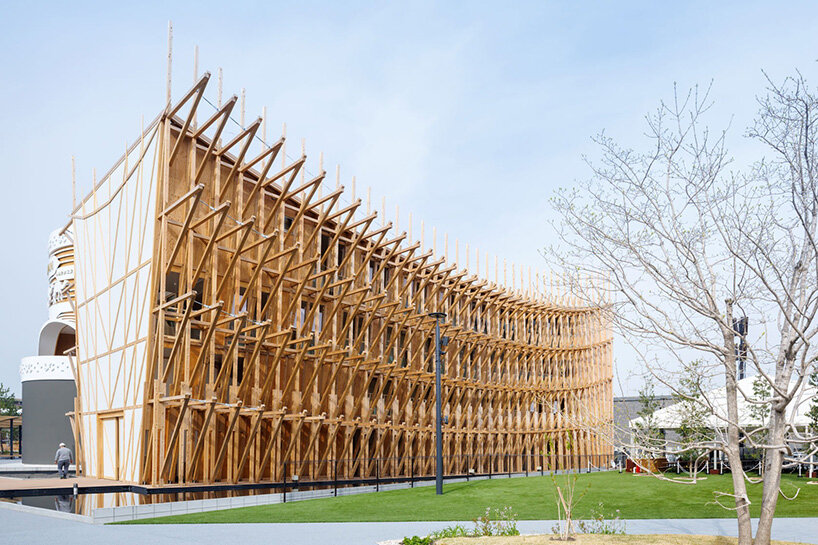
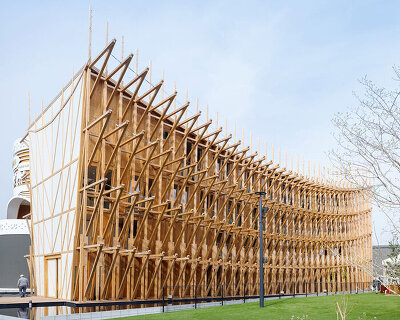
Lina Ghotmeh—Architecture designs the Bahrain Pavilion for Expo 2025 Osaka, crafting a timber-and-aluminum structure inspired by the nation’s traditional dhow boats and its long maritime history. Positioned along the waterfront in the Expo’s Empowering Lives zone, the pavilion bridges Bahraini boat-building heritage with Japanese wood craftsmanship, expressing cultural exchange through material and form. The structure reinterprets millennia-old construction techniques with a lightweight wooden frame, an aluminum outer layer, and passive cooling strategies that reduce mechanical energy use.
Designed for disassembly and reuse after the Expo, the pavilion embodies Bahrain’s commitment to sustainability and craft-driven innovation. The structure received the Gold Award for Best Architecture and Landscape in the Self-Built category, recognizing Ghotmeh’s precise, contextual approach and the pavilion’s refined expression of Bahrain’s cultural and environmental heritage.
read more here
SIR PETER COOK’S LEGO PLAY PAVILION FOR THE SERPENTINE
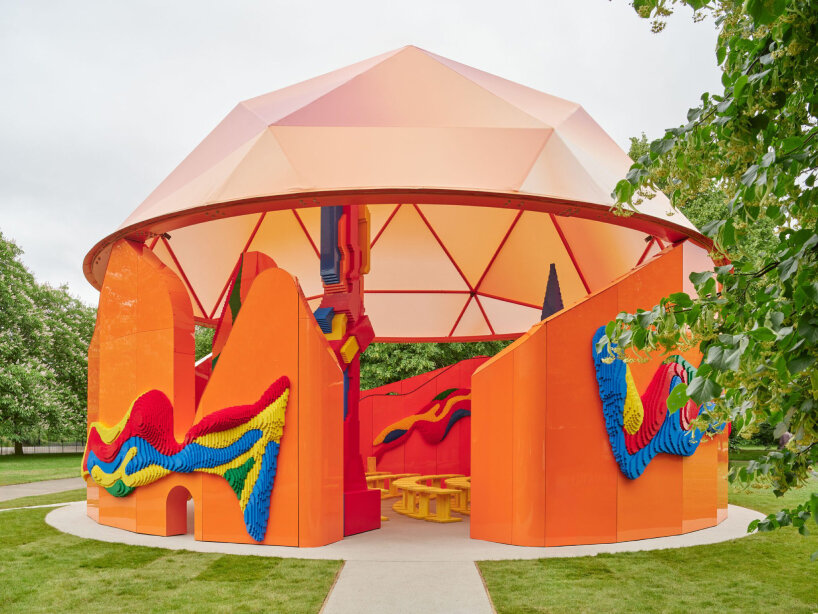
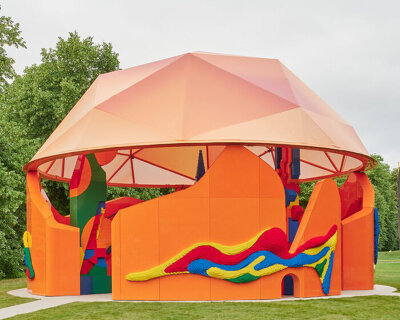
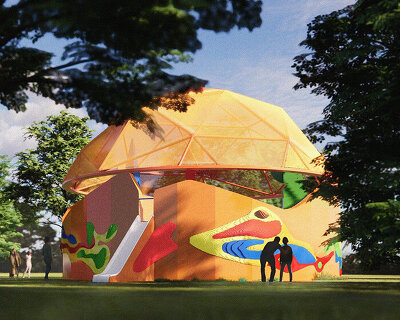
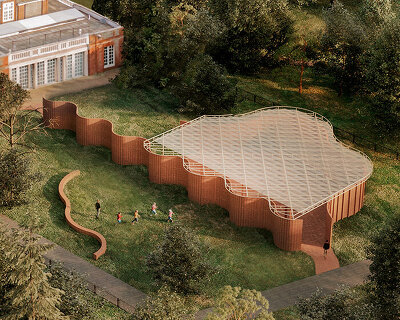
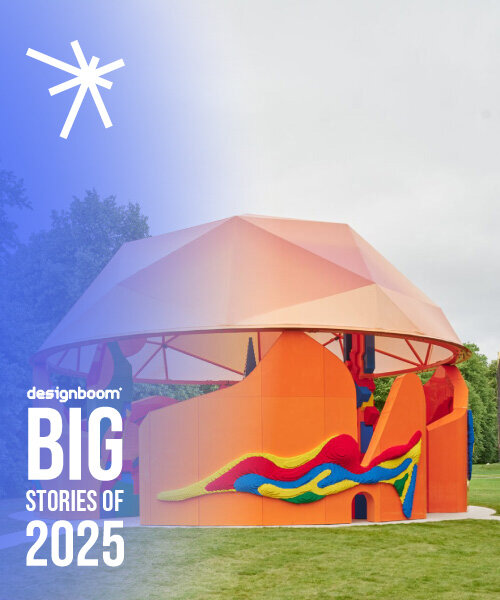
Serpentine and the LEGO Group’s Play Pavilion by Sir Peter Cook, installed in London’s Kensington Gardens, is a bright, bowl-shaped structure wrapped in orange and animated with LEGO-built topographies. The exterior walls of the pavilion rise and dip like a shifting landscape, inviting visitors to touch the tactile brick formations before stepping inside.
Sunlight filters through gaps between the roof and base, filling the interior with natural light while maintaining a breezy, open feel. A towering central pillar, assembled from LEGO bricks, anchors the space like a watchful robotic figure. Visitors are encouraged to play, build, and modify the pavilion in real time through an interactive brick wall and a trove of LEGO pieces. Multiple openings frame views of the garden, while a yellow slide offers a playful exit route.
read more here
SIX-SEAT FOREST BAR PAVILION BY ELMGREEN & DRAGSET
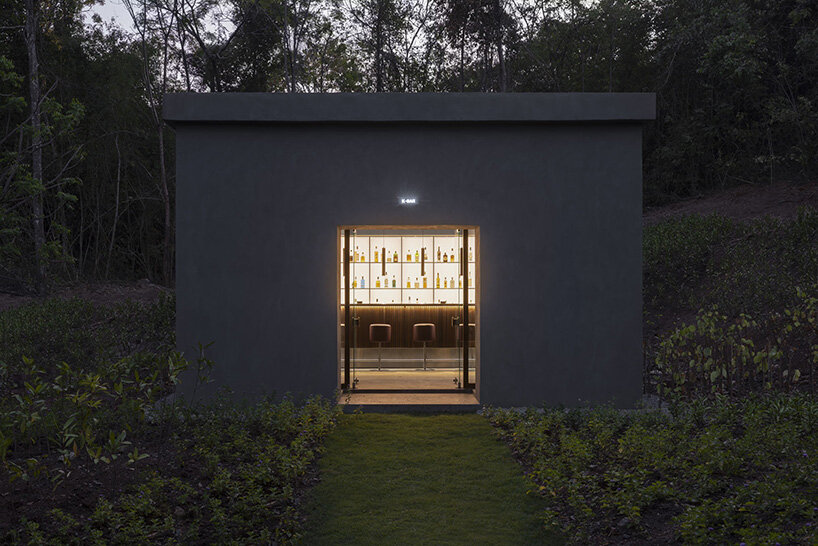
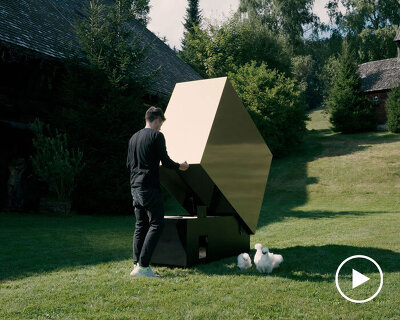
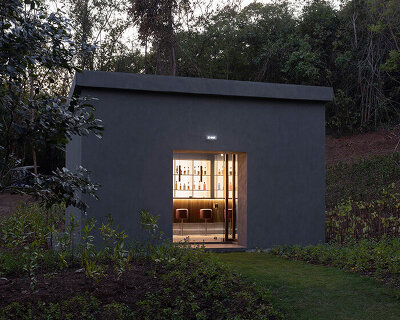
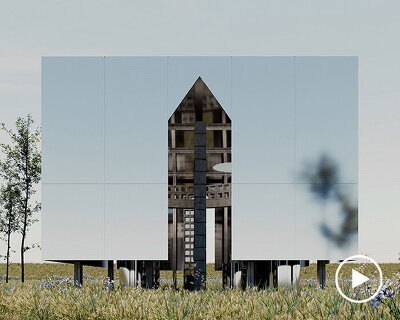
Elmgreen & Dragset unveil K-BAR, a six-seat cocktail pavilion tucked deep within Thailand’s Khao Yai Art Forest, inserting an urban typology into a remote natural setting. Appearing most days as a charcoal-gray sculptural object amid dense foliage, the pavilion occasionally comes to life: visitors arriving at the right moment are guided through the forest to find the bar glowing from within.
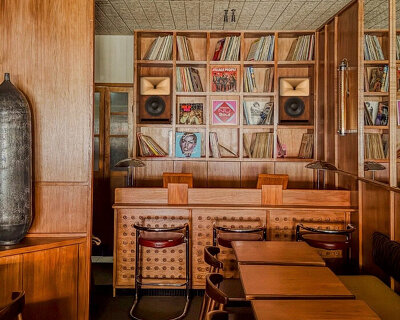
Inside, stainless steel surfaces, dark wood, red leather stools, terrazzo flooring, and a backlit display channel the intimacy of classic metropolitan bars. A permanently installed 1996 painting by Martin Kippenberger, visible even when the bar is closed, anchors the installation, paying homage to the artist’s legacy and echoing Elmgreen & Dragset’s long-standing interest in ‘denials,’ functional forms that resist predictable use.
Open only once a month, K-BAR plays with visibility, access, and displacement, placing a European artwork in a Southeast Asian forest as a subtle inversion of museum repatriation debates. As part of the newly launched Khao Yai Art Forest, the pavilion underscores the initiative’s mission to merge contemporary art with ecological immersion, offering an unexpected moment of encounter in one of Thailand’s most pristine environments.
read more here
LEOPOLD BANCHINI INSTALLS TIMBER BATHHOUSE IN SPAIN
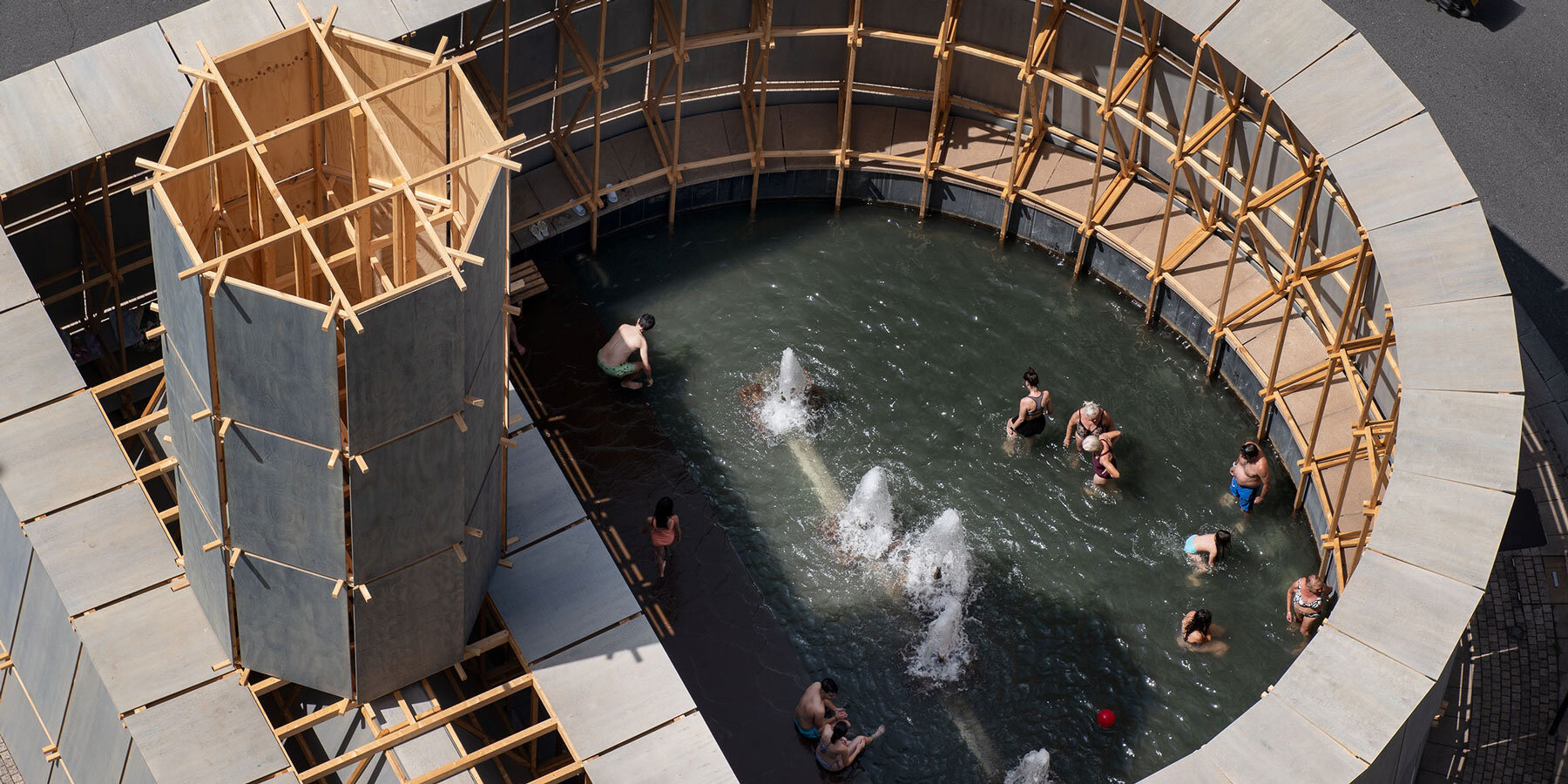
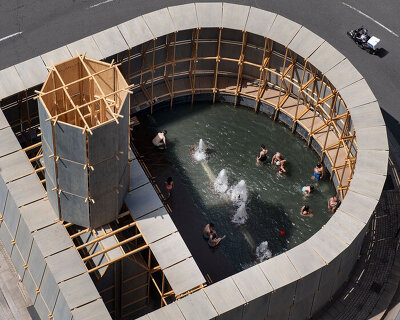
Leopold Banchini Architects installs Round About Baths at the Concéntrico Festival in Logroño, Spain, transforming the center of a traffic roundabout into a temporary public bathhouse. The circular timber structure reclaims an overlooked urban void, introducing cold-water basins, steam rooms, and changing areas that revive the communal spirit of historic public baths.
Built with a standard timber frame and clad in uncut wooden panels intended for reuse, the pavilion emphasizes material efficiency and circularity. High perimeter walls provide privacy while clearly marking the intervention within the car-dominated landscape, prompting visitors to reconsider how urban land is allocated and who it serves. By situating a shared bathing environment at the heart of a vehicular crossroads, Round About Baths challenges conventional urban hierarchies and highlights the potential of underutilized spaces. Once dismantled, the site returns to its previous state, but the project leaves behind a conceptual proposal.
read more here
TOGUNA WORLD’S NOMADIC PAVILION LANDS IN ATHENS
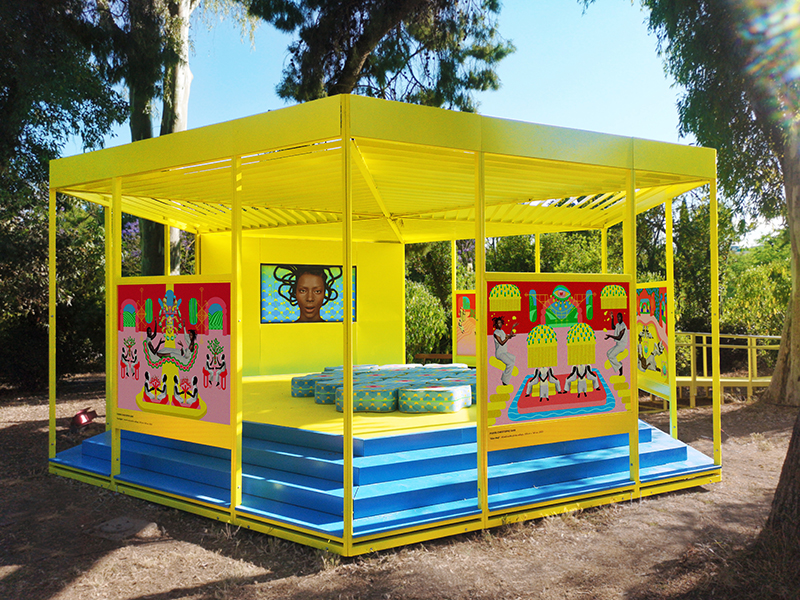
Toguna World’s immersive nomadic pavilion, The Sanctuary of Dreams, combines film, ritual, and collective storytelling within an inflatable structure presented as part of Plásmata 3 | We’ve met before, haven’t we? in Athens. Rooted in African philosophies of cyclical time and ancestral memory, the space invites visitors to enter barefoot and step into a meditative environment where a 44-minute, three-channel art film brings together animation, collage, soundscapes, and archival textures.
After the screening, participants join a guided reflection circle, contributing their visions to The Global Mapping of Dreams, a growing archive of future imaginaries from across Africa and its diaspora. Designed by Pierre-Christophe Gam, the pavilion functions as a contemporary ritual space, featuring dimmable lighting, scent, modular cushions, and spatial audio that shape an intimate environment for collective visioning.
read more here
MERO STUDIOS BUILDS A PAVILION FROM 780 LEFTOVER BAGUETTES
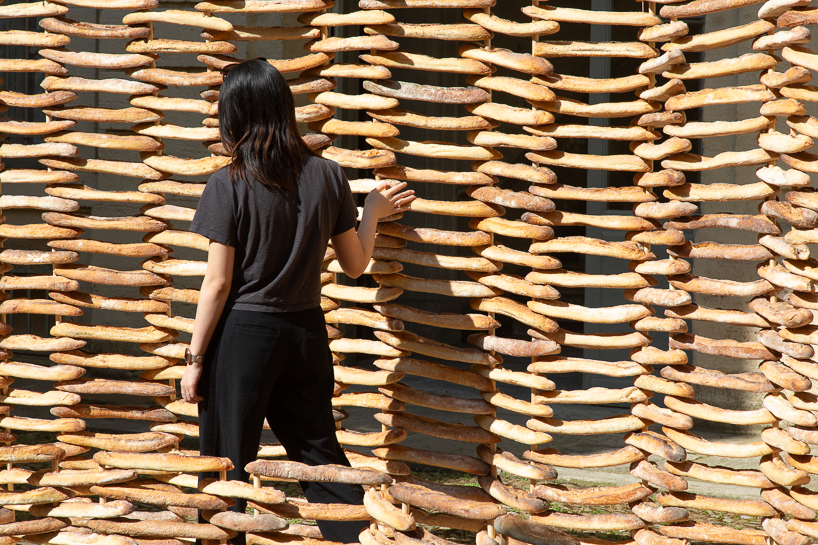
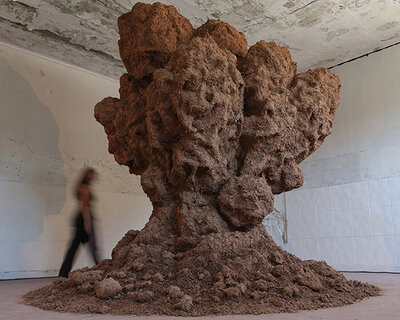
MERO Studios builds Paysage de Pain, a public pavilion made from 780 salvaged baguettes, turning surplus bread into a tactile, aromatic structure within the courtyard of Montpellier’s Hôtel de Lunas. Developed with the nonprofit Pain de L’Espoir, the installation reframes food waste as a spatial material, highlighting the staggering amount of unsold bread discarded daily in France.
Visitors move through warm, dough-scented walls that crack and age under the sun, transforming the pavilion into a living metaphor for nourishment, excess, and decay. Through its texture, smell, and temporal fragility, Paysage de Pain becomes a sensory monument to resourcefulness.
read more here
FEATHER-BLADE SEASIDE PAVILION SWAYS ON CHAISHAN ISLAND
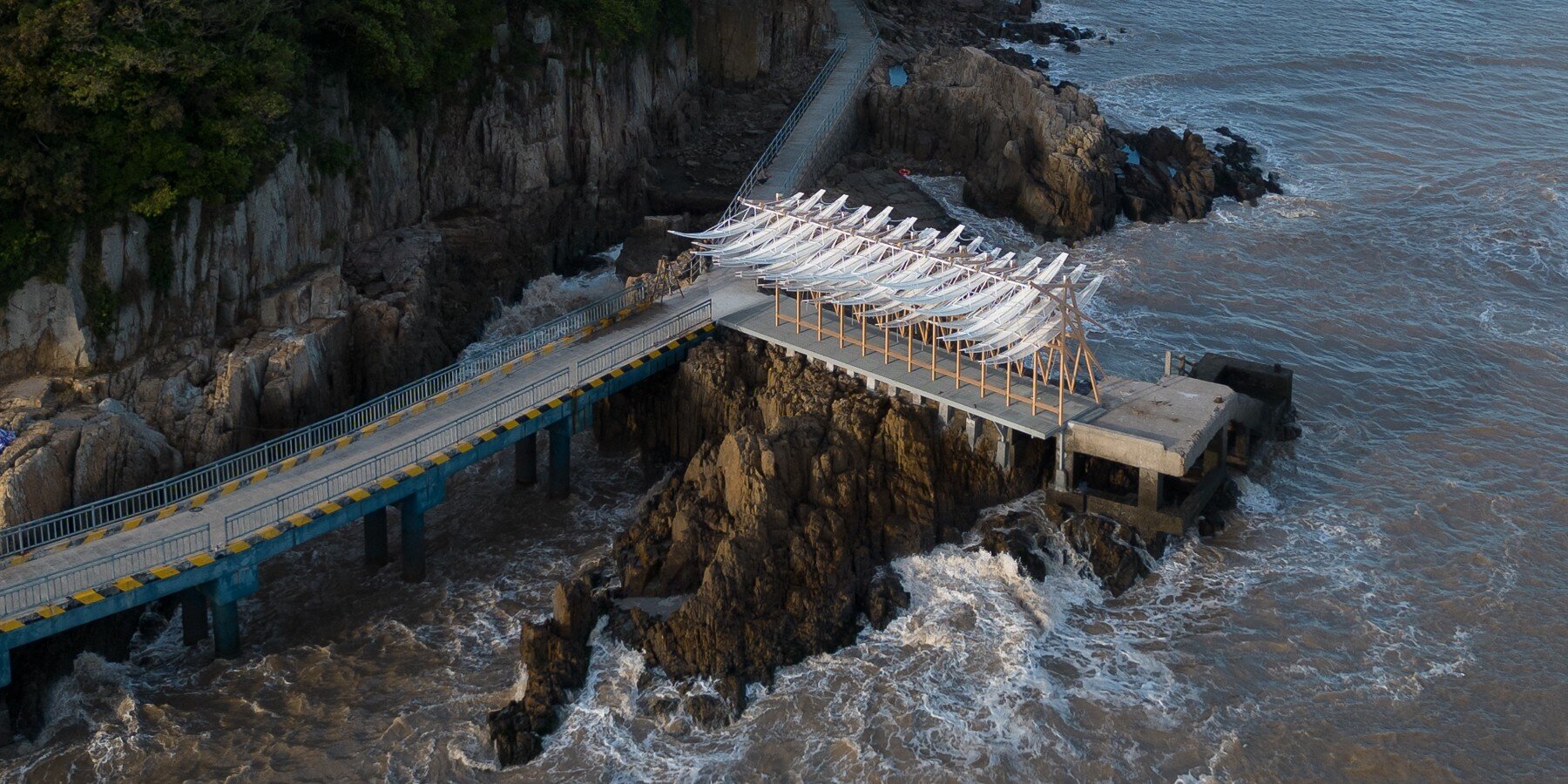
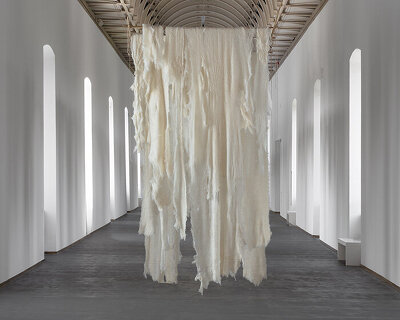
GN Architects’ Seaside Pavilion brings new life to the abandoned pier of Chaishan Island, introducing a wind-driven structure whose long white blades sway gently above the water. Designed as part of the Hello, Island revitalization initiative, the pavilion acts as a symbolic arrival point, a contemporary echo of traditional village entrances where large trees once anchored community gatherings.
Suspended from a prefabricated steel frame, 36 seven-meter blades move with the sea breeze, creating a rhythmic, feather-like choreography that mirrors the quiet landscape of the island. The installation repurposes the old cargo pier into a resting and meeting place for the elderly residents. Built with corrosion-resistant materials and high-strength fishing ropes for durability, the pavilion balances engineering precision with a sense of lightness. Its movement shifts from subtle to visible depending on the wind, transforming the site into a landmark that reconnects Chaishan’s past, present, and future through motion and placemaking.
read more here
MARINA TABASSUM’S 2025 SERPENTINE PAVILION OPENS IN LONDON
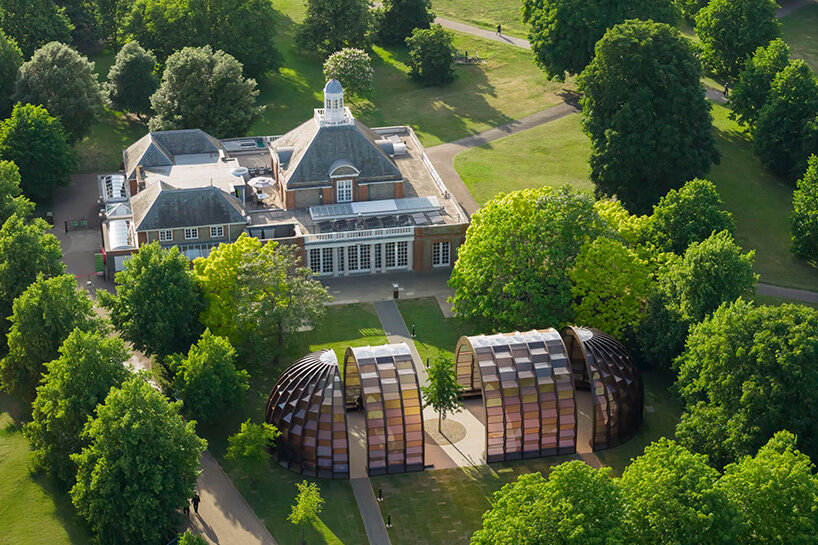
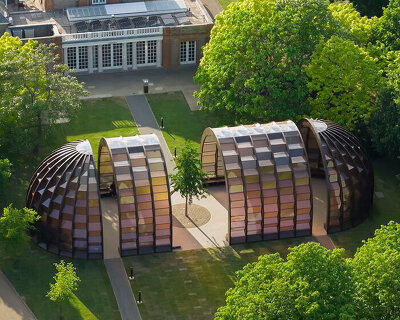
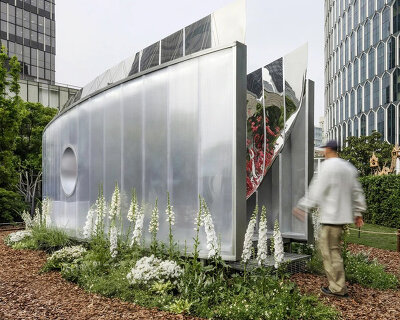
Marina Tabassum Architects’ A Capsule in Time was the 2025 Serpentine Pavilion, a modular timber structure that explores impermanence, light, and temporality within London’s Kensington Gardens. Composed of four translucent capsules aligned with Serpentine South’s historic bell tower, the pavilion filters daylight into shifting patterns, echoing the hydrologic landscapes of Bangladesh, where land continually forms, dissolves, and reappears.
A kinetic capsule allows sections of the pavilion to expand for public programs, while a ginkgo tree anchors the interior as a living symbol of resilience. Built entirely from wood and translucent polycarbonate, materials chosen for their reuse potential, the project embraces dry construction and adaptability, ensuring the pavilion continues its life beyond the summer season. Integrated bookshelves house a curated selection of texts spanning Bengali literature, ecology, and identity, including works banned in Bangladesh. Tabassum frames the pavilion as a place of quiet resistance and shared knowledge, offering a contemplative environment where ideas can circulate freely.
read more here
BAMBOO PAVILION ANCHORS YASMEEN LARI’S PONO VILLAGE

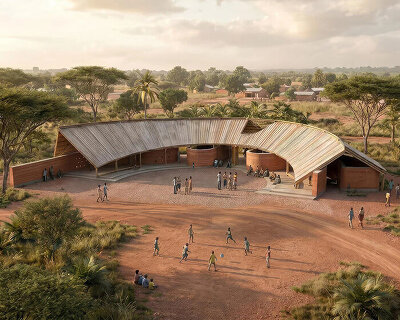
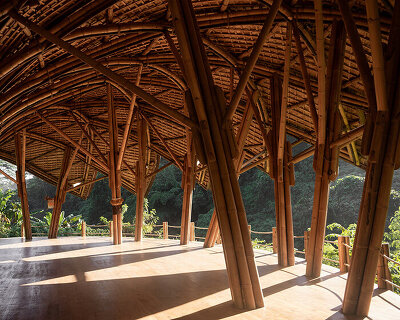
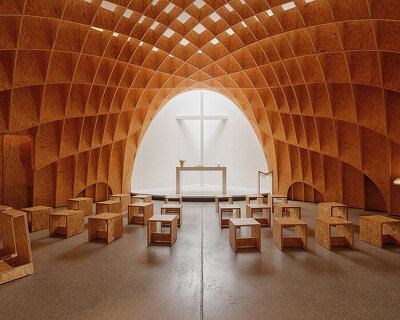
Nyami Studio and Jack Rankin complete the Juliet Center in Sindh, Pakistan, a bamboo pavilion that anchors Yasmeen Lari’s zero-carbon Pono Village, a prototype community built in response to the devastating 2022 floods. The lightweight vaulted structure is shaped from bamboo, mud, lime, and thatch, translating vernacular forms into a modular, climate-resilient space designed for communal use. The pavilion offers an open, flexible environment for workshops, gatherings, and training programs, supporting Lari’s mission to empower local residents, particularly women, through hands-on construction and craft skills.
Two interlocking vaults span widely without internal columns, creating a breathable interior that can be adapted or expanded as the village evolves. Built using a combination of digital precision and traditional techniques, the project demonstrates how low-carbon materials can achieve structural complexity and durability in extreme climates. Hand-made mud tiles line the floor, and a woven thatch roof of locally harvested grass provides protection from heat and monsoon rains.
read more here
RAD+AR BUILDS WOVEN-BAMBOO CHICKEN COOP IN JAKARTA
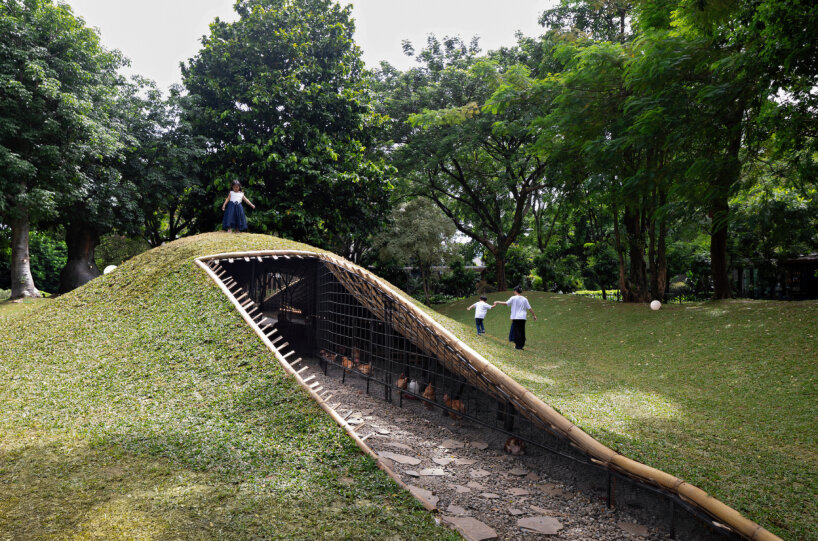
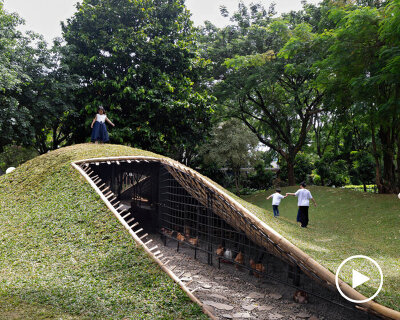
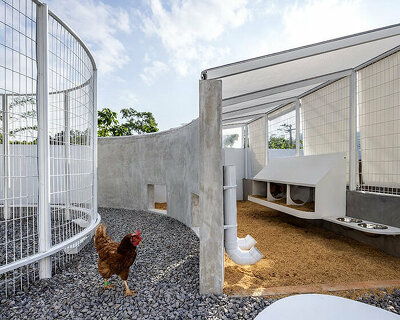
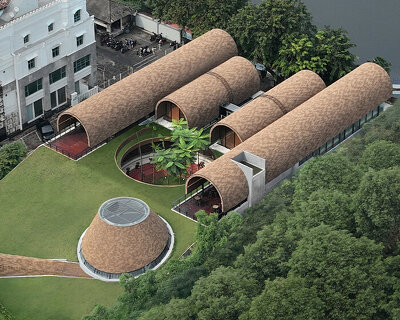
RAD+ar designs the Chicken Hero Pavilion in Urban Forest Jakarta, carving a low, hill-like form into the landscape to house an educational chicken coop disguised as part of the terrain. The pavilion merges ecological performance with community engagement, inviting visitors through a tunnel-like opening into a space that promotes backyard poultry farming as a sustainable household practice. Inside, reclaimed bamboo forms a ventilated, daylight-filled structure optimized for animal comfort and waste management.
The pavilion processes organic waste from nearby restaurants, turning leaves and food scraps into compost and closing the loop by distributing fresh eggs daily, a live demonstration of a micro circular economy. As a temporary installation, the project functions both as a prototype for low-impact chicken coops and as a public learning space. It addresses Indonesia’s significant food waste challenges while breaking stigmas around small-scale poultry keeping. Blending into the park’s topography, the Chicken Hero Pavilion shows how simple construction and local materials can support inclusive education, environmental stewardship, and community-led sustainability.
read more here
see designboom’s TOP 10 stories archive:
2024 — 2023 — 2022 — 2021 — 2020 — 2019 — 2018 — 2017 — 2016 — 2015 — 2014 — 2013
shop
your own online design shop — no sales commission collected