wooden compass with single red arrow leads people with dementia to their homes
the device activates automatically when picked up, turns off when placed down, and functions on its own without a power button.
People with dementia come home using wooden compass
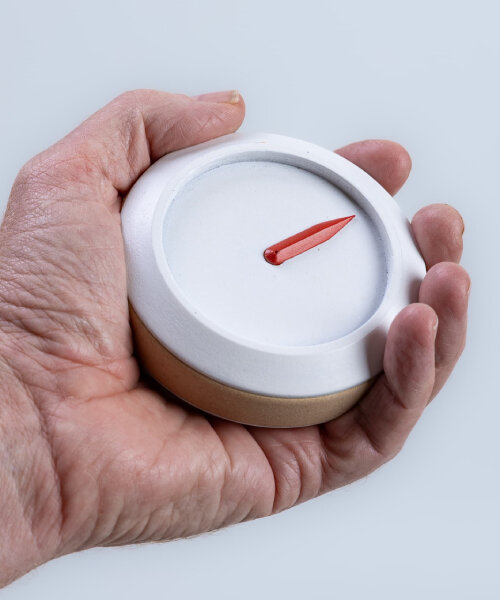
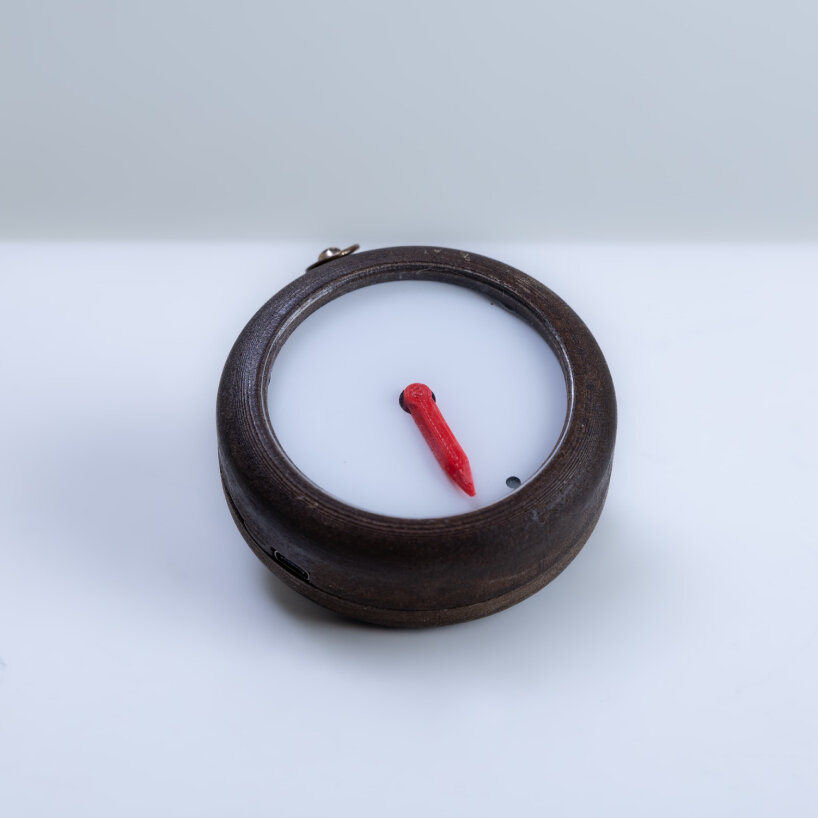
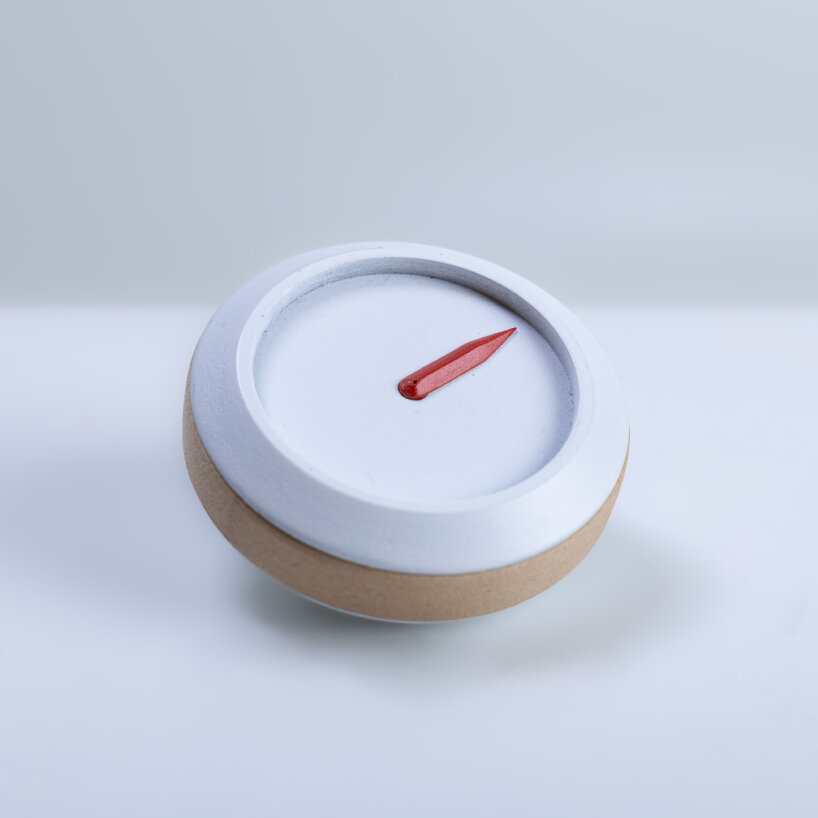
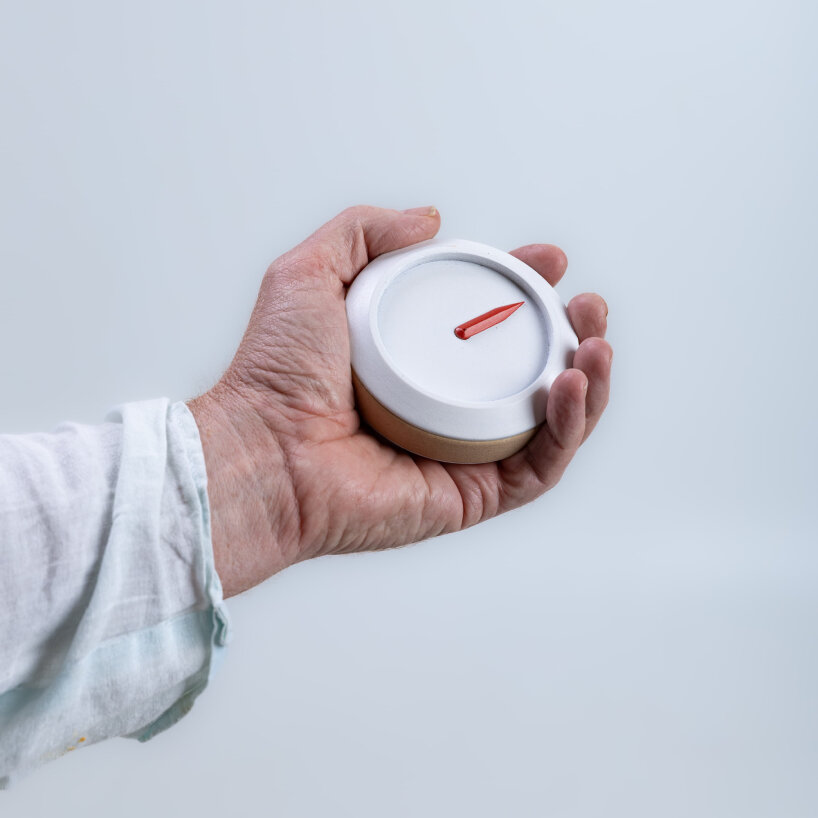
Aumens introduces a wooden compass with a single red arrow to help lead people with dementia safely to their homes. Activating automatically when picked up and turning off when placed down, the device has no power button to remember, no startup sequence, and no confirmation screen. Movement here becomes the interface, and this design choice removes one of the most common failure points in assistive devices: forgetting to turn them on. There’s a recessed button, hidden from casual contact, that can only be pressed with a pin.
When pressed near the front door, the device stores that location as ‘home’ to avoid any accidental resets while walking. Once outside, the wooden compass for people with dementia has no options. This means it doesn’t ask where the user wants to go. It only ever points home. The team says that there have been studies behind the project that show that changing modes or meanings caused confusion for the user, so the device only leads the user to their homes. Optional vibration and sound cues support the visual arrow, and the team adds that these alerts are not alarms but reminders to help the users remember to hold or look at the device.

Aumens co-designs the device with over 100 users
The wooden compass began with a problem that is both practical and deeply personal: people with dementia can lose their sense of direction even in familiar neighborhoods. A short walk to the grocery store can turn into a stressful and dangerous situation, not because the route has changed, but because orientation has. The purpose of the device is to guide someone home and nothing else. That focus shaped every design decision. From the start, the project rejected screens, maps, menus, and notifications.
Instead, it centers on a single, persistent action: follow the arrow. Research led by Prof. Dr. Ir. Rens Brankaert showed that people with dementia respond better to clear, physical cues than to abstract digital information. The wooden compass was co-designed with more than 100 people living with dementia, along with their partners, family members, and caregivers. Early prototypes were tested, rejected, simplified, and tested again, which involved a three-month pilot and 30 people with dementia using the working device every day. In the end, the users were reluctant to return the device, a reinforcement for the team to proceed with the release. Aumens plans to launch the Compass in 2026, with a subscription that includes connectivity, the caregiver app, and continuous updates.

project info:
name: Compass
design: Aumens
shop
your own online design shop — no sales commission collected