hotel by ccd reinterprets nomadic cultural patterns through dispersed brick volumes in china
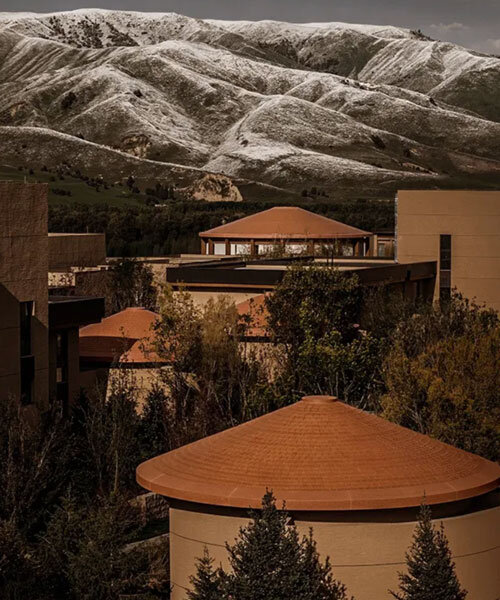
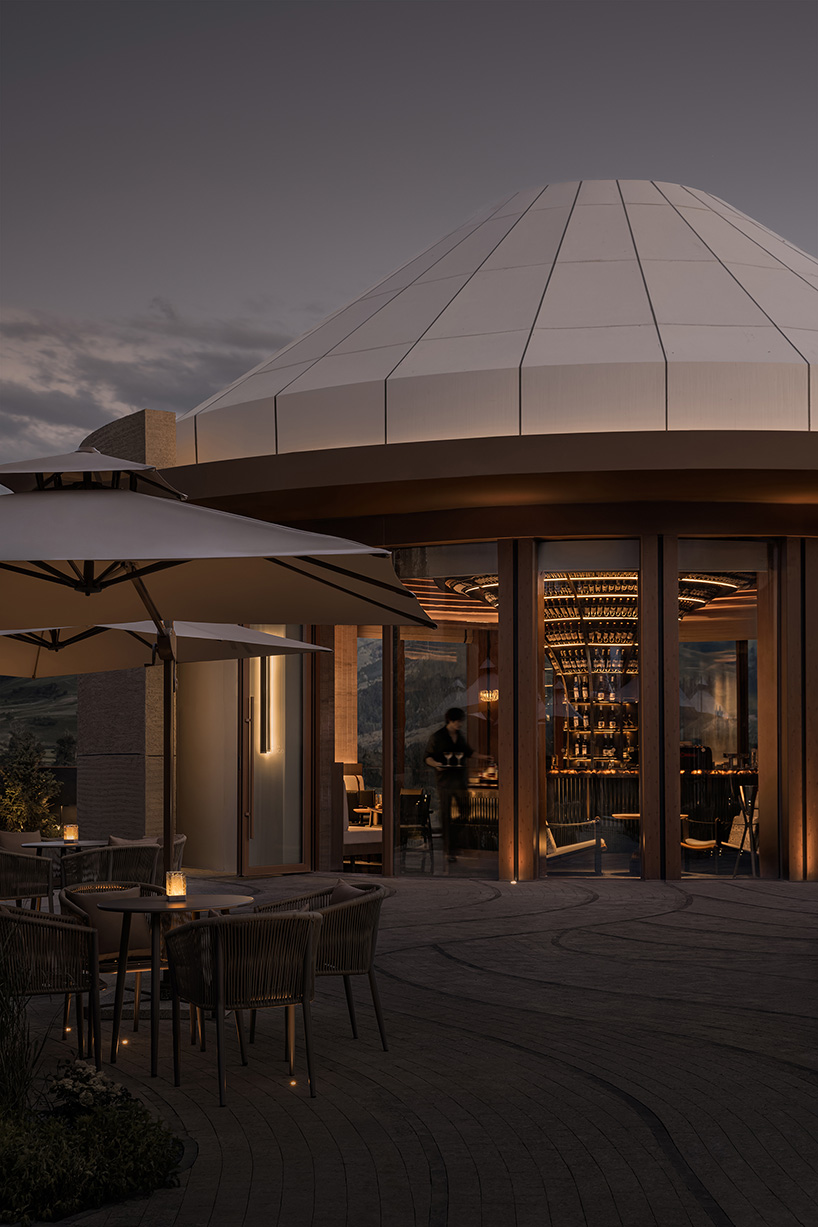
domed structures and circular planning reference the traditional yurt dwellings.
CCD’s design for Hotel Indigo Nalati draws on Nomadic Culture
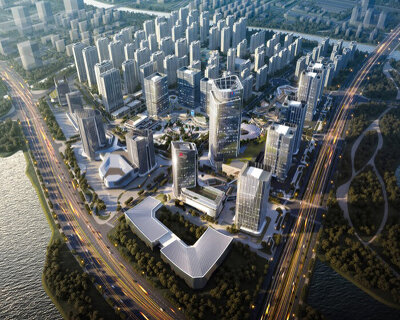
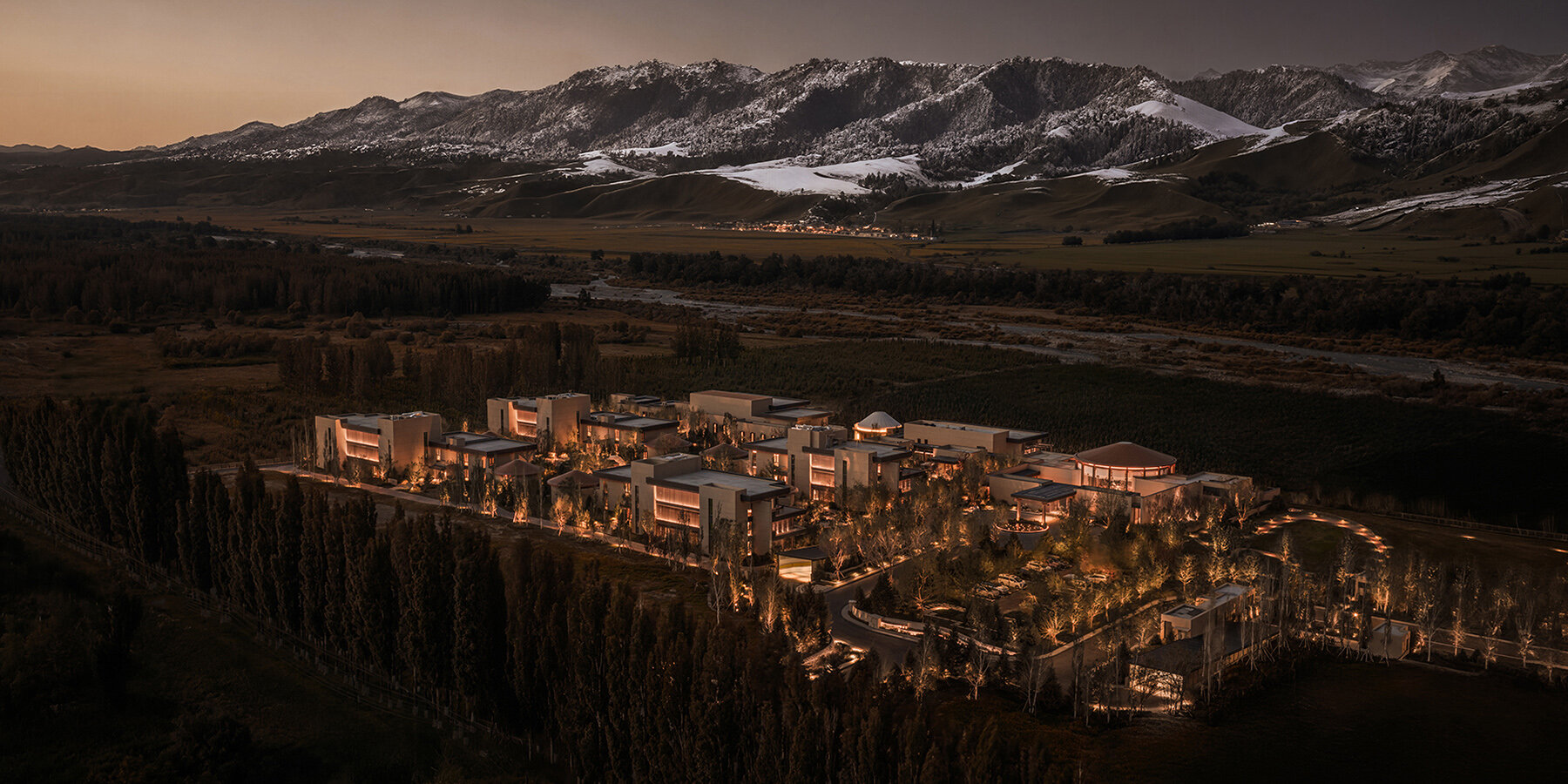
Hotel Indigo Nalati is located at the junction of the Duku Highway and the Ili ‘Figure-8’ Scenic Loop in Nalati Town, within the Ili Kazakh Autonomous Prefecture of Xinjiang, China. Set within an expansive landscape of steppe and framed by the Tianshan Mountains, the hotel occupies a strategic position along a major scenic route. The design by CCD is structured around the concept ‘A Grand Journey Along the Duku Highway, Through the Seasons of Nalati,’ using the Kazakh word mausym, meaning ‘season,’ as a thematic framework to interpret seasonal change and nomadic cultural patterns.
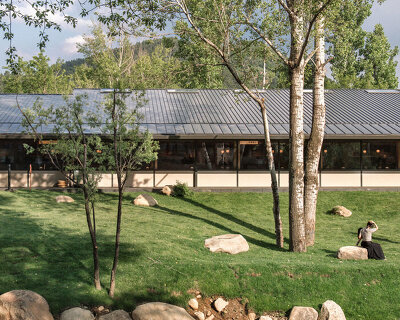
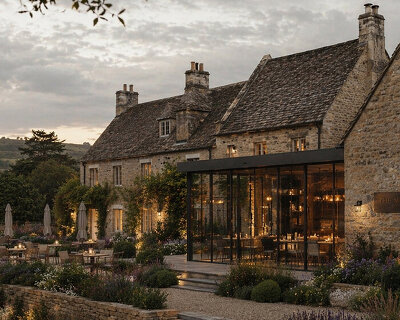
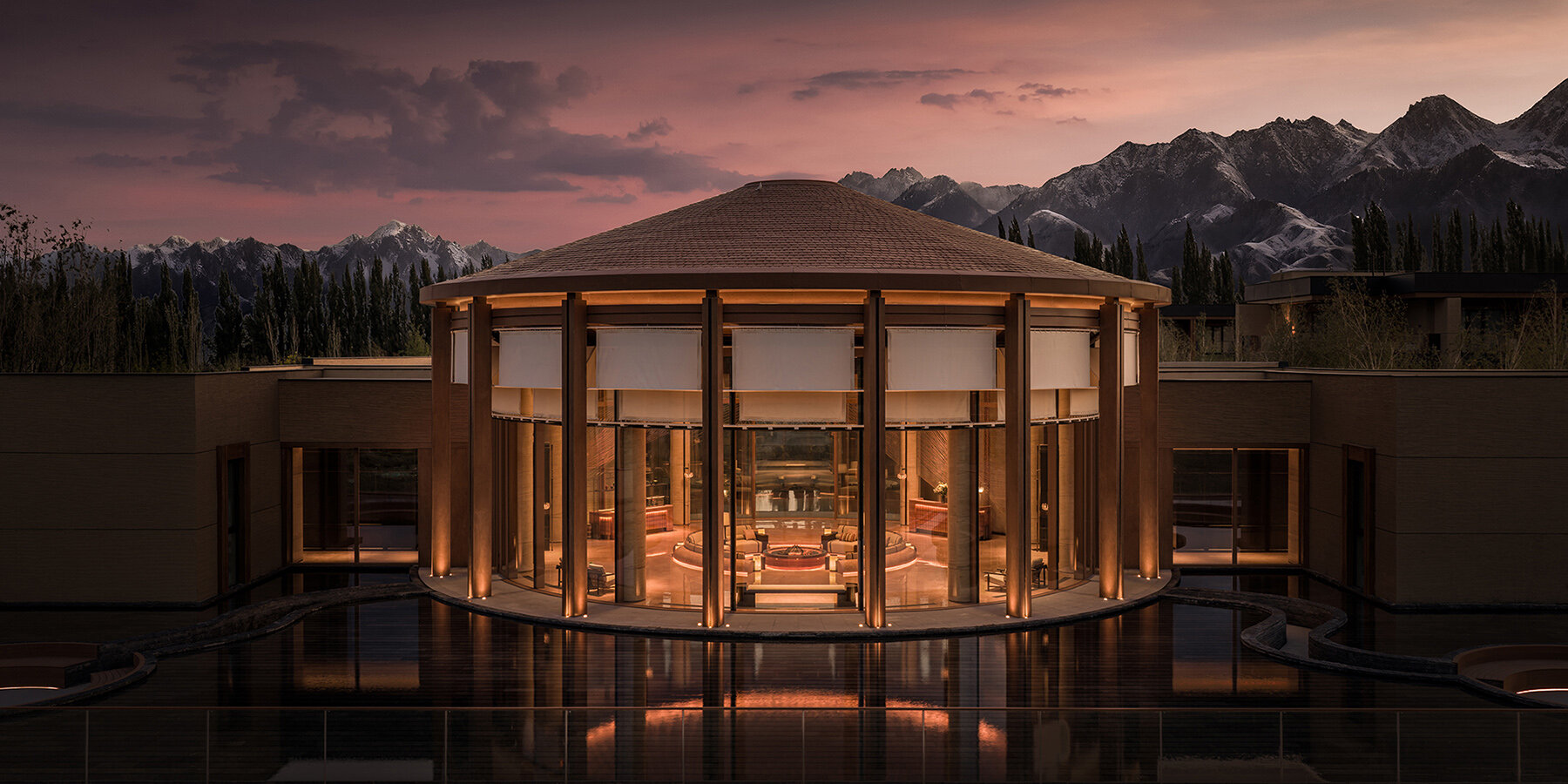
The architectural language draws from the spatial logic of steppe nomadic life. References to traditional yurts and winter settlements are abstracted into form, circulation, and material choices. Rather than a single mass, the hotel adopts a dispersed layout, with multiple building volumes distributed across the site and connected by winding paths through a forested landscape. From a distance, the complex reads as a clustered arrangement integrated into its surroundings, allowing landscape systems to function as part of the hotel’s ecological and spatial framework.
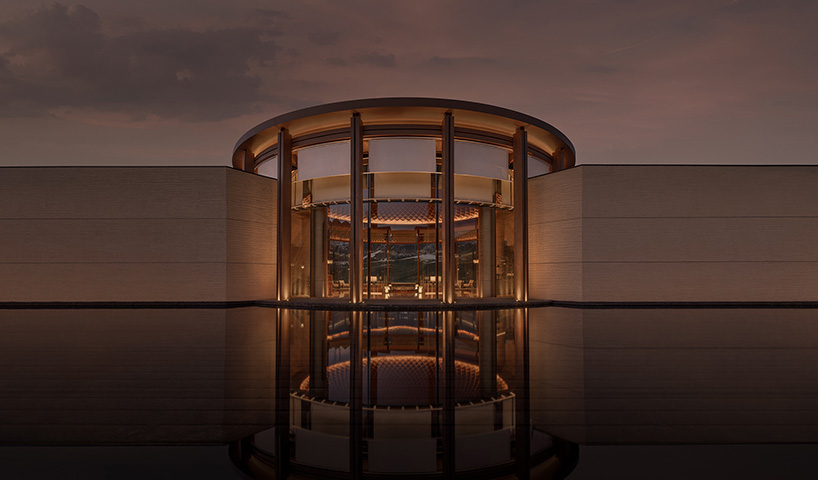
The arrival sequence is defined by a curved canopy inspired by the geometry of the Nalati sunrise. This canopy shelters the drop-off area and establishes a transitional courtyard space between the exterior landscape and interior programs. Warm-toned materials and soft curvature reference the spatial enclosure of an Aul, a traditional Kazakh nomadic settlement. Subtle references to local geography and heritage, including the Tianshan Mountains, Nalati sunrise, Gongnaisi River, and Wusun totem forms, are incorporated into the architectural detailing of the arrival zone.
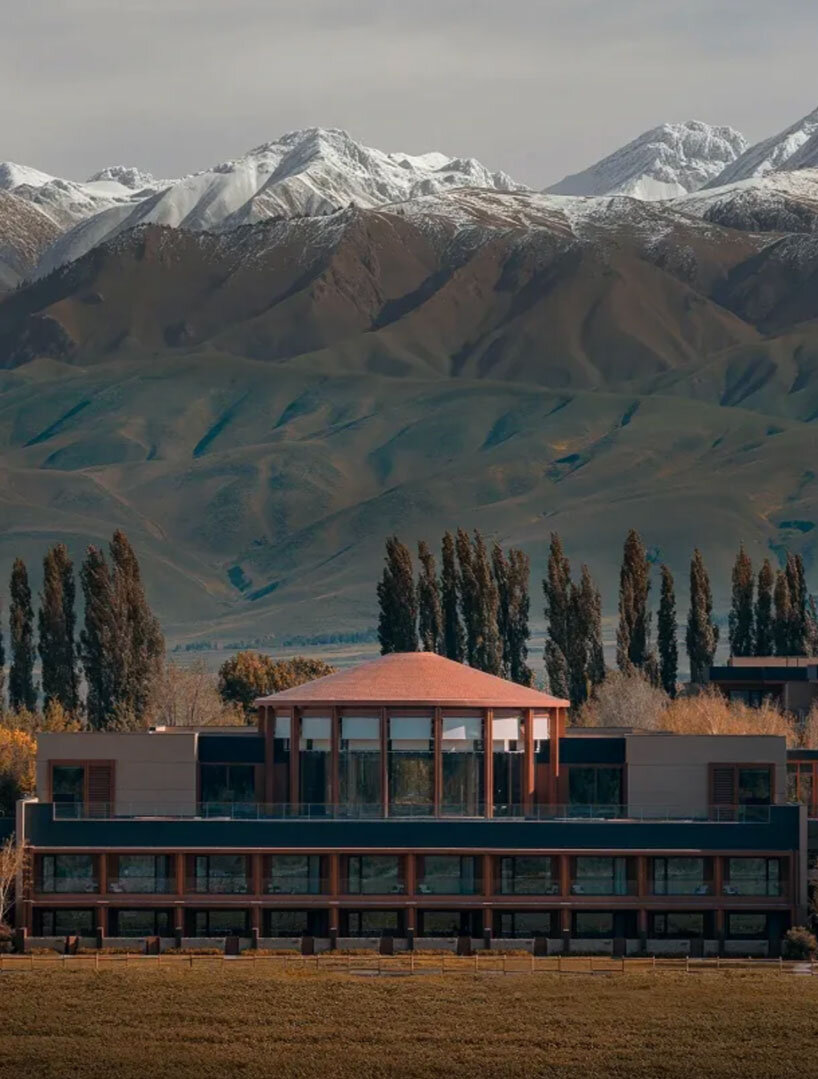
material restraint and framed views link interiors to landscape
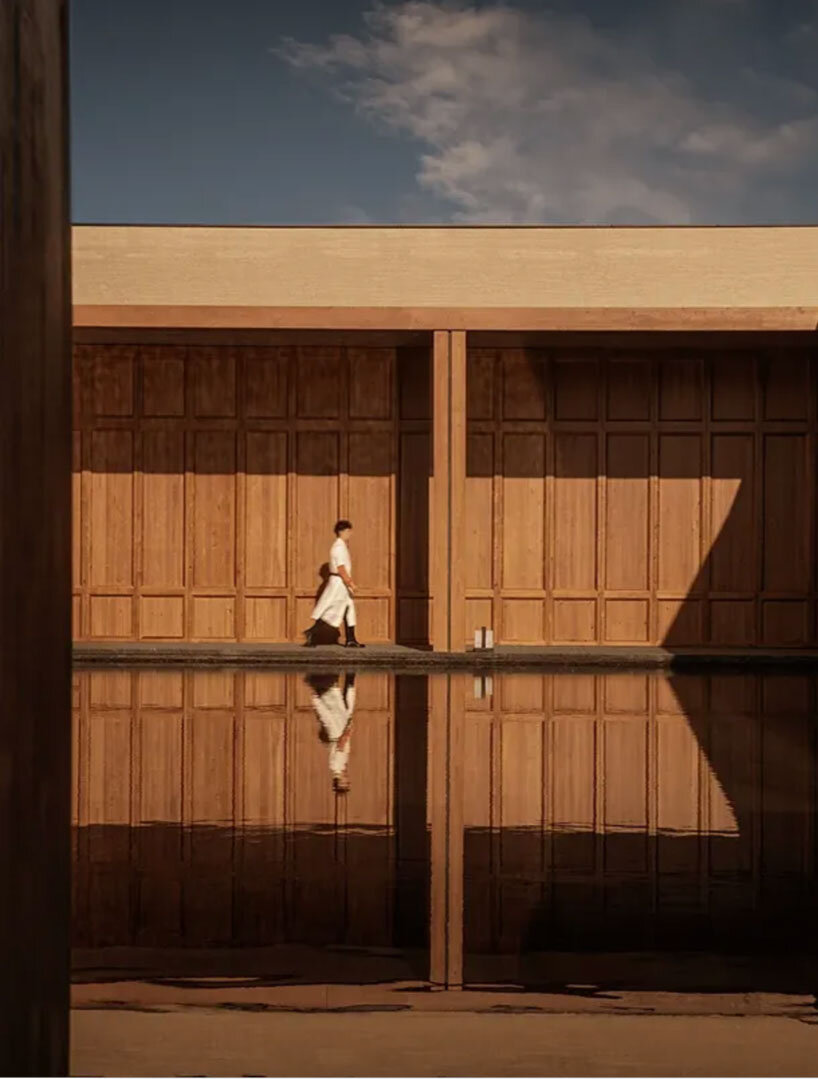
Light is used as a primary spatial device throughout the courtyard and entrance areas. Natural light enters through layered openings and filtered surfaces, animating stone and timber elements while maintaining a controlled, subdued atmosphere. The material palette emphasizes stone, wood, and brick, balancing solidity with openness and reinforcing the project’s connection to place and climate.
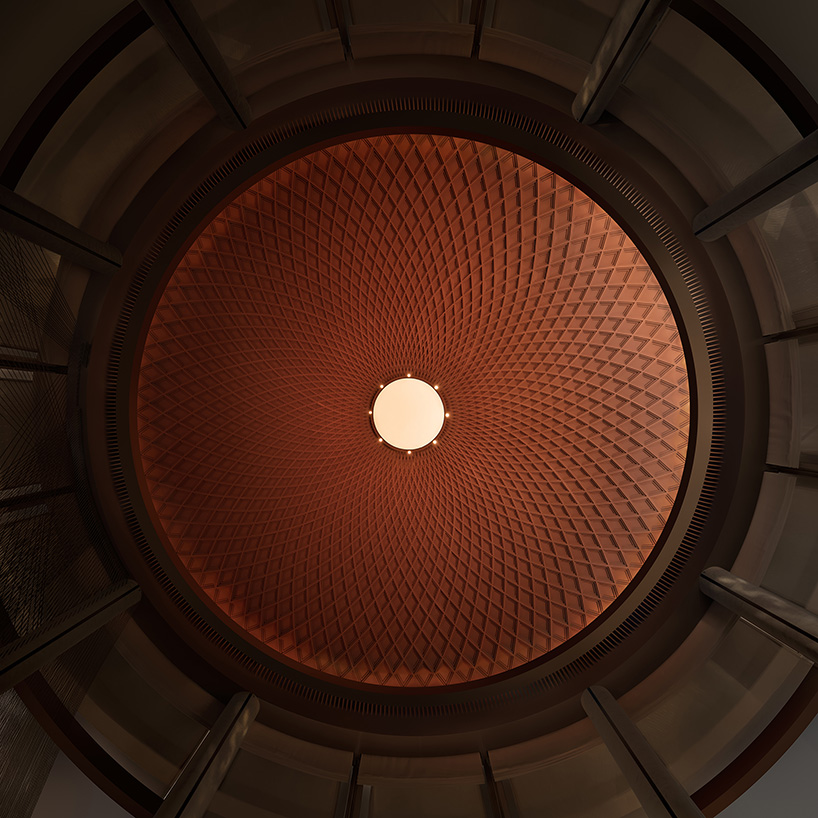
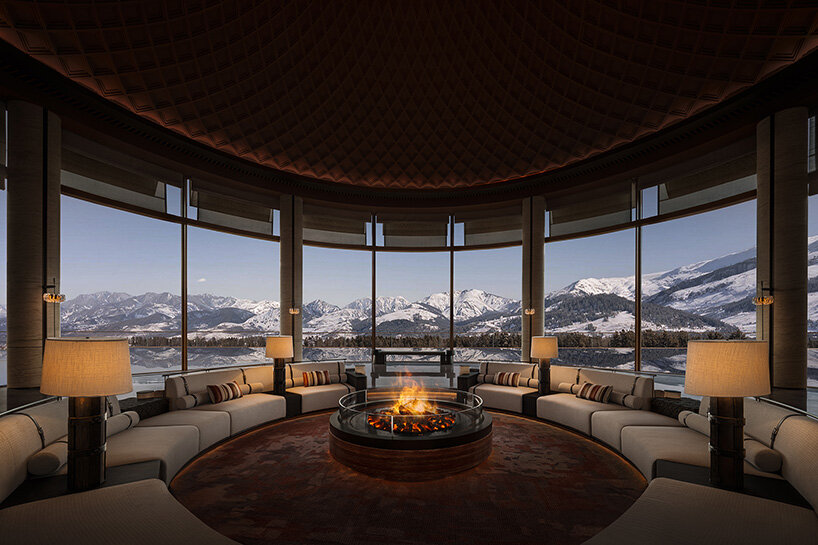
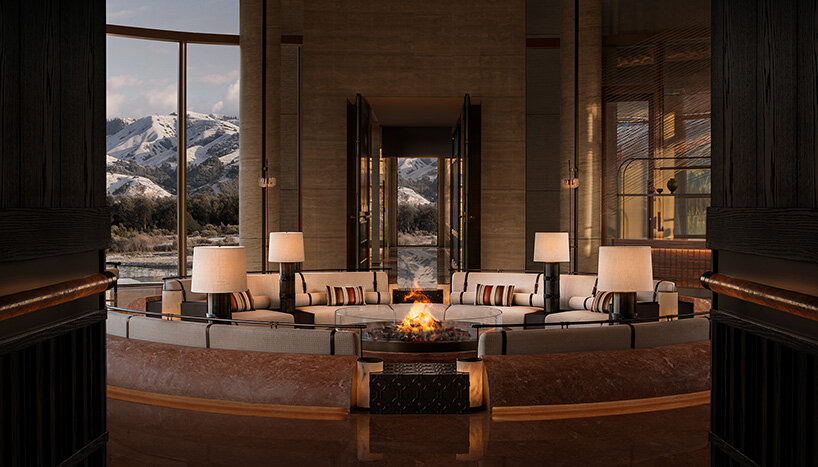
The design team at CCD organizes the hotel lobby beneath a large domed structure that references the spatial enclosure of a traditional yurt. Earth-toned brick walls and evenly spaced structural columns establish a rhythmic interior order. The dome ceiling features layered, scale-like patterns that modulate light while reinforcing the verticality of the space. A large curved window frames views toward the Nalati Grassland and the Tianshan Mountains, visually extending the interior toward the surrounding landscape.
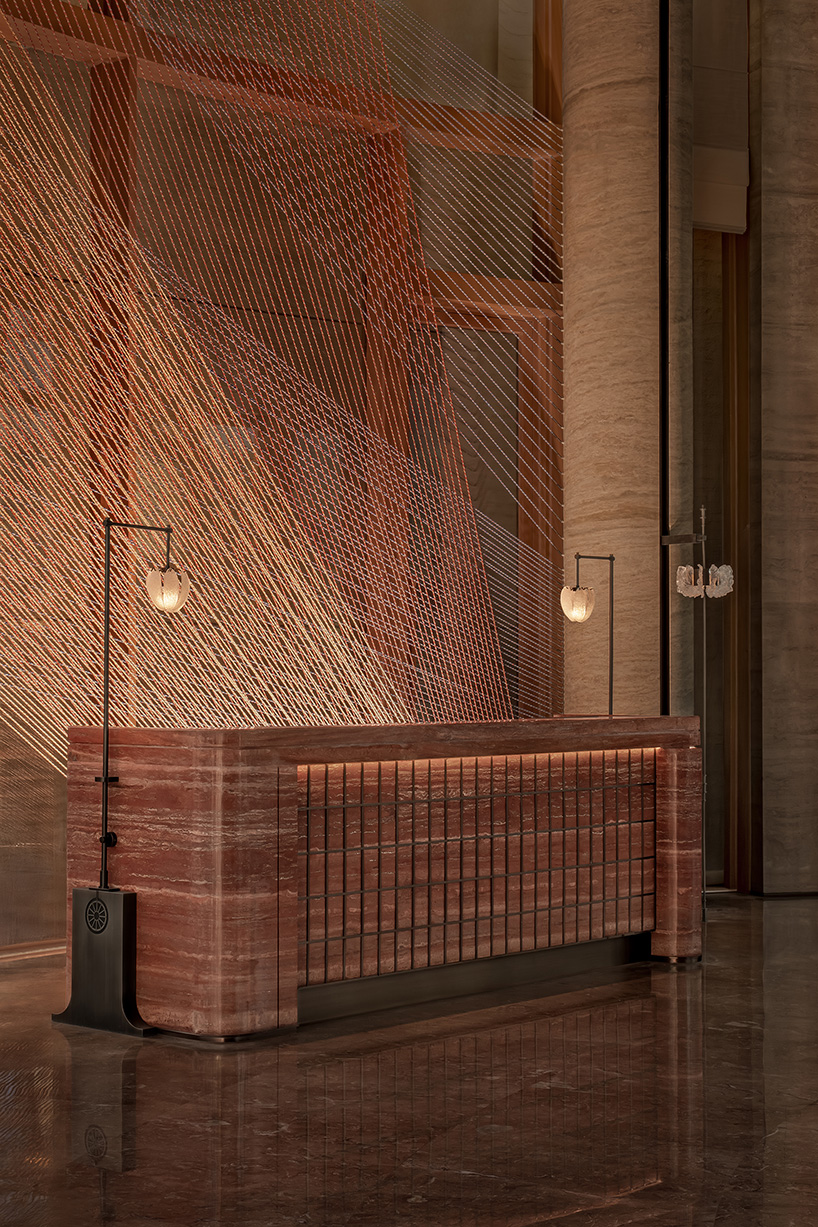
At the center of the lobby, a contemporary fireplace installation reinterpretates the traditional hearth, functioning as both a spatial anchor and social gathering point. Seating is arranged to encourage informal use while maintaining clear circulation. Decorative elements incorporate regional craft traditions, including felt-thread artworks behind the reception desk and patterned carpets derived from local motifs. These elements are integrated as part of the architectural composition rather than applied ornament.
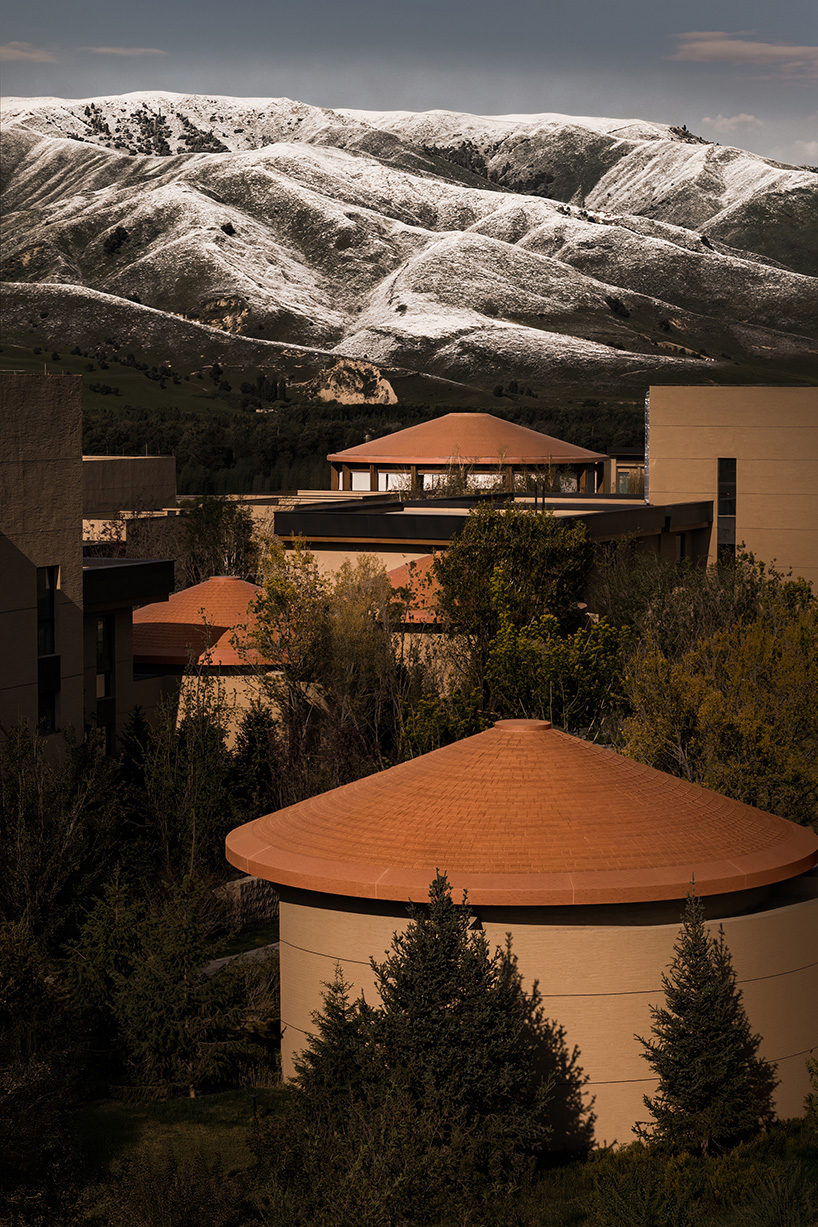
Circular layouts and yurt-derived detailing form Hotel interiors
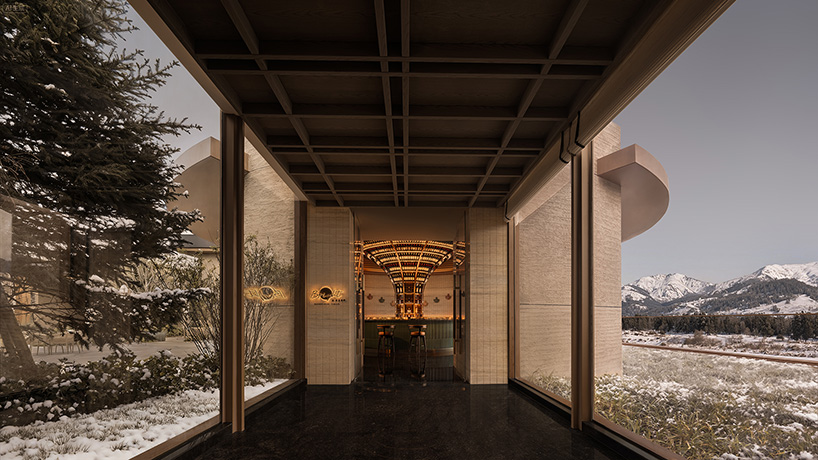
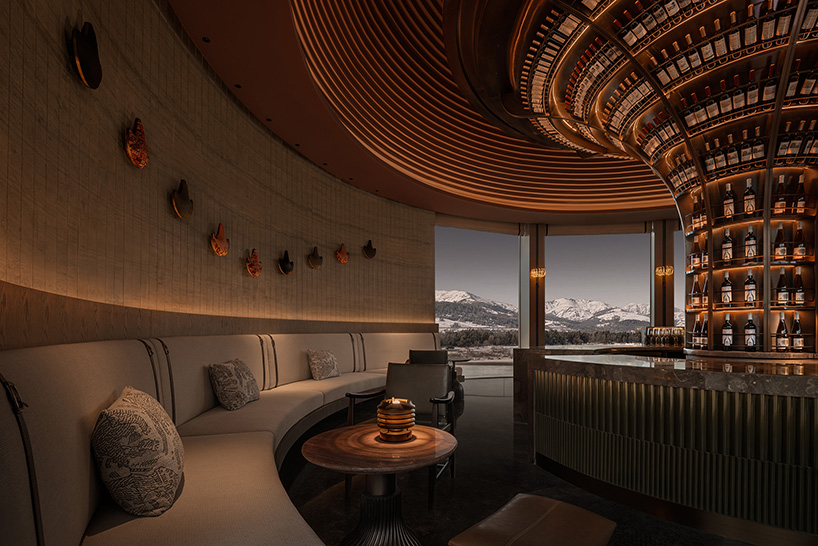
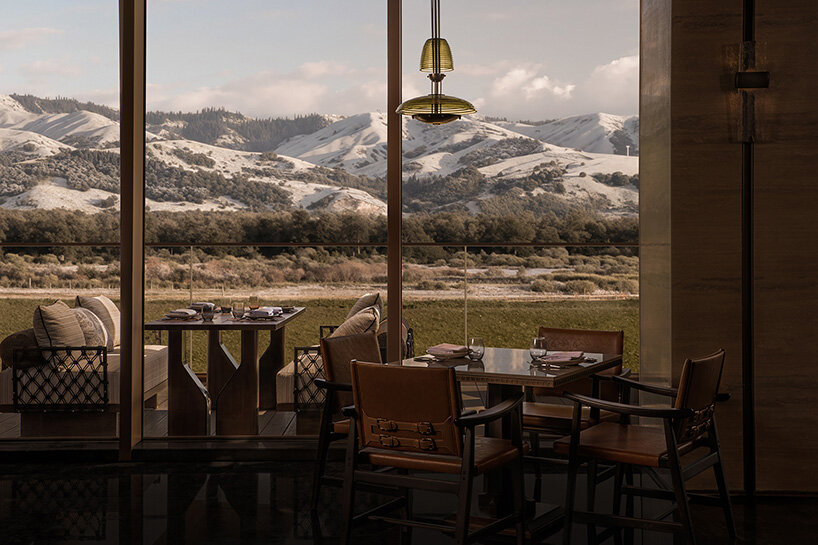
The hotel’s restaurant and bar, named ‘SHOW · A Neighborhood Café,’ reference Kazakh hospitality rituals through spatial layout and material expression. Circular planning elements and curved circulation paths define the space, with a central round bar positioned as a focal point. The layout emphasizes visual continuity and fluid movement while maintaining distinct zones for dining and social interaction. Material choices reinforce the connection to the surrounding environment. Brick, washed stone, timber, and metal surfaces reflect the tonal qualities of the steppe landscape, while curved geometries guide sightlines and movement. Interior and exterior spaces remain visually connected, allowing landscape views to form part of the dining experience without dissolving spatial boundaries.
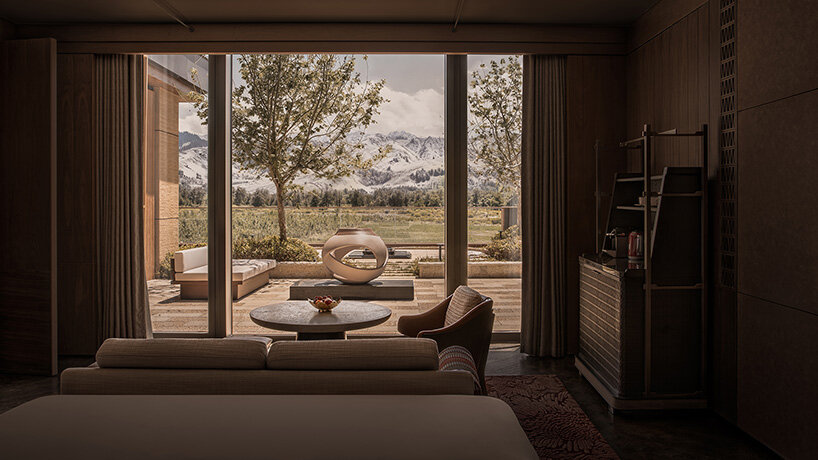
Guestroom design draws directly from the structure and spatial logic of the yurt. Carved wooden double doors introduce a layered threshold, while skylights reference the traditional yurt’s roof opening, allowing daylight and night sky views to define the room’s atmosphere. Interior partitions reinterpret the diamond-grid wooden framework typical of yurts, translating it into contemporary architectural detailing. Materials and finishes emphasize local craft traditions, including felt-inspired carpets, wall textiles, and decorative elements derived from grassland culture. Artwork, lighting fixtures, and custom details reference regional flora, fauna, and nomadic tools, including motifs inspired by horses and traditional instruments. Lighting elements in circulation areas draw from native plant forms, reinforcing seasonal and ecological themes. Bathrooms continue the yurt-inspired framework through patterned partitions and warm material tones, maintaining spatial continuity across the guestroom. Throughout the rooms, design decisions prioritize environmental responsiveness, material tactility, and cultural reference without relying on literal replication.
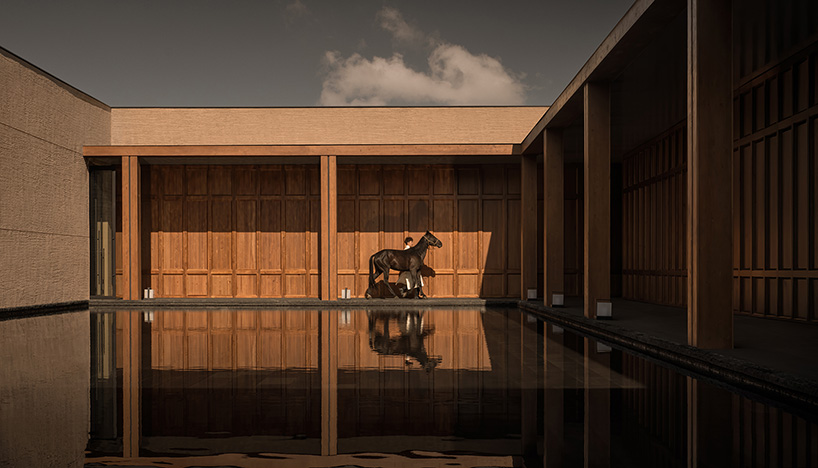
Hotel Indigo Nalati integrates architectural form, landscape, and cultural reference into a cohesive hospitality environment. Through a dispersed site strategy, seasonal narrative, and reinterpretation of nomadic spatial traditions, the project establishes a dialogue between contemporary hospitality design and the ecological and cultural context of the Nalati grasslands.
1/4
project info:
name: Hotel Indigo Nalati
interior designer: CCD / Cheng Chung Design (HK) | @ccd_chengchungdesign
architect: H2 Architecture Design Group
location: Nalati Town, Xinyuan County, Ili Kazakh Autonomous Prefecture, Xinjiang, China
area: 13,052 sqm
client: Xinjiang Huamei Resort Tourism Co., Ltd.
soft furnishings: CCD / Cheng Chung Design (HK)
VI design: CCD·ATG BEYOND
material platform: IDEAFUSION
photographer: Wang Ting
designboom has received this project from our DIY submissions feature, where we welcome our readers to submit their own work for publication. see more project submissions from our readers here.
shop
your own online design shop — no sales commission collected