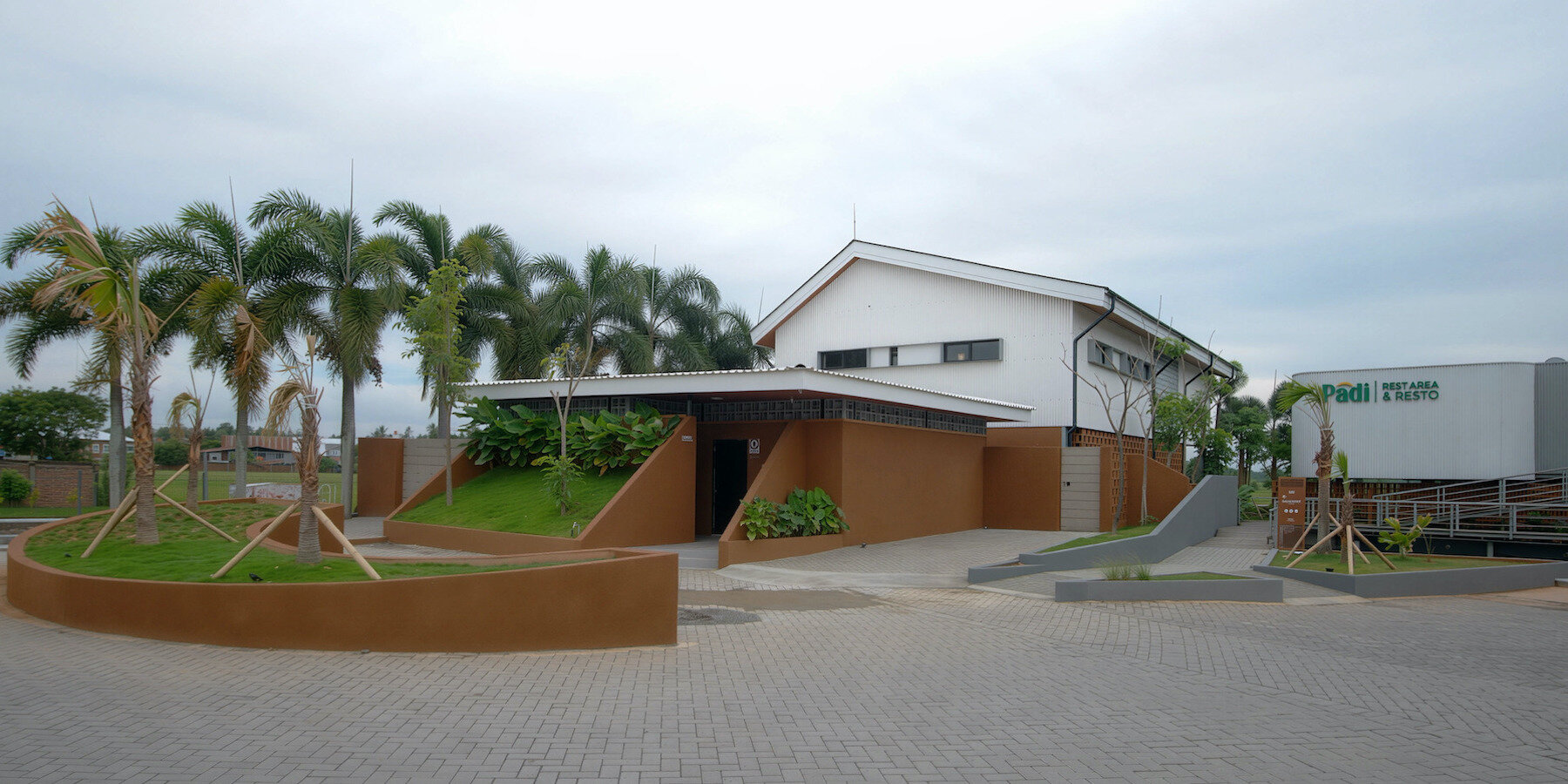
MIV Architects builds an Ecological Rest Area in South Sulawesi
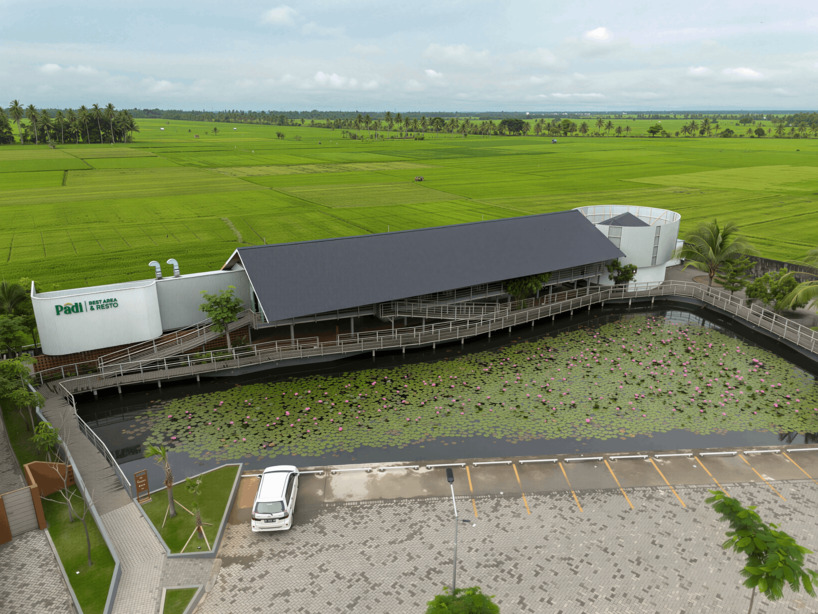
Situated within the rice fields of Anabanua Village, Wajo Regency, South Sulawesi, Indonesia, the PADI Rest Area transforms a former industrial excavation pit into a multi-functional architectural and ecological site. The project, developed by MIV Architects, redefines the traditional rest area by combining transit utility with community engagement and environmental restoration. The site originally functioned as a landfill excavation for a gas station, which, over time, filled with water and became overgrown with lotuses. The design repurposes this condition, converting construction waste into a central water feature around which the project’s four main building volumes, public toilets, a management office, a restaurant, and a musholla (prayer room), are organized. The buildings are arranged to follow the contours of the pond, facilitating natural cross-ventilation and creating a visual and spatial focus on the water element.
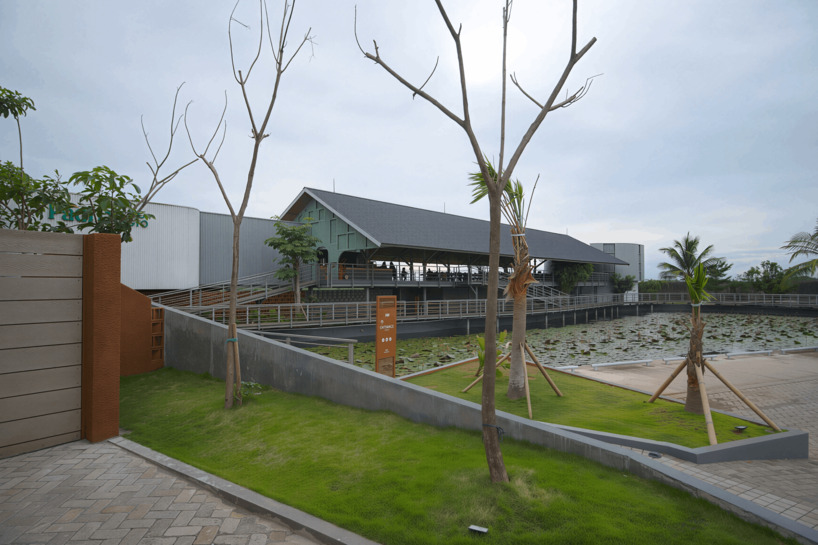
A floating wooden decking path along the pond guides visitors through a transitional experience, shifting from the high activity of the Trans-Sulawesi road to a quieter, more contemplative environment. The two-story management building functions as both a screen for staff dormitories and a visual buffer, delaying the main view of the rice fields until visitors reach the restaurant, reinforcing a controlled spatial sequence and a layered approach to sightlines. The architectural language draws on vernacular Buginese traditions, particularly the concept of the ‘Rumah Panggung’ (stilt house). Elevated floor plates protect the buildings from ground moisture while wide roofs shelter semi-open spaces, combining cultural references with contemporary construction methods. Exposed steel structures, zinc roofing, natural stone, and wood elements integrate industrial efficiency with local material aesthetics.
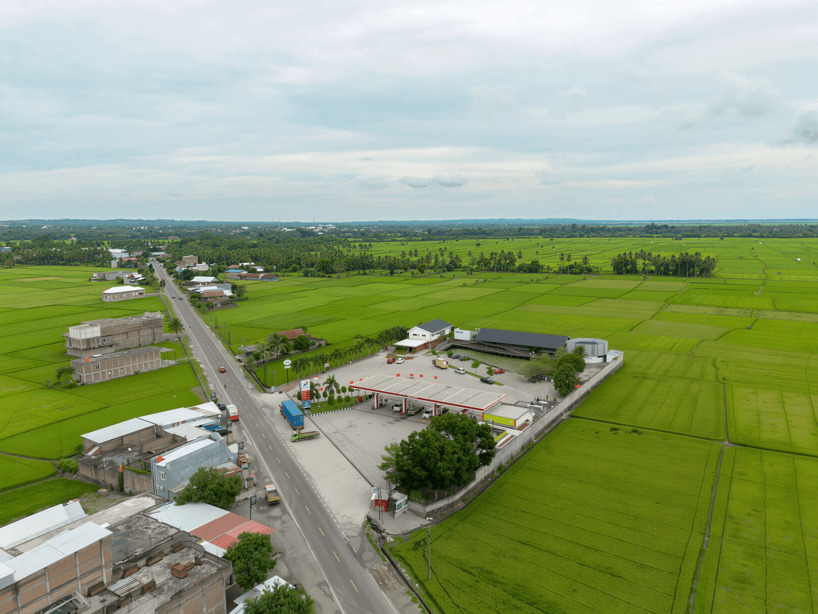
all images courtesy of MIV Architects
PADI Rest Area serves as both a transit stop and a community hub
The project by design studio MIV Architects also prioritizes socio-economic and community engagement. Construction followed a self-management (swakelola) model, enabling local artisans to take primary responsibility for building execution. This method reduced costs, circulated investment locally, and facilitated technical knowledge transfer. The participation of local labor extended to operational staffing, reinforcing community ownership and ensuring the facility functions as a shared resource.
Circulation throughout the site is designed to encourage interaction with the café and restaurant areas before reaching the musholla, supporting local economic activity while maintaining the integrity of the worship space. By integrating ecological restoration, vernacular references, and community involvement, PADI Rest Area operates as both a transit facility and a public hub, blending utility with cultural and environmental engagement.
PADI Rest Area is located within the rice fields of Anabanua Village, South Sulawesi
the project transforms a former industrial excavation pit into a public rest area
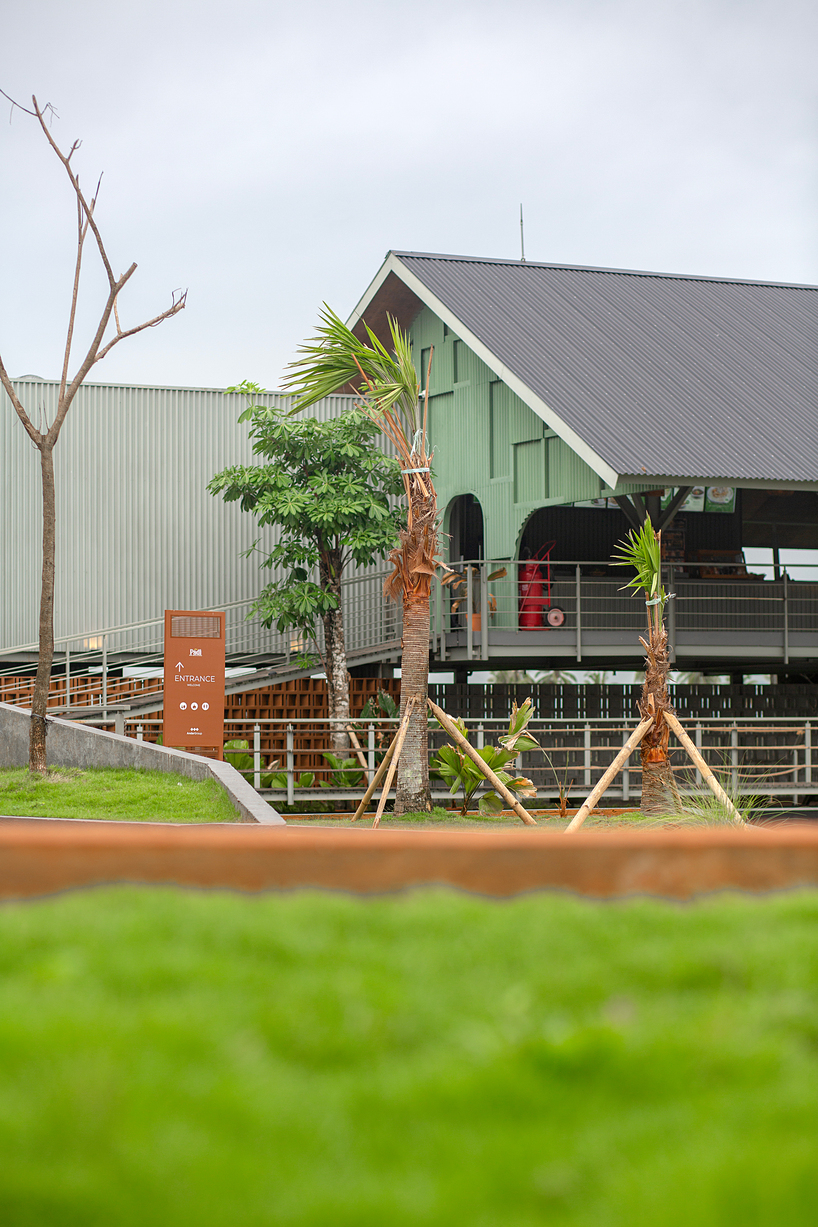
the architectural language draws on vernacular Buginese traditions
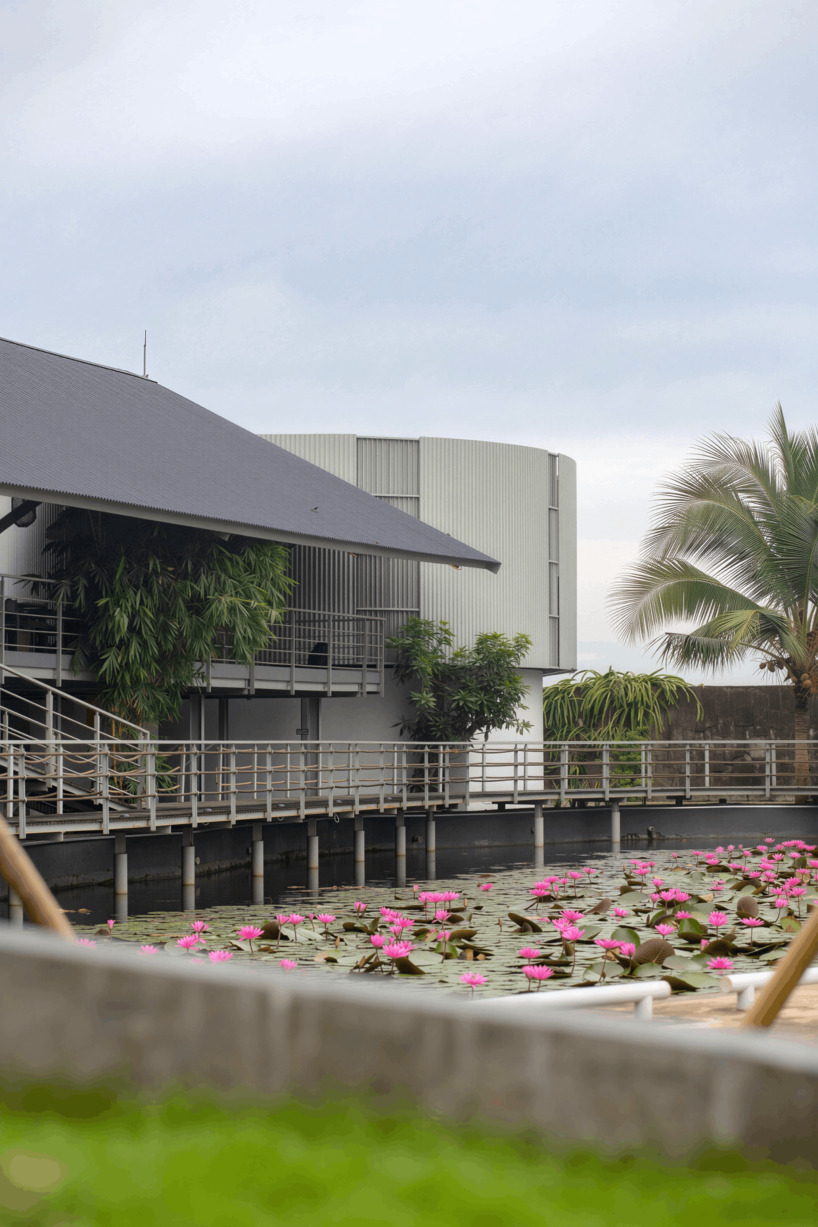
a lotus-filled pond forms the spatial center of the project
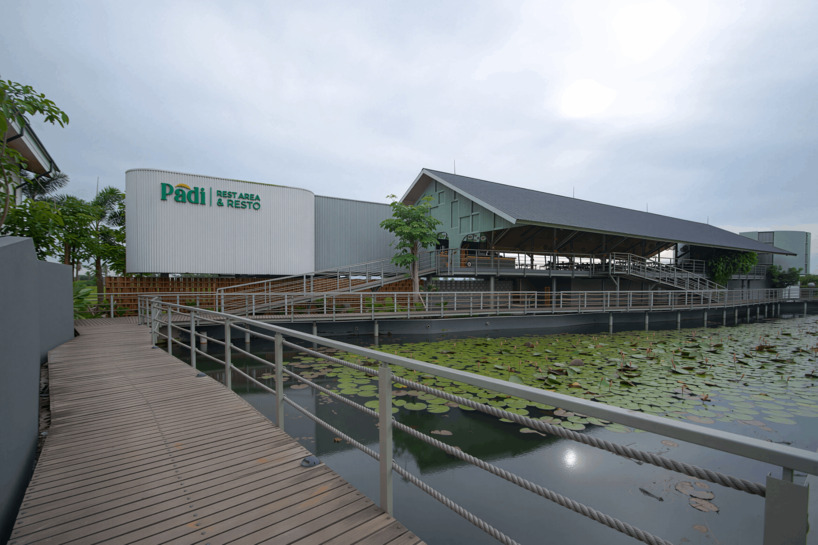
an abandoned landfill site was repurposed as an ecological water feature
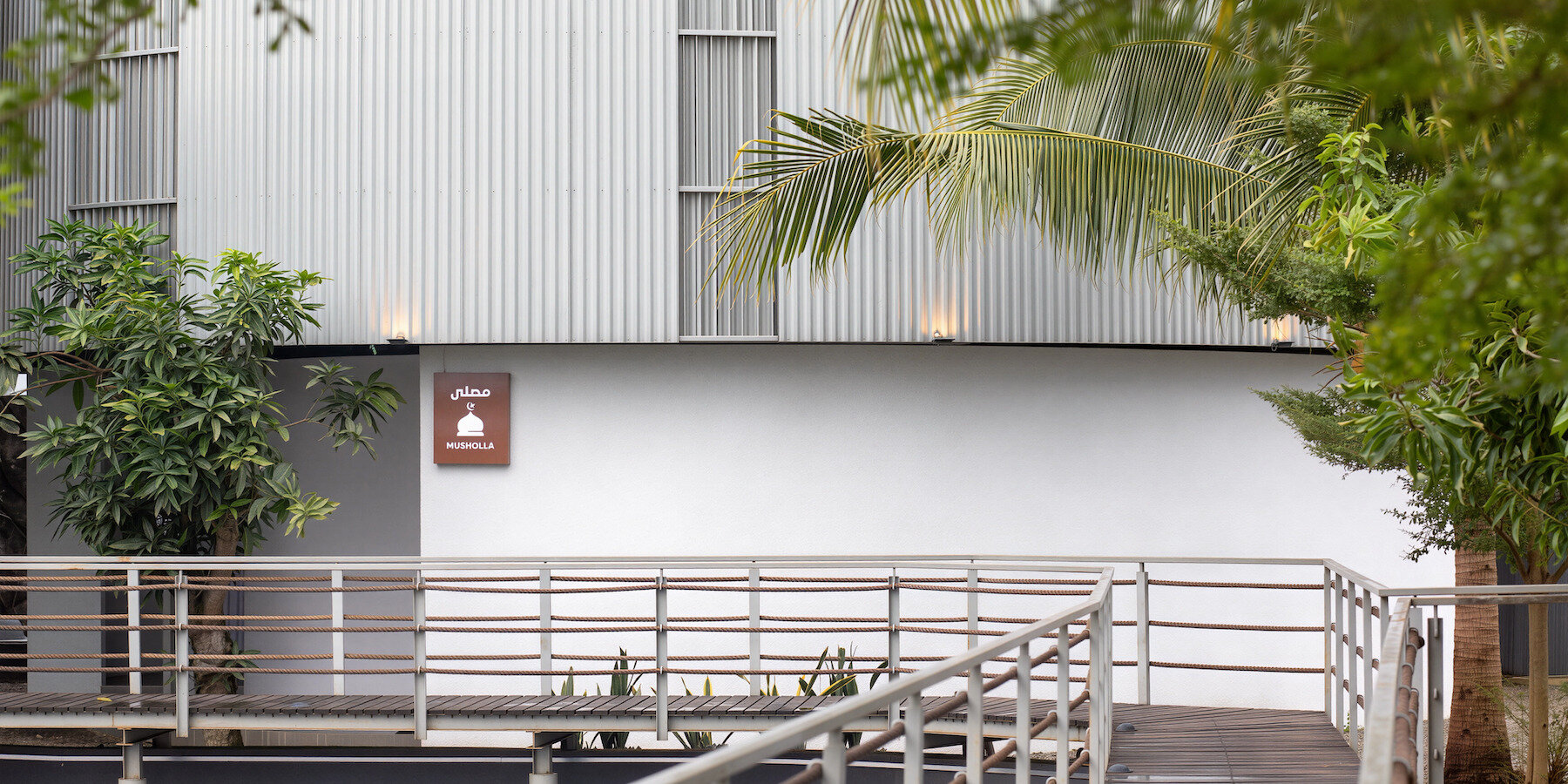
four building volumes are arranged around the pond’s contours
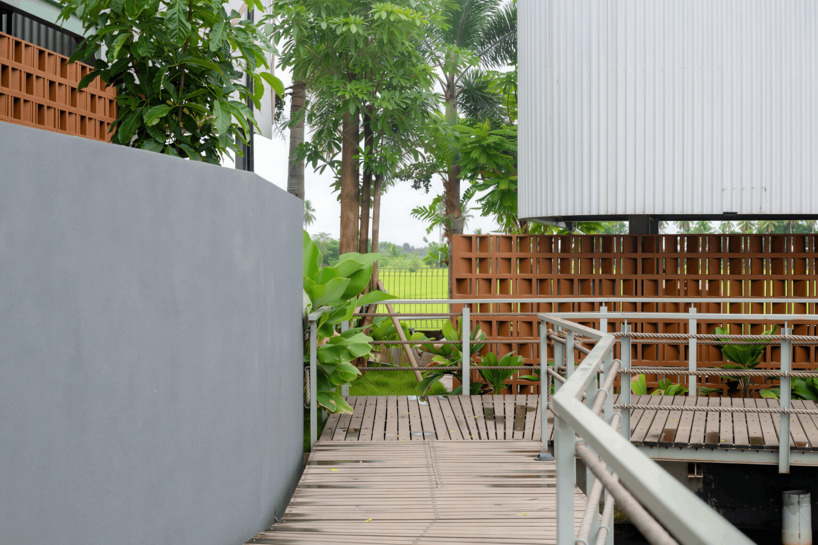
a floating wooden deck guides visitors along the pond’s edge

building placement supports natural cross-ventilation in a tropical climate
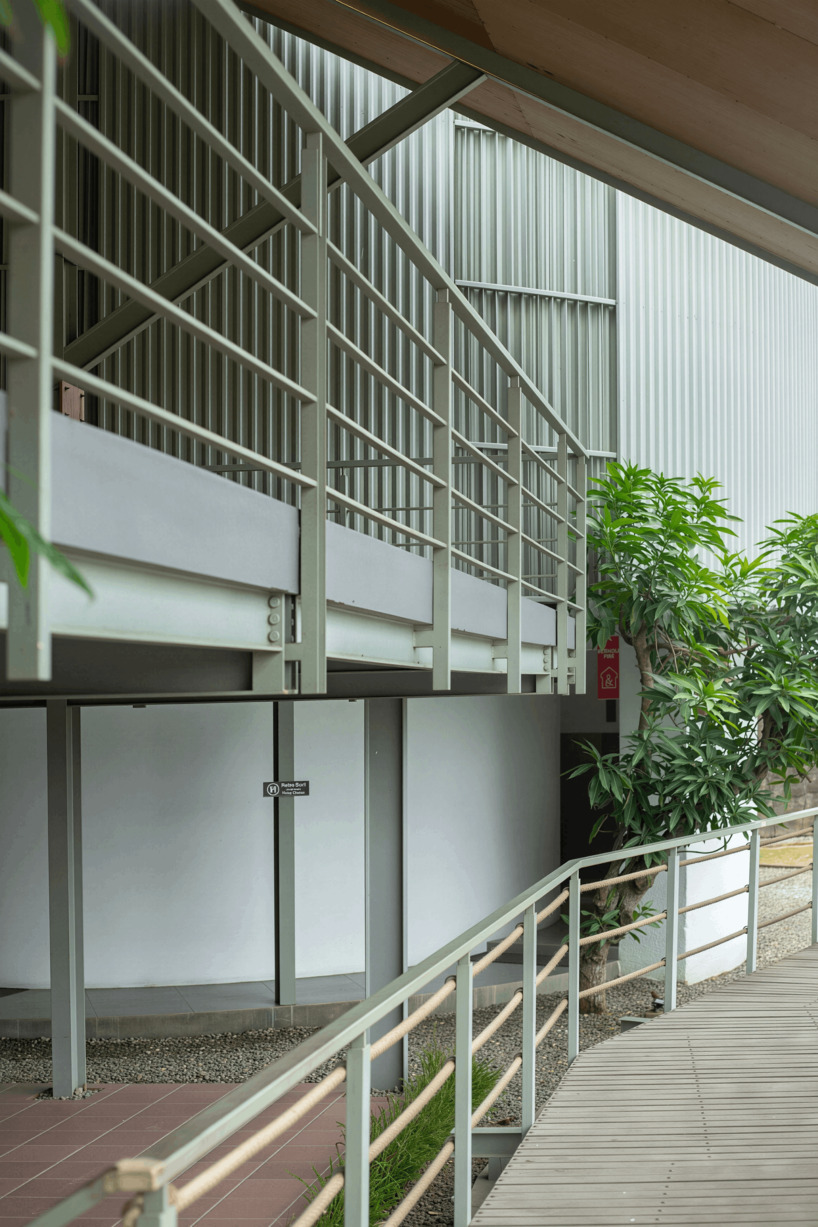
elevated floor plates protect interiors from ground moisture
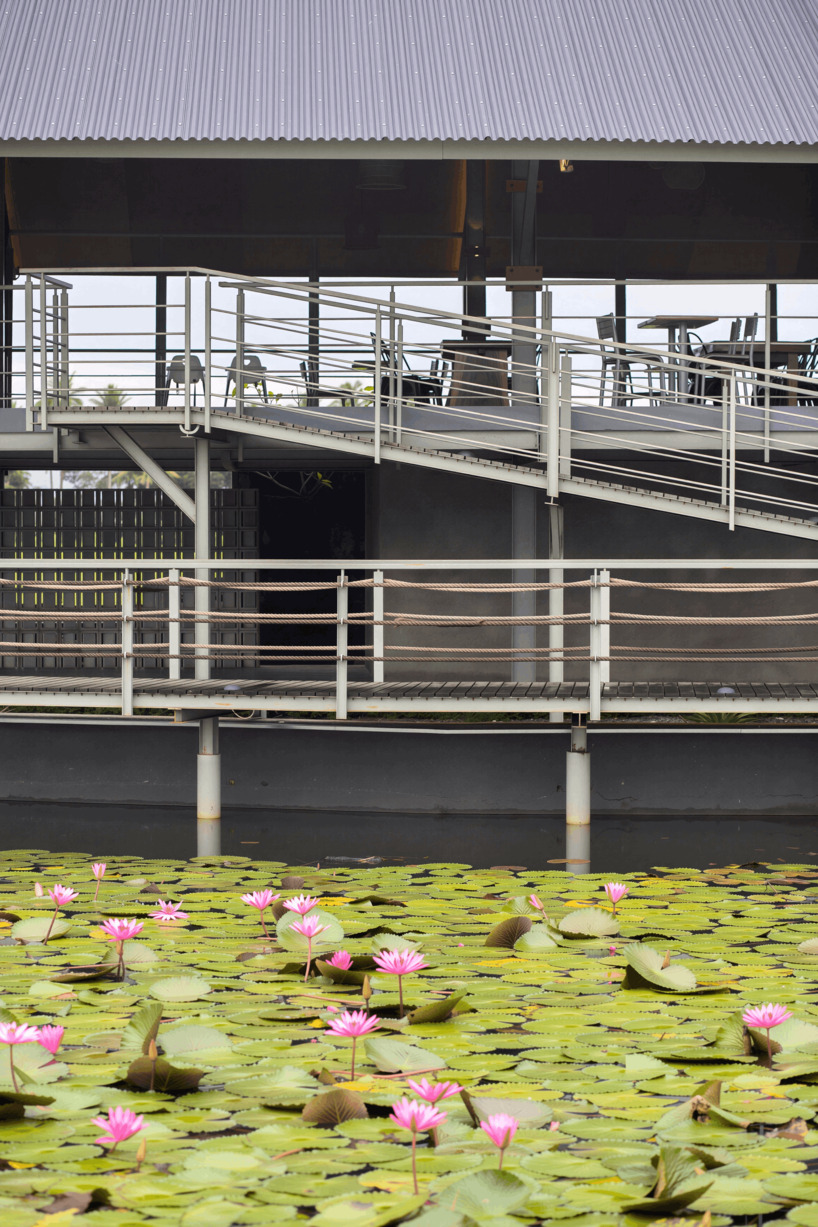
the rest area functions as both a transit stop and a community hub
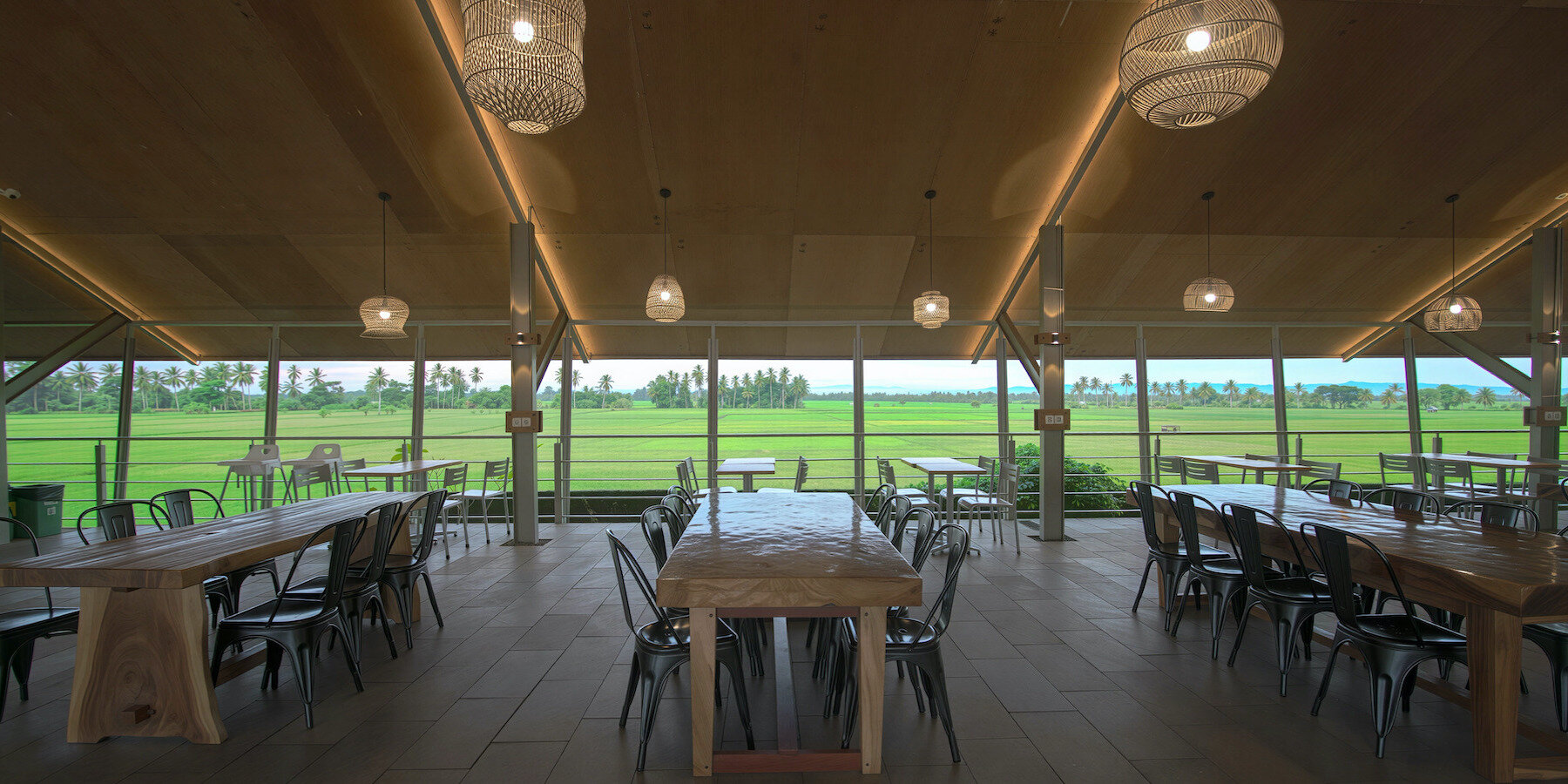
the material palette balances industrial construction with local aesthetics
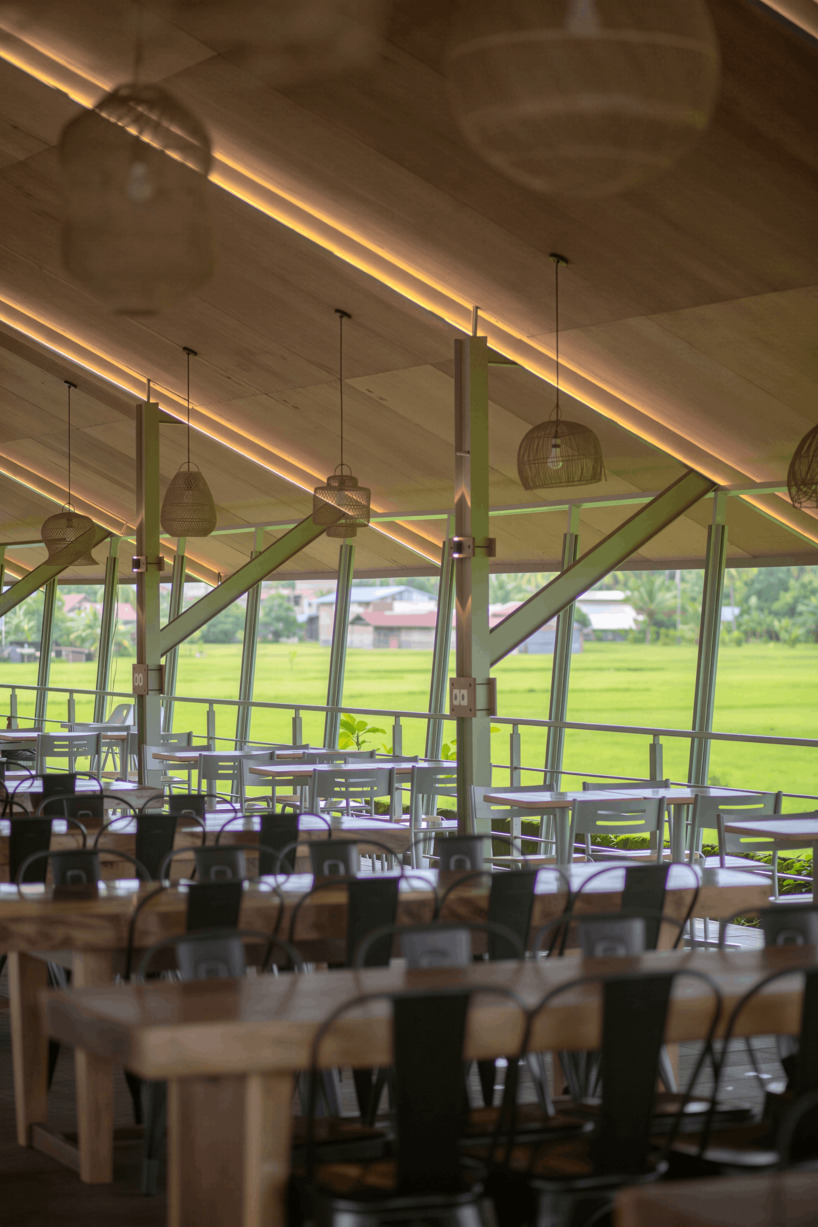
exposed steel and zinc roofing are paired with wood and natural stone
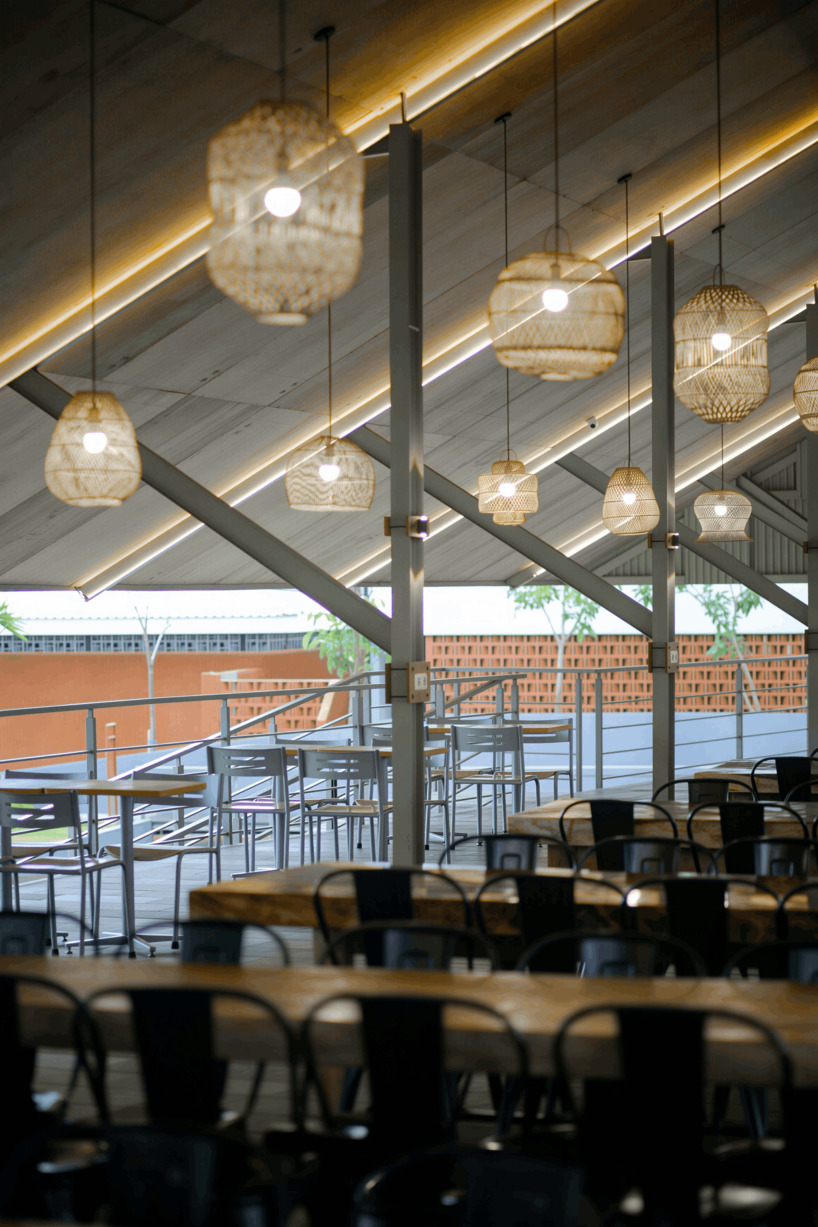
circulation routes lead visitors through café and restaurant areas
project info:
name: PADI
architect: MIV Architects
design team: Ikhsan Hamiru, Alfachri Kamarullah, Andi Nindyah Ekananda, Izan, Syahrul Hidayat, Chairil Ismi
location: Anabanua Village, Wajo Regency, South Sulawesi, Indonesia
designboom has received this project from our DIY submissions feature, where we welcome our readers to submit their own work for publication. see more project submissions from our readers here.
edited by: christina vergopoulou | designboom
architecture in indonesia (201)
 Feb 25, 2026
 Jan 26, 2026
 Dec 16, 2025
 Nov 16, 2025
 Nov 13, 2025
architecture on stilts (106)
 Feb 13, 2026
 Feb 05, 2026
 Jan 13, 2026
 Jan 08, 2026
 Dec 28, 2025
renovation and restoration architecture and design (1166)
 Mar 11, 2026
 Mar 10, 2026
 Mar 10, 2026
 Mar 10, 2026
 Mar 04, 2026
restaurant and café design (943)
 Mar 03, 2026
 Mar 02, 2026 Feb 25, 2026
 Feb 23, 2026
 Feb 21, 2026
steel architecture and design (400)
 Mar 12, 2026 Mar 10, 2026
 Mar 09, 2026
 Mar 07, 2026
 Mar 05, 2026
wood and timber architecture and design (1402)
 Mar 11, 2026
 Mar 09, 2026
 Mar 08, 2026
 Mar 05, 2026
 Mar 03, 2026
 Mar 11, 2026
 Mar 10, 2026
 Mar 08, 2026