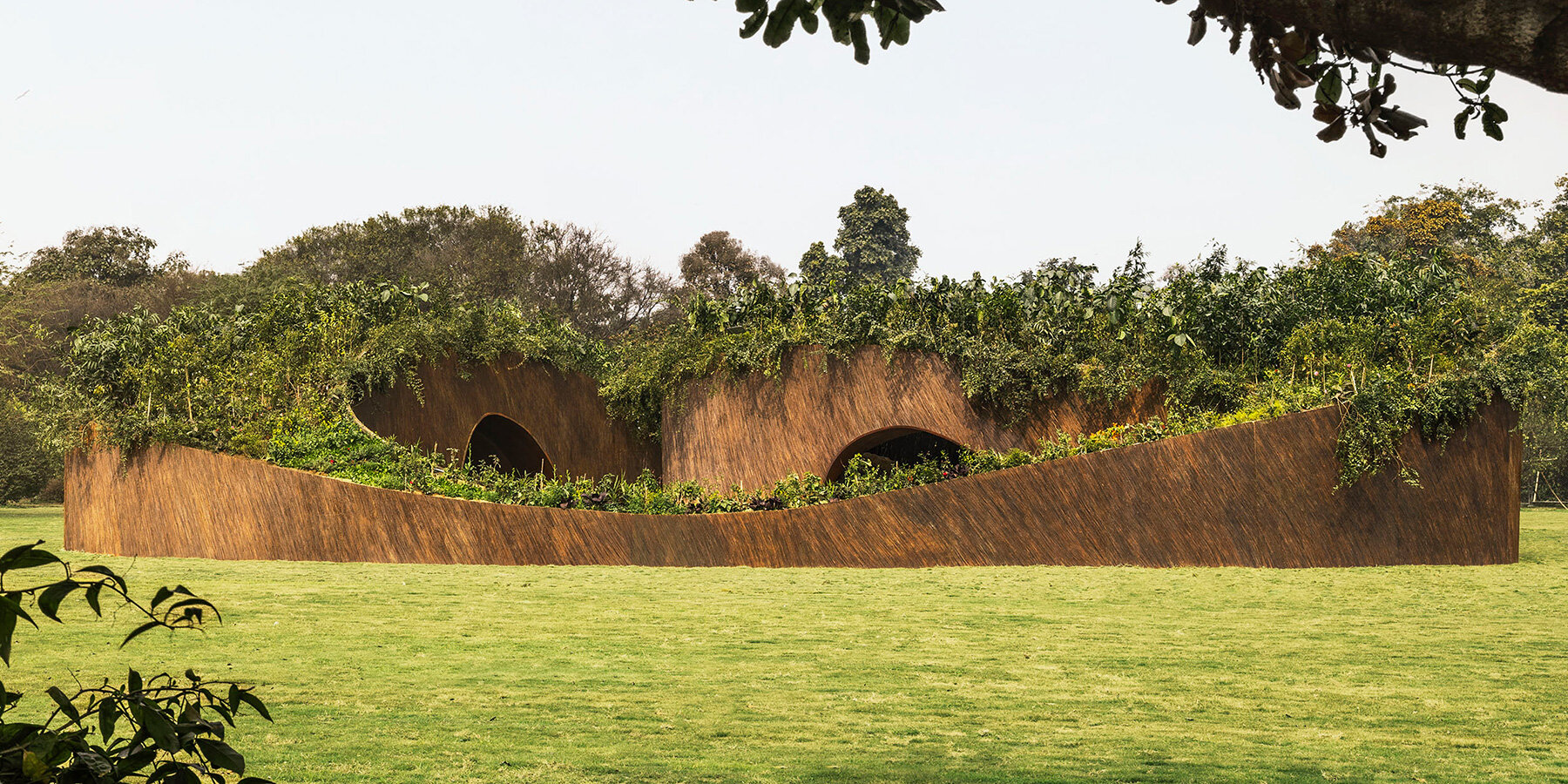
aranyani unveils its first architectural pavilion in india
In the gardens of Sunder Nursery in New Delhi, Aranyani presents Sacred Nature, the inaugural edition of the Aranyani Pavilion, on view from February 4th to 20th, 2026. Conceived as an annual architectural commission, the pavilion, designed in collaboration with T__M.space, marks the first time the conservation and creative initiative translates its ecological research into a built, walkable structure. ‘The Aranyani Pavilion explores sacred growth through geometry and material. It emerges from a dialogue between digital design and physical craft, allowing the architecture to grow from its context rather than be imposed on it,’ the architects tell designboom. ‘The spatial trajectory is intentionally slow, encouraging reflection and a quiet awareness of material, landscape, and movement.’
The spiral structure is built from upcycled Lantana camara, an invasive shrub introduced to India through colonial trade routes in the eighteenth century. Now covering more than 13 million hectares and threatening large areas of forest, lantana is recast here as a structural lattice, fabricated by Ekarth Studio. Above it, a living canopy of more than forty native plant species, including edible, medicinal, and culturally significant varieties, forms a functioning microhabitat.
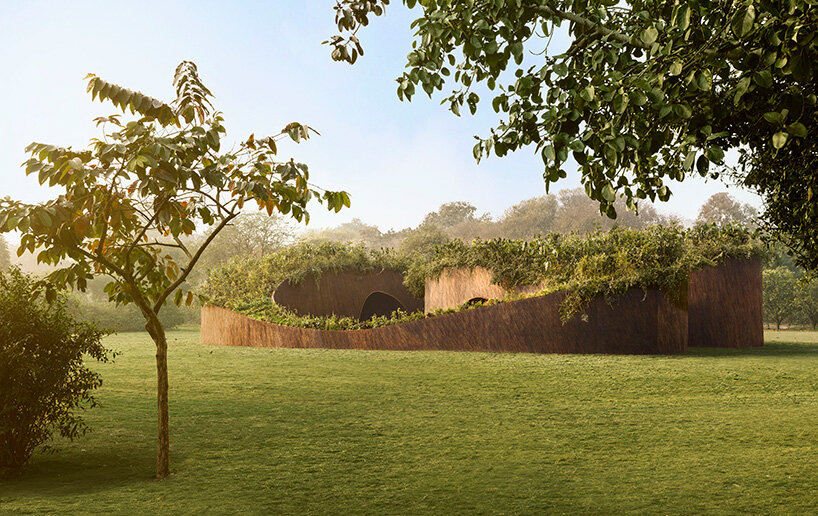
all images by Lokesh Dang, courtesy of Aranyani
‘sacred nature’ by t__m.space guides visitors along a spiral path
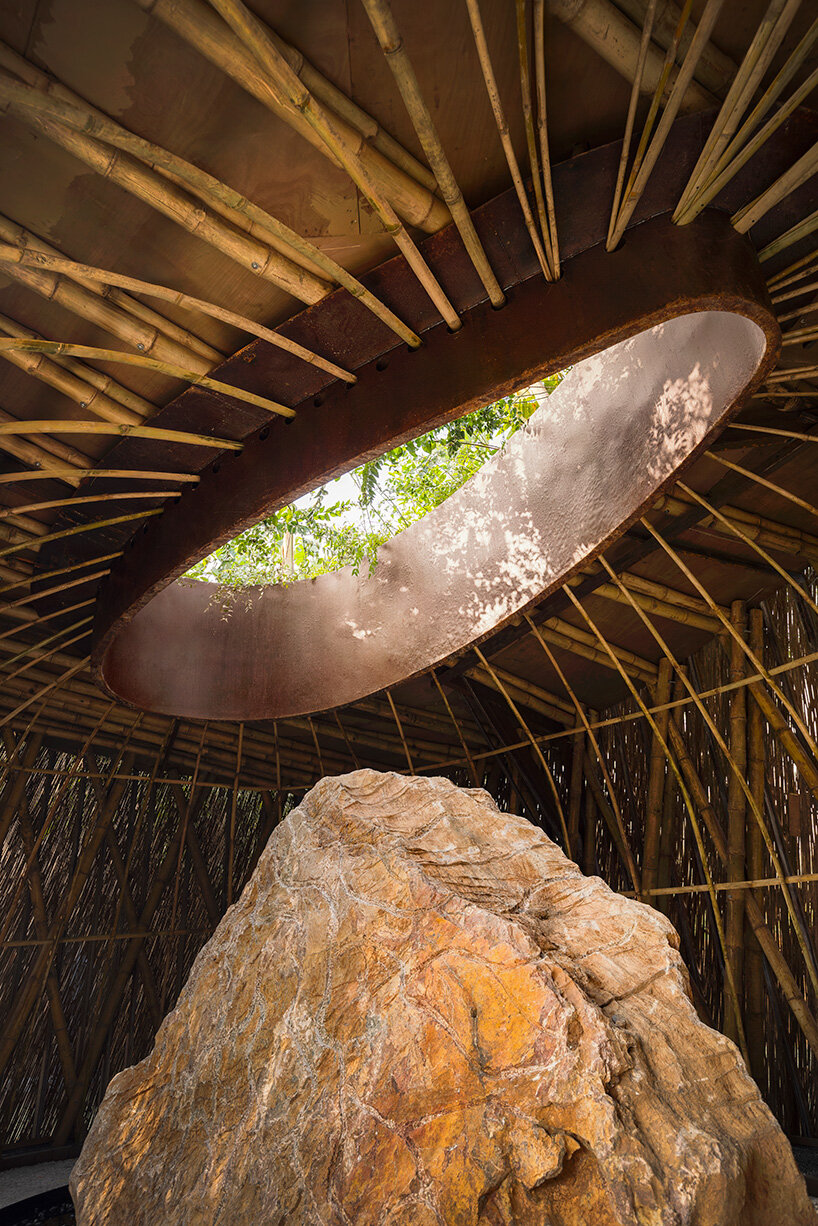
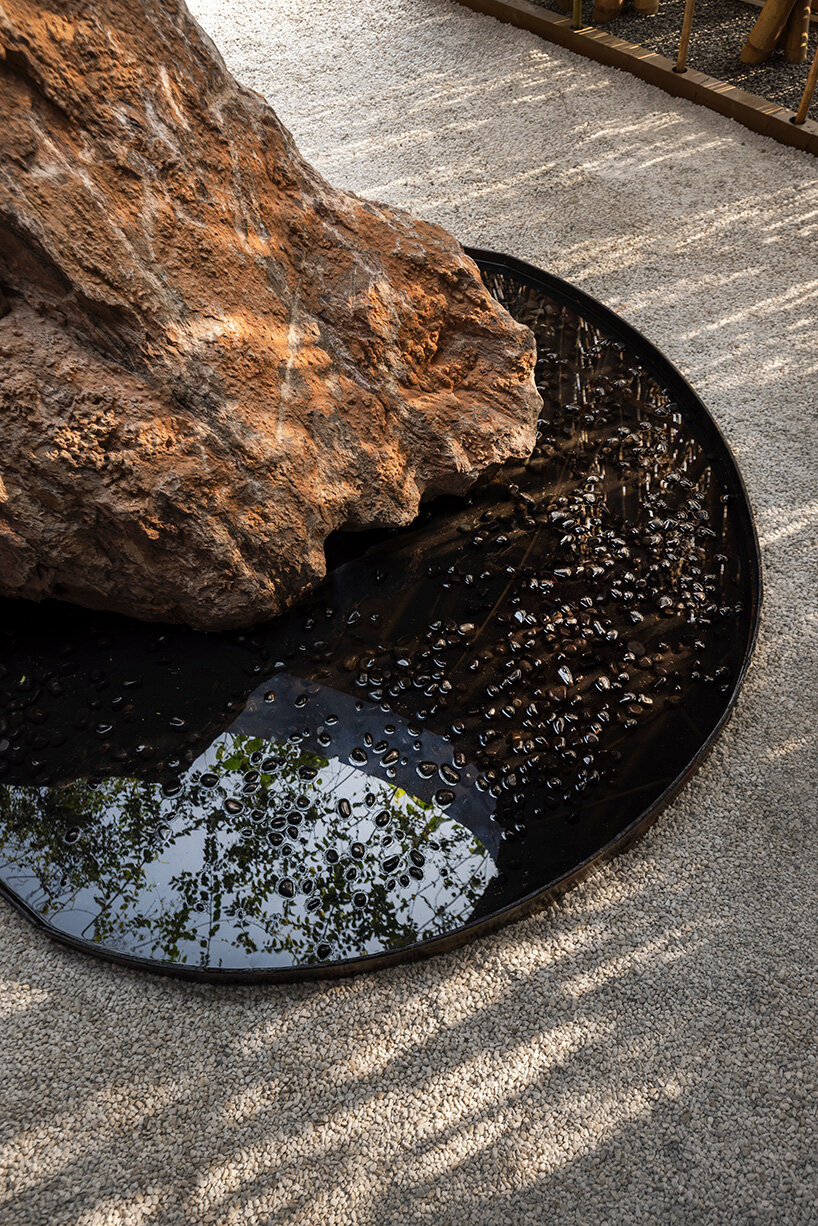
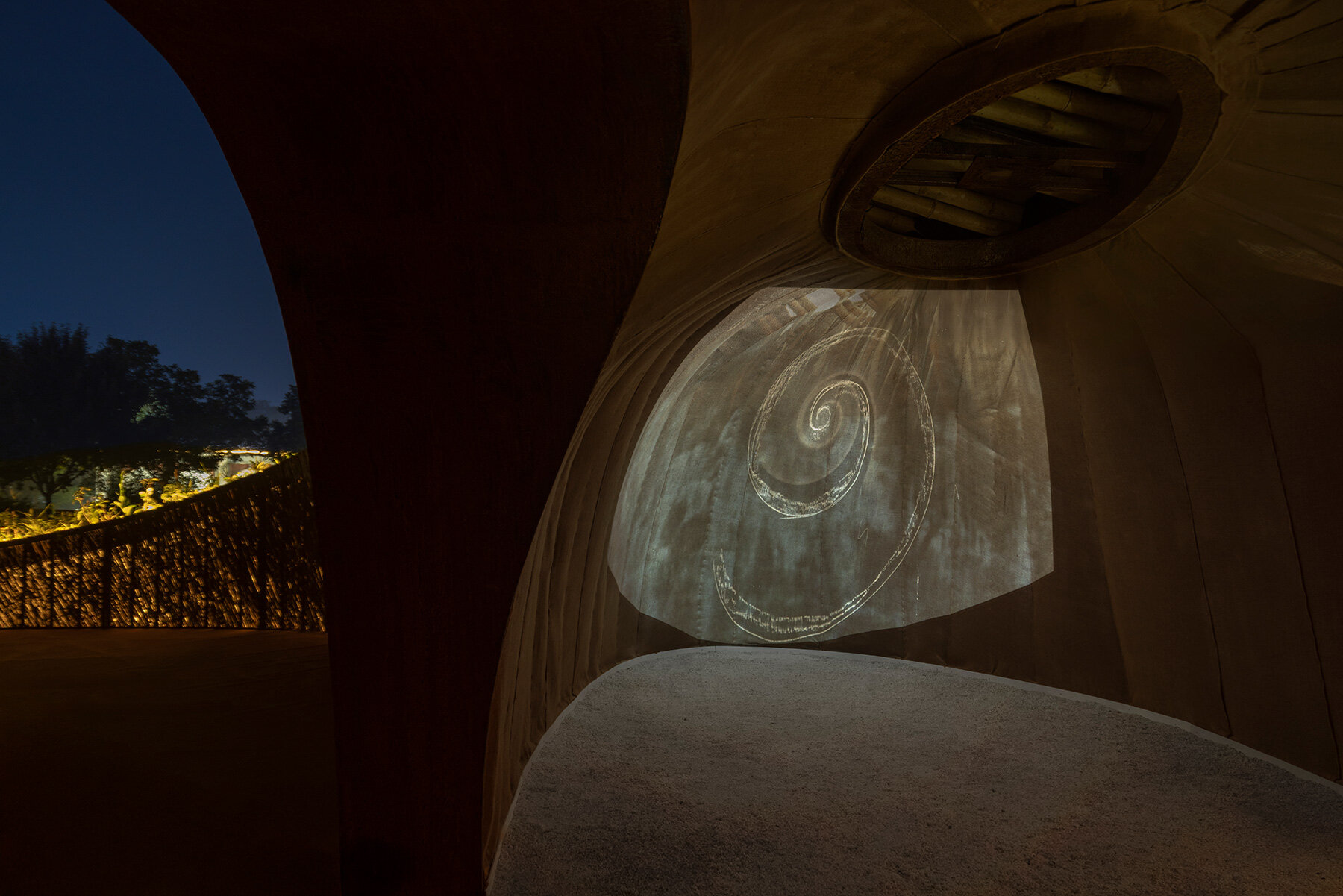
Set within the historic landscape of Sunder Nursery, the pavilion by T__M.space takes the form of a spiral walkthrough installation. Its spatial logic draws from India’s sacred groves, community-protected forest sanctuaries that functioned as early biodiversity reserves long before modern conservation law. As visitors follow a continuous, inward-moving path, the architecture modulates light, shadow, texture, and sound, echoing the layered rhythms of a living forest. The journey culminates in a central shrine anchored by a stone monolith, recalling the ritual cores of sacred groves where stone markers traditionally signify a symbolic meeting of earth and sky.
Founded by conservation scientist and creative director Tara Lal, ecological restoration and creative arts initiative Aranyani has worked across diverse ecosystems, from the Himalayas to the Aravallis, through its field arm, Aranyani Earth. The pavilion extends this practice into the urban realm, using architectural form to make ecological processes legible and experiential. ‘Aranyani is named after the forest goddess, who appears in the Rigveda. That we have forgotten Aranyani, and can name more products than forests or trees or springs, says a lot about the times we’re living in,’ Tara Lal shares with designboom. ‘The restoration work we do at Aranyani, this pavilion, and the ten-day programme that will follow, is a small way of calling her back.’
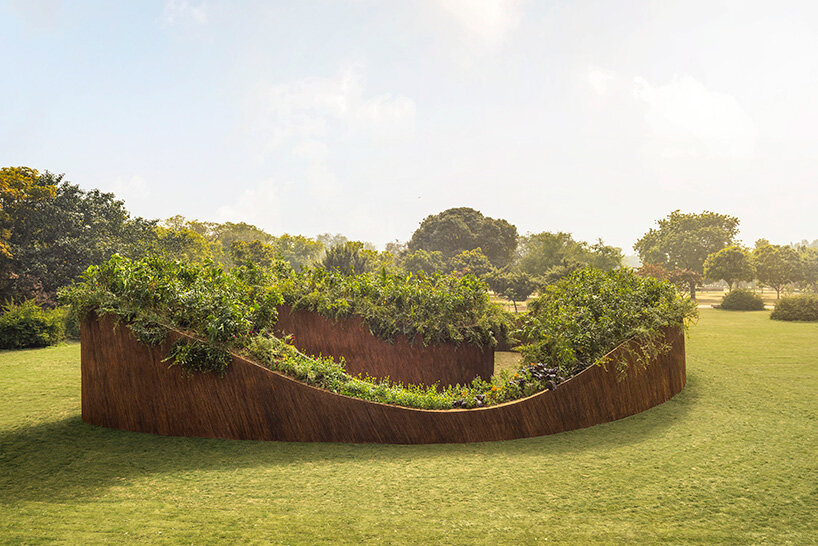
Aranyani presents Sacred Nature in the gardens of Sunder Nursery in New Delhi
building with lantana as a technical and ecological act
Beyond its symbolic charge, the pavilion is also a demanding technical exercise. Spanning nearly 600 square meters of ground, with a footprint of 200 square meters and an inner space of approximately 100 square meters, the structure required thousands of lantana branches to be sourced, sorted, and assembled. Its bamboo framework provides tensile strength and structural clarity, while the lantana lattice acts as a porous skin, allowing air, light, and sound to pass through.
Lantana, typically cleared or burned, is neither disguised nor aestheticized. Its presence is deliberate, structural, and unresolved. By placing invasive material in direct dialogue with indigenous planting above, the pavilion stages restoration as a layered, ongoing process rather than a finished solution.
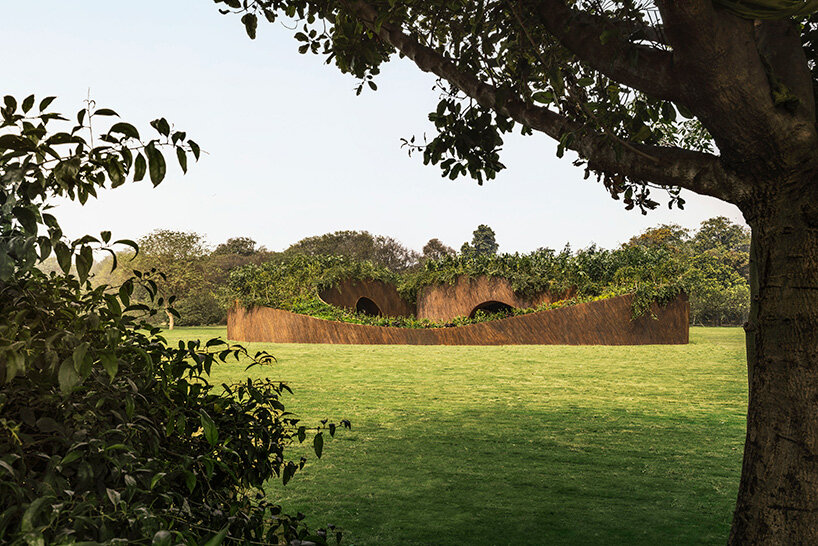
Aranyani Pavilion is on view from February 4th to 20th, 2026
a pavilion with an afterlife
Sacred Nature, named after the forest goddess of the Rigveda, one of India’s oldest sacred texts, also operates as a platform for discussion and exchange. A public program of talks, workshops, performances, and guided tours extends the ecological and decolonial themes of the pavilion, bringing together voices from environmental activism, architecture, business, and the arts. Speakers include environmental activist Vandana Shiva and historian Sathnam Sanghera, alongside practitioners working at the intersection of ecology, design, and cultural production.
After its presentation in New Delhi, the Aranyani Pavilion will be permanently installed at the Rajkumari Ratnavati Girls’ School in Jaisalmer, an award-winning example of climate-responsive architecture by Diana Kellogg Architects. There, it will function as a living classroom for students and researchers. Its edible and medicinal plants will be transferred to community-led environmental projects in Delhi, including the Basti Gardens of Hope in Nizamuddin and Swechha’s urban forest initiatives, extending the material life of the pavilion into local landscapes and communities.‘This installation is inspired by sacred groves I travelled to, and I hope it invokes in you what those groves invoked in me: wonder,’ Tara Lal tells us.
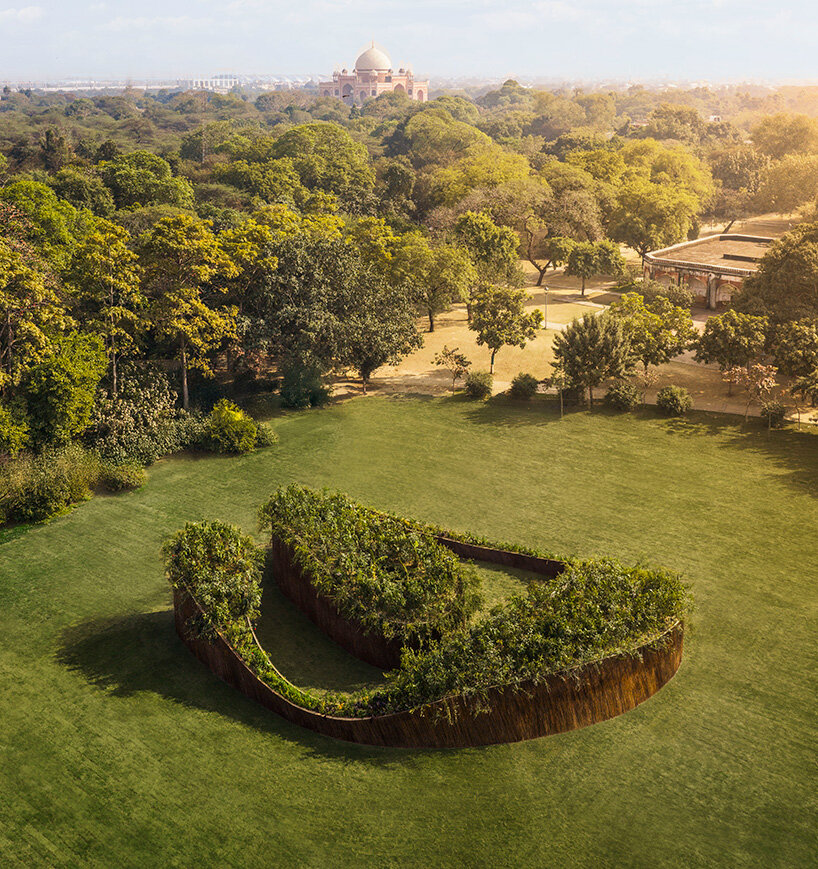
a living canopy of more than forty native plant species forms a functioning microhabitat
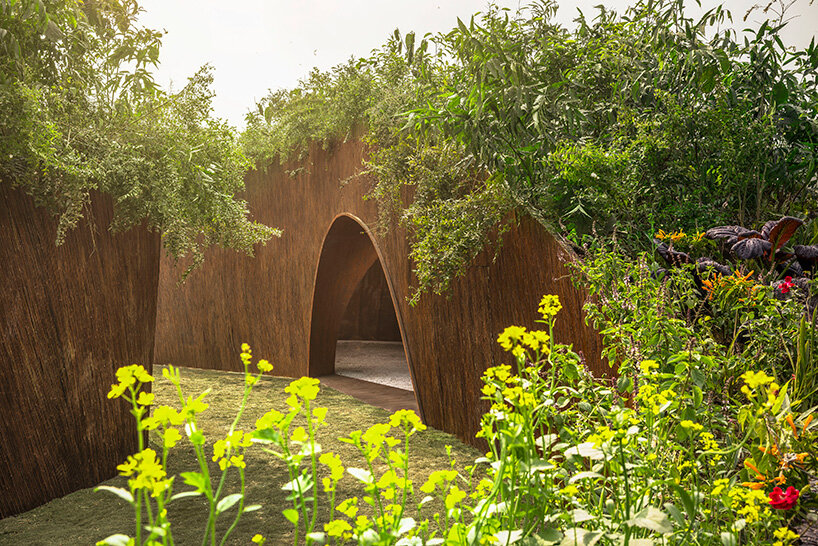
the spiral structure is built from upcycled Lantana camara
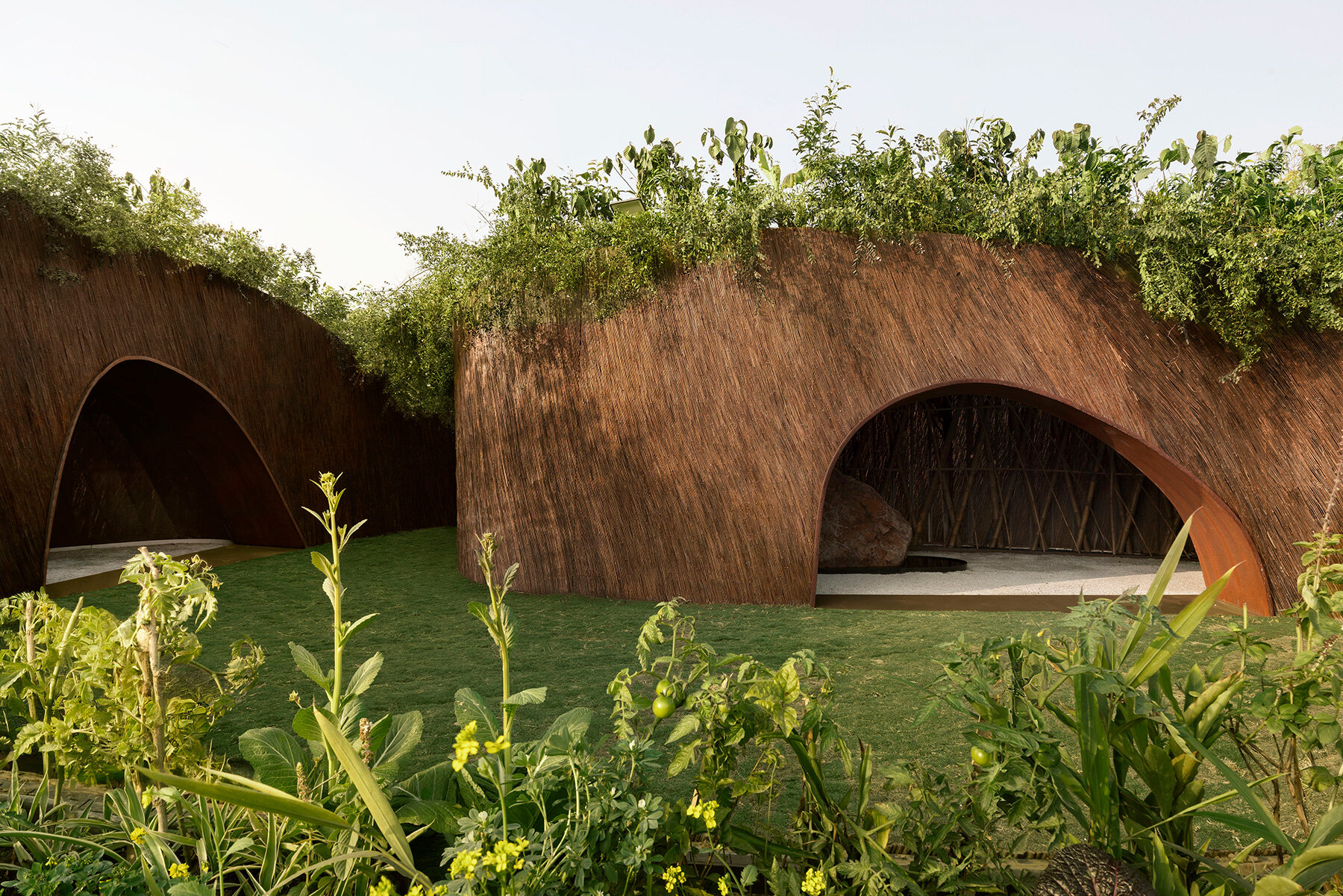
designed in collaboration with T__M.space
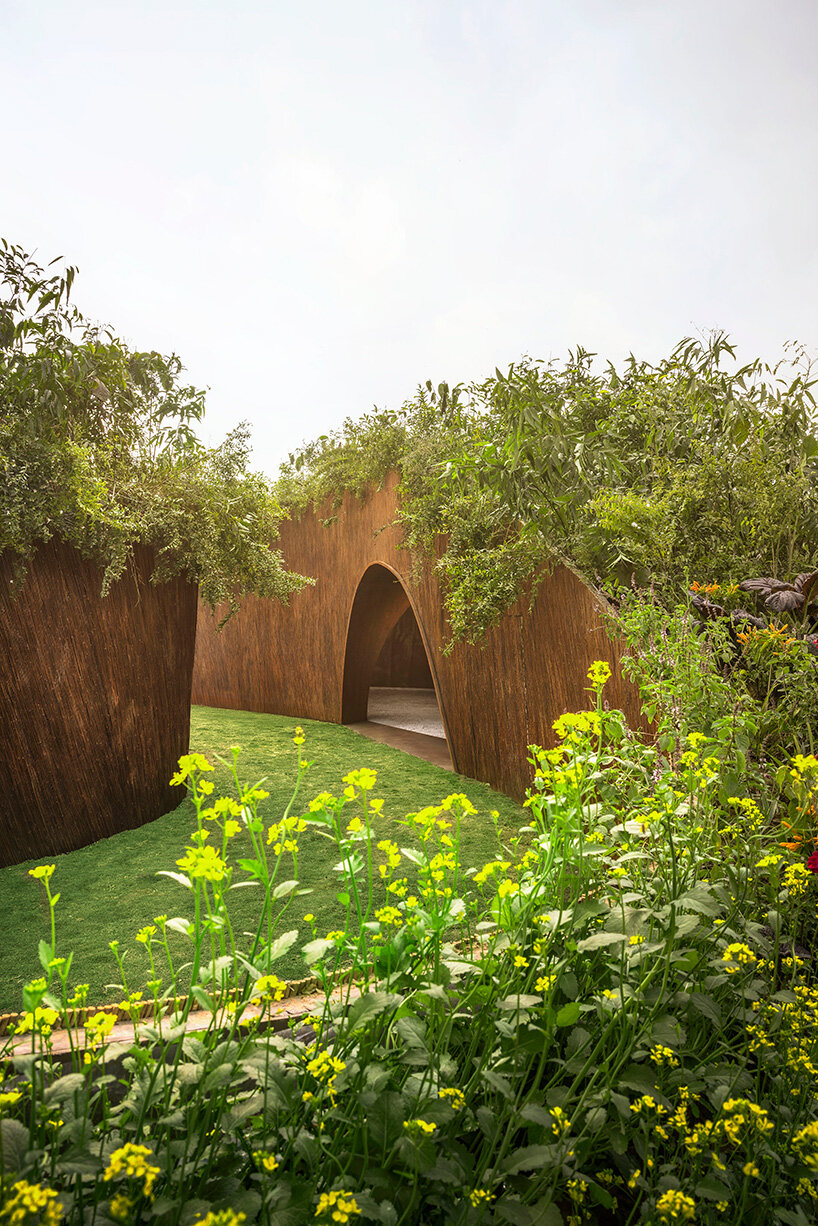
its spatial logic draws from India’s sacred groves
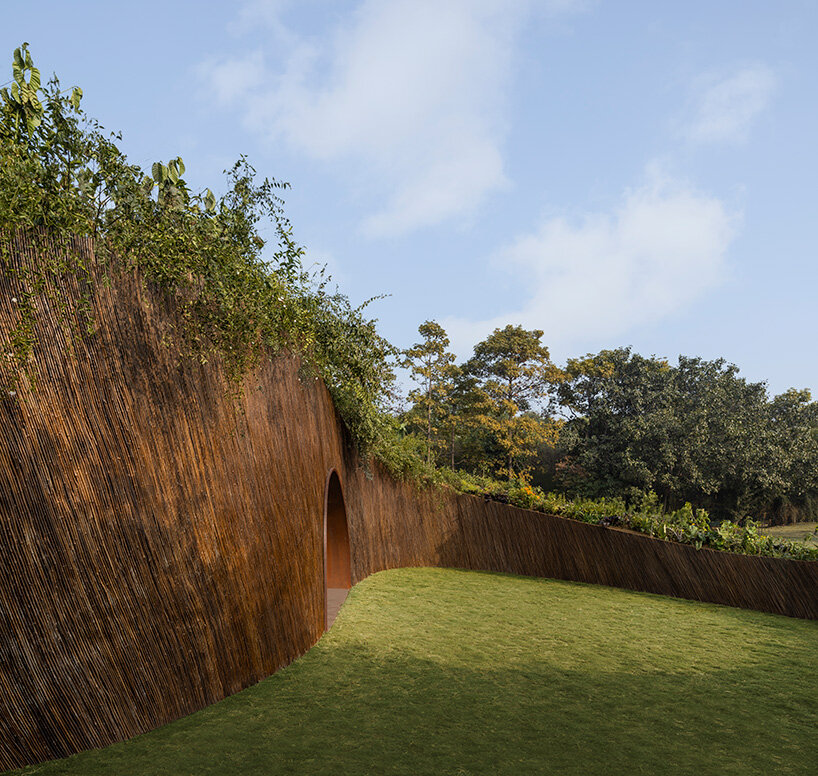
the architecture modulates light, shadow, texture, and sound
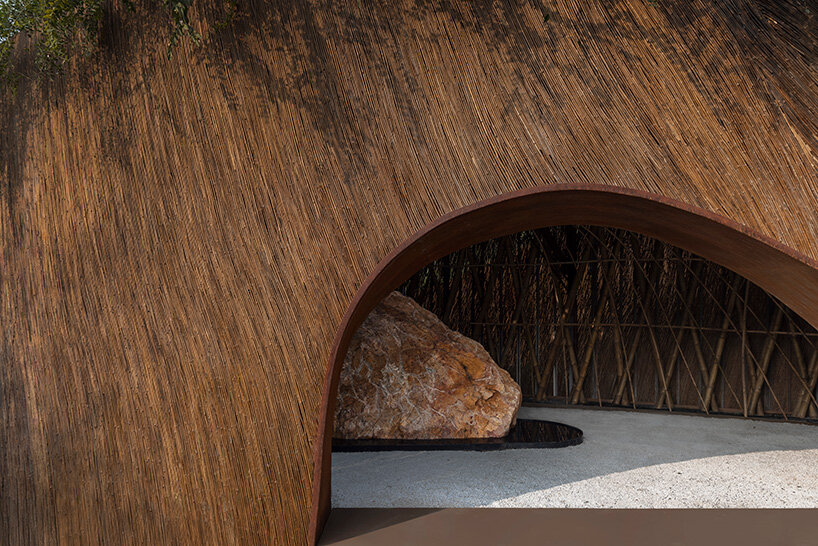
echoing the layered rhythms of a living forest
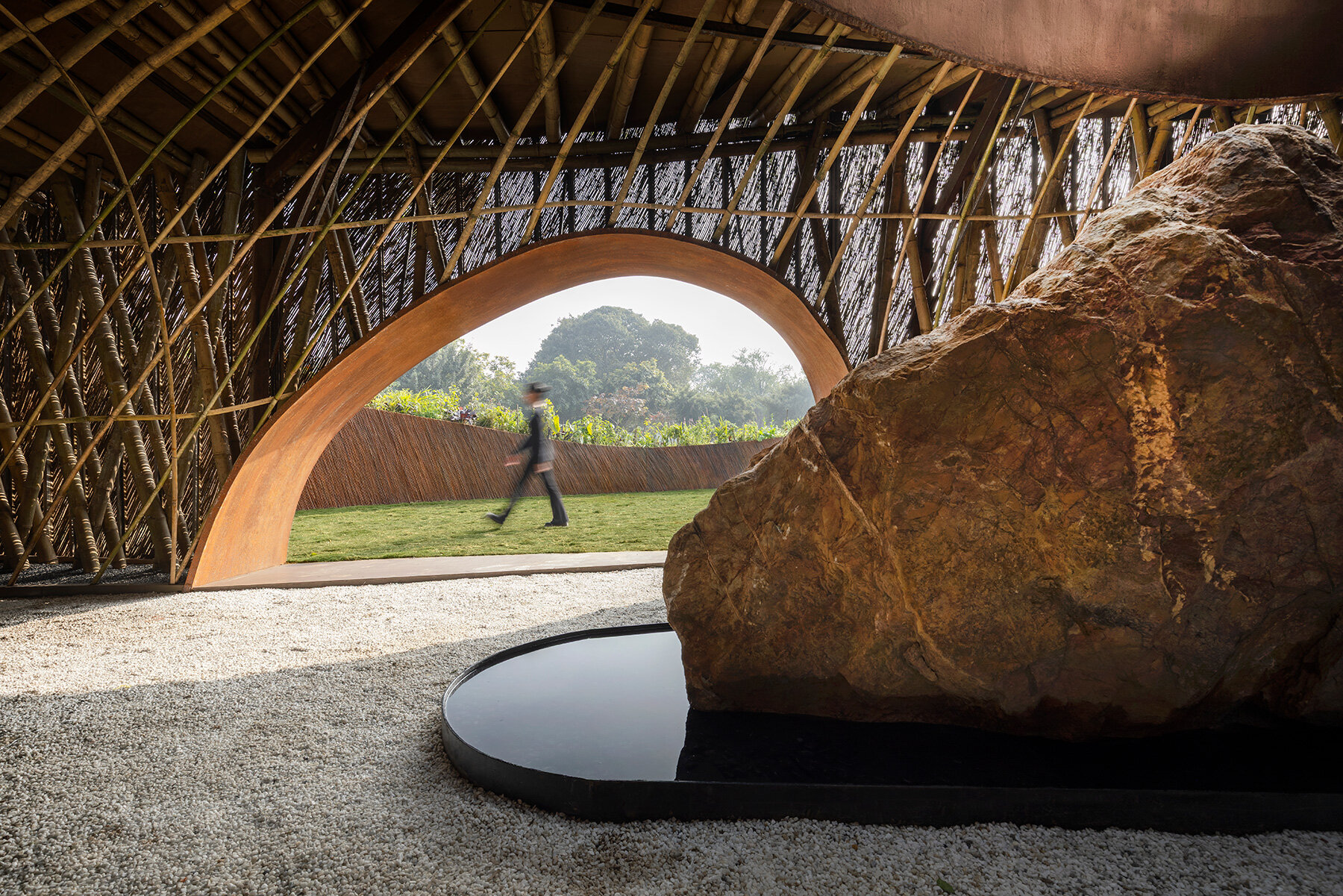
a central shrine anchored by a stone monolith
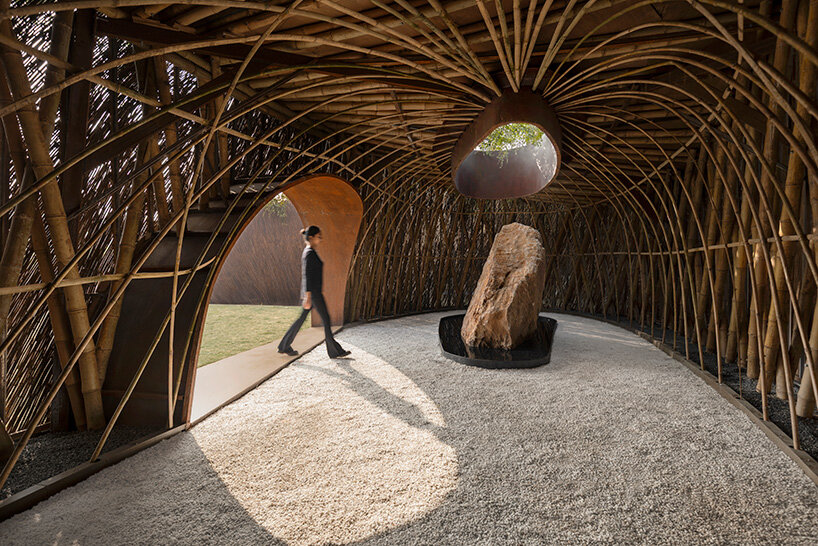
recalling the ritual cores of sacred groves
beyond its symbolic charge, the pavilion is also a demanding technical exercise
the structure required thousands of lantana branches to be sourced, sorted, and assembled
the Aranyani Pavilion will be permanently installed at the Rajkumari Ratnavati Girls’ School in Jaisalmer

happening now! ISE 2026 showcases how high-performance sound and smart technologies transform residential spaces into stress-reducing environments.
architecture in india (420)
 Feb 03, 2026
 Jan 30, 2026
 Jan 27, 2026
 Jan 22, 2026
 Jan 22, 2026
temporary pavilions (573)
 Jan 31, 2026
 Jan 30, 2026
 Jan 26, 2026
 Jan 20, 2026
 Jan 19, 2026
 Jan 20, 2026
 Jan 15, 2026
 Dec 30, 2025