a former coffee warehouse in rotterdam begins its second life as the nederland fotomuseum
an adaptive reuse project in rotterdam, 'nederlands fotomuseum' brings one of the world’s largest photography collections into public view.
long-awaited ‘nederlands fotomuseum’ opens in rotterdam
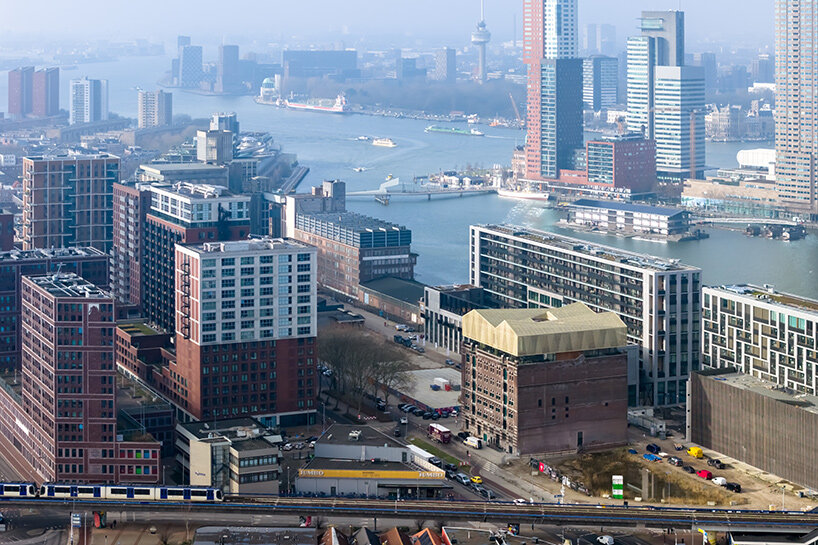
The Nederlands Fotomuseum has officially opened its new home in Rotterdam, settling into the restored Santos warehouse along the Rijnhaven harbor.
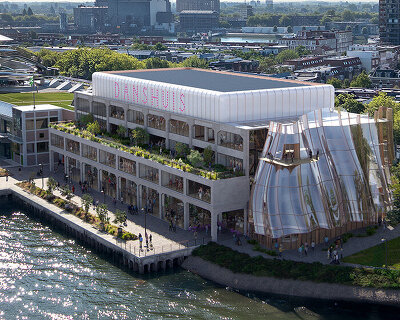
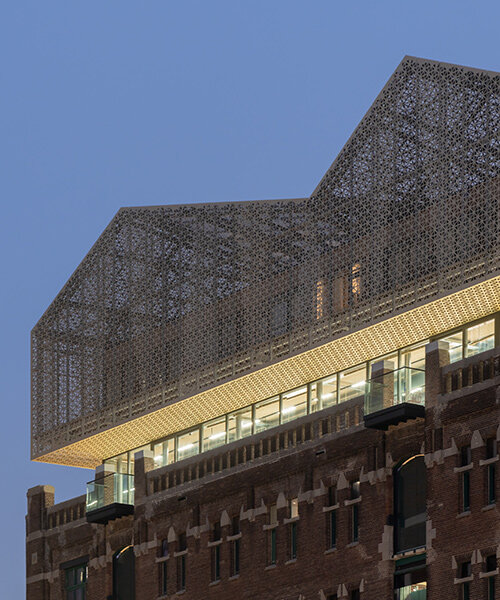
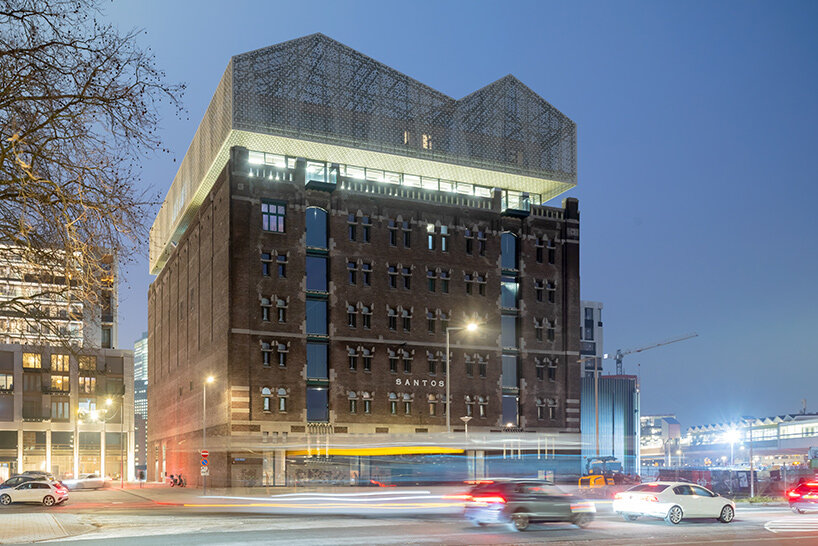
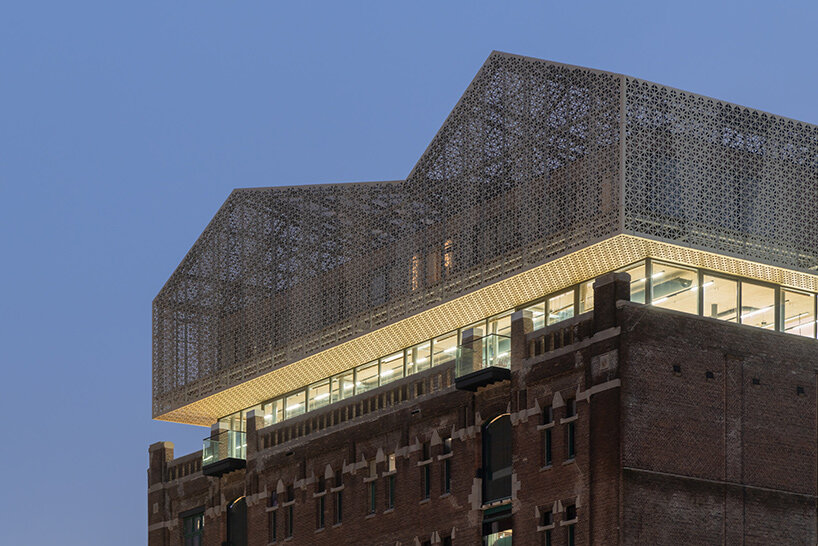
The heavy brick mass of the early twentieth century warehouse stands steady at the corner, its facades still marked by decorative lintels and deep-set openings. Above, two added floors sit within a perforated aluminum veil that glows softly at dusk. The metal skin reads as a light canopy hovering over the old masonry, a precise intervention that contrasts the museum‘s new public life with its working past. See designboom’s previous coverage here.
adaptive reuse for an historic warehouse
The museum occupies one of the best preserved warehouses in the Netherlands, built between 1901 and 1902 for coffee shipped from Brazil. Architects Renner Hainke Wirth Zirn Architekten in Hamburg worked with Rotterdam-based firm WDJArchitecten to restore the six historic stories and insert new levels at the top, bringing the total height to just under 35 metres. The upper addition, wrapped in a semi transparent ‘crown,’ holds offices and a restaurant while maintaining solar protection through its perforated surface .
At ground level, the shutters that once sealed the facade have been opened permanently and replaced with glazing. The change draws the city inward. Passing traffic, cyclists, and pedestrians read the interior at a glance. The museum presents itself as part of the street, which suits a harbor district undergoing steady regeneration.
collections backdropped by lofty, industrial interiors
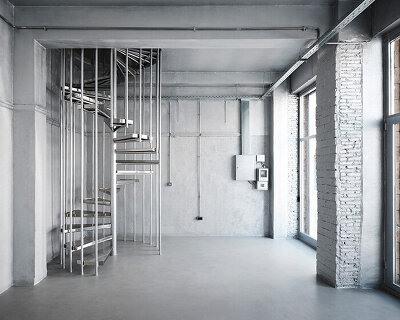
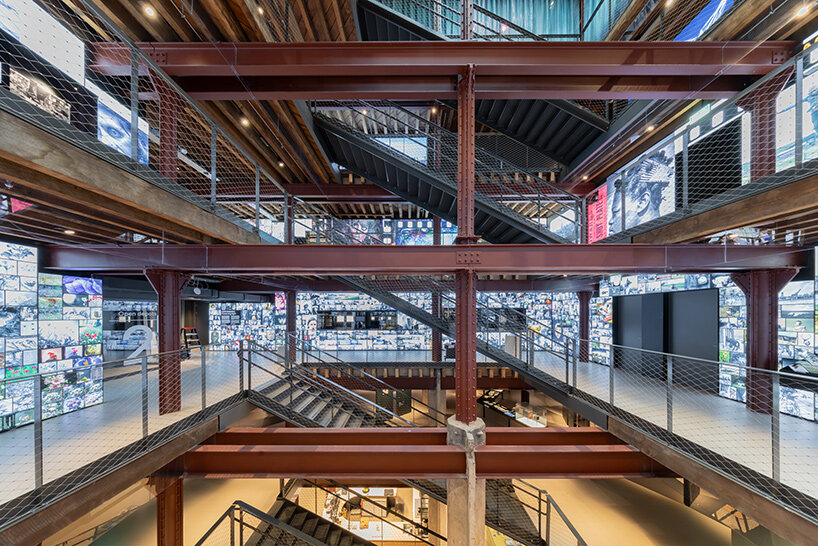
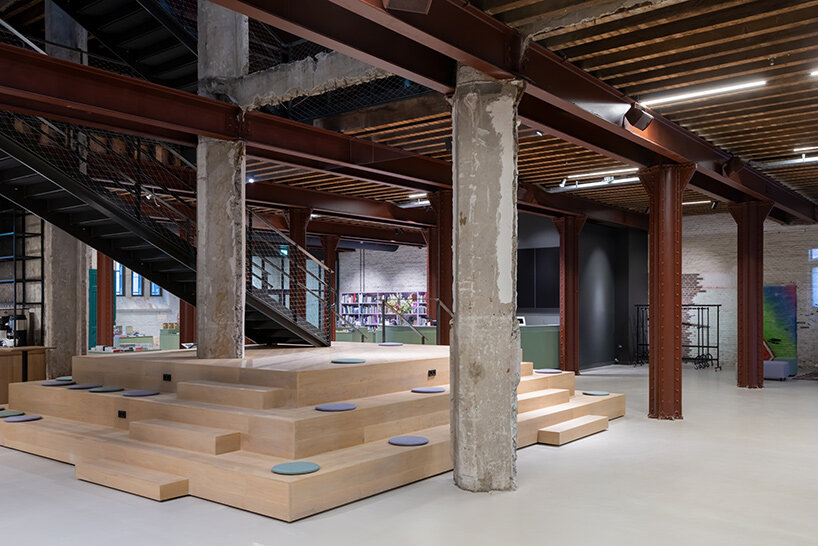
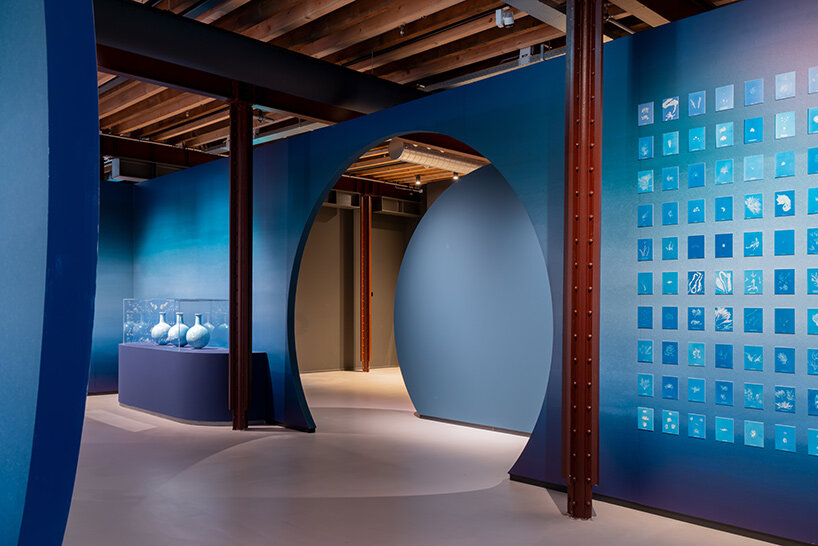
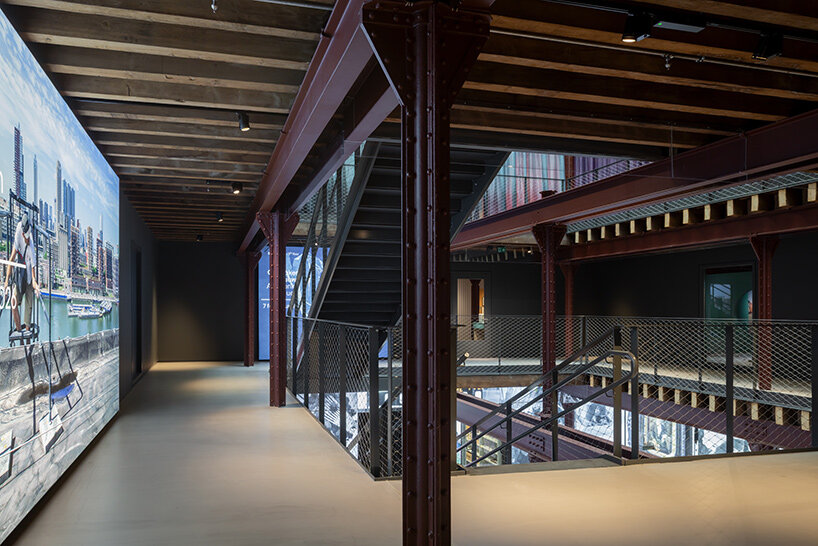
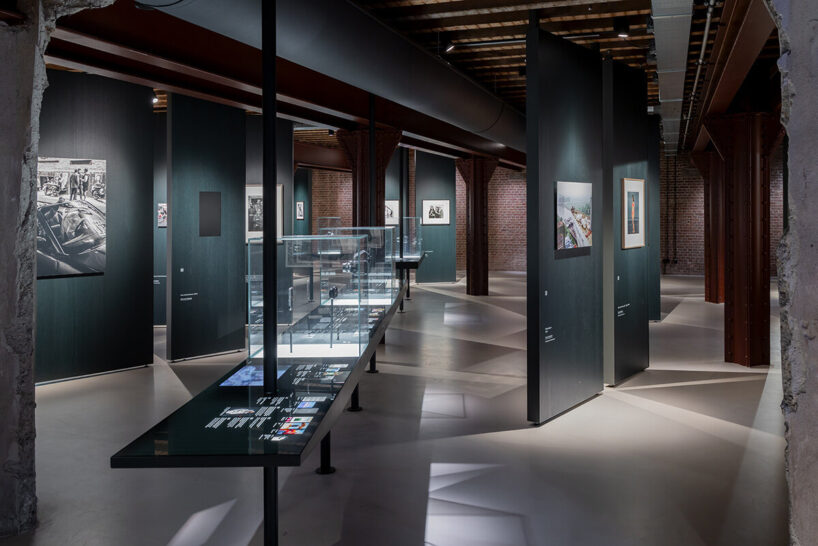
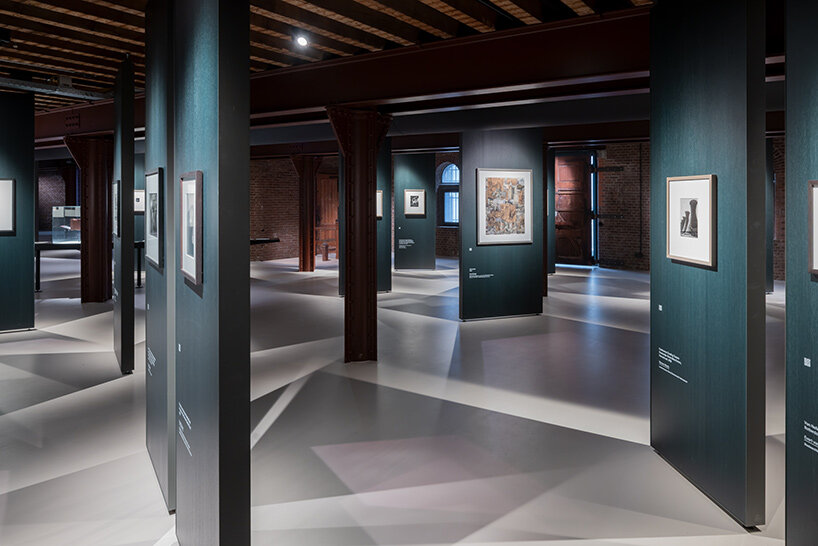
Entering Rotterdam’s new Nederlands Fotomuseum, visitors are welcomed by a tall atrium has been cut through the center, with a stair rising from the basement to the top floors. Daylight filters down from above, touching the cast iron columns and the timber beams that span each level. The original structure remains exposed. Services have been threaded between the joists, keeping the ceilings quiet.
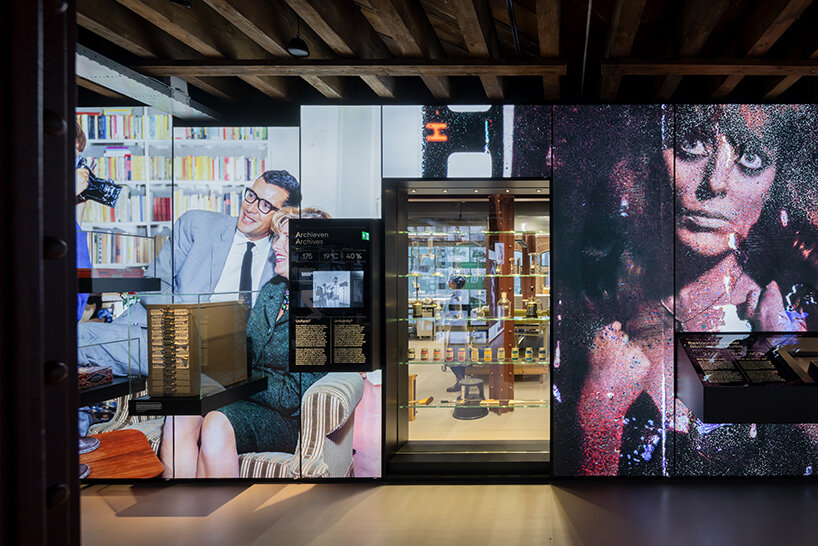
Circulation feels direct. The stair carries visitors past galleries, open depots, and ateliers where conservation work takes place behind glass. From the landings, one can watch specialists handling negatives and prints. The proximity between display and care makes the museum’s mandate tangible. Photography appears as both image and object.
a national collection on display
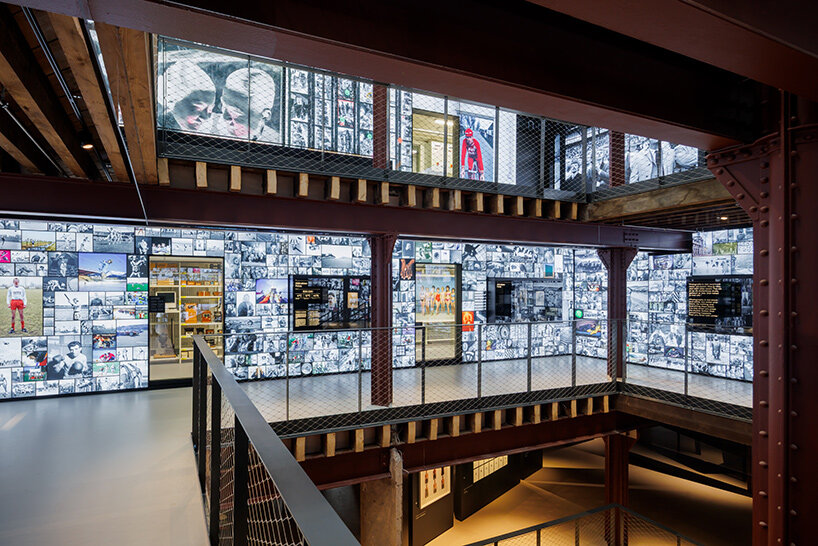
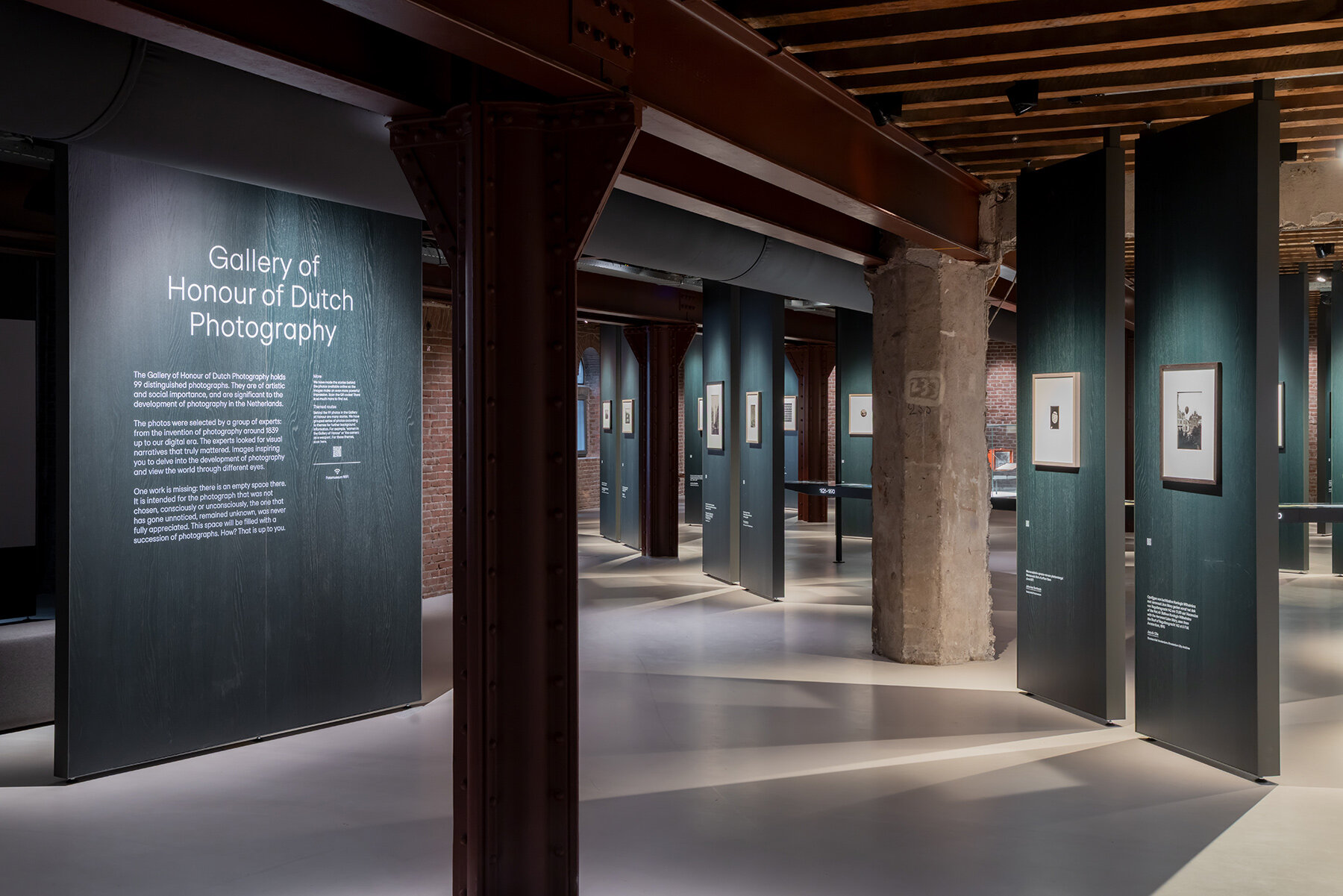
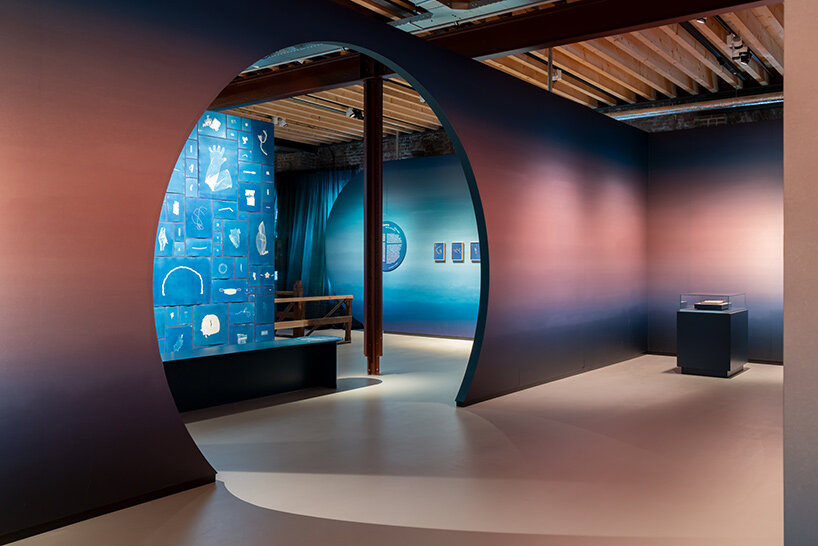
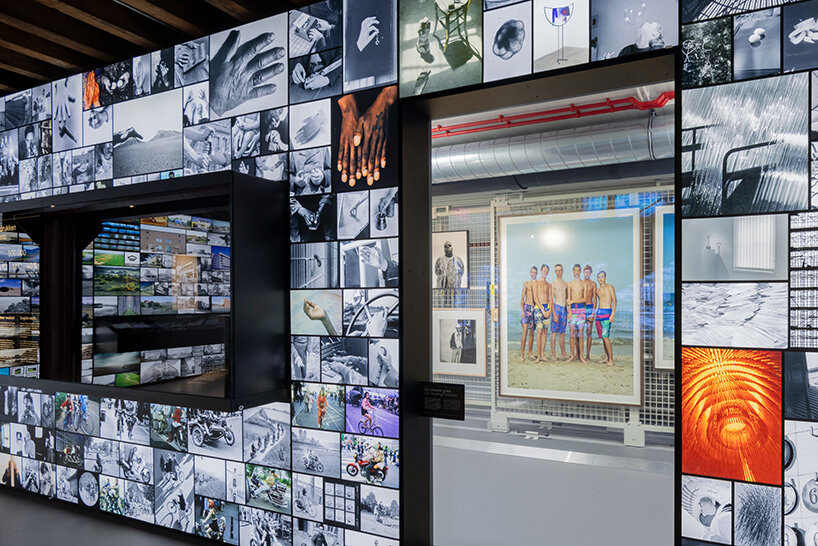
The program spreads across roughly 9,000 square meters, with more than 5,000 dedicated to public space and nearly 3,400 to exhibitions . The first floor hosts the Gallery of Honour of Dutch Photography, a permanent presentation tracing the medium from the nineteenth century to the present. Upper floors hold temporary shows, while the second and third levels contain climate controlled storage and conservation facilities.
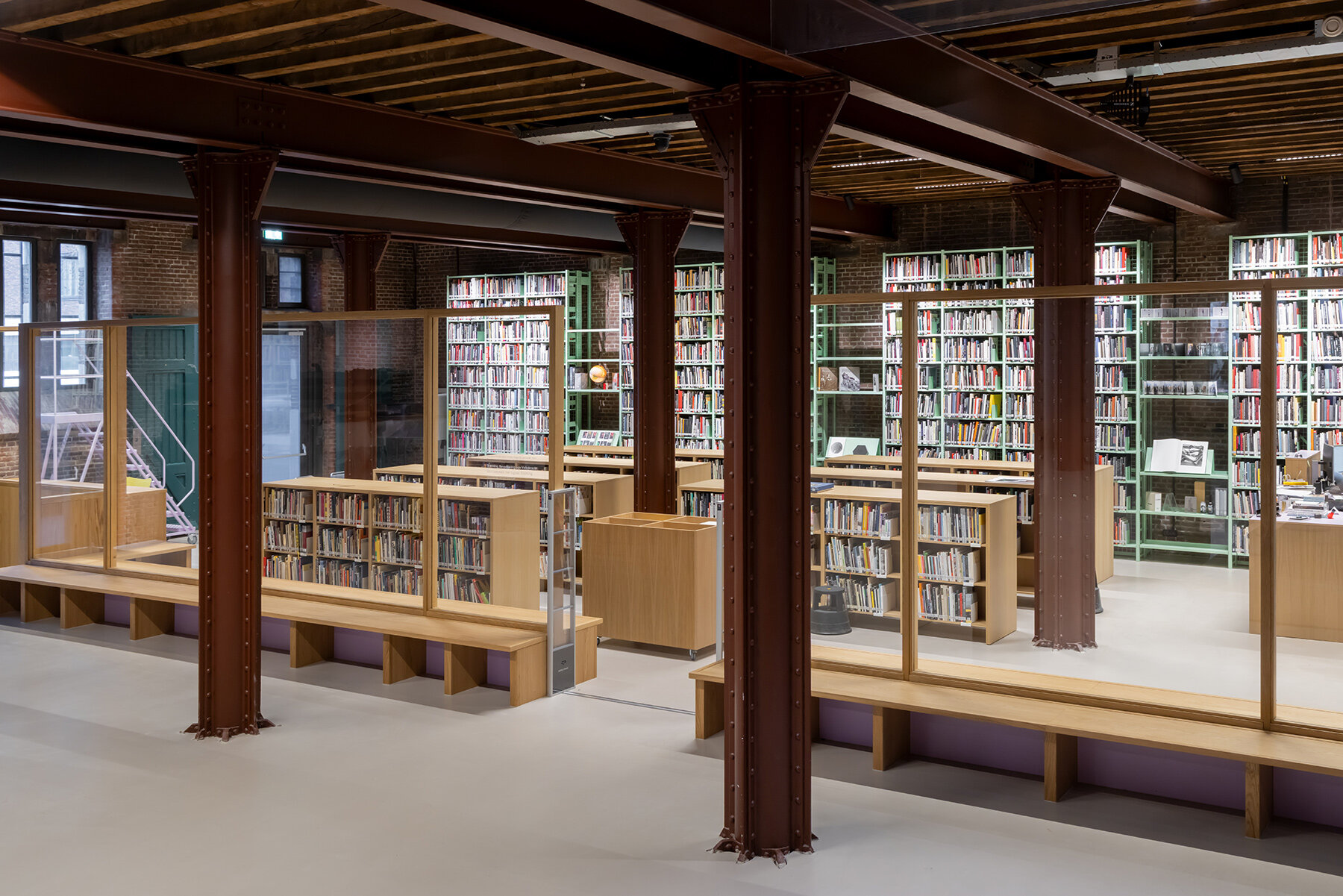
On the ground floor, a café, library, and bookshop create a slow threshold between city and museum. In the basement, a darkroom and education areas support workshops. Toward the top, a restaurant opens onto views of the skyline and the Maas. Each function occupies the warehouse’s repetitive grid, so the space maintains a consistent rhythm even as uses shift.
spaces for display and preservation
The move brings the institution’s collection of over 6.5 million objects into purpose-built conditions. The scale becomes easier to grasp when walking past the open depots. Rows of cabinets and boxes stretch deep into the floor plate, their order contrasting with the rough brick and patched concrete. Light levels stay controlled, the atmosphere cool. The building’s closed facades and limited daylight suit the needs of light sensitive material.
The Nederlands Fotomuseum has long focused on preservation alongside exhibition, and the new setting reinforces that dual role. The architecture supports both tasks with straightforward means: durable surfaces, generous spans, and a plan that keeps movement efficient. Visitors experience the archive as an active workplace rather than a back room.
1/7
project info:
name: The National Museum of Photography (Nederlands Fotomuseum) | @nlfotomuseum
architect: Renner Hainke Wirth Zirn Architekten | @rhwz.architekten, WDJArchitecten
location: Rotterdam, Netherlands
completion: 2026
previous coverage: November 2024
shop
your own online design shop — no sales commission collected