ocular anatomy informs optical salon’s interior in poland
light, material, and spatial sequencing organize the optical salon’s layout.
Znamy Się designs optical salon and clinic’s interior in Wrocław
Znamy Się design studio takes over the interior design of AUGA, an optical salon and specialist clinic in Wrocław, Poland. The concept is structured around the biological process of vision, translating the anatomy of the eye into spatial organization, material selection, and lighting design.
The project takes the human eye as its primary reference. The overall layout reflects the path of light as it travels through the eye, from cornea and lens to retina and neural transmission. This sequence is interpreted architecturally as a progression from the entrance area through the retail space and into the consulting rooms. The interior is organized as a spatial narrative, where circulation mirrors the transformation of light into visual perception. Form, color, and material decisions are informed by anatomical structures, establishing a cohesive relationship between biological function and built environment.
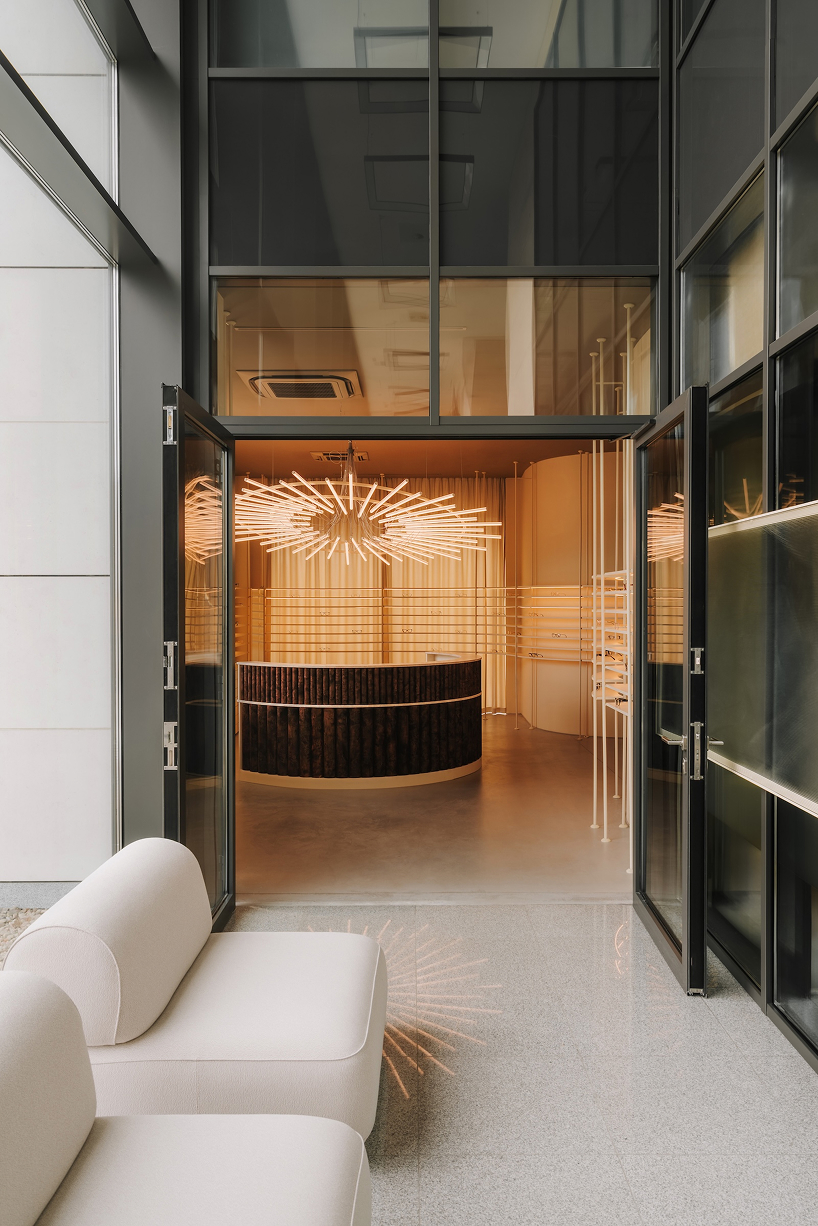
light, material, and spatial sequencing outline AUGA’s layout
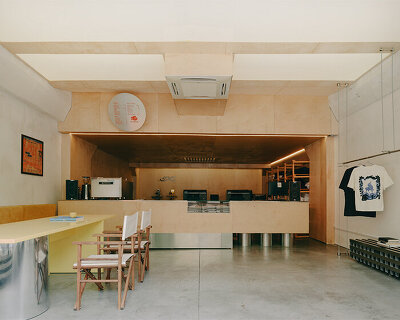
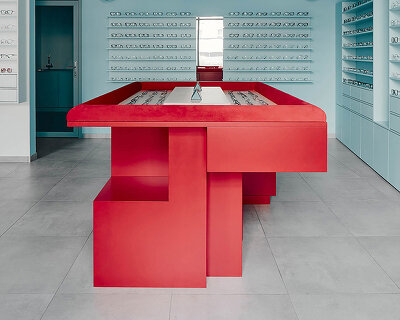
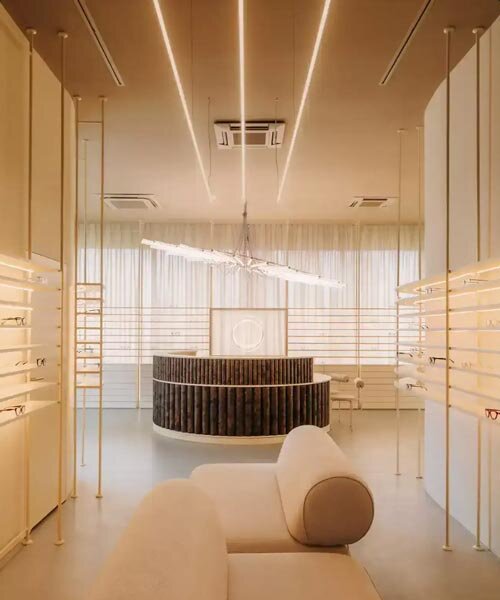
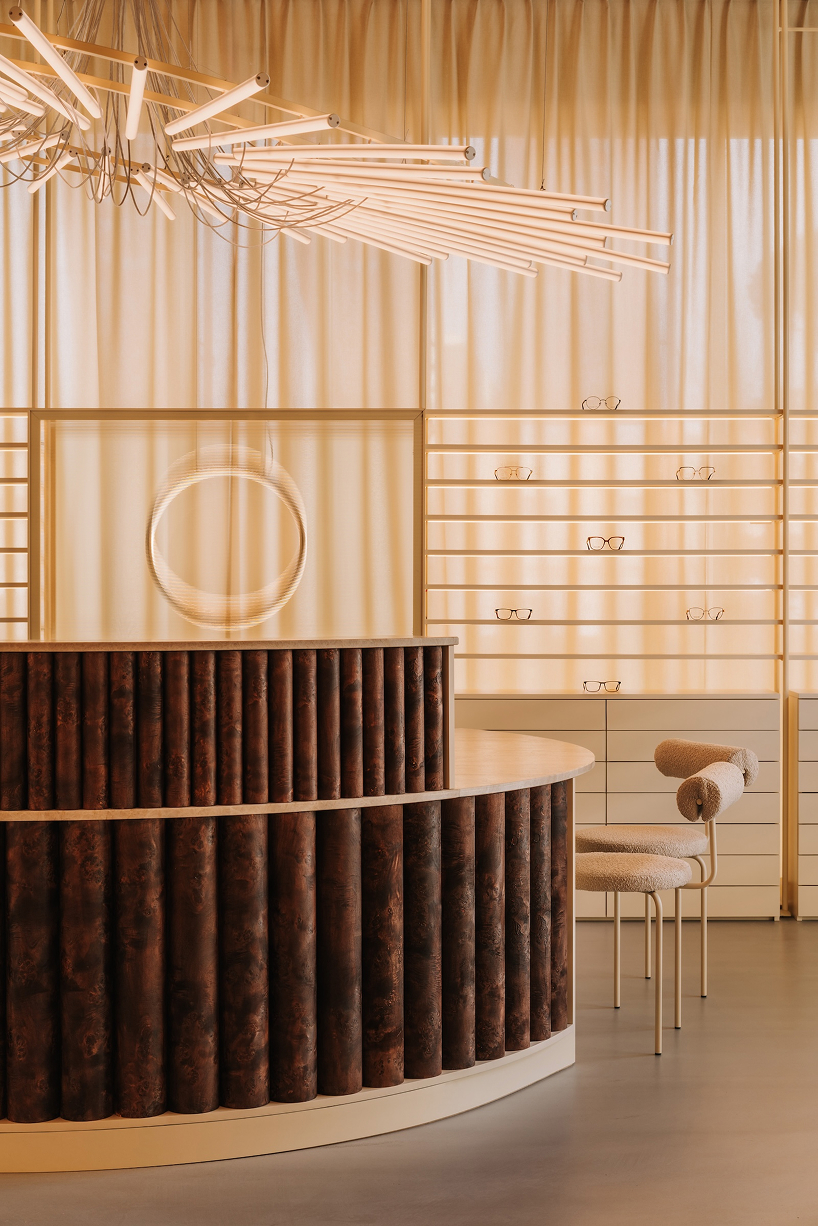
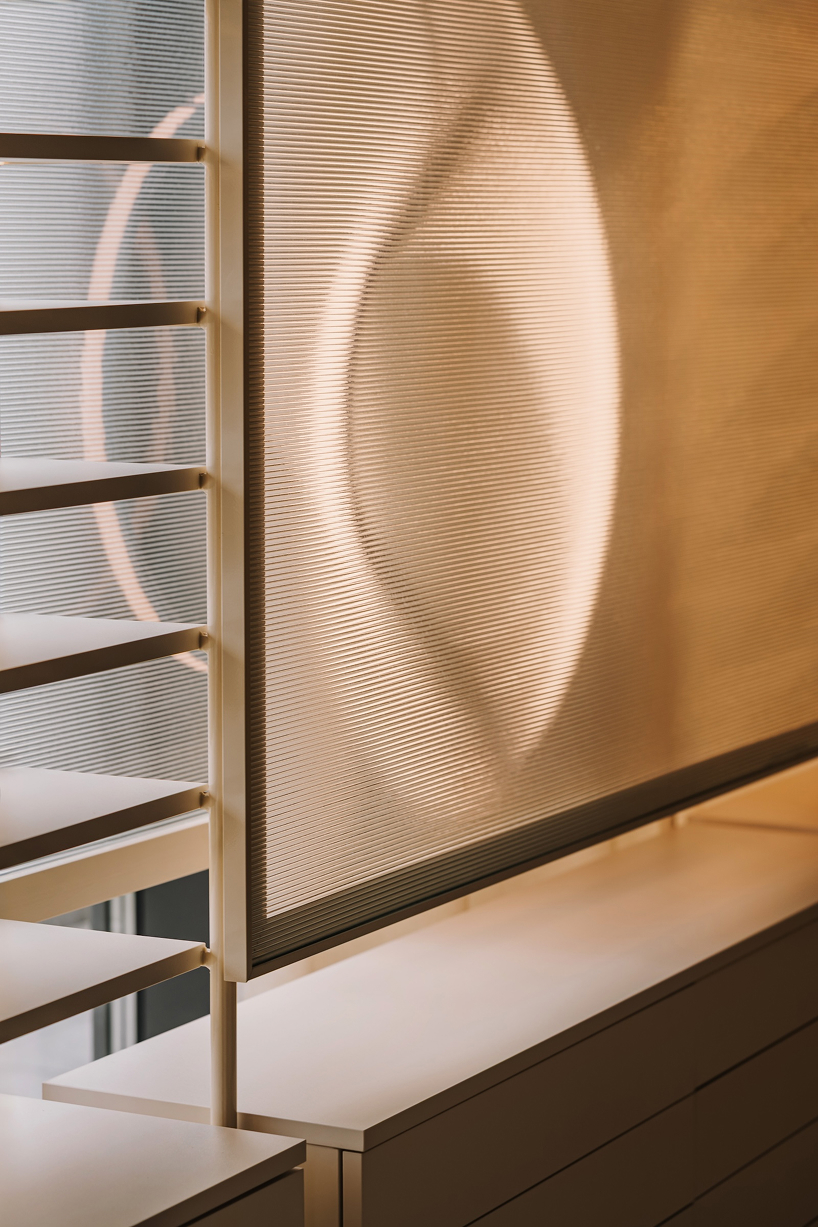
The design team at Znamy Się introduces a glass installation with a ridged, biconvex profile that references the form of the eye’s lens. Positioned to interact with natural daylight, the element refracts and distorts incoming sunlight, echoing the optical function of focusing light onto the retina. Through this intervention, light operates not only as illumination but as a shaping device within the space. At the core of the salon stands a circular counter made of burl wood, illuminated by a suspended LED chandelier. This central element functions as a spatial analogy to the macula, the part of the retina responsible for sharp central and color vision. Its position and concentrated lighting establish it as the primary focal point within the interior.
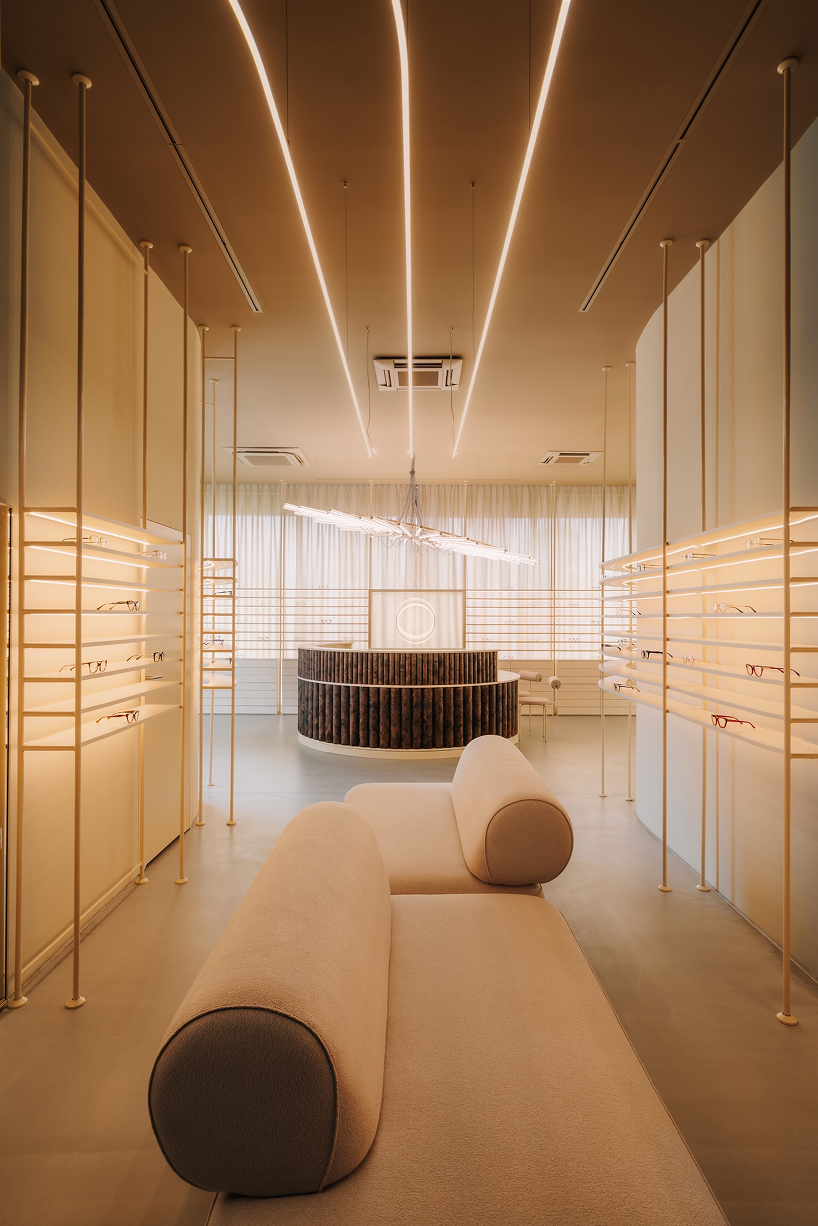
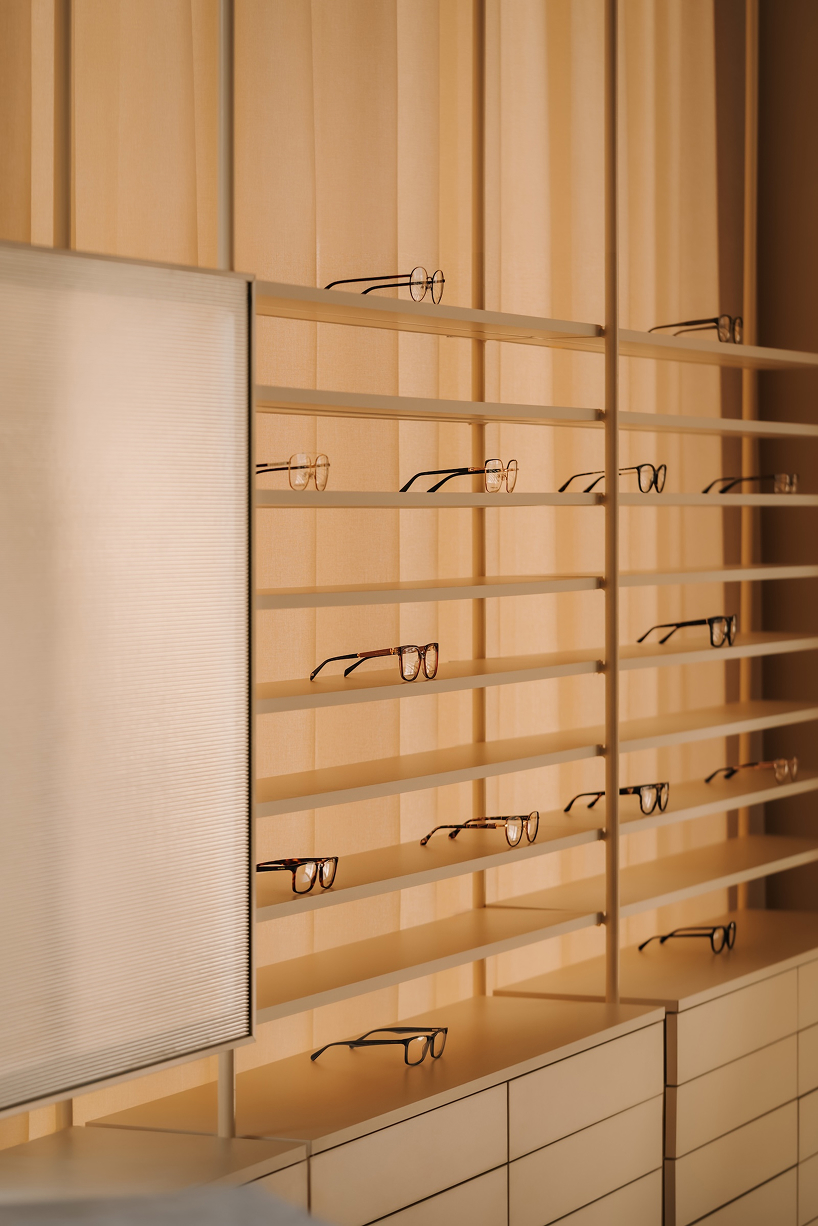
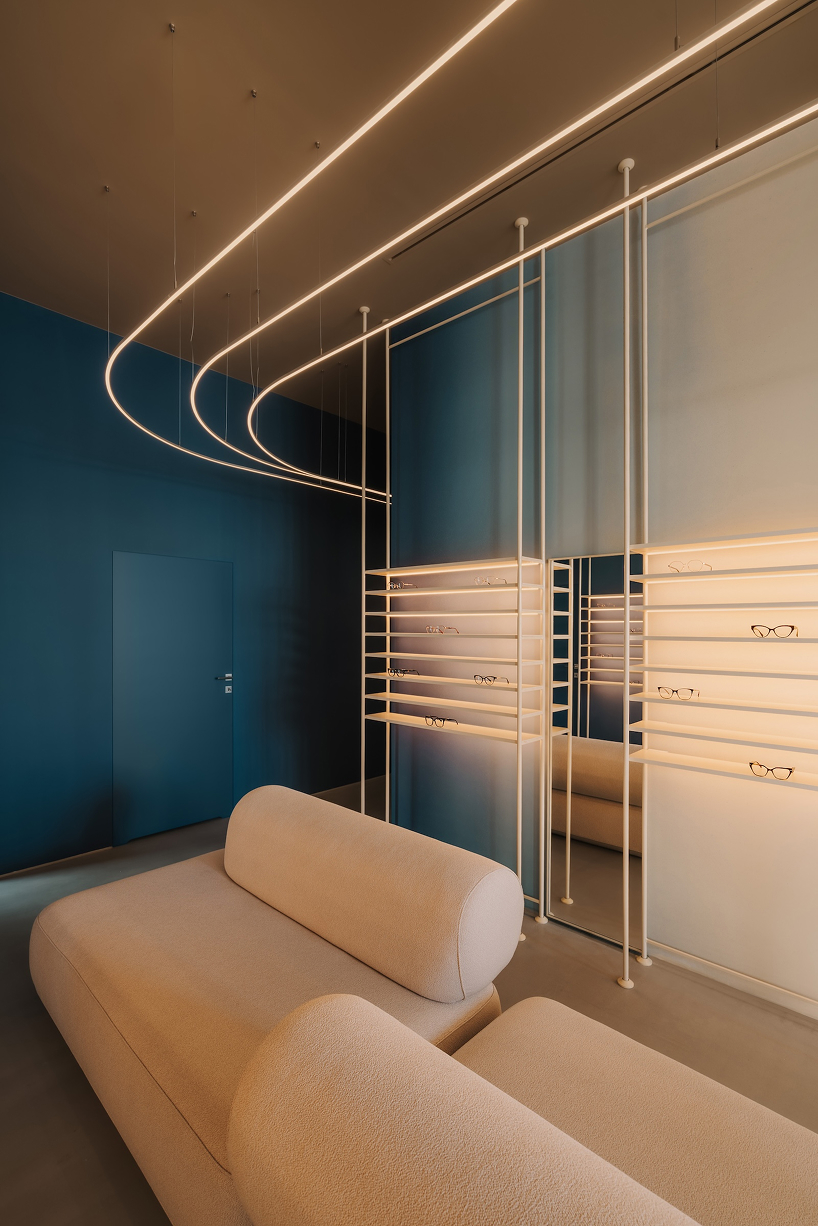
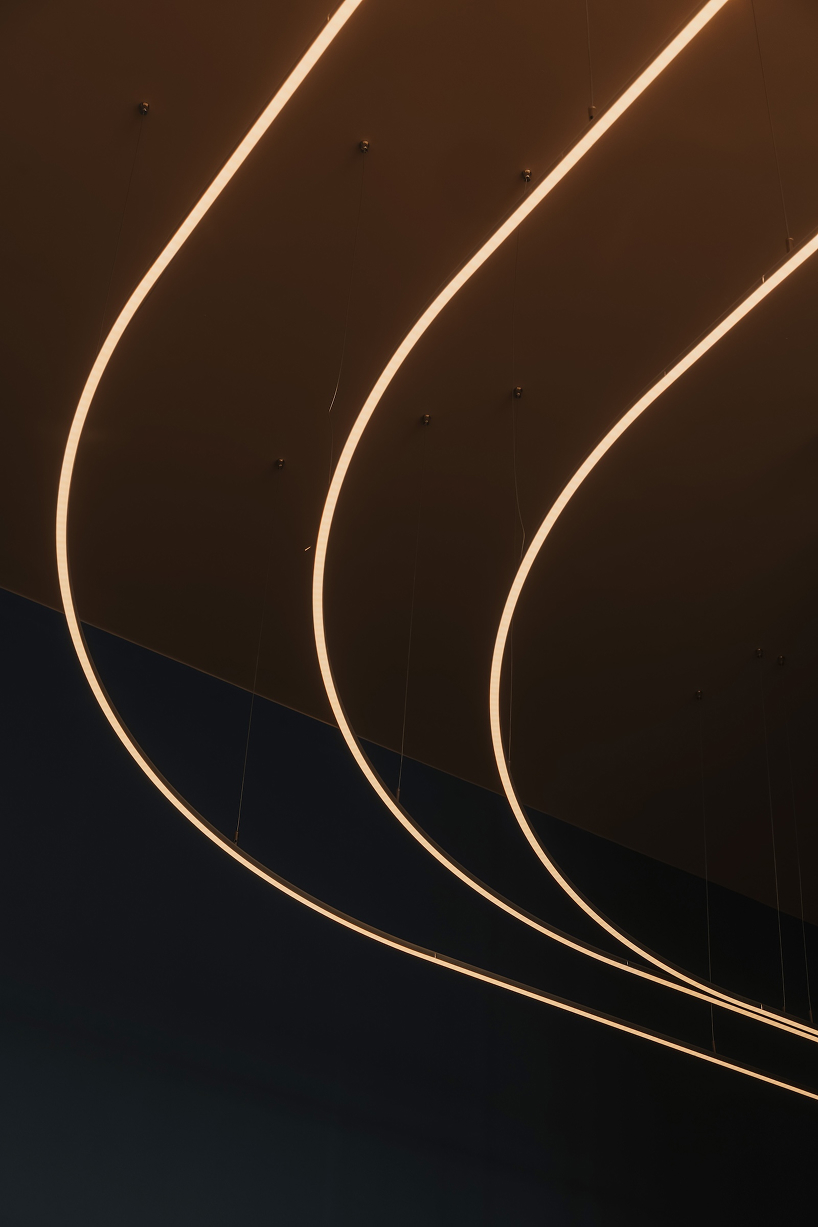
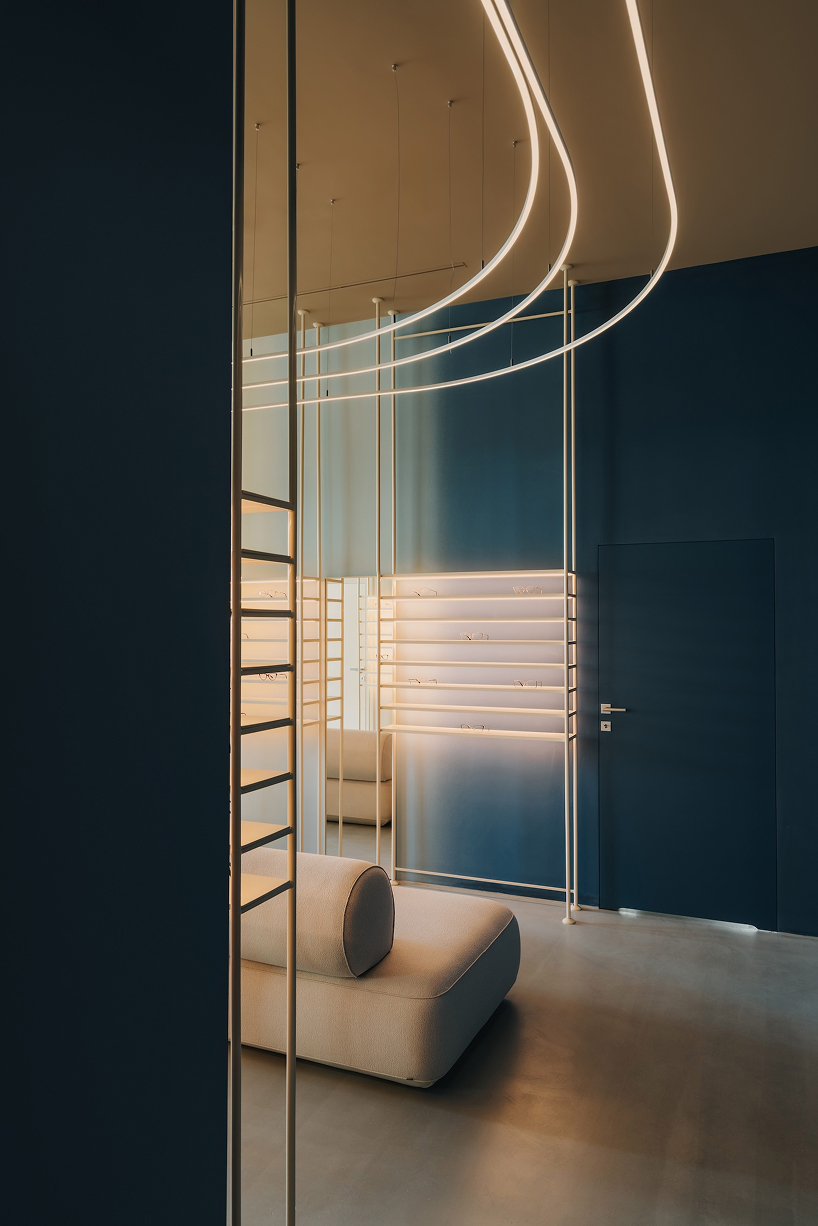
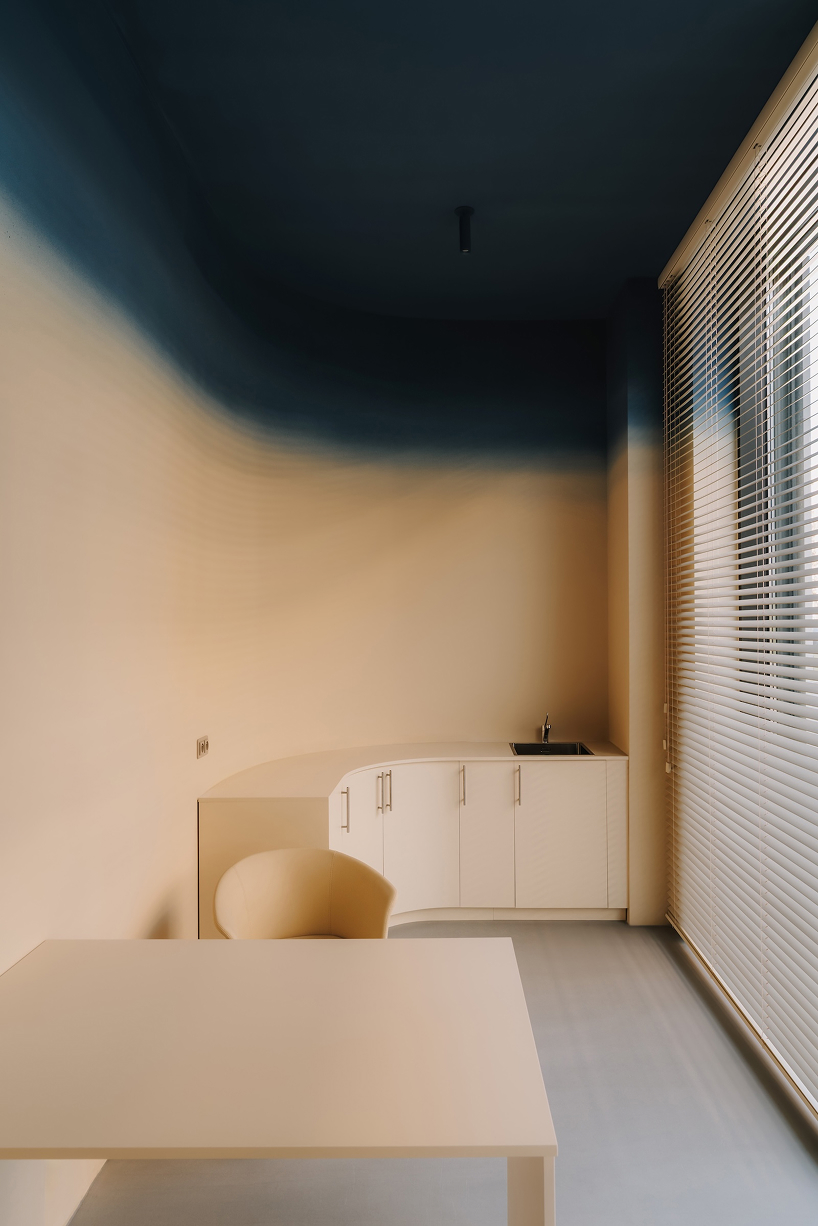
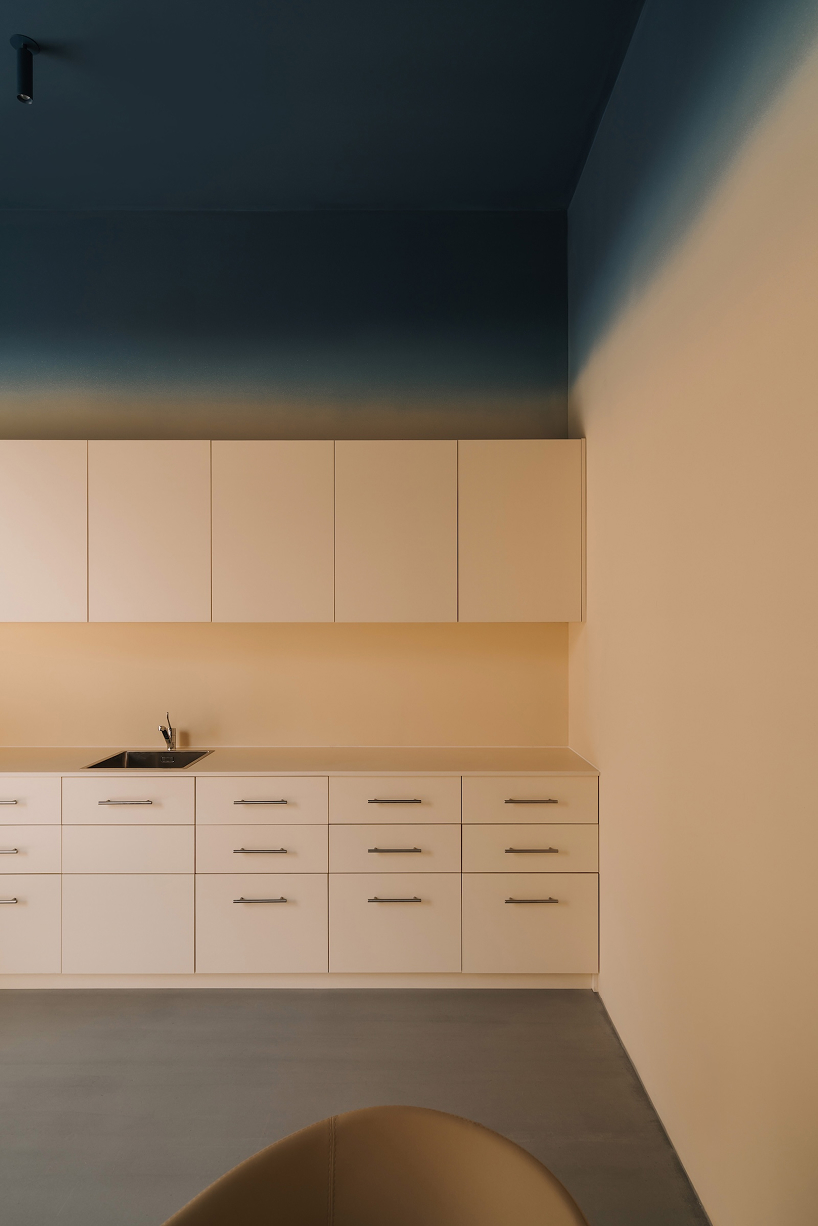
Horizontal shelving lines the walls, creating a sense of lateral continuity and subtle motion. A blue gradient transitions from the entrance toward the consulting areas, reinforcing directional flow. These elements reference rods, the photoreceptors associated with peripheral vision, motion detection, and low-light perception. The deep navy tones evoke the Purkinje effect, in which blue wavelengths remain perceptible as overall light levels decrease. Linear LED light guides suspended from the ceiling extend throughout the salon and into the consulting rooms. These illuminated lines suggest neural pathways, referencing the transmission of visual information from the eye to the brain. Functionally, they provide wayfinding, directing visitors through the space while reinforcing the conceptual framework.
project info:
name: AUGA Clinic
architect: Znamy Się | @znamysie_architects
design team: Wojtek Nowak, Bogna Kawa-Nowak, Monika Jokiel, Ula Dachnij-Seredyńska, Anna Petryszyn
location: Wrocław, Poland
photographer: Migdal Studio | @migdal.studio
designboom has received this project from our DIY submissions feature, where we welcome our readers to submit their own work for publication. see more project submissions from our readers here.
shop
your own online design shop — no sales commission collected