rootstudio’s oaxaca bus stops feature cut metal panels inspired by local histories
rootstudio’s interventions in oaxaca integrate perforated metal structures to bring public art to public transport.
A Civic Pause Along oaxaca’s Central de Abastos
RootStudio’s public transport interventions in Oaxaca reshape the experience of waiting along the Central de Abastos through a system of architecturally considered bus stops designed for BinniBus.
Set within one of the city’s most active commercial corridors, the project addresses a stretch where routes, goods, and pedestrians converge from early morning onward. Here, public transport often operates under pressure. RootStudio proposes an alternative, where the waiting period becomes a spatial condition worthy of design attention.
RootStudio conceives Infrastructure as public art
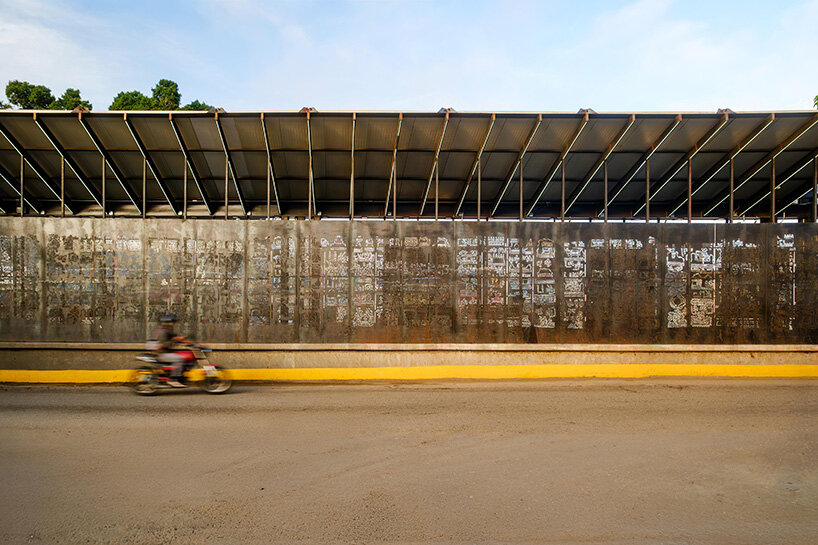
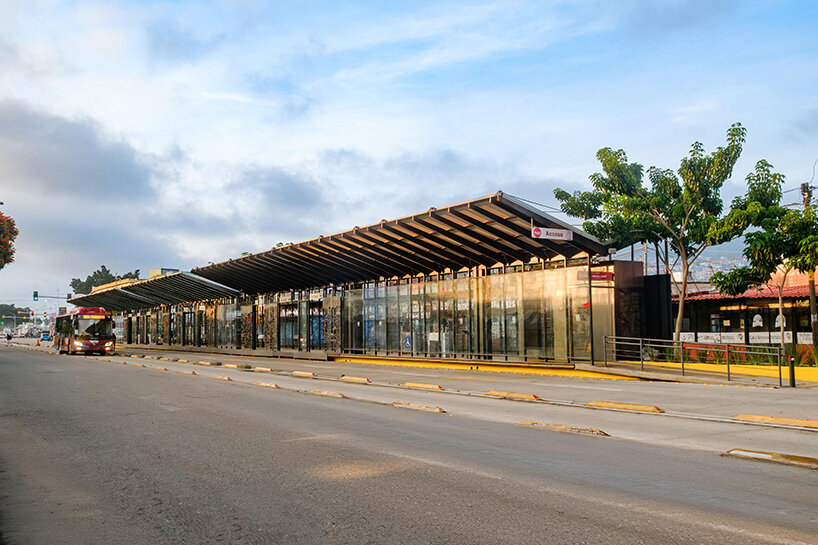
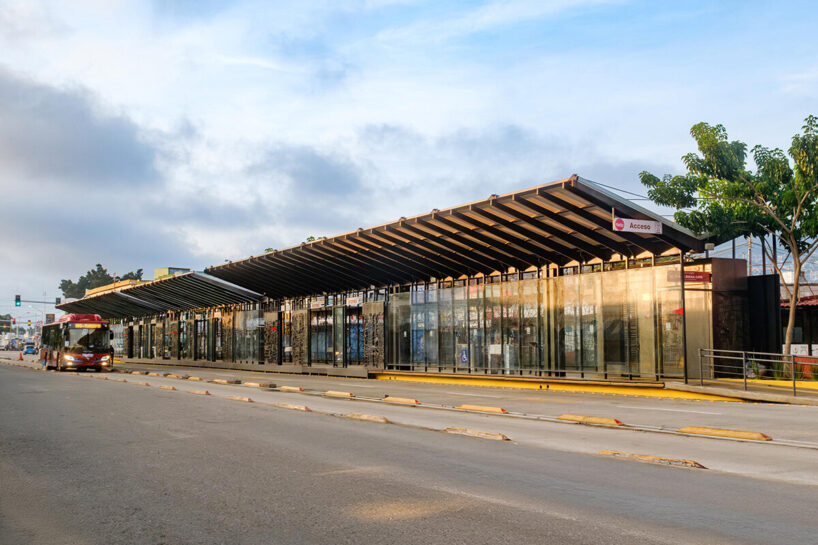
The team at RootStudio extends these public transport structures between the historic center and the market district of Central de Abastos, Oaxaca. Four stops were introduced, with two conceived as a single unit to accommodate heavier foot traffic. Their placement acknowledges the Central de Abastos as both logistical heart and civic threshold.
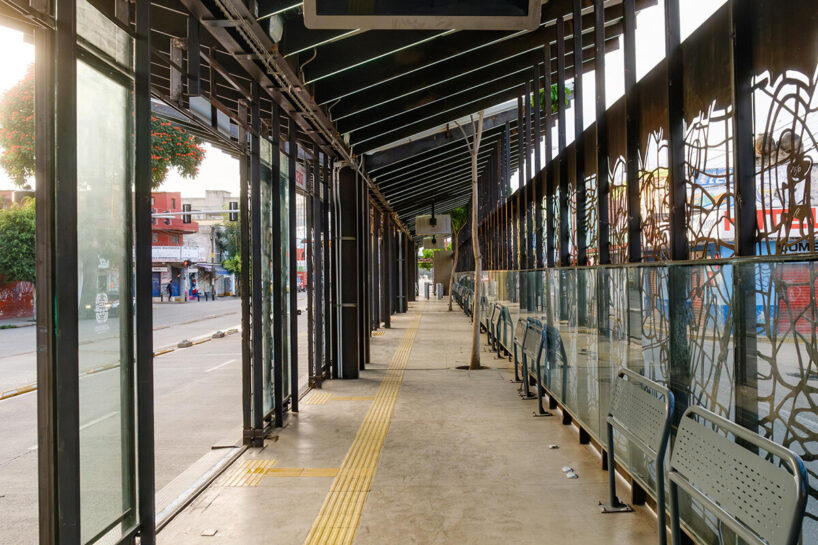
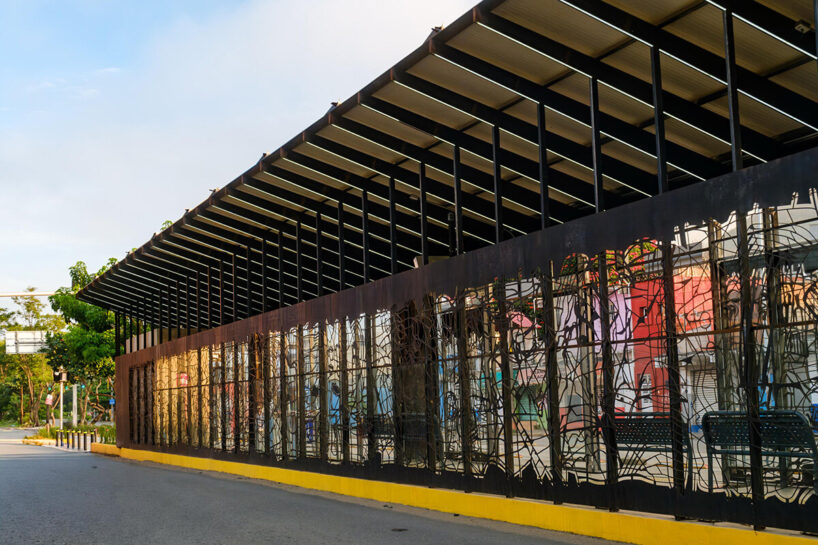
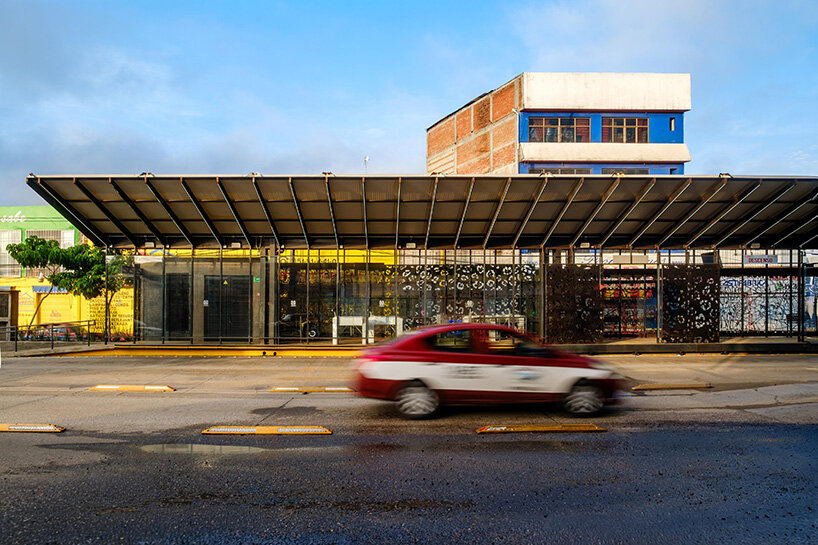
Each intervention is organized around a continuous roof supported by a rhythmic structural frame. The canopy provides shade and shelter from rain while defining a perimeter for waiting without enclosing it. The architecture reads as a measured gesture within an intense urban setting. It offers orientation and cover while maintaining visual permeability toward the street and market stalls beyond.
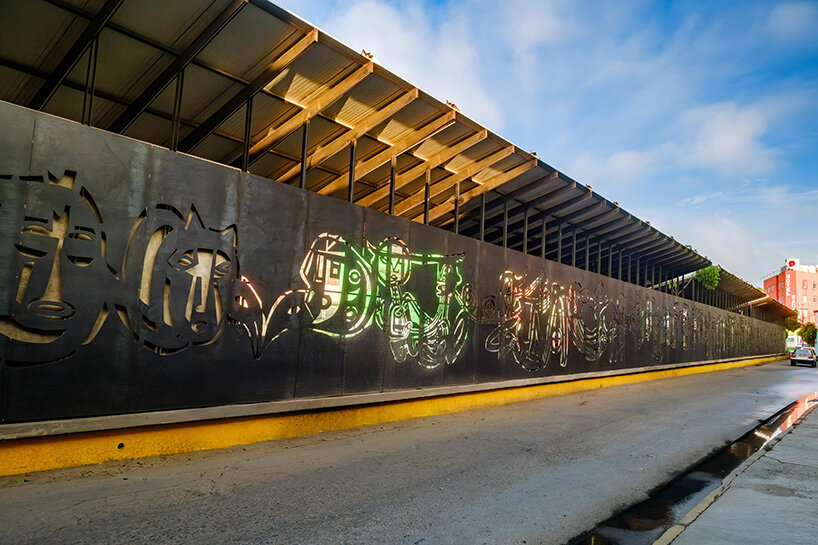
Metal screening filters sunlight
After sunset, the system acquires a distinct presence. Integrated points of light strengthen the legibility of the space and expand the perceived zone of safety in an area that previously relied on limited illumination. The stop operates as a luminous reference along the corridor, marking intervals in the urban fabric.
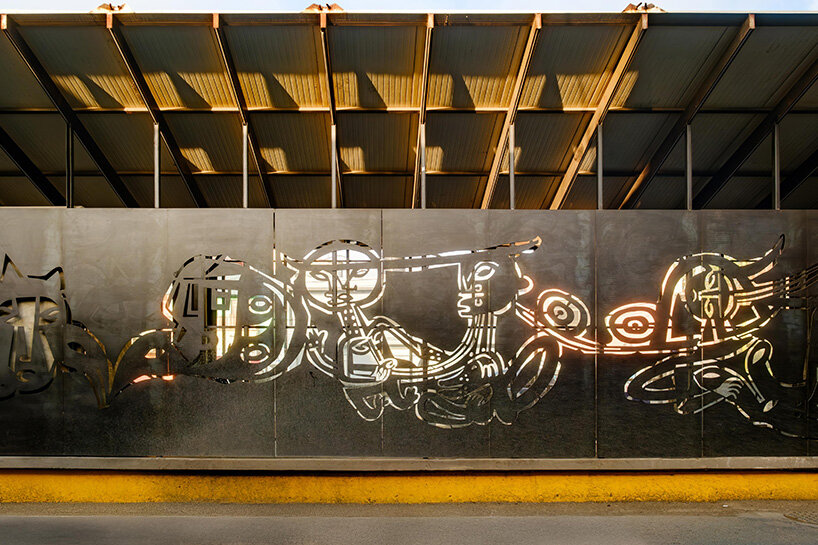
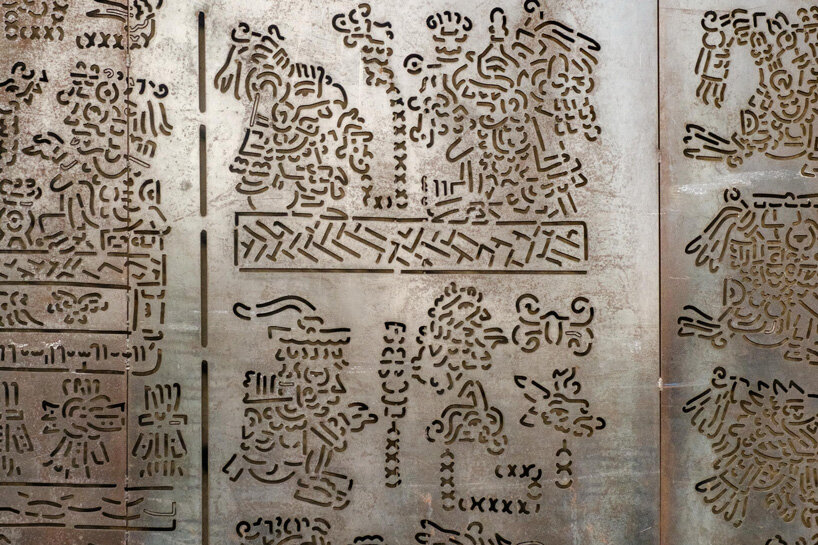
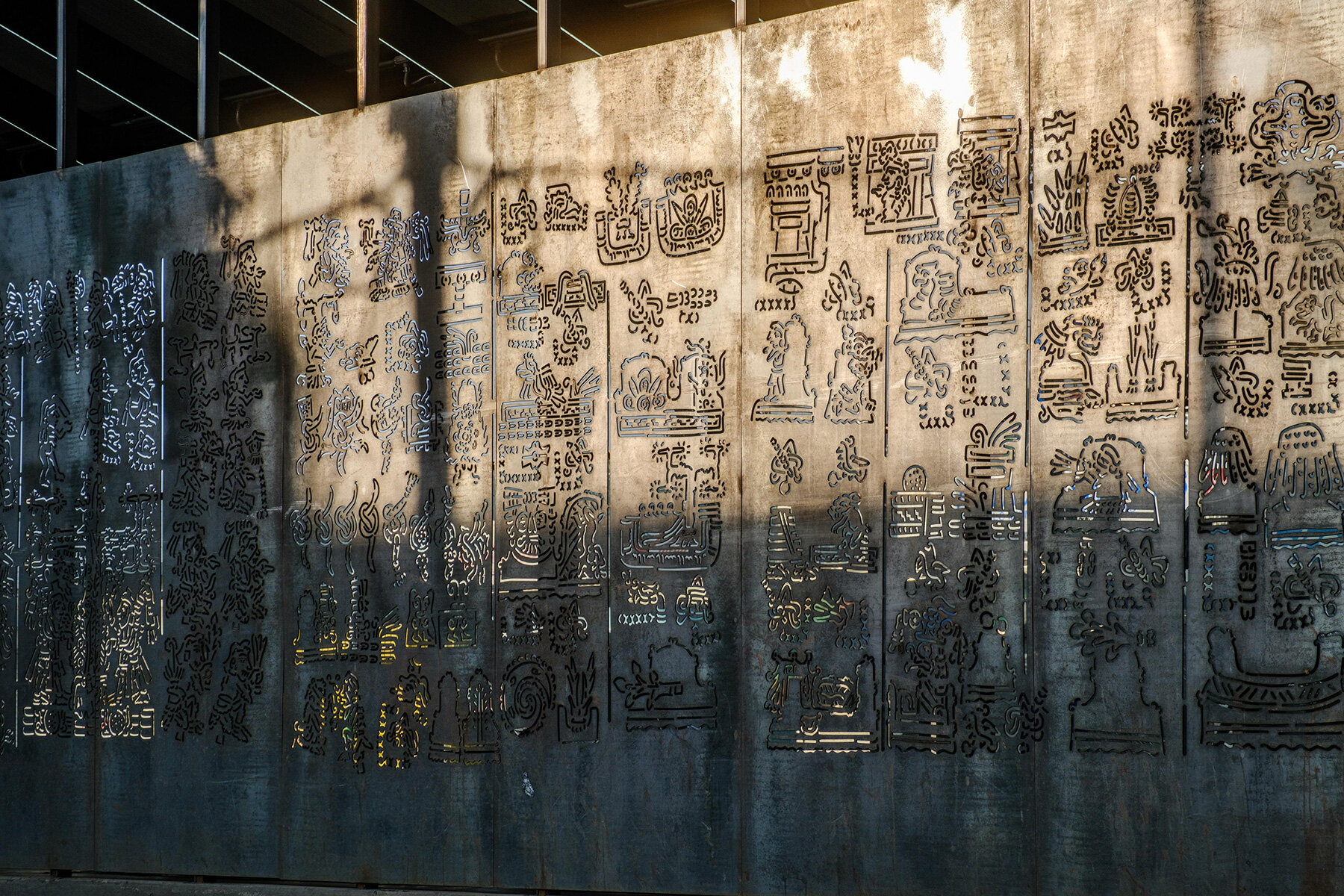
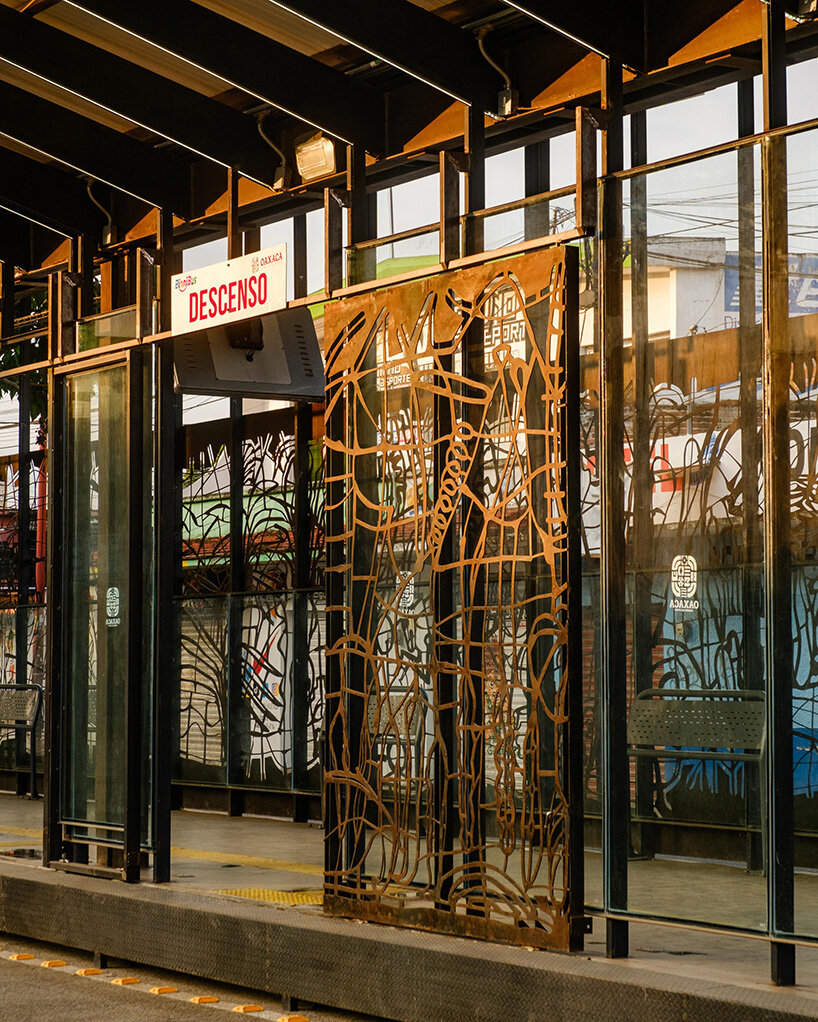
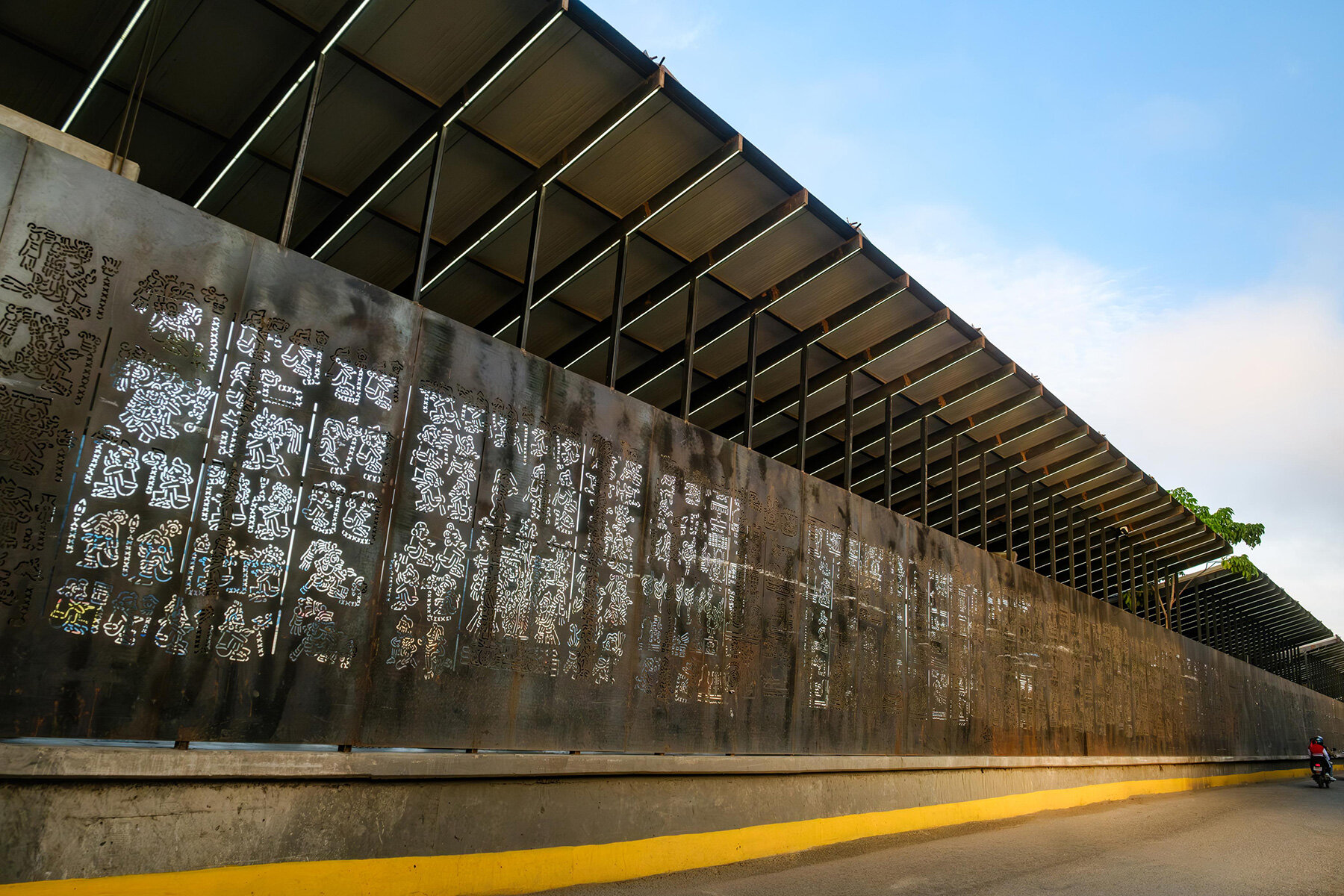
Material decisions shape the project’s character. In place of glass panels commonly found in transport stations, RootStudio selected perforated metal surfaces engineered for durability under intensive use. The cut patterns regulate transparency and ventilation while filtering direct sunlight. During the day, shadows register across the pavement and benches in shifting layers.
Vegetation is integrated directly into the stations. Trees inserted within the footprint of the stops introduce shade and temper the microclimate, reinforcing the human scale of the intervention. The relationship between structure and planting is deliberate, allowing air to circulate while softening the mineral surfaces of the site.
Inside, the spatial organization prioritizes fluid circulation during peak demand. Metal benches with restrained profiles align beneath the canopy, leaving generous passageways. Tactile paving guides visually impaired users, and informational devices clarify routes, access points, and expected wait times. Protective screens buffer proximity to vehicular traffic and airborne dust while preserving ventilation.
The stops function as cohesive pieces of infrastructure rather than isolated objects. Their design extends beyond the vehicle itself, reinforcing the identity of the broader public transport system, which has evolved from City Bus to BinniBus under the direction of the Secretaría de Movilidad del Estado de Oaxaca. The architectural language supports this institutional continuity, making the service recognizable at ground level.
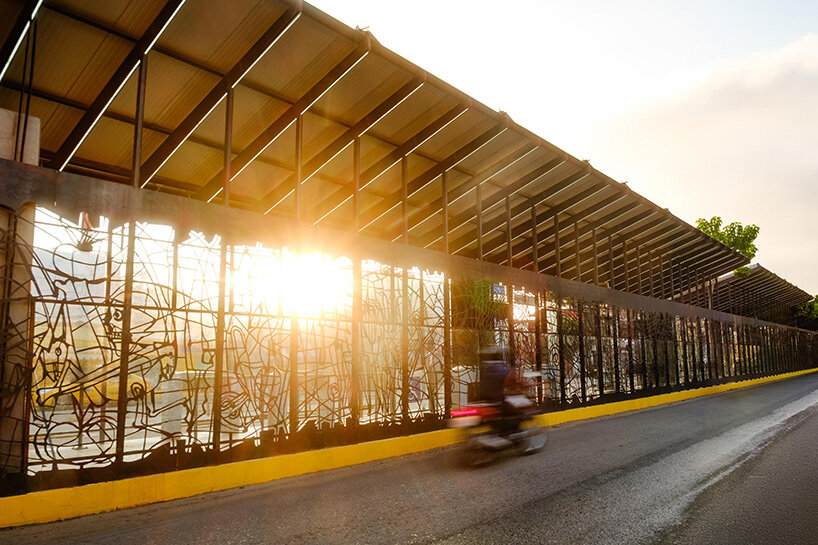
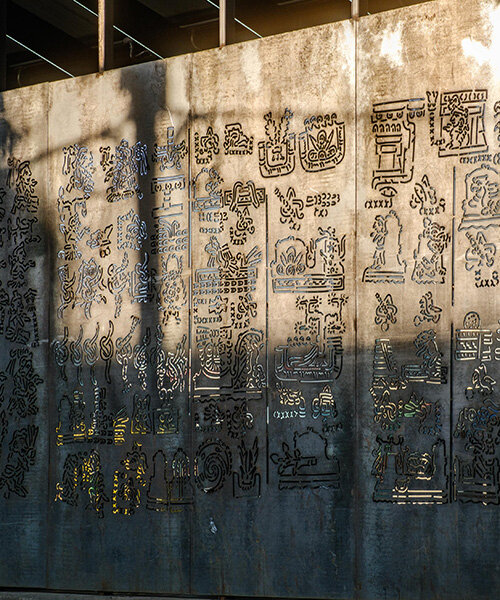
A defining dimension of the project lies in its integration of public art. Perforated metal panels double as surfaces for imagery developed in collaboration with three artists. Luis Zárate references the commercial rhythms of the Central de Abastos, Sabino Guisu draws on the visual narratives of Mixtec codices, and Carlito Dalceggio engages with Afrodescendant memory linked to the Costa Chica.
These images appear and dissolve as light shifts across the metal. They operate at the scale of the passerby, accompanying those who wait without demanding attention. Through this strategy, RootStudio positions public transport infrastructure as a carrier of local identity embedded within the routines of Oaxaca.
The interventions coincide with broader mobility improvements, including new buses, expanded routes, and the incorporation of security cameras. Within this context, the bus stop becomes a tangible sign of investment in public art and infrastructure.
1/5
project info:
architect: RootStudio | @_rootstudio_
location: Central de Abastos, Oaxaca, Mexico
photography: © Pacu
shop
your own online design shop — no sales commission collected