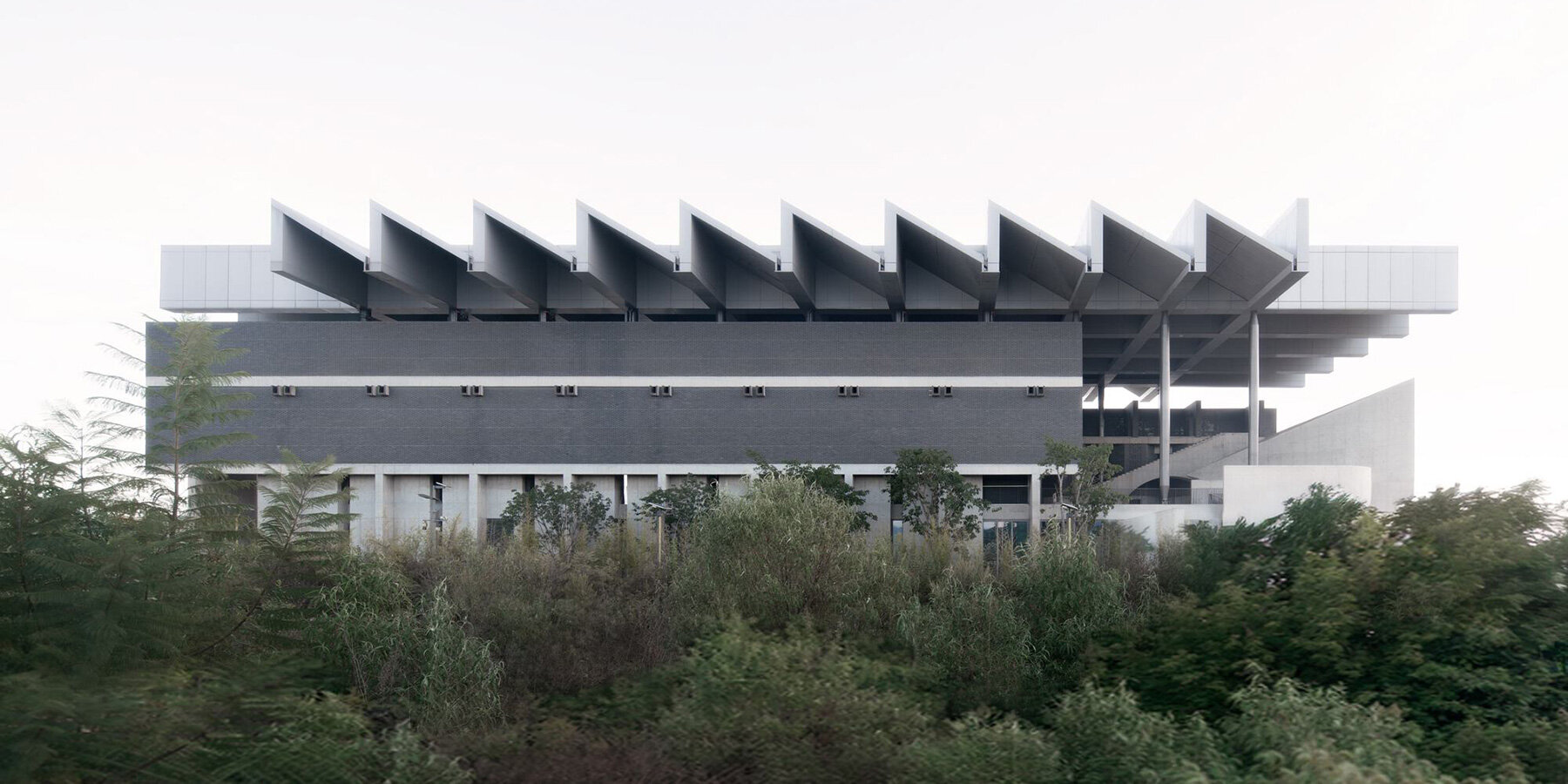
a complex for the history and craft of cinema
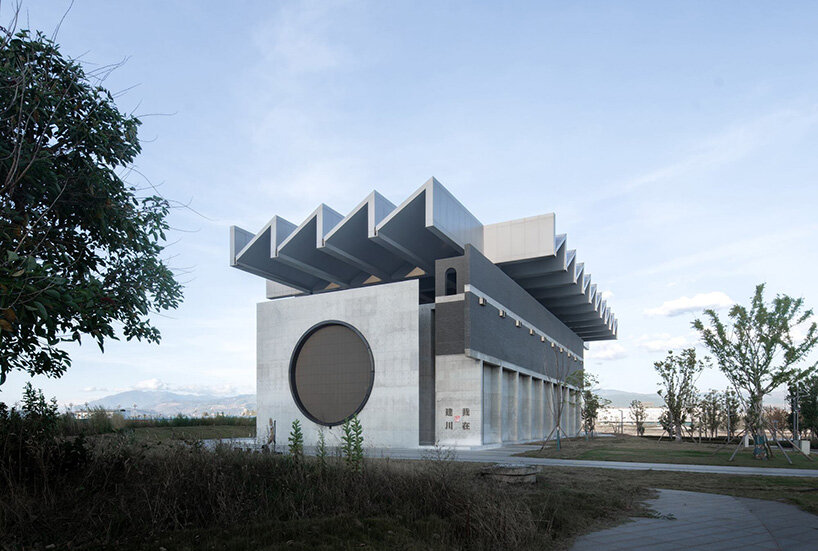
The Xichang Jianchuan Film Museum by Shenzhen-based Tanghua Architects stands in Xichang, China as a prominent presence within the city’s new high-speed rail district. With its monumental concrete structure and folding rooftop, the project is part of the expansive Jianchuan museum campus and contributes to a cultural complex dedicated to the history and craft of cinema.
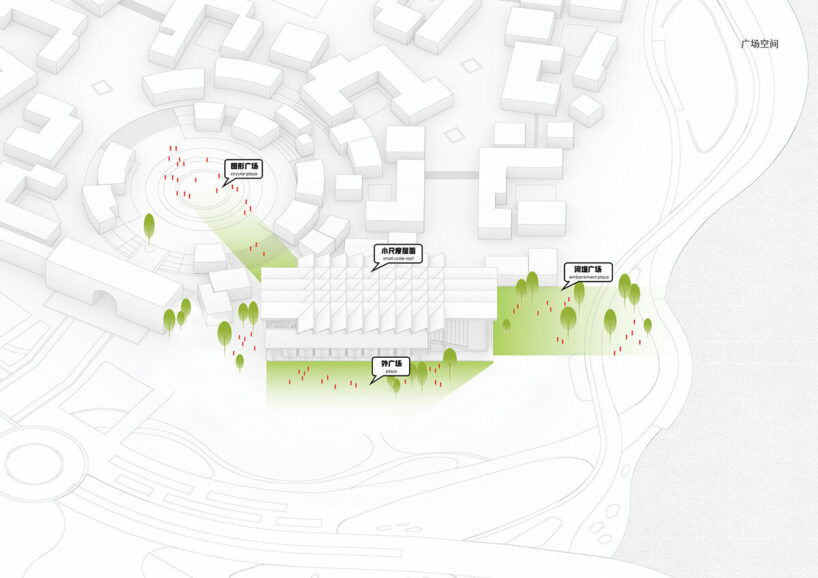
Set within a large master plan that will ultimately include seventeen institutions devoted to different aspects of film history, the museum occupies a central position along the campus’s main route. It’s within this larger context that the team developed a building dedicated to documentary cinema, a discipline defined by its close relationship with lived experience and observation.
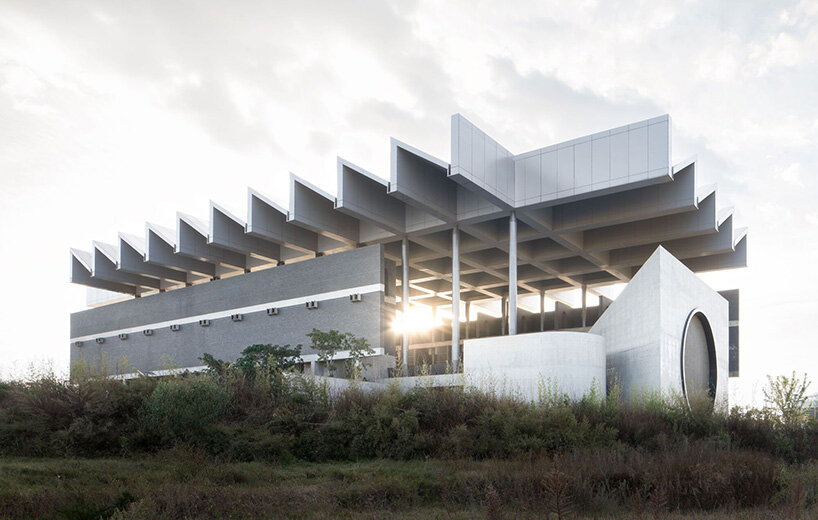
images © MMCM Studio
Tanghua Architects is duided by Documentary Film
The team at Tanghua Architects approached the design with the premise that documentary filmmaking carries a unique quality of authenticity. Architecture for such a program could express that sensibility through material honesty and spatial openness. The building therefore presents itself with direct structural expression, surfaces of exposed concrete, and a generous relationship with the surrounding climate of Xichang.
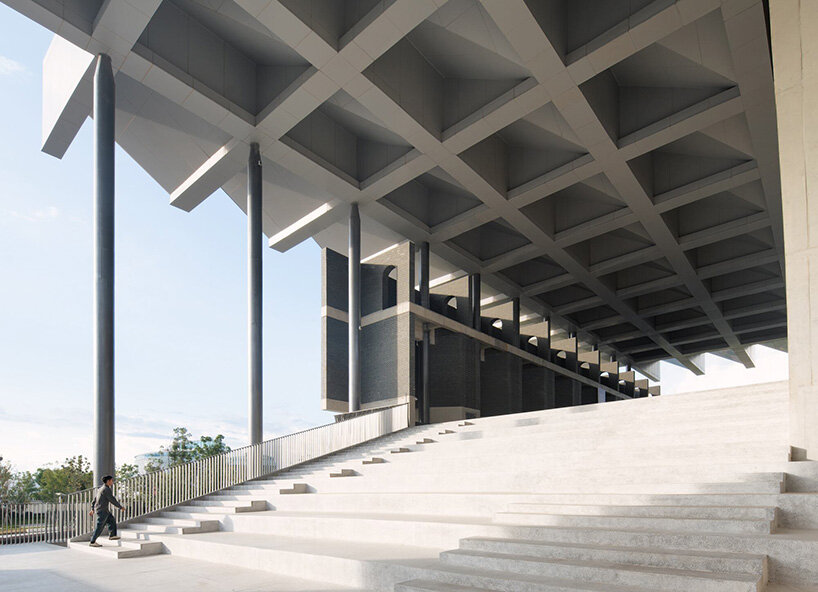
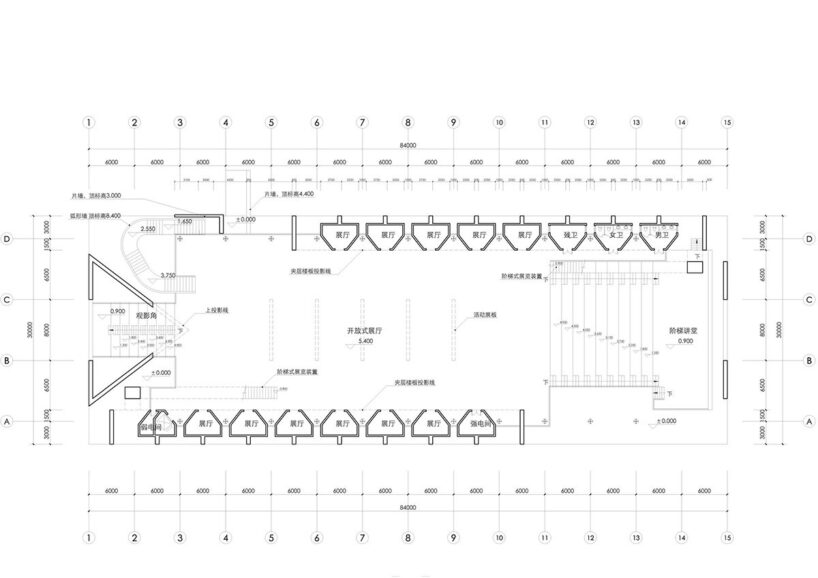
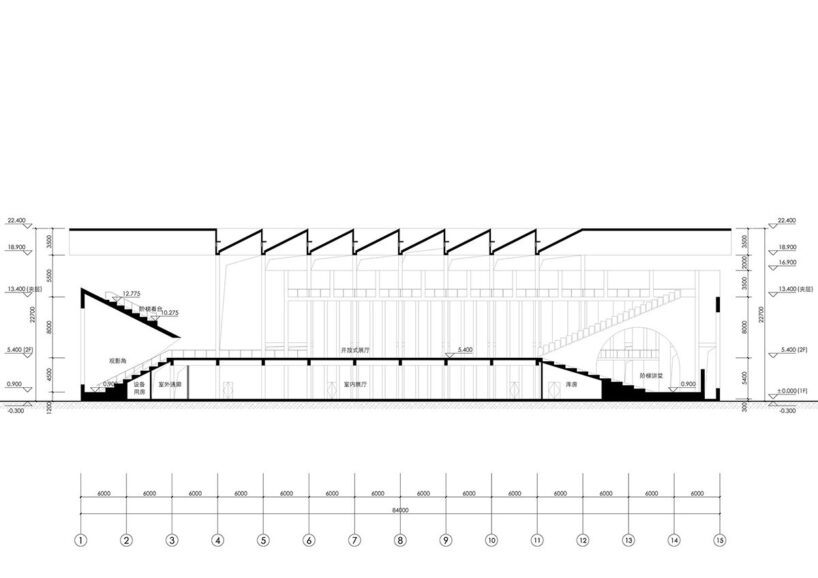
Tanghua Architects organizes the Film Museum as a sequence of spaces that shift between enclosed galleries and an expansive open exhibition hall above. The second floor operates as a large shaded platform that allows air and sunlight to pass through the building. Visitors move across this elevated space while remaining connected to the atmosphere of the valley in a way that allows them to experience the museum in dialogue with the environment beyond its walls.
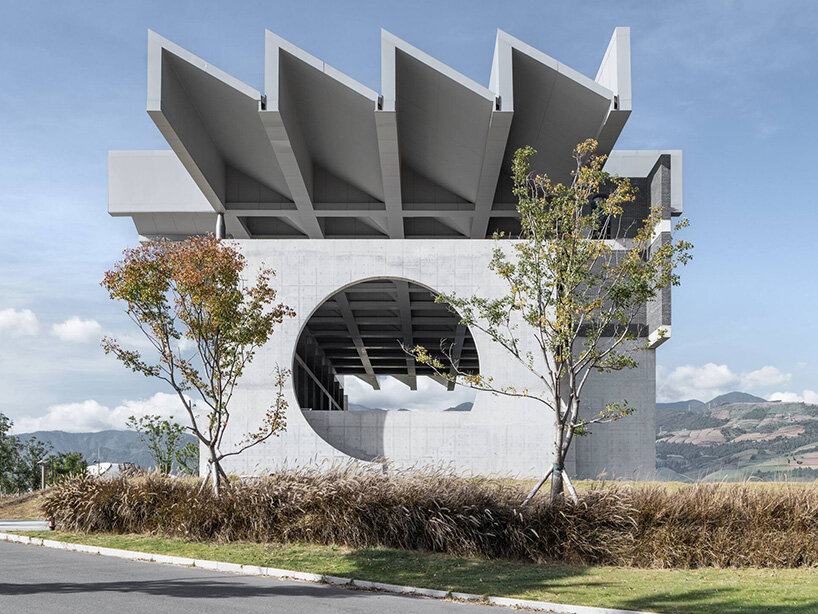
the Xichang Jianchuan Film Museum by Tanghua Architects completes in China
A Roof That Frames the Sky
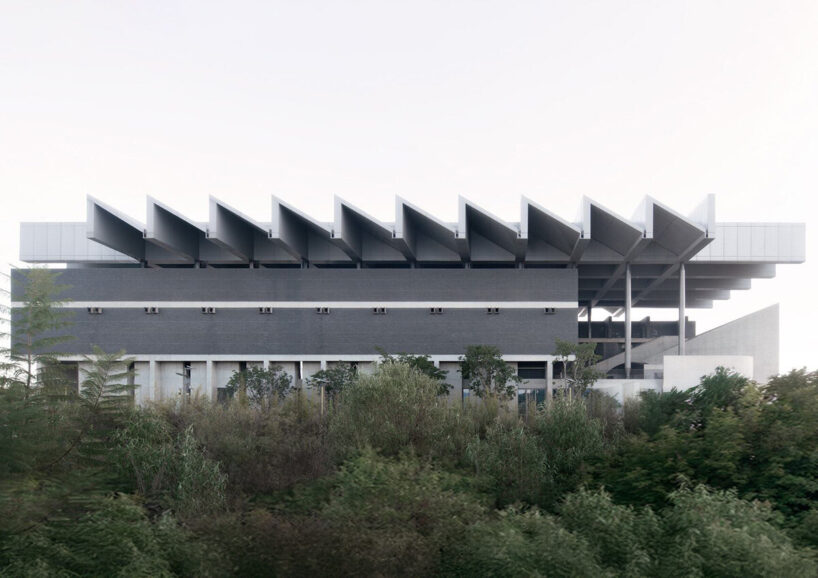
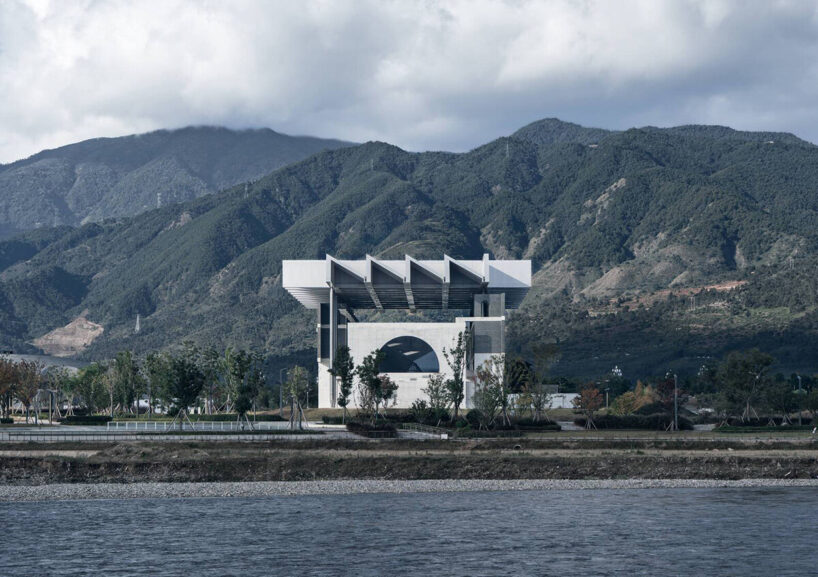
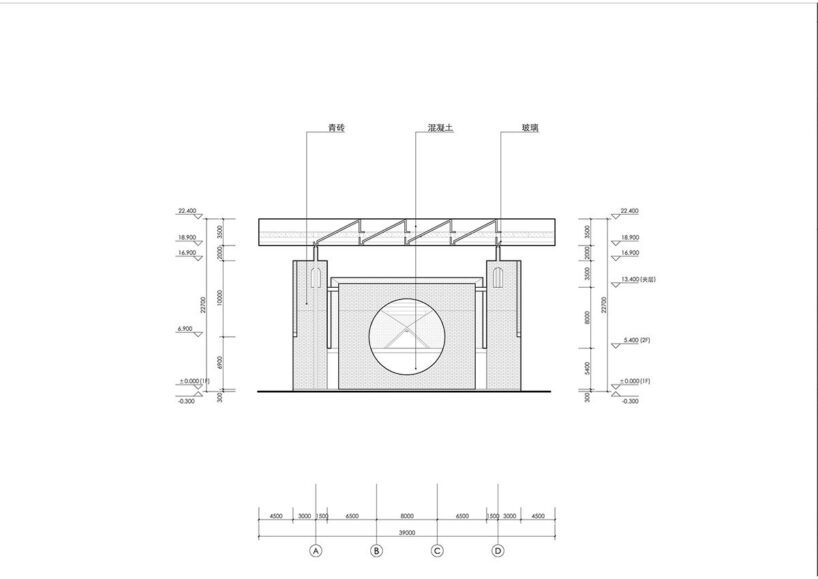
The most defining element of the Film Museum is its articulated roof structure, which Tanghua Architects shapes as a series of folded concrete planes. The structure projects outward in a repeating rhythm which creates broad eaves that cast long bands of shade across the terraces and galleries below. From a distance, the roof reads as a sculptural silhouette against the sky, while at closer range it reveals a structural grid that extends throughout the interior.
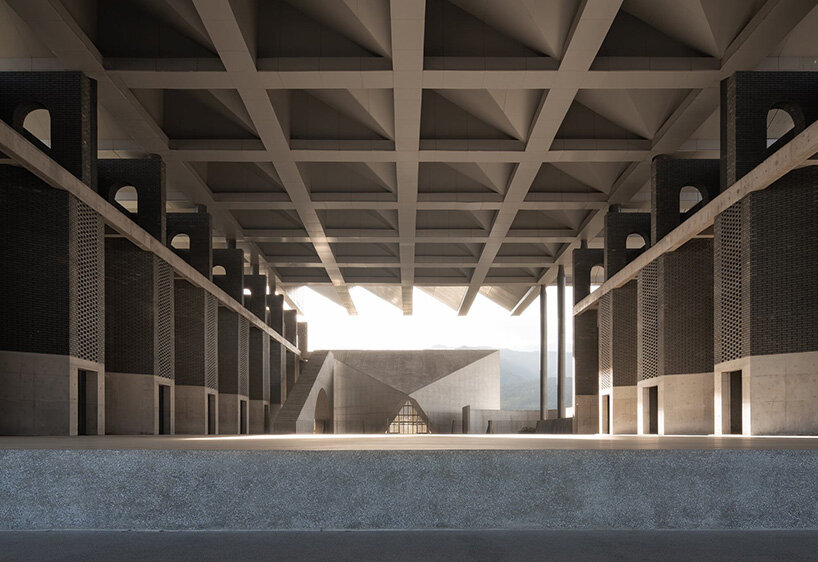
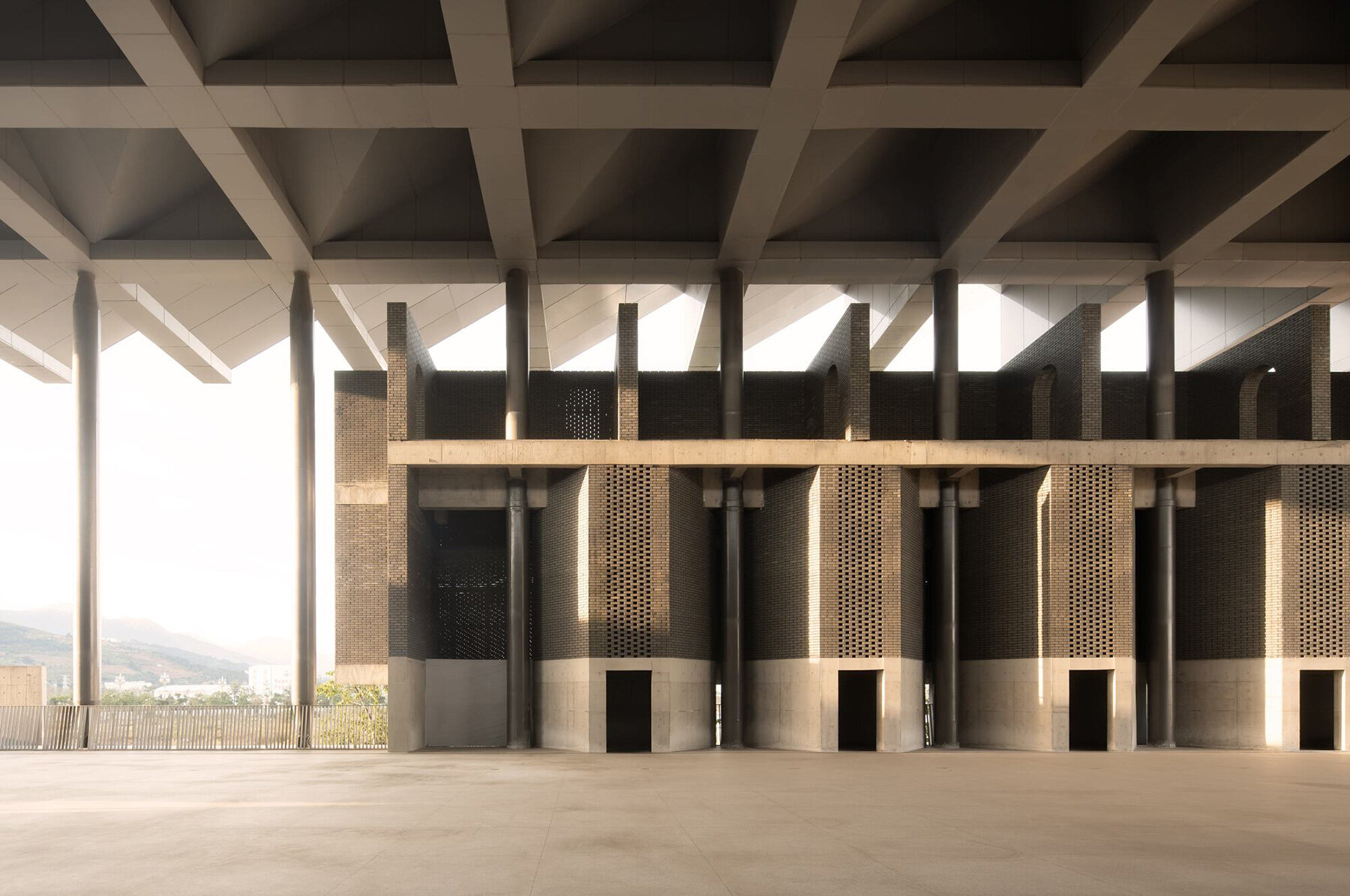
This overhead structure introduces a sense of scale to the Film Museum. Massive beams intersect above the open hall, forming a pattern of square coffers that guide light across the concrete surfaces. As the sun moves through the day, shifting patches of brightness cinematically travel across the floor and walls..
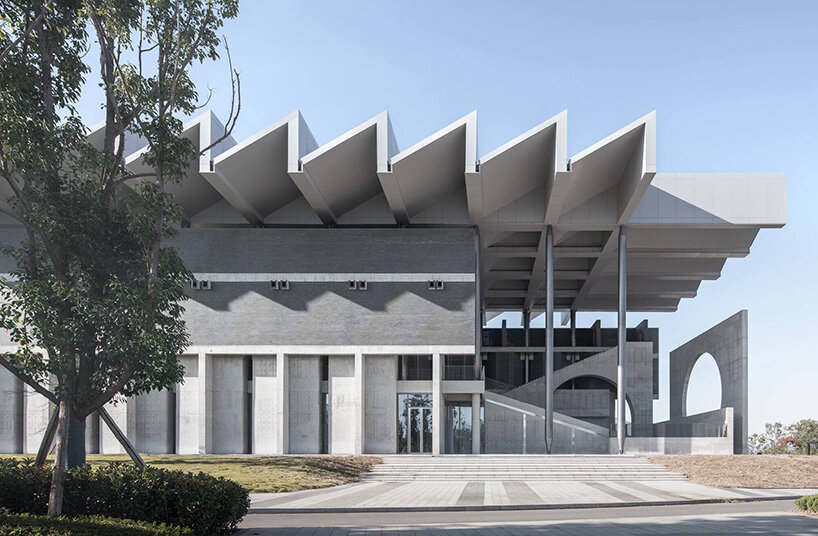
a folded concrete roof extends outward to create deep shade across the upper exhibition platform
Movement Through the Building
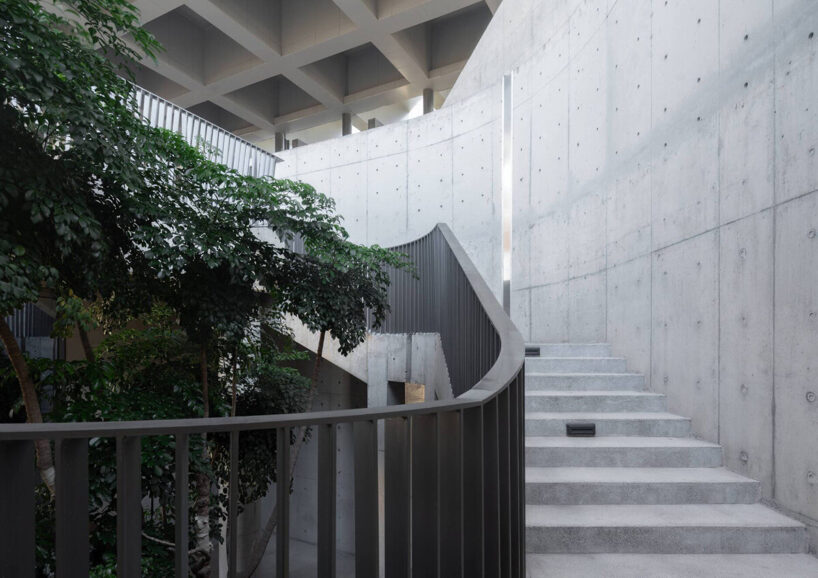
The ground level entrance leads to enclosed exhibition halls dedicated to the history of film and documentary practice. These galleries provide controlled conditions for archival material and curated installations. From this base, visitors ascend through ramps and stairways toward the open platform above.
The transition from enclosed galleries to the open hall is a dramatic shift. Above, the building becomes a large civic terrace supported by slender columns. Views extend outward across the campus and toward the mountains, and circular openings cut into the concrete walls to frame these landscapes.
large structural beams form a grid that defines the rhythm of the interior hall
Material and Structure
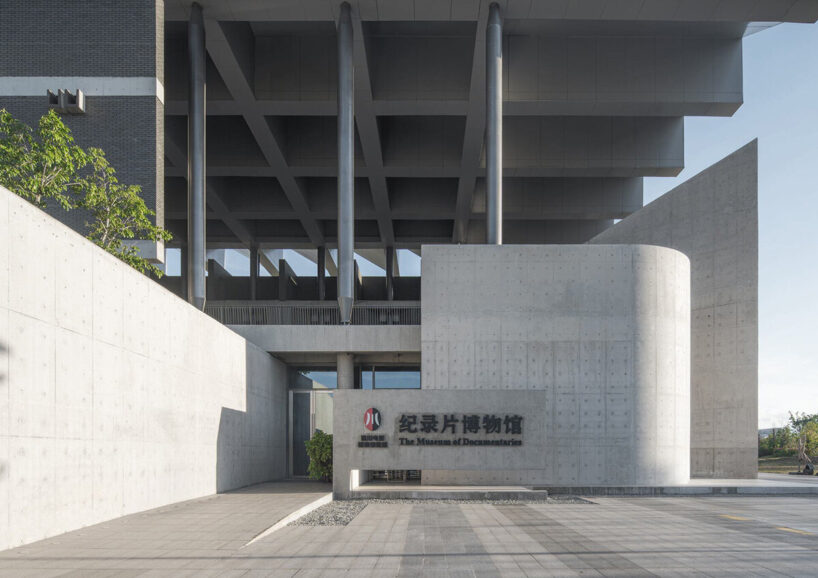
Concrete defines the design language of the Film Museum. Tanghua Architects leaves the material exposed so that the subtle traces of construction remain visible. Slight variations in tone and texture reveal the process of casting and assembly, a strategy which reinforces the building’s emphasis on direct expression.
Alongside the concrete structure, dark brick volumes line sections of the interior perimeter. These brick elements introduce depth and rhythm along the open hall while housing smaller rooms and circulation routes. The combination of concrete frame and brick surfaces gives the building a balance between mass and openness.
ground floor galleries house enclosed exhibition spaces dedicated to film history
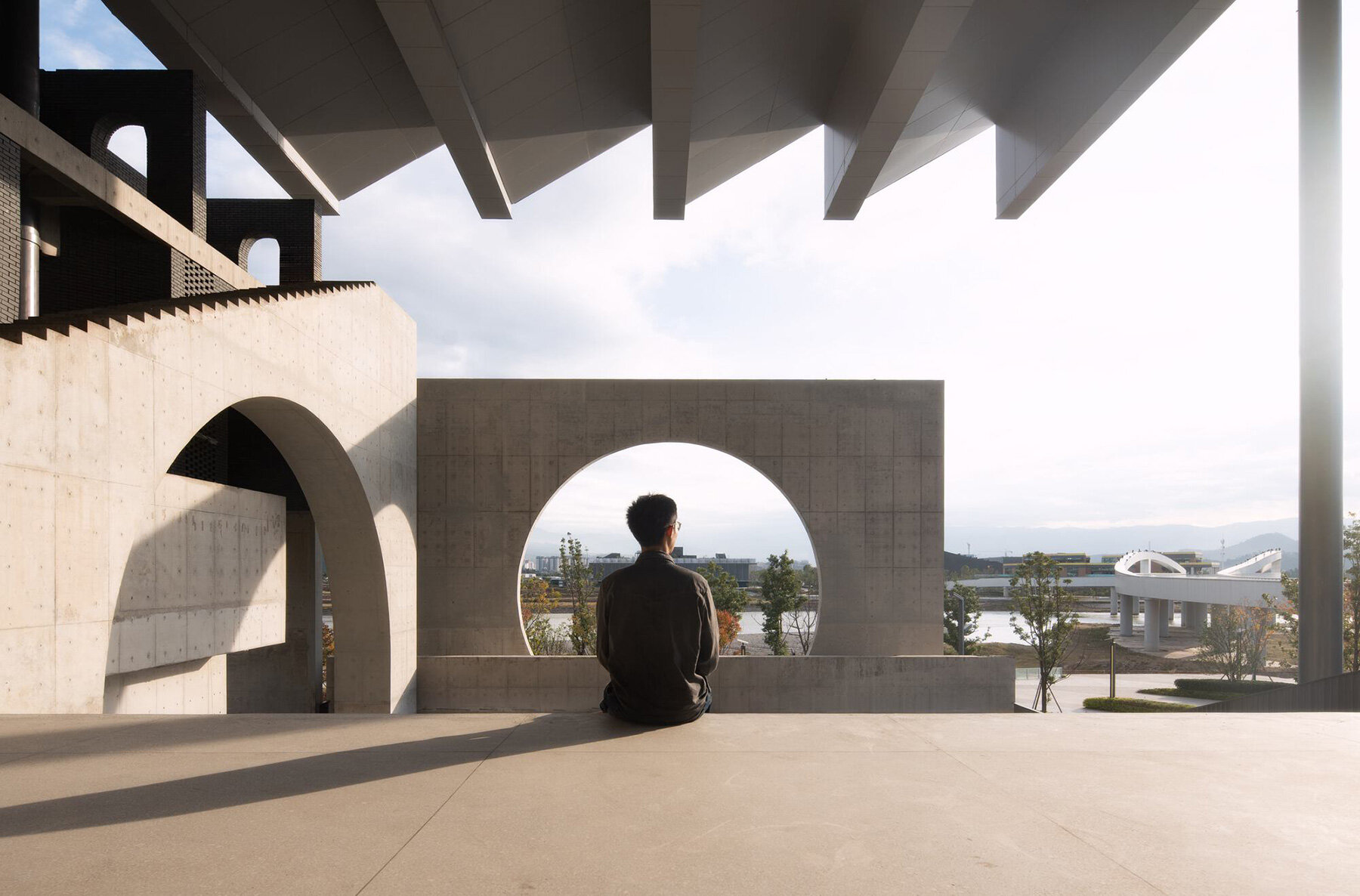
circular openings in the concrete frame distant views of the surrounding valley
an open second floor platform allows sunlight and fresh air to move through the building
exposed concrete surfaces reveal subtle textures from the construction process
project info:
name: Xichang Jianchuan Film Museum Complex – Documentary Film Museum
architect: Tanghua Architects | @tanghua.architects
location: Liangshan Yi Autonomous Prefecture, China
area: 4167 square meters
completion: 2025
photography: © MMCM Studio | @mmcm.studio
lead architect: Yu Wenbo
design team: Zhao Yuli, Liu Huawei
technical team: Wang Tianhao
co-designer: CCDI International (Shenzhen) Design Consultants
client: Sichuan Hejin High-speed Railway New Urbanization Investment
architecture in china (2061)
 Mar 04, 2026
 Mar 03, 2026
 Mar 01, 2026
 Feb 23, 2026
 Feb 17, 2026
concrete architecture and design (980)
 Mar 08, 2026
 Mar 06, 2026
 Mar 04, 2026
 Mar 02, 2026
 Mar 02, 2026
museums and galleries (863)
Mar 04, 2026 Mar 04, 2026
 Mar 04, 2026
 Feb 28, 2026
 Feb 20, 2026
rooftop architecture and design (216)
 Mar 02, 2026
 Feb 24, 2026 Feb 23, 2026 Feb 20, 2026
 Feb 13, 2026
 Feb 24, 2026
 Feb 19, 2026
 Feb 10, 2026