the expanded new museum set to open in New York
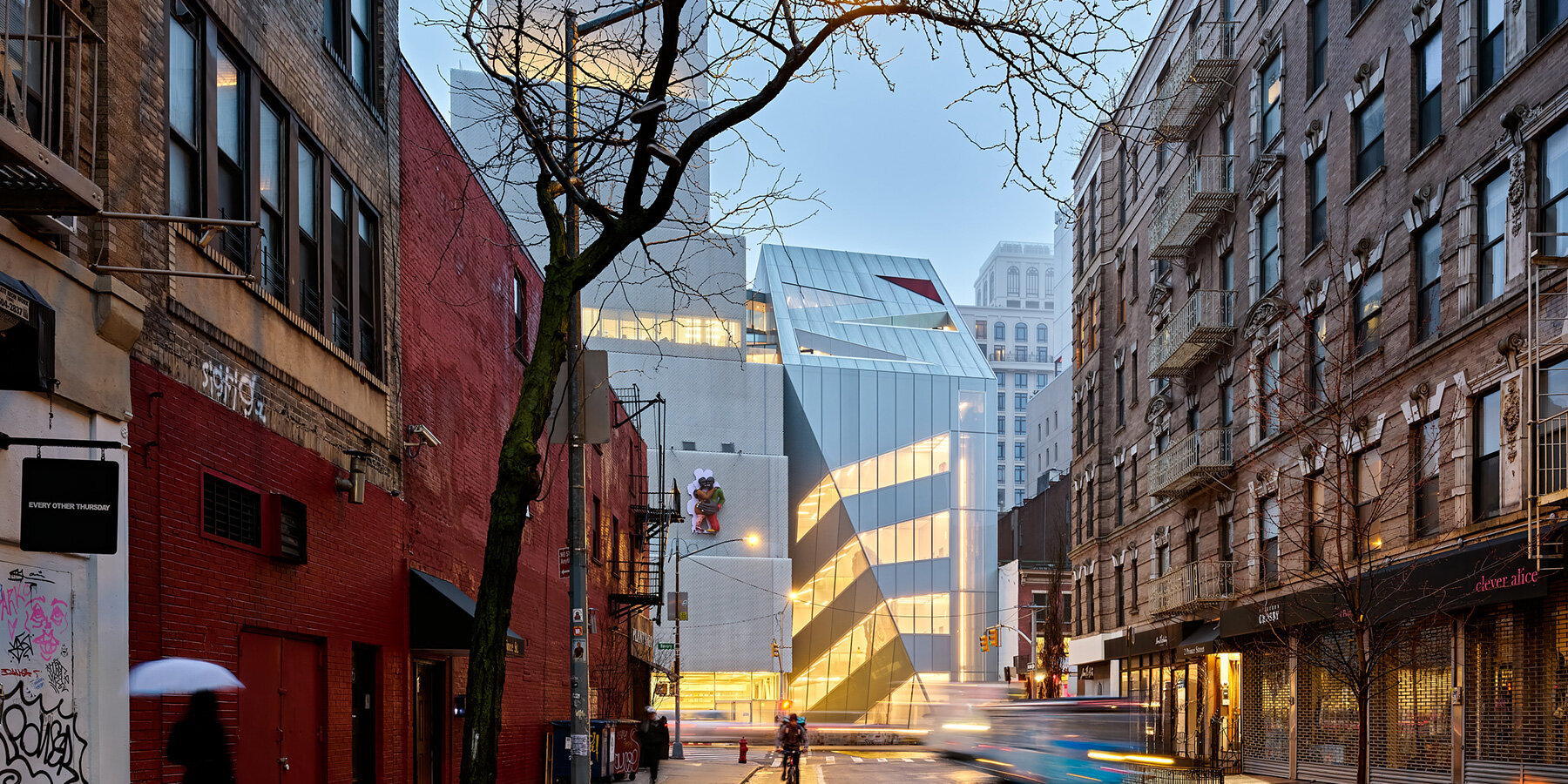
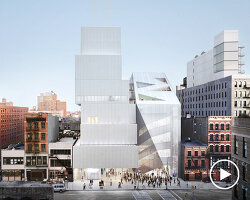
New York City sees the completion of the New Museum‘s long-awaited expansion by OMA, which now stands proudly alongside its iconic SANNA-designed counterpart. Realized under the direction of Shohei Shigematsu, the addition rises along the Bowery as a distinct yet closely linked counterpart to its neighbor, which first opened in 2007.
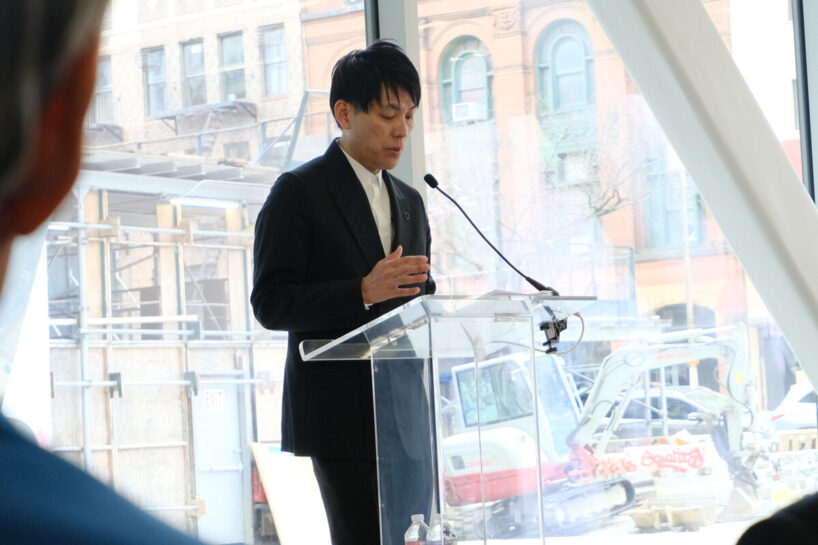
‘It’s a new New Museum composed of two distinct yet highly connected buildings, independent but in constant dialogue,‘ Shigematsu explains ahead of the building’s public opening. Rather than merging into a single form, the two volumes maintain their independence, as OMA’s folding facade contrasts with the familiar stacking boxes of the original building.
Ahead of its public opening, designboom previewed the museum‘s new galleries along with the inaugural exhibition, ‘New Humans: Memories of the Future,’ curated by Massimiliano Gioni.
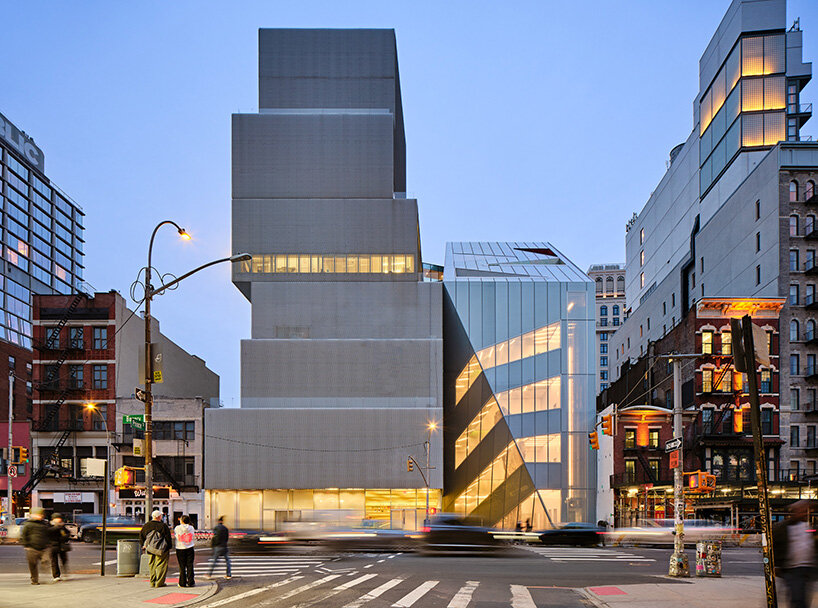
image © Jason Keen
A building that opens itself to the city
At street level, the expansion reshapes the presence of the New Museum on the Bowery. The corner at Prince Street is carved into a public plaza, a gesture that shifts the institution from a destination into a place of encounter. This open threshold extends the museum into the rhythm of the neighborhood, inviting movement across its edges throughout the day.
The facade reveals the activities within. Circulation paths, terraces, and interior spaces appear through angled openings and translucent surfaces. As evening sets in, the building emits a soft, striped glow, turning the New Museum into a graphic beacon.
Shigematsu reflects on this condition: ‘Museums today are among the last truly public spaces in the city.‘ Thus, they must support gathering, participation, and dialogue while remaining open to change.
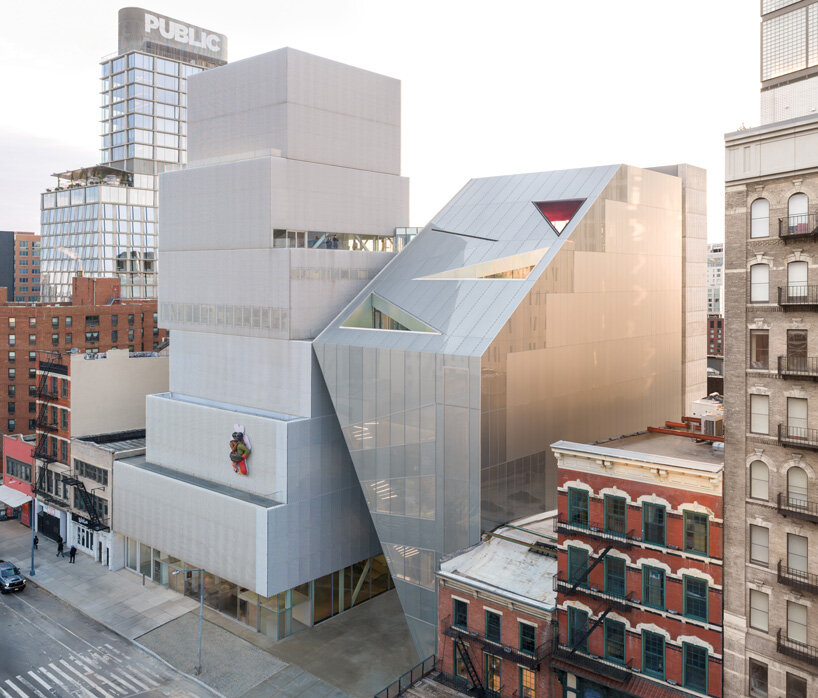
image © Jason O’Rear
Parallel structures, shared experience
Inside, the expansion aligns its program with the New Museum’s existing building, stacking galleries and spaces for education and production in parallel. This strategy allows the two structures to function together, offering both continuity and variation. Galleries can expand across floors or contract into more focused rooms, giving curators a wider range of possibilities.
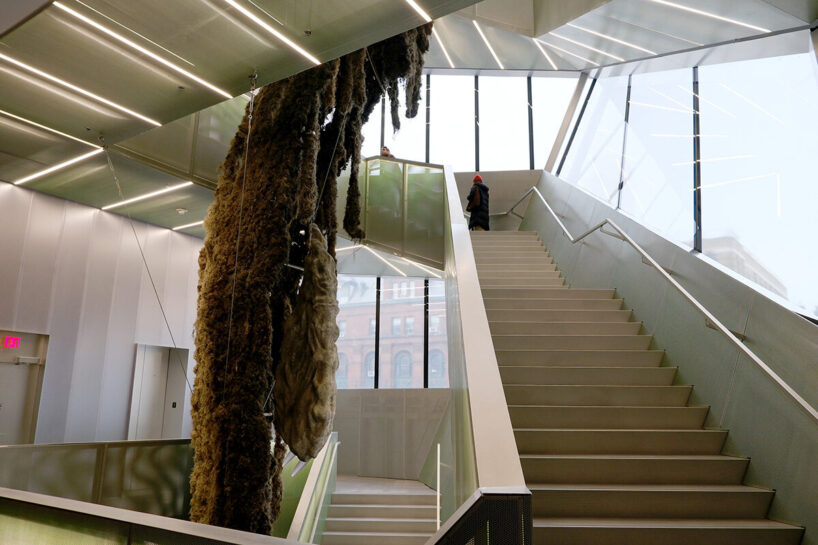
Between the buildings, an interstitial zone forms a central spine. The atrium stair rises through this space, connecting levels while creating a point of pause. It is a place where visitors encounter one another, where art becomes visible across floors, and where the city can be glimpsed through shifting perspectives. Shigematsu describes this area as ‘a social and visual condenser,‘ where movement and exchange converge.
Material choices reinforce this sense of openness. Glass surfaces tilt and intersect, guiding light deep into the building. Seating areas integrate into circulation, encouraging visitors to linger. The architecture supports both focused viewing and informal gathering, allowing different rhythms to coexist.
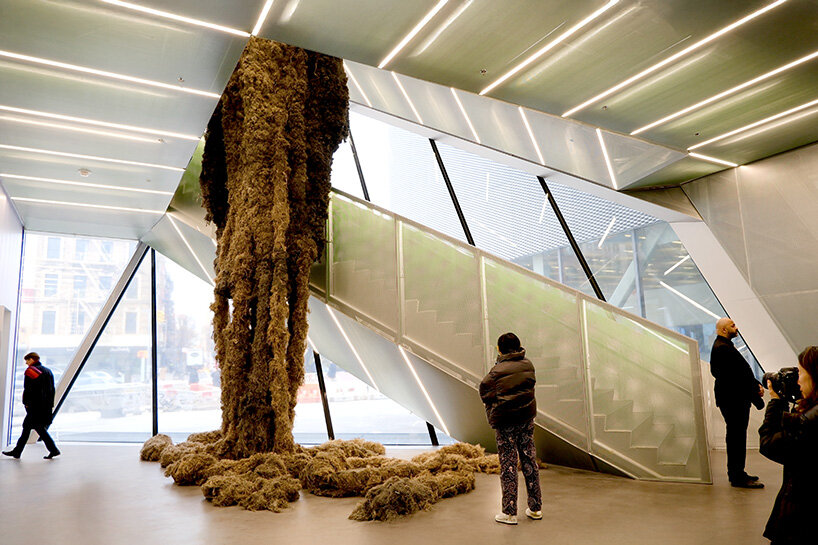
Klára Hosnedlová, Shelter | image © designboom
the inaugural exhibition: ‘New Humans’
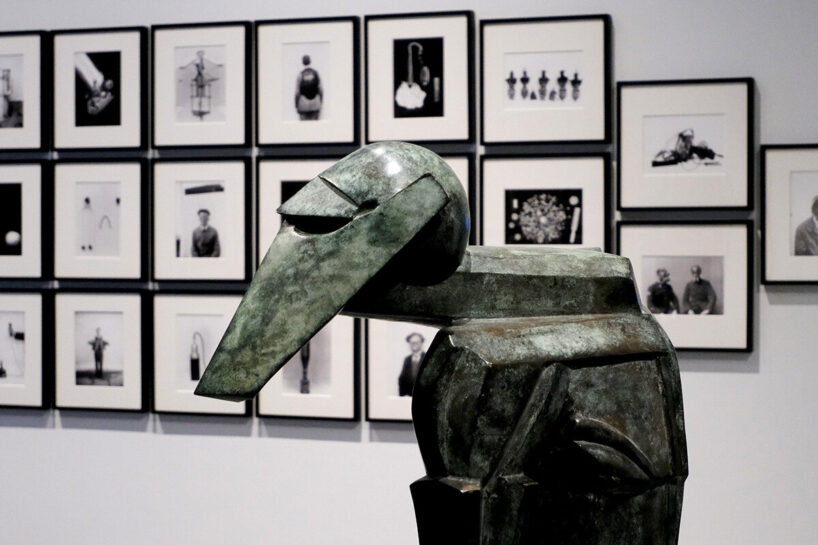
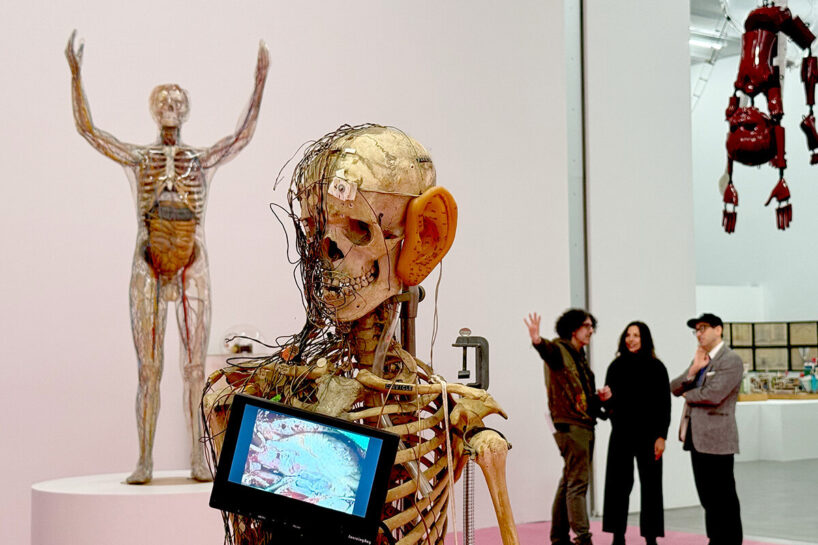
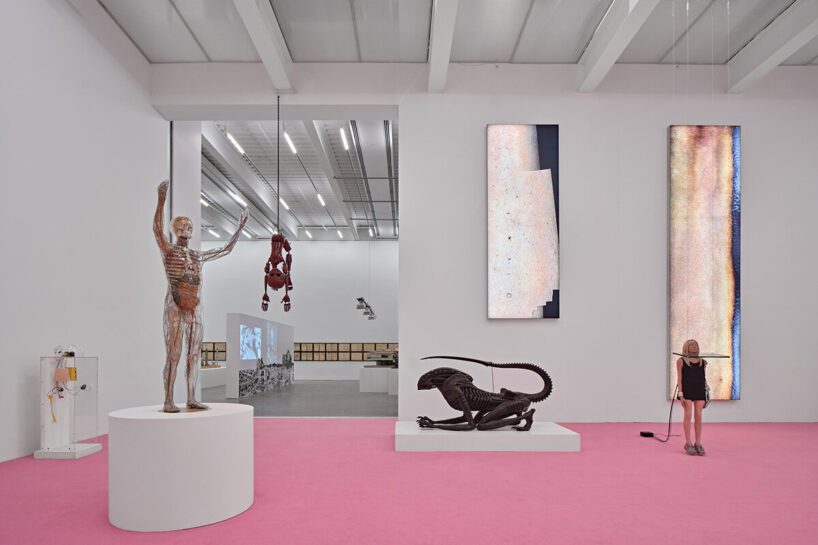
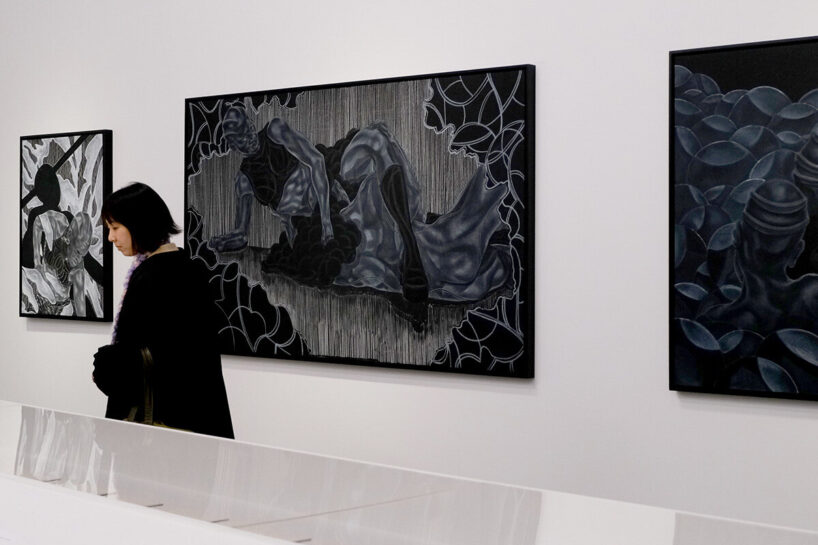
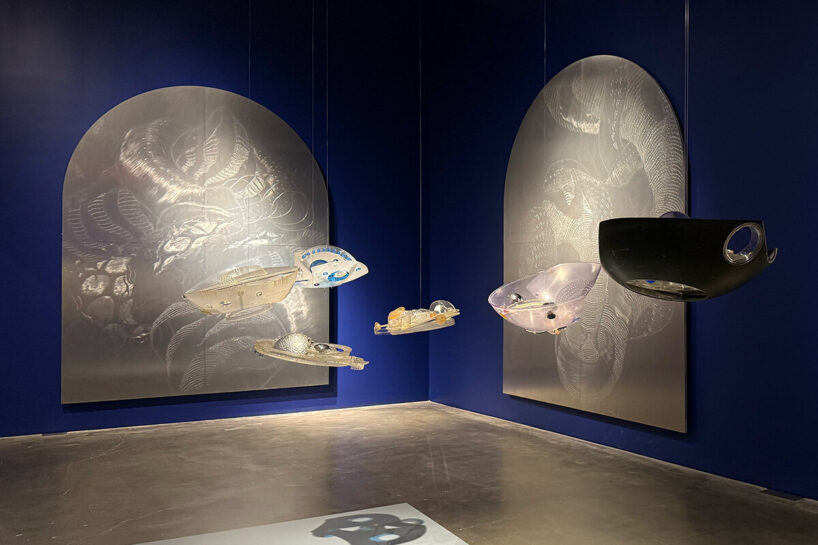
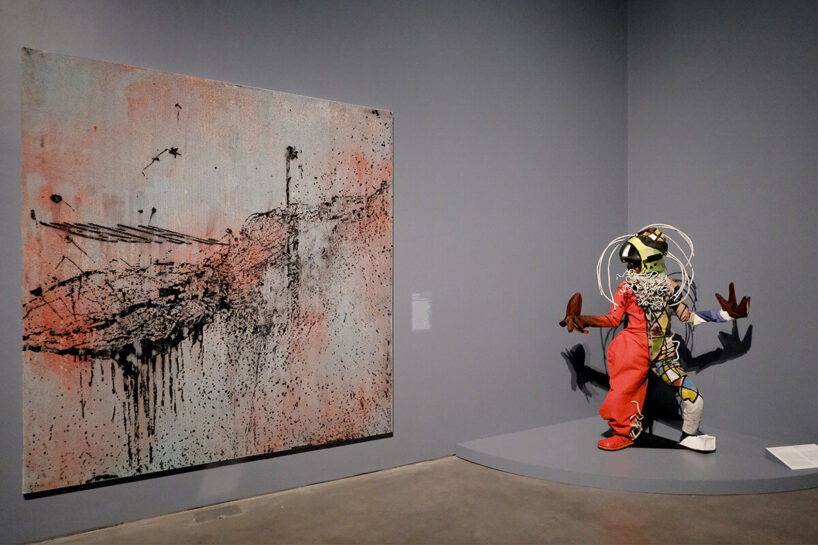
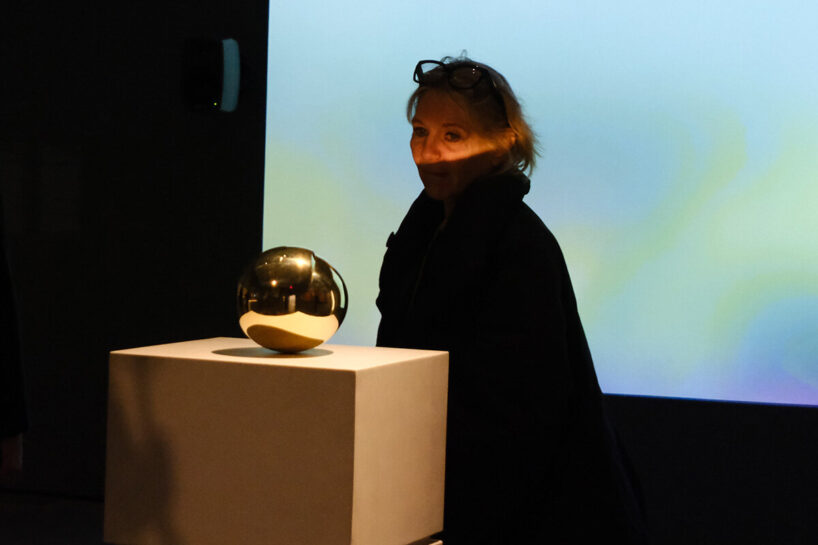
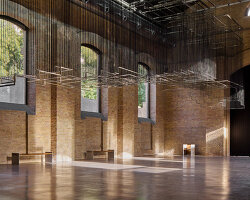
The inaugural exhibition, New Humans: Memories of the Future, curated by Massimiliano Gioni, takes full advantage of this expanded spatial framework. Spread across multiple floors, the exhibition brings together more than 200 participants, including artists, architects, writers, and scientists, to examine how technological and cultural shifts reshape what it means to be human.
Gioni describes the new building: ‘It’s a kind of lens or a prism that refracts and expands ideas in a multiplicity of colors and vibrations.‘ Within this environment, the exhibition moves across time, placing contemporary works alongside historical references. The approach draws a connection between past moments of transformation and those unfolding today.
The exhibition begins from a line by Karel Čapek, who introduced the word robot in 1920: ‘There is nothing stranger to humans than their own image.‘ From this starting point, New Humans considers both the uncertainties and possibilities that accompany technological change. Gioni speaks of a ‘symmetry between the 1920s and today,‘ suggesting that periods of rapid transformation can also generate new forms of resilience and imagination.
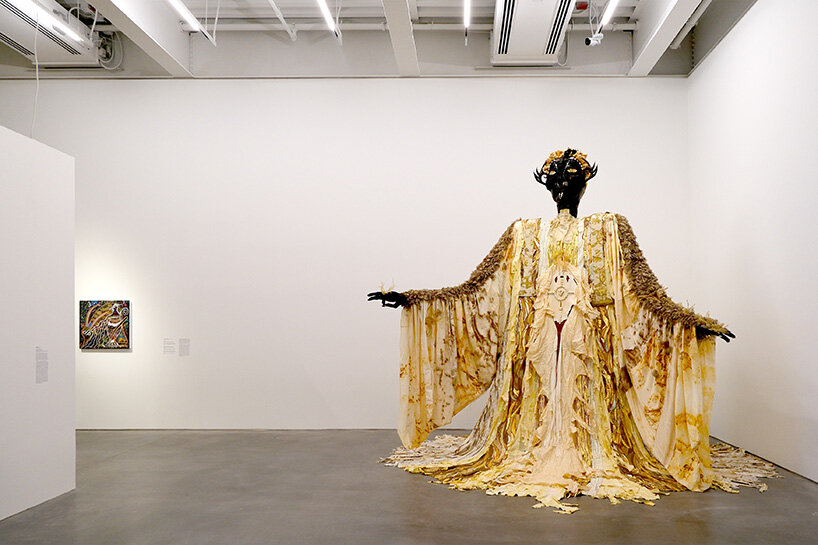
New Humans: Memories of the Future, 2026, exhibition view. New Museum, New York | image © designboom
A platform for production and future practice
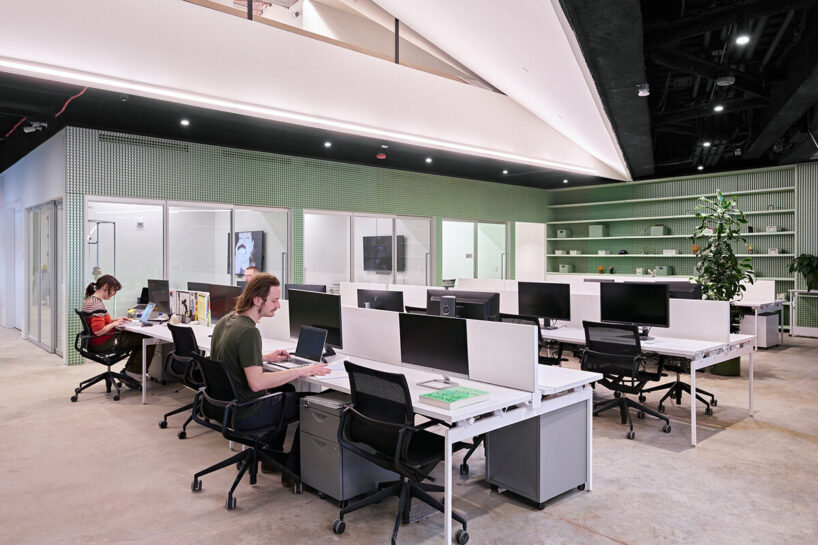
Beyond exhibition space, the expansion broadens the museum’s role as a site of production. Upper levels house studios for artists in residence and a dedicated space for NEW INC, the institution’s cultural incubator. These areas support ongoing work rather than finished display, reinforcing the idea of the museum as an active environment.
Shigematsu frames this shift as a response to a larger question: what should a museum be today? His answer centers on adaptability. ‘Architecture therefore cannot be fixed or singular,‘ he explains. ‘It needs to be both robust and nimble, capable of accommodating what we know today and what we cannot yet anticipate.‘ The expansion embodies this approach, offering spaces that can evolve alongside the practices they support.
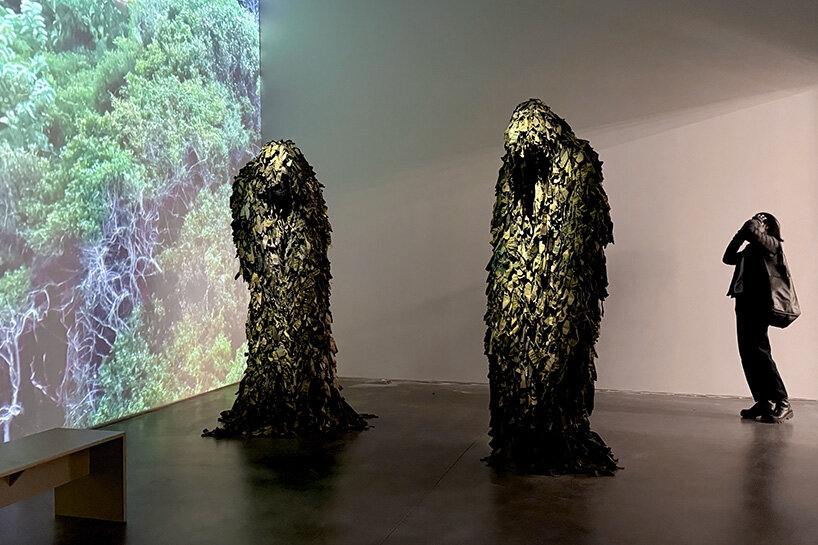
New Humans: Memories of the Future, 2026, exhibition view. New Museum, New York | image © designboom
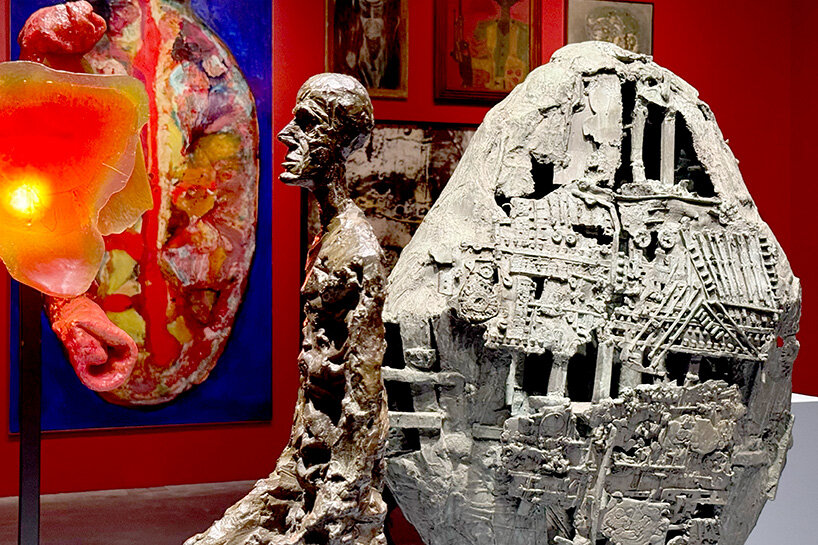
New Humans: Memories of the Future, 2026, exhibition view. New Museum, New York | image © designboom
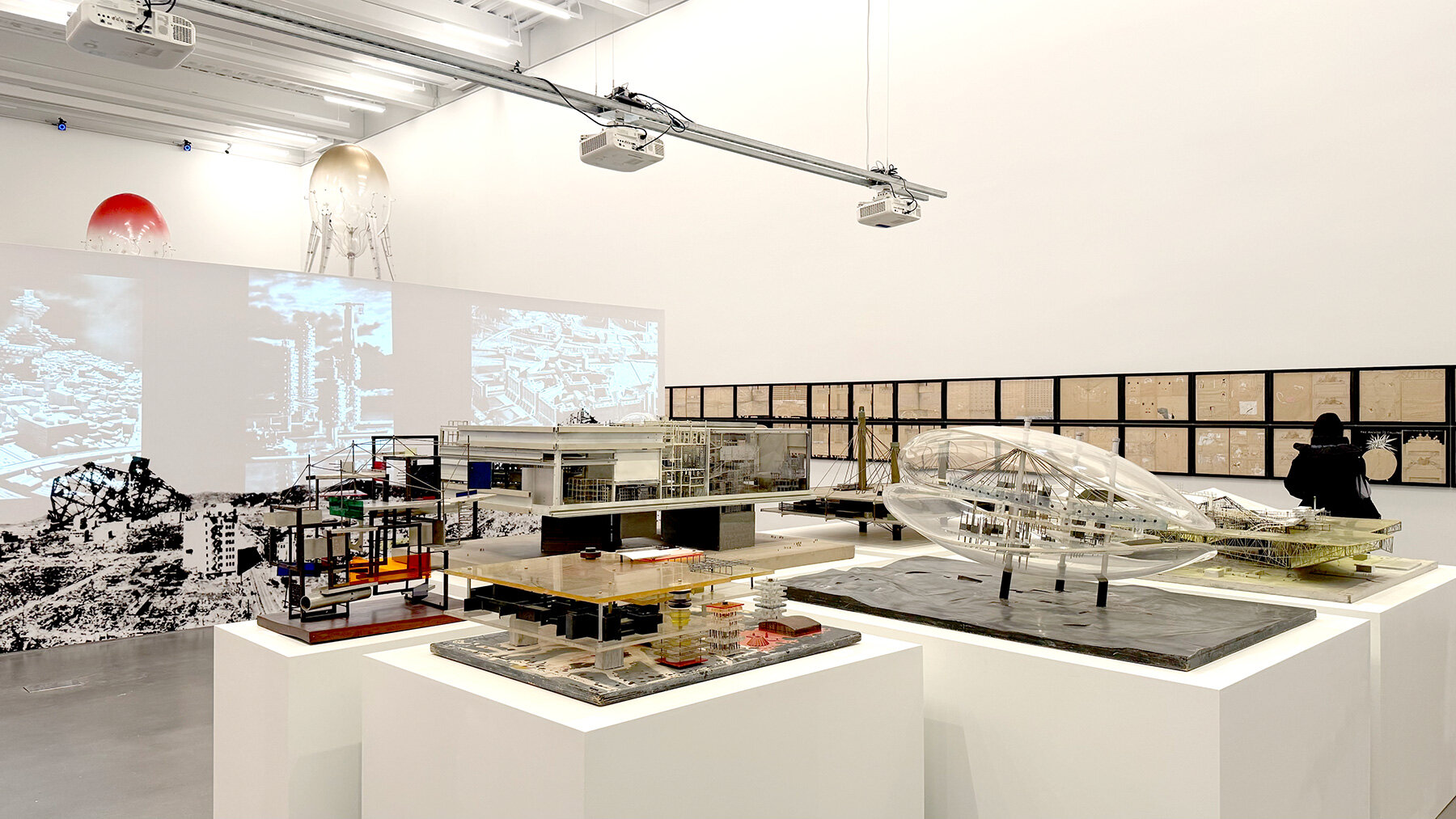
New Humans: Memories of the Future, 2026, exhibition view. New Museum, New York | image © designboom
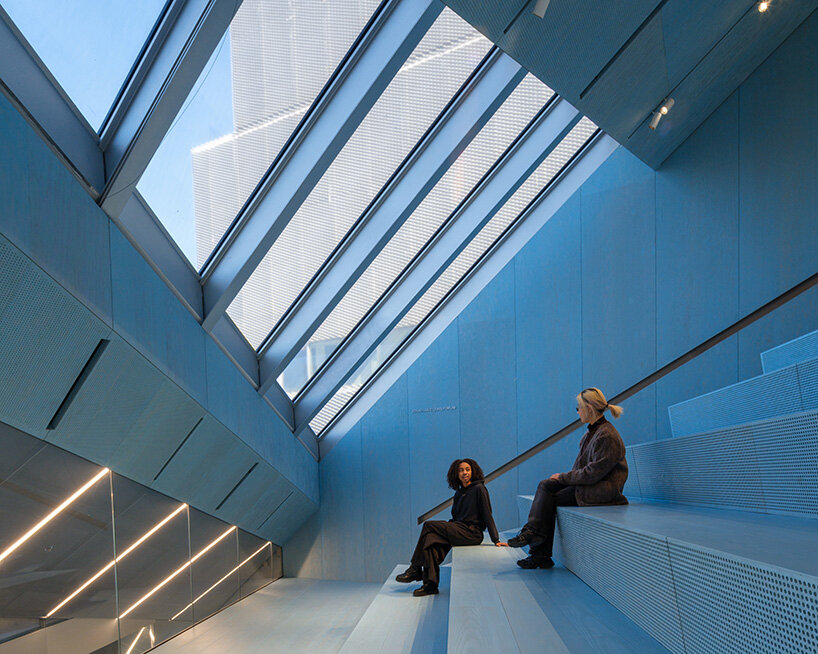
forum | image © Jason O’Rear
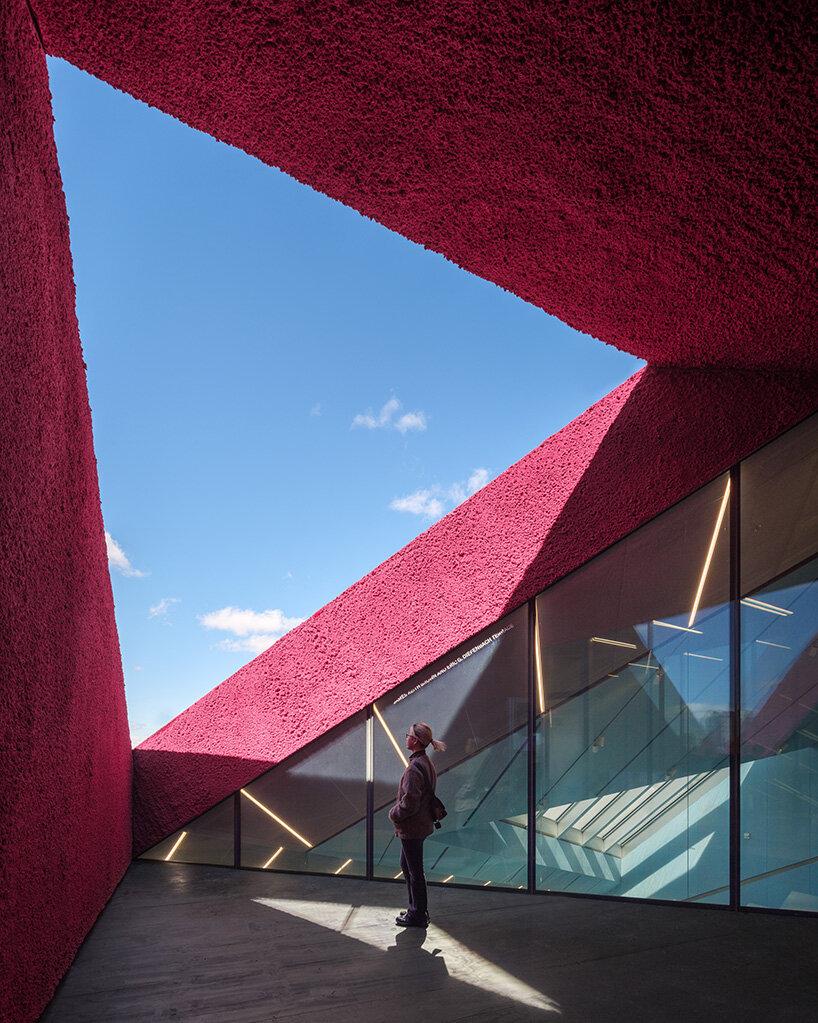
rooftop terrace | image © Jason O’Rear
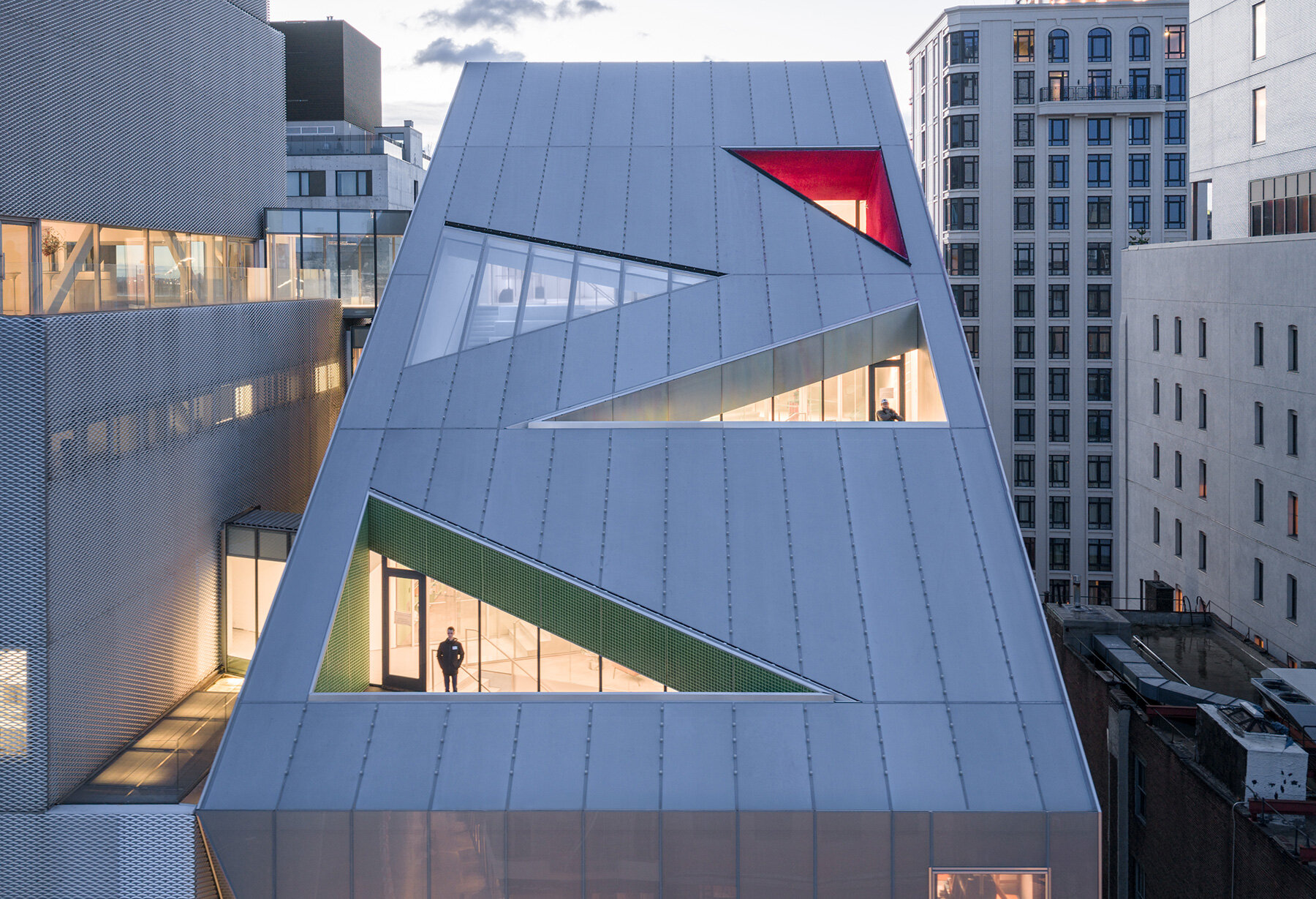
image © Jason O’Rear
project info:
name: New Museum | @newmuseum
architect: OMA / Shohei Shigematsu | @omanewyork
museum: New Museum
location: 235 Bowery, New York, NY
exhibition: New Humans: Memories of the Future
curator: Massimiliano Gioni
executive architect: Cooper Robertson
completion: March 2026
photography: © designboom © Jason Keen © Jason O’Rear
architecture in new york (680)
 Sep 19, 2026
 Sep 15, 2026
 Sep 10, 2026
 Sep 08, 2026
architecture in the US (1685)
 Sep 17, 2026
 Sep 13, 2026
 Sep 10, 2026
 Sep 10, 2026
exhibitions (271)
 Sep 20, 2026
 Sep 16, 2026 Sep 13, 2026
 Sep 11, 2026
 Sep 08, 2026
massimiliano gioni (8)
 Mar 20, 2026
 Jun 22, 2021
 Jul 14, 2013
 Jul 12, 2013
 Jun 05, 2013
museums and galleries (910)
 Sep 24, 2026
 Sep 24, 2026
 Sep 23, 2026
 Sep 18, 2026
 Sep 17, 2026
new museum (16)
Mar 20, 2026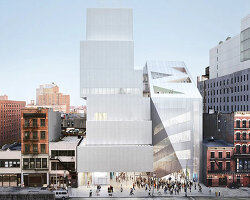 Jan 13, 2026
 Feb 27, 2025 Jun 22, 2021
 Jul 31, 2019
OMA / rem koolhaas (378)
 Sep 02, 2026
 Aug 22, 2026
 Aug 18, 2026
 Jun 04, 2026
 May 19, 2026
 Sep 23, 2026
 Sep 22, 2026
 Sep 20, 2026
 Sep 18, 2026