fondazione dries van noten opens with inaugural exhibition at palazzo pisani moretta, venice
curated by dries van noten, the presentation brings together more than 200 works across fashion, art, and design.
prefer designboom on googlefondazione dries van noten takes shape on the grand canal
Dries Van Noten inaugurates its foundation in Venice, establishing a new cultural platform dedicated to craftsmanship as a living, evolving language. Housed within the historic Palazzo Pisani Moretta, Fondazione Dries Van Noten opens with its first presentation, The Only True Protest Is Beauty, running from April 25th to October 4th, 2026.
The exhibition borrows its title from American songwriter Phil Ochs, reframing his statement into a spatial and material investigation. Here, beauty is approached as tension rather than resolution, an encounter that unsettles as much as it attracts. Curated by Dries Van Noten himself, the presentation unfolds across twenty rooms spanning the ground floor and piano nobile levels of the palazzo, where more than 200 works form an intuitive sequence of contrasts, interruptions, and resonances.
Rather than following a fixed curatorial logic, the exhibition operates through instinct, allowing unexpected proximities between disciplines. Fashion, art, collectible design, ceramics, glass, and photography coexist, creating a layered environment where meaning emerges through juxtaposition.

fashion as structure and narrative
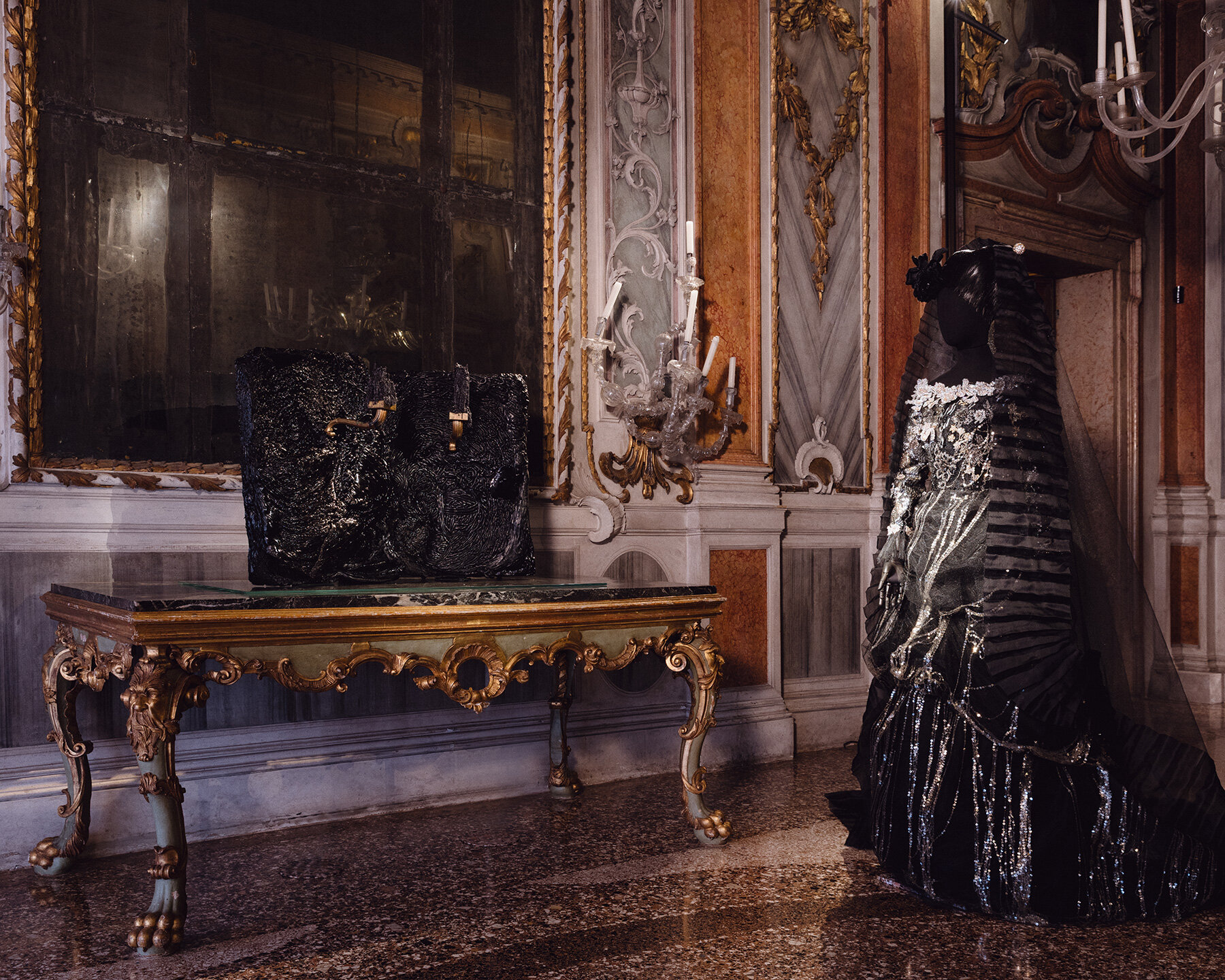
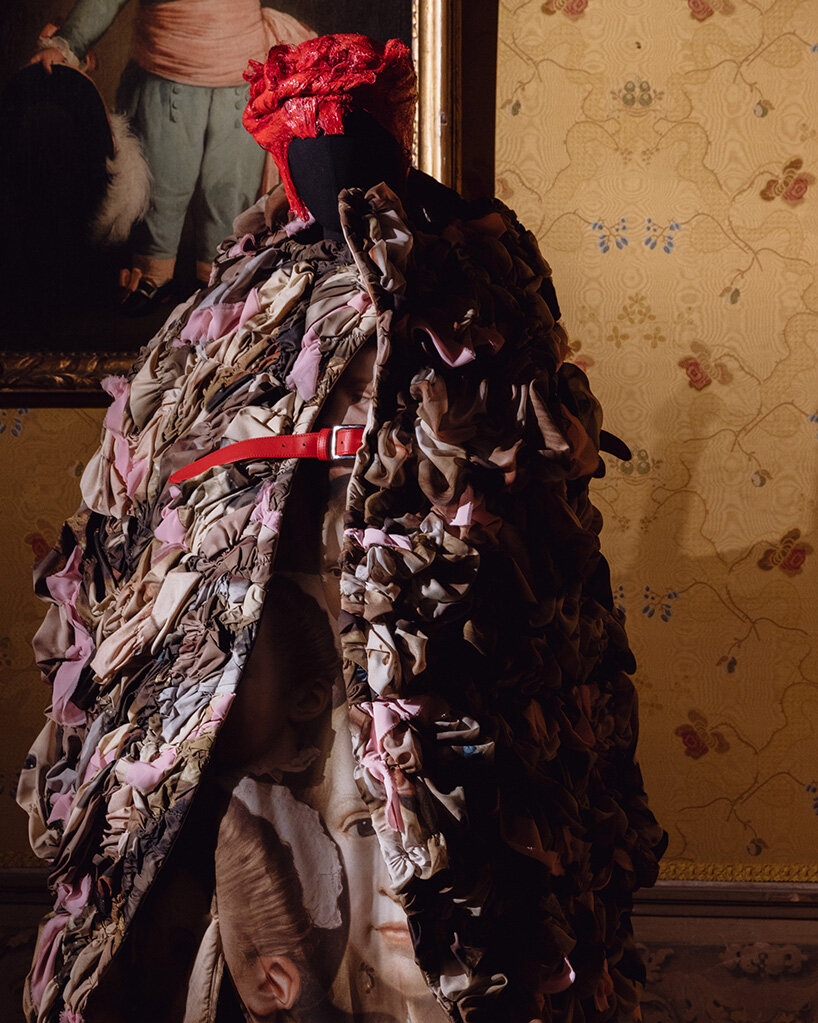
Archival silhouettes by Christian Lacroix and Rei Kawakubo trace parallel approaches to construction and abstraction, while extending the dialogue across generations. The inclusion of Comme des Garçons emphasizes sculptural garments as autonomous forms, challenging conventional definitions of beauty.
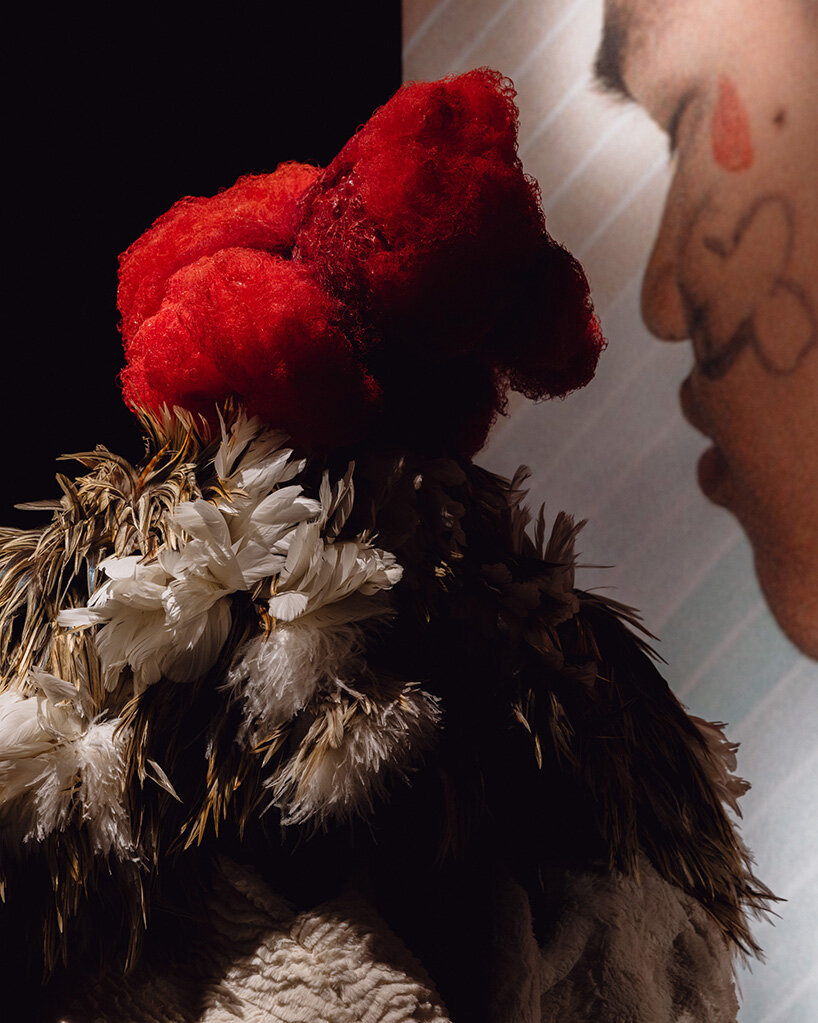
Emerging voices such as Ayham Hassan introduce a materially grounded language shaped by constraint and resilience, positioning fashion as both personal narrative and political expression. Throughout the exhibition, garments move beyond display to become spatial agents, interacting directly with the palazzo’s frescoes, textures, and historical ornamentation.
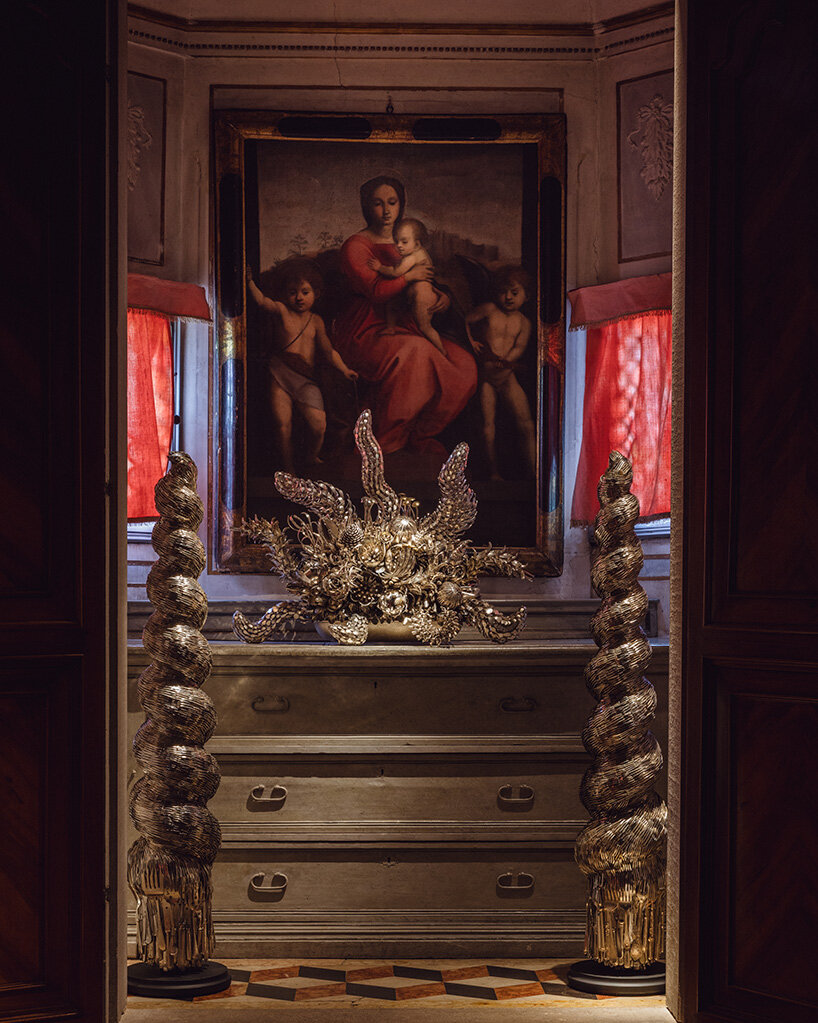
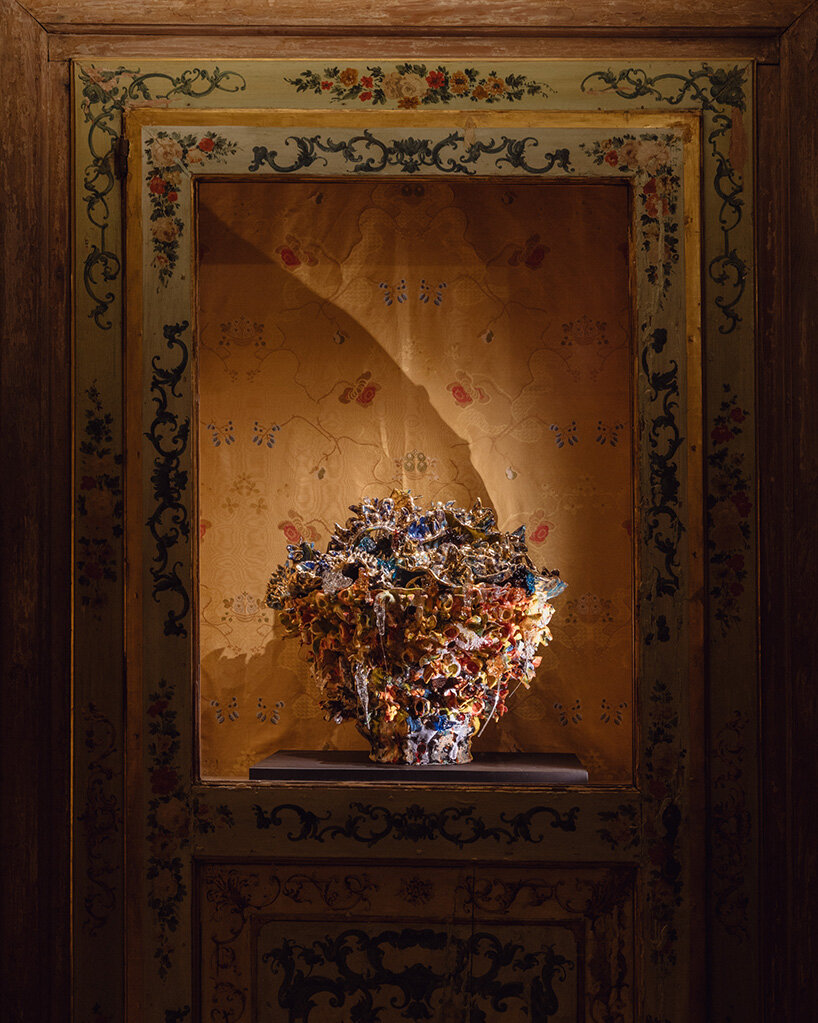
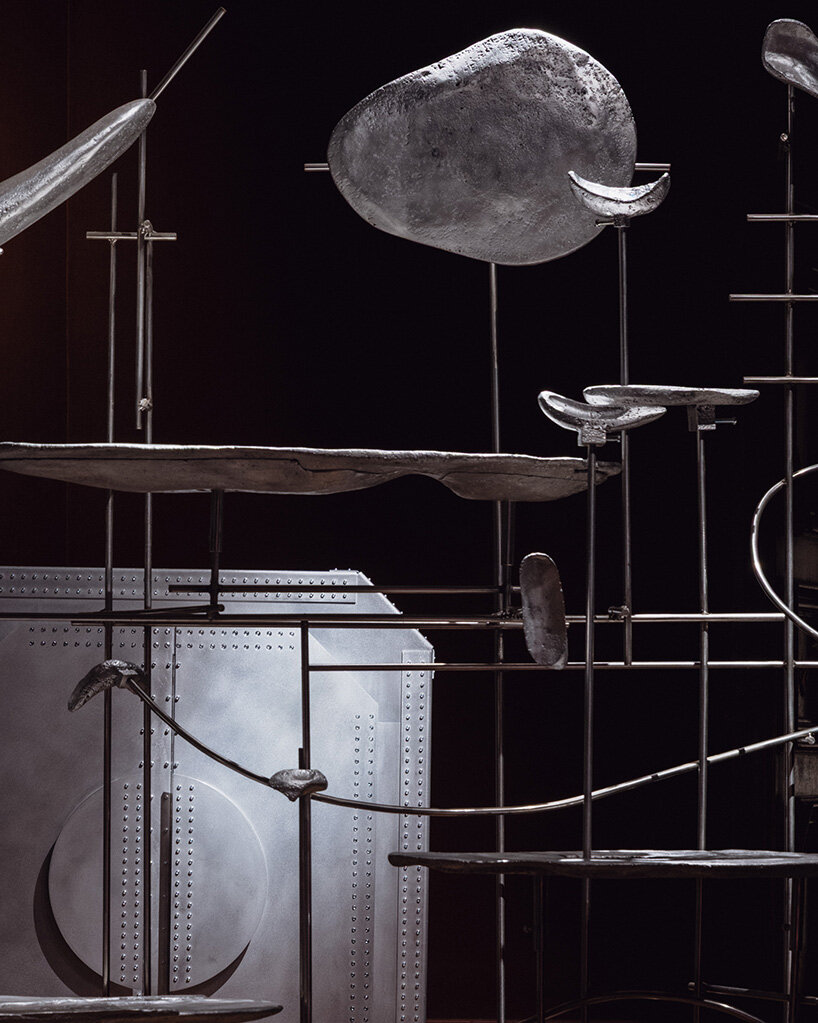
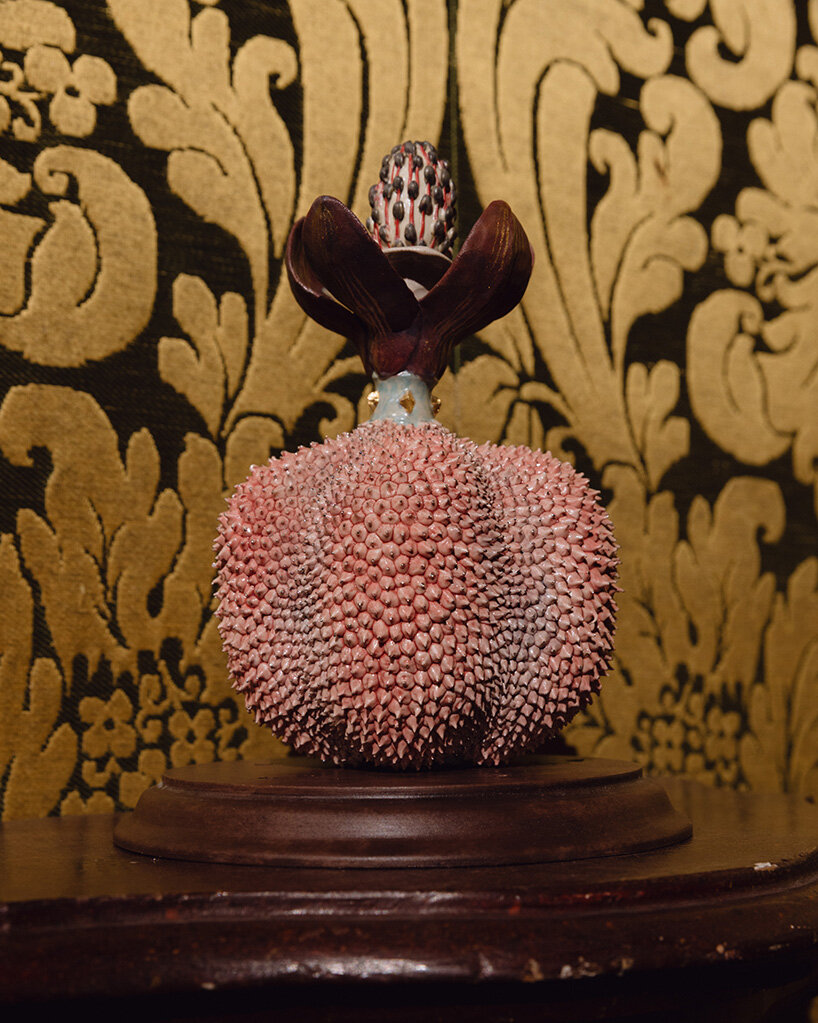
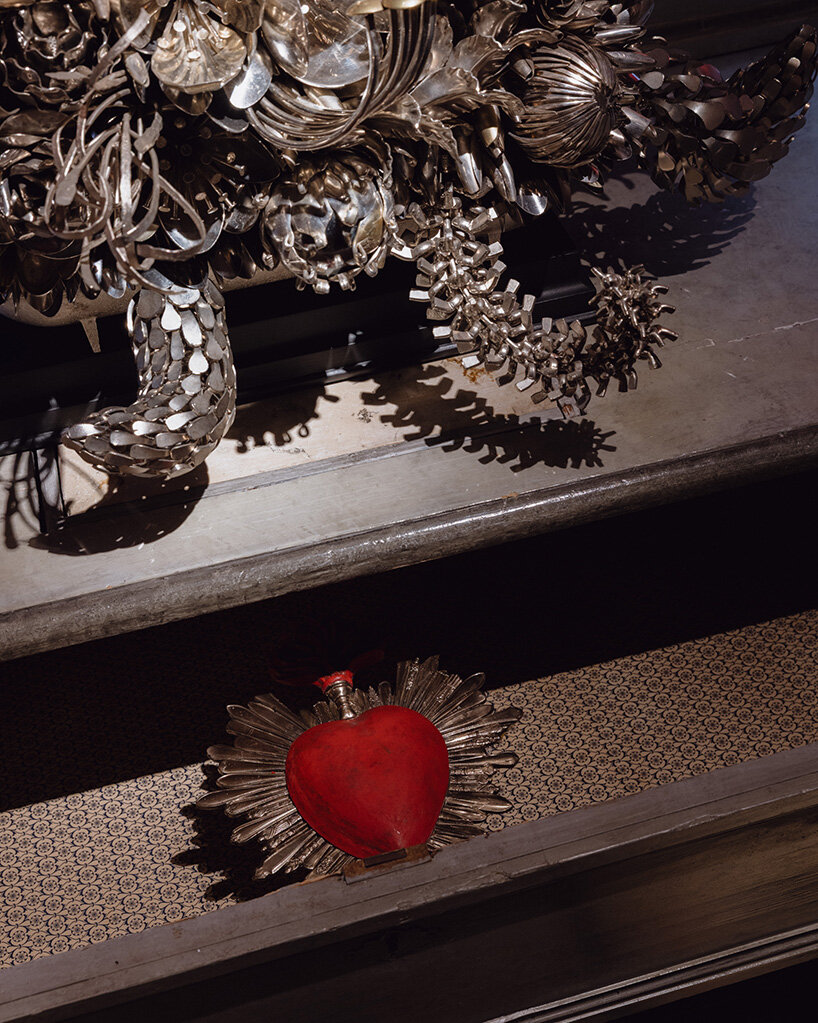
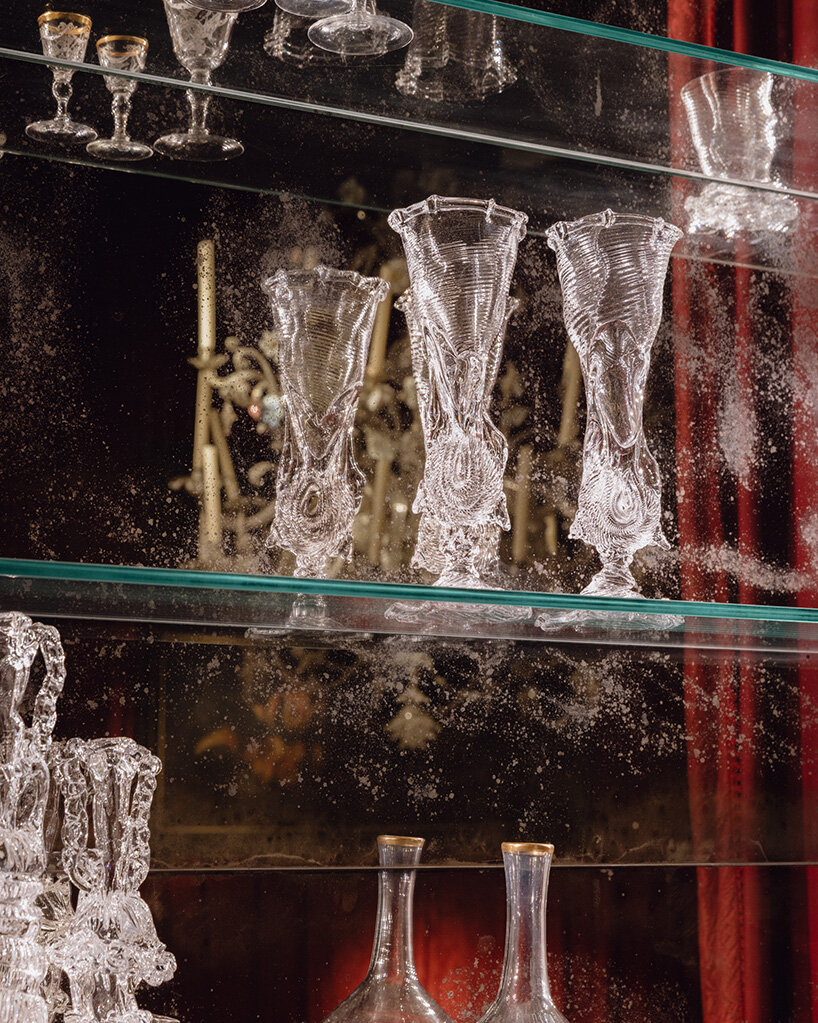
Across the rooms of the foundation, material experimentation unfolds as a continuous dialogue between past and present. Works by Peter Buggenhout introduce ambiguity and decay, while glass pieces by Ritsue Mishima and Murano-based makers extend traditions of fragility and transparency. Elsewhere, ceramics by Kaori Kurihara echo organic rhythms found in the palazzo’s painted interiors, while Hubert Duprat’s Trichoptère works transform insects into unlikely jewellers, embedding precious materials into natural processes. In a former chapel alcove, Misha Kahn introduces a deliberately irreverent sculptural intervention, offset by the intricate metal assemblages of Ann Carrington.
These encounters are structured around a recurring tension between harmony and rupture. Moments of visual coherence are repeatedly interrupted by elements that destabilize the scene, reinforcing beauty as something active, unstable, and open-ended.
a scenography of intuition and encounter
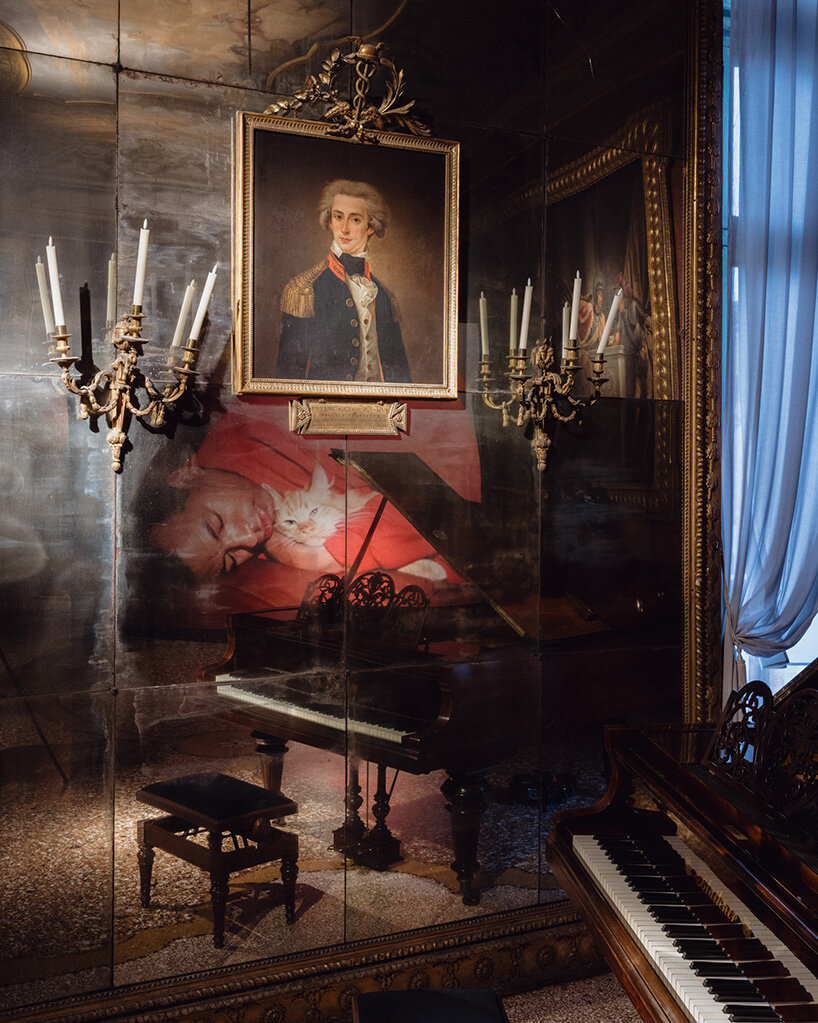
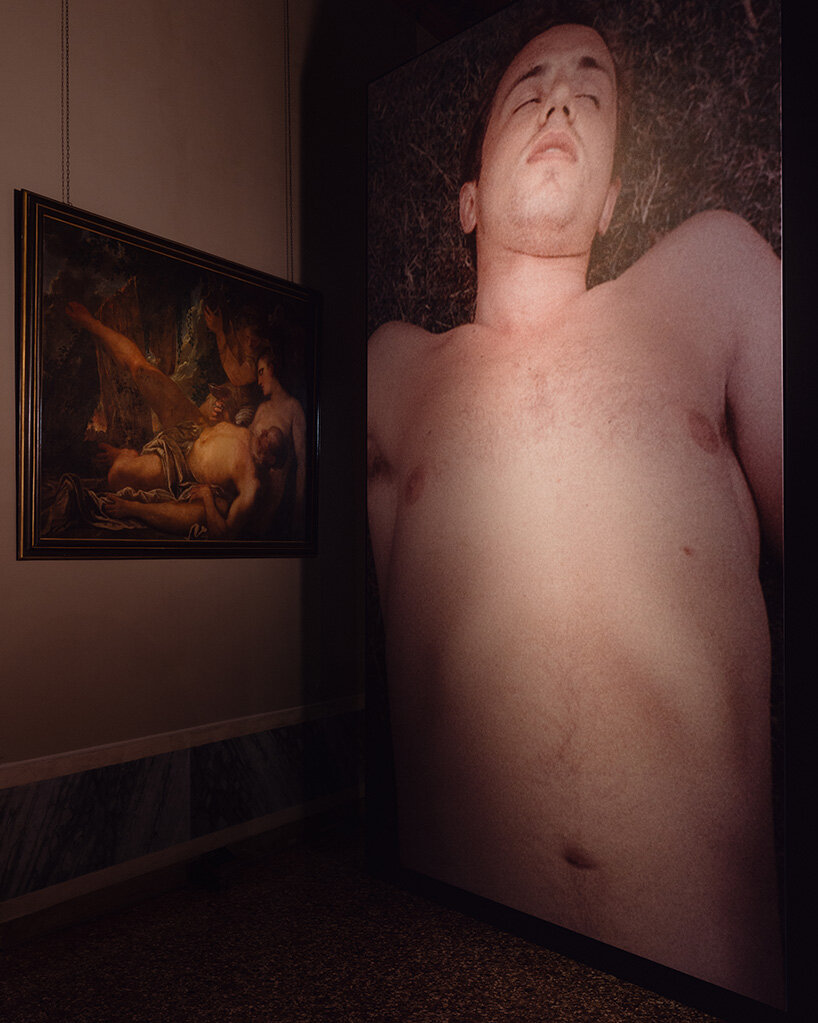
The exhibition’s scenography, also developed by Van Noten, avoids hierarchical organization in favor of a fluid, atmospheric progression. Historical elements of the palazzo become active participants, framing each work within a dense network of references. Ceiling frescoes, antique furnishings, and architectural details are brought into dialogue with contemporary interventions, collapsing temporal boundaries.
More than twenty behind-the-scenes videos accompany the presentation, offering insight into the making processes and emphasizing the human dimension embedded in each object. This focus on gesture, labor, and material knowledge reinforces the foundation’s broader mission to foreground the act of making as both cultural memory and future-oriented practice.
As a private historic residence, Palazzo Pisani Moretta opens to the public through a controlled access model tied to the foundation’s membership program. The initiative also marks a rare opportunity to experience the building before its upcoming restoration, positioning the exhibition as both cultural activation and transitional moment.
With this inaugural presentation, the Fondazione Dries Van Noten sets out a clear trajectory, one that bridges disciplines, geographies, and temporalities while maintaining a focus on craftsmanship as a shared language. Within this framework, beauty is not positioned as a fixed ideal, but as an evolving question, continuously reshaped through material, context, and encounter.


project info:
name: THE ONLY TRUE PROTEST IS BEAUTY
venue: Fondazione Dries Van Noten | @fondazionedriesvannoten
location: Palazzo Pisani Moretta, Grand Canal, Venice, Italy
founders: Dries Van Noten and Patrick Vangheluwe
curator and scenographer: Dries Van Noten
coordinators: Jurgen Sailer and Sabrina Transiskus
architecture: Torsello Architettura
lighting design: marionanni studio
scenography production: Uni.S.Ve.
presentation production: Marsilio Arte
publisher: Marsilio Arte
exhibitors: Adeline Halot, Alexander Kirkeby (Uppercut), Ann Carrington, Armand Louis for Wave Murano Glass, Arthur Vandergucht (Uppercut), atelier lachaert dhanis, Audrey Guimard, Ayham Hassan, Bruno Amadi, Bruno Barbon, Chris Fusaro (Uppercut), Christian Lacroix, Codognato, Comme des Garçons, Ettore Sottsass, Hubert Duprat (Art : Concept), Isaac Monté (Spazio Nobile), Joris Laarman (Friedman Benda), Joseph Arzoumanov, Joyce J Scott (Goya Contemporary Gallery), Julien d’Ys, Hyeokjin Jung (Side Gallery), Kaori Kurihara, Kate MccGwire, Katsuyo Aoki, Kiko Lopez (Objects With Narratives), Lionel Jadot (Objects With Narratives), Lilla Tabasso (Galleria Caterina Tognon), Lisa Immordino Vreeland, Misha Kahn (Friedman Benda), Monika Rościszewska, Moreno Schweikle (Uppercut), Nifemi Marcus-Bello (Side Gallery), Odile Gilbert, Pao Hui Kao (Spazio Nobile), Peter Buggenhout (Axel Vervoordt Gallery), Rebecca Manson (Josh Lilley), Richard Štipl (Steinhauser Gallery), Ritsue Mishima (Pierre Marie Giraud Gallery), Seongil Choi (Uppercut), Sophie Buhai (Galerie Anne Sophie Duval), Steven Shearer (David Zwirner and Galerie Eva Presenhuber), Takuro Kuwata (Pierre Marie Giraud Gallery), Tony Cragg (Fondazione Berengo), Václav Cigler (Galleria Caterina Tognon), Virginia Leonard (Side Gallery), Vladimir Slavov (Objects With Narratives), Wendy Andreu (Uppercut), Xavier Mañosa (Side Gallery)
photographer: Matteo de Mayda | @demayda
shop
your own online design shop — no sales commission collected