
IED EXPLORES FORMS OF INCLUSIVE LIVING THROUGH DESIGN
How can design interventions prompt political citizenship? Istituto Europeo di Design (IED), the Italian design school with campuses in Italy, Spain, and Brazil, explored different ways of inhabiting states of emergency during Milan Design Week 2026 with three interventions around the city. The projects were presented under the theme ‘Living the Present’ and included a camping setup for over 300 design students visiting the city, an ephemeral structure for temporary housing, and a series of flexible, modular furniture interventions designed for initial reception spaces.
The interventions reflects on the constant evolution of contemporary cities and the underlying systems that shape them, highlighting the need to rethink and redesign these structures in order to improve the conviviality and coexistence of all species inhabiting urban environments today.

third edition of Glitch Camp during Milan Design | all images courtesy of Istituto Europeo di Design (IED)
CREATIVITY THROUGH SOCIAL RESPONSIBILITIES
The Glitch Camp is organized by Francesco Morelli Foundation (the non-profit organization that owns the IED Group) and Istituto Europeo di Design with contributions of Fondazione Cariplo. Strengthening ties between creativity and social responsibility, the 2026 project took place at the post-industrial Ex Macello in Porta Vittoria, during IED’s 60th anniversary year.
Through this context, Riccardo Balbo, President of the Francesco Morelli Foundation and Academic Director of the IED Group, stated: ‘Driving change and contributing to the betterment of future generations is possible if we listen to the places we inhabit. Now in its third year and coinciding with IED’s 60th anniversary, The Glitch Camp transforms Design Week into an opportunity for active and political citizenship: eating, sleeping, and living together isn’t just about hospitality… It’s a workshop for the common good. We offer young people from all over the world a unique space for building relationships, meeting the international design community, and becoming catalysts for a better and more stable future.’

students from over 30 different nationalities connected for active and political citizenship
To encourage genuine interactions between Master of Arts and Bachelor of Arts students and the design community besides the interventions, the camp featured functional and welcoming spaces, such as a lounge, a large communal area, and outdoor spaces set up with IKEA furnishings and tents from Ferrino. After the camp, the IKEA-provided sets will be donated to the Arché Foundation, which supports women and children victims of violence, to ensure low-impact hospitality and the circularity of the products used.

the IKEA-provided sets for functional and welcoming spaces
EDITORIAL PROJECT PROMPTS URBAN RELATIONSHIPS
The editorial project Notes on Plural Intelligences is part of IED’s 60th anniversary celebrations, accompanied by a public programme that explores the school’s vision of the multiple forms of intelligence through design. During Milan Design Week 2026, the second issue of the publication was presented across various events organised by the international design school. Titled Now-Here Land, it examines the systems and relationships that shape contemporary cities, while proposing new ways of navigating them. Throughout the year, new issues will be released every two months in connection with special events. All issues can be downloaded for free on the IED website.

second issue of the Editorial project Notes on Plural Intelligences
INSTALLATION VIVO SHAPES INTERIOR MATERIALS FOR EMERGENCIES
As a response onsite to emergencies through research and design, the installation VIVO consisted of temporary housing solutions for those impacted by natural disasters and other kinds of displacements. Within the major exhibition-event INTERNI MATERIAE, the installation proposed a 48-hour house assembly in Italian gyms as a way to provide a fast solution for groups of people forced to temporarily shelter together.
It allowed visitors to immerse themselves in a 1:1 scale portion of this temporary housing system. VIVO is the evolution of a BA in Interior Design thesis project by Alumni Tommaso Cavalli, Chiara Gorni Silvestrini, Sofia Lipoli, and Andrea Lombardi – all recent IED graduates. Curated by designer, professor, and IED Alumnus Davide Angeli, the project has evolved into an open system that centers on the potential of life reconstruction and continuity.

temporary housing to provide a fast solution for groups of people forced to shelter together
FARE POSTO PRESENTS DESIGN INSIGHTS FOR CENTER SAMMARTINI
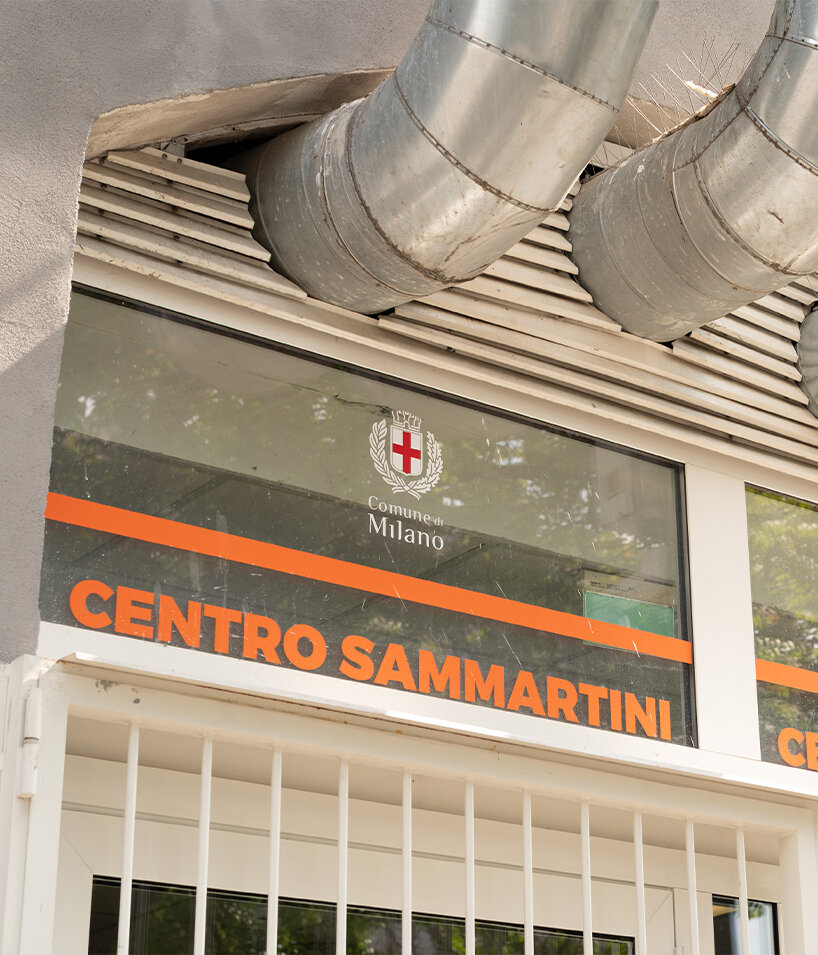
The Fare Posto installation, designed by MA in Interior Design. Special Practices for Gathering Culture students, at IED, rethinks the initial reception spaces of the Center Sammartini as a response to urban and social challenges. Conducted with the City of Milan and the staff of the Center with the support of Francesco Morelli Foundation, three proposals focused on restoring the visibility and sense of belonging to those living on the margins.
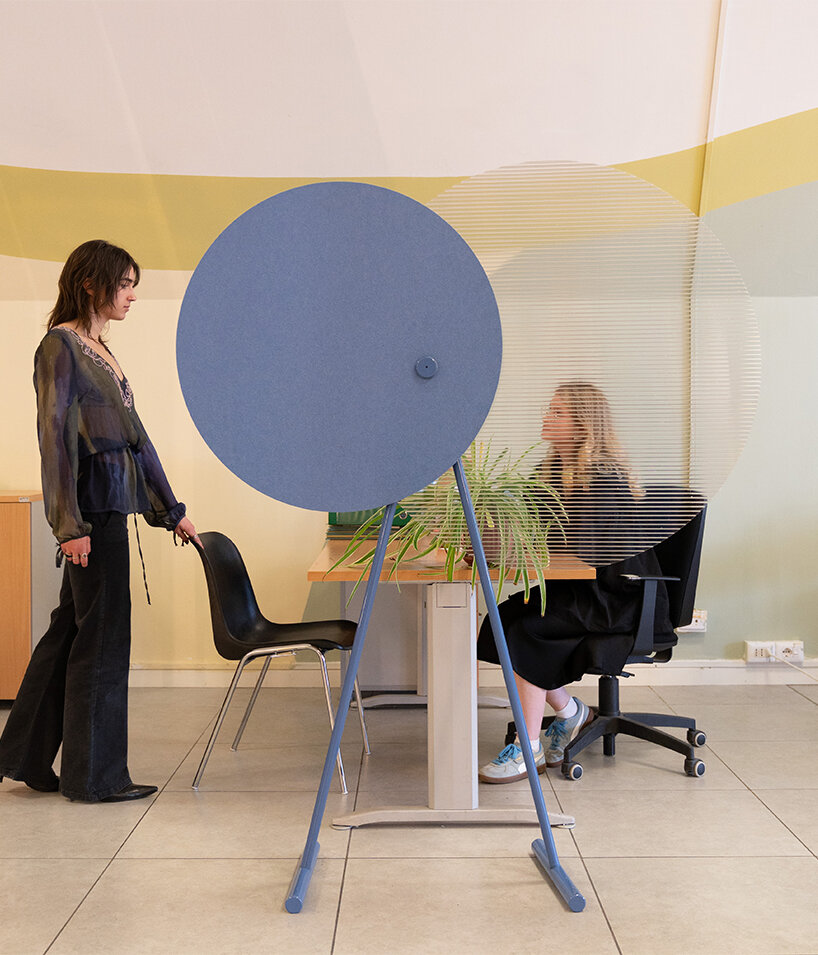
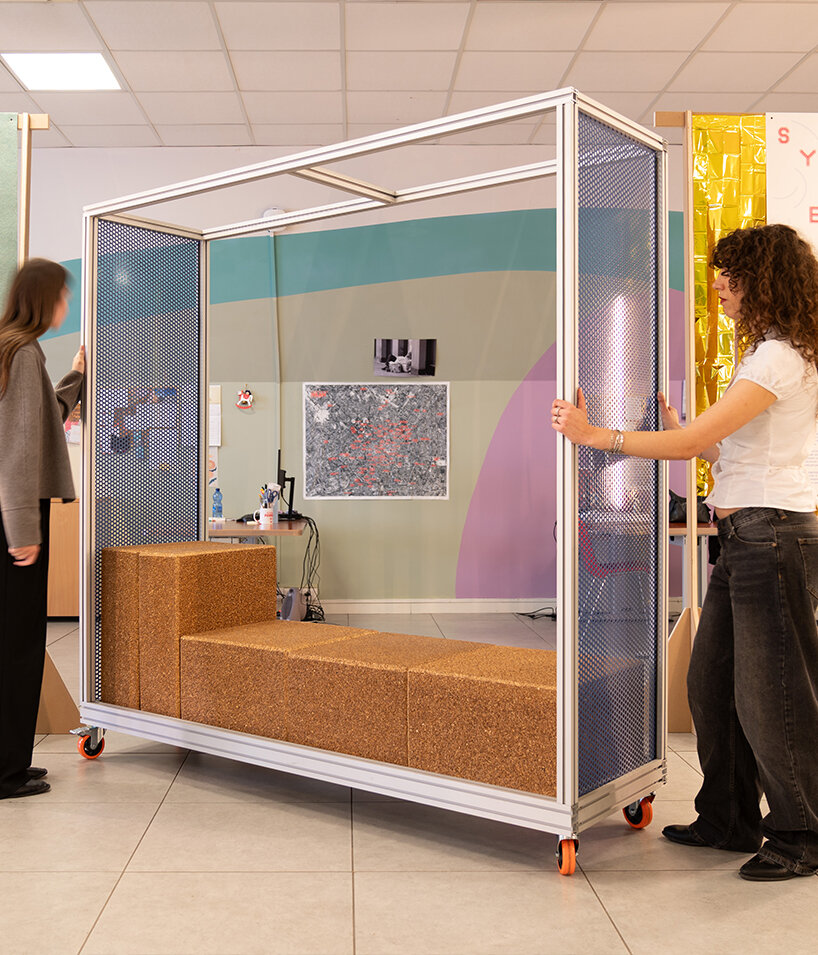
For the spatial division, Alessia Martinez and Ekaterina Sharova’s GENTLE FRAME project exemplifies low-impact design with its use of modular systems, made with aluminum and recycled cork. The design allows clarity and order for the space. For comfort improvement, SYNESTESIA, designed by Jahnavi Desai and Stefania Straziuso, proposed a modular system of seating and work surfaces that supports the interaction between staff and users. Non-invasive lights are used to shape a welcoming and accessible atmosphere.
Mobile devices were also proposed through the KALEIDOSCOPE project by Federica Avon, Damla Dinckan, and Olga Matsiuk. It combined visual and acoustic screening to ensure privacy and intimacy in listening spaces. All prototypes were created to make the space recognizable for those who inhabit them, characterized not only by functionality but also by beauty.

modular system of seating and work surfaces that supports the interaction between staff and users

students strengthens ties between creativity and social responsibility

The Glitch camp hosted at a post-industrial space of Ex Macello in Porta Vittoria

a project designed to encourage social interaction between students and the design community

an open system that centers on the potential of life reconstruction and continuity
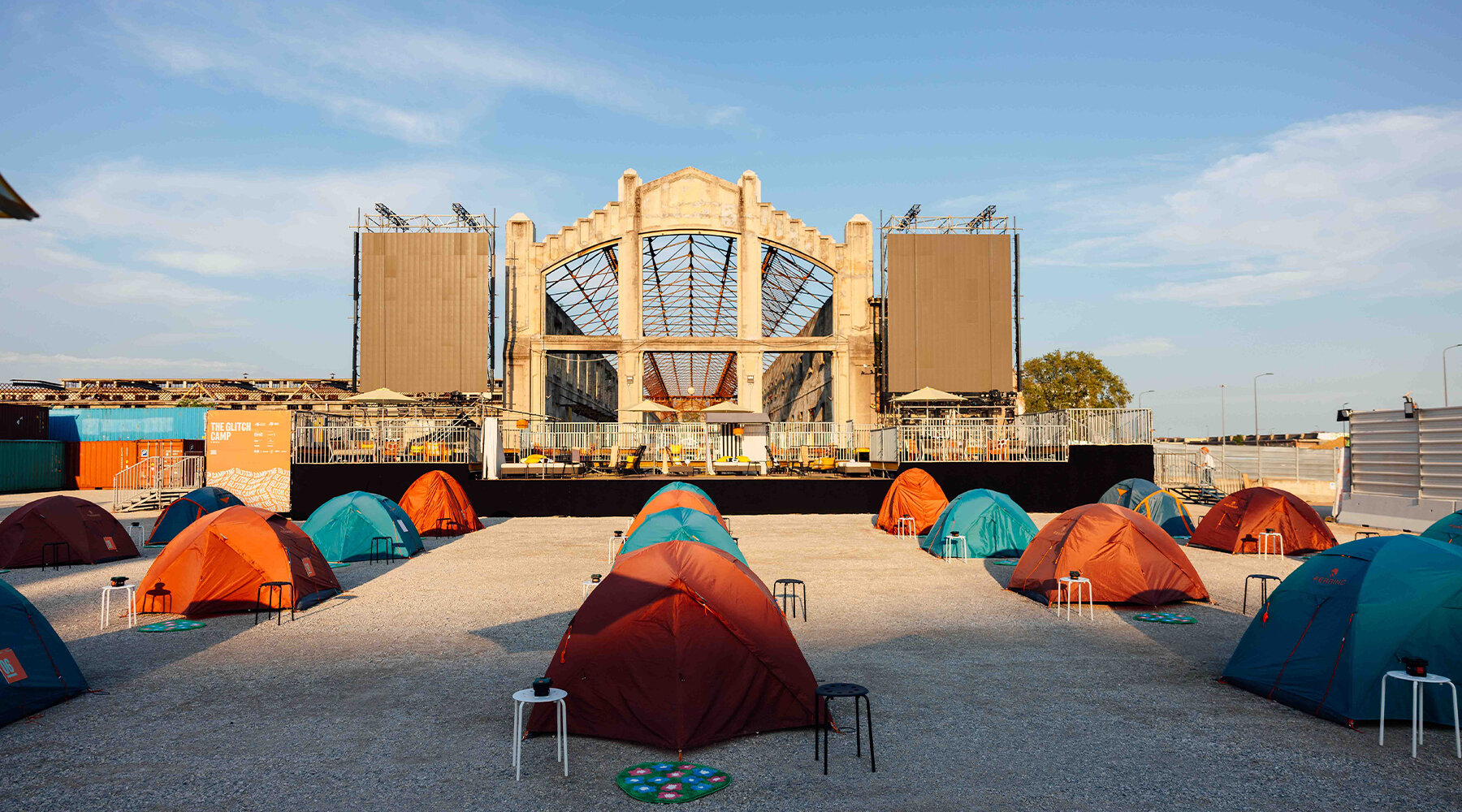
For the 2026 edition, there were around 300 the campers, who experienced the urban camp in a multicultural setting
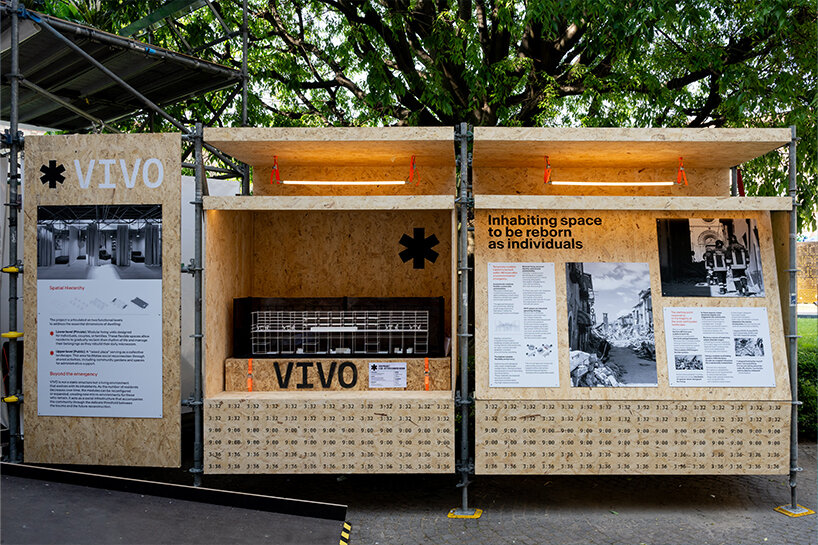
VIVO project as a response onsite to emergencies through research and design
project info:
name: The Glitch Camp
organization: Istituto Europeo di Design (IED) | @ied_official
programs: Master of Arts | Bachelor of Arts
location: Ex Macello, Viale Molise 62, Milan
happening now! effe and patricia urquiola design baluar, a sauna and hammam collection translating medieval bastion geometries into wellness architecture.
IED istituto europeo di design (12)
 Jun 24, 2025
 May 21, 2025
 May 02, 2025
 Jan 29, 2025
Milan Design Week 2026 (81)
 Jul 30, 2026
 Jul 27, 2026
 Jul 22, 2026
 Jul 17, 2026
 Jul 14, 2026
 Sep 22, 2026
 Sep 17, 2026
 Sep 15, 2026