Frances van Hasselt traces mohair back to land and climate
At the inaugural edition of Craft Days in Warsaw, South African textile designer Frances van Hasselt describes mohair through the ecosystems, people, cycles of care and landscapes that shape it long before it becomes textile. Presented within the surreal woven landscape of the exhibition at the Gawroński Villa, her practice falls somewhere between textile, agriculture, storytelling, and environmental stewardship. Raised on a family angora goat farm in the Karoo desert, van Hasselt works with mohair from rainfall to finished product, building rugs, tapestries, garments, and woven pieces through a deeply place-specific and tactile process.
In a moment saturated by acceleration, synthetic surfaces, and algorithmic sameness, her work moves in a slower, more grounded direction, attentive to the fragile environmental and human conditions that make production possible in the first place. ‘When you’re working in a place where your material comes from, you realize that it doesn’t start in our studio or in factories,’ she explains during her talk. ‘It starts with rainfall and the delicate ecosystem of desert plant life and goats and herdsmen and soil and sunshine and this incredible group of human beings who get things from rainfall into the final piece.’ Throughout the talk, van Hasselt repeatedly returns to the idea that textiles are inseparable from land, climate, labor, and care. Her practice resists the logic of overproduction by working at the pace of the material itself. Fashion, in her view, has become dangerously detached from material origins, producing objects with little understanding of where they begin or what they require.

all images courtesy of Frances van Hasselt and Frances V.H Mohair
building a textile language rooted in the Karoo ecosystem
Mohair itself sits at the center of this misunderstanding. ‘People actually have a very poor understanding of materials,’ Frances van Hasselt notes, clarifying that mohair comes from the hair of the angora goat rather than wool or rabbit fur. South Africa produces around 60 percent of the world’s mohair, largely from the Karoo region where her family has farmed for generations, yet much of the fiber leaves the country in raw form before being transformed elsewhere. For the Karoo-based textile designer, rebuilding a local language around the material became a cultural and political act. ‘We wanted to build on that and create something very specifically local,’ she says, describing the absence of a formal textile industry in South Africa alongside the abundance of artisanal knowledge embedded within rural communities.
Her return to the Karoo came after years abroad studying politics, philosophy, economics, and international relations before living in Hong Kong and spending time in Japan. There, a conversation with a Japanese textile master radically shifted her understanding of making. After enthusiastically announcing plans to recreate Japanese craftsmanship back home, she recalls him responding bluntly: ‘You can’t do this. This is the way we make.’ Rather than imitate another tradition, he urged her to develop something rooted in her own ecosystem. ‘Go back and build something that is unique to your ecosystem,’ the artisan told her. The exchange became foundational to her practice and to her understanding of authenticity as something inseparable from geography, material conditions, and inherited knowledge.

women artisans work collectively
a women-led approach to craft, labor, and textile making
Today, every stage of the Frances van Hasselt process remains closely tied to the Karoo landscape. Mohair is hand-washed, sun-dried outdoors, opened by hand, spun manually, dyed, woven, crocheted, or felted depending on the behavior of the material itself. ‘Our practice is very unique,’ she highlights. ‘It’s old, old handmade practices.’ The textiles carry traces of weather, touch, and rhythm, recording not only the environment but also the emotional presence of the maker. ‘We can tell which spinner has spun what yarn,’ the artist points out. ‘It’s a signature.’ Rather than uniform perfection, the studio embraces irregularity as evidence of life itself.
That philosophy extends to the women-led structure of the studio. Beginning with one artisan, the workshop has gradually grown into a collective of 15 women, many of them single mothers from surrounding communities. As van Hasselt explains, each artisan is given the opportunity to bring another woman into the studio, allowing skills and employment to expand organically through trust, proximity, and shared experience. Knowledge is passed informally from one maker to another through repetition and daily practice rather than institutional training. ‘Making is not for everyone,’ van Hasselt reflects. ‘The people who stay have learned a skill and are the best in the world at what they do.’ Her description of textile work resists romanticization and industrial efficiency, framing craft instead as emotional, bodily, and deeply relational labor.

handwoven mohair textiles fill the Frances V. H. studio
a call for slower and more material-aware design culture
Throughout the conversation, van Hasselt challenged contemporary design education and fashion systems for prioritizing collections, speed, and image over material literacy. ‘The fashion and textile world is asking nature to adapt to the means of fashion,’ she observes, calling instead for practices that begin with understanding fibers, ecosystems, and processes before form. One of the most resonant moments of the talk came when she described her wish for designers to ‘be inspired by the ingredients of their fabrics and create pieces that speak to the full life cycle of a material.’ In her studio, textiles are conceived as accumulations of environmental and human conditions.
This emphasis on tactility and slowness also positions her work within a broader return toward physical experience and craft amid digital saturation. Asked about the current resurgence of artisanal practices, van Hasselt describes it less as nostalgia than instinct. ‘It’s not that intellectual,’ she responds. ‘It’s more guttural.’ She speaks about handmade objects as things that continue to hold emotional resonance precisely because they cannot be fully replicated by mechanized production. ‘It will be the heirlooms of our generation going forward,’ she adds, referring to works that preserve evidence of touch, labor, and time.

hand-spun mohair fibers
Craft Days inaugural edition transforms Warsaw’s historic Villa
The discussion took place as part of Craft Days, an initiative launched by Visteria Foundation following the inscription of Polish basketry on UNESCO’s Representative List of the Intangible Cultural Heritage of Humanity in late 2025. Held inside Warsaw’s historic Gawroński Villa, the exhibition brings together weaving, braiding, basketry, and related craft traditions through contemporary art and design. Curated by Eleonora Bojanowska, Szymon Machnikowski, and Hanna Rydlewska, the presentation installs an immersive labyrinth of textiles, furniture, ceramics, and glass inside the villa.
Craft Days frames making as a living cultural language shaped equally by memory, experimentation, and contemporary realities. Historical works are presented alongside emerging practices, many developed through the Visteria Foundation’s inaugural Portfolio Review, creating conversations across generations and disciplines. Within this setting, van Hasselt’s textiles feel particularly resonant, shaped as much by weather systems, labor structures, and local ecologies as by technique itself.

textiles are conceived as accumulations of environmental and human conditions | image by Gary Van Wyk

each artisan is given the opportunity to bring another woman into the studio | image by Gary Van Wyk

Wildflowers Don’t Care Where They Grow | image by @fabiennegehrmann

the works reflect the colors and textures of the South African landscape | image by Gary Van Wyk

tapestry woven from hand-dyed mohair fibers | image by Gary Van Wyk

Frances van Hasselt photographed beside one of her large-scale handwoven mohair tapestries
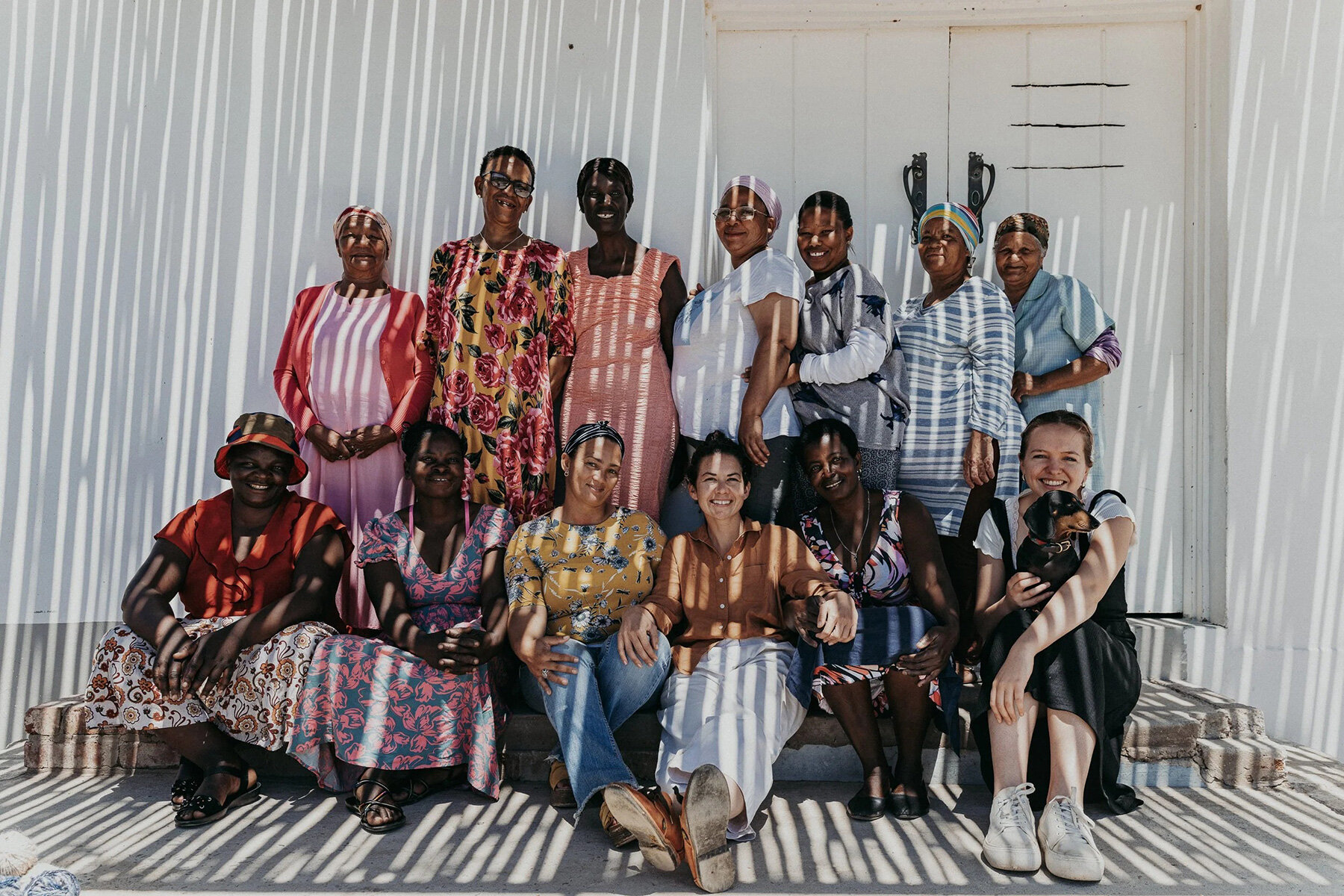
the workshop has gradually grown into a collective of 15 women
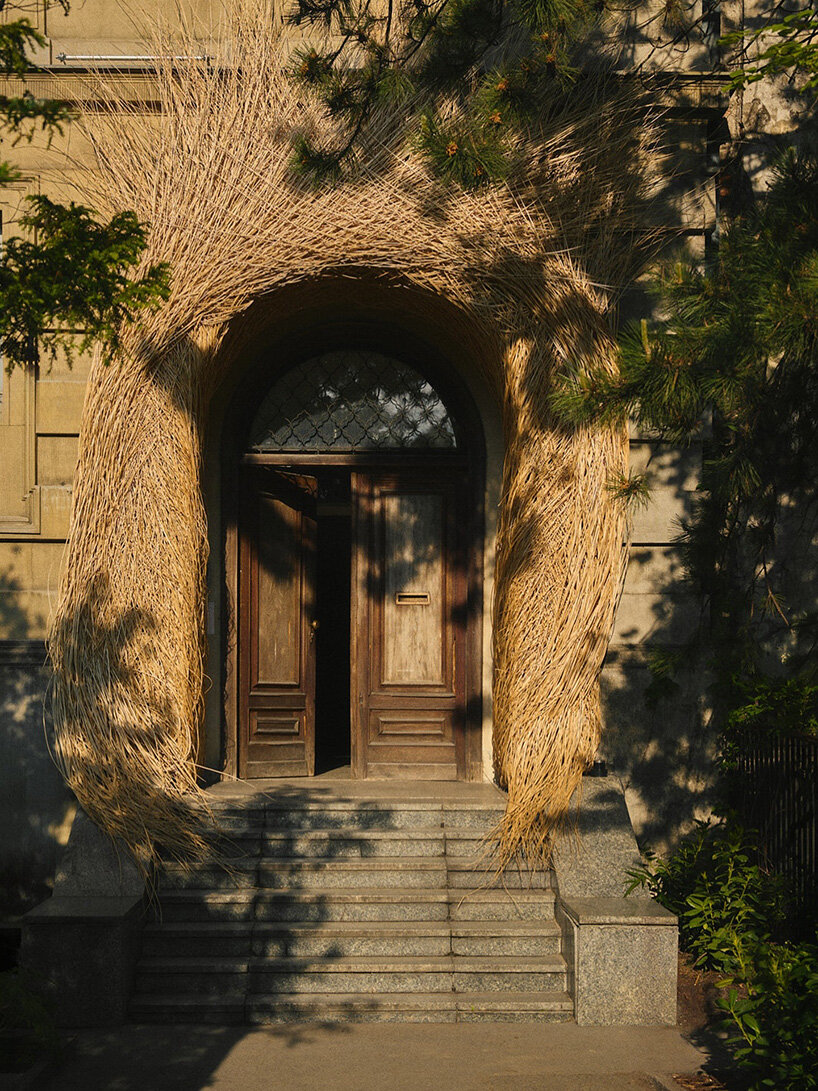
Craft Days is on view at Gawronski Villa in Warsaw | image by Tomo Yarmush via @visteria.foundation
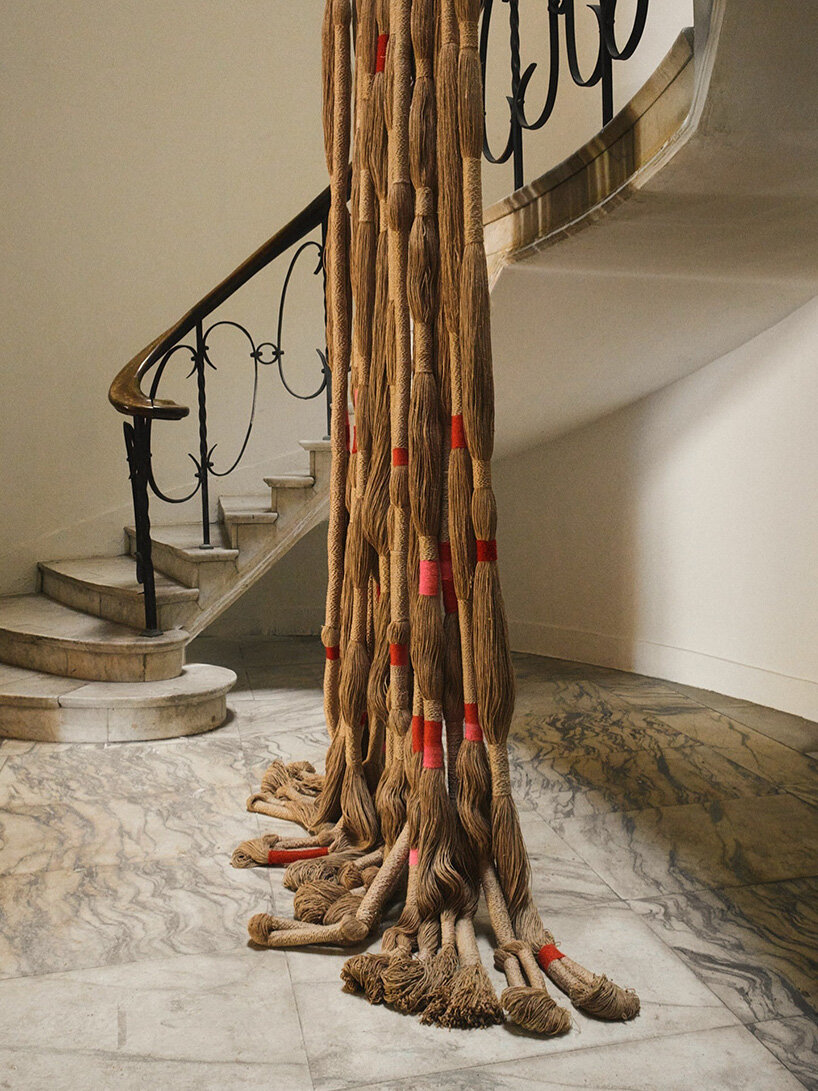
Untitled, Sheila Hicks, 1975, cotton, linen, wool | image by Tomo Yarmush via @visteria.foundation
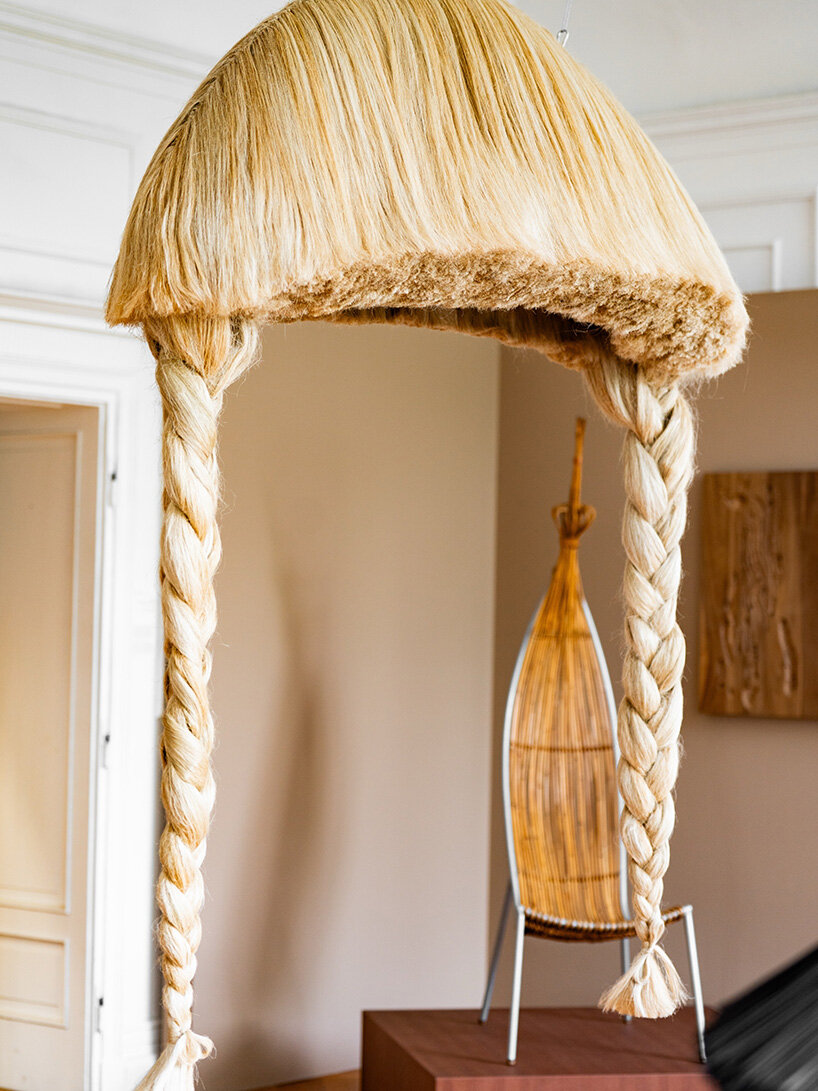
Braids, Ala Savashevich, 2026 | image by Edward Wendt via @visteria.foundation
project info:
designer: Frances van Hasselt
studio: Frances V.H Mohair | @francesv.h_mohair
based in: Karoo desert, South Africa
exhibition: Craft Days 2026
location: Gawronski Villa, Al. Ujazdowskie 23, Warsaw
presented by: Visteria Foundation | @visteria.foundation
exhibition concept: Eleonora Bojanowska, Szymon Machnikowski, Hanna Rydlewska
exhibition design: Anna Szczęsny and Bartosz Brylewski


happening now! effe and patricia urquiola design baluar, a sauna and hammam collection translating medieval bastion geometries into wellness architecture.
exhibitions (271)
 Sep 20, 2026
 Sep 16, 2026
 Sep 13, 2026
 Sep 11, 2026
 Sep 08, 2026
RADICAL SOFTNESS (53)



social impact (30)
 Aug 26, 2026
 Aug 23, 2026
 Aug 13, 2026
 Jul 24, 2026
 Jul 21, 2026
textile and fabric art (129)
 Sep 10, 2026
 Sep 07, 2026
 Aug 13, 2026
 Aug 13, 2026
 Sep 21, 2026
 Sep 14, 2026
 Sep 08, 2026