
global designers invited to showcase sustainable impact at seoul design award 2026
the seoul design award 2026 issues a final call for global designers creating impactful solutions that rebuild communities after crisis.
REDESIGNING LIFE AFTER CRISIS
The Seoul Design Award 2026 has issued its final call for entries to the global creative community to submit projects that address daily human survival, community infrastructure, and ecological recovery amidst modern disasters. Operating as the world’s only public design award dedicated exclusively to sustainable daily life, the competition accepts works spanning Product, Visual, Digital/AI, Spatial/System, and Service/Social innovation from individual designers, teams, or enterprises. Best of all, submission to the platform is entirely free, ensuring that impactful, problem-solving design remains universally accessible to change-makers from every corner of the globe.
Only two weeks remain before the June 30, 2026 deadline. Interested parties can review the submission requirements and enter their work directly through the official website.

ALIGNED WITH THE UN SUSTAINABLE DEVELOPMENT GOALS
Organized by the Seoul Metropolitan Government and the Seoul Design Foundation, the award celebrates its seventh consecutive edition as a cornerstone of Seoul’s legacy as a UNESCO Creative City of Design. While conventional competitions heavily prioritize market profitability or surface-level aesthetics, this competition assesses how effectively a design functions as practical infrastructure for social recovery to honor projects that foster harmony between people, society, and the environment. Submissions are categorized into the Main Award for market-ready projects released within the last five years, the Young Designer Award for speculative concepts, mockups, and prototypes, and the ESG Design Impact Award honoring corporate contributions to sustainable systems. Across all categories, evaluations are firmly rooted in four critical focus areas aligned with the UN Sustainable Development Goals: Health & Peace, Equal Opportunities (Universal Design), Energy & Environment, and Cities & Communities.

IMPACTFUL SOLUTIONS OF PAST WINNERS
What truly distinguishes the Seoul Design Award is its emphasis on scalability and the continuous lifecycle of a project long after the moment of recognition. The platform looks for a specific design attitude — one that views resilience not just as a temporary shield against hardships like war, climate crisis, or social inequality, but as a long-term process of social regeneration. Past winning projects illustrate this exact trajectory, serving as global benchmarks for how creative thinking can restore human dignity in the most vulnerable sectors of society.
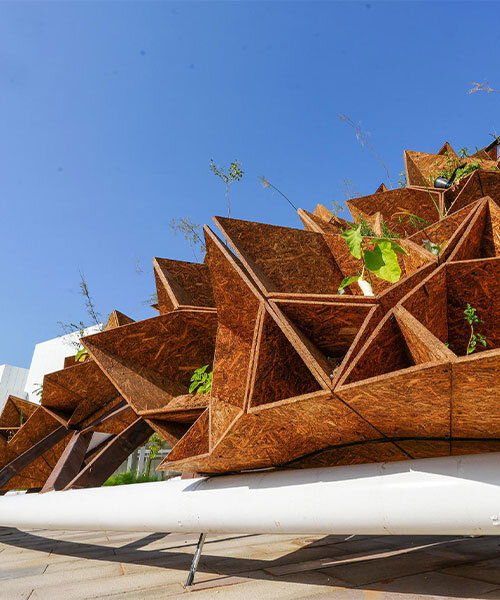
A primary example is the 2025 Grand Prize winner, Jaza Energy Hubs. This project introduced modular, flat-pack solar charging stations to rural African communities entirely cut off from traditional power grids, systematically replacing hazardous kerosene and diesel. Beyond deploying clean technology, the project established an empowering social infrastructure: local women, dubbed ‘Jaza Stars,’ operate the hubs. This integration provides stable income and leadership roles for women while extending social and economic resilience to the wider community, enabling children to study after dark and allowing local households to thrive independently.

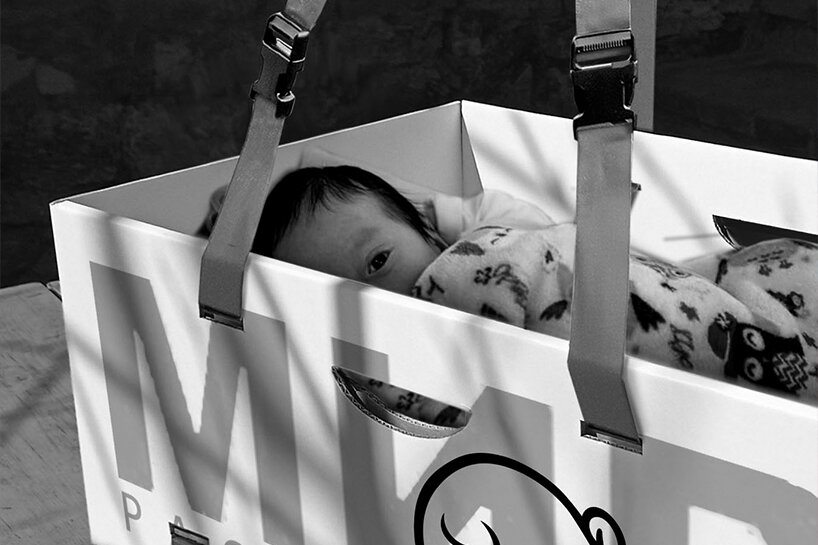
Humanitarian design solutions also take center stage through projects like the Emergency Folding Cradle and LADIS Lamp Disinfection. Built to safeguard newborns during catastrophic events, over 1,000 flat-pack Emergency Folding Cradles have been deployed across Ukraine, Türkiye, and Syria, with active production lines now mobilizing for Gaza.
Similarly addressing immediate survival, the LADIS Lamp Disinfection system has distributed over 2,500 water purification units across Nigeria, Uganda, and Timor-Leste, dramatically curbing waterborne illnesses. Both initiatives have evolved far beyond single-use items; they have grown into collaborative public health networks supported by international NGOs, artisans, and public sectors alike.

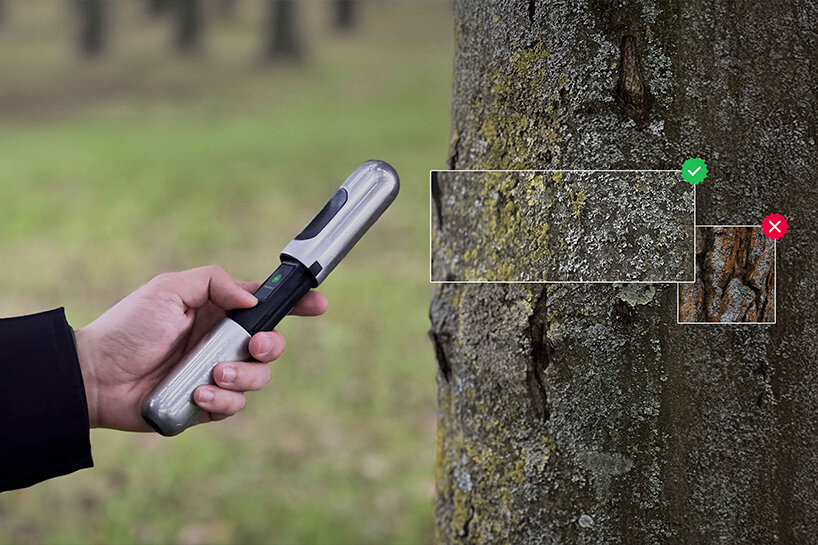
Even ecological stewardship is reimagined through the award, as demonstrated by the concept-turned-reality project Bark-Code. By digitally tracking the unique patterns of tree bark as forest fingerprints, it established a non-human-centered approach to environmental monitoring. Following its recognition in Seoul, the project secured backing from the UK’s D&AD Future Impact Fund, effectively transitioning from an ambitious conceptual framework into an active, real-world system for long-term forest management.
The world is waiting for the next wave of solutions capable of steering humanity toward a brighter, more harmonious tomorrow. Submissions must be written in English and uploaded directly via the official online portal before June 30, 2026.

Seoul Design Award 2026 Jury Orientation

project info:
name: Seoul Design Award 2026
submission requirements: https://www.seouldesignaward.or.kr/guidelines/guidelines
submission deadline: June 30th, 2026
shop
your own online design shop — no sales commission collected