
Easel bridge serves as both infrastructure and public furniture
The Easel Bridge is a 10-meter pedestrian crossing located in Yucun, Moganshan, Zhejiang Province, China, spanning Fuxi Creek. The structure, designed by XBTW OFFICE, introduces a spatial system composed of four inclined planes, transforming the act of crossing into a sequence of bodily positions oriented toward viewing, leaning, pausing, and interaction. One side of the bridge functions as an easel-like surface, enabling on-site sketching of the surrounding mountains, creek, and townscape. The opposite side is configured as a continuous backrest, positioning users between the landscape and ongoing drawing activities. The bridge therefore operates as both circulation infrastructure and a viewing and making device within the public realm. Situated within a waterfront commercial district that includes Liaoyuan Theater, retail, and dining spaces, the bridge forms part of Moganshan Town’s slow-mobility network. The surrounding setting brings together mountain, water, and urban fabric within a continuous visual field, which informs the spatial logic of the intervention.

all images by Zhu Yumeng
XBTW Office uses corrugated metal and teak to shape Easel bridge
XBTW OFFICE’s architectural team composes the main structure out of corrugated metal panels and circular steel tubes. The easel-facing plane uses translucent frosted corrugated material, while the opposing side incorporates teak backrests to introduce a warmer tactile contrast within the metallic framework. Structurally, the bridge adopts a beam system that allows the four inclined planes to function independently from load-bearing requirements. This separation enables the planes to respond primarily to spatial and programmatic intent. The bridge is organized into 2-meter modules, each subtly rotated by 2–3 degrees. This incremental shift produces variations along the crossing, shaping a sequence of minor spatial adjustments that influence movement and perception across the span.

the Easel Bridge spans Fuxi Creek in Yucun, Moganshan

it is located within Moganshan’s waterfront commercial district

the crossing forms part of the town’s slow-mobility network

mountains, creek, and townscape become part of the experience

corrugated metal panels shape the bridge’s lightweight appearance

four inclined planes redefine the pedestrian crossing
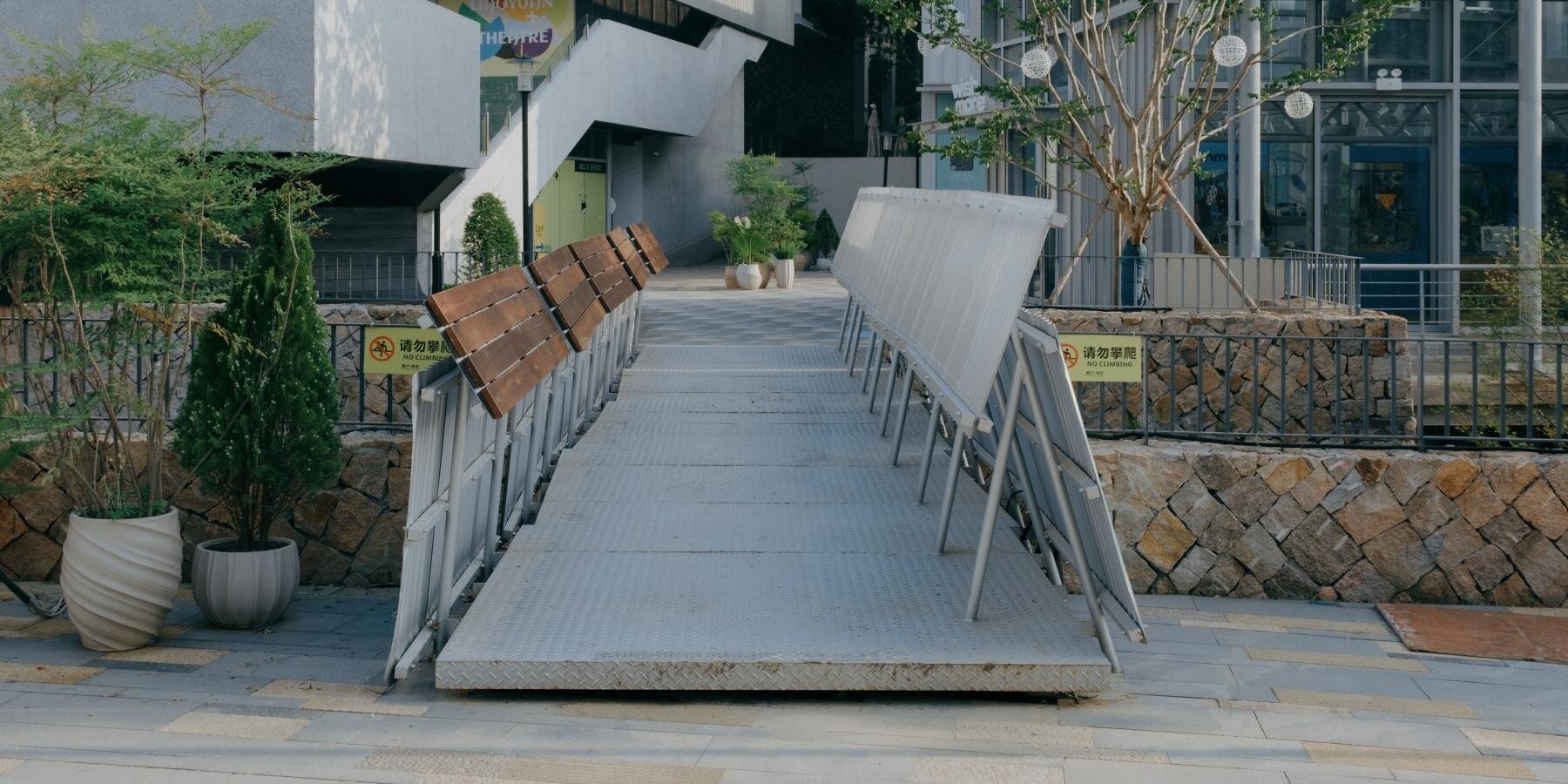
the bridge serves as both infrastructure and public furniture

the bridge transforms crossing into an act of observation and drawing
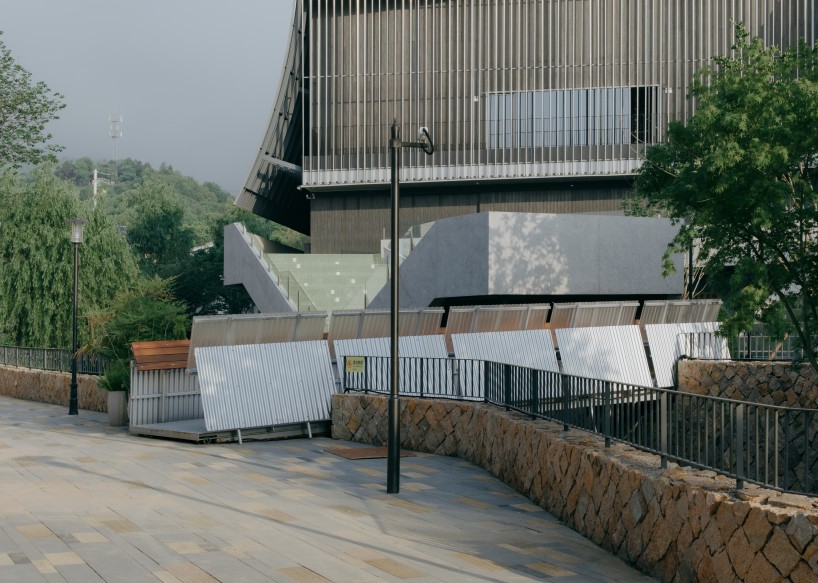
small geometric shifts influence movement and perception

the bridge is assembled from 2-meter modular sections

the inclined surfaces prioritize spatial interaction over load-bearing
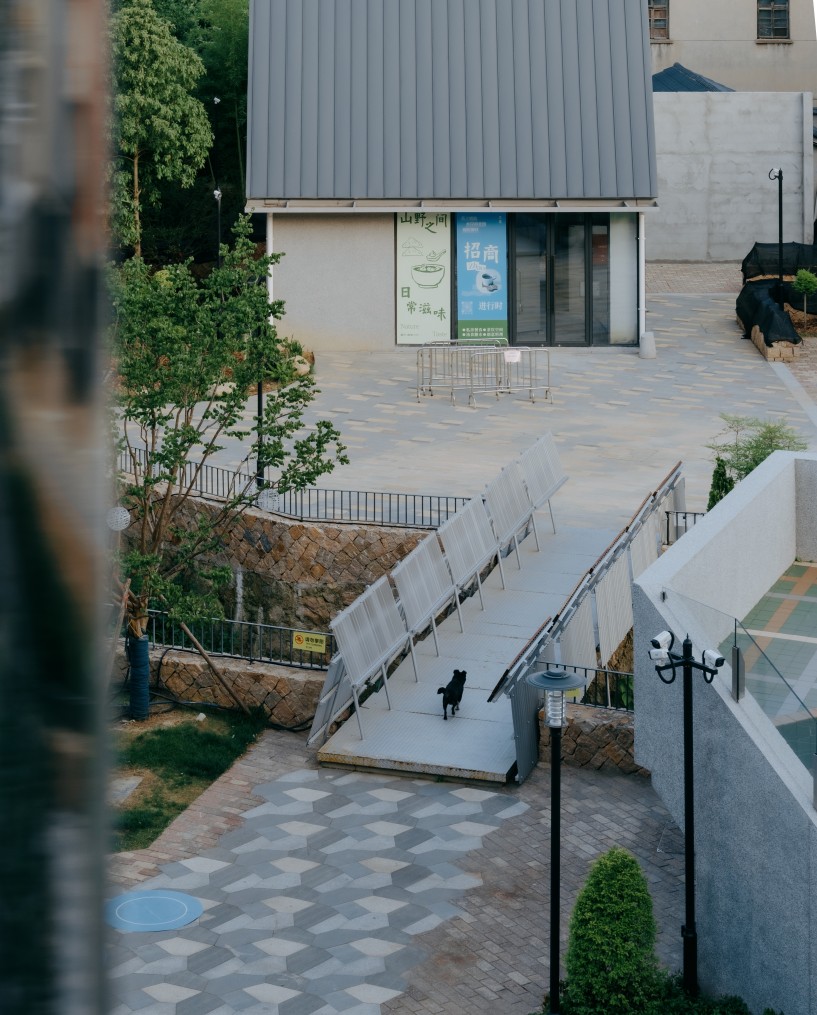
each module rotates slightly to vary the crossing experience
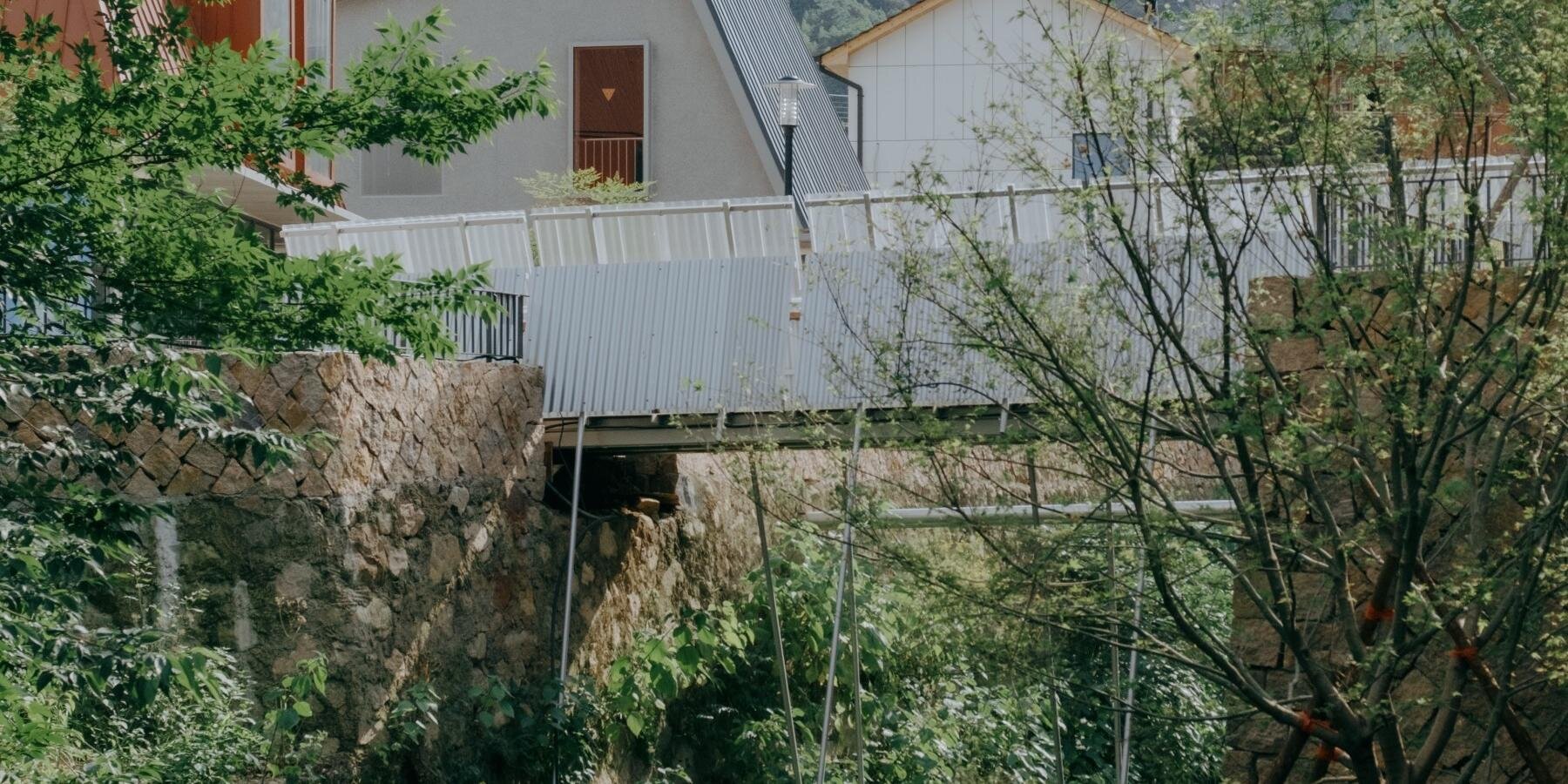
views unfold across the surrounding natural landscape
architecture in china (2118)
 Sep 16, 2026
 Sep 11, 2026
 Sep 08, 2026
 Sep 07, 2026
 Sep 05, 2026
bridge architecture and design (273)
 Jun 15, 2026
 Jun 03, 2026
 May 27, 2026
 May 11, 2026
 Apr 09, 2026
 Sep 23, 2026
 Sep 22, 2026
 Sep 20, 2026
 Sep 18, 2026